

New Jersey is no longer simply adjacent to the world’s biggest sporting event—it is central to it. As the countdown to FIFA World Cup 2026 accelerates, the Garden State is positioning itself as one of the most dynamic, accessible, and culturally vibrant host regions in the entire tournament footprint. With eight matches scheduled at MetLife Stadium—including the Final—and a sweeping network of fan activations, watch zones, and regional celebrations unfolding across the state, New Jersey is preparing to operate at a scale rarely seen in its modern history.
World Cup Match Schedule (MetLife Stadium)
Across Explore New Jersey’s expanding coverage of the World Cup 2026, one reality is becoming unmistakably clear: this is not a single-site event. It is a statewide experience, designed to engage millions of visitors and residents alike through a layered ecosystem of festivals, public viewing environments, transportation infrastructure, and cultural programming that stretches from the Hudson waterfront to South Jersey.
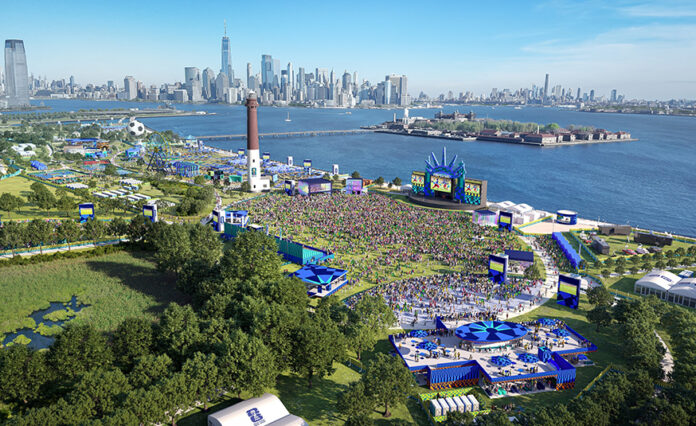
At the center of this effort is Liberty State Park in Jersey City, which will serve as the primary gathering point for fans throughout the duration of the tournament. Running from June 11 through July 19, this expansive fan festival transforms one of New Jersey’s most iconic public spaces into a global stage. Positioned directly along the Hudson River with unobstructed views of the Manhattan skyline and the Statue of Liberty, the setting alone establishes a sense of scale and significance. Over the course of 39 days, all 104 matches will be broadcast live on massive screens, creating a continuous, immersive viewing environment that operates as both a sports destination and a cultural hub.
MetLife Stadium (referred to as “New York New Jersey Stadium” for the tournament) will host five group stage games and three knockout rounds.
| Date | Matchup | Round | Time (ET) |
|---|---|---|---|
| June 13 | Brazil vs. Morocco | Group C | 6:00 PM |
| June 16 | France vs. Senegal | Group I | 3:00 PM |
| June 22 | Norway vs. Senegal | Group I | 8:00 PM |
| June 25 | Ecuador vs. Germany | Group E | 4:00 PM |
| June 27 | Panama vs. England | Group L | 5:00 PM |
| June 30 | TBD vs. TBD | Round of 32 | 5:00 PM |
| July 5 | TBD vs. TBD | Round of 16 | 4:00 PM |
| July 19 | World Cup Final | Final | 3:00 PM |
The footprint of the festival is equally ambitious. Spanning hundreds of thousands of square feet, the site is designed to accommodate tens of thousands of visitors per day, with projections exceeding one million total attendees across the tournament. This is not a passive viewing space—it is a fully realized fan environment, incorporating live performances, curated food and beverage programs, international vendor villages, and interactive installations that reflect the global nature of the event.
A major component of this experience is the integration of Sports Illustrated as the Official Fan Experience Supporter for the New York/New Jersey host region. Their presence introduces a distinct editorial and historical dimension to the festival, including a large-scale exhibit showcasing decades of iconic sports photography and storytelling. In addition, fans will have the opportunity to create personalized magazine-style covers, effectively placing themselves within the visual legacy of the sport. These activations are designed not only as entertainment, but as cultural touchpoints that connect the present tournament to the broader history of soccer on the world stage.
While Liberty State Park anchors the statewide experience, it is far from the only destination. In Harrison, the rebranded Sports Illustrated Stadium—formerly Red Bull Arena—emerges as a secondary hub that brings fans even closer to the action. Throughout the tournament, the venue will host a series of structured watch parties and live events, offering a more contained but equally engaging environment. With a 60-foot viewing screen positioned on the pitch itself and additional viewing zones throughout the facility, the experience blends stadium energy with accessibility. The pricing model reinforces that accessibility, with modest admission costs for adults and free entry for younger fans, ensuring that the event remains inclusive without sacrificing production quality.
The strategic importance of this location extends beyond programming. Situated within walking distance of the Harrison PATH station, the stadium is directly connected to one of the most efficient transit corridors in the region, allowing fans to move seamlessly between New Jersey and New York City. That connectivity becomes a defining feature of the broader World Cup experience, particularly as transportation planning emerges as one of the most critical operational components of the tournament.
For match days at MetLife Stadium—rebranded as New York New Jersey Stadium during the tournament—the emphasis is clear: public transit is not just recommended, it is essential. With no general parking and strict limitations on vehicle access, fans are expected to rely heavily on NJ Transit rail and bus services. The system is being scaled accordingly, with high-frequency bus routes operating at near-continuous intervals and rail connections running through Secaucus Junction into the Meadowlands. Travel times from Manhattan are estimated between 30 and 60 minutes, though demand will require careful planning and early departure for all attendees.
Complementing these major hubs is a distributed network of localized fan experiences known as “Flag Cities” events. These are designed to bring the World Cup atmosphere directly into communities across North Jersey, transforming public spaces into vibrant, soccer-centric street festivals. Scheduled across multiple municipalities—including Jersey City, Bergen County, Secaucus, Newark, and the Rutherford area—these events combine live match screenings with interactive soccer zones, international cuisine, and entertainment programming that reflects the diversity of the global game.
Each location offers a distinct expression of the tournament’s energy, but collectively they serve a broader purpose: decentralizing access and ensuring that the World Cup experience is not confined to a single venue or ticketed audience. These events create entry points for families, casual fans, and local communities to engage with the tournament in a way that feels both immediate and inclusive.
Further expanding the experience is the integration of large-scale commercial and entertainment destinations, most notably the American Dream complex in East Rutherford. Located adjacent to MetLife Stadium, this expansive retail and entertainment hub is positioning itself as a continuous fan destination throughout the tournament. With indoor theme parks, a full-scale water park, indoor skiing, and a range of hospitality offerings, the venue is developing its own extended programming slate that includes watch parties, live appearances, and branded activations designed to operate in parallel with official FIFA events.
This layered approach—combining centralized festivals, secondary hubs, community-based activations, and commercial entertainment zones—reflects a deliberate strategy. Rather than concentrating activity in a single location, New Jersey is distributing the experience across multiple environments, each tailored to different types of fans and levels of engagement. The result is a system that can absorb massive attendance while maintaining a sense of accessibility and flow.
Beyond the fan-facing infrastructure, the broader economic and cultural impact of the World Cup on New Jersey is already taking shape. Investments in community initiatives, including the development of mini-pitches and youth programming, signal a long-term commitment to expanding the sport’s footprint at the grassroots level. State-led funding initiatives are further reinforcing this effort, channeling resources into local projects that align with the tournament’s legacy goals.
At the same time, the region is preparing for a surge in global visibility that extends far beyond the matches themselves. The convergence of international tourism, media coverage, and parallel national celebrations—particularly those tied to the United States’ 250th anniversary—positions New Jersey at the center of a historic moment. Hospitality, transportation, and public space management are all being recalibrated to meet this demand, with an understanding that the success of the tournament will be measured not only by what happens inside the stadium, but by how effectively the region performs as a host.
For residents and visitors navigating this landscape, preparation becomes part of the experience. Securing accommodations early, understanding transit routes, and identifying preferred fan zones are no longer optional considerations—they are essential components of participating in the event at scale. The sheer volume of activity ensures that every corner of the region will feel the impact, from major urban centers to suburban communities and waterfront destinations.
What ultimately defines New Jersey’s role in World Cup 2026 is not just its proximity to New York City or its hosting of the Final. It is the state’s ability to transform itself into a fully integrated platform for global sport, culture, and community engagement. From Liberty State Park’s skyline-framed festival grounds to the energy of neighborhood watch parties and the precision of its transportation network, the state is building an experience that operates on multiple levels simultaneously.
As the tournament approaches, the infrastructure is aligning, the programming is expanding, and the narrative is solidifying. New Jersey is not preparing to support the World Cup—it is preparing to shape it.
















