
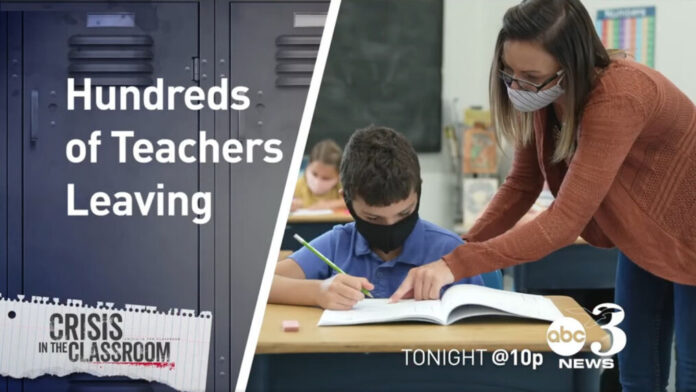

Across New Jersey, school districts are confronting a challenge that would have seemed almost unimaginable a generation ago. While communities continue investing in educational excellence, administrators throughout the state are increasingly finding themselves grappling with a growing shortage of qualified educators, shrinking applicant pools, and staffing vacancies that can emerge with little warning and create immediate consequences for students.
The challenge is no longer confined to a handful of districts or specific subject areas. It has become one of the defining educational issues of the decade, affecting urban, suburban, and rural communities alike. As school leaders work to ensure that students receive high-quality instruction despite these staffing realities, a larger debate is emerging about whether existing regulations are keeping pace with the realities of modern education.
That debate recently gained renewed attention following a public discussion sparked by North Plainfield School District Superintendent Dr. Michelle Aquino, who argued that New Jersey schools are increasingly being forced to navigate a difficult conflict between outdated regulations and practical solutions designed to protect student learning.
At the center of the conversation is a question many educators throughout the state are now asking: When a qualified teacher cannot be physically placed in a classroom, should districts be penalized for finding alternative ways to deliver instruction?
The issue emerged after North Plainfield faced a sudden staffing vacancy shortly before the start of the school year. Rather than leave students without consistent instruction, district leaders implemented a solution utilizing a certified remote educator to ensure continuity and maintain educational standards.
What followed highlighted the growing tension between educational innovation and regulatory compliance.
According to the concerns raised by district leadership, the effort to provide uninterrupted instruction resulted in a complaint and a subsequent ruling that underscored how current educational regulations can conflict with the practical realities facing modern school systems.
The situation has resonated well beyond a single district because it reflects a challenge confronting schools throughout New Jersey. Administrators are increasingly expected to solve staffing shortages while simultaneously adhering to rules developed for an educational environment that looked very different from the one schools face today.
The debate extends beyond one district or one staffing decision. It touches on broader questions surrounding workforce development, educational access, technological advancement, and how schools can best serve students during periods of unprecedented change.
Teacher shortages remain one of the most significant pressures facing public education nationwide, and New Jersey has not been immune. Districts across the state continue reporting difficulties recruiting certified educators in specialized fields including mathematics, science, special education, world languages, and certain career and technical education disciplines.
In many communities, vacancies that once attracted dozens of applicants now generate only a handful. Some positions remain open for months. Others require districts to creatively reassign personnel, increase workloads, or implement temporary solutions simply to ensure classrooms remain staffed.
The consequences extend beyond scheduling concerns.
When vacancies remain unfilled, students often experience disruptions in continuity, larger class sizes, substitute coverage, or reduced course offerings. School leaders therefore face immense pressure to find solutions that prioritize educational outcomes while remaining compliant with state requirements.
Technology has emerged as one of the most significant tools available to districts seeking to address these challenges.
The rapid evolution of digital learning platforms, virtual classrooms, interactive instructional systems, and remote communication tools has transformed how educational services can be delivered. During recent years, students, teachers, and families became familiar with virtual instruction on a scale never previously imagined. While most educators agree that traditional in-person learning remains the preferred model whenever possible, the experience demonstrated that technology can provide meaningful educational continuity when circumstances require flexibility.
Supporters of modernized educational regulations argue that certified virtual instruction should be viewed as a legitimate option during staffing emergencies rather than a last resort subject to punitive consequences.
Their argument is straightforward.
If a district can provide students with access to a qualified, certified educator using modern technology rather than leaving classrooms uncovered or staffed by individuals lacking appropriate credentials, student learning should remain the primary consideration.
The conversation also reflects larger changes occurring throughout the workforce.
Remote and hybrid work arrangements have become common across industries ranging from healthcare and finance to technology and government services. Employees increasingly collaborate across geographic boundaries while maintaining productivity and effectiveness. Many educational leaders believe schools should be permitted similar flexibility under carefully controlled circumstances when doing so benefits students.
At the same time, advocates for existing regulations emphasize the importance of maintaining educational quality, accountability, and consistency. They argue that classroom learning encompasses more than content delivery and includes personal relationships, social development, classroom management, and the human connections that help students thrive academically and emotionally.
Those concerns are not insignificant.
Education remains fundamentally human. Teachers do far more than present information. They mentor, encourage, observe, intervene, inspire, and build relationships that often shape students for years beyond graduation. Many educators believe those interactions are most effective when they occur face-to-face within a traditional classroom environment.
Yet even those who strongly support in-person learning increasingly acknowledge that staffing realities require practical solutions.
The challenge facing policymakers is determining how to balance educational standards with operational realities.
The issue also raises important questions about educational equity. Wealthier districts often possess greater flexibility and resources when vacancies occur. Smaller districts and communities with limited applicant pools may have fewer options available when qualified candidates cannot be found. Modernizing regulations could potentially provide those districts with additional tools to maintain educational quality during staffing shortages.
Throughout New Jersey, school leaders continue searching for innovative ways to recruit and retain educators. Efforts include expanded mentoring programs, alternative certification pathways, tuition assistance initiatives, residency partnerships with colleges and universities, and enhanced professional development opportunities.
Many districts are also investing heavily in employee wellness programs, recognizing that retention has become just as important as recruitment. Educational leaders increasingly understand that supporting teachers professionally and personally contributes directly to classroom success and long-term workforce stability.
At the heart of the discussion remains a simple but critical objective: ensuring students receive the highest-quality education possible regardless of staffing challenges.
The debate sparked by North Plainfield’s experience serves as a reminder that educational policy cannot remain static while the world around it evolves. The realities facing schools today differ dramatically from those of previous decades. Technology has changed. Workforce expectations have changed. Student needs have changed. Recruitment challenges have changed.
Many educational leaders believe regulations must evolve as well.
As New Jersey continues its long-standing commitment to educational excellence, conversations about flexibility, innovation, and student-centered decision-making are likely to become increasingly important. Policymakers, administrators, educators, parents, and community leaders will continue examining how best to balance accountability with adaptability in a rapidly changing educational landscape.
What remains clear is that every stakeholder shares a common goal: ensuring that students have access to exceptional instruction, regardless of the challenges schools face behind the scenes.
The future of education may ultimately depend on finding solutions that honor both the traditions that have long defined academic excellence and the innovations that can help sustain it. For districts navigating staffing shortages, that balance may become one of the most important educational conversations of the coming decade.
As New Jersey schools continue adapting to new realities, the discussion is no longer simply about regulations or staffing models. It is about ensuring that every student, in every classroom, receives the opportunities and support necessary to succeed in an increasingly complex world.
















