

For more than a century, the Penn Relays have stood as one of the most iconic and respected track and field events in the world, bringing together elite athletes, rising competitors, schools, universities, and international participants inside the historic confines of Franklin Field in Philadelphia. Since its founding in 1895, the event has grown into far more than a track meet. It has become a symbol of athletic tradition, competitive excellence, perseverance, and the enduring spirit of sport itself.
This year, during the 130th edition of the Penn Relays held from April 23 through April 25, that spirit was once again fully visible as Special Olympics athletes from across multiple states stepped onto one of track and field’s most historic stages to compete, inspire, and demonstrate exactly what inclusion, determination, and high-level competition truly look like.
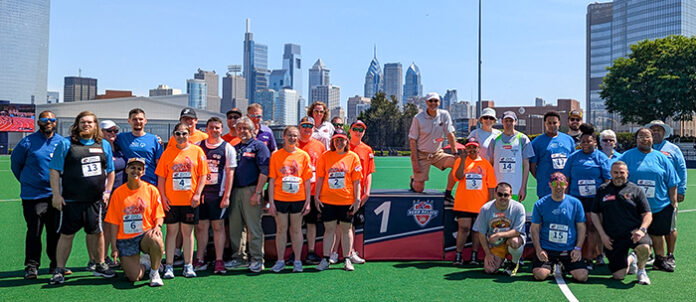
Among the thousands of competitors participating throughout the internationally recognized event were 97 athletes and Unified partners representing Special Olympics programs from New Jersey, Pennsylvania, Delaware, Maryland, and Florida. Together, they competed in a series of featured events including the 4×100-meter relays, Unified relays, 100-meter dash competitions, and shot put events, bringing energy, intensity, and emotional power to Franklin Field in a way that resonated throughout the entire stadium.
For Special Olympics New Jersey, the event represented another major milestone in the organization’s continuing commitment to athletic excellence, inclusion, and competitive opportunity. Twenty-six athletes from SONJ proudly represented the Garden State across every Special Olympics discipline featured during the Penn Relays, delivering standout performances that earned multiple podium finishes and showcased the growing strength of New Jersey’s Special Olympics programs on a regional and national level.
The results spoke for themselves. Special Olympics New Jersey athletes captured one silver medal and one bronze medal in relay competition, one gold medal and one bronze medal in the 100-meter dash, and two gold medals along with one bronze medal in shot put events. Yet the significance of the experience extended far beyond medals and podium placements. For the athletes, families, coaches, Unified partners, and supporters who made the trip to Philadelphia, the Penn Relays represented an opportunity to compete on one of the sport’s grandest stages while standing shoulder to shoulder with athletes from across the country inside a venue that has hosted generations of track and field history.
The atmosphere surrounding the Special Olympics events throughout the weekend reflected everything that makes the Penn Relays unique. Athletes moved through warmups with intense focus and excitement. Relay teams prepared baton exchanges with precision. Coaches delivered final instructions before competitors entered the stadium. Families gathered in the stands with overwhelming pride. Volunteers and staff worked continuously behind the scenes to ensure every athlete had the opportunity to compete at their highest level.
At Franklin Field, the energy surrounding Special Olympics competition carried the same emotional intensity and competitive focus seen throughout every level of the Penn Relays. The roar of the crowd during relay exchanges, the concentration visible before the start of each sprint, and the determination displayed during field events reinforced the reality that these athletes were not participating for symbolic recognition alone. They were there to compete, to perform, and to represent their programs, teammates, and communities with pride.
The Unified Sports model also remained central to the weekend’s impact. Unified competition continues serving as one of the most powerful examples of inclusive athletics anywhere in sports today, bringing together athletes with and without intellectual disabilities as teammates competing side by side. The Penn Relays once again demonstrated how Unified Sports breaks down barriers while creating authentic, meaningful athletic partnerships built around teamwork, trust, and mutual respect.
For many athletes and families, the experience carried deeply personal significance. Among the standout stories from the weekend was Special Olympics New Jersey athlete Malea Brown, whose participation at the Penn Relays became a meaningful family moment tied directly to the event’s generational history. Malea’s father had previously competed at the Penn Relays during his own high school years, creating a powerful full-circle moment as she stepped onto the same legendary track decades later representing SONJ.
Malea embraced the moment with enthusiasm and pride, reflecting the passion and commitment that define so many Special Olympics athletes across New Jersey. Surrounded by family support throughout the competition, she represented not only her team but also the emotional connection many athletes and families develop through Special Olympics participation. Her mother, Melissa Brown, captured the atmosphere perfectly, describing the excitement of seeing Malea compete inside such a historic environment surrounded by enormous crowds and world-class energy.
Malea’s athletic achievements also highlight another defining characteristic of Special Olympics New Jersey competitors: versatility and year-round commitment. Like many SONJ athletes, she participates across multiple sports disciplines throughout the year. Earlier this season, she earned a gold medal during Special Olympics New Jersey’s inaugural Pickleball Championship at the organization’s Winter Games, reinforcing the depth of talent and dedication that continues driving the statewide program forward.
That culture of year-round competition has become one of the strongest foundations of Special Olympics New Jersey’s success. Athletes train continuously throughout the calendar year across multiple sports, building not only physical skills but also confidence, discipline, leadership abilities, social connection, and personal independence. Events like the Penn Relays provide a national-level platform where those months and years of preparation become visible to broader audiences.
The importance of visibility cannot be overstated. Special Olympics participation at iconic events like the Penn Relays continues helping reshape public understanding of athletes with intellectual disabilities while challenging outdated assumptions regarding competition, capability, and athletic performance. The sight of Special Olympics athletes competing inside one of track and field’s most prestigious venues sends a powerful message about inclusion, representation, and opportunity within sports culture itself.
Special Olympics New Jersey has long positioned itself as one of the nation’s most active and impactful state programs, consistently expanding opportunities for athletes while strengthening public awareness around inclusion and accessibility in sports. Participation in major events like the Penn Relays reinforces that mission while also elevating the visibility of New Jersey athletes on larger regional and national stages.
The coaches, Unified partners, volunteers, parents, and staff members supporting the athletes throughout the weekend also played a critical role in the event’s success. Behind every race, relay exchange, throw, and medal ceremony stood an extensive support network dedicated to ensuring athletes were fully prepared physically, mentally, and emotionally for the experience. Their work often unfolds quietly behind the scenes, but the impact is visible every time an athlete steps confidently into competition.
For coaches in particular, events like the Penn Relays represent the culmination of countless hours spent training athletes, organizing logistics, building confidence, and fostering teamwork. The trust between athletes and coaches becomes especially visible during high-pressure moments inside major venues where nerves, excitement, and anticipation all converge simultaneously.
The Penn Relays themselves also deserve recognition for continuing to embrace Special Olympics competition as part of the larger event structure. By including Special Olympics athletes within one of the most historic and prestigious track meets in the world, organizers reinforce the principle that inclusion strengthens sports rather than existing separately from it. The opportunity for Special Olympics athletes to compete within the broader Penn Relays environment helps ensure that inclusion becomes integrated into the culture of athletics itself rather than treated as an isolated initiative.
The emotional power of the event extended far beyond the medal count. Every athlete entering the stadium, standing in staging areas, preparing for baton exchanges, lining up for races, or stepping into the shot put circle represented something larger than individual competition. They represented perseverance, preparation, courage, and the ongoing expansion of opportunity within sports.
For New Jersey, the performances delivered by SONJ athletes at the 130th Penn Relays also reflect the broader strength of the state’s inclusive sports community. Across schools, local programs, recreation systems, and statewide organizations, New Jersey continues developing one of the strongest cultures of inclusive athletics anywhere in the country. The success of Special Olympics New Jersey athletes on major stages reinforces that legacy while inspiring future generations of competitors to pursue opportunities within sports regardless of barriers or limitations.
As another historic Penn Relays weekend concluded at Franklin Field, the accomplishments of Special Olympics athletes stood among the event’s most inspiring and meaningful moments. Medals were earned, personal goals were achieved, memories were created, and families celebrated experiences that will remain unforgettable long after the final races ended.
Most importantly, the athletes themselves once again reminded everyone watching exactly what sports are supposed to represent: effort, teamwork, resilience, opportunity, pride, and the unshakable belief that competition has the power to unite communities while bringing out the very best in people.
















