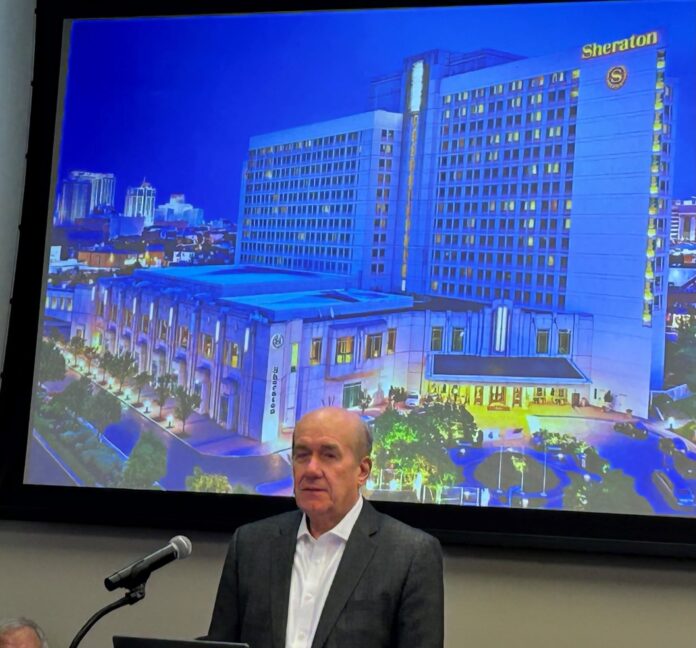

Atlantic City has taken another significant step toward reshaping one of its most recognizable gateway properties, approving long-term tax incentives that will allow the extensive redevelopment of the Sheraton Atlantic City Convention Center Hotel into a modern mixed-use destination combining hospitality with age-restricted residential living. The action signals more than the rehabilitation of a single building—it represents another chapter in Atlantic City’s ongoing effort to diversify its economy, modernize aging infrastructure, and strengthen year-round activity beyond the traditional casino industry.
The approvals by the Atlantic City Council clear an important hurdle for one of the city’s largest redevelopment initiatives currently moving through the pipeline. Two separate 30-year tax agreements will support the transformation of the 16-story property overlooking the Atlantic City Convention Center into a dual-purpose complex designed to better serve both visitors and permanent residents while preserving one of the city’s most strategically located hospitality assets.
Located at 2 Convention Boulevard, the Sheraton has long served convention attendees, business travelers, and visitors arriving through one of Atlantic City’s busiest transportation corridors. For decades, the hotel has functioned as a critical component of the convention district, directly connected to one of New Jersey’s premier meeting and exhibition venues. Yet like many legacy hospitality properties throughout the region, changing travel patterns, economic pressures, and years of deferred capital improvements have placed increasing strain on its long-term competitiveness.
The redevelopment proposal seeks to address those realities with an ambitious investment that fundamentally reimagines how the property operates while preserving its role within Atlantic City’s tourism economy.
Under the approved redevelopment framework, approximately half of the existing hotel inventory will remain dedicated to overnight accommodations. The renovated hotel will feature roughly 250 limited-service guest rooms that will undergo comprehensive modernization. Plans call for completely refreshed interiors, including upgraded finishes, redesigned guest spaces, new carpeting, contemporary wall treatments, artwork, lighting improvements, and extensive cosmetic enhancements intended to align the property with modern hospitality expectations.
Guest rooms will be substantially refreshed to create a more competitive lodging product capable of attracting convention attendees, business travelers, leisure visitors, and event participants throughout the year. Maintaining a hotel presence at the site ensures continued support for Atlantic City’s convention business while allowing ownership to diversify the property’s long-term revenue model.
Equally significant is the residential component of the project. Approximately 250 former hotel rooms will be converted into 130 age-restricted residential apartments designed specifically for older adults seeking urban living with convenient access to transportation, healthcare, entertainment, restaurants, shopping, and community amenities.
The residential conversion will include a mix of studio, one-bedroom, and two-bedroom residences, creating housing options that accommodate a variety of lifestyles and household sizes. Unlike traditional hotel accommodations, the apartments will feature fully equipped kitchens complete with full-size appliances, including refrigerators, freezers, ovens, ranges, microwaves, and dishwashers. These additions transform the former guest rooms into functional permanent residences capable of supporting independent daily living.
The project also incorporates an affordable housing component, with a portion of the residential units reserved to meet affordability requirements. The inclusion of affordable senior housing reflects broader statewide efforts to increase housing availability while addressing the growing demand for residences designed specifically for New Jersey’s aging population.
As demographics continue shifting across the state, developments that combine accessibility, convenience, and proximity to public services have become increasingly important. Atlantic City, with its established transportation network and concentration of healthcare providers, has emerged as a logical location for additional age-restricted housing opportunities.
Beyond the residential conversion itself, redevelopment plans extend throughout the property. Exterior improvements include expanded amenity spaces, upgraded public areas, enhanced building entrances, improved landscaping, and new architectural features designed to modernize the property’s appearance. Planned pedestrian enhancements include construction of a covered walkway connecting the convention center parking garage with the hotel, improving accessibility for guests attending conferences, trade shows, conventions, and special events regardless of weather conditions.
Interior renovations will also encompass the building’s lower levels, where common spaces are expected to receive significant upgrades that improve circulation, functionality, and overall visitor experience. Updated signage and exterior improvements are intended to reinforce the property’s renewed identity while creating a stronger visual presence along one of Atlantic City’s primary arrival corridors.
The residential portion of the redevelopment is expected to include an array of lifestyle amenities that reflect changing expectations among today’s active adult population. Planned features include recreational facilities such as a golf simulator, indoor swimming pool, sauna, barbecue area, and additional gathering spaces intended to foster community interaction while enhancing quality of life for residents.
Although both the residential and hotel components will share the property’s primary entrance, the development has been designed to maintain operational separation between permanent residents and overnight guests. A dedicated residential entrance will provide additional privacy and security while allowing each component of the building to function independently without compromising convenience.
Importantly, the redevelopment preserves existing commercial activity already operating within the property. Turnpike Tavern, a familiar dining destination inside the hotel, is expected to remain open, maintaining an established food and beverage option for hotel guests, convention visitors, local residents, and future apartment occupants.
The project reflects a growing trend across New Jersey and throughout the United States, where aging hotels are increasingly being repositioned for mixed-use purposes rather than demolished. Adaptive reuse has become an attractive redevelopment strategy because it allows developers to preserve existing structures while responding to evolving market demands. Instead of relying exclusively on transient lodging, mixed-use developments create multiple revenue streams that improve financial sustainability while serving broader community needs.
Atlantic City has increasingly embraced this redevelopment philosophy as it works to diversify beyond gaming revenue. While casinos remain central to the local economy, city officials have placed growing emphasis on residential development, educational institutions, healthcare investment, entertainment venues, sports tourism, and convention business as complementary economic drivers.
The Sheraton redevelopment aligns closely with that broader vision by preserving hotel capacity while simultaneously introducing new permanent residents into an area traditionally dominated by tourism activity. Increased residential occupancy contributes to neighborhood vitality throughout the year, supporting local businesses during periods when visitor traffic naturally declines.
The property’s location adjacent to the Atlantic City Convention Center makes its continued viability particularly important. The convention center remains one of New Jersey’s largest meeting facilities and plays a substantial role in attracting conferences, trade shows, corporate gatherings, sporting events, and exhibitions that generate economic activity extending well beyond hotel stays. Restaurants, retail businesses, transportation providers, entertainment venues, and service industries all benefit from convention-related tourism.
Maintaining a competitive hotel adjacent to the convention center strengthens Atlantic City’s ability to compete for regional and national events while ensuring visitors have access to modern accommodations within walking distance of conference activities.
Developers have emphasized that extensive capital investment is necessary because the building has reached an age where major infrastructure replacement can no longer be deferred. Unlike routine cosmetic updates, the project includes comprehensive improvements to essential building systems that have served the property since its original construction during the 1990s.
Mechanical equipment, electrical infrastructure, plumbing systems, roofing components, and exterior building elements are expected to undergo significant modernization. These investments represent foundational improvements that extend well beyond appearance, improving energy efficiency, operational reliability, building performance, and long-term sustainability.
The planned façade renovation will also reshape the property’s exterior image, helping the building better reflect contemporary architectural standards while improving first impressions for visitors entering Atlantic City through the convention district.
For many years, the hotel has faced mounting economic challenges stemming from multiple external forces that have reshaped Atlantic City’s hospitality market. The aftermath of Hurricane Sandy, dramatic changes in consumer travel behavior, increasing competition within the regional gaming industry, expansion of online gaming platforms, and the unprecedented disruption caused by the COVID-19 pandemic collectively altered the economics of large convention hotels throughout the region.
As occupancy patterns shifted and operating margins narrowed, many older hospitality properties found it increasingly difficult to finance the extensive renovations required to remain competitive with newer hotels and recently updated casino resorts.
Industry standards typically call for comprehensive guest room renovations every several years in order to meet evolving customer expectations and maintain franchise quality requirements. Deferred improvements over multiple decades can eventually threaten a property’s ability to retain national branding, attract convention business, and compete within an increasingly sophisticated hospitality marketplace.
The redevelopment initiative represents an effort to reverse those trends through a comprehensive modernization rather than incremental repairs.
Financially, the project is expected to represent an investment approaching $100 million, placing it among the more significant private redevelopment initiatives currently underway in Atlantic City. Developers are also pursuing additional state redevelopment incentives designed to encourage transformational investment in economically important projects throughout New Jersey.
State-supported redevelopment programs have increasingly become tools for attracting large-scale private investment into communities where construction costs and financing challenges might otherwise delay or prevent substantial rehabilitation projects. These initiatives are intended to stimulate job creation, expand local tax bases over the long term, preserve important commercial assets, and strengthen regional economies through strategic investment.
Construction activity associated with the Sheraton redevelopment is expected to generate employment across numerous sectors, including architecture, engineering, construction management, skilled trades, interior design, building systems installation, landscaping, hospitality services, and property management. Once completed, the mixed-use development will continue supporting permanent employment opportunities related to hotel operations, residential management, maintenance, food service, and guest services.
The redevelopment also reinforces confidence in Atlantic City’s long-term future. Large-scale investments in legacy properties demonstrate that both private developers and public officials continue identifying opportunities for growth beyond traditional casino expansion. By modernizing existing buildings instead of abandoning them, Atlantic City preserves important pieces of its built environment while adapting them to meet today’s economic realities.
For residents, business owners, visitors, and convention organizers alike, the Sheraton redevelopment represents more than a building renovation. It is a strategic investment in Atlantic City’s evolving identity as a destination where tourism, residential living, business activity, and community development increasingly intersect.
As redevelopment efforts continue throughout the city, projects like this illustrate how thoughtful adaptive reuse can strengthen neighborhoods, expand housing opportunities, preserve hospitality infrastructure, and reinforce Atlantic City’s position as one of New Jersey’s most important economic and tourism centers. With municipal approvals now secured and redevelopment momentum continuing to build, one of the city’s most recognizable convention district landmarks appears poised for a new era that blends modern hospitality, permanent residential living, and long-term economic resilience into a single transformative vision.