

New Jersey is once again under siege from dangerous heat, as the National Weather Service has issued extreme heat warnings and heat advisories covering all 21 counties during the state’s second major heat wave of the month. The stretch peaked yesterday, with air temperatures pushing toward 100 degrees and humidity driving the actual feels like heat index up to a genuinely dangerous 107 to 109 degrees. That oppressive stickiness remains a factor today as well, though a weak cold front is expected to bring gradual relief by Friday, dropping temperatures back down into the lower 90s.
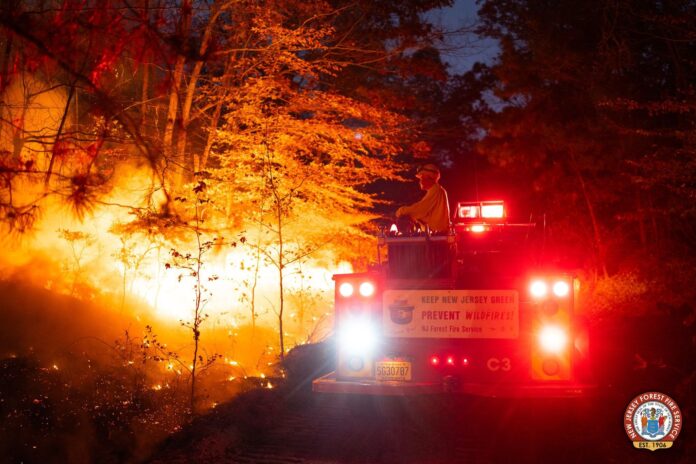
Compounding the danger, jet stream patterns have pushed wildfire smoke from Ontario, Canada directly into the Tri-State region, layering poor air quality on top of the extreme heat itself. Code Orange air quality alerts are now active alongside the heat warnings, and state health officials have cautioned that the combination of elevated ozone levels and thick wildfire smoke poses a genuinely serious risk for anyone with underlying lung or heart conditions, even for people who might otherwise tolerate the heat itself reasonably well.
The human cost of this extended heat emergency has already proven severe. The New Jersey Department of Health has confirmed that at least 29 people died from heat related illness during the state’s first major heat wave over the July 4th weekend, a genuinely sobering toll that underscores just how dangerous this summer’s weather pattern has become. Advocates working with vulnerable populations have noted that at least nine of those victims were unhoused individuals, a detail that speaks directly to how unevenly extreme heat’s dangers fall across different segments of the population. In response, cities including Newark have declared Code Red emergency orders, opening air conditioned libraries and recreation centers as cooling hubs specifically to give residents without reliable air conditioning at home a safe place to escape the heat during the day.
Beyond the immediate public health emergency, state energy regulators have ordered a formal investigation into how local utility companies responded to the storms that accompanied the earlier July heat wave, storms that knocked out power for more than 800,000 residents and left thousands without air conditioning for days at a stretch. That kind of prolonged power loss during extreme heat represents a genuinely dangerous compounding risk, since losing air conditioning during exactly the stretch when it matters most can turn a difficult situation into a life threatening one for residents without other means of staying cool.
At the county level, Morris County’s Office of Emergency Management has issued detailed guidance urging residents to take the current conditions seriously. With heat index values ranging from 100 to 109 degrees today, county officials have identified today as the hottest stretch of the week, with air temperatures reaching the upper 90s to near 100 degrees, and hot, humid conditions expected to persist through Friday, July 17. Officials are urging residents to stay well hydrated, limit strenuous outdoor activity during the hottest parts of the day, and spend time in air conditioned buildings whenever possible. County guidance also emphasizes checking in on older adults, neighbors, and other especially vulnerable residents throughout the heat wave, and reiterates the simple but critical warning to never leave children or pets unattended inside a vehicle under any circumstances.
Residents looking for relief can find cooling center locations through the Morris County Office of Emergency Management’s dedicated cooling centers webpage, or through the statewide NJ 211 directory, both of which are updated regularly by county and local emergency management agencies as hours and locations shift. Anyone struggling to cope with the heat can also contact their municipal Office of Emergency Management or local police department directly to locate a nearby cooling shelter, or call NJ 211 for assistance, reachable by dialing 211 directly or toll free at 1-877-652-1148. In the event of an actual heat related medical emergency, officials stress that residents should call 911 immediately rather than waiting to see if symptoms improve on their own. Recognizing the warning signs of heat related illness matters enormously in these situations, and officials point to a body temperature of 103 degrees or higher, hot, red, dry or damp skin, a rapid and strong pulse, headache, dizziness, nausea, confusion, or loss of consciousness as key indicators that immediate medical attention is needed.
Morris County is also encouraging residents who haven’t already done so to register with Smart911, a free emergency call service that gives first responders important background information about individuals and their household members during an emergency, a resource that can make a genuine difference in how quickly and effectively responders can help during a heat related crisis.
Beyond the heat itself, the National Weather Service is also forecasting a chance of isolated severe thunderstorms between 4 and 11 p.m. today, with the potential for damaging wind gusts, small hail, brief heavy rainfall, and frequent cloud to ground lightning. Those storms carry their own separate risks of localized tree damage, power outages, and road closures, adding yet another layer of complexity to an already dangerous stretch of weather. The wildfire smoke drifting in from Canada is expected to move into the region beginning tonight and may linger through Friday or Saturday, and officials are specifically urging individuals with asthma, COPD, heart disease, or other respiratory conditions to monitor local air quality closely and consider limiting prolonged outdoor activity if conditions continue to worsen.
The Morris County Office of Emergency Management has said it will continue monitoring conditions closely and coordinating with municipal, county, and state partners as the situation evolves. Residents are being encouraged to monitor trusted weather sources throughout the day and to make sure they have multiple reliable ways to receive weather alerts and emergency information, given how quickly conditions have already shifted between extreme heat, wildfire smoke, and the potential for severe thunderstorms within this single stretch of days.
Separately, advocates working with New Jersey’s unhoused population have called on Governor Mikie Sherrill to declare a formal state of emergency specifically so that shelters can temporarily lift standard occupancy limits, allowing more people to access safe, air conditioned shelter during this kind of genuinely life threatening heat event. That request underscores a broader concern running through this entire crisis, that the people facing the greatest risk from extreme heat, including unhoused individuals and residents without reliable access to air conditioning, often have the fewest resources available to protect themselves, making public cooling centers, emergency shelter capacity, and programs like Smart911 considerably more than a convenience during stretches like this one.
















