
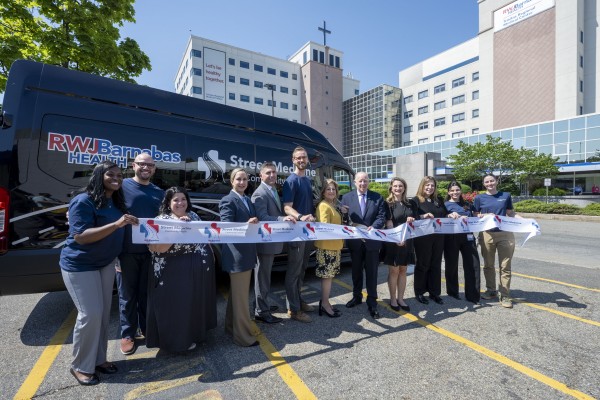

New Jersey’s healthcare landscape is entering a transformative new chapter as RWJBarnabas Health officially launches the state’s first Street Medicine Program, a groundbreaking mobile healthcare initiative designed to bring medical treatment directly to unhoused residents where they live, gather, and seek shelter. Unveiled in Elizabeth on May 19, the ambitious program signals a major shift in how healthcare systems across New Jersey may begin addressing homelessness, chronic illness, mental health, addiction treatment, and healthcare accessibility for some of the state’s most vulnerable populations.
At a time when healthcare systems nationwide are confronting rising emergency care costs, overcrowded hospitals, expanding behavioral health crises, and growing housing instability, RWJBarnabas Health’s new Street Medicine Program represents more than simply another outreach initiative. It reflects a broader rethinking of what modern healthcare delivery can look like when hospitals stop waiting for patients to arrive at clinics and instead bring care directly into communities.
The initiative, based out of Trinitas Regional Medical Center in Elizabeth, immediately becomes one of the most significant community health developments currently unfolding anywhere in New Jersey. Through a clearly marked mobile medical unit staffed by healthcare professionals, the program will travel directly to shelters, transitional housing sites, encampments, gathering spaces, and other locations where unhoused residents live or receive services.
Rather than forcing individuals facing homelessness to navigate transportation barriers, appointment systems, insurance complications, or institutional distrust, the Street Medicine Program is intentionally designed around a radically different philosophy: healthcare should meet people where they are.
That simple idea carries enormous implications.
For years, healthcare providers throughout New Jersey and nationally have struggled with the reality that many unhoused individuals often seek treatment only after medical conditions escalate into emergencies. Chronic illnesses go unmanaged. Mental health conditions remain untreated. Substance use disorders worsen without intervention. Preventive care becomes nearly inaccessible. Minor infections or manageable conditions can rapidly evolve into severe medical crises requiring hospitalization.
Street medicine attempts to interrupt that cycle before crisis occurs.
RWJBarnabas Health’s new initiative will provide a broad range of direct medical services in the field, including acute and preventive care, chronic disease management, mental health support, street psychiatry services, substance use treatment resources, and harm reduction interventions. The mobile team will also work to connect patients with transportation assistance, behavioral health support, long-term clinic access, social services, and coordinated treatment planning intended to keep vulnerable residents engaged in ongoing care rather than disconnected from the healthcare system entirely.
The launch arrives during a period of increasing urgency surrounding homelessness throughout New Jersey.
According to the latest statewide counts, New Jersey’s unhoused population has climbed to nearly 14,000 individuals, a figure that underscores the growing pressure facing healthcare systems, municipalities, shelters, nonprofits, and community organizations across the state. While homelessness itself remains driven by complex economic, housing, mental health, addiction, and structural factors, healthcare accessibility continues emerging as one of the most critical and difficult challenges surrounding the crisis.
Traditional healthcare systems often struggle to effectively serve unhoused populations because those systems are generally built around assumptions of stability — permanent addresses, transportation access, scheduled appointments, insurance navigation, and predictable communication channels. Individuals experiencing homelessness frequently face barriers in nearly all of those areas simultaneously.
Street medicine directly challenges that framework.
Instead of asking vulnerable residents to adapt to institutional healthcare structures, the program adapts healthcare delivery itself to the realities patients actually face. The approach has gained increasing national visibility in recent years as healthcare systems across the country explore more aggressive community-based intervention strategies designed to improve outcomes while reducing avoidable emergency room utilization and preventable hospitalizations.
The concept has even entered mainstream cultural conversation through recent portrayals in popular television dramas such as HBO Max’s “The Pitt,” which features a fictional hospital-based street medicine team delivering care directly in public spaces to unhoused populations. Yet while the idea may feel newly visible in public discourse, healthcare advocates have spent years arguing that mobile community care models represent one of the most effective strategies for reaching populations consistently underserved by conventional healthcare systems.
RWJBarnabas Health is now positioning New Jersey directly inside that evolving national movement.
Supported through state funding, the Street Medicine Program operates as part of RWJBarnabas Health’s broader “Our Healthy Communities” initiative, a system-wide strategy focused on addressing social drivers of health extending beyond traditional clinical treatment alone. Increasingly, major healthcare systems are recognizing that medical outcomes are deeply shaped by factors like housing stability, food access, transportation, behavioral health support, economic insecurity, and environmental conditions.
RWJBarnabas Health reports reinvesting more than $151 million into community health initiatives beyond standard medical care, reflecting a growing institutional understanding that long-term health improvement often requires intervention far outside hospital walls.
The Elizabeth launch may ultimately become the first phase of something far larger.
System leadership has already indicated plans to expand the Street Medicine model throughout additional New Jersey communities following the initial rollout at Trinitas Regional Medical Center. If successful, the program could become a blueprint for future mobile healthcare expansion statewide, particularly in urban corridors where homelessness, addiction treatment needs, mental health crises, and healthcare accessibility challenges increasingly overlap.
At the ribbon-cutting ceremony unveiling the initiative, healthcare leaders, elected officials, medical residents, and community advocates gathered to recognize the significance of the moment.
Among those present were Trinitas Regional Medical Center leadership, Union County officials, Elizabeth Mayor J. Christian Bollwage, psychiatry and internal medicine residents, podiatry specialists, RWJBarnabas Health executives, and community health advocates who collectively framed the initiative as a major step forward for vulnerable populations throughout Union County.
RWJBarnabas Health President and CEO Mark Manigan emphasized that the program reflects a broader cultural mission within the healthcare system itself.
“Our Street Medicine Program is born from a culture that recognizes everyone, regardless of circumstance, is deserving of compassion and access to the world-class healthcare we provide,” Manigan said during the launch announcement. “Being the first in New Jersey to put such a focus on the immediate healthcare needs of some of our most vulnerable residents is something in which RWJBarnabas Health takes tremendous pride.”
That framing matters because the program is not being presented merely as a charity initiative or temporary outreach effort. Instead, RWJBarnabas is positioning street medicine as a legitimate and necessary extension of modern healthcare infrastructure itself.
At Trinitas Regional Medical Center, leadership emphasized that the program is designed specifically to intervene earlier in patient health trajectories before medical conditions escalate into emergency situations requiring hospitalization or crisis-level intervention.
Nancy DiLiegro, president and CEO of Trinitas Regional Medical Center, described the initiative as a strategic response to the direct physical, emotional, and psychological effects homelessness creates for vulnerable residents throughout Elizabeth.
“Every single day we see first-hand the impacts of homelessness on one’s physical, mental, and emotional health,” DiLiegro explained. “This initiative strategically delivers care to those who need it most, helping intervene and prevent a health crisis that would require emergency care.”
That preventative focus could have major implications not only for patient outcomes but also for healthcare system sustainability itself.
Emergency departments throughout the country increasingly function as de facto primary-care providers for many unhoused individuals because preventive access remains so limited. Street medicine programs attempt to reduce those emergency interventions by stabilizing patients earlier through consistent outreach, medication management, behavioral health engagement, wound care, addiction treatment support, and ongoing relationship-building between providers and patients.
The inclusion of street psychiatry and harm reduction services also reflects growing recognition that homelessness, behavioral health, and substance use challenges are deeply interconnected rather than isolated issues. Effective intervention often requires integrated care models capable of addressing physical health, mental health, addiction treatment, trauma, and social support simultaneously.
Leading the program operationally is Dr. Edward Egan, who will oversee the mobile healthcare team as medical director of RWJBarnabas Health’s Street Medicine Program.
Egan described the initiative as an opportunity to directly confront the disproportionate healthcare barriers faced by unhoused populations while building meaningful long-term relationships capable of improving outcomes over time.
“We know the unhoused population face disproportionate barriers to receiving the care they need,” Egan said. “This program will make a meaningful difference in our patients’ lives and help prevent hospitalizations.”
For Elizabeth specifically, the program arrives at a critical moment.
Like many urban communities throughout New Jersey, Elizabeth continues navigating the complex realities of rising housing pressures, economic inequality, healthcare accessibility challenges, and behavioral health demands while simultaneously experiencing significant redevelopment and growth. City leadership has increasingly emphasized community-based partnerships designed to improve quality of life and expand services for vulnerable residents.
Mayor Bollwage described the Street Medicine Program as potentially “life-changing” for the city’s unhoused population, underscoring how deeply local governments now view healthcare accessibility as inseparable from broader community stability and public well-being.
The larger significance of the launch ultimately extends beyond Elizabeth alone.
Street medicine represents a fundamental philosophical shift in how healthcare systems define responsibility and accessibility. It challenges the idea that hospitals exist only as fixed destinations where patients must arrive independently. Instead, it reframes healthcare as something mobile, relational, proactive, and embedded directly into the communities where need exists most urgently.
As New Jersey continues confronting rising healthcare costs, housing instability, mental health challenges, and widening disparities in access to care, programs like RWJBarnabas Health’s Street Medicine initiative may increasingly become not extraordinary innovations, but necessary components of modern public health strategy itself.
For now, however, Elizabeth stands at the forefront of that transformation. A marked medical van traveling through city streets now carries more than healthcare supplies and clinicians. It carries a new vision of healthcare delivery built around dignity, accessibility, prevention, compassion, and the belief that medical care should never depend solely on whether someone has the ability to walk through a hospital door.
















