
New Jersey’s healthcare landscape is undergoing one of the most dramatic transformations in modern state history.
The shift is no longer limited to hospital construction projects, insurance policy debates, or pharmaceutical breakthroughs. Increasingly, the future of healthcare is unfolding inside smartphones, remote monitoring dashboards, wearable devices, virtual coaching platforms, and AI-assisted patient support systems designed to bring medical engagement directly into people’s everyday lives.
At the center of that rapidly expanding movement is remote patient monitoring, one of the fastest-growing sectors in modern healthcare delivery, and now RPM Healthcare is taking a major step forward by expanding accessibility through a newly enhanced Spanish-language platform experience, AI-powered coaching support, and fully bilingual patient engagement services.
The expansion represents far more than a software update.
It reflects a broader transformation currently happening throughout healthcare systems nationwide — one increasingly focused on accessibility, preventive care, digital equity, language inclusion, and long-term patient engagement rather than reactive treatment alone.
For New Jersey especially, the timing is enormously significant.
As one of the most diverse states in America, New Jersey sits directly at the crossroads of healthcare innovation and multilingual patient care. Communities throughout Hudson County, Bergen County, Passaic County, Essex County, Union County, Middlesex County, and large sections of South Jersey include substantial Spanish-speaking populations who have historically faced varying levels of communication barriers, administrative complexity, and reduced healthcare accessibility inside traditional medical systems.
RPM Healthcare’s newest expansion directly addresses those realities by creating a more fully integrated remote care environment designed specifically to improve communication, usability, and patient participation for Spanish-speaking users.
The update introduces a complete Spanish-language application experience alongside AI Coaching tools, bilingual enrollment support, and Spanish-speaking care coaches capable of helping patients navigate treatment plans, monitoring systems, education resources, and ongoing digital health engagement more comfortably and effectively.
That approach matters enormously because one of the greatest challenges in modern healthcare is no longer simply treatment availability.
It is patient participation.
Healthcare providers nationwide increasingly recognize that outcomes improve dramatically when patients remain actively engaged with their own care between doctor visits. Chronic conditions such as hypertension, diabetes, heart disease, obesity, respiratory illness, and post-hospital recovery often depend heavily on day-to-day monitoring, lifestyle management, medication adherence, and ongoing communication rather than occasional in-office appointments alone.
Remote patient monitoring has emerged as one of the most important solutions to that challenge.
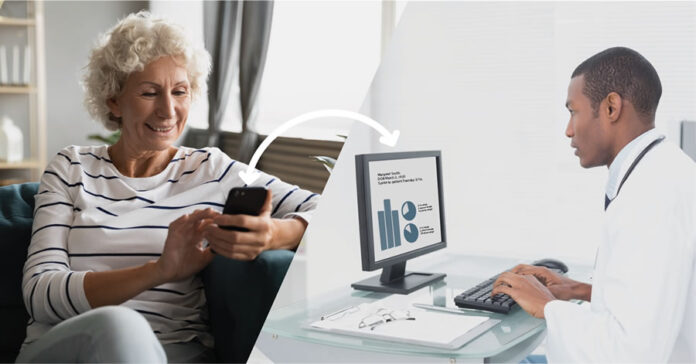
RPM platforms allow healthcare providers to track patient data remotely through connected devices measuring blood pressure, glucose levels, oxygen saturation, weight fluctuations, heart metrics, medication compliance, and other critical indicators in real time. Physicians and care teams can then identify early warning signs, intervene faster, reduce unnecessary hospitalizations, and maintain stronger long-term oversight without requiring patients to travel constantly into physical offices.
That model became especially prominent following the COVID-19 pandemic, when healthcare systems accelerated digital transformation initiatives at unprecedented speed.
But while remote healthcare technology expanded rapidly, accessibility gaps often remained.
Language barriers frequently limited full participation for non-English-speaking patients, particularly older populations or individuals already struggling with complex medical conditions. Many healthcare platforms simply translated portions of applications superficially without fully integrating culturally responsive communication, live bilingual support, or coaching systems capable of building trust and sustained patient engagement.
RPM Healthcare’s expansion appears designed specifically to solve that problem.
The company’s emphasis on bilingual care coaches and Spanish-speaking enrollment specialists introduces a far more human-centered structure into the digital healthcare process itself. Instead of relying solely on automated translation or impersonal interfaces, the system integrates direct communication support capable of helping patients navigate both technology and healthcare management simultaneously.
That human component may ultimately become the most important aspect of the entire rollout.
Technology alone rarely solves healthcare inequity.
Connection does.
Patients managing chronic illness often feel overwhelmed not only by symptoms, but by paperwork, insurance systems, medication schedules, lifestyle adjustments, appointment coordination, and unfamiliar digital tools. Having bilingual care professionals available to guide that experience can significantly improve comfort, participation, and long-term compliance with treatment plans.
The addition of AI Coaching tools further reflects where healthcare technology itself is rapidly evolving.
Artificial intelligence inside healthcare is increasingly shifting away from abstract futuristic branding and moving toward practical patient support applications that assist with everyday care management. AI-driven coaching systems can provide reminders, encouragement, educational guidance, symptom tracking assistance, and behavioral reinforcement designed to keep patients consistently engaged with their treatment goals.
When combined with human oversight rather than replacing it entirely, these systems become especially effective.
That hybrid structure — technology supported by real care teams — appears central to RPM Healthcare’s broader philosophy.
Importantly, the expansion also reflects another critical shift happening throughout healthcare economics.
Hospitals, insurers, and healthcare systems increasingly recognize that proactive monitoring costs significantly less than emergency intervention. Remote monitoring programs often reduce avoidable hospital admissions, shorten recovery timelines, improve medication adherence, and allow providers to identify complications before they escalate into crises requiring intensive treatment.
For patients, the benefits extend beyond cost.
Remote monitoring can dramatically improve quality of life.
Older adults can remain more independent while still receiving oversight. Patients in suburban or underserved areas gain more consistent access to care teams. Individuals with mobility limitations face fewer transportation barriers. Families caring for loved ones with chronic conditions receive greater reassurance through continuous monitoring systems capable of alerting providers when problems arise.
In New Jersey, where healthcare infrastructure remains among the most active and competitive in the country, digital monitoring platforms are becoming increasingly integrated into mainstream medical practice across hospital systems, private providers, rehabilitation programs, and long-term chronic care management.
RPM Healthcare’s expansion therefore represents more than one company’s platform enhancement.
It reflects the accelerating normalization of digitally connected healthcare itself.
That trend is expected to continue intensifying throughout the remainder of the decade as wearable technology, AI-assisted diagnostics, remote consultation systems, predictive analytics, and home-based care ecosystems become more deeply embedded into everyday healthcare delivery models.
But accessibility remains the defining issue.
The most advanced healthcare technology in the world becomes meaningless if patients cannot comfortably use it.
That is why multilingual integration matters so deeply.
New Jersey’s demographic structure makes language-accessible healthcare especially critical moving forward. The state’s healthcare future will increasingly depend on systems capable of serving highly diverse populations through culturally responsive communication, inclusive digital design, and patient-centered engagement strategies rather than one-size-fits-all technological deployment.
RPM Healthcare’s Spanish-language initiative aligns directly with that future.
The company’s expansion also arrives during a broader national conversation surrounding healthcare trust itself. Many patients continue feeling disconnected from institutional healthcare systems that often appear rushed, impersonal, or administratively overwhelming. Personalized digital engagement combined with bilingual support can help restore stronger communication pathways between providers and patients who may otherwise disengage from long-term care management.
That relationship-building component cannot be overstated.
Healthcare outcomes improve when patients feel heard, understood, and supported rather than processed through systems they struggle to navigate.
For Explore New Jersey readers following the continuing evolution of health technology, digital wellness infrastructure, and patient-accessibility innovation throughout the Garden State, RPM Healthcare’s latest expansion represents another major example of how healthcare is becoming increasingly decentralized, multilingual, and technologically integrated without losing sight of the human relationships still driving effective care.
The future of medicine is no longer confined to hospital walls.
Increasingly, it lives inside connected homes, mobile platforms, wearable devices, bilingual communication systems, and real-time patient support networks designed to keep people healthier before emergencies ever begin.
And in New Jersey, that future is arriving faster every year.