Home Blog Page 84

ShoreTown Turns Silver: BlueClaws Prepare for a Landmark 25th Anniversary Season

A New Era, New Look, and Unforgettable Experiences Set to Define BlueClaws Baseball in 2026

Baseball at the Jersey Shore has always been more than a game. It’s summer air drifting across the stands, the crack of a bat echoing through the evening, and generations of fans returning year after year to the same beloved ballpark. In 2026, the Jersey Shore BlueClaws will transform that familiar tradition into a season-long celebration as they mark 25 years of baseball at ShoreTown Ballpark, setting the stage for their most ambitious, nostalgia-filled, and community-driven year yet.

The milestone season officially begins on Tuesday, April 7, 2026, when the BlueClaws open their home schedule under the lights against Brooklyn’s affiliate. Fireworks will follow the first pitch, signaling not just the start of another season, but the beginning of a tribute to a quarter-century of Shore baseball memories. Ticket sales have already launched, and early demand suggests fans are eager to be part of opening night history.

From the outset, the organization has made it clear that this anniversary is not simply a date on the calendar. It’s a full-scale celebration of players, fans, families, and the community that built one of New Jersey’s most successful minor league franchises. Throughout the season, special events, themed games, and fan-driven initiatives will highlight the people and moments that shaped the BlueClaws story from their inaugural season to the present day.

One of the most anticipated elements of the anniversary festivities is the unveiling of an all-time 25th Anniversary Team. Fans are being invited to participate directly, voting weekly by position group to decide the greatest players in BlueClaws history. The process begins with catchers and will continue through the roster, culminating in the official team reveal in March. It’s an interactive tribute that gives longtime supporters a voice in honoring the stars who once wore the ShoreTown uniform.

The team is also collecting fan photos, stories, and personal memories to be showcased throughout the season, reinforcing the idea that this anniversary belongs to the community as much as the franchise itself. For many families, BlueClaws games have been summer rituals passed down through generations. Now, those personal moments will become part of the team’s historical record.

Adding fresh identity to the anniversary season is a newly introduced on-field logo known as the Liberty Bucket. Inspired by the iconic Liberty Bell, the design connects New Jersey pride with patriotic symbolism, creating a bold new visual that will debut across the field in 2026. It’s a nod to heritage, resilience, and hometown spirit—values that mirror the franchise’s enduring presence on the Shore.

Specialty events will fill the calendar with excitement well beyond traditional baseball. One of the most talked-about arrivals will be Banana Ball, as the Savannah Bananas and the Loco Beach Coconuts bring their wildly popular exhibition games to ShoreTown Ballpark for three nights in June. Expect choreographed celebrations, unconventional rules, and a carnival-like atmosphere that transforms the stadium into a festival of entertainment. It’s a rare opportunity for local fans to experience one of the most viral sensations in modern sports without leaving New Jersey.

Community appreciation remains at the heart of the season as well. A dedicated Military Appreciation Night in July will honor local service members, with nominations open to recognize hometown heroes in a pregame ceremony. These tributes continue the BlueClaws tradition of celebrating those who serve, reinforcing the franchise’s commitment to community values alongside athletic achievement.

On the baseball side, familiar leadership returns as manager Greg Brodzinski steps into his fourth season guiding the club. His steady presence has helped maintain continuity while developing future talent, and that pipeline remains strong. A dozen former BlueClaws have earned invitations to Philadelphia’s Spring Training roster, including highly regarded prospects who once electrified ShoreTown crowds. Their continued progression underscores the franchise’s role as a stepping stone to the big leagues.

Recent international success also adds shine to the organization’s reputation. One of last season’s standout outfielders recently helped lead his Australian league team to a championship, further proving that BlueClaws alumni are making impact far beyond New Jersey’s borders.

Of course, the BlueClaws experience has always extended beyond the diamond. Membership plans, mini-game packages, hospitality outings, and luxury suite raffles are already available, offering fans new ways to build summer traditions with family, friends, and colleagues. Picnic areas, buffet-inclusive seating, and boardwalk-style perks ensure every visit feels like a full-day Shore experience rather than just nine innings of baseball.

As anticipation grows toward April’s opening night, one thing is clear: the 2026 season will not simply mark another year of BlueClaws baseball. It will be a living celebration of 25 years of community, competition, and ShoreTown spirit, reimagined for a new generation of fans.

For those who follow New Jersey’s vibrant landscape of live entertainment and community gatherings, the BlueClaws anniversary season will stand proudly alongside the state’s most celebrated music and event experiences, reinforcing that New Jersey summers remain unmatched in energy, passion, and hometown pride.

The countdown to anniversary baseball has begun. And when the lights switch on at ShoreTown Ballpark this spring, they’ll illuminate not just a field—but a legacy.

ParkStage Raises the Curtain on a Star-Studded 2026 Summer Season – Monmouth County Prepares for a New Era of Outdoor Entertainment with the Arrival of ParkStage

Count Basie Center and County Leaders Unveil Vision for a Landmark Open-Air Venue in Freehold

A bold new chapter in New Jersey’s live entertainment story is beginning to take shape in Monmouth County. Plans are now officially in motion for ParkStage, a large-scale outdoor performance venue destined to transform the East Freehold Park Fairgrounds into one of the region’s most dynamic cultural gathering spaces. Slated to launch in Summer 2026, the project represents a rare convergence of artistic ambition, regional pride, and forward-thinking tourism development that is set to place Freehold firmly on the national live-event map.

Freehold’s New Outdoor Venue Reveals Its First Wave of Major Headliners. Anticipation for Monmouth County’s forthcoming ParkStage venue has just shifted into high gear. As construction and planning continue toward the Summer 2026 debut of this ambitious open-air entertainment destination in Freehold, organizers have unveiled the first round of performers set to christen the new stage. The initial lineup delivers instant credibility and excitement, featuring genre-spanning icons Sublime, indie-folk favorites The Head and The Heart, and new-wave trailblazers The B-52s. It’s an opening statement that signals ParkStage’s intent to launch not quietly, but with statewide resonance.

This announcement marks the first tangible glimpse of what ParkStage will represent for New Jersey’s live entertainment scene. From beach-born reggae-rock energy to introspective indie anthems and neon-lit retro pop, the diversity of the early bookings reflects a deliberate strategy: to build a venue that welcomes every generation of concertgoer. These acts bring decades of loyal fans, ensuring that opening season performances won’t just draw crowds, but will create memory-making nights that define the venue’s identity from day one.

Sublime’s inclusion instantly connects ParkStage to summertime tradition. Few bands capture warm-weather nostalgia quite like their catalog of laid-back grooves and ska-tinged classics. Their performance promises an atmosphere of carefree celebration that pairs naturally with an outdoor amphitheater under open skies. The Head and The Heart offer a different emotional palette, delivering soul-stirring harmonies and storytelling-driven songwriting that has made them festival staples nationwide. Meanwhile, The B-52s bring legendary status and high-energy fun, blending pop, rock, and camp into performances that feel like living pop-culture history.

Together, these artists form a cross-section of musical eras and styles, establishing ParkStage as a place where programming isn’t limited by genre or demographic. It’s a bold curatorial approach designed to make Freehold a must-visit destination on national touring circuits.

Beyond the excitement of the lineup itself, the announcement underscores the growing cultural footprint of Monmouth County. ParkStage is being developed not simply as a concert site, but as a regional anchor for arts-driven tourism. With convenient access, large-scale infrastructure, and community-focused planning, the venue is positioned to attract fans from across the tri-state area, filling hotels, restaurants, and local businesses on show nights. Each concert is expected to ripple outward economically while reinforcing New Jersey’s identity as a live entertainment powerhouse.

Additional artist announcements are scheduled to roll out throughout the coming year, building momentum toward a debut season that could rival established amphitheaters up and down the East Coast. By pacing reveals and maintaining anticipation, organizers are shaping ParkStage into more than a venue opening. They are crafting an event series that will unfold as a headline-generating story in its own right.

For fans eager to experience the next evolution of the state’s thriving music culture, ParkStage is quickly emerging as the new frontier. It offers the promise of expansive outdoor shows without leaving New Jersey’s borders, blending national-touring prestige with hometown pride.

As 2026 approaches, ParkStage’s first lineup announcement confirms what many suspected: this isn’t a modest local stage. It’s a statement venue with ambition, vision, and now, a roster of artists ready to turn that vision into unforgettable nights. The summer of 2026 may still be over the horizon, but the countdown in Freehold has officially begun.

The initiative is being led through a collaboration between the Count Basie Center for the Arts and Monmouth County Tourism, two organizations with deep roots in elevating the cultural profile of Central Jersey. ParkStage is not simply an expansion of existing entertainment offerings. It is a purpose-built, open-air destination designed to welcome major touring artists, national comedy acts, and large-scale special events in a setting that balances scenic surroundings with modern convenience.

For the Count Basie Center, the timing carries special meaning. The venue’s debut aligns with the institution’s centennial celebration, honoring a hundred years of artistic excellence while boldly stepping into its next century of community engagement. Leadership at the Basie Center has emphasized that ParkStage is envisioned as more than a performance space. It is a statement of confidence in the region’s appetite for the arts, an investment in shared experiences, and a catalyst for creative and economic energy.

Monmouth County’s involvement reflects a broader vision as well. The 2026 launch coincides with nationwide commemorations of America’s 250th anniversary, and county officials have positioned ParkStage as one of the signature attractions of that historic milestone. By integrating live entertainment into the larger anniversary programming, Monmouth County aims to offer residents and visitors alike a reason to celebrate heritage, community, and creativity together.

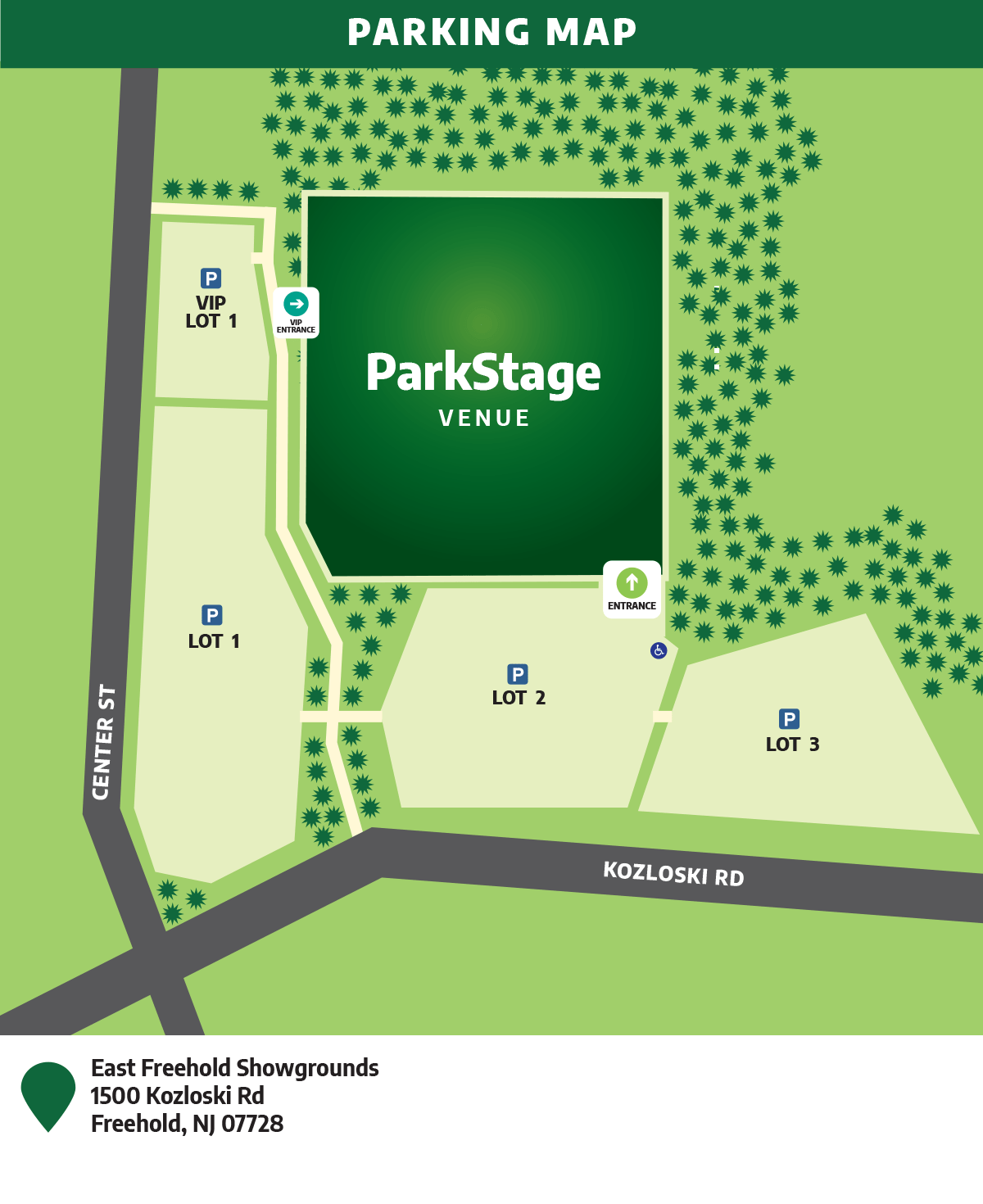
The chosen location at the East Freehold Park Fairgrounds places ParkStage at the center of one of New Jersey’s fastest-growing population corridors. With millions of residents living within a short drive, easy access via major roadways, and generous on-site parking, the venue is designed for convenience without sacrificing atmosphere. Plans call for VIP accommodations, thoughtful crowd flow, and a setting that blends open-air rural charm with contemporary event infrastructure. It’s a deliberate move to create a destination that feels both grand in scale and welcoming in spirit.

Local leadership has embraced the project as an opportunity to energize the surrounding communities. Every performance is expected to generate increased foot traffic for nearby businesses, restaurants, and shops, turning concert nights into full evenings out in Freehold. For the township and borough alike, ParkStage represents an economic engine and a platform to showcase everything the area has to offer, from hospitality to history.

Programming details will roll out in 2025, but early plans promise a diverse lineup of national and international headliners. Music will anchor the schedule, complemented by comedy and other large-format performances that broaden ParkStage’s appeal across age groups and interests. The goal is to build a seasonal calendar that draws repeat visitors, sustains regional tourism, and establishes a signature summer experience for New Jersey.

Beyond logistics and schedules, ParkStage carries cultural weight. It reinforces Monmouth County’s long-standing connection to the arts, from jazz heritage to contemporary performance, and extends that legacy into an open-air future. For fans of live shows, the venue will offer another gateway into New Jersey’s thriving music scene, adding a major new stage to an already vibrant statewide lineup.

As construction plans progress and anticipation builds, one thing is clear: ParkStage is poised to become more than a concert venue. It is a celebration of community, creativity, and shared experience, promising summer nights filled with sound, laughter, and connection under the New Jersey sky. When the lights rise in 2026, Freehold won’t just be hosting shows. It will be hosting a new tradition.

Sublime

0

Sublime Returns to New Jersey: A Legendary Sound Reborn for a New Generation

June 19 @ 7:00 PM 11:30 PM

A familiar sun-soaked rhythm is rolling back into the spotlight, and New Jersey fans are preparing to welcome it with open arms. Sublime, the genre-blending powerhouse that reshaped alternative music in the 1990s, is entering a new era of live performance and creative momentum. With original members Eric Wilson and Bud Gaugh reunited alongside a new frontman who carries both heritage and hunger, the band is proving that legacy can evolve without losing its soul.

For longtime listeners, Sublime has always represented more than a band. Their fusion of punk urgency, reggae ease, ska bounce, and hip-hop attitude built an unmistakable signature that crossed musical boundaries and cultural spaces. Their songs became beach anthems, skate park soundtracks, college dorm staples, and radio classics all at once. Decades later, those tracks still pulse through playlists, commercials, television shows, and film soundtracks, introducing fresh audiences to a catalog that refuses to age.

The group’s rebirth has added an emotional new dimension. Jakob Nowell, son of original frontman Bradley Nowell, now leads the band with a vocal tone that echoes his father’s spirit while bringing a fresh edge of his own. Rather than imitate, Jakob channels the essence of Sublime’s sound and pushes it forward, standing shoulder-to-shoulder with Wilson’s unmistakable bass lines and Gaugh’s driving percussion. The chemistry is real, the performances electric, and the response from fans immediate.

Their first major appearance together sparked national attention, igniting a wave of festival bookings and sold-out shows across North America. Television performances followed, including high-profile late-night sets and radio sessions that introduced this new chapter to millions of viewers and listeners. The band’s return isn’t built on nostalgia alone; it’s powered by creative output that feels current, energetic, and confident.

New releases have reinforced that message. Fresh material blends playful storytelling, emotional honesty, and rhythmic experimentation while still sounding undeniably like Sublime. Radio programmers have taken notice, pushing new tracks into heavy rotation and proving that the band’s relevance extends far beyond its classic hits. Meanwhile, timeless favorites continue to dominate streaming platforms, generating billions of plays and sustaining steady audience growth year after year.

On the touring circuit, Sublime is commanding major festival slots and headlining large-scale venues. Each performance bridges generations, drawing fans who first heard the band in the ’90s alongside younger listeners discovering them through games, shows, and viral clips. The crowds sing every word, the grooves feel eternal, and the band’s renewed chemistry keeps the experience thrilling rather than retrospective.

For New Jersey’s vibrant live entertainment scene, the band’s upcoming appearance represents more than another tour date. It’s a chance to witness a legendary catalog delivered with renewed energy, anchored by musicians who respect the past while writing the future in real time. As the state continues to celebrate its deep-rooted concert culture, fans can explore more stories, venues, and artist spotlights through Explore New Jersey’s music coverage, which highlights the performances shaping the local live experience.

Sublime’s story has always been one of resilience, individuality, and sonic exploration. Now, with a revitalized lineup and a creative surge pushing them forward, they are demonstrating that great music doesn’t fade — it reinvents. When they step onto the stage this summer, it won’t just be a concert. It will be the continuation of a cultural legacy that still knows how to move a crowd.

Count Basie Center for the Arts

732.842.9000

View Organizer Website

ParkStage

East Freehold Showgrounds – 1500 Kozloski Rd
Freehold, New Jersey 07728 United States
+ Google Map
View Venue Website

Delbarton’s Wrestling Dynasty Hits New Heights in the Quest for National Supremacy

On winter nights in Morristown, the roar inside Delbarton’s gym has become something more than school spirit. It’s the sound of a program operating at the peak of its powers, a team that has not only conquered New Jersey’s high school wrestling landscape but is now charging toward the rarefied air of national dominance. With a statement victory over Pennsylvania’s top-ranked powerhouse, Delbarton has firmly positioned itself as a legitimate contender for the number one spot in the country, a pursuit that has elevated the entire state’s wrestling reputation along with it.

For years, Delbarton has been synonymous with elite preparation, relentless conditioning, and a tradition that attracts top-tier talent. This season’s squad, however, feels different even by their lofty standards. Every weight class features depth, every dual meet carries an air of inevitability, and every opponent enters the mat knowing they face a lineup with championship expectations from top to bottom. The recent win over Pennsylvania’s best program was not just another mark in the win column; it was a benchmark performance that announced to the national wrestling community that New Jersey’s finest have evolved into a national force.

What separates this Delbarton team is balance. While many programs rely on a handful of standout wrestlers to carry the load, Delbarton thrives on total lineup strength. Lightweights showcase speed and technical precision, middle weights impose tactical control, and upper weights combine power with surprising agility. Coaches have emphasized match strategy as much as physical dominance, ensuring that even close bouts swing in Delbarton’s favor through preparation and situational awareness.

Behind the results is a culture built over decades. Training sessions are demanding, film study is routine, and younger wrestlers are mentored into the program’s expectations long before they step into varsity competition. Alumni involvement reinforces a sense of legacy, while the coaching staff’s commitment to continuous improvement keeps the team ahead of evolving national trends in technique and conditioning. This isn’t just a season-long surge; it’s the product of a system designed to sustain excellence year after year.

The victory over Pennsylvania’s top-ranked team served as a measuring stick against another wrestling-rich state, and Delbarton passed with authority. That performance has sparked national ranking discussions, with analysts now debating whether New Jersey’s powerhouse deserves the top slot in the country. Such recognition would mark a milestone not only for Delbarton but also for New Jersey high school wrestling as a whole, proving the state can produce programs that stand toe-to-toe with any in America.

Beyond rankings and records, the excitement surrounding this run has reignited interest in scholastic wrestling statewide. Younger athletes are watching closely, youth programs are seeing increased participation, and rival schools are raising their own standards to chase Delbarton’s benchmark. The ripple effect is strengthening the overall quality of competition throughout the region, further cementing New Jersey’s place on the national wrestling map. Readers looking to follow the broader rise of scholastic athletics can explore more coverage of New Jersey’s high school sports through ongoing features spotlighting standout programs and athletes across the state.

As postseason tournaments approach, pressure will intensify. Every dual meet, invitational, and championship bout now carries the weight of expectation. Yet if the season so far is any indication, Delbarton thrives under that spotlight. Their wrestlers step onto the mat with composure, confidence, and a collective belief that they belong at the very top of the sport.

In a state proud of its wrestling heritage, Delbarton’s current run feels like a defining chapter. They are no longer just the team to beat in New Jersey. They are a program chasing history, determined to bring national recognition home to Morristown and redefine what a high school wrestling powerhouse can be.

Deep Freeze Grips New Jersey as Arctic Air Settles In and Another Coastal Snow Threat Emerges

Historic cold follows major winter storm while forecasters track a potential weekend nor’easter that could once again reshape the state’s weather landscape

New Jersey is locked in the coldest stretch of the winter season as an arctic air mass pours across the region following a powerful snowstorm that buried parts of the state under nearly a foot and a half of snow. What began as a dramatic weekend storm has now evolved into a prolonged deep freeze, creating dangerous outdoor conditions, icy travel hazards, and mounting anticipation over another possible coastal storm looming on the horizon.

Sunshine and bright skies may offer a visual calm today, but temperatures tell a different story. Daytime readings are struggling to climb out of the lower 20s, with many communities seeing highs that barely reach the low-to-mid 20-degree range. As the sun sets, clear skies will allow temperatures to plunge even further, dropping into the single digits statewide. In elevated areas of northwest New Jersey, readings may fall below zero overnight. Wind chills between negative 10 and negative 15 degrees are creating a serious risk of frostbite and hypothermia, prompting cold weather advisories that remain in effect into midweek.

This is not a brief cold snap. Forecasters indicate that the arctic high pressure system responsible for this outbreak will remain anchored over the region through the end of the week. Wednesday continues the frigid trend, with daytime temperatures hovering in the low-to-mid 20s and overnight lows again sinking into the single digits. Thursday appears even colder, with potential near-record lows as nighttime readings dip toward the mid-single digits. Friday offers little relief, maintaining subfreezing daytime highs and bitter overnight cold that keeps roadways icy and snowpack frozen in place.

The storm that delivered the weekend snowfall was not an ordinary winter system. Atmospheric patterns aligned perfectly to funnel polar air southward while a phased storm system tracked up the East Coast, drawing moisture into an environment primed for heavy snow. Central and northern portions of the state experienced major accumulations, while southern areas saw intense snowfall before any changeover. The result was a high-impact winter event that triggered a statewide emergency declaration, suspended transit operations, and left lingering travel concerns even after plows cleared primary roads.

Now, as the atmosphere resets, attention turns to the next potential chapter in this volatile winter pattern. Global forecast models are signaling the development of another powerful coastal storm late Saturday into Sunday. Early indications suggest a classic nor’easter setup, with a surface low forming in the southern United States and tracking northward along the East Coast. Whether that storm stays offshore or hugs closer to the coastline will determine if New Jersey sees another round of significant snow, a mixed precipitation event, or a near-miss that spares the state.

At this stage, confidence in the exact track remains moderate, but the broader signal for storm development is strong. Even a modest shift in the upper-level pattern could pull the system toward the coast, opening the door for additional snow accumulations and gusty winds. Coastal communities could also face the risk of tidal flooding if the storm intensifies near shore. Forecast guidance continues to fluctuate run-to-run, a normal trait when a system remains several days away, but the pattern itself supports the possibility of another impactful winter event.

For now, the immediate concern remains the cold. With temperatures staying well below freezing all week, untreated roads will remain icy, snowbanks will not melt, and exposed skin can freeze in minutes under strong winds. Residents are urged to limit prolonged outdoor exposure, ensure pets are protected, and check heating systems as energy demand spikes across the region.

New Jersey’s winter story is far from over. A punishing cold wave has settled in, and the potential for another major snowmaker looms as the weekend approaches. As conditions evolve, updated Weather Report coverage will continue tracking temperature trends, storm developments, and travel impacts statewide.

One thing is certain: the Garden State remains in the heart of winter’s most aggressive phase, and the coming days will test both endurance and preparedness across every corner of New Jersey.

Bridging the Distance: New Intercom Technology Transforms Communication in New Jersey Senior Living

In senior housing communities, feeling connected is more than a convenience — it is a cornerstone of safety, independence, and dignity. Across nine senior living facilities, a new communications upgrade is quietly reshaping daily life, ensuring residents never miss a visitor, a delivery, or an important call for help. Through an innovative deployment by AVLinkPro, aging buildings that once relied solely on traditional telephone infrastructure now support modern IP video intercoms without abandoning landline calling. The result is a future-ready system that meets residents where they are, blending familiar technology with next-generation capability.

For many senior living communities, upgrading security and communication tools presents a unique challenge. Residents are comfortable with traditional telephones, staff are trained on legacy systems, and budgets demand practical solutions rather than costly overhauls. AVLinkPro’s approach answered those concerns with a hybrid design that allows IP-based video intercom stations at building entrances to ring residents directly through their existing landline phones. Visitors can be seen and spoken to through modern video units, while residents respond using the phones they already trust. No steep learning curve, no disruption — just an immediate improvement in access and awareness.

This system delivers more than convenience. It strengthens building security by giving residents visual confirmation of who is requesting entry. It streamlines staff response by centralizing call routing. It also reduces missed connections, an often-overlooked issue in senior living where unanswered calls can lead to confusion or concern. With clearer communication channels, facilities can operate more efficiently while residents gain greater confidence in their environment.

Behind the scenes, the technology is built for longevity. Internet protocol intercom infrastructure ensures these communities are prepared for future digital expansion, remote monitoring possibilities, and integration with emergency alert systems. At the same time, continued landline compatibility ensures no resident is left behind in a transition to newer tech. This balanced design recognizes that modernization in senior care must be thoughtful, inclusive, and respectful of real-world habits.

The installation across nine separate facilities also demonstrates how scalable solutions can be applied statewide. Each property has its own layout, staffing model, and resident population, yet the system adapts without requiring full reconstruction. That scalability matters as New Jersey’s senior population continues to grow, increasing demand for housing that supports independence without compromising safety.

The impact of thoughtful communication design extends into overall resident wellbeing. Clear, reliable access to building entry systems reduces anxiety. Quick response pathways contribute to a sense of personal security. And technology that feels intuitive rather than intimidating encourages residents to engage rather than withdraw. These improvements align with broader efforts across the state to enhance quality of life for older adults, a topic explored further through Explore New Jersey’s health and wellness coverage spotlighting services and innovations that support aging communities.

AVLinkPro’s deployment illustrates a larger trend in senior living: technology serving people, not the other way around. As intercom systems evolve from simple buzzers into smart communication hubs, the goal remains human connection — ensuring that residents feel reachable, visible, and in control of their space.

In a time when senior housing providers are asked to deliver higher levels of safety, comfort, and care with limited resources, solutions like this stand out. They respect tradition while embracing progress. They reduce operational strain while empowering residents. And most importantly, they remind us that innovation is most meaningful when it quietly improves everyday life.

Across New Jersey’s senior living landscape, that quiet transformation is already ringing through the halls — one answered call at a time.

High-Stakes CD-11 Democratic Race Ignites Debate Over Attack Ads, Outside Influence, and Political Transparency in New Jersey

Candidates clash over controversial television spot, dark money spending, and the future of campaign accountability in pivotal congressional contest

A fiercely competitive Democratic primary in New Jersey’s 11th Congressional District has taken a dramatic turn as candidates confront the growing influence of outside-funded attack advertising, sparking a broader debate about truth in political messaging, campaign transparency, and the expanding role of independent spending in modern elections.

The controversy centers on a recently launched television ad funded by a national political action committee that accuses former Congressman Tom Malinowski of supporting federal immigration enforcement policies through a 2019 House vote. The claim has been widely challenged as misleading, linking Malinowski’s support for a bipartisan bill containing humanitarian aid and enhanced border management provisions to present-day enforcement actions. Every Democratic member of New Jersey’s congressional delegation supported that legislation at the time, including the representative whose seat Malinowski now seeks to fill.

The ad’s release has roiled an already crowded field of eleven Democratic contenders vying to represent one of the state’s most closely watched districts. During a virtual candidate forum hosted by a Morris County Jewish Democratic group, contenders were given the opportunity to weigh in on the ad and the role of external spending in shaping the race. What followed revealed sharp ideological differences on campaign ethics, political influence, and party unity.

Malinowski addressed the issue directly, calling the ad a deliberate distortion designed to inflame voters rather than inform them. He argued that misrepresenting legislative records to score political points undermines democratic discourse and urged his opponents to publicly denounce deceptive campaign tactics regardless of who benefits from them.

Several candidates took firm positions. Progressive voices in the field condemned the ad and criticized national political organizations for injecting massive sums of money into local races. Others described the spot as harmful to voter trust, arguing that relentless negative advertising risks disengaging the electorate at a moment when participation is essential.

Not all contenders issued direct denunciations. Some instead pivoted toward broader concerns about unlimited independent expenditures, referencing the lasting impact of federal court rulings that opened the door to unrestricted third-party political spending. Their comments reflected growing unease among voters across the political spectrum about the role of so-called dark money in elections.

Meanwhile, additional dynamics are shaping the contest. Several candidates are positioning themselves as strong advocates for community engagement, civil rights protection, and bipartisan cooperation, while others are emphasizing experience in government operations and economic development. The open seat—created by a recent gubernatorial transition—has attracted heightened national attention, increasing fundraising pressure and intensifying media scrutiny.

Political observers note that the controversy surrounding the ad has become a flashpoint for a much larger question: how future campaigns in New Jersey will balance aggressive messaging with factual integrity. The answer may influence not only this primary, but statewide approaches to campaign regulation, disclosure requirements, and public confidence in election processes.

As candidates continue to campaign across suburban communities in Morris and Essex counties, voters are now assessing more than policy positions. They are evaluating character, transparency, and commitment to ethical governance. The outcome of the CD-11 primary will help determine the district’s direction in Washington, but it may also send a message about how New Jersey voters expect campaigns to be conducted in an era of escalating political advertising and complex Legislation surrounding campaign finance.

With Election Day approaching, one thing is certain: this race has evolved beyond a standard primary. It has become a referendum on the future of political accountability in New Jersey—and how far candidates and their supporters are willing to go to win.

New Jersey Literacy Strategist Lily Laux Brings Proven Instruction Models, New Jersey Charter Schools & Saint Elizabeth University Lands Landmark $2 Million Endowment

Transformative gift positions New Jersey university as emerging leader in educator and mental health workforce development. New Jersey Eyes Reading Revolution as Literacy Strategist Lily Laux Brings Proven Instruction Models East

Architect of Texas reading reform could influence how Garden State schools reshape literacy, teacher training, and student achievement

A quiet but potentially transformative shift is emerging in New Jersey’s academic landscape as literacy strategist Lily Laux, recognized for helping implement the “science of reading” framework in Texas, enters conversations that could reshape how the Garden State approaches early literacy. Her track record in restructuring statewide reading instruction has drawn attention from education leaders eager to modernize classroom practices, improve comprehension outcomes, and close long-standing achievement gaps.

The science of reading movement centers on evidence-based instruction rooted in cognitive research on how children learn to decode, comprehend, and retain language. In Texas, Laux played a key role in embedding these principles into curriculum standards, teacher training, and district-level accountability systems. The result was a shift away from loosely structured reading models toward explicit phonics, vocabulary development, and systematic comprehension strategies. Education analysts credit this transition with strengthening early literacy performance and creating clearer benchmarks for teacher preparation programs.

For New Jersey, the timing is notable. Districts across the state continue to refine reading instruction in response to changing student needs, post-pandemic learning disruptions, and renewed emphasis on early-grade literacy as a predictor of long-term academic success. Introducing leadership with direct experience in large-scale reading reform opens the door for accelerated progress rather than incremental change.

Should Laux’s methods influence New Jersey policy, schools could see expanded professional development for educators, new certification requirements focused on evidence-based literacy teaching, and updated classroom materials aligned with scientific reading research. Teacher preparation programs at universities may also adapt coursework to reflect these standards, ensuring new educators enter classrooms fluent in data-driven instruction techniques.

The implications extend beyond elementary classrooms. Strong foundational literacy skills improve outcomes in every subject area, from math problem-solving to science comprehension and critical thinking. By prioritizing structured reading methodologies, New Jersey could strengthen graduation rates, reduce intervention costs, and expand long-term workforce readiness.

Parents and caregivers are also increasingly engaged in discussions about reading instruction, seeking transparency in how schools teach literacy and how progress is measured. A statewide pivot toward the science of reading offers clearer expectations, measurable benchmarks, and consistency across districts. That clarity could help families better support reading development at home, reinforcing classroom gains.

Higher education institutions, advocacy organizations, and policy leaders are already exploring how best to align with next-generation literacy strategies. As New Jersey continues to invest in evolving Education initiatives, the potential integration of proven reading science frameworks positions the state to become a regional leader in literacy excellence rather than a follower of national trends.

While any large-scale instructional shift requires thoughtful rollout, funding alignment, and teacher support, the presence of an experienced architect of reading reform creates momentum. If New Jersey embraces these evidence-based practices with the same commitment demonstrated in Texas, the outcome could redefine how reading is taught, learned, and mastered statewide.

In a competitive national landscape where student performance metrics increasingly influence economic growth and social mobility, New Jersey’s willingness to innovate in literacy instruction may prove to be one of its most consequential education decisions in years to come.

Saint Elizabeth University has taken a decisive step forward in shaping New Jersey’s future classrooms and counseling offices. The Morristown-based institution has secured a $2 million endowment dedicated to expanding scholarships and academic programming in early childhood education and psychology, a transformational investment that strengthens the pipeline of educators and mental health professionals at a time when both fields face critical statewide demand.

The endowment is designed to directly support students preparing for careers in early learning instruction, developmental education, school counseling, and psychological services. University leaders say the gift will increase scholarship availability, enhance specialized coursework, and broaden experiential learning opportunities that place students in real-world classroom and clinical environments before graduation. In practical terms, the funding allows Saint Elizabeth to attract high-achieving candidates, retain promising students, and graduate professionals ready to enter a workforce that urgently needs them.

Early childhood education has become a focal point in New Jersey’s broader academic strategy, with policymakers and districts increasingly recognizing that strong literacy and developmental foundations shape lifelong learning outcomes. Saint Elizabeth’s expanded investment in this discipline places the university in alignment with statewide efforts to strengthen education initiatives from preschool onward, giving future teachers the training, tools, and confidence to deliver measurable results. Those following evolving education priorities across the state will find this development a significant boost to New Jersey’s growing emphasis on Education innovation.

Psychology and mental health training represent the second pillar of the endowment’s impact. As schools and communities respond to rising awareness of student wellness, trauma-informed teaching, and behavioral health needs, the demand for qualified counselors and clinical professionals continues to surge. Saint Elizabeth’s enhanced psychology programs aim to prepare graduates who are not only academically grounded but also equipped with hands-on experience and ethical practice standards essential in modern mental health care.

University officials describe the endowment as a long-term commitment rather than a one-time contribution. The fund will generate recurring support year after year, ensuring sustained growth in program offerings, faculty resources, and student services. This financial stability allows Saint Elizabeth to plan boldly, invest strategically, and maintain a competitive academic environment that draws students from across New Jersey and beyond.

The announcement arrives amid broader conversations about how reading instruction, early literacy frameworks, and evidence-based teaching methods can reshape statewide academic performance. National models have shown that implementing structured reading science and data-driven instruction can produce dramatic gains, and institutions that prepare future teachers to master these approaches are quickly becoming central to education reform. By expanding its early childhood education focus, Saint Elizabeth places itself at the forefront of preparing the next generation of educators capable of modernizing New Jersey’s classrooms.

Founded with a mission centered on service and professional excellence, Saint Elizabeth University has steadily evolved into a regional force in health sciences, education, and human services training. The new endowment reinforces that trajectory, offering students greater access, stronger mentorship, and enhanced career readiness. For aspiring educators and psychologists seeking a university that pairs academic rigor with purpose-driven preparation, Saint Elizabeth’s latest milestone sends a clear message: New Jersey’s future professionals are being built here, with vision, investment, and ambition to match the state’s growing needs.

New Era for New Jersey Charter Schools as Sweeping Law Ushers in Transparency, Accountability, and Modern Oversight. State’s first major charter school reform in three decades reshapes governance, budgeting, and public confidence in alternative education

New Jersey has entered a defining moment in public education policy with the passage of a comprehensive charter school modernization law, marking the first significant overhaul of charter regulations in more than 30 years. Signed as one of former Governor Phil Murphy’s final legislative acts, the new framework signals a decisive shift toward stronger accountability, enhanced financial transparency, and closer alignment between charter institutions and the communities they serve.

For decades, charter schools have occupied a unique position in New Jersey’s educational landscape, offering specialized learning models and flexible administrative structures while receiving public funding. Yet the regulatory system governing them had remained largely unchanged since the sector’s inception. As enrollment grew and budgets expanded, so did calls for updated oversight. The newly enacted reforms answer that demand, establishing a modern governance structure designed to meet today’s expectations for fiscal responsibility and public engagement.

At the heart of the legislation is a sharpened focus on budget transparency. Charter schools will now face increased public disclosure requirements, ensuring taxpayers, parents, and local officials can clearly see how public funds are allocated and spent. Financial reporting standards have been strengthened, audit processes refined, and oversight mechanisms expanded to prevent misuse of resources and encourage long-term sustainability. These measures are intended not only to safeguard public investment but also to reinforce public trust in schools that operate with taxpayer support.

The law also introduces updated accountability benchmarks tied to academic performance and operational integrity. Charter operators will be required to demonstrate measurable student outcomes alongside sound financial management. Renewal decisions will now factor in community impact, equitable enrollment practices, and compliance with state education standards. This integrated approach reflects a broader philosophy that innovation in schooling must coexist with rigorous public responsibility.

Supporters of the reform describe it as a recalibration rather than a restriction, maintaining the creative flexibility that defines charter education while reinforcing the guardrails that protect students and taxpayers alike. By modernizing oversight without dismantling autonomy, New Jersey aims to preserve choice-driven education options while ensuring consistent quality across districts.

Parents and families stand to benefit from clearer access to school performance data, budget summaries, and governance decisions. This visibility encourages informed decision-making when selecting educational pathways for children and fosters deeper engagement between schools and the communities they serve.

Educators and administrators will also see expanded guidance and professional development opportunities as schools adapt to updated compliance and reporting requirements. The transition period is expected to include collaborative planning between state officials and charter networks to ensure smooth implementation without disrupting classroom instruction.

Beyond immediate policy effects, the reform reflects a broader statewide commitment to evolving Education priorities in step with changing student needs, financial realities, and public expectations. As districts seek innovative teaching models and personalized learning environments, charter schools remain an integral part of New Jersey’s academic ecosystem. The updated law ensures they move forward with stronger foundations, clearer accountability, and renewed legitimacy in the eyes of the public.

In an era where educational outcomes directly shape workforce readiness and economic competitiveness, New Jersey’s charter school modernization marks more than a legislative update. It represents a strategic investment in trust, transparency, and the long-term credibility of alternative public education across the state.


New Jersey Mourns Produce Pete: The Voice Who Made Fresh Food a Family Tradition

New Jersey has lost one of its most recognizable and beloved personalities. Peter “Produce Pete” Napolitano, the longtime television fixture who turned fruits and vegetables into must-watch weekend storytelling, has passed away at the age of 80. For more than three decades, his warm presence on Saturday mornings felt like an invitation into the kitchen of a trusted neighbor, offering guidance, humor, and a deep respect for food that connected generations across the tri-state area.

Napolitano’s television career began not with a media ambition, but with a shopkeeper’s instinct to share knowledge. Viewers came to know him through his signature produce segments, where he highlighted what was in season, explained how to choose the best items, and paired them with practical recipes often inspired by meals prepared alongside his wife, Bette. The segment’s charm was never just about cooking. It was about family tables, neighborhood markets, and the small rituals that make food meaningful.

Though he became a familiar face on New York and New Jersey television screens, Napolitano’s roots were firmly planted in Bergenfield. Born and raised in New Jersey, he learned the produce business from his father, an Italian immigrant who built a livelihood selling fruits and vegetables door to door before opening a neighborhood produce market in the late 1950s. Pete spent decades working in that family business, absorbing not only product knowledge but also the rhythm of customer conversations, the importance of relationships, and the pride of running a local shop. Those experiences later became the foundation of his on-air authenticity. He wasn’t performing expertise; he lived it.

His journey into broadcasting happened almost by accident. A customer recognized his gift for explaining food simply and passionately and encouraged him to appear on a short television spot. At first, Pete resisted. Running a business left little time for studio lights. But Bette recognized the opportunity, and her encouragement opened a door that would lead to a 33-year television run. From brief early segments to his long tenure on Weekend Today, Napolitano became a staple of Saturday mornings, welcoming viewers with enthusiasm that never felt scripted.

Over the years, his influence extended beyond television. He collaborated on food columns, sharing written reflections on everything from artichokes to cherries, always with a storyteller’s flair and a merchant’s precision. His voice resonated with readers who appreciated both practical tips and personal anecdotes. Whether describing the sweetness of a perfectly ripe melon or the heritage of a seasonal Italian dish, Pete’s writing mirrored the warmth of his broadcasts.

He was also an outspoken supporter of local agriculture. Napolitano often emphasized that strong local farms and strong local food businesses were inseparable. He believed New Jersey’s agricultural identity deserved preservation and celebration, even as farms became fewer and food distribution changed. His advocacy aligned with a broader appreciation for fresh, regional ingredients that continues to shape shopping and dining habits across the state. Readers exploring local food culture can find more about the evolving landscape of New Jersey grocery and produce traditions through Explore New Jersey’s coverage of supermarkets and food destinations, a space Pete himself helped inspire.

Beyond the public persona was a devoted family man. Pete and Bette met as teenagers, built a life together, raised two children, and welcomed seven grandchildren. His family often found its way into his storytelling, reinforcing the idea that cooking and produce weren’t just topics, but threads that bind generations. Viewers who tuned in each week felt they were part of that extended family, sharing in the comfort of familiar advice and friendly conversation.

His passing marks the end of an era in local media, but his legacy remains woven into the habits of countless households. He taught viewers how to pick a tomato, how to store herbs, how to savor citrus in winter — but more importantly, he reminded people to slow down, cook with care, and appreciate where food comes from. That combination of knowledge and heart made Produce Pete more than a television personality. He became a New Jersey institution.

As the state reflects on his life, one truth stands out: Pete Napolitano didn’t just talk about produce. He cultivated connection, tradition, and a shared love of food that will endure long after the cameras fade.

Willrich Precision Instruments Secures CMMC 2.0 Level 2 Certification, Strengthening New Jersey’s Role in Defense-Grade Manufacturing

Cybersecurity milestone positions Cresskill-based metrology leader at the forefront of secure precision technology and federal compliance

New Jersey’s reputation as a hub for advanced manufacturing and innovation just gained another powerful endorsement. Willrich Precision Instruments, a family-owned metrology and inspection authority headquartered in Cresskill, has officially achieved CMMC 2.0 Level 2 certification, a critical cybersecurity standard required for companies supporting sensitive Department of Defense programs. The designation not only elevates Willrich’s national standing but reinforces the state’s growing influence in high-security, high-precision industrial technology.

For more than five decades, Willrich Precision Instruments has quietly built a reputation as one of the most trusted names in measurement science. Founded in New Jersey in 1971 and originally operating from a spare room, the company has grown into a regional and national leader in gauging, metrology services, and custom inspection solutions. Today, its corporate offices and flagship showroom on Broadway in Cresskill serve as the command center for operations supporting aerospace, automotive, medical device, and defense manufacturers across the country.

The newly awarded CMMC 2.0 Level 2 certification places Willrich in a select group of companies qualified to handle controlled unclassified information for defense-related contracts. In an era where cybersecurity vulnerabilities can compromise national supply chains, the certification signals that Willrich’s internal systems, data handling practices, and operational infrastructure meet rigorous federal protection standards. For defense contractors seeking trusted partners, this achievement makes Willrich an increasingly indispensable link in the secure manufacturing ecosystem.

While cybersecurity compliance may seem worlds away from calipers and micrometers, modern metrology has become deeply intertwined with digital infrastructure, automation, and data-driven inspection platforms. Willrich’s certification underscores the company’s ability to deliver advanced measurement technologies without sacrificing data integrity or system security. This alignment of precision engineering and cyber resilience reflects the future of industrial innovation, where accuracy, automation, and information security coexist at the highest level.

Willrich’s impact in New Jersey extends far beyond compliance credentials. The company continues to serve manufacturers throughout the state with on-site calibration, ISO-accredited inspection services, and rapid repair of critical measurement equipment. Its equipment distribution portfolio ranges from traditional hand tools to cutting-edge Coordinate Measuring Machines, 3D laser scanning systems, and industrial CT scanners. For manufacturers pushing tolerances to microscopic limits, Willrich’s solutions ensure quality assurance remains exact, repeatable, and production-ready.

Custom engineering has also become a defining strength. Willrich designs and builds specialized gauging fixtures and automated inspection cells for complex manufacturing applications, tailoring solutions that reduce cycle times while increasing accuracy. These innovations help New Jersey-based producers remain globally competitive in industries where precision is non-negotiable.

Strategic partnerships with industry giants such as Mitutoyo, Nikon, and Renishaw further expand Willrich’s technological reach. Combined with its newly reinforced cybersecurity framework, these alliances position the company at the intersection of measurement science and secure digital integration, a space that continues to grow in relevance as factories adopt smarter, interconnected production systems.

As defense programs, medical manufacturing, and aerospace engineering increasingly rely on secure data-sharing environments, Willrich’s CMMC 2.0 Level 2 certification becomes more than a corporate milestone. It signals New Jersey’s expanding footprint in advanced manufacturing and industrial security, showcasing how legacy family-owned enterprises can evolve into next-generation technology leaders.

In a marketplace where precision and protection are equally critical, Willrich Precision Instruments stands as a model of how traditional craftsmanship, modern automation, and cybersecurity excellence can converge. For those tracking the state’s industrial evolution, the company’s achievement represents another strong step forward in New Jersey’s growing influence in the world of high-performance manufacturing and Technology innovation.

Historic Ring of Honor Celebration Tonight as Devils Fight Back Into the Playoff Picture Amid Injuries, Rumors, and Rising Young Talent

The New Jersey Devils are once again reminding the hockey world that nothing about this season will come easy. Late January has brought a mix of urgency, optimism, frustration, and intrigue as the team claws its way back into relevance following an uneven first half and the shockwaves left behind by the Quinn Hughes trade. A strong road trip restored belief, but a stumble in Seattle underscored how thin the margin for error has become. Every point matters now, every shift feels magnified, and every storyline surrounding this club seems to carry long-term implications.

A Night of Legacy and High Stakes Takes Center Ice in Newark. The Devils Welcome the Jets for a Season-Ending Clash and a Historic Ring of Honor Celebration.

Prudential Center will feel a little louder, a little prouder, and a lot more meaningful when the New Jersey Devils take the ice for their final showdown of the season against the Winnipeg Jets. This is not simply another game on the schedule. It’s an evening where present ambition meets cherished history, blending the thrill of live NHL competition with a tribute to one of the franchise’s most respected figures.

As the Jets arrive in Newark for the last head-to-head meeting of the year, the Devils step into the spotlight with both competitive urgency and ceremonial significance. The matchup promises intensity from the opening faceoff, as New Jersey looks to close its season series against Winnipeg with authority in front of a home crowd that has grown increasingly passionate with each passing season. Every shift, every shot, and every save carries weight, turning the game into a showcase of the Devils’ identity as a fast, relentless, and evolving contender in the league.

Before the puck drops, however, the arena’s focus will turn toward honoring a legacy that helped define Devils hockey. Former player and coach John MacLean will be inducted into the Devils’ Ring of Honor, a recognition reserved for individuals whose impact on the franchise transcends statistics and seasons. MacLean’s name is etched into the team’s history through both his scoring brilliance on the ice and his contributions behind the bench, making his induction a moment that bridges generations of fans.

For longtime supporters, MacLean represents a foundational chapter in the Devils’ journey from upstart organization to respected NHL franchise. His career embodied grit, intelligence, and loyalty, traits that continue to shape the culture of the team today. As the ceremony unfolds, the crowd inside Prudential Center will not just be applauding a former star; they will be celebrating decades of shared memories, hard-fought victories, and the enduring pride of New Jersey hockey.

The timing of this honor, paired with a crucial late-season game, creates an atmosphere that feels both reflective and forward-looking. Current Devils players will skate onto the ice inspired by the legacy being recognized just moments before, while fans old and new unite in appreciation of the team’s past and optimism for its future. It’s the kind of night that reminds everyone why hockey in New Jersey is more than a sport. It’s a community, a tradition, and a source of identity.

For visitors and locals alike, attending a game like this captures the full spectrum of what Devils hockey offers: elite-level action, heartfelt ceremony, and an arena pulsing with energy. Those following the team’s season and its growing influence across the state can explore deeper coverage and stories surrounding the New Jersey Devils as the franchise continues to build on its legacy.

As the final horn sounds and the night draws to a close, one thing will be certain. This won’t just be remembered as the Devils hosting the Jets. It will be remembered as the night New Jersey honored one of its own, celebrated its hockey heritage, and once again reminded the league that the heart of the Devils beats strongest at home.

Three wins in four games on the West Coast injected new life into the Devils’ postseason chase. The timing could not be more critical. The Metropolitan Division remains a traffic jam, and New Jersey sits in striking distance rather than safety. A loss to the Kraken halted momentum, but the overall trip reinforced that this roster still has the depth and skill to threaten anyone when structure and confidence align. The Devils return home aware that they cannot afford prolonged slumps again, yet encouraged that their ceiling remains high.

Rookie forward Lenni Hämeenaho has been one of the brightest revelations of the month. Thrust into meaningful minutes, he has brought energy, puck support, and a quiet confidence beyond his years. Skating alongside Cody Glass and Arseny Gritsyuk, Hämeenaho’s debut stretch has given New Jersey a line that can tilt possession and create sustained offensive pressure. For a team searching for consistency, his emergence has added a new dimension and hints at a longer-term solution to depth scoring questions.

While new faces rise, concern continues to orbit the franchise centerpiece. Jack Hughes is still producing, still creating, still driving play — yet analysts and observers have noticed subtle signs that his lingering hand injury may not be fully resolved. He continues to rack up points, but shot release, board battles, and puck protection have not always looked natural. The Devils’ success depends heavily on Hughes operating at full capacity, and how the medical staff manages his workload over the coming weeks could define the season’s outcome.

In goal, Jacob Markstrom’s play has invited scrutiny. Some nights he looks composed and reliable; others, rebounds linger and positioning wavers. The recent loss in Seattle brought renewed debate, though most goals against were born from breakdowns in front of him. Still, championship-level teams receive consistent goaltending, and the Devils know stability in the crease must improve if they expect to survive a playoff race that grows tighter by the day.

The blue line is another evolving storyline. A defensive logjam has forced difficult decisions, with younger talent pushing for permanent roles. Simon Nemec continues to show why the organization sees him as a foundational piece, and the coaching staff appears increasingly comfortable prioritizing development and mobility over veteran contracts. That reality has placed Dougie Hamilton in the center of league-wide speculation. A healthy scratch earlier this month sparked chatter, and with his agent navigating a limited trade list, Hamilton’s future in New Jersey remains uncertain. Ironically, his recent surge on the power play — including a string of multi-point efforts — has reminded everyone why teams would line up for his services if made available.

Injuries remain part of the equation. Luke Hughes’ absence has stretched defensive depth, forcing role adjustments and heavier minutes for others. Yet the team’s penalty kill has quietly become one of the league’s most efficient units since the new year, operating near the top of NHL rankings. That improvement has kept the Devils afloat during five-on-five inconsistencies and reinforces that coaching adjustments are taking hold.

The Seattle game itself told the story of a team still learning how to close. New Jersey struck first on a crisp power-play finish, moved the puck with confidence, and dictated long stretches of play. But missed opportunities piled up, blocked shots clogged shooting lanes, and a handful of miscommunications opened brief windows the Kraken converted. Despite late pressure and another power-play marker, the Devils left points on the table — the kind that loom large when standings tighten.

Yet perspective matters. A 3–1 road trip against Western Conference competition pulled New Jersey firmly back into the playoff conversation. The offense remains dangerous, the special teams are trending upward, and young contributors are stepping into meaningful roles. Trade rumors swirl around potential offensive reinforcements, including speculation about star-level additions across the league, though management has remained patient and measured so far.

This season’s Devils are not a finished product. They are a team in motion — balancing development with urgency, navigating injuries while demanding results, weighing roster futures against immediate need. What remains undeniable is that the talent is real, the belief has returned, and the next stretch of games will determine whether this resurgence becomes a true climb or another near-miss chapter in a season already full of twists.

For continuing coverage, analysis, and team features, readers can follow ongoing reporting through Explore New Jersey’s Devils coverage, where the story of this season continues to unfold game by game.

New Vision for Perth Amboy Waterfront: $200 Million Sea Gate Project Clears Final Hurdle

Historic shoreline set for transformation as sweeping redevelopment ushers in housing, public space, and long-awaited access to the Arthur Kill

Perth Amboy’s long-sealed industrial waterfront is poised for a dramatic rebirth. After years of planning and negotiations, city officials have granted full approval for Sea Gate, a $200 million redevelopment initiative that will convert a dormant 15-acre brownfield site into a vibrant residential and public destination. The project signals one of the most consequential waterfront transformations in Central New Jersey in decades, repositioning Perth Amboy as a city ready to reclaim its shoreline and redefine its future.

Led by Kushner Companies, the Sea Gate plan replaces a fenced-off, underutilized expanse of former industrial land with a five-building residential community featuring 602 market-rate rental residences. The development footprint spans multiple city blocks along Front, Commerce, Rector, Broad, High, and Fayette Streets, wrapping the Arthur Kill waterfront in new life, new energy, and long-overdue public access.

Beyond the housing itself, Sea Gate is designed as a true mixed-use neighborhood experience. Publicly accessible amenities form the heart of the project, including a continuous waterfront esplanade extending from Front Street to Washington Street’s bulkhead, landscaped plazas designed for community gatherings, a children’s playground, and a dedicated dog park. These outdoor spaces are funded by the redeveloper and will remain open to all residents and visitors, marking a shift from decades of restricted shoreline access to a future defined by openness and connection to the water.

Perth Amboy Mayor Helmin Caba praised the approval as a milestone moment for the city’s growth trajectory, noting that the plan was structured to benefit not only future residents of Sea Gate but the entire community. By transforming an environmentally challenged site that has generated minimal tax revenue into an active, high-value district, the city is securing both long-term economic vitality and a renewed relationship with its waterfront.

The financial framework behind the project reflects its scale and ambition. Under a long-term Payment in Lieu of Taxes agreement, Kushner Companies will contribute approximately $1.2 million annually to the city. This replaces a property that currently yields only a fraction of that figure in yearly revenue. In addition, the redeveloper has committed $1 million toward the construction or rehabilitation of affordable housing elsewhere in Perth Amboy, extending the project’s impact beyond the waterfront footprint.

Parking infrastructure has also been integrated into the design, with 909 spaces planned to accommodate residents and visitors while supporting broader commercial activity in the area. Construction is expected to progress over roughly three years, bringing sustained job creation and steady investment activity during the buildout period.

A distinctive element of the redevelopment agreement is its recognition of Perth Amboy’s historical legacy. The approved plan includes a memorial honoring Thomas Mundy Peterson, the city resident recognized as the first African American to vote in a U.S. election following ratification of the 15th Amendment in 1870. This tribute anchors the project not only in modern development but in the city’s enduring place in national history.

Environmental remediation and archaeological review will also play critical roles as redevelopment proceeds. The site’s legacy industrial conditions have limited its usability for decades, but the state-mandated cleanup and historical assessment process ensures both environmental responsibility and preservation of any historically significant materials uncovered during construction.

Sea Gate’s residential offering will consist entirely of one- and two-bedroom apartments, targeting a growing demand for modern waterfront living within commuting distance of major employment corridors. Combined with new public gathering spaces and waterfront connectivity, the project is expected to redefine how residents and visitors experience Perth Amboy’s shoreline.

For a city long separated from its own waterfront by fences and forgotten infrastructure, Sea Gate represents more than a development approval. It is a reclamation of space, identity, and opportunity. As Perth Amboy positions itself for a new chapter of growth, this landmark initiative stands as a defining moment in the city’s urban evolution and a significant addition to New Jersey’s expanding portfolio of waterfront redevelopment and Construction innovation.

EACR Inc. Brings High-Efficiency Electronics Recycling Pickup Services to Jersey City’s Business Community

Jersey City Companies Gain a Smarter, Safer Way to Recycle Electronics and Batteries Without Disrupting Operations

Jersey City’s business landscape just gained a powerful new sustainability ally. EACR Inc., a specialized electronics and battery recycling provider, has launched a dedicated commercial pickup service across the Jersey City region, giving local organizations a streamlined, secure, and regulation-ready solution for disposing of outdated technology and hazardous battery waste. As companies navigate growing environmental responsibilities and data-security expectations, this new service arrives as both a practical convenience and a compliance essential.

From office towers and healthcare facilities to schools, warehouses, and municipal departments, nearly every organization faces the same challenge: what to do with aging electronics piling up in storage rooms and back offices. Computers, monitors, printers, networking hardware, point-of-sale systems, and mobile devices all contain sensitive data components and environmentally harmful materials. Tossing them into standard waste streams is no longer acceptable under modern environmental standards, and self-transport to recycling centers is inefficient for busy operations. EACR’s scheduled pickup program solves that gap with door-to-door collection designed specifically for commercial clients.

What sets this initiative apart is its emphasis on security and simplicity. Businesses can arrange recurring or on-demand pickups that remove equipment directly from their premises with documented chain-of-custody procedures. This approach reduces data exposure risks, ensures proper material handling, and allows companies to maintain internal audit records for environmental reporting. For organizations subject to industry regulations or privacy requirements, this level of accountability is increasingly non-negotiable.

Battery recycling is another focal point of the new program. Lithium-ion packs, alkaline batteries, and industrial power cells present fire hazards and contamination risks when mishandled. EACR’s battery pickup service offers segregated collection, proper packaging protocols, and safe downstream processing that keeps dangerous materials out of landfills and prevents workplace safety incidents. For Hudson County businesses striving to meet sustainability goals, this service closes a critical compliance gap while minimizing liability.

The timing of the rollout reflects a broader movement within New Jersey’s commercial sector. Environmental stewardship has become more than a corporate buzzword; it’s a competitive advantage. Clients, partners, and consumers increasingly favor organizations that demonstrate measurable green practices. Proper electronics recycling is one of the most visible and achievable steps a business can take to prove environmental responsibility without major operational changes.

Jersey City, known for its dense commercial footprint and innovation-driven economy, is a natural fit for a program of this scope. High-rise office corridors, startup hubs, educational campuses, and healthcare institutions all generate continuous streams of electronic turnover. A local pickup-based model eliminates transportation headaches, reduces storage clutter, and transforms what was once a costly chore into a scheduled, predictable service.

EACR’s launch also strengthens the region’s circular economy efforts by redirecting recoverable metals, plastics, and components back into manufacturing supply chains. This reduces the demand for raw material extraction while keeping harmful substances out of soil and waterways. It’s a behind-the-scenes process that delivers visible community benefits, from cleaner neighborhoods to reduced landfill pressure.

For companies looking to align with statewide environmental initiatives and discover broader sustainability guidance, a range of helpful New Jersey resources are available to support business owners in navigating compliance, recycling standards, and green infrastructure opportunities. Access to localized insight remains key to staying ahead of evolving regulations.

As Jersey City continues to grow as a regional business powerhouse, services like EACR’s commercial electronics and battery pickup program mark an essential step forward. By making responsible disposal effortless, secure, and verifiable, the company is helping redefine how urban enterprises handle technology lifecycle management. For organizations determined to operate smarter, safer, and more sustainably, this new initiative delivers exactly what modern business demands.

Orpheus Chamber Orchestra & Stella Chen Seasons Of Change

0

January 27 @ 7:00 PM 11:30 PM

Orpheus Chamber Orchestra and Stella Chen Deliver an Evening of Masterful Classical Music in New Jersey

Classical music enthusiasts will have an extraordinary opportunity to experience the GRAMMY Award-winning Orpheus Chamber Orchestra in concert with celebrated violinist Stella Chen on Tuesday, January 27, 2026, at 7:00 p.m. Known for their innovative approach and collaborative artistry, this performance promises an evening of dynamic, high-energy classical music at its finest.

Since its founding, the Orpheus Chamber Orchestra has distinguished itself by performing without a conductor, a rare approach that demands precision, communication, and shared musical vision. Their performances are renowned for “edge-of-the-seat intensity” and an “infectious love for making music,” as described by The New York Times, bringing a unique energy and intimacy to every stage they grace. Audiences can expect a seamless blend of technical mastery, expressive phrasing, and inspired interplay between the musicians.

Joining the orchestra is violinist Stella Chen, whose artistry has captivated audiences worldwide. Known for her brilliant technique, emotive interpretations, and dynamic stage presence, Chen brings a rare combination of technical skill and expressive depth, making her collaboration with Orpheus particularly compelling. Together, they promise a program that will explore both the subtle nuances and the exhilarating heights of chamber music, delivering a concert experience that is as intellectually stimulating as it is emotionally resonant.

The performance also reflects New Jersey’s continued role as a hub for exceptional live music. The state’s vibrant cultural scene hosts a diverse array of concerts, from classical chamber performances to contemporary ensembles, providing audiences with opportunities to experience world-class musicians without leaving the Garden State. Explore New Jersey’s music coverage highlights these events, keeping readers informed about noteworthy performances and unique musical experiences across the state.

Attendees of this concert will witness not only technical brilliance but also the profound artistry that defines Orpheus Chamber Orchestra and Stella Chen. The evening promises a rare, immersive experience in chamber music, perfect for both longtime classical aficionados and new listeners eager to explore the depth and excitement of live orchestral performance. This January concert stands as a testament to the power of collaboration, musical excellence, and the enduring appeal of classical music in New Jersey.

The Morris Museum

(973) 971-3700

View Organizer Website

ParkStage

East Freehold Showgrounds – 1500 Kozloski Rd
Freehold, New Jersey 07728 United States
+ Google Map
View Venue Website

Governor Mikie Sherrill Sworn In as New Jersey’s 57th Governor, Launches Bold Early Agenda Amid Controversy

TRENTON, N.J. — Democrat Mikie Sherrill officially assumed office as New Jersey’s 57th governor on January 20, 2026, marking the beginning of a new chapter in the state’s political landscape. In her first week in office, Sherrill has signaled a proactive and decisive approach, implementing immediate policy measures, assembling key leadership teams, and addressing pressing national issues that have reverberated in New Jersey.

Among her earliest actions, Governor Sherrill instituted a regulatory freeze on new state rules and policies, providing her administration time to evaluate ongoing programs and ensure that new regulations align with her priorities for transparency, efficiency, and economic growth. She has also announced several high-profile appointments, including naming Jill Hirsch as chair of the New Jersey Sports & Exposition Authority, a role that will oversee some of the state’s most high-profile venues and events. Sherrill emphasized that these appointments reflect her commitment to modernizing state operations while fostering economic development and public accountability.

Governor Sherrill’s early days in office have coincided with renewed scrutiny of the state legislature. New Jersey lawmakers recently approved a 67% pay increase, a move that has drawn significant public attention and debate. Critics argue that the timing of such raises is politically sensitive as Sherrill begins her term, while supporters contend that the adjustment ensures that legislative salaries keep pace with responsibility and cost-of-living increases. The governor has commented on the development, emphasizing her commitment to balanced governance and fiscal responsibility while navigating these early controversies.

In addition to state-focused priorities, Sherrill has weighed in on national incidents that resonate with New Jersey residents. In response to the fatal shooting of Alex Pretti in Minneapolis by federal ICE agents, the governor condemned the operation as reckless and unaccountable. “These untrained, masked agents aren’t making communities safer — they’re occupying cities, inciting violence, and violating the Constitution,” Sherrill said in a public statement. She also referenced the previous death of Renee Good, a mother of three, underscoring her call for federal accountability and stricter oversight of law enforcement actions. The statement has sparked conversations across New Jersey about federal authority, local safety, and the role of government in protecting civil liberties.

Governor Sherrill’s first week has also included engagement with local communities and lawmakers to address issues ranging from public safety to immigration policy. Assemblyman Paul Kanitra of Ocean County joined her administration this week as a guest co-host for public forums and outreach events, participating in discussions that ranged from immigration and law enforcement accountability to lighter cultural touchpoints such as local dining traditions, including White Castle “date nights,” and community engagement in historic sites and seasonal events. These appearances highlight Sherrill’s approach of blending policy-focused leadership with accessible public dialogue, seeking to connect with residents across the state while tackling serious legislative and social matters.

The new governor faces immediate challenges as she balances ambitious policy goals with pressing public concerns. From illegal immigration and federal oversight to state infrastructure and economic development, Sherrill is positioning herself as an active, vocal leader who is not afraid to confront both local and national issues. Analysts note that her early actions, particularly the regulatory freeze and high-profile appointments, signal a governance style focused on strategic control, accountability, and deliberate reform.

For New Jersey residents following political developments, Sherrill’s administration has emphasized regular public updates and engagement with state and local communities. Citizens are encouraged to track legislation, appointments, and policy shifts through the state’s official announcements and through comprehensive political coverage available on Sunset Daily News New Jersey.

As the legislative session continues and Sherrill navigates the first months of her term, observers anticipate further decisive action on key issues including government transparency, social equity, and public safety, with the governor’s statements on national incidents highlighting her willingness to address both New Jersey and federal matters head-on.

Saddlehill Winery Puts New Jersey on the National Wine Map With Prestigious Red Blend Award

East Coast Estate Winery Triumphs at the 2026 San Francisco Chronicle Wine Competition

Voorhees, New Jersey—Full disclosure is that I have never tried any of these wine’s yet, however I will soon. If you set that aside please, in what I call a remarkable achievement that highlights the growing prominence of East Coast winemaking, let alone within 2 miles from my house, the Saddlehill Winery has earned top honors at the 2026 San Francisco Chronicle Wine Competition, taking home the coveted “Best of Class” award for its 2023 Renegade Red Blend. Competing against more than 5,500 entries from North America’s leading wine regions, this accolade marks a historic milestone for both Saddlehill and New Jersey’s wine community.

Saddlehill Winery, known for its meticulously cultivated estate vineyards and commitment to high-quality craftsmanship, distinguished itself in a field traditionally dominated by West Coast giants from Napa and Sonoma. The 2023 Renegade Red Blend impressed a panel of over 35 professional judges with its balance, depth, and complexity, earning it the singular distinction of East Coast Best of Class in the red blend category. With Virginia and other emerging regions claiming accolades in select varietals, Saddlehill stands alone as the only winery on the entire eastern seaboard to secure this top honor in 2026.

“This recognition is a monumental moment for the New Jersey wine industry,” said Bill Green, owner of Saddlehill Winery. “To represent the East Coast as the sole Best of Class Red Blend winner in a competition of this scale demonstrates the quality and vision that our team brings to every bottle. Winemaker Peter Szerdahelyi’s skill and dedication have been instrumental in achieving this level of excellence.”

The winery’s performance at the competition was further strengthened by a series of additional medals, underscoring the breadth of its portfolio:

  • Best of Class: 2023 Renegade (Red Blend)
  • Gold: 2023 Proprietor’s Blend (Red Blend)
  • Silver: 2023 Merlot
  • Bronze: 2023 Reserve Chardonnay

The San Francisco Chronicle Wine Competition, often described as the “Super Bowl” of the wine industry, conducts rigorous blind tastings to ensure impartial evaluation, making each medal a reflection of both technical precision and artistic expression. Winners, including Saddlehill’s Renegade, will be showcased at the Public Tasting event at Fort Mason Center in San Francisco on March 7, 2026, offering a rare opportunity for enthusiasts to sample the nation’s best wines in one setting.

Saddlehill’s success has not only elevated the profile of New Jersey wines nationally but has also reinforced the state’s potential as a premier wine-producing region. Under the guidance of Winemaker Peter Szerdahelyi, the estate combines traditional European techniques with modern viticulture innovations, creating wines that marry complexity with approachability. The 2023 Renegade exemplifies this philosophy, offering layers of rich fruit, nuanced tannins, and a finish that reflects both precision and character unique to Saddlehill’s terroir.

For visitors eager to experience these award-winning vintages firsthand, Saddlehill’s tasting room in Voorhees offers a curated exploration of the winery’s full portfolio. Guests can enjoy guided tastings, seasonal events, and vineyard tours that reveal the artistry and dedication behind each bottle. For those unable to visit in person, the winery provides online ordering and shipping to 42 states, making it easy to enjoy Saddlehill’s nationally recognized wines from anywhere.

Saddlehill’s achievement also underscores New Jersey’s growing recognition in the broader American wine landscape. With a focus on estate-grown grapes, careful blending, and rigorous quality control, the winery is contributing to a shift in perception—positioning New Jersey not just as a regional producer but as a contender on the national stage. The success of the Renegade Red Blend serves as both a benchmark for excellence and an invitation to wine lovers to explore the state’s rich viticultural potential.

Beyond its accolades, Saddlehill Winery embodies a larger commitment to the craft and culture of wine in New Jersey. The estate’s dedication to sustainability, vineyard stewardship, and community engagement reflects a modern vision for East Coast winemaking—one that values both heritage and innovation. Whether sampling a bold red blend, a crisp Chardonnay, or one of its seasonal releases, visitors are offered a window into the artistry that has earned Saddlehill its place among North America’s elite wineries.

For wine enthusiasts and collectors alike, exploring New Jersey’s award-winning wineries, including Saddlehill, provides a unique opportunity to experience the rising caliber of East Coast viticulture. Those seeking additional options and local insights into the state’s expanding wine and beverage scene can also explore New Jersey’s curated dispensary and specialty beverage resources for comprehensive listings and recommendations.

Saddlehill Winery’s triumph at the 2026 San Francisco Chronicle Wine Competition is more than a personal achievement—it is a statement that New Jersey wines have arrived on the national stage, offering both quality and character that rival the most storied regions of the United States. As the estate continues to innovate and expand, wine lovers across the nation now have one more reason to raise a glass to the Garden State.

Jersey City Launches “Coco” Delivery Robots in Heights Neighborhood, Pioneering Sidewalk Automation

JERSEY CITY, N.J. — Jersey City has officially welcomed a new era of food and grocery delivery with the launch of “Coco,” a fleet of autonomous sidewalk delivery robots now roaming the Jersey City Heights neighborhood. This pilot program, which marks the company’s first expansion into New Jersey, introduces a cutting-edge approach to last-mile delivery while blending technology, sustainability, and urban convenience.

Each Coco robot weighs approximately 100 pounds and is designed with a bright pink, cooler-like exterior that makes it instantly recognizable. Equipped with 90 liters of insulated storage, a single unit can transport up to four grocery bags or six extra-large pizzas, keeping items secure and temperature-controlled throughout the delivery. The robots are entirely electric, producing zero emissions and underscoring Jersey City’s commitment to environmentally friendly innovation.

Coco navigates sidewalks at speeds up to 5 mph, relying on AI-assisted navigation, LiDAR sensors, and onboard cameras to perceive obstacles in all directions. While the robots are autonomous, they are closely monitored by remote human “pilots” who can intervene in complicated or crowded situations, ensuring both safety and efficiency. To address privacy concerns, Coco’s cameras automatically blur faces and license plates, and the company states that no personal information is stored during deliveries.

The delivery process is streamlined for convenience. Coco integrates with major platforms such as Uber Eats and DoorDash, allowing customers to place orders directly through their preferred apps. Once a restaurant loads the order into Coco’s secure cargo bay, the robot sets off to its destination. Customers unlock their delivery using a unique code or app authorization at the closest curbside drop-off point, as Coco does not enter buildings. Currently, the robots operate within roughly a one-mile radius of partnered restaurants, focusing on efficiency while navigating local sidewalks.

While the Heights pilot is still in its early stages and restaurant partners are gradually being mapped, Jersey City already has a precedent for autonomous delivery in its downtown area. Avride, an existing service provider, collaborates with over 100 local restaurants and integrates with Uber Eats and Grubhub, providing robot deliveries to locations including Shake Shack, Wonder, Rumi Turkish Grill, Short Grain, and Pizzeria Las Americas. Customers can check the restaurant listings in the apps for the “autonomous vehicle may deliver your order” notification to confirm availability.

City officials have embraced the Coco rollout as a way to reduce traffic congestion, lower delivery costs, and advance Jersey City as a hub for urban robotics innovation. However, some residents have voiced concerns regarding sidewalk accessibility and safety, citing reports from other cities where robots have been obstructed or even struck by vehicles. Program administrators emphasize that Coco’s mapping and piloting process is designed to minimize interference with pedestrian traffic and maximize safe operation.

The Coco pilot also signals broader trends in automated delivery services across urban centers. By combining robotics, AI, and mobile integration, Jersey City is positioning itself at the forefront of next-generation logistics, creating potential new partnerships for local restaurants while giving residents faster, more efficient, and environmentally conscious options for both meals and groceries.

As the Heights pilot progresses, the city anticipates an official announcement of Coco’s participating restaurant partners in the neighborhood. For those eager to explore autonomous deliveries today, the downtown area remains fully operational with Avride’s fleet, providing a glimpse into what’s coming as Jersey City expands its robotic delivery ecosystem. For more insights into technological developments and urban innovation in New Jersey, residents can follow the latest business updates and reports.

With Coco now on the streets, Jersey City is taking a bold step toward the future of city logistics, blending cutting-edge technology with everyday convenience while creating a model that could influence urban delivery across the region.

Existing Downtown Jersey City Robot Partners (via Avride)

While waiting for the Coco partners in the Heights to be confirmed, you can order robot delivery from these downtown spots through Uber Eats: 

To check for the most current list of participating restaurants for the Coco service once it’s fully operational in the Heights, look for the notice that reads “autonomous vehicles may deliver your order” on the restaurant’s page within the Uber Eats or DoorDash apps.

Cannabis Delivery Expands Across New Jersey as Licensed Dispensaries and Tech Platforms Transform Access

How 2026 Is Shaping the State’s Fast-Growing On-Demand Cannabis Market

New Jersey’s adult-use cannabis market continues to evolve rapidly, with delivery services now becoming a central component of the state’s regulated ecosystem. As of January 2026, approximately 50 dispensaries across New Jersey offer delivery, and that number is expected to grow as Class 6 delivery-only licenses are awarded to qualified operators. This shift is transforming how residents access cannabis, creating both convenience for consumers and new economic opportunities for local communities.

Delivery is now available from a mix of dispensaries managing their own fleets and those partnering with specialized logistics platforms. One standout example is Priscotty, a technology-driven service that has expanded to include five dispensary partners in Hoboken, Jersey City, and Red Bank. The platform’s hybrid model, employing both vehicles and e-bikes, allows for rapid, discreet, and flexible delivery in dense urban areas while supporting local drivers seeking flexible work opportunities. This approach also reduces costs for dispensaries and creates a safer, more efficient last-mile distribution network.

Across the state, delivery options are increasingly accessible in nearly every region. In North Jersey, providers like Blue Violets in Hoboken, CityLeaf in Newark, Blue Oak in Bloomfield, and A21 Wellness in Edison have established strong reputations for speed, discretion, and product selection. Central Jersey is served by Anja in Highland Park, Cloud Nine Dispensary in North Plainfield, The Social Leaf in South Toms River, and Simply Pure in the Trenton/Ewing area. South Jersey residents can access services from BluLight Cannabis in Woodbury Heights, BestBuds in Deptford, Cuzzie’s in Camden, and Highway 90 in Marlton. A notable example is Green Lightning in Cinnaminson, which cultivates its own proprietary products on-site and delivers to Burlington and Camden counties, offering customers a unique farm-to-door experience.

Ordering cannabis for delivery is straightforward but strictly regulated. Customers place orders through a licensed dispensary’s website or a third-party platform, selecting their desired products and delivery window. Identification verification is mandatory: the person who placed the order must present a valid government-issued ID at delivery. State law limits transactions to residential addresses, including homes, hotels, and short-term rentals, while public locations are off-limits. Recreational users may purchase up to one ounce of flower or equivalent products per order, including edibles or concentrates, ensuring compliance with legal limits.

Delivery services are generally offered either directly by dispensaries or through licensed Class 6 operators. Fees and minimums vary by provider; for instance, Hello High serves South Jersey from Moorestown to Cape May with a $50 minimum, often offering free delivery, while Nevaeh Verde delivers across northern New Jersey for a $55 minimum with a $5 fee waived on orders over $100. Central New Jersey providers like Theo and Emerald Tea Supply Co. cover a range of towns with similar same-day delivery services, providing reliability and convenience for residents across the state. Discretion is paramount—deliveries are typically made in unmarked vehicles, and most services provide real-time tracking or text updates to ensure customers can monitor their order.

Priscotty’s emergence as a leading delivery platform exemplifies the technological and operational sophistication now entering New Jersey’s cannabis market. Founded in 2022, the company integrates proprietary logistics technology with regulatory compliance to streamline delivery from multiple dispensaries. In urban centers such as Hoboken and Jersey City, e-bikes have become a game-changer, allowing drivers to make multiple deliveries per hour while avoiding traffic and minimizing operational costs. Drivers are paid $10 per delivery plus 100% of tips, creating a sustainable income stream that compares favorably with traditional gig work while offering greater schedule flexibility.

Scott Prisco, Priscotty’s founder and CEO, emphasizes that drivers are the backbone of the business. “Drivers are really the foundation,” he notes. “Without them, you can have technology and customers, but the business doesn’t work.” By providing flexible schedules, higher-than-average pay, and support for local contract drivers—including career-transitioners and individuals re-entering the workforce—Priscotty has created a model that benefits both communities and employees while ensuring consistent, professional service for customers.

The company’s dual-model approach—supporting both dispensary-managed delivery and a virtual storefront fulfilled by partner dispensaries—allows for tailored coverage that maximizes efficiency and responds to demand density. This flexibility enables delivery in dense urban markets as well as suburban and semi-rural areas, adapting service radii from roughly 5 miles in cities like Hoboken to broader zones in Monmouth and other counties. Each delivery follows rigorous compliance protocols, with standardized packaging, verification steps, and secure handling, ensuring product integrity and customer safety.

As New Jersey’s adult-use market matures, delivery is becoming more than a convenience; it is a critical component of the state’s regulated cannabis ecosystem. Companies like Priscotty not only increase access for consumers but also provide meaningful local employment opportunities while helping dispensaries scale responsibly. The platform’s expansion reflects broader trends in the cannabis industry, including consolidation, operational sophistication, and the integration of technology-driven logistics to meet consumer expectations for on-demand service.

For residents and visitors, the rise of legal cannabis delivery presents a new way to engage with the market, whether for medicinal purposes or recreational enjoyment. Those seeking current delivery options can consult licensed providers or explore a curated selection of New Jersey dispensaries online, ensuring they connect with reputable, regulated businesses. With its combination of convenience, safety, and quality, cannabis delivery is poised to play a transformative role in New Jersey’s thriving adult-use landscape, bridging accessibility, technology, and community in a rapidly growing sector.

Consumers interested in learning more about local dispensaries and delivery services can explore the New Jersey dispensary scene for detailed listings and region-specific options.

Curious George: The Golden Meatball

0

TWO (2) SHOWS – 1pm & 4pm – Curious George Swings Into Bergen PAC With a Delightful Musical Adventure

February 1 @ 1:00 PM 9:00 PM

A New Family-Friendly Production Brings Laughter, Music, and Monkey Mischief to Englewood – TWO (2) SHOWS – 1pm & 4pm

This February, Bergen Performing Arts Center in Englewood opens its doors to a vibrant new production that promises to captivate audiences of all ages. Curious George: The Golden Meatball brings the beloved, inquisitive little monkey from books, television, and movies to life on stage in a fully realized musical experience. Set for Sunday, February 1, 2026, with performances at 1:00 p.m. and 4:00 p.m., the show offers an interactive, playful, and music-filled adventure designed to entertain children while delighting the adults who accompany them.

The story centers on Curious George, whose natural curiosity and boundless energy lead him into a series of comedic mishaps and heartfelt moments. This production, created specifically for young audiences, transforms the familiar tales of the little monkey into an immersive theatrical experience. Through original songs, dynamic choreography, and imaginative staging, the show captures the essence of George’s mischievous personality while introducing new narrative twists, including the quest for the titular golden meatball—a symbol of discovery, teamwork, and perseverance.

Bergen PAC’s thoughtfully designed theater space enhances the performance, allowing families to experience the excitement of a professional stage production in a setting that is intimate enough to feel personal but expansive enough to host vibrant musical numbers and elaborate set pieces. Children are encouraged to engage with the story, sing along with catchy tunes, and even feel the thrill of George’s antics as they unfold in real time. The production team has gone to great lengths to ensure that the visuals, music, and staging work together seamlessly, creating a sensory-rich environment that stimulates imagination while maintaining clear storytelling.

This family-centered performance also reflects a growing trend in New Jersey’s cultural landscape, where high-quality theatrical experiences for young audiences are increasingly accessible outside of New York City. Shows like Curious George: The Golden Meatball not only entertain but also introduce children to the discipline and artistry of live performance, laying the groundwork for a lifelong appreciation of the arts. By blending humor, music, and visual spectacle, the show makes theater approachable, inviting, and thoroughly enjoyable for even the youngest attendees.

Tickets are priced starting at $21, making this an accessible option for families looking for a meaningful outing without compromising quality. Bergen PAC’s location at 30 North Van Brunt Street is convenient for local and regional visitors, with ample parking and nearby dining options that allow families to make a full day of their theater experience. Phone inquiries for ticketing and group information can be directed to 201-227-1030, ensuring that every family has the guidance they need to plan their visit.

In addition to providing an engaging theatrical event, productions like this also highlight the vitality of New Jersey’s theatre

Bergen Performing Arts Center

201-816-8160

View Organizer Website

ParkStage

East Freehold Showgrounds – 1500 Kozloski Rd
Freehold, New Jersey 07728 United States
+ Google Map
View Venue Website

Juvenile Admits to Attempted Murder of Florence Township Officer, Faces Adult Prison Sentence

MOUNT HOLLY, N.J. — A 17-year-old from Alexandria, Virginia, charged with attempting to kill a Florence Township police officer and assaulting two additional officers last year entered guilty pleas in Superior Court yesterday and will be sentenced as an adult, Burlington County Prosecutor LaChia L. Bradshaw confirmed.

Under a plea agreement with the Prosecutor’s Office, Fasihullah Safar will serve an 18-year state prison sentence in exchange for guilty pleas to Attempted Murder (First Degree), Aggravated Assault (Second Degree), Aggravated Assault on a Law Enforcement Officer (Third Degree), and Theft of a Motor Vehicle (Third Degree). Sentencing is scheduled for March 26 before the Honorable Aimee Belgard in Mount Holly.

The case was transferred from juvenile court after the Prosecutor’s Office filed a petition to waive Safar to adult status in September 2025, citing the severity of the attack and the risk to public safety.

The violent incident occurred on March 21, 2025, at approximately 4:30 p.m. While responding to a report of an overturned vehicle, a Florence Township patrol officer was struck deliberately by Safar’s vehicle multiple times. Following the collision, Safar’s vehicle became disabled on Route 130 near Station Road, where additional officers arrived to contain the situation. Safar then lunged at the responding officers with a knife, stabbing one officer multiple times in the chest. Thanks to a protective vest, the officer avoided life-threatening injuries. Two other officers sustained injuries, including facial cuts and lacerations, but were treated and released. Safar sustained only a minor cut to his finger caused by his own knife.

Investigators later determined that Safar had intentionally caused the initial vehicle collision that prompted the police response, further underscoring the premeditated nature of his actions.

During court proceedings, Safar disclosed that in the months prior to the attack, he had become involved with the Islamic State terrorist organization online and expressed intentions to join the group. He stated that his goal in targeting law enforcement was to promote terrorism and defend his religion. Safar admitted to shouting “Allahu akbar” during the altercation and acknowledged that his attack was motivated by extremist ideology.

Prosecutor Bradshaw condemned the act as “a senseless and cowardly act of violence” and emphasized that “violence driven by hatred or intolerance has no place in New Jersey and will be met with the full force of the law. The Burlington County Prosecutor’s Office remains committed to protecting every resident from violent and extremist threats.”

The case was prosecuted by BCPO Assistant Prosecutor Courtney J. O’Brien, with the investigation led by Burlington County detectives and officers from the New Jersey Office of Homeland Security and Preparedness and the Florence Township Police Department. Lead investigators included Detective Sgt. Shawn McDonough (BCPO), Detective Sgt. Lauren Laielli and Detective Daniel Connolly (NJOHSP), and Detective Matthew Nagle (FTPD).

Thomas Hauck, Director of NJOHSP, praised the collaboration, stating, “This investigation exemplifies the importance of strong coordination between county and state law enforcement. NJOHSP is proud to support the Burlington County Prosecutor’s Office and local partners in addressing terrorism-related threats and ensuring public safety across New Jersey.”

This high-profile case highlights the ongoing vigilance required to protect law enforcement and the public from ideologically motivated violence. For updates and continued coverage on law enforcement and public safety in the state, readers can explore our in-depth law and order reporting.

Safar’s sentencing will mark the next critical step in a case that shook the Florence Township community and reaffirmed the state’s commitment to holding violent offenders accountable, particularly when public safety and extremist motives intersect.

New Jersey Says Goodbye to a One-of-a-Kind Original as Uncle Floyd’s Legacy Takes Center Stage

A Statewide Tribute Honors the Comic, Musician, and Cultural Connector Who Defined Generations

New Jersey lost one of its most singular and beloved voices with the passing of Uncle Floyd, the legendary comedian, musician, and television personality whose influence stretched far beyond the screen and the stage. He died peacefully at the age of 74, leaving behind a body of work that defied easy categorization and a legacy woven deeply into the cultural fabric of the Garden State. In the days following his passing, fans, fellow performers, and longtime collaborators have come together to remember not just a performer, but a presence that helped shape New Jersey’s creative identity for decades.

A public online tribute honoring Uncle Floyd is scheduled to air on January 27, offering an open invitation for audiences to celebrate a life defined by generosity, humor, and boundless creativity. Framed as a communal gathering rather than a formal memorial, the event reflects the spirit Uncle Floyd carried throughout his career. His world was one where everyone was welcome, where laughter and music were shared freely, and where the line between performer and audience all but disappeared.

For many, Uncle Floyd was a first introduction to comedy that felt personal rather than distant. His style was playful, absurd, and unapologetically sincere, blending piano-driven musical comedy with characters and sketches that felt simultaneously unpredictable and familiar. He possessed an uncanny ability to entertain without condescension, inviting viewers into the joke rather than performing above them. That accessibility became his hallmark and a major reason his following remained fiercely loyal across generations.

His influence extended well beyond laughs. Uncle Floyd created platforms for emerging artists, musicians, and comedians at a time when opportunities were scarce, especially for those operating outside mainstream entertainment hubs. Through his television work and live performances, he gave countless performers their first exposure, often long before they were recognized elsewhere. In doing so, he helped establish New Jersey as fertile ground for original comedy and music, reinforcing the state’s role as a creative incubator rather than a cultural afterthought.

Those who worked alongside him frequently speak about his kindness as much as his talent. He was known for encouraging newcomers, mentoring younger performers, and treating every collaborator with respect, regardless of experience or status. That generosity fostered a sense of community that still resonates today within New Jersey’s comedy and music circles. It is no coincidence that many artists who passed through Uncle Floyd’s orbit went on to build lasting careers, carrying elements of his ethos with them.

Uncle Floyd’s impact also lives on through the broader tradition of live comedy in New Jersey, where intimacy, originality, and audience connection remain central. His career serves as a blueprint for what is possible when performers embrace authenticity over polish and heart over trend. In many ways, today’s thriving stand-up scene across the state owes a quiet debt to the space he helped carve out, a lineage that continues to evolve within New Jersey’s vibrant stand-up comedy culture.

The upcoming tribute is expected to blend archival moments, personal reflections, and shared memories, offering fans a chance to reconnect with the joy Uncle Floyd brought into their lives. For those who grew up watching him, it is an opportunity to revisit a formative voice. For newer audiences, it serves as an introduction to a performer whose influence predates social media and streaming platforms, yet feels remarkably timeless.

As New Jersey gathers online to celebrate Uncle Floyd, the tone is less about mourning and more about gratitude. Gratitude for the laughter that crossed generations, for the music that punctuated countless evenings, and for a performer who never forgot where he came from or who he was performing for. Uncle Floyd’s passing marks the end of an era, but his spirit endures in every room where laughter breaks tension, every stage where originality is celebrated, and every New Jersey artist who dares to be unapologetically themselves.

Proposed Water Rate Hike Sparks Concern Across New Jersey as Utility Seeks Approval for Infrastructure Recovery

TRENTON, N.J. — New Jersey American Water has formally proposed a statewide rate increase that, if approved, would raise monthly bills for hundreds of thousands of residential customers and businesses, reigniting debate over affordability, infrastructure investment, and regulatory oversight in the state’s essential utility services.

Under the proposal now before the New Jersey Board of Public Utilities, the average residential water customer would see monthly bills increase by more than $15, while customers receiving wastewater services could face an additional increase of over $13 per month. The combined impact would represent a notable jump in household utility costs at a time when many New Jersey residents are already navigating higher expenses for housing, energy, and everyday necessities.

The company says the requested rate adjustment is intended to offset the cost of approximately $1.4 billion in system upgrades and infrastructure improvements made across the state. According to New Jersey American Water, those investments were necessary to modernize aging pipes, improve water quality, enhance system reliability, and comply with evolving environmental and safety regulations. Utility officials argue that without rate adjustments, it becomes increasingly difficult to sustain long-term service quality and resilience.

Consumer advocates, however, are raising concerns about the scale and timing of the proposed increases. Water and wastewater services are non-negotiable household necessities, and even modest monthly hikes can place disproportionate strain on lower- and fixed-income residents. For families already balancing rising property taxes, insurance premiums, and food costs, an additional utility burden could force difficult financial trade-offs.

The Board of Public Utilities will now review the proposal, a process that typically includes detailed financial analysis, public hearings, and opportunities for customer input. Regulators will assess whether the requested increases are justified, reasonable, and in the public interest, weighing infrastructure needs against affordability and service obligations.

New Jersey American Water serves communities across much of the state, making the outcome of this case especially significant. Any approved increase would ripple across urban, suburban, and rural areas alike, affecting homeowners, renters, and small businesses. In regions where water bills already rank among the highest in the state, the proposal has amplified calls for greater transparency and clearer explanations of how infrastructure investments translate into customer costs.

State officials have emphasized that the review process exists to protect consumers while ensuring utilities can safely operate and maintain critical systems. Still, public engagement is expected to play a key role as residents seek clarity on how the proposed changes might affect their monthly budgets and whether alternative funding mechanisms were considered.

For New Jersey residents looking to better understand utility oversight, rate-setting processes, and available assistance programs, a growing number of community and consumer resources are available through New Jersey-focused public information channels.

As the case moves forward, the Board of Public Utilities is expected to announce a timeline for hearings and a potential decision later this year. Until then, customers are encouraged to stay informed, participate in public comment opportunities, and explore state-level guidance on essential services and household cost management through New Jersey resources.

The proposed increase underscores a broader statewide challenge: balancing the urgent need to repair and modernize aging infrastructure with the equally pressing need to keep basic services affordable for the people who rely on them every day.

Road Trip Momentum Meets Reality in Seattle as Devils Refocus on Home Ice

A Promising Western Swing Ends With Hard Lessons, Roster Questions, and a Reset in Newark

The New Jersey Devils arrived in Seattle riding the confidence of a near-flawless Pacific Division road trip, carrying wins earned through discipline, late-game resolve, and goaltending under pressure. By the time the final horn sounded at Climate Pledge Arena on January 25, 2026, that momentum had been checked by a Seattle Kraken team that capitalized on defensive breakdowns and timely scoring, handing the Devils a 4–2 loss that served as a reminder of how thin the margins remain in the Eastern Conference playoff race.

The defeat closed the book on an otherwise productive West Coast swing that saw New Jersey take points from Calgary, Edmonton, and Vancouver, three buildings where victories are never given lightly. Those wins pushed the Devils to a 27-23-2 record and reinforced the belief that this roster, when structured and engaged, can compete with anyone. Seattle, however, exposed lingering inconsistencies that continue to surface when execution slips, particularly in transition defense and puck management through the neutral zone.

Sunday afternoon’s matchup unfolded under unusual circumstances back home, with much of New Jersey dealing with winter weather that kept many fans glued to screens rather than packed into local viewing spots. On the ice, the Devils struggled to impose their pace early, allowing the Kraken to dictate matchups and establish a forecheck that disrupted New Jersey’s rhythm. While the Devils generated chances and showed pushback as the game progressed, Seattle’s ability to convert mistakes into goals proved decisive.

Still, the larger story extends beyond a single loss. The Devils’ recent victories underscored a team learning how to win tight games, including a dramatic 5–4 win over Vancouver on January 23 and back-to-back one-goal decisions against Edmonton and Calgary earlier in the trip. Those results highlighted improved defensive structure and a willingness to grind, traits that have not always been consistent this season but are increasingly visible.

As the team returns to Newark, attention quickly shifts to what comes next. The Devils are set to host the Winnipeg Jets at Prudential Center on Tuesday, January 27, a game that now carries added importance as New Jersey looks to reestablish its home-ice identity. With the standings compressed and every point carrying weight, the Devils cannot afford extended dips following otherwise successful stretches.

Roster developments loom just as large as the schedule. Defenseman Luke Hughes has been placed on Long-Term Injured Reserve with an upper-body injury retroactive to January 19, a blow to both the blue line and the team’s transition game. Hughes is expected to rehabilitate without surgery and is projected to miss time through the Olympic break, forcing the Devils to adjust pairings and minutes during a critical stretch. His absence has also halted trade discussions involving Dougie Hamilton, as the organization now leans heavily on Hamilton’s experience and stability to anchor the defense.

In the midst of those challenges, there have been encouraging signs from unexpected places. A forward line featuring rookies Arseny Gritsyuk and Lenni Hämeenaho alongside Cody Glass has emerged as a reliable spark, combining speed, creativity, and responsible play. Their chemistry has provided a secondary offensive push that has helped offset injuries and inconsistent production elsewhere in the lineup, offering a glimpse into how the Devils’ depth could shape future success.

This moment feels emblematic of the Devils’ season as a whole: progress tempered by setbacks, growth paired with reminders of work still to be done. The Seattle loss was not catastrophic, but it was instructive, emphasizing the need for sharper execution and sustained urgency regardless of venue or opponent. For a team with playoff aspirations, learning from these moments is not optional.

As New Jersey turns back toward home ice, the focus sharpens on consistency, health, and lineup balance. The upcoming stretch will test the Devils’ ability to absorb adversity while continuing to evolve, a theme that has followed the franchise through recent seasons of transition and ambition. For fans tracking the team’s path, this phase represents another chapter in an ongoing effort to define what this group can become, both now and in the seasons ahead, within the broader story of the New Jersey Devils.

Digging Out of the Winter Storm as it Locks in Across New Jersey – Snow Gives Way to Ice, Prompting Closures and Travel Warnings

MORRISTOWN, N.J. — A powerful and complex winter storm continued to grip New Jersey on Monday, delivering a prolonged mix of snow, sleet, and freezing rain that has led to hazardous travel conditions, widespread closures, and sharply varying snowfall totals across the state.

Snow first pushed into southern coastal communities just after midnight, with Cape May among the earliest locations to see flakes begin falling. What started as fine, almost dust-like snow quickly intensified overnight, transitioning into steadier accumulation by the pre-dawn hours. By morning, several inches were already on the ground in South Jersey, with totals steadily climbing as the storm progressed.

By late morning and early afternoon, reports across the southern and central parts of the state showed widespread accumulations between six and eight inches, with localized higher totals approaching nine and ten inches in parts of Ocean County. Cape May County reported around six inches, while Little Egg Harbor saw approximately seven inches and Manahawkin reached eight inches. Northern and northwestern portions of Ocean County emerged as some of the hardest-hit areas in the region during the storm’s initial phase.

Central New Jersey experienced more variability, particularly between the Interstate 195 and Interstate 78 corridors. Some communities reported totals as low as seven inches, while others pushed past ten or eleven inches, with drifting contributing to uneven measurements. Farther north, conditions remained firmly wintry, with locations north of Interstate 80 continuing to see heavy snowfall well into the afternoon. Several of those areas were already reporting more than a foot of snow, with additional accumulation still ongoing.

As expected, the storm evolved through multiple phases. The first phase concluded as snowfall transitioned to sleet across much of South Jersey, Central Jersey, and the southern tier of North Jersey. The change was unmistakable, with ice pellets bouncing off rooftops, windows, and road surfaces — an audible signal that snowfall had effectively ended for large portions of the state.

Phase two of the system brought the most dangerous conditions. With surface temperatures remaining at or below freezing across much of inland New Jersey, sleet and freezing rain became the dominant forms of precipitation west of the Garden State Parkway, from roughly Toms River south through Cape May County. In interior South Jersey, temperatures lingered in the teens and 20s, allowing ice to accumulate rapidly on untreated surfaces. Areas closer to the coast saw plain rain, though that boundary remained largely pinned near and east of the Parkway.

Meteorologists noted that the snow-to-sleet line stalled for several hours, allowing northern New Jersey to continue accumulating snow while central and southern regions dealt with a disruptive ice storm. This pause proved critical, as it prevented warmer air from surging too far north and preserved heavy snow potential for the state’s northern tier.

As the primary low-pressure system transferred energy to a developing coastal low late in the day, colder air began filtering back into the region from the north. This marked the transition toward the storm’s final phase, during which the snow line was expected to sag back southward toward Interstate 78. Areas north of that line were forecast to pick up additional light snow through Monday morning, while locations farther south were unlikely to see a return to snow before precipitation tapered off.

In plain terms, the storm unfolded largely as forecast, despite the challenges posed by warm air aloft and shifting precipitation types. The greatest concern now centers on safety. Ice accumulation has significantly amplified the storm’s impact, turning already difficult winter driving into a far more dangerous situation. Officials urged residents to avoid unnecessary travel, noting that slick roads, reduced visibility, and icy surfaces pose heightened risks.

The combination of freezing rain and sleet has also raised concerns about power outages, though relatively modest wind speeds have helped limit widespread damage so far. Even so, isolated outages remain possible, particularly in areas experiencing prolonged icing.

In southeastern New Jersey, rainfall near the coast may wash away road salt ahead of a return to colder, Arctic air, creating additional hazards as temperatures drop. Transportation and public works departments are expected to monitor conditions closely and reapply treatments as needed.

The storm’s impact prompted multiple closures, including Morris County government offices, which announced they would be closed Monday due to hazardous conditions. Officials reported heavy snow continuing across the county, with many areas already exceeding eight inches and total accumulations projected between ten and fourteen inches before the system fully exits late Monday morning. Residents and county employees were advised to remain off the roads to allow plow crews and emergency responders to operate safely.

As conditions continue to evolve, residents are encouraged to stay informed through local emergency management updates and ongoing coverage in Sunset Daily News New Jersey’s weather report section, which will continue tracking snowfall totals, ice impacts, and travel advisories statewide.

Additional observations and updates are expected as the storm’s final phase concludes, but officials emphasized that patience and caution remain essential as New Jersey works through one of the season’s most disruptive winter events.

New Jersey Begins Long Recovery After Historic Snowstorm as Bitter Arctic Cold Moved In. New Jersey awoke Monday to the difficult task of digging out from one of the most impactful winter storms in recent years, as communities across the state faced deep snow, ongoing travel disruptions, and the looming threat of an extended stretch of dangerous cold.

As of January 26, snowfall totals ranged widely, but the hardest-hit areas were concentrated in the northern reaches of the state. Portions of Sussex County reported accumulations approaching 17 inches, with several surrounding communities not far behind. Heavy snow, followed by periods of sleet and freezing rain in central and southern regions, created a complex and hazardous storm that strained road crews and emergency responders statewide.

Governor Mikie Sherrill declared a statewide State of Emergency effective January 24, allowing New Jersey to mobilize additional resources, streamline emergency response efforts, and discourage unnecessary travel. The declaration remained in effect Monday as plow crews continued clearing secondary roads and municipalities assessed storm-related impacts, including icy surfaces and localized power issues.

Transportation systems across the state were among the most visibly affected. NJ Transit announced it had begun a gradual, phased restoration of rail service, warning riders that delays, cancellations, and equipment issues were still likely as crews inspected tracks, switches, and overhead infrastructure impacted by snow and ice. Commuters were urged to check service status frequently and allow for extra travel time as operations slowly return to normal.

PATH train service was also operating under limitations, running on a modified Saturday schedule as officials worked to stabilize conditions. While some routes resumed partial service, transportation officials cautioned that full restoration could take additional time given the severity of the storm and the cold temperatures that followed it.

Road conditions remained a concern in many parts of the state, particularly in higher elevations and less-traveled areas where snowpack and ice persisted. State and local officials continued to urge residents to stay off the roads unless absolutely necessary, emphasizing that even treated highways could refreeze overnight as temperatures plunged.

That concern is only growing as meteorologists warn of an unusually intense and prolonged cold spell settling over the region. Forecasts call for a rare, week-long deep freeze in the storm’s wake, with daytime highs struggling to rise above freezing and overnight lows dropping sharply. Wind chills are expected to fall below zero in parts of northern and central New Jersey, posing serious risks to anyone exposed for extended periods.

The Arctic air mass is expected to increase the danger of black ice, burst pipes, and additional strain on heating systems. Emergency management officials are reminding residents to check on vulnerable neighbors, bring pets indoors, and take precautions to protect plumbing and vehicles from freezing temperatures.

Schools, government offices, and businesses across New Jersey continue to assess reopening plans, with many closures and delayed openings already announced. Officials warned that even where snowfall totals were lower, lingering ice and extreme cold could prolong disruptions well into the week.

Utility providers are also monitoring the situation closely, as sustained cold increases energy demand and heightens the risk of isolated outages. Residents are encouraged to conserve energy where possible and report outages promptly.

As the state transitions from storm response to recovery, officials stress that the danger has not passed. The combination of lingering snow, icy conditions, and record-setting cold creates a challenging and potentially dangerous environment, particularly for drivers and those without reliable heat.

For continuing updates on snowfall totals, transit conditions, and temperature trends, readers are encouraged to follow ongoing coverage in Sunset Daily News New Jersey’s weather report section, which will track the evolving impacts of this winter event throughout the week.

While the snowplows may eventually clear the roads, the days ahead will test New Jersey’s resilience as residents brace for one of the coldest stretches of the season following a storm that left its mark statewide.

Lucius

0

Lucius Returns to Princeton With a Show Built on Memory, Harmony, and Reinvention

March 27 @ 7:30 PM 11:30 PM

McCarter Theatre Welcomes the Acclaimed Duo for an Intimate Night of Sound and Story

On Friday, March 27, 2026, McCarter Theatre Center will host a performance that feels less like a conventional concert and more like an immersive musical conversation, as Lucius brings its celebrated live production, A History Worth Repeating, to the Matthews Theatre for an 8:00 p.m. performance. For New Jersey audiences, the evening offers a rare opportunity to experience one of indie-pop’s most distinctive acts in a setting that rewards nuance, vocal interplay, and emotional detail.

Lucius has built a reputation not simply on songwriting, but on connection. Fronted by the unmistakable pairing of Jess Wolfe and Holly Laessig, the Grammy-nominated band has become synonymous with precision harmonies, mirrored aesthetics, and a live presence that feels both meticulously crafted and deeply human. Their voices, often described as inseparable, move together with an instinctive chemistry that turns even the quietest moments into something arresting. In the intimate acoustics of the Matthews Theatre, those qualities are poised to take on even greater weight.

The tour concept behind A History Worth Repeating is rooted in reflection rather than nostalgia. Lucius has always drawn from the past without being confined by it, revisiting earlier material while reframing songs through the lens of growth, perspective, and lived experience. Rather than a retrospective in the traditional sense, the performance invites listeners to hear familiar work reshaped by time, alongside newer compositions that expand the band’s sonic palette. The result is a show that acknowledges where Lucius has been while emphasizing where they continue to go.

Since emerging onto the national scene, Lucius has carved out a unique space within modern indie music. Their sound blends elements of pop, rock, folk, and soul, anchored by vocal arrangements that feel both classic and contemporary. Over the years, the band has collaborated with an impressively wide range of artists, from rock legends to chart-topping pop acts, further underscoring their versatility and musical credibility. Yet no matter the project, the defining feature remains the same: voices that lock together with uncanny precision, creating a shared identity that is instantly recognizable.

Live, that identity becomes even more compelling. Lucius performances are known for their emotional openness, subtle theatricality, and a sense of trust between artist and audience. Rather than overwhelming the room with spectacle, the band draws listeners inward, using restraint as a strength. At McCarter, a venue long celebrated for presenting world-class music, theater, and dance, the group’s approach feels especially well matched. The Matthews Theatre’s warm sightlines and refined sound design make it an ideal environment for the layered harmonies and dynamic shifts that define Lucius’ concerts.

The choice of Princeton as a tour stop also speaks to the band’s appreciation for culturally engaged audiences. Central New Jersey has become an increasingly important corridor for live music, offering artists a place where attentiveness and curiosity are part of the experience. Events like this contribute to the region’s growing reputation as a destination for high-caliber performances, reinforcing New Jersey’s broader role in the national music landscape, a connection that continues to evolve across genres and generations within the state’s vibrant music scene.

For longtime fans, the evening promises moments of recognition and rediscovery. For newcomers, it serves as a compelling introduction to a band that thrives on sincerity and craft rather than trends. Lucius does not rush its songs or its stories, allowing melodies to breathe and lyrics to land with intention. In a cultural moment often defined by speed and distraction, that patience feels increasingly rare and valuable.

As McCarter Theatre presents Lucius – A History Worth Repeating, the performance stands out as more than a tour date on a calendar. It is a reminder of what live music can offer when artistry, setting, and audience align. For one night in March, Princeton will play host to a band that understands the power of harmony not just as a musical device, but as a shared experience, one that lingers long after the final note fades.

McCarter Theatre Center

609-258-2787

View Organizer Website

ParkStage

East Freehold Showgrounds – 1500 Kozloski Rd
Freehold, New Jersey 07728 United States
+ Google Map
View Venue Website

University of the People Broadens MBA Reach With Bilingual Expansion Targeting Global Growth

PASADENA, Calif. — University of the People, the world’s first tuition-free, accredited online university, is significantly expanding its Master of Business Administration program by offering it in both Arabic and English, a move designed to open access to advanced business education for thousands of additional learners across the globe. The expansion represents one of the most ambitious steps yet in the institution’s mission to democratize higher education and reach underserved populations at scale.

The newly broadened MBA offering reflects a growing demand for flexible, globally relevant business education, particularly in regions where access to traditional graduate programs is limited by cost, geography, or language. By delivering the same rigorous curriculum in two of the world’s most widely spoken languages, University of the People is positioning itself as a serious player in international business education while maintaining its founding principle that cost should never be a barrier to learning.

University officials say the bilingual expansion is aimed squarely at working professionals, entrepreneurs, and aspiring business leaders seeking practical, leadership-driven training without taking on crippling student debt. The MBA program emphasizes real-world business skills, including strategic management, organizational leadership, marketing, finance, and ethical decision-making, all delivered through an online model that allows students to balance education with professional and personal responsibilities.

The Arabic-language MBA, in particular, is expected to dramatically increase enrollment from the Middle East, North Africa, and Arabic-speaking communities worldwide. For many students in these regions, graduate-level business education in their native language has historically been scarce or prohibitively expensive. University of the People’s approach removes both obstacles, offering a fully accredited MBA that mirrors the English-language program in academic standards, faculty oversight, and learning outcomes.

In parallel, the English-language MBA continues to attract students from more than 200 countries and territories, reinforcing the university’s status as one of the most internationally diverse higher education institutions in the world. The program’s global classroom model allows students to collaborate across borders, cultures, and economic backgrounds, creating a learning environment that mirrors the realities of modern, interconnected business.

The expansion also underscores a broader shift in higher education toward accessible, skills-driven programs that align with workforce needs. As employers increasingly value demonstrated competence, leadership ability, and global awareness over traditional prestige markers, University of the People’s MBA model offers a compelling alternative to conventional graduate business schools.

For New Jersey residents and international learners alike, the move highlights the growing influence of online education in reshaping how advanced degrees are earned and valued. As business leaders face rapidly changing markets, digital transformation, and global competition, programs that combine flexibility, affordability, and academic rigor are becoming increasingly attractive.

University of the People’s leadership has indicated that this expansion is part of a larger strategy to continue growing enrollment while maintaining academic quality and institutional integrity. With tens of thousands of students already enrolled across its degree programs, the university is steadily building a reputation as a disruptive force in higher education — one focused not on exclusivity, but on impact.

The MBA expansion also aligns with broader conversations around workforce development and lifelong learning, topics frequently explored within the broader landscape of higher education and professional advancement. Readers interested in ongoing coverage of academic innovation, policy, and access can find related reporting in Sunset Daily News New Jersey’s education coverage.

As University of the People looks ahead, the bilingual MBA offering signals more than just program growth. It represents a strategic bet on inclusivity, global engagement, and the idea that high-level business education should be available to anyone with the ambition to pursue it — regardless of where they live or what language they speak.

From New Jersey Roots to a Sundance Stage, a Secretly Filmed Iranian Story ‘The Friend’s House is Here’ Breaks Through

In an era when headlines reduce Iran to flashpoints of conflict and protest, a quietly defiant film made under extraordinary conditions is offering a far more intimate and human portrait. The Friend’s House is Here, a feature created in secrecy by filmmakers Hossein Keshavarz and Maryam Ataei, arrives at the Sundance Film Festival carrying not just artistic ambition, but the weight of lived risk, friendship, and creative resistance. For New Jersey audiences in particular, the film’s journey resonates deeply, as one of its creators traces his formative years back to Middlesex County before returning, again and again, to a homeland shaped by contradiction and courage.

The film was shot last summer in Tehran under circumstances that would have stopped most productions cold. As explosions echoed across the city, anti-aircraft drills punctuated the nights, and security forces intensified raids on artists, Keshavarz and Ataei pressed forward. Just days before cameras rolled, dozens of officers stormed another filmmaker’s home nearby. That reality did not deter them. Instead, it sharpened the urgency of their work. Every scene was captured knowing that discovery could mean arrests, confiscated footage, or worse.

When production wrapped, the danger did not end. The completed film had to be physically smuggled out of Iran, concealed at the end of a religious movie on a hard drive to evade inspection at checkpoints. The journey took it across borders to Turkey and ultimately to the United States, where it now stands as one of the most emotionally charged premieres of the festival season.

At its core, The Friend’s House is Here is a woman-centered narrative following a circle of young artists in Tehran who refuse to surrender their creative lives. Though fictional, the story draws directly from the lived experiences of its cast and creators. Underground theater rehearsals, rooftop conversations, late-night gatherings, and performances staged in defiance of restrictions are woven into a portrait of a city alive with imagination. Women walk unveiled in sunlight, dancers claim public spaces, and artists insist on visibility even when silence would be safer.

The timing of the film’s debut is impossible to ignore. As mass protests sweep Iran and communication blackouts cut families off from one another, Ataei speaks openly about the terror of not hearing her parents’ voices for days at a time. Keshavarz recounts learning that a supporting actor in the film was shot in the face during protests, with the potential loss of her eyesight. These are not abstract stakes; they are the daily costs borne by the community that brought the film to life.

Yet the film does not dwell in despair. Instead, it emphasizes creative joy as an act of survival. Friendship becomes the engine of resistance, binding artists together as they protect one another, collaborate, and refuse to disappear. The title itself nods to Abbas Kiarostami’s landmark Where Is the Friend’s House?, situating the film within a lineage of Iranian cinema that finds profound meaning in intimate, human-scale stories.

For Keshavarz, the project is inseparable from his New Jersey upbringing. Raised in the Colonia section of Woodbridge after his family emigrated from Iran in the 1980s, he grew up navigating cultural identity in a place where difference was often met with suspicion. Those experiences, shaped by moments of prejudice and political backlash, instilled an empathy that now defines his filmmaking. His sister, acclaimed director Maryam Keshavarz, is no stranger to Sundance success, and her influence as an executive producer on this project underscores the family’s enduring connection between New Jersey and global cinema.

Ataei’s path complements his. Born and educated in Tehran, she emerged from the city’s underground theater scene, studying film and dramatic literature while performing in small, often unofficial productions. Their creative partnership began years ago and has always been rooted in collaboration under constraint. Their first feature together, also filmed covertly, earned international recognition and set the foundation for a shared artistic language grounded in authenticity and trust.

That trust extended to every aspect of The Friend’s House is Here. The cast includes real members of Tehran’s underground arts community, including performers known for improvisational theater and dance shared on social media despite constant surveillance. Scenes were shaped through conversation and improvisation, allowing real fears, hopes, and defiance to bleed into the narrative. The result is a film that feels less like a scripted drama and more like an invitation into lived reality.

The dangers of making such a film are never far from the surface. Power outages interrupted shoots. Security forces occupied nearby buildings. Decisions as small as calling in extra performers carried the risk of arrest. Each day required calculating who could be trusted, where cameras could safely roll, and when to stop. Even family members were implicated, as Ataei’s aunt appears on screen in a role that mirrors real conversations urging caution and restraint.

Despite all of this, the filmmakers remain committed to returning to Iran. They speak candidly about accepting the risks inherent in telling these stories, viewing silence as a greater threat than danger. Their stance places them among a generation of artists who refuse to live divided lives, one version in private and another in public. Instead, they reclaim streets, rooftops, and stages as spaces of truth.

For audiences in New Jersey, the film’s Sundance premiere is more than a cinematic milestone. It is a reminder that global stories often have local roots, and that the state’s creative community extends far beyond its borders. The Friend’s House is Here stands as a testament to the power of independent filmmaking to bear witness, connect cultures, and preserve voices that would otherwise be erased. As part of the broader conversation around cinema and storytelling explored in Explore New Jersey’s coverage of film and television, this project exemplifies how art born in secrecy can still reach the world, carrying with it resilience, humanity, and an unyielding demand to be seen.

ACME Brings Lunar New Year Traditions to Life With a Festive Community Celebration in Fort Lee

As winter settles across North Jersey, ACME is preparing to transform an ordinary Saturday afternoon into a vibrant cultural gathering that blends tradition, food, and community spirit. On January 31, the Fort Lee ACME location on Lemoine Avenue will host its fifth annual Lunar New Year celebration, a free, all-ages event that has steadily grown into a meaningful local tradition. Running from noon through the late afternoon, the celebration invites families, neighbors, and visitors to experience the sights, sounds, and flavors associated with one of the most widely observed holidays in the world.

This year’s event centers on the energy and symbolism of the Year of the Horse, a sign traditionally associated with strength, movement, and optimism. Those themes will be on full display as the store welcomes a lineup of cultural performances and interactive experiences designed to educate as much as entertain. A highlight of the afternoon will be the return of the Fong’s Hung Ga Kung Fu Association, whose lion dance performance is expected to draw crowds both inside and outside the store. The lion dance, long believed to bring good fortune and chase away negative energy, has become a centerpiece of ACME’s Lunar New Year programming, and its presence reflects the retailer’s commitment to honoring tradition rather than simply borrowing its imagery.

Adding depth to the celebration, the Chinese-American Family Coalition will lead a cultural tea ceremony and tasting, offering guests an opportunity to slow down and engage with one of the most time-honored elements of Lunar New Year observances. The ceremony provides a moment of reflection amid the excitement, introducing attendees to the history, etiquette, and meaning behind tea culture while allowing them to sample a range of flavors tied to the holiday.

Music will also play a central role in setting the tone for the afternoon. Traditional Erhu performances by Fei Fei Yang will provide a melodic backdrop, weaving classical Chinese sounds into the modern supermarket setting. The result is a rare fusion of everyday life and cultural heritage, turning a routine shopping destination into a shared community space.

For younger attendees, the celebration offers hands-on fun throughout the afternoon, including face painting and interactive activities designed to keep children engaged while introducing them to Lunar New Year traditions in an accessible way. At the same time, food lovers will find plenty to explore, with tastings and free samples from well-known brands such as SPAM, Mizkan, and Blue Dragon. These offerings are complemented by in-store savings and giveaways, reinforcing ACME’s role not only as a cultural host but also as a neighborhood grocery destination invested in its customers.

What sets this event apart is how seamlessly it blends cultural education with the familiar rhythms of a local supermarket. ACME has increasingly positioned its stores as community hubs, and events like this reflect a broader effort to connect food, tradition, and place. For residents of Fort Lee and surrounding towns, the Lunar New Year celebration has become a reason to gather, learn, and celebrate together without barriers to entry.

In the context of New Jersey’s diverse food landscape, ACME’s approach stands out for its authenticity and accessibility. As part of the wider conversation around grocery stores embracing cultural identity, events like this align naturally with the evolving role of supermarkets as community spaces, a trend reflected across the state’s food scene and explored further in Explore New Jersey’s coverage of local supermarkets.

Now in its fifth year, ACME’s Lunar New Year celebration is no longer a novelty. It is a reflection of Fort Lee’s cultural fabric and a reminder that meaningful experiences do not always require grand venues or ticketed entry. Sometimes, they happen right between the produce aisle and the bakery, where tradition meets everyday life and the community comes together to welcome a new year with hope, color, and shared celebration.

Devils Carry Road Momentum Into Seattle With Confidence and Purpose

The New Jersey Devils arrive in Seattle on Sunday afternoon looking very much like a team that has rediscovered its identity. Winners of five of their last six games and unbeaten through the first three stops of a demanding Western road swing, the Devils enter Climate Pledge Arena playing their most connected hockey of the season. What began as a survival trip has turned into a statement opportunity, with New Jersey aiming to close the journey with a clean four-game sweep and a fourth straight victory away from home.

At 27-22-2, the Devils are quietly forcing their way back into the playoff conversation. The standings say sixth place in the Metropolitan Division, but the on-ice product tells a more encouraging story. New Jersey has been resilient, opportunistic, and increasingly comfortable playing tight, playoff-style games, particularly on the road, where they have emerged as one of the NHL’s most effective traveling teams.

This surge has been fueled by balance rather than reliance on a single star. While Jack Hughes continues to drive play and pace, his recent production has come primarily through playmaking, opening space for others to finish. Nico Hischier’s steady two-way dominance remains the backbone of the lineup, and Dougie Hamilton’s influence from the blue line has stabilized both the power play and the transition game. Yet the most unexpected catalyst has come from a youthful, energetic line featuring Cody Glass alongside rookies Arseny Gritsyuk and Lenni Hämeenaho, a trio that has provided scoring depth, speed, and a level of unpredictability opponents have struggled to contain.

That group was instrumental in Friday night’s dramatic 5-4 win over Vancouver, a game that showcased both the Devils’ progress and the lessons they are still learning. New Jersey controlled long stretches, built a multi-goal lead, and then had to manage late chaos as the Canucks pushed desperately with the net empty. Head coach Sheldon Keefe emphasized afterward that the takeaway was not panic but composure, noting that the Devils’ ability to protect leads has been nearly flawless this season. When leading after two periods, New Jersey remains perfect, a reflection of improved structure and maturity in high-pressure moments.

Seattle presents a very different challenge. The Kraken thrive on slowing the pace, limiting clean entries, and keeping opponents to the perimeter. When these teams met earlier this month in New Jersey, the game unfolded at a deliberate tempo, with little space through the neutral zone. The Devils escaped with a narrow victory then, but Keefe has stressed the need for quicker puck movement and sustained speed if New Jersey wants to dictate terms this time around.

Encouragingly, the Devils have shown more variety in their offensive approach during this trip. Goals have come off set plays, extended offensive-zone pressure, and quick-strike rush chances. That versatility will be essential against a Seattle team that is comfortable dragging games into low-event territory and leaning on disciplined defensive layers.

In goal, Jacob Markstrom gets the nod as New Jersey looks to maintain rhythm while managing a tight upcoming schedule. Markstrom has won four of his last five starts and has been reliable during the road trip, even as the coaching staff remains confident in Jake Allen’s ability to step in when called upon. The Devils’ goaltending tandem has been a quiet strength, particularly behind a defensive group that has tightened gaps and reduced high-danger chances.

Seattle, meanwhile, enters the matchup searching for consistency. The Kraken have experienced dramatic swings this season, from an early run of success to a mid-season slump, followed by a holiday surge that briefly re-energized their playoff hopes. Recently, however, they have cooled off again, dropping seven of their last nine games. Jordan Eberle continues to lead the way in goals, Matty Beniers remains the offensive engine, and goaltender Philipp Grubauer has enjoyed a bounce-back campaign, but the Kraken have struggled to generate sustained offense against structured teams.

History favors New Jersey in this matchup. The Devils have never lost to Seattle in regulation, and earlier this season they edged the Kraken 3-2 behind a two-goal performance from Hischier. That confidence, combined with their strong road record, sets the stage for a compelling afternoon test.

Beyond the immediate result, this game carries broader significance. New Jersey has clawed back into relevance by committing to process over spectacle, embracing defensive responsibility without sacrificing creativity. The road trip has reinforced that identity, and a win in Seattle would serve as both a reward and a warning to the rest of the league that the Devils are finding their stride at precisely the right time.

For fans tracking the team’s progress and playoff push, the evolving story of the New Jersey Devils continues to reflect a franchise blending emerging talent with hardened resolve. As the Devils prepare to drop the puck in Seattle, the message is clear: this is no longer a team simply trying to stay afloat. This is a group learning how to win, wherever the schedule takes them next.

Arctic Winter Storm Locks Down New Jersey With Widespread Travel Disruptions and High-Impact Snow

State of Emergency Declared as Powerful Snowstorm Slams Region, Paralyzing Roads, Airports, and Daily Life

New Jersey is bracing for one of the most consequential winter weather events of the season as a powerful Arctic storm system advances across the state, prompting sweeping travel restrictions, government closures, and emergency declarations. Governor Mikie Sherrill issued a statewide state of emergency on Sunday, January 25, 2026, as heavy snow, ice, and extreme cold combined to create hazardous conditions from South Jersey to the northern highlands.

All state and interstate highways have seen speed limits reduced to 35 miles per hour as road crews struggle to keep pace with rapidly deteriorating conditions. At Newark Liberty International Airport, more than 500 flights have already been canceled, with additional delays expected as snowfall intensifies and ice accretion becomes a growing concern. Travelers are strongly urged to monitor evolving transportation conditions and avoid unnecessary movement, particularly during peak snowfall periods. Ongoing updates related to regional transportation impacts can be found within Sunset Daily News’ comprehensive New Jersey transportation coverage.

Snowfall totals are expected to reach 8 to 12 inches across much of the state, with the most elevated northwest locations potentially exceeding 18 inches. State offices will remain closed Monday, January 26, and school districts statewide have already announced closures or delayed openings due to treacherous roadways and dangerously cold temperatures.

This storm represents the final warning as New Jersey heads into what meteorologists are describing as a long-duration, high-impact Arctic pattern. Sunday is expected to be an all-day weather emergency, with conditions worsening rapidly overnight and persisting into Monday morning. Forecast confidence has increased in recent hours, with two late-developing trends sharpening the threat: the inland reach of mixed precipitation has held steady or edged slightly farther northwest, while snowfall rates on the storm’s front end have intensified across South Jersey and parts of Central Jersey.

The storm will unfold in three distinct phases, each bringing its own hazards.

The first phase begins late Saturday night and extends through midday Sunday. Light snow is expected to reach southwestern and southern portions of the state between approximately 10 p.m. and 1 a.m., spreading into Central Jersey by around 5 a.m. and North Jersey by about 7 a.m. As colder Arctic air dominates the region, snow will quickly intensify, transitioning from light accumulations to periods of moderate and then heavy snowfall. Temperatures ranging from 10 to 18 degrees will support exceptionally high snow-to-liquid ratios, allowing snow to pile up rapidly.

Between roughly 5 a.m. and noon Sunday, snowfall rates of one to two inches per hour are possible across South and Central Jersey, marking the most intense portion of the storm for those regions. This window will account for the bulk of snow accumulation south of Interstate 78. While forecast models suggest a conservative range, forecasters are not ruling out localized overperformance, including the possibility of brief but extreme snowfall bursts that could push totals higher than currently projected.

Around midday Sunday, the storm will enter its second phase as sleet begins to intrude into South Jersey. The transition zone will push northward over the course of one to two hours, reaching the Interstate 95 and New Jersey Turnpike corridor by early afternoon. Central Jersey may continue accumulating snow for a short period during this transition, potentially adding several additional inches if heavy rates persist before sleet takes over.

From noon through mid-afternoon, much of South and Central Jersey will experience a punishing combination of sleet and snow, with sleet accumulations possibly exceeding an inch in some areas. North Jersey, however, is expected to remain predominantly snow during this phase, allowing totals there to continue climbing. As the afternoon progresses, sleet is forecast to change to freezing rain as far north as the I-95 corridor, with extreme southeastern areas briefly seeing plain rain. Ice accumulation during this period raises concerns for downed tree limbs and sporadic power outages, even in the absence of strong winds.

The final phase begins late Sunday night and continues through Monday morning. By approximately 11 p.m., precipitation should taper off across South and Central Jersey. North Jersey, particularly areas north of Interstate 78, may continue to see lighter snow showers overnight into mid-morning Monday. While additional accumulations are expected to be modest, they will add to already significant totals and further complicate cleanup efforts.

Overall, North Jersey is expected to remain largely snow-dominant throughout the entire storm, prompting the issuance of a high-impact snowfall warning for areas north of I-78. Elsewhere in the state, officials continue to monitor the potential for sudden shifts in precipitation type that could elevate impacts beyond current projections.

In plain terms, this is a prolonged Arctic winter storm that will disrupt nearly every aspect of daily life across New Jersey. Sunday will be the most dangerous period, with heavy snow, sleet, and ice combining to make travel nearly impossible at times. While damaging winds are not expected, the presence of freezing rain introduces the risk of power disruptions caused by ice-laden branches and infrastructure stress.

Residents are urged to complete preparations immediately, remain off the roads whenever possible, and be ready for extended cold that may persist for weeks beyond the storm’s conclusion. Emergency management officials emphasize that even as snowfall ends, lingering ice, frigid temperatures, and cleanup challenges will keep conditions hazardous well into the start of the workweek.