Home Blog Page 80

Inside New Jersey’s Shadow Courtroom: The Untold Legacy of the Attorney Who Defended the Mob and Lived to Tell the Story

For more than seven decades, one New Jersey attorney stood quietly at the crossroads of law, power, and organized crime, representing some of the most feared and influential figures of the twentieth century while rarely seeking the spotlight himself. Now, at 93 years old, Chris Franzblau has finally pulled back the curtain on a career that placed him in the private rooms, whispered negotiations, and high-stakes legal battles that defined an era of American criminal history.

His newly released memoir, The Last Mob Lawyer: True Stories from the Man Who Defended Some of the Biggest Names in Organized Crime, offers a rare, firsthand account of what it meant to practice law in New Jersey when mob families, federal prosecutors, and labor unions collided daily in courtrooms, conference rooms, and back hallways across the state.

Franzblau was not merely a defense attorney who happened to represent controversial clients. He became, by reputation and by results, the lawyer trusted by some of the most powerful figures in organized crime to protect their freedom, their influence, and often their silence. In an industry built on loyalty, word-of-mouth, and absolute discretion, that trust became his defining professional currency.

His client list reads like a historical archive of American organized crime. He represented Genovese family boss Jerry Catena, Teamsters heavyweight Anthony “Tony Pro” Provenzano, and perhaps most famously, labor leader Jimmy Hoffa. Franzblau’s relationship with Hoffa extended far beyond courtroom appearances. In his book, he revisits one of the most enduring mysteries in American history: Hoffa’s disappearance.

According to Franzblau, a witness confided that Hoffa’s body was transported in a black Cadillac and buried at a construction site at the southern end of Broadway in Jersey City, near the Pulaski Skyway, during the 1970s. The alleged burial site, he explains, would place Hoffa beneath poured foundations that were later sealed and developed, creating a location entirely separate from the areas previously targeted by federal investigators and decades of high-profile searches. Franzblau does not frame the claim as speculation. He presents it as information delivered directly to him by someone he believed had personal knowledge of the event.

The memoir is not solely built around Hoffa’s disappearance. Instead, it unfolds as a sweeping chronicle of Franzblau’s seven-decade legal career in New Jersey, where he emerged as a central legal figure within the Genovese family’s operational orbit and a trusted advisor to senior leadership inside the Teamsters union during some of its most turbulent years.

What distinguishes Franzblau’s story from many organized crime memoirs is his professional origin. Before becoming one of the state’s most recognizable defense attorneys, he served as an Assistant United States Attorney. Earlier still, he worked as a Navy cryptographer and witnessed the Cuban Revolution firsthand, experiences that sharpened his understanding of secrecy, intelligence gathering, and the fragility of institutional power. That background, he argues, gave him a unique ability to anticipate prosecutorial strategies and navigate the psychological pressures that accompany federal investigations.

In the book, Franzblau also revisits one of the most controversial legal battles of his career: his efforts to prevent the extradition of Meyer Lansky. The case placed him directly against international authorities and forced him to confront the political complexities that surround high-profile criminal figures whose influence stretches across borders. Franzblau describes the case as a defining test of his legal instincts and his willingness to challenge government narratives when due process, in his view, was at risk.

The memoir further reaches into the cultural undercurrent of organized crime’s influence on American entertainment. Franzblau claims that organized crime intervention played a quiet but decisive role in rescuing the early careers of Frank Sinatra and Tony Bennett, describing behind-the-scenes pressure and protection that allegedly shielded both artists at moments when industry gatekeepers were prepared to shut doors. Whether readers view these stories as revelations or provocations, they add an unexpected layer to the way power networks intersected with popular culture in mid-century America.

Another significant section of the book revisits Sam “The Plumber” DeCavalcante and the pivotal FBI wiretaps in 1965 that exposed the structure and hierarchy of New Jersey’s organized crime leadership. Franzblau offers personal insight into how those recordings reshaped the legal landscape for defense attorneys and permanently altered the balance between law enforcement and organized crime families operating in the region.

Throughout the memoir, Franzblau repeatedly returns to a central theme: the transformation of criminal defense law itself. He contrasts the slow, personal, reputation-based legal world of the 1950s and 1960s with today’s data-driven, media-saturated justice system. In his view, the profession he entered no longer exists in recognizable form. Attorneys once relied on trust built quietly over decades. Today, visibility and public narrative management often carry equal weight with courtroom skill.

The book spans approximately 208 pages, but its historical scope reaches far beyond its length. Franzblau reflects on how law enforcement tactics evolved, how informant culture reshaped organized crime structures, and how federal prosecution strategies became increasingly sophisticated as technology and surveillance expanded. For New Jersey readers, the memoir doubles as a detailed social history of the state’s legal and criminal institutions during the second half of the twentieth century.

Despite the notoriety surrounding many of his clients, Franzblau does not portray himself as a romantic figure in the criminal underworld. Instead, he frames his career as a study in legal boundaries, professional ethics, and the constant tension between defending constitutional rights and confronting the moral weight of the people who sought his representation. He writes candidly about moments when he questioned decisions, navigated personal risk, and wrestled with the emotional toll of representing clients who operated far outside society’s norms.

What makes Franzblau’s story especially compelling within New Jersey’s broader historical narrative is how deeply rooted his career was in the state’s courtrooms, neighborhoods, and political climate. The legal battles he describes unfolded in county courthouses, federal courtrooms, and union halls that remain active civic institutions today. His career offers a rare window into how organized crime once functioned openly enough to require a stable of elite legal specialists who knew both sides of the system intimately.

While Explore New Jersey most often highlights the state’s cultural, business, and community stories, the Franzblau memoir reminds readers that New Jersey’s identity has also been shaped by its complex legal and criminal history. That broader storytelling mission continues across the site, from investigative features to community reporting and even the statewide sports ecosystem covered through Explore New Jersey’s hockey coverage, where the same communities, neighborhoods, and families that appear in historical accounts continue to shape the modern fabric of the state.

For readers drawn to true crime, legal history, and the deeper mechanics of power behind public institutions, The Last Mob Lawyer offers a rare perspective that only one man could provide. Franzblau is not an outsider examining organized crime after the fact. He stood inside its legal machinery for more than 70 years, navigating conversations and conflicts that will never appear in official transcripts.

At an age when most careers are long concluded, Franzblau has chosen to document his experiences with remarkable directness. Whether readers are searching for new insight into Jimmy Hoffa’s fate, a clearer understanding of how New Jersey’s organized crime families operated, or a portrait of a legal profession that has largely disappeared, his memoir delivers a personal and often unsettling account of how justice, loyalty, and power intersected behind closed doors in the Garden State.

In telling his story now, Franzblau becomes exactly what the title suggests: the last living representative of a legal era shaped by whispered alliances, relentless federal scrutiny, and a criminal underworld that once operated in full view of New Jersey’s public life.


Arctic Clipper Targets New Jersey Friday Evening, Setting Up Fluffy Snow, Blustery Winds and One of the Coldest Weekends of the Winter

New Jersey is heading into a fast-moving but impactful winter weather setup Friday evening, as a classic Arctic clipper sweeps through the region and opens the door to an extended stretch of bitter cold, gusty winds and dangerous wind chills across the state.

According to regional forecasters, a developing upper-level trough across the eastern United States will steer a northern-stream system directly into the Mid-Atlantic late Friday. While the system will not have enough time to fully phase with southern energy to become a major storm for New Jersey, it will deliver a quick burst of snow followed by a sharp surge of Arctic air.

The evolving setup is being closely monitored through the Sunset Daily New Jersey weather report.

High above the surface, a powerful jet stream pattern is carving a deep trough across the eastern half of the country. At mid-levels of the atmosphere, purely polar energy from the north is diving southeast and attempting to link up with a weaker southern-stream disturbance over the southeastern United States. That interaction occurs too late to generate a large coastal storm for New Jersey, but it is strong enough to drive a compact clipper system across the Great Lakes and northern New York.

New Jersey ends up on the western flank of the broader trough, directly under cross-polar Arctic flow — a configuration that favors brief but intense snowfall followed by rapidly falling temperatures.

At lower levels, the system behaves much like a traditional frontal passage, but with a crucial difference: the air mass is arriving from the north rather than the west.

The northern-stream low will track across the Great Lakes and into northern New York Friday afternoon and evening. Attached to that system is an Arctic cold front that will sweep south through New Jersey between approximately 5 p.m. and midnight.

Along and just ahead of that front, a narrow but potent band of precipitation is expected to develop. The window for snowfall at any one location will be short — roughly three to four hours — but the bursts of snow could be briefly intense.

Forecasters say this will not be a slow, steady snowfall. Instead, snow is expected to fall in squalls and heavier bursts at times, with quick reductions in visibility during the most active periods.

Because surface temperatures will be very cold — generally in the 24 to 27 degree range during the event — and the air column aloft will be exceptionally cold, snow that falls is expected to be light and fluffy.

Snow-to-liquid ratios are projected to be near 15:1 or even higher. That means a relatively small amount of moisture can still produce a noticeable accumulation. In practical terms, a tenth of an inch of liquid would yield roughly an inch and a half of snow, while two-tenths could support close to three inches in localized areas.

Timing will vary across the state.

Snow should begin first in northwestern New Jersey sometime after 4 p.m. Friday. Central, northeastern and southwestern sections of the state are more likely to see their primary snowfall window during the middle of the evening. Southeastern New Jersey should be last to see the band pass through, closer to midnight.

While the main burst of snow will end quickly, lighter flurries could linger into mid to late Saturday morning in some areas.

Overall accumulations look modest but meaningful for travel, especially given the fluffy nature of the snow and the brief periods of heavier intensity. A general coating to one or two inches appears possible statewide, with localized higher totals where the strongest snow bands persist the longest.

Once the clipper passes, the weather pattern becomes far more hostile.

The departing system is expected to rapidly strengthen offshore to the east of New Jersey on Saturday. At the same time, strong high pressure will build in from the west. The interaction between the intensifying offshore low and the approaching high will tighten the pressure gradient across the state.

That setup is expected to produce strong northerly winds throughout Saturday and Saturday night, with gusts likely high enough to create hazardous wind chills and areas of blowing snow.

The wind direction will be straight out of the Arctic, pulling in some of the coldest air of the winter season.

Saturday is shaping up to be brutally cold, even by recent standards. The persistent north wind will make temperatures feel dramatically colder than the actual readings, and wind chills will plunge well below zero in parts of northern and western New Jersey.

Windy conditions may persist into early Sunday morning before gradually easing.

Although Saturday night into early Sunday will likely feel the coldest due to the combination of wind and falling temperatures, the coldest actual air temperatures of the entire stretch may occur Sunday night into Monday morning.

By that time, winds should be lighter and skies clearer, allowing strong radiational cooling to drive temperatures down even further — potentially producing the lowest true readings of the winter so far.

This comes after an already unusually cold stretch since Thanksgiving, making the upcoming period one of the most severe cold episodes of the season.

Beyond the weekend, the weather turns quieter but remains cold.

Saturday through early next week appears dry across New Jersey, but temperatures will stay well below seasonal averages through at least Monday.

Forecasters are also monitoring two potential snow signals in the longer-range outlook.

The first window to watch is Wednesday night into Thursday morning, February 11 through February 12. That system appears milder than the upcoming clipper but could still support accumulating snow if the current trend holds.

A second, more distant signal is emerging for the weekend of February 14 through February 15. Both remain low-confidence at this time, but meteorologists expect to begin taking the midweek signal more seriously by Saturday and the Valentine’s weekend window by early next week if consistency continues in forecast guidance.

In plain terms, New Jersey can expect a quick-hitting round of fluffy snow late Friday afternoon through late Friday night, followed by an extended stretch of very cold and windy weather through the weekend.

Travel Friday evening could become briefly hazardous during heavier snow bursts, and outdoor conditions on Saturday and early Sunday will be dangerous for prolonged exposure due to wind chill.

After a short break early next week, attention will turn once again to the potential for additional snow later in the week and next weekend as the active winter pattern shows no signs of shutting down.

Atlantic City’s Island Waterpark Lands New Jersey’s First-Ever C-PACE Loan, Unlocking $45.5 Million in Green Financing

Atlantic City’s year-round entertainment economy reached a major financial milestone at the close of 2025, as Island Waterpark at Showboat secured the first Commercial Property Assessed Clean Energy (C-PACE) loan ever issued in New Jersey—opening the door to a powerful new financing tool for large commercial projects across the state.

The $45.5 million loan, finalized on December 31, positions the 120,000-square-foot indoor water park and entertainment complex as the inaugural recipient under New Jersey’s newly launched C-PACE program, administered through the New Jersey Economic Development Authority. The financing was arranged and closed by Minneapolis-based PACE Loan Group, marking the first successful transaction under the state’s long-anticipated clean energy lending framework.

For Atlantic City’s hospitality and development sector, the transaction represents a major breakthrough in how large-scale commercial properties can restructure long-term capital while simultaneously advancing energy efficiency and sustainability goals. Additional coverage of major New Jersey development and investment activity is available through Sunset Daily News’ ongoing business reporting.

Island Waterpark, located directly adjacent to the Showboat Resort on the Boardwalk, will use the C-PACE proceeds to recapitalize the construction loan that financed the development of the attraction, which opened in 2023 and has since become one of the city’s most visible family-oriented destinations.

The facility includes ten large-scale waterslides, a multi-level interactive children’s play structure, a full-length lazy river, four on-site restaurants and three bars, transforming the former casino-adjacent site into a climate-controlled entertainment hub designed to operate year-round.

Both Island Waterpark and the Showboat Resort are owned by Philadelphia-based developer Bart Blatstein through Tower Investments, a firm that has played a central role in repositioning underutilized Atlantic City properties into non-gaming attractions.

Industry officials involved in the transaction said the financing highlights the growing appeal of C-PACE as a long-term, fixed-rate capital solution for large commercial owners.

C-PACE allows property owners to finance eligible energy and building efficiency improvements through a special assessment tied to the property, rather than through conventional mortgage debt. The structure enables longer repayment periods, often improving cash flow and freeing capital for future reinvestment.

In the case of Island Waterpark, a significant portion of the financing supported previously completed energy and infrastructure upgrades that qualify under the program’s guidelines. These qualifying improvements included high-efficiency building envelope upgrades, interior LED lighting, modernized HVAC systems, high-efficiency natural gas pool heaters and other energy conservation measures embedded into the facility’s design and operations.

By allowing the project to retroactively finance qualifying improvements, the C-PACE program created a new pathway for the property to restructure debt at more favorable terms while strengthening the long-term operating profile of the building.

The transaction also signals a turning point for New Jersey’s commercial real estate and development community, which has been closely watching the rollout of the state’s C-PACE program since applications first opened last summer.

State leaders authorized the creation of the program in 2021 as part of a broader strategy to expand clean energy investment and reduce operating costs for commercial property owners. While more than 30 states and Washington, D.C., have established similar programs, New Jersey’s first successful closing now establishes a working model for developers, lenders and municipalities across the state.

For Atlantic City, the timing is particularly notable.

The city continues to accelerate its long-running effort to diversify beyond traditional gaming revenue by attracting family entertainment, convention traffic, sports tourism and experiential attractions that can operate throughout the year. Island Waterpark has become a cornerstone of that strategy, drawing regional visitors during winter months when the Boardwalk historically struggled to maintain foot traffic.

In January 2025, the New Jersey Economic Development Authority also approved a $4.2 million grant to support the expansion of the broader Showboat Family Entertainment Center campus, further reinforcing the site’s role as a central driver of non-casino tourism.

The water park itself sits on land that once served as a surface parking lot tied to the former Showboat casino operation, which closed in 2014. After Blatstein acquired the resort property in 2016, redevelopment planning gained momentum, and regulatory approvals in 2020 cleared the way for construction of the indoor water park complex. Construction began in 2022, culminating in the opening of the approximately $100 million attraction the following year.

From an economic development perspective, the C-PACE financing arrives as Atlantic City continues to court private capital for large-scale redevelopment projects while navigating rising construction costs, higher interest rates and tightening traditional credit markets.

Industry observers say the flexibility of C-PACE financing—particularly its ability to attach repayment to the property itself rather than the owner—could become an increasingly important tool for developers seeking to modernize hotels, entertainment venues, office buildings and mixed-use projects throughout New Jersey.

Because C-PACE financing is voluntary and project-specific, participation does not require municipalities to provide direct funding. Instead, it enables local governments to support clean energy investment by authorizing the use of the assessment mechanism within their jurisdictions.

State officials expect additional applications to follow Island Waterpark’s closing as awareness grows among developers and commercial property owners.

For the Showboat campus, the refinancing strengthens the long-term financial stability of one of Atlantic City’s most visible reinvention projects, reinforcing the city’s broader strategy to expand family-oriented tourism, indoor attractions and sustainable development.

More importantly for New Jersey’s commercial real estate market, the Island Waterpark transaction establishes a clear precedent: C-PACE is now fully operational in the state—and positioned to become a meaningful new source of capital for the next wave of redevelopment, modernization and clean-energy investment across New Jersey.

New Jersey Supreme Court Tightens Standard for Passion-Provocation Manslaughter Instructions in Major Criminal Law Ruling

In a decision that will reshape how trial courts across the state handle jury instructions in homicide prosecutions, the New Jersey Supreme Court has clarified when judges are required to charge juries on passion-provocation manslaughter as a lesser-included offense of murder, sharply limiting when such instructions must be given if the defense does not request them.

The ruling, issued in State v. Owens on January 6, 2026, resolves a split in the Appellate Division and restores the murder conviction of Michael Owens, while also providing new, statewide guidance that trial judges and attorneys will rely on in future criminal cases.

The decision immediately becomes part of New Jersey’s evolving body of criminal and procedural law now shaping legislative and judicial practice statewide, a development closely tracked in Sunset Daily’s continuing coverage of New Jersey legislation and court policy.

The case centered on whether the trial court erred by failing to instruct jurors on passion-provocation manslaughter during Owens’ murder trial.

Owens was convicted by a jury of murder, possession of a firearm for an unlawful purpose, and aggravated assault. According to the trial record, the incident unfolded after Owens discovered that another man had contacted his girlfriend by phone. Prosecutors said Owens became enraged, physically assaulted his girlfriend by choking her, took her cellphone, and left.

Approximately forty-five minutes later, Owens used information found on the phone to locate and confront a man from whom his girlfriend regularly purchased heroin. That man, identified as Gonzalez, was shot and killed.

At trial, Owens did not ask the court to instruct the jury on passion-provocation manslaughter. Instead, defense counsel affirmatively took the position that no lesser-included offenses should be submitted to the jury.

After his conviction, Owens appealed, arguing that the trial court should nevertheless have instructed jurors on passion-provocation manslaughter and that the aggravated assault charge involving his girlfriend should have been separated from the homicide case. He also challenged his sentence.

A majority of the Appellate Division initially sided with Owens. The panel ruled that the trial judge should have charged the jury on passion-provocation manslaughter even though the defense had not requested it. The majority reasoned that when evidence clearly indicates the appropriateness of a lesser-included offense, a judge must provide the instruction on the court’s own initiative, and that such a need must effectively “jump off the page.”

The panel further concluded that trial judges must view the evidence in the light most favorable to the defendant when deciding whether to instruct on passion-provocation manslaughter. Based on that approach, the majority vacated Owens’ murder conviction and his conviction for possession of a firearm for an unlawful purpose.

The panel also faulted the trial court for allowing the jury to hear evidence related to the aggravated assault against Owens’ girlfriend, concluding that the evidence should have been sanitized and that its prejudicial effect outweighed its probative value.

A sharply worded dissent from Appellate Division Judge Thomas Gilson, however, rejected each of those conclusions.

Judge Gilson wrote that the record did not support a passion-provocation manslaughter charge because Gonzalez did not provoke Owens, and because the lapse of time between the argument with Owens’ girlfriend and the shooting gave Owens ample opportunity to cool off.

He further concluded that there was no plain error in the jury instructions, that the aggravated assault evidence was not unfairly prejudicial, and that the trial court acted well within its discretion by allowing the jury to hear that evidence in the context of the related homicide charges.

Judge Gilson would have affirmed Owens’ convictions in full.

Because of that dissent, the State appealed to the New Jersey Supreme Court as of right.

The Supreme Court unanimously reversed the Appellate Division.

In a per curiam opinion, the Court reinstated Owens’ convictions for murder and possession of a firearm for an unlawful purpose and sent the case back to the Appellate Division solely for review of Owens’ sentencing arguments.

The justices adopted Judge Gilson’s reasoning in its entirety.

“We reverse the judgment of the Superior Court, Appellate Division substantially for the reasons stated in Judge Gilson’s thoughtful dissenting opinion,” the Court wrote.

Beyond restoring the convictions, the Court used the case to clarify a critical and frequently litigated issue in criminal trials: when judges must instruct juries on passion-provocation manslaughter without a request from the defense.

The Court drew a firm distinction between two very different procedural situations.

When a defendant affirmatively requests a passion-provocation manslaughter instruction, trial courts must evaluate the evidence under the well-established standard that views the record in the light most favorable to the defendant.

However, when a defendant does not request the instruction — or, as in Owens’ case, explicitly tells the court that no lesser-included offenses should be charged — a far more demanding standard applies on appeal.

In those circumstances, appellate courts may reverse only if the evidence in the record clearly indicates that the instruction was required, meaning that the factual basis for the charge must be unmistakable and “jump off the page.”

The Court emphasized that the more defendant-friendly evidentiary standard does not apply when the issue is raised for the first time on appeal as plain error.

By drawing this bright procedural line, the Supreme Court signaled that strategic decisions made by defense counsel at trial carry real consequences and that appellate courts should not retroactively impose lesser-included offenses when the defense has consciously chosen an all-or-nothing trial strategy.

The ruling also reinforces the legal elements required to support a passion-provocation manslaughter charge, including proof of adequate provocation, an actual loss of self-control, and the absence of sufficient time for a reasonable person to cool off before committing the killing.

In Owens’ case, the Court agreed that the record did not demonstrate provocation by the victim and that the passage of time between the initial confrontation and the fatal shooting undermined any claim of heat-of-passion conduct.

Equally significant is the Court’s treatment of the aggravated assault evidence involving Owens’ girlfriend.

By adopting the dissent, the justices rejected the argument that the jury should have been shielded from that evidence. The Court accepted that the assault was directly relevant to understanding the sequence of events leading to the homicide and that its probative value was not substantially outweighed by the risk of unfair prejudice.

For prosecutors, the decision provides stronger authority to present connected acts that form part of a continuous narrative, even when those acts involve separate criminal charges.

For defense attorneys, the ruling underscores the importance of deliberate trial-level decisions concerning lesser-included offenses and the risks associated with declining those charges in hopes of securing an outright acquittal.

Across New Jersey’s trial courts, the impact of State v. Owens is expected to be immediate. Judges now have clear direction that they are not required to override defense strategy by injecting passion-provocation manslaughter into a case unless the evidentiary record plainly demands it.

The ruling narrows the path for defendants seeking reversals based on unrequested jury charges and provides a more predictable framework for courts evaluating homicide cases involving claims of emotional or situational provocation.

As criminal prosecutions continue to test the boundaries of jury instruction law, the Supreme Court’s decision in Owens stands as one of the most consequential clarifications in recent years, redefining how passion-provocation manslaughter fits into New Jersey’s modern criminal trial practice.

Breaking New Ice: How Elle Hartje’s New Role Is Rewriting Hockey’s Future Across New Jersey

A new chapter in New Jersey’s hockey story officially began this week, and it carries meaning far beyond one team, one league, or one season. The New York Sirens of the Professional Women’s Hockey League have named forward Elle Hartje as the organization’s first-ever female ambassador for Hockey in New Jersey, a landmark appointment that signals a broader commitment to grassroots growth, representation, and long-term development throughout the state.

For a region that has quietly become one of the most influential hockey pipelines in the country, Hartje’s appointment reflects both how far the game has come in New Jersey and how deliberately its future is now being shaped.

The role positions Hartje as the public face of the Sirens’ statewide outreach efforts, with a focus on youth engagement, girls’ hockey development, school and community programs, and visibility initiatives designed to bring professional women’s hockey closer to families who may still be discovering the sport for the first time. More importantly, it establishes a consistent, recognizable leader for a generation of young players who are searching for proof that the professional pathway they dream about truly exists.

New Jersey has long produced elite talent, passionate fan bases, and one of the country’s most competitive youth hockey ecosystems. Yet for many young athletes—particularly girls—the professional future of the sport often felt distant, abstract, or geographically removed. Hartje’s new position directly addresses that gap by connecting local players to an active professional athlete who understands the same rinks, schedules, travel demands, and developmental challenges they face today.

The significance of this appointment lies not only in its historic first, but in the timing. Women’s professional hockey is entering a period of unprecedented stability, visibility, and institutional support. With the PWHL quickly establishing itself as a credible, high-performance league, franchises are now investing in long-term market development rather than short-term exposure. New Jersey, with its dense population of youth programs, high school leagues, and club organizations, represents one of the most strategically important growth regions in the sport.

Hartje’s responsibilities will extend well beyond ceremonial appearances. The ambassador role is expected to include on-ice clinics, community skating events, school visits, youth tournament involvement, and collaborative initiatives with local hockey associations across North and Central New Jersey. She will also play a central role in promoting the visibility of women’s professional hockey at the grassroots level, helping young players understand what the modern professional pathway looks like—from youth development to collegiate hockey and ultimately to the PWHL.

What makes Hartje especially well suited for this position is the balance she brings between elite competition and personal accessibility. As an active professional forward, she represents the speed, physicality, and technical sophistication of today’s women’s game. At the same time, her reputation within hockey circles is rooted in approachability and mentorship, two qualities that are essential when the objective is to inspire participation rather than simply showcase performance.

For families navigating the youth hockey landscape, the presence of a dedicated female ambassador provides clarity and credibility to conversations that are becoming increasingly common in New Jersey rinks. Questions about long-term opportunities, college pathways, competitive development models, and the realities of professional hockey are now being answered by someone who is living those experiences in real time.

The Sirens’ decision also reflects a growing understanding that meaningful growth in women’s hockey requires more than highlight reels and marketing campaigns. It requires sustained, personal engagement within local communities. It requires faces that young players can see regularly, interact with, and ultimately emulate. By creating a permanent ambassador role and placing Hartje at its center, the organization is investing in relationships rather than impressions.

From a broader development standpoint, this initiative aligns with a noticeable shift in how professional hockey organizations view their role within the state’s athletic ecosystem. New Jersey is no longer treated simply as a fan market or talent pool. It is increasingly being approached as a strategic partner in building the sport’s infrastructure—especially for girls and young women.

Participation numbers in girls’ hockey programs across the state have steadily risen in recent years, fueled by stronger youth leagues, improved access to training facilities, and greater visibility at the collegiate and professional levels. Yet access remains uneven, particularly in communities where hockey has historically been less accessible due to cost, travel, or lack of local programming. One of the core goals of the ambassador initiative is to help bridge those gaps through targeted outreach and partnerships with schools, recreation departments, and nonprofit organizations.

Hartje’s presence also brings immediate value to high school and youth coaches seeking to motivate players during the most critical stages of development. The transition years—from early competitive hockey into high school programs and elite travel teams—are often where participation drops off, particularly for female athletes. Direct engagement with a professional player who successfully navigated that same developmental funnel provides both motivation and practical insight.

Beyond the rink, Hartje’s appointment carries symbolic weight within New Jersey’s larger sports culture. Female leadership roles in professional sports remain limited, especially in positions tied directly to player development and public engagement. By appointing a current player to lead statewide hockey outreach, the Sirens are embedding representation into the operational fabric of the organization rather than treating it as a separate initiative.

The impact of this role will also be felt at the fan level. Professional women’s hockey continues to attract new audiences, many of whom are discovering the sport through youth participation and family involvement. Hartje’s outreach efforts are expected to drive stronger connections between community programs and Sirens home games, creating a clearer pipeline from local rink to professional arena.

For readers who closely follow the evolving landscape of professional and grassroots hockey in the region, this appointment stands out as one of the most forward-thinking development moves of the year. It represents a tangible commitment to expanding the game’s footprint in New Jersey while elevating the visibility of women’s professional hockey as an attainable and sustainable career path. More coverage on how professional hockey initiatives are reshaping the sport statewide can be found throughout Explore New Jersey’s dedicated hockey coverage, where similar community-driven efforts continue to redefine what the sport looks like in the Garden State.

As Hartje steps into this new ambassador role, the expectations are high—but so is the opportunity. Her influence will be measured not in press releases or ceremonial appearances, but in participation numbers, program growth, and the confidence of young players who now see a direct line between their local rink and the professional game.

For New Jersey, this moment represents more than a single appointment. It marks the beginning of a new, intentional era for women’s hockey in the state—one built on visibility, access, and leadership from within the game itself.

Historic Toy and Train Collection Shatters Expectations at New Jersey Auction, Surpassing $1.6 Million

Rare European masterpieces, early Marklin treasures and museum-quality mechanical toys ignite national attention at Bertoia’s landmark December sale

A remarkable private collection of antique toys and model trains assembled over a lifetime by Martin and Deborah Maloy has rewritten the modern auction record books in New Jersey, generating more than $1.6 million at a high-profile December 13 sale conducted by Bertoia’s Auction House.

The event, held at the respected New Jersey auction firm known internationally for specialty collectibles and historical objects, drew aggressive bidding from collectors across the United States, Europe and Asia, firmly establishing the Maloy collection as one of the most significant antique toy and train offerings to reach the market in recent years.

The sale placed New Jersey at the center of the global collectibles conversation and underscored the region’s growing influence in the high-end world of historical toys, mechanical amusements and early model engineering. For enthusiasts following the state’s expanding cultural and live-event scene, the auction has become a defining moment in New Jersey’s growing reputation for premium collector experiences and cultural entertainment.

At the heart of the auction were exceptionally rare early 20th-century works by the legendary German manufacturer Märklin, widely regarded as one of the foundational innovators of precision toy and model production.

The top lot of the day was a hand-painted Märklin musical carousel, an early mechanical showpiece featuring elaborate lithographed panels, fine detailing and a fully functioning musical movement. Dating from the early 1900s, the carousel commanded a staggering $120,000 after intense international competition.

Collectors and specialists noted that surviving examples of large Märklin mechanical fairground pieces in original condition have become increasingly scarce, particularly those retaining factory paint, original drive components and intact musical mechanisms.

Another standout from the Maloy collection was a circa 1912–1915 Märklin Series II model of the famed U.S. Navy vessel “Battleship Brooklyn.” The highly detailed, early production model—celebrated for its craftsmanship, scale accuracy and hand-finished components—sold for $90,000, placing it among the most valuable American naval toy ship models ever sold at a New Jersey auction.

Auction specialists described the Brooklyn battleship model as an exceptional convergence of historical subject matter and elite European manufacturing quality, appealing equally to toy collectors, maritime historians and early industrial design enthusiasts.

The overall result—surpassing $1.6 million in total sales—reflected both the depth of the Maloys’ collection and the dramatic rise in demand for museum-grade antique toys and trains.

Industry observers say the market has evolved well beyond nostalgia.

Serious collectors increasingly view early mechanical toys, miniature transportation models and hand-crafted playthings as cultural artifacts that document early industrial engineering, design aesthetics and social history. Unlike many modern collectibles, high-end antique toys were produced in limited quantities and were often subjected to heavy use, making surviving examples in premium condition exceptionally rare.

The Maloy collection was widely praised for its consistent quality and scholarly depth. Rather than focusing on a single category, the collection offered a carefully curated range of European mechanical toys, early train systems, novelty mechanisms and display-quality pieces representing multiple eras of pre-war manufacturing.

Several bidders participating remotely through live platforms were reportedly museum buyers and institutional collectors, further validating the historical importance of the offering.

Beyond the marquee results, the auction also featured strong performances across multiple categories, including early tinplate trains, mechanical figures, wind-up novelty pieces and display models from premier European workshops. Specialists noted that bidding momentum remained steady throughout the day, a sign that demand in the upper tier of the toy and train market remains resilient despite broader fluctuations in luxury collectibles.

For New Jersey’s cultural and lifestyle landscape, the Maloy auction represents more than a financial milestone.

It highlights a rapidly expanding appetite for immersive collector events and heritage-driven experiences that blend history, craftsmanship and design. As interest grows in regional attractions tied to arts, exhibitions and specialty events, auctions of this caliber are increasingly seen as part of the state’s broader entertainment identity.

Collectors and cultural tourists alike are now looking more closely at New Jersey as a destination for high-level auctions, gallery showcases and historical exhibitions. That momentum is also reflected in the state’s expanding calendar of cultural programming, exhibitions and live events featured through New Jersey’s broader entertainment coverage.

Bertoia’s, long known within specialist circles for its leadership in the antique toy and train sector, has quietly transformed its New Jersey auction floor into a global marketplace. The Maloy collection now stands among the firm’s most celebrated single-owner sales, further elevating the state’s standing within the international collecting community.

For Martin and Deborah Maloy, the sale marked the culmination of decades of careful collecting, scholarship and preservation. Friends and colleagues familiar with the collection described it as the product of deep personal passion, extensive historical research and meticulous care—qualities that translated directly into bidder confidence and record-setting results.

As demand for rare, mechanically sophisticated and historically important toys continues to climb, industry experts believe the Maloy auction may serve as a benchmark for future high-end toy and train sales nationwide.

More importantly for New Jersey, the success of this extraordinary auction reinforces a growing truth: the state is no longer simply hosting major cultural moments—it is creating them.

Affordability Takes Center Stage in Trenton as Lawmakers Move Forward on “Stay NJ” and Sales Tax Relief, While Kim Warns Federal Anger Is Driving Homeland Security Standoff

New Jersey leaders accelerate cost-of-living proposals for seniors and families as national budget turmoil spills into state political debate

As New Jersey residents continue to wrestle with rising housing costs, taxes, and everyday expenses, lawmakers in Trenton are moving forward on a sweeping package of affordability initiatives aimed at keeping longtime residents in their homes—while also confronting the growing political consequences of federal dysfunction.

At the center of the current legislative push is the long-anticipated “Stay NJ” program, a major new property tax relief initiative designed to help senior homeowners remain in New Jersey as living costs climb. State officials say the program’s application framework is now advancing through the legislative process, bringing the state closer to launching one of the most ambitious senior tax relief efforts in decades.

At the same time, lawmakers are actively exploring the possibility of a statewide sales tax reduction, a proposal that would extend relief beyond homeowners and reach nearly every household in the state.

Together, the two initiatives reflect a strategic shift by legislative leaders to address affordability through both targeted and broad-based mechanisms, an issue that has quickly become one of the defining themes of New Jersey’s current political climate. Ongoing coverage of state policy and legislative developments is available through Sunset Daily’s New Jersey politics reporting.

The “Stay NJ” program is specifically structured to benefit older residents who have spent much of their lives contributing to local communities and now face the growing risk of being priced out. While New Jersey already offers several property tax relief programs for seniors and disabled residents, lawmakers have acknowledged that the existing system remains fragmented, confusing for applicants, and often insufficient to offset rising assessments and municipal tax growth.

Under the developing framework, “Stay NJ” would serve as a centralized, streamlined benefit designed to supplement current programs and provide more predictable and meaningful relief. Lawmakers say the goal is to reduce application barriers, improve outreach, and ensure that eligible seniors are not forced to navigate multiple overlapping systems to access assistance.

Legislative leaders have also signaled that the program is intended to stabilize communities by allowing aging residents to remain in their neighborhoods, helping preserve local civic engagement, school support networks, and small business activity.

Beyond the senior-focused initiative, lawmakers are now openly discussing a potential sales tax cut as part of a broader affordability strategy. While still in the exploratory stage, the proposal has gained attention among both legislative chambers as consumer spending remains strained by higher prices for groceries, utilities, and transportation.

Supporters of a sales tax reduction argue that it offers immediate relief to families who may not qualify for property-based assistance but are still facing significant financial pressure. They also point to the potential for increased consumer activity to support small businesses and regional retail corridors, particularly in communities still recovering from the economic shocks of the pandemic and inflationary spikes.

Critics, however, have raised concerns about the long-term impact on state revenues and the potential strain on funding for public services if the tax cut is not paired with a clear and sustainable fiscal strategy. Legislative budget analysts have begun modeling several scenarios to assess how a reduced rate could affect state coffers over multiple fiscal years.

The renewed focus on affordability in Trenton arrives against the backdrop of rising political frustration nationwide, a dynamic that New Jersey’s junior U.S. senator, Andy Kim, addressed this week while weighing in on a stopgap federal spending measure tied to the Department of Homeland Security.

Kim said the short-term funding package reflects a deeper level of public anger and anxiety over the conduct of federal law enforcement and immigration agencies, particularly among communities unsettled by reports of aggressive enforcement activity and shifting federal priorities.

According to Kim, Americans are demonstrating “how worried they are” about federal agents and the broader direction of national security and immigration policy. He said those concerns are increasingly being conveyed directly to lawmakers and, in turn, to Republican leadership and the White House.

Kim described the stopgap Homeland Security funding measure not as a sign of legislative stability, but as a symptom of escalating public pressure and political volatility in Washington. He warned that continued reliance on temporary funding extensions leaves both agencies and communities operating under uncertainty, undermining confidence in federal governance and long-term planning.

For New Jersey, the national debate carries particular resonance. The state’s diverse immigrant communities, dense transportation networks, and proximity to major federal hubs make it especially sensitive to policy shifts within Homeland Security and related agencies. Local leaders and advocacy groups have repeatedly called for clearer federal direction and more predictable funding frameworks that allow state and municipal partners to plan effectively.

Kim’s comments also reflect a growing recognition among New Jersey Democrats that federal turbulence is shaping voter expectations at home. Lawmakers in Trenton increasingly view affordability policy as inseparable from broader political stability, especially as voters express frustration with gridlock in Washington and demand more tangible, day-to-day improvements at the state level.

The convergence of state and federal issues has sharpened the political stakes for New Jersey’s legislative leadership. With housing costs continuing to rise and property tax burdens remaining among the highest in the nation, lawmakers face mounting pressure to demonstrate progress before the next election cycle accelerates.

Senior advocates say the timing of the “Stay NJ” program could prove pivotal. Many older residents live on fixed incomes that have not kept pace with inflation or local tax increases, and housing insecurity among seniors is becoming a more visible concern across suburban and urban communities alike.

Meanwhile, consumer groups and business organizations are closely watching the sales tax discussion, viewing it as a potential catalyst for economic activity but also as a test of the state’s willingness to balance relief with long-term fiscal responsibility.

State leaders have made clear that both proposals remain subject to further negotiation and fiscal review, but momentum is building around the idea that affordability must be addressed across multiple fronts—not solely through housing policy or tax credits, but through a coordinated legislative agenda that recognizes how cost pressures intersect.

As lawmakers push forward on senior property tax relief and weigh a broader sales tax cut, Kim’s warning from Washington underscores a parallel reality: voter frustration is no longer confined to one level of government. From Trenton to Capitol Hill, political leaders are now operating in an environment shaped by deep public anxiety, skepticism toward institutions, and a demand for practical results.

In New Jersey, the coming months will reveal whether the promise of “Stay NJ,” potential sales tax relief, and a renewed focus on economic stability can translate into durable policy—and whether state leaders can leverage that progress to restore confidence at a time when national politics remains increasingly unsettled.

Brick by Brick, History Comes Alive in Morristown as Families Reimagine the American Revolution for a New Generation

In a ballroom filled with color, concentration, and quiet bursts of excitement, Morris County transformed a milestone in American history into something families could hold in their hands, shape with their imagination, and place directly onto the map of their own community. A sold-out hands-on LEGO workshop in Morristown recently brought together parents, children, educators, and local leaders for a one-of-a-kind experience that blended creativity, collaboration, and Revolutionary War history into a powerful community moment.

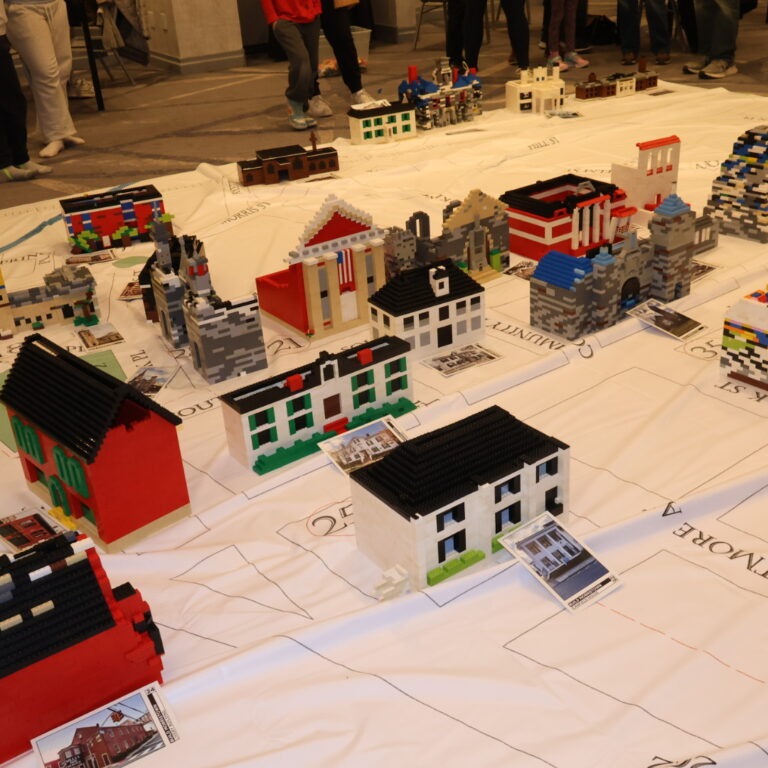
The two-hour program, titled Build Our History Brick-by-Brick, served as one of Morris County’s signature public events marking the lead-up to the nation’s 250th anniversary in 2026. Fifty family teams gathered inside the Hyatt Regency in Morristown and were each challenged with an ambitious goal: recreate the town’s most historically significant sites using more than 100,000 LEGO building pieces, then assemble those models into a massive three-dimensional map of Morristown itself.

The result was not simply a craft activity or a themed family outing. It became a living, spatial history lesson—one that illustrated how deeply Morristown’s past is embedded in its present streets, neighborhoods, and civic landscape.

From the moment the first building instructions were handed out, the room took on the feel of a design studio rather than a typical workshop. Children assumed the roles of architects and engineers, parents became project managers and problem solvers, and grandparents shared stories about places they had visited for decades without fully realizing the historical significance behind them. The experience naturally bridged generations, turning well-known landmarks into shared creative challenges.

Families built detailed brick versions of some of Morris County’s most recognizable Revolutionary-era sites, including the Ford Mansion, Washington’s Headquarters Museum, Fort Nonsense, the Schuyler-Hamilton House, and the Wick House. In total, thirteen locations connected directly to the American Revolution were represented, alongside other civic and cultural landmarks that define Morristown’s historic character.

What made the project especially compelling was not just the accuracy of the models, but the way participants came to understand how these sites relate to one another geographically and historically. Morristown’s unique role as a strategic military center during two separate winter encampments of General George Washington and the Continental Army became far easier to grasp when families could literally see the town unfold beneath their hands.

As the final building sessions concluded, volunteers unrolled a massive 16-foot-by-20-foot map of Morristown across the ballroom floor. One by one, each team carried its completed structure to the correct real-world location. Slowly, a fully dimensional aerial view of the town emerged—complete with clusters of historic homes, military sites, and public buildings positioned exactly where they stand today.

The assembled display revealed something that textbooks often struggle to convey: the remarkable density of historically significant locations within a relatively compact downtown area. For many families, seeing those sites laid out together was a revelation. It highlighted how Morristown’s development, military importance, and civic life evolved side by side during one of the most consequential periods in American history.

County officials and organizers emphasized that the workshop was designed not only to educate, but to inspire curiosity beyond the event itself. The goal was to create a meaningful entry point into local history—one that encourages families to later walk the same streets, visit the same buildings, and view familiar landmarks through a much deeper historical lens.

Organizers from the Morris County 250th Anniversary Steering Committee explained that interactive, creative programming is becoming a cornerstone of the county’s broader semiquincentennial strategy. Rather than relying solely on traditional lectures or static exhibits, the county is intentionally building experiences that invite residents to actively participate in telling their own story.

That philosophy was evident throughout the workshop. Teams were encouraged to problem-solve together, adapt designs when materials ran short, and think critically about architectural features that distinguish each historic site. Even small details—window placement, roof lines, and entryways—became teaching moments about how buildings were designed for both function and symbolism during the late eighteenth century.

Local tourism leaders noted that placing the finished models directly onto the oversized map helped participants visualize how Morristown’s historic growth shaped its modern identity. The exercise demonstrated why certain corridors became centers of activity, how military logistics influenced settlement patterns, and why Morristown emerged as a focal point during the Revolutionary War years.

For many families, the workshop offered their first exposure to Morris County’s larger 250th anniversary initiative. The program is part of a multi-year public engagement effort that will continue through 2026 with educational programs, heritage tourism events, exhibitions, and community celebrations designed to highlight Morris County’s central role in the founding of the nation.

The impact of the LEGO event extended well beyond the two-hour time frame. Children left with a personal connection to sites they had just helped recreate. Parents gained new insight into local history that often gets overshadowed by broader national narratives. And educators in attendance saw firsthand how tactile learning can ignite curiosity in ways that traditional classroom instruction sometimes cannot.

The event also underscored a broader cultural shift taking place across New Jersey, where historic preservation, creative engagement, and public programming increasingly intersect. As communities search for innovative ways to keep history relevant and accessible, hands-on experiences like this one are becoming essential tools for building long-term public interest in heritage and culture. Readers interested in how these kinds of creative public programs are reshaping the state’s cultural landscape can explore more stories through Explore New Jersey’s arts and culture coverage, where similar community-driven initiatives continue to gain visibility.

Behind the scenes, the success of the workshop reflected months of planning and coordination among county leadership, tourism professionals, educational partners, and corporate sponsors who helped fund the program. Their shared objective was clear: create an experience that honors history without placing it behind glass.

By the end of the afternoon, families gathered around the finished map, pointing out their buildings, taking photos, and discussing which sites they wanted to visit next in real life. The display became a temporary community landmark of its own—an interactive snapshot of Morristown’s past reconstructed through thousands of small plastic bricks and an enormous amount of teamwork.

As Morris County continues its countdown to 2026, additional programs and public events will further explore the county’s Revolutionary War legacy and its lasting influence on New Jersey and the nation. If the enthusiasm inside that ballroom was any indication, the appetite for creative, inclusive, and deeply local history programming is only growing.

In Morristown, history was not simply remembered last weekend. It was built—piece by piece—by the very families who now carry that story forward.

Funding Freeze Stalls Gateway Tunnel as Jersey City Races to Save a Landmark Church and New Jersey’s Construction Outlook Grows More Complicated

New Jersey’s construction and infrastructure sector entered a volatile new phase Friday as work on the long-awaited Gateway rail tunnel was ordered to pause, triggering immediate economic fallout while preservation officials in Jersey City simultaneously weighed a time-sensitive plan to rescue one of the city’s oldest surviving church façades.

The sudden halt of construction activity on the $16 billion Gateway tunnel project, which is intended to modernize and expand rail capacity beneath the Hudson River, comes amid a federal funding freeze that has forced project partners to suspend work as of February 6. Industry leaders say the shutdown is expected to result in the near-term loss of roughly 1,000 jobs and raises new concerns about the long-term reliability of the Northeast Corridor, one of the most heavily traveled rail routes in the country.

The tunnel is considered a cornerstone of regional transportation resilience, particularly for New Jersey commuters who depend on daily service into Manhattan. A prolonged pause now threatens to disrupt coordinated timelines across multiple agencies and could inflate project costs if crews, equipment, and contracts must be remobilized at a later date.

The stoppage arrives at a moment when the state’s broader pipeline of major infrastructure and redevelopment activity remains historically strong. According to industry forecasts, New Jersey is still projected to see record construction spending in the 2026–2027 cycle, with an estimated $58.4 billion expected statewide. Utilities are projected to account for approximately $17.7 billion of that total, while investments tied to NJ Transit are forecast to exceed $5 billion.

For a sector that has become one of the state’s most reliable economic drivers, the contrast is striking: unprecedented long-term opportunity paired with short-term instability for some of the largest public works initiatives.

Coverage of major New Jersey infrastructure and development projects can be found through Sunset Daily’s ongoing reporting on regional construction.

Beyond megaprojects, road and bridge rehabilitation continues across Central and North Jersey. One of the most visible long-term efforts remains the extensive reconstruction and modernization work along Route 18 in East Brunswick. That multi-year corridor improvement project, designed to upgrade aging pavement, drainage systems, and traffic flow, is currently scheduled for completion in the fall of 2026 and is viewed by transportation planners as a critical link for both local commuters and regional freight traffic.

While statewide infrastructure planning wrestles with funding uncertainty, a parallel drama is unfolding at the neighborhood level in Jersey City, where officials are being urged to move quickly on a redevelopment proposal that could determine the survival of a 140-year-old religious landmark.

North Baptist Church, located in the Harsimus Cove section of downtown Jersey City, was constructed in 1886 and has remained vacant since a devastating fire in the 1970s. Decades of exposure and neglect have left much of the original structure gone, with the historic façade and decorative elements serving as the building’s most significant remaining features.

A new redevelopment proposal now before the city’s Historic Preservation Commission seeks to stabilize the structure and adapt the site for residential use. The architect leading the effort has warned commissioners that extended delays could place the remaining portions of the building at serious risk.

Project architect Manny Pereiras told commissioners that the building’s condition has deteriorated to the point where structural failure is no longer a remote possibility.

“Every day that goes on, we’re risking the collapse of this building,” Pereiras said during a recent hearing, describing the situation as increasingly precarious.

The design team is presenting updated renderings that incorporate additional masonry and restoration features intended to blend new construction with what remains of the original building. A centerpiece of the plan is the recreation of the church’s distinctive rose window, which was shattered in 1937 and later sealed with brick.

While the return of the rose window and the preservation of surviving terracotta ornamentation drew broad support from commissioners, debate emerged over the treatment of the Fourth Street façade. That portion of the structure would be largely rebuilt, prompting some members of the commission to question whether the new design should replicate the original architectural style more precisely.

Commissioner Tony Sandkamp raised concerns about introducing what he described as a modern interpretation of a historically significant elevation, noting that homeowners across the city are often required to restore missing architectural elements to match original designs.

Pereiras countered that the proposal is rooted in adaptive reuse rather than strict historical reconstruction. The building, he emphasized, will no longer function as a church, and the design is intended to acknowledge the past while accommodating a new purpose.

“We’re not trying to imitate the historic style,” he said. “We’re giving a nod to the history while marrying what was there with what we’re proposing today.”

Under the plan, the building—owned by JCH Development—would be converted into 13 residential units, including duplex apartments. One of the most distinctive design features incorporates the existing bell tower into the primary bedroom of one of the residences, preserving a dramatic architectural element within the new living space.

Commissioner Brian Blazak expressed support for the overall approach, noting that the survival of the structure itself is remarkable given its long period of abandonment.

“I’ve been walking past this building for about 15 years,” Blazak said. “I never imagined someone would attempt to rebuild the south-facing façade. It’s incredible that it’s still standing at all.”

The North Baptist Church proposal arrives amid a broader wave of historic church restoration and adaptive reuse projects across Jersey City. Recent approvals involving St. Mark’s and the Reformed Church of Van Vorst have encouraged preservation advocates, while the long-delayed redevelopment of St. John’s Baptist Church—stalled for decades—has become a cautionary tale for officials wary of allowing lengthy review processes to jeopardize fragile historic structures.

That concern was voiced directly during the commission’s discussion.

One member warned that prolonged debate could turn the North Baptist Church effort into “another St. John’s,” a reference to a project that languished through years of uncertainty before finally gaining traction.

Daniel Wrieden, an officer with the city’s Historic Preservation Office, told commissioners he is increasingly worried about the building’s physical stability. He said interior conditions have worsened dramatically in a relatively short period.

“I was surprised by the level of degradation that’s taken place in less than 18 months,” Wrieden said. “The building is in very poor shape.”

At the same time, Wrieden cautioned that the application remains incomplete and cannot be approved until additional design and construction details are submitted, including specifications for lighting and other architectural elements.

On a broader level, he said the proposal’s reliance on contemporary construction techniques may be the most practical option for preserving what remains of the historic fabric.

“I do think modern construction is the right direction here,” Wrieden said. “There is refinement to be done, but we need more detailed information before this can move forward.”

The fate of North Baptist Church now rests on whether city officials can balance preservation standards with the urgent structural realities facing the site—an increasingly common challenge across older urban neighborhoods where aging buildings require swift intervention to remain viable.

Together, the Gateway tunnel shutdown and the uncertain future of North Baptist Church illustrate the widening gap between New Jersey’s ambitious infrastructure and redevelopment vision and the political, financial, and regulatory hurdles that can derail it. As the state prepares for what could be its largest construction spending cycle on record, projects both massive and modest are being tested by funding constraints, permitting timelines, and the relentless passage of time.

Grinding for Answers in Newark as Devils’ Defensive Stand Still Can’t Mask a Growing Scoring Crisis

The New Jersey Devils returned to Prudential Center on Thursday night hoping a tighter structure, a simplified game plan, and a renewed sense of urgency could finally halt a slide that has begun to reshape the tone of the season. Instead, the result felt hauntingly familiar. A disciplined, low-event defensive effort kept the New York Islanders almost completely in check, but the Devils once again could not solve their offensive identity, falling 3–1 in a game that became less about a single loss and more about an increasingly troubling pattern.

This was a night where effort was not the issue. Structure was not the issue. Even goaltending, for the most part, was not the issue. What continues to separate the Devils from relevance in tightly contested games is an attack that struggles to create sustained pressure, struggles to convert high-danger opportunities, and struggles to manufacture offense when the opponent refuses to give them space.

The mood inside the building reflected it. There was anticipation at puck drop, but also a quiet recognition that this group has reached a point in the season where every shift feels like a referendum on what the roster truly is and what it still needs to become.

Compounding the frustration surrounding the loss was organizational news delivered earlier in the day, when the Devils placed forward Juho Lammikko on waivers with the intent to terminate his NHL contract. The move, procedural on the surface, quietly underscored the broader theme of transition beginning to take shape behind the scenes. The front office is no longer merely adjusting at the margins. It is actively clearing space, evaluating fit, and preparing for deeper decisions ahead.

The game itself opened with one of the lowest-event periods the Devils have played all season. Both teams were cautious through the neutral zone and reluctant to overcommit on forechecks, creating long stretches of puck control along the perimeter and very little sustained pressure inside the slot. The Devils generated only a handful of shots, but the Islanders were limited to almost nothing as well, a testament to a defensive structure that has quietly improved over recent weeks.

The one moment that threatened to break the stalemate came when Dawson Mercer slipped behind the defense on a clean breakaway and rang a shot off the crossbar, a sequence that drew the loudest reaction of the period and momentarily energized a crowd desperate for something to build upon.

By the end of the opening twenty minutes, the Devils had effectively shut the Islanders down while offering only flashes of danger themselves. It marked the continuation of a broader trend that has haunted this season. The club has struggled to strike first, and early offense has been particularly elusive. Despite the defensive discipline on display, the inability to generate meaningful chances early in games continues to leave little margin for error.

The second period provided the turning point, and it arrived not through sustained offensive pressure by the Islanders, but through a breakdown in coverage and communication that the Devils have worked tirelessly to eliminate. A misread during a defensive-zone reverse left the weak side unattended, allowing a loose rebound to be pounced on and converted. What should have been a routine exit became the opening goal against, and another uphill climb began.

That sequence highlighted an issue that has surfaced repeatedly throughout the season: winger positioning on defensive-zone reversals. The Devils often use reverses as a safety valve to escape pressure and reset breakouts, but too frequently the supporting winger is late or absent altogether. When that support disappears, exits turn into turnovers, and turnovers turn into extended defensive-zone time. On this play, it turned into the first goal of the night.

To their credit, the Devils responded with their most connected stretch of hockey in several games. A rare power play midway through the period featured quick puck movement and several heavy point shots, including multiple trademark one-timers from the blue line that forced difficult saves and second chances. Nico Hischier created traffic and battled inside the crease, and the Devils finally began to look like a group capable of generating momentum rather than simply containing damage.

The tying goal was the product of layered effort rather than individual brilliance. It required multiple recovery plays, a patient regroup through the neutral zone, and a well-timed feed into the slot that allowed Hischier to snap a shot past Ilya Sorokin. It was a simple play executed cleanly, and in the context of the Devils’ recent offensive drought, it felt far more significant than a single goal in a tied game. Even the goaltender joined the scoresheet, earning his first assist of the season by initiating the sequence that ultimately led to the finish.

For a brief stretch, the Devils resembled a functional attacking team. They forced the Islanders into late coverage adjustments, created rebound opportunities from both sides of the crease, and generated enough chaos around the net to finally break through. It was exactly the type of shift layering and puck support that has too often been absent this year.

But whatever rhythm was found in the middle frame never carried forward.

The third period unfolded with the same troubling script that has followed the Devils through much of the winter. Possession was fleeting. Zone entries were quickly neutralized. Shots came from distance without traffic. And when the Islanders finally capitalized late, it arrived on a play that combined a lost draw battle, a mishandled puck, and a defensive stumble that left the slot completely exposed. A clean walk-in and a low finish under the pad restored the Islanders’ lead and drained what little energy remained in the building.

The Devils were unable to mount any meaningful push after the goal. There was no late surge. No sequence of sustained offensive-zone pressure. No drawn penalties. An empty-net goal sealed the outcome and underscored the uncomfortable reality that the Devils simply ran out of ideas long before they ran out of time.

On paper, the defensive performance should be viewed as encouraging. Limiting an opponent to so few shots is not accidental, and it speaks to improved layers through the neutral zone and far more consistent support from the forwards collapsing low. But defensive progress only carries value when paired with offensive relevance, and that remains the central problem.

Several individual performances hinted at what this roster still possesses. Ondrej Palat created multiple quality looks, rang a shot off the post, and consistently drove play below the goal line. Young forwards such as Lenni Hameenaho continued to show poise and creativity when given space, while Cody Glass quietly played a responsible two-way game that stabilized his line. Ivan Gritsyuk, in limited opportunities, remains one of the few skaters whose speed and unpredictability consistently force defenders to back off at the blue line.

There were also subtle moments that showcased developmental promise on the back end. One defenseman in particular repeatedly activated through the neutral zone with quick give-and-go exchanges, building speed through puck support and immediately rejoining the rush. Those habits translate directly to modern NHL transition play, and they represent one of the few reliable pathways for this team to generate offense when forechecking pressure alone is not creating turnovers.

At the same time, underlying metrics painted a harsher picture for others. Shot share dipped sharply as the game progressed, and several depth forwards struggled to push play north once the Islanders tightened their defensive box in the third period. When the game demanded urgency, the Devils did not have enough players capable of creating separation with the puck or winning contested space inside the dots.

That reality has begun to influence how the organization approaches the coming weeks. The decision involving Lammikko is unlikely to be the last roster move before the trade deadline window closes. Evaluations are clearly underway, not just at the NHL level, but across the entire pipeline. The focus has quietly shifted toward identifying which players can be part of a faster, more dynamic version of this team moving forward and which roles must be reimagined.

For fans following the team closely through the ongoing coverage at Explore New Jersey’s Devils hub, the story of this season has evolved from early optimism into a more complex conversation about sustainability, roster balance, and organizational patience. The Devils are not far away in terms of structure and discipline. They are, however, far away in the area that ultimately defines success in this league: consistent, repeatable offense against structured defensive teams.

The upcoming break may arrive at the right time. For players, it offers a chance to reset physically and mentally after weeks of grinding through games that have increasingly resembled one another. For the coaching staff, it becomes an invaluable window to re-evaluate line combinations, power-play deployment, and zone-entry strategies that have grown predictable. And for management, it provides clarity before making difficult decisions about roster direction and long-term planning.

Thursday’s loss was not a collapse. It was not an effort issue. It was not even a particularly poorly played hockey game. It was something far more concerning: a controlled, structured performance that still failed to generate enough offense to win. Until the Devils find a way to consistently turn defensive reliability into attacking confidence, nights like this will continue to define the season, no matter how tight the shot totals or how disciplined the coverage appears on paper.

CD-11 Democratic Primary Turns Into a Late-Night Thriller as Mejia Edges Ahead of Malinowski

A dramatic and rapidly shifting Democratic primary in New Jersey’s 11th Congressional District remains officially too close to call, as progressive organizer Analilia Mejia surged late to take a narrow lead over former congressman Tom Malinowski in a race triggered by Governor Mikie Sherrill’s departure from Congress.

As of Thursday morning, with roughly 91 percent of the vote reported, Mejia holds a slim advantage of 28.7 percent to Malinowski’s 28.0 percent, according to results carried by the Associated Press. With provisional ballots still outstanding and party officials signaling those ballots may lean toward Mejia, the contest is increasingly expected to move toward a recount.

For ongoing coverage of New Jersey and national political developments, readers can follow our reporting through our embedded politics coverage at Sunset Daily.

Just hours earlier, the race appeared to be breaking decisively in Malinowski’s favor. An initial wave of early vote and vote-by-mail results placed the former congressman on top, leading some observers to believe he had successfully engineered a political comeback in one of the most closely watched special primaries in the state this cycle.

That narrative unraveled quickly as Election Day totals were added and Mejia’s late-breaking grassroots operation delivered a sharp reversal.

The seat became vacant after Sherrill won the 2025 gubernatorial election, setting off a crowded special primary field of eleven candidates and setting the stage for an unusually volatile contest. The winner will face Republican nominee Joe Hathaway, who advanced unopposed in the GOP primary, in an April special general election.

Malinowski entered the race with formidable advantages: statewide and national name recognition, significant fundraising capacity, and the institutional memory of having flipped a Republican-held district in 2018. In a low-turnout special election environment, those assets initially appeared decisive. Early tallies showed Malinowski performing strongly in vote-by-mail returns and establishing a cushion that briefly suggested he would either win outright or finish in a narrow first-place position in key counties, including Essex.

That cushion, however, collapsed as Mejia’s Election Day support materialized.

By the end of the night, Mejia overtook Malinowski in Essex County, a development that stunned establishment operatives who had long viewed the race as a two-way contest between Malinowski and Essex County Commissioner Brendan Gill. Mejia’s late momentum effectively reshaped the race and exposed a deep appetite among Democratic primary voters for a more confrontational and progressive message.

Mejia, a longtime labor and political organizer and former political director for SEIU 32BJ and Working Families, built a campaign that leaned heavily on door-to-door organizing, small-donor fundraising and issue-driven mobilization. Her candidacy steadily gained traction in the final weeks, cutting through what had initially been a crowded field dominated by higher-profile contenders.

Party insiders privately described Mejia’s surge as one of the most disruptive late-stage developments in a North Jersey primary in recent memory.

Patrick Murray, a New Jersey pollster who has closely tracked Democratic voter behavior in the region, said the near-tie outcome underscores how sharply the party electorate has shifted.

“When you look at Mejia and Malinowski together pulling close to 60 percent of the vote, that tells you a lot about what Democratic voters are looking for right now,” Murray said. He noted that turnout in a February special primary is typically lower and more ideologically engaged than a June primary electorate, amplifying the influence of highly motivated progressive voters. “This is very much a Democratic electorate that wants to take the fight directly to Donald Trump.”

For Malinowski, the race was widely viewed as a bid for political redemption after a turbulent recent history.

Once considered a rising Democratic figure after winning a traditionally Republican district in 2018, Malinowski became one of the most visible casualties of New Jersey’s congressional redistricting. The reconfigured map stripped away key Democratic municipalities from his former district and left him politically exposed. He subsequently lost his seat in 2022 to Republican Tom Kean Jr.

Complicating his return was lingering criticism surrounding his stock trading activity while in office, an issue that resurfaced during the campaign and fueled negative advertising in the closing stretch. While Malinowski attempted to reintroduce himself as a progressive voice and emphasized his national security credentials from his time in the Obama administration, outside spending and aggressive mail and television campaigns made the final weeks of the race unusually contentious.

Even so, Malinowski appeared poised for victory earlier in the evening, especially as he ran well in early returns across multiple municipalities. That advantage ultimately proved fragile in the face of Mejia’s late ground surge.

The ripple effects of the contest extended well beyond the top two candidates.

In Essex County, Newark Mayor Ras Baraka, an outspoken supporter of Mejia, once again demonstrated his political strength, carrying the countywide vote for a second consecutive high-profile Democratic primary following his performance in last year’s gubernatorial contest. His organizational backing and visibility in urban turnout operations were widely credited by party observers as a meaningful factor in Mejia’s late-night climb.

The results were also a setback for the Essex County Democratic Committee, which had lined up behind Gill. Gill, long viewed as a formidable establishment contender with deep institutional support, failed to break through as the race polarized between Malinowski’s comeback bid and Mejia’s insurgent campaign.

Another notable late development came from Tahesha Way, the former lieutenant governor, who surged past Gill in late reporting. Her performance sparked immediate discussion among party activists about her potential future in state legislative politics, with quiet conversations already turning toward a possible run in the 40th Legislative District.

National political organizations also watched the race closely. Heavy outside spending aimed at bolstering Malinowski’s candidacy did not translate into a decisive victory, and the effectiveness of that spending is now being reassessed by Democratic strategists looking ahead to the April general election.

With provisional ballots still to be counted and the margin separating the top two candidates well under one percentage point, election officials and party leaders say the outcome may not be finalized for several days. A recount appears increasingly likely, particularly if the remaining ballots narrow the gap even further.

For now, the only certainty in New Jersey’s 11th District is that what began as a presumed establishment-friendly special election has turned into a defining test of the Democratic Party’s ideological direction heading into a volatile national election year.

Whether Mejia’s late grassroots surge ultimately delivers a historic upset or Malinowski manages to reclaim a narrow victory, the race has already sent a clear signal across North Jersey: Democratic voters are energized, deeply polarized over the party’s future, and prepared to reshape the political landscape in one of the state’s most competitive congressional districts.

New Jersey Renews the Push to End Clock Changes as Lawmakers Weigh Permanent Time Options

Garden State leaders revive the long-running fight over daylight saving and standard time, setting the stage for a national decision that could finally end the twice-a-year ritual for residents, schools, farms, and businesses

For many New Jersey residents, the most predictable disruption of the year is not a snowstorm or a heat wave, but the moment the clocks are forced forward or back. As winter slowly loosens its grip and early spring approaches, the debate over whether the Garden State should finally abandon the twice-annual time change has returned to the State House—this time with renewed urgency and a growing sense that the decision is no longer simply about convenience.

In early February 2026, New Jersey lawmakers formally revived multiple proposals aimed at permanently ending the long-standing practice of switching between standard time and daylight saving time. The competing bills reflect a fundamental disagreement over which version of time best serves public health, economic activity, education, public safety, and the rhythms of daily life across the state.

One legislative proposal would place New Jersey on permanent daylight saving time, effectively locking the state into Eastern Daylight Time year-round. Supporters argue that longer evening daylight improves quality of life, boosts local commerce, encourages outdoor activity, and aligns better with modern work and leisure patterns. Under this approach, residents would “spring forward” one final time and never return to standard time again.

A separate measure takes the opposite approach, calling for permanent standard time instead. This proposal is built around medical and scientific research that links standard time more closely to human circadian rhythms. Advocates say earlier sunrises support healthier sleep patterns, improved academic performance for children, and safer morning commutes—especially during winter months when darkness currently stretches well into the morning hours.

While both approaches aim to eliminate the disruption of clock changes, they reflect two very different philosophies about how time should serve society.

The practical reality, however, is that neither proposal can move forward on its own.

Under existing federal law, states are permitted to opt out of daylight saving time entirely and remain on standard time year-round, as Arizona and Hawaii have done for decades. What states are not allowed to do is observe daylight saving time permanently. That authority rests with Congress.

As a result, even if New Jersey lawmakers pass legislation calling for permanent daylight saving time, the change would remain legally blocked unless federal law is amended.

That federal decision is once again under review.

The Sunshine Protection Act, reintroduced in both chambers of Congress in 2025, would allow states nationwide to adopt daylight saving time permanently if they choose. The proposal gained early attention when it was introduced but, as of February 2026, it remains stalled in the U.S. House and has not advanced to final approval. Without federal action, New Jersey’s daylight saving proposal remains largely symbolic—an official declaration of intent rather than a practical change.

The standard time proposal, however, operates within the boundaries of existing federal law. New Jersey could move to permanent standard time without congressional approval. Yet that path brings its own political and public hurdles, especially for residents who favor brighter evenings and fear that early winter sunsets could affect business activity, family routines, and community engagement.

For New Jersey, the issue extends far beyond a simple preference for light in the morning or evening.

Schools, transportation systems, healthcare providers, public safety officials, and local employers have all quietly weighed in on the broader impact of time changes. Numerous studies continue to link the seasonal shift in clocks to short-term spikes in traffic accidents, workplace injuries, and sleep-related health problems. Pediatric experts frequently point to the difficulty younger students face when heading to school in prolonged darkness after the fall time change.

At the same time, business groups and tourism advocates consistently highlight the economic value of longer daylight hours in the evening. Restaurants, downtown retail districts, parks, and recreational facilities often report increased foot traffic when daylight extends deeper into the evening hours, particularly in spring and summer.

New Jersey’s extensive outdoor economy, from shore communities to agritourism destinations, also plays a quiet but influential role in the debate. Seasonal operations, farmers markets, and family-run farms operate on narrow margins that can be affected by visitor patterns, staffing schedules, and weather-dependent hours. Many of those communities closely follow broader conversations around rural and agricultural policy, which are regularly covered through Explore New Jersey’s ongoing reporting on agriculture and farming across the state.

The political landscape reflects this wide range of competing priorities.

Supporters of permanent daylight saving time point to public polling that repeatedly shows strong voter frustration with clock changes. Many residents view the twice-yearly shift as an outdated holdover from a different era, one that no longer matches modern work schedules, digital connectivity, or 24-hour commerce.

Backers of permanent standard time counter that popularity should not outweigh public health evidence. Sleep researchers, medical associations, and pediatric groups continue to advocate for standard time as the healthier long-term option, warning that permanent daylight saving time could effectively place New Jersey on a permanent form of social jet lag during winter months.

This scientific divide is now front and center in legislative discussions.

Several New Jersey lawmakers have acknowledged that the debate has matured significantly over the past few years. Earlier proposals to eliminate clock changes were often framed as convenience measures. The current round of legislation places far greater emphasis on long-term health outcomes, workforce productivity, and student performance.

Another challenge lies in regional coordination.

New Jersey does not exist in a time vacuum. Any permanent shift—whether daylight saving or standard—would ideally be aligned with neighboring states such as New York, Pennsylvania, and Connecticut. A fractured regional approach could complicate transportation schedules, broadcast programming, financial markets, and multi-state business operations. Lawmakers have increasingly acknowledged that a patchwork of time policies across the Northeast would create more confusion than it resolves.

That reality has strengthened the argument for federal action, even among those who support permanent standard time. A national framework would eliminate interstate inconsistencies and give states clear authority to adopt long-term time policies without uncertainty.

For now, however, New Jersey remains bound by the existing system.

Unless Congress acts, residents should still expect to adjust their clocks on Sunday, March 8, 2026, when the state will move forward one hour at 2:00 a.m. The familiar loss of sleep, early-week grogginess, and temporary disruption to routines will arrive once again, even as lawmakers continue to debate whether it should be the last time New Jersey ever has to do so.

The renewed legislative push makes one thing clear: the political appetite to end clock changes has not faded. If anything, it has grown sharper, more data-driven, and more urgent.

Whether the Garden State ultimately lands on permanent daylight saving time or permanent standard time may depend less on Trenton than on Washington. Until federal law changes—or until New Jersey chooses to embrace standard time on its own—the clocks will continue to shift, even as public patience for the practice steadily runs out.

Cold Grip Holds Across New Jersey as Light Snow Targets Friday Night and Another Arctic Blast Looms

State remains locked in a winter reset pattern through early next week before a brief thaw and a potential mid-February storm window

New Jersey remains stuck in what forecasters often describe as a “reloading trough” pattern, a repetitive winter setup that continues to recycle cold air into the region and delay any meaningful break from winter’s harshest stretch. That pattern is expected to persist through roughly Tuesday, February 10, marking the final phase of what has been the core of winter cold that has dominated the state since mid-January.

Although residents across South and Central Jersey have experienced a few slightly more tolerable afternoons this week, temperatures have still averaged just below normal, with daytime highs only briefly pushing above the freezing mark in many locations. The brief moderation has not been enough to qualify as a true warm-up, and the overall pattern remains firmly wintry.

That changes modestly late Friday as a fast-moving Alberta Clipper system approaches the state.

Thursday and Friday daytime will actually trend a bit colder than the past two days, with conditions similar to today but several degrees lower. Skies will remain dry through most of Friday, but attention turns to the evening commute as the clipper arrives around 5 p.m.

Light snow is expected to develop Friday evening and continue through the overnight hours, tapering off between 4 and 5 a.m. Saturday. This is not expected to be a significant winter storm, but it will be enough to create slippery travel conditions across much of the state, especially on untreated roads and elevated surfaces.

Current projections point to a general coating to about one inch of snow for most of New Jersey, with a few isolated pockets potentially reaching close to two inches. The most likely outcome remains minor accumulation, but even light snowfall combined with dropping temperatures will be enough to create localized travel concerns late Friday night and early Saturday morning.

Saturday will feel sharply different from Friday, not because of snow, but because of an advancing Arctic front.

Temperatures on Saturday are expected to peak unusually early in the day, likely by mid-morning or late morning, before falling steadily through the afternoon as colder air pours into the region. Winds will increase as the front passes, producing raw and increasingly uncomfortable conditions statewide.

By Saturday afternoon and evening, wind chills will plunge well below actual air temperatures, setting the stage for another round of bitter cold similar to what New Jersey experienced last week.

Saturday night into Sunday brings a renewed surge of Arctic air, reinforcing the deep winter feel. Sunday will remain cold and blustery, and the coldest night of the entire season is increasingly likely to occur Sunday night into early Monday morning, when clearing skies and light winds may allow temperatures to drop to their lowest levels of the winter so far.

The prolonged cold spell should finally begin to ease again on or around Tuesday, February 10, as a ridge of high pressure builds into the eastern United States. That shift will allow temperatures to rebound closer to seasonal norms and hold through at least Thursday or Friday, offering a short but meaningful break from the relentless cold.

However, attention is already turning to a developing storm signal for the February 14–15 timeframe.

Unlike the recent pattern, which has often featured overwhelming Arctic air suppressing storm systems south of the region, this upcoming signal suggests a more traditional winter storm setup. That means a potential rain-snow line somewhere across New Jersey rather than a system being forced well offshore or too far south to affect the state.

If this signal holds, portions of North, Central or South Jersey could end up on different sides of that precipitation boundary. At this stage, there is still significant uncertainty, and forecasters caution that model guidance will likely fluctuate dramatically over the next several days, producing a wide range of solutions that may populate automated forecast apps and social feeds.

The window will remain under casual monitoring through Monday, February 9. If the signal remains consistent after that point, more detailed tracking and accumulation projections will begin.

In plain terms for residents planning the next several days: expect slightly colder conditions than today through Thursday and Friday daytime. Light snow is possible statewide Friday evening after about 5 p.m. and should end by early Saturday morning, with a coating to around one inch being the most likely outcome, and isolated spots approaching two inches.

From Saturday through roughly Tuesday, New Jersey returns to a much colder regime, with Saturday afternoon through Sunday featuring the harshest wind chills. Sunday night into Monday morning may end up as the coldest night of the winter. Temperatures should finally relax again from Tuesday through the end of the workweek before attention turns to the potential mid-February storm window.

Residents are encouraged to stay aware of changing conditions and timing updates through Sunset Daily News’ ongoing weather report coverage for New Jersey.

Last Stand Before the Olympic Pause: Devils and Islanders Collide in a High-Stakes Newark Showdown

With postseason dreams fading and the league about to go dark for the Winter Games, New Jersey faces a defining night against a familiar division rival at Prudential Center

The calendar could not have scripted a sharper sense of urgency for the New Jersey Devils than the one hanging over downtown Newark tonight. As the Islanders arrive at Prudential Center for a 7 p.m. puck drop on February 5, this matchup represents more than just another Metropolitan Division meeting. It is the final opportunity for both clubs to make one last statement before the NHL shuts down for the 2026 Winter Olympics—and for New Jersey, it may also be the clearest snapshot of where this season is truly headed.

For fans following the heartbeat of the franchise through Explore New Jersey’s ongoing coverage of the New Jersey Devils, this game sits at the intersection of pressure, patience, and a front office that must decide whether to fight for the margins now or reshape the future with a longer lens.

The standings tell an uncomfortable story. New Jersey enters the night at 28-26-2, sitting nine points behind the Islanders, who arrive with a 31-21-5 record and a firm grip on a playoff position. The gap is not insurmountable in theory. In practice, it is made heavier by the calendar and by a Metropolitan Division that has offered the Devils very little room to breathe since early November. Regulation wins have become essential currency, not luxury, and anything short of a full two points only tightens the math further.

Adding to the psychological challenge is the season series. The Islanders have won all three previous meetings, controlling the tempo and exposing the structural flaws that have plagued New Jersey for much of the winter. The Devils are not only chasing points—they are chasing answers to why this opponent has repeatedly dictated the flow of play.

Tonight’s contest will be televised locally on MSGSN and MSGSN2 and is available via ESPN+, but the real audience is the Devils’ own locker room, where the stakes feel far more personal than the broadcast footprint.

The roster, already thinned and reshaped by injuries and recent transactions, will look noticeably different again. Jack Hughes will miss his third straight game with a lower-body injury, and all indications remain that the organization is targeting a return after the Olympic break rather than pushing him back into action for one final pre-pause appearance. His absence continues to ripple through the lineup. Hughes is not merely a top-line center; he is the engine of New Jersey’s controlled zone entries, transition offense, and power-play creativity. Without him, the Devils are forced to manufacture offense through committee rather than through a single destabilizing presence.

There is, however, a new face expected to step into the spotlight.

Veteran center Nick Bjugstad is set to make his Devils debut after arriving in a deal with the St. Louis Blues that sent Thomas Bordeleau and a draft pick the other way. Bjugstad is projected to slot into the third-line center role, where his size, faceoff reliability, and experience against playoff-caliber competition could immediately stabilize a unit that has struggled to tilt the ice consistently.

This is not a splash move. It is a surgical one—and that distinction speaks volumes about the organization’s current posture.

New Jersey enters the night as a slight betting favorite at minus-110, with the over/under set at 5.5 goals. On paper, the margins are razor thin. On the ice, they have felt wider.

The Devils are coming off a sobering 3-0 shutout loss to the Columbus Blue Jackets on Tuesday, a game that closed the season series between the two clubs and underscored one of the most persistent problems this roster has faced: generating sustained offense when early chances dry up. New Jersey controlled stretches of play but struggled to convert pressure into quality looks, let alone goals. Too many shifts ended with perimeter movement, blocked lanes, and a lack of secondary chances around the crease.

It is a theme that has followed the team for months.

Since the middle of November, the Devils have not been able to build momentum for more than a few games at a time. Any brief uptick in results has been followed by multi-game slides, often driven by some combination of defensive breakdowns, uneven goaltending, and an attack that has failed to punish mistakes from opposing blue lines.

Those patterns have now pushed the franchise into one of the more complex decision windows of its recent history.

General manager Tom Fitzgerald faces a reality that many teams prefer to postpone: there is no obvious single move that transforms this group into a legitimate postseason threat before the trade deadline. The Atlantic Division’s depth is expected to consume both wild card positions, which means New Jersey’s only realistic path back into the playoff picture runs directly through the Metropolitan’s top three. That path currently includes chasing down the Islanders and Pittsburgh while still trying to close ground on teams that have already demonstrated far greater consistency.

The numbers alone make the case difficult. The on-ice trends make it harder.

The Devils’ internal evaluation has already produced one notable piece of roster housekeeping. Ondrej Palat was moved for Maxim Tsyplakov, a deal that did more than simply shuffle wingers. It removed the final season of a six-million-dollar cap commitment and restored flexibility at a moment when financial maneuverability may be more valuable than mid-season reinforcements.

That shift in thinking hints at a strategy centered on recalibration rather than desperation.

This does not mean dismantling the core. Nico Hischier remains foundational, and the idea of stripping the roster down to its studs would be neither necessary nor responsible. But it does suggest a growing willingness to explore the market on veterans whose contracts and career arcs no longer align cleanly with the team’s competitive window.

Brenden Dillon, now 35 and signed through next season at a four-million-dollar cap hit, fits squarely into that category. He has been a stabilizing physical presence, but it is fair to ask whether extending that relationship into his late thirties advances the long-term picture. Jonas Siegenthaler, still only 28 and under contract for two more seasons at $3.4 million annually, presents a different dilemma. His defensive profile has value league-wide, yet his struggles moving the puck and a difficult season overall make timing a crucial factor if New Jersey hopes to extract meaningful return.

Stefan Noesen, recovering from knee surgery with a year left on his deal, could quietly become a depth target for contenders if his recovery timeline allows him to contribute in the spring. Evgenii Dadonov’s fit has never materialized, but his modest cap hit and prior production history may still hold appeal elsewhere. Even Maxim Tsyplakov, newly acquired and not yet fully evaluated within the system, represents a variable the organization must assess with clear eyes rather than emotional investment.

In net, Jacob Markstrom’s market value has been dulled by inconsistent results, but his evolving no-trade structure over the next two seasons could make him more movable down the road if New Jersey opts for broader structural change.

Behind them, the pipeline is beginning to assert itself. The recent call-up of Lenni Hameenaho has offered a glimpse of pace and composure that fits the direction the franchise hopes to sustain. It is unlikely that internal options alone can fill every future vacancy, but the Devils no longer operate from a place of prospect scarcity.

Cap flexibility will also define the conversation. Projections indicate New Jersey is positioned to have close to $14 million in available space next season, and that figure can grow if additional contracts are moved. The objective is not to overspend in a shallow free-agent market. It is to retain the ability to absorb contracts, facilitate larger hockey trades, and reshape the roster with agility rather than constraint.

Even among higher-profile names, quiet evaluations are unavoidable. Dougie Hamilton’s $9 million cap hit, Dawson Mercer’s extended stretches of invisibility, and the long-term investment in Timo Meier all invite difficult questions—not necessarily about immediate movement, but about whether the current blend of skill sets truly complements the direction the organization intends to pursue.

That backdrop makes tonight’s game more revealing than its point value alone suggests.

Across the ice, the Islanders represent a version of structural clarity the Devils have struggled to mirror. They are disciplined through the neutral zone, deliberate below the hash marks, and comfortable grinding games into low-event outcomes when necessary. It is precisely the type of opponent that has frustrated New Jersey all season.

And yet, the spotlight will once again drift toward the player who is not dressed.

Jack Hughes’ absence continues to spark debate well beyond Newark. Day-to-day following a lower-body injury, Hughes has expressed his desire to return before the Olympic break, but time is running out. He remains on the United States Olympic roster, creating an uncomfortable optics problem for a fan base already stretched thin by a disappointing campaign.

No one questions Hughes’ competitiveness or his commitment to the Devils. His value to the lineup is undeniable. But with only this game remaining before the league pauses, the possibility that he could miss critical club games only to suit up internationally days later has ignited frustration among supporters who view every remaining Devils contest as a must-win scenario.

The situation also raises broader questions for USA Hockey. With center depth that includes Jack Eichel, Dylan Larkin, Auston Matthews, J.T. Miller and Vincent Trocheck, the American roster is not lacking options. Healthy forwards such as Cole Caufield, Alex DeBrincat, Alex Tuch and Jason Robertson remain available. If the goal is to maximize medal chances, selecting players who are fully fit seems logical. If the goal includes protecting long-term health for players returning to critical roles in the NHL stretch run, the calculus becomes even more complex.

For New Jersey, however, the debate is ultimately academic. Hughes is unavailable tonight. The responsibility shifts to a group that must prove it can compete without its centerpiece.

That task begins with execution in the smallest details: cleaner exits under pressure, more aggressive net-front presence, and a commitment to collapsing defensively when possession turns. Against an Islanders team comfortable living in low-scoring territory, the Devils cannot afford prolonged lapses or passive special teams.

This is the last chance before the Olympic pause to demonstrate that the gap in the standings does not fully reflect the competitiveness of this roster.

If New Jersey finds a way to finally solve an opponent that has dominated the season series, the break could arrive with a sliver of renewed belief. If not, tonight may serve as a quiet confirmation that the organization’s future will be shaped less by short-term pushes and more by the careful, deliberate restructuring that has already begun behind the scenes.

Either way, when the lights come on at Prudential Center and the puck drops at 7 p.m., the Devils are not merely playing the Islanders.

They are playing for clarity.

New Jersey Defies National Cooldown as Home Prices Hit Fresh Highs in Late 2025

Garden State emerges as one of the nation’s strongest housing markets while much of the country slows to post-recession pace

New Jersey’s housing market closed out 2025 on a sharply different trajectory than the rest of the country, posting one of the strongest annual home price gains in the nation even as national growth fell to its slowest pace since the recovery from the Great Recession.

New data released this week shows that U.S. home price growth in December cooled to just 0.9 percent year over year, signaling a broad national reset after years of intense pandemic-era acceleration. Analysts describe the current environment as a rebalancing phase, where affordability, job stability and long-term demand fundamentals are now playing a larger role than rapid speculative price escalation.

Against that backdrop, New Jersey stood out.

The state recorded a 5.5 percent annual increase in home prices, placing it among the top-performing housing markets in the country and firmly bucking the national cooling trend. New Jersey also ranked among a small group of states that reached new highs in annual home price growth by the end of December, underscoring how resilient demand remains across many of the state’s residential submarkets.

The strength in New Jersey is being driven by a combination of structural and demographic forces that continue to favor the state over many traditionally high-growth regions. Compared with coastal Sun Belt and Mountain West markets that surged earlier in the decade, much of New Jersey remains relatively affordable for high-income professionals who are now less tethered to daily office commutes. Hybrid and flexible work patterns have widened the geographic footprint of buyer demand, allowing households to prioritize school districts, transportation access and long-term community stability rather than proximity to a single employment hub.

Regional analysts point to northern and central New Jersey communities, particularly those with direct rail access to Manhattan and growing mixed-use downtowns, as consistent demand drivers. The Newark metro area, in particular, continues to post gains that run counter to the broader national slowdown, reflecting a tight supply environment and sustained interest from first-time buyers, move-up households and investors seeking long-term rental stability.

New Jersey is not alone in its outperformance, but it remains one of the most prominent examples in the Northeast. Other strong states in the latest data include Illinois at 5.4 percent, Nebraska at 5.4 percent and Connecticut at 5.1 percent. Markets such as Newark, Allentown, Pennsylvania and Chicago were highlighted nationally as local standouts in a market otherwise defined by decelerating growth.

New Jersey was one of seven states nationwide to set new highs in annual home price growth as of December. The other states joining that list were Pennsylvania, Delaware, Nebraska, Louisiana, Indiana and Mississippi.

Economists say the divergence between regions reflects a fundamental shift in buyer behavior. High-growth markets in the South and West that previously experienced intense in-migration and investor activity are now absorbing higher inventory levels and cooling demand. At the same time, Northeast and Midwest markets with deeper job bases, mature infrastructure and tighter development pipelines are benefiting from more stable absorption.

Industry observers note that the national slowdown does not signal a collapse in values, but rather a recalibration after years of unsustainable price acceleration.

While upward pressure remains in many markets, the pace has moderated enough to suggest that buyers may encounter a more navigable landscape in 2026—particularly in regions where new listings are beginning to rebuild and sellers are adjusting expectations.

In sharp contrast to New Jersey’s continued momentum, negative home price growth is now concentrated across large portions of the South and West. States and regions including Florida, Texas, Colorado, Washington, D.C., Hawaii, Arizona, Utah, Oregon and California are showing outright price declines or stagnation. Analysts attribute the downturn in those markets to a surge in resale and new-construction inventory, higher mortgage rates relative to local incomes and a slowdown in population inflows that once fueled rapid appreciation.

New Jersey’s housing dynamics remain constrained by limited developable land, a lengthy approval process for large-scale residential projects and persistent under-supply in both entry-level and mid-priced housing. Those structural supply limitations continue to place upward pressure on values, even as national demand softens.

At the same time, the state’s diversified economy—anchored by healthcare, life sciences, finance, logistics, technology and higher education—has provided an unusually stable employment base for homeowners. That economic diversity has reduced the risk of sharp localized downturns and continues to support household formation across multiple income brackets.

Local brokers and developers also point to sustained interest in transit-oriented development, adaptive reuse projects and suburban infill communities as important contributors to price stability. Buyers are showing growing interest in properties that offer walkable amenities, access to commuter rail and flexible living space that accommodates remote and hybrid work arrangements.

Looking ahead to early 2026, housing economists expect New Jersey’s market to remain competitive but less frenzied than in recent years. Multiple-offer situations are becoming less common in certain submarkets, and days on market are gradually lengthening, but overall supply remains tight enough to prevent meaningful downward pressure on prices.

For buyers and sellers alike, the state’s performance highlights how regional housing conditions now diverge far more sharply than national averages suggest. While the U.S. market enters a slower and more balanced phase, New Jersey continues to operate in a fundamentally different demand environment—one shaped by constrained supply, resilient employment and enduring commuter-driven location advantages.

Ongoing coverage of housing conditions, development trends and transaction activity across New Jersey is available through Sunset Daily News’ in-depth real estate reporting.

North Jersey Voters Decide the Field in Pivotal 11th District Special House Primary

Contested race to replace Governor Mikie Sherrill launches a high-stakes battle across Essex, Morris and Passaic counties

Voters across a wide swath of North Jersey are heading to the polls today, February 5, 2026, to shape one of the most closely watched congressional contests in the state, as the 11th Congressional District holds a special primary election to determine who will move on to the general election later this year.

The contest was triggered when Mikie Sherrill formally resigned her seat in the U.S. House of Representatives after being sworn in as governor of New Jersey, leaving a sudden vacancy in a district that has repeatedly proven to be one of the state’s most competitive and politically influential congressional seats.

Today’s vote is not the general election. Instead, Democratic and Republican voters are selecting their respective party nominees, who will then face each other in a special general election to serve the remainder of Sherrill’s unexpired term in Congress.

The 11th District stretches across portions of Essex, Morris and Passaic counties and encompasses a complex mix of suburban neighborhoods, historic town centers and densely populated commuter communities. Its electorate includes some of the state’s most highly educated voters, major corporate employment centers and a growing bloc of younger families drawn by transit access and school systems. That demographic diversity has long made the district a political bellwether for North Jersey and, increasingly, for national party strategists watching suburban voting trends.

On the Democratic side, three well-known figures are competing for the nomination.

Brendan Gill, currently serving as an Essex County commissioner, enters the race with deep institutional backing and years of experience as a political strategist and campaign advisor. Supporters describe him as a pragmatic coalition-builder with strong relationships throughout Essex County’s municipal leadership and labor community. Gill’s campaign has emphasized local economic development, public safety coordination among municipalities and federal investment in transportation and housing.

State Senator Britnee Timberlake is positioning her candidacy around housing affordability, tenant protections and civil rights enforcement. Representing a portion of Essex County in the Legislature, Timberlake has built a statewide profile through her advocacy on fair housing access, social equity and community development programs. Her campaign messaging has focused heavily on affordability pressures facing working families and the need for stronger federal involvement in urban reinvestment.

Veteran State Senator John McKeon brings one of the longest public service records in the field. McKeon has represented parts of Morris County in Trenton for decades and is widely recognized for his leadership on environmental protection, land preservation and open-space funding. His candidacy highlights environmental resilience, climate preparedness and long-term planning for regional growth.

The Republican primary features two candidates with sharply different professional backgrounds and campaign themes.

Raafat Barsoom, a physician who previously ran for the 11th District seat, is centering his campaign on healthcare access, cost reform and physician-led policy development. Barsoom has argued that Congress lacks sufficient medical professionals directly shaping healthcare legislation and has framed his candidacy as a practical response to rising insurance costs and system inefficiencies.

Joseph Belnome, a local building inspector and longtime civic advocate, is presenting himself as a hands-on community problem-solver with firsthand experience in municipal operations and regulatory enforcement. His campaign has focused on neighborhood safety, permitting reform and what he describes as the need for more locally grounded representation in Washington.

The political stakes surrounding the primary extend far beyond the district’s borders. While the 11th District currently leans Democratic, its recent history of competitive races and shifting suburban voting behavior makes it one of the few North Jersey seats that both parties view as a true battleground. National party committees and outside groups are expected to invest heavily once nominees are selected.

Beyond party control, the outcome will influence how the district is represented in federal debates over transportation funding, commuter rail reliability, housing supply and regional economic development. With the North Jersey commuter economy closely tied to large-scale infrastructure and redevelopment efforts, candidates in both parties have already pointed to federal support for regional construction and modernization projects as central to the district’s long-term growth.

Polling locations are open throughout the district until 8:00 p.m. this evening.

The 11th Congressional District includes the following municipalities where voters are casting ballots today.

In Essex County, voters are participating in Belleville, Bloomfield, Cedar Grove, Fairfield, Glen Ridge, Livingston, Maplewood, Millburn, Montclair, North Caldwell, Nutley, Roseland, South Orange, Verona, West Caldwell and West Orange.

In Morris County, polling locations are open in Boonton Town and Boonton Township, Butler, Chatham Borough and Chatham Township, Denville, Dover, East Hanover, Florham Park, Hanover, Harding, Jefferson, Kinnelon, Lincoln Park, Madison, Mendham Borough and Mendham Township, Mine Hill, Montville, Morris Plains, Morris Township, Morristown, Mountain Lakes, Parsippany-Troy Hills, Pequannock, Randolph, Rockaway Borough and Rockaway Township, and Victory Gardens.

In Passaic County, voters are heading to the polls in Little Falls, Pompton Lakes, Totowa, Wayne and Woodland Park.

State election officials remind voters that polls close promptly at 8:00 p.m. Residents can confirm their specific polling location using the state’s official polling place locator.

Most voters who have previously cast ballots in New Jersey will not be required to present identification. However, first-time voters who registered by mail may be asked to show either a digital or physical form of identification, such as a driver’s license, government-issued ID, utility bill or bank statement.

With a new governor in office and an open congressional seat for the first time in years, today’s special primary marks the opening chapter in a race that will shape North Jersey’s voice in Washington at a moment when federal policy decisions on transportation, housing, environmental protection and economic competitiveness are increasingly intersecting with everyday life across Essex, Morris and Passaic counties.

Gateway Tunnel Showdown Intensifies as New Jersey and New York Warn of Imminent Construction Shutdown

With billions in federal funding frozen, state leaders call the halt politically driven and vow legal action to protect jobs, commuters, and the region’s transportation future

New Jersey’s largest and most consequential transportation project is now at the center of a rapidly escalating legal and political confrontation, as state officials warn that active construction on the $16 billion Gateway rail tunnel could grind to a halt as early as February 6 if frozen federal funding is not released.

Governor Mikie Sherrill, joined by acting Attorney General Jennifer Davenport, delivered a blunt message during a press conference in Newark this week: the suspension of federal funds threatens not only one of the nation’s most important rail infrastructure projects, but also thousands of jobs and the daily commute of hundreds of thousands of New Jersey and New York residents.

The Gateway Tunnel project, designed to construct a new Hudson River rail tunnel and rehabilitate the existing century-old infrastructure linking New Jersey to Manhattan, is widely regarded as the backbone of the Northeast Corridor. The corridor carries the highest volume of passenger rail traffic in the United States and is essential to the economic stability of the entire Northeast megaregion.

According to state officials and the Gateway Development Commission, the project is now facing an operational cliff. Construction activity is being scaled down as contractors prepare for the possibility that funding will remain inaccessible. Project leadership has warned that without immediate access to federal dollars already committed to the project, work must stop within days.

Governor Sherrill described the funding freeze as a deliberate political act rather than an administrative or compliance issue.

She said the project carries deep personal and regional significance, noting that her own family depends on reliable trans-Hudson rail service. She warned that the loss of momentum on Gateway would reverse years of planning and investment meant to finally deliver a modern, dependable one-seat ride into New York City for New Jersey commuters.

Sherrill said she raised the issue directly with President Donald Trump in recent days and underscored the broader implications of the decision.

She characterized the freeze as the cancellation of funding that had already been approved, appropriated, and prepared for deployment, and said New Jersey is now using every legal tool available to keep the funding pipeline open, workers on the job, and the project moving forward.

Standing beside the governor, acting Attorney General Jennifer Davenport said the state’s legal case is straightforward.

New Jersey and New York jointly filed a lawsuit in the U.S. District Court for the Southern District of New York on February 3, seeking to compel the U.S. Department of Transportation to restore the suspended funding. The filing asserts that the federal government is unlawfully withholding billions of dollars owed to the Gateway project and violating statutory and administrative requirements governing federal transportation grants.

The lawsuit followed a separate action filed one day earlier by the Gateway Development Commission itself. In that case, the commission’s project manager alleges breach of contract and warns that the funding freeze makes it impossible to continue construction operations under existing agreements.

Davenport said the funding pause, which has been in place since October, violates federal law in multiple ways and fails to meet basic requirements that agencies must provide valid, lawful reasons for major funding decisions.

She further alleged that the suspension reflects an improper attempt to punish political rivals by targeting a critical regional infrastructure investment, adding that public statements by the president describing the project as “terminated” support the claim that the freeze is politically motivated.

Davenport thanked New York officials for their partnership in the litigation and said both states are united in demanding that the federal government immediately reverse course.

Governor Sherrill echoed that position, saying there is no credible explanation for the prolonged delay other than what she described as political maneuvering and shifting justifications.

She pointed to statements made by the president criticizing Democratic leadership and linking that criticism to the decision to withhold funding, arguing that the remarks make clear the true motive behind the freeze.

Sherrill said the state will continue pursuing both legal action and federal advocacy, emphasizing that members of New Jersey’s congressional delegation are actively negotiating to unlock the funds and avoid a shutdown that would ripple across the region’s economy.

Among those leading that effort is U.S. Representative Josh Gottheimer of New Jersey’s 5th Congressional District, who held a separate media call to outline what he described as a bipartisan push among New Jersey and New York lawmakers to resolve the impasse.

Gottheimer said the legal challenges are necessary but not sufficient on their own. He stressed that negotiations must continue in parallel, warning that the consequences of allowing the project to stall are far too severe for both states and the nation’s transportation system.

He said lawmakers from both parties are attempting to bring all sides back to the table to protect years of planning, bipartisan commitments, and construction progress that is already underway.

Gottheimer described himself as baffled by the administration’s decision to jeopardize a project with such clear economic, public safety, and workforce benefits. He said he sees no rational policy basis for the freeze and suggested that politics appears to be the primary driver behind the decision.

He added that the Gateway project supports thousands of union construction jobs, engineering positions, and professional services roles across the region, and that a shutdown would immediately impact families, small businesses, and contractors who rely on the steady flow of work generated by the project.

The Trump administration has cited concerns related to the project’s Disadvantaged Business Enterprise program as the basis for freezing funds. However, New Jersey officials and congressional leaders argue that the issue could have been addressed through standard compliance processes rather than a sweeping suspension of federal support.

Gottheimer said the explanation does not align with the scale of the action taken and argued that regulatory questions should never be used to derail a nationally significant infrastructure program.

Beyond the courtroom and Capitol Hill, the looming shutdown has triggered growing concern among regional planners, labor organizations, and business leaders who view Gateway as foundational to the long-term competitiveness of the New York–New Jersey metropolitan area.

The new tunnel is designed to eliminate one of the most severe bottlenecks in the national rail network, reduce cascading delays throughout the Northeast Corridor, and provide redundancy in the event of system failures affecting the existing Hudson River tunnels, which were heavily damaged during Superstorm Sandy.

Transportation economists have repeatedly warned that a prolonged failure of the current tunnels—without the Gateway replacement in place—could cut trans-Hudson rail capacity by as much as 75 percent, severely restricting access to Manhattan’s employment centers and triggering far-reaching economic losses throughout northern New Jersey.

With contractors now preparing contingency plans and live construction activity under threat, the Gateway Tunnel has become an urgent test case for how large-scale infrastructure programs are protected from political disruption.

State officials say the outcome will shape not only the future of this project, but also investor and contractor confidence in federally supported transportation initiatives nationwide.

As legal filings proceed and negotiations continue, New Jersey leaders insist they will not allow the project to collapse under what they describe as an unlawful funding freeze, warning that the region cannot afford to lose momentum on a project that is central to both economic growth and public mobility.

Continued coverage of the Gateway Tunnel and other large-scale transportation and infrastructure initiatives will remain a major focus of Sunset Daily News’ regional construction reporting across New Jersey and the greater metropolitan corridor.

How Allan Rohan Crite’s Neighborhood Vision Comes Home to New Jersey

A new exhibition at the Zimmerli Art Museum at Rutgers–New Brunswick is bringing a powerful New Jersey story back into focus—one rooted not in spectacle, but in streets, stoops, sanctuaries, and the quiet heroism of everyday life. Allan Rohan Crite: Neighborhood, opening February 11 and continuing through July 31, 2026, presents a wide-ranging portrait of an artist whose work transformed ordinary moments into enduring records of Black life in twentieth-century urban America.

Born in North Plainfield, New Jersey, in 1910 and raised in Boston, Allan Rohan Crite built a career that bridged fine art, social history, and community memory. While his professional reputation extended well beyond any single city, the perspective that shaped his artistic voice was formed early, grounded in a lived understanding of what it meant to grow up within tight-knit neighborhoods defined by shared faith, cultural resilience, and collective survival.

The Zimmerli exhibition offers the most comprehensive regional look in years at Crite’s lifelong commitment to documenting Black communities as they existed on their own terms—joyful, complex, faithful, political, and deeply human. Spanning more than six decades of creative work, the exhibition traces how Crite became not only a painter and printmaker, but also a visual chronicler of American social life during a period marked by segregation, migration, war, civil rights activism, and shifting urban landscapes.

What makes Allan Rohan Crite: Neighborhood especially compelling for New Jersey audiences is the way it reconnects the artist’s national legacy to the state where his story began. Though Crite spent most of his adult life in Boston, his New Jersey roots are central to understanding how his art evolved. Growing up within a family that valued education, church life, and cultural continuity, Crite developed an early sensitivity to the rhythms of communal life—who gathered, who cared for one another, and how daily rituals held deeper meaning beneath the surface.

That sensibility would become the defining feature of his artistic career. Rather than centering his work on dramatic historical moments alone, Crite repeatedly turned his attention to everyday scenes: children playing in the street, neighbors talking on front steps, families attending church, workers navigating city life, and friends lingering in familiar public spaces. In doing so, he rejected the limited narratives that often defined Black life in mainstream American art during the twentieth century.

The Zimmerli presentation positions Crite as a storyteller whose visual language resisted both romanticization and erasure. His figures are neither anonymous nor idealized. They are portrayed with dignity, humor, fatigue, devotion, and emotional depth. Whether rendered in oil, watercolor, drawing, or print, Crite’s compositions reveal an unwavering belief that everyday life itself deserves artistic permanence.

One of the exhibition’s most important contributions is how it highlights the spiritual dimension that runs through much of Crite’s work. Faith was not simply a background element in his imagery; it was a central organizing force in the communities he documented. Church processions, choir gatherings, religious festivals, and moments of prayer appear throughout his career, not as symbols of abstraction but as lived practices that anchored families and neighborhoods through decades of social change.

This attention to spiritual life also allowed Crite to portray Black communities as self-sustaining cultural ecosystems. The exhibition carefully situates his work within broader historical movements, including the Great Migration, the rise of Black political organizing in northern cities, and the emergence of community institutions that supported housing, education, and artistic development. Viewers are invited to see how his visual storytelling evolved alongside these transformations, becoming more layered and socially reflective as the twentieth century progressed.

Importantly, Allan Rohan Crite: Neighborhood does not treat the artist as an isolated figure working apart from his surroundings. Instead, the exhibition underscores how deeply embedded he was in the communities he portrayed. His neighbors were often his subjects. His friends and fellow congregants became recurring figures in his compositions. This proximity gave his work a rare authenticity—an insider’s record shaped by long-standing relationships rather than distant observation.

The Zimmerli installation places particular emphasis on Crite’s commitment to accessibility and community education. Alongside his studio practice, he devoted significant energy to teaching, mentoring, and participating in local cultural initiatives. He believed that art should circulate within the same communities that inspired it, not remain confined to institutional walls. That philosophy aligns powerfully with the exhibition’s title, Neighborhood, which speaks as much to Crite’s worldview as it does to the scenes he painted.

For Rutgers and the broader New Jersey arts community, the exhibition reinforces the state’s enduring role in shaping nationally significant cultural voices. It also expands the public’s understanding of what constitutes American modernism by foregrounding an artist whose career unfolded largely outside the commercial art centers that typically dominate historical narratives.

Visitors moving through the exhibition will encounter works that reflect both consistency and quiet evolution. Early pieces reveal Crite’s careful attention to composition and narrative clarity, while later works demonstrate increasing confidence in color, movement, and symbolic layering. Across every period, however, the same guiding principle remains: a refusal to let everyday Black experience be reduced to stereotype, tragedy, or historical footnote.

The timing of this exhibition also feels especially resonant. As conversations about representation, memory, and cultural authorship continue to shape museums and academic institutions nationwide, Crite’s career offers a model for how artists can serve simultaneously as creators, historians, and community witnesses. His work does not attempt to summarize Black life. Instead, it preserves fragments of lived reality—moments of connection that collectively form a deeper, more durable historical record.

For New Jersey residents, the exhibition is also an opportunity to reclaim a native son whose artistic achievements deserve wider local recognition. North Plainfield may appear only briefly in the arc of Crite’s biography, but its presence is foundational. It represents the beginning of a perspective that would later resonate across cities, generations, and social boundaries.

The Zimmerli Art Museum’s commitment to presenting this expansive view of Crite’s career strengthens the region’s cultural landscape and affirms Rutgers–New Brunswick as a critical hub for scholarship and public engagement in the visual arts. Readers interested in exploring additional exhibitions, artist profiles, and cultural programming across the state can discover more through Explore New Jersey’s art and culture coverage, which highlights the institutions and creators shaping the Garden State’s creative identity.

Allan Rohan Crite: Neighborhood ultimately asks visitors to reconsider how history is recorded—and who is entrusted to record it. Through scenes of ordinary life rendered with extraordinary care, Crite built a visual archive that honors presence, resilience, and collective memory. More than a retrospective, the Zimmerli exhibition functions as a homecoming, reconnecting a nationally significant artist to the New Jersey roots that quietly helped shape one of the most meaningful visual chronicles of twentieth-century urban Black life.

Haddon Township Secures $10 Million Financing Plan to Modernize Aging Water Infrastructure Along Cuthbert Boulevard

Major investment targets lead service replacement, system reliability, and long-term public health protection for residents and businesses

Haddon Township is preparing to move forward with a comprehensive $10 million water infrastructure initiative aimed at strengthening the community’s drinking water system and accelerating the replacement of aging service lines along one of the municipality’s most heavily traveled corridors.

Municipal officials have confirmed that the township will utilize low-interest financing through the New Jersey Infrastructure Bank to fund a multi-phase program focused on inspecting, upgrading, and replacing lead and galvanized steel residential service connections, as well as a major section of water main running beneath Cuthbert Boulevard.

The project represents one of the township’s most significant utility investments in recent years and comes as municipalities across South Jersey continue to confront the long-term consequences of aging underground infrastructure installed decades before modern water quality and reliability standards were established.

Under the proposed financing plan, township engineers will begin a systematic inspection and verification program for private and publicly owned water service lines serving homes and businesses along the Cuthbert Boulevard corridor. Where lead or galvanized steel piping is identified, the township will coordinate full replacements designed to meet current state and federal drinking water standards.

Local officials say the program is structured to prioritize both public health protection and long-term system resilience. Lead and galvanized service lines, which remain in older housing stock throughout the region, are known to degrade over time and pose risks to water quality if left unaddressed. The planned work will eliminate those materials entirely and replace them with modern piping designed to improve flow, pressure stability, and long-term durability.


In addition to individual service connections, the project will also replace an aging water main segment beneath Cuthbert Boulevard, a key east–west transportation route that supports daily commuter traffic, local businesses, and emergency response operations. Township engineers have cited recurring maintenance concerns and limited capacity in the existing main as factors driving the replacement schedule.

By pairing service line upgrades with a full water main reconstruction, the township expects to significantly reduce the likelihood of future breaks, unplanned shutdowns, and roadway disruptions. Officials also anticipate improved fire flow capability along the corridor, an important public safety benefit for commercial properties and multi-family residences in the surrounding area.

The financing structure through the New Jersey Infrastructure Bank allows the township to spread the cost of the improvements over time while securing interest rates substantially lower than traditional municipal bond offerings. Township administrators said the approach helps shield local taxpayers from large short-term rate increases while ensuring critical infrastructure work can move forward without delay.

Haddon Township’s investment reflects a broader statewide push to modernize buried utility systems and eliminate legacy materials that no longer meet current safety expectations. New Jersey communities have increasingly turned to state-backed financing programs as federal and state regulatory standards continue to tighten around lead exposure, water system transparency, and asset management.

Municipal leaders emphasized that the project will be coordinated carefully to limit disruptions to residents and businesses along Cuthbert Boulevard. Construction scheduling, traffic control plans, and phased utility shutdowns are expected to be released publicly ahead of the start of field work. Township officials also plan to conduct direct outreach to affected property owners to explain how private service line inspections and replacements will be handled.

Beyond water quality improvements, the project is also expected to generate short-term economic activity through engineering services, construction contracts, materials procurement, and project management roles. Local officials noted that infrastructure programs of this scale contribute to workforce stability in the regional utility and heavy civil construction sector.

The initiative also aligns with Haddon Township’s broader capital improvement strategy, which prioritizes proactive maintenance over emergency response. Township administrators have increasingly focused on replacing assets before failure rather than absorbing the higher long-term costs associated with emergency repairs, roadway reconstruction, and repeated service interruptions.

For residents, the upgrades promise more than just regulatory compliance. The improvements are expected to deliver stronger system reliability, better water pressure consistency, and enhanced confidence in the township’s drinking water supply. Officials say that eliminating outdated service materials will also improve the township’s ability to meet future testing and reporting requirements without costly retrofits.

As planning advances, the Cuthbert Boulevard initiative is poised to become one of the township’s most visible infrastructure projects and a benchmark for how small and mid-sized communities can leverage state financing to modernize essential utilities.

Ongoing coverage of local infrastructure and utility investment—including projects like this major water system overhaul—will continue as part of Sunset Daily News’ regional construction reporting across South Jersey and the greater Camden County area.

New Jersey Unveils Public ICE Monitoring Portal as Lawmakers Clash Over Enforcement, Funding, and Officer Safety

Governor Sherrill’s new upload platform signals a sharp policy shift as civil rights groups and Republicans warn of deepening political and legal conflict

New Jersey has entered a new and highly charged phase in the national immigration debate after Governor Sherrill announced the launch of a statewide online portal that allows residents to upload video footage of Immigration and Customs Enforcement activity, a move framed by the administration as a tool for transparency and community oversight—but criticized by opponents as politically driven and potentially dangerous.

The new system encourages residents to document federal immigration operations in real time, with the governor publicly urging communities to “get your phone out” when ICE activity is observed. Administration officials say the platform is designed to improve accountability, provide a clearer public record of federal enforcement practices, and allow the state to track patterns that may raise civil rights concerns.

The initiative immediately ignited a fierce response inside the Legislature, where partisan divisions over immigration enforcement and public safety are now widening. Republican leaders have accused the administration of effectively placing federal officers under public surveillance while simultaneously limiting the state’s cooperation with federal authorities.

At the center of the legislative pushback is state Senator Jon Bramnick of the 21st Legislative District, who has announced plans to introduce legislation that would criminalize federal immigration officers who conceal their identities during enforcement operations. The proposal would impose jail time on officers who wear face coverings while conducting official duties, a practice that supporters of the bill argue undermines public trust and accountability.

Bramnick has positioned the proposal as a civil liberties measure, arguing that residents deserve to know who is exercising enforcement authority in their neighborhoods. Democratic leadership, however, has signaled firm resistance to the bill, warning that it could interfere with federal operations and expose officers to personal risk.

The standoff is unfolding as Democratic lawmakers simultaneously move to restrict New Jersey’s cooperation with federal immigration enforcement and to block or redirect state-level funding connected to homeland security partnerships that involve ICE. Legislative leaders backing the governor’s strategy argue that the state has an obligation to protect immigrant communities from what they describe as increasingly aggressive federal tactics.

Supporters of the new monitoring portal say public documentation is necessary at a time when immigration enforcement is becoming more visible across urban and suburban communities alike. They argue that video evidence provides an important layer of protection for residents, witnesses, and even officers themselves by offering an objective record of what takes place during encounters.

But law enforcement advocates and several Republican officials warn that encouraging residents to film active enforcement operations risks escalating already tense situations and could place bystanders, officers, and families in danger. They also contend that the portal sends a signal that federal agents should be treated as adversaries rather than public servants carrying out lawful duties.

Civil rights and immigrant advocacy organizations, while welcoming the portal, say the governor’s initiative does not go far enough. Several groups issued statements following the announcement asserting that public video uploads alone will not prevent what they characterize as large-scale deportation campaigns that are expanding across the region. According to advocates, enforcement actions have increased in both visibility and frequency, particularly in working-class communities and areas with large immigrant populations.

These organizations are calling for additional state-level protections, including expanded legal defense funding for immigrants, tighter restrictions on data-sharing between state agencies and federal authorities, and formal limits on when and how local law enforcement can coordinate with ICE.

The political battle now unfolding in Trenton reflects a broader recalibration of New Jersey’s immigration posture under Governor Sherrill, who has made community oversight and state independence from federal enforcement priorities a defining feature of her early administration. Her allies describe the portal as part of a wider effort to restore public confidence in government oversight, while opponents see it as a symbolic move that risks undermining interagency cooperation.

Behind the political rhetoric, business leaders and municipal officials are also watching the situation closely, warning that prolonged conflict between state and federal authorities could ripple into workforce stability, regional investment, and the overall economic climate. Industries that rely heavily on immigrant labor—including construction, logistics, hospitality, healthcare support services, and food distribution—have repeatedly cautioned that uncertainty surrounding enforcement policy can disrupt hiring pipelines and employer planning across New Jersey’s regional economy.

Those broader implications have increasingly pulled immigration enforcement into the state’s wider conversation about growth, development, and the regulatory environment affecting employers, a dynamic now shaping ongoing legislation coverage across the state.

As Democrats move forward with efforts to limit homeland security funding linked to federal enforcement and Republicans prepare legislation aimed at officer identification and accountability, the future of New Jersey’s relationship with ICE appears set for prolonged legal and political confrontation.

For immigrant communities and advocacy groups, the new public upload portal represents a symbolic acknowledgment of long-standing concerns—but not a comprehensive solution. For lawmakers and law enforcement professionals, it marks a dramatic departure from past practice that could permanently alter how immigration enforcement unfolds in New Jersey’s cities and neighborhoods.

With mass deportation efforts escalating nationally and political pressure rising on both sides of the aisle, New Jersey’s approach is now becoming a closely watched test case for how far a state can go in monitoring and challenging federal immigration operations without triggering significant legal and operational backlash.

Morris County Chamber to Spotlight Four Standout Employers and a Community Icon at 105th Annual Business Gathering

Morris County’s flagship business event will celebrate innovation, leadership, and workforce impact as regional employers take center stage in Whippany

The Morris County Chamber of Commerce will place the spotlight squarely on business leadership, workforce innovation, and community impact when it convenes its 105th Annual Meeting on Friday, February 12, 2026, honoring four organizations whose work has helped shape the region’s economic and civic landscape.

The Chamber’s 2026 Business Catalyst Awards will be presented to Delta Dental of New Jersey Inc. of Parsippany, Guided Parenting Support (GPS) of Morristown, Marotta Controls Inc. of Montville, and SESI Consulting Engineers of Parsippany. The awards recognize companies that demonstrate exceptional business performance while also delivering measurable value to employees, clients, and the broader Morris County community.

This year’s honorees reflect the diversity and depth of the county’s modern economy, spanning healthcare services, family and behavioral support, advanced manufacturing and aerospace systems, and professional engineering and infrastructure consulting. Chamber officials said the recipients were selected for their ability to pair sustained organizational growth with leadership that strengthens local talent pipelines, professional development, and regional resilience.

The 105th Annual Meeting will take place from 11 a.m. to 1:45 p.m. at the Hanover Marriott Hotel in the Whippany–Parsippany area, bringing together business owners, executives, nonprofit leaders, municipal officials, and economic development partners from across Morris County and northern New Jersey.

Beyond the presentation of awards, the event serves as one of the Chamber’s most important annual forums for setting priorities, evaluating regional economic trends, and strengthening collaboration between the private and public sectors. Attendees will also hear the Chamber’s annual State of the Chamber address, outlining organizational initiatives, advocacy priorities, and strategic investments for the year ahead, followed by the State of the County address, offering a broader snapshot of Morris County’s economic, infrastructure, and workforce outlook.

A featured highlight of the program will be a keynote presentation by Seth Mattison, a nationally recognized futurist and workplace strategy expert, who will deliver a forward-looking session titled “The Future-Ready: Strategies for Leading the Future of Work.” His presentation is expected to focus on how organizations can adapt to accelerating technological change, generational shifts in the workforce, evolving leadership models, and the growing demand for flexible, purpose-driven workplaces.

Chamber leadership said the keynote was intentionally selected to align with the Business Catalyst Award theme, which emphasizes not only performance and profitability, but also adaptability, talent retention, and organizational culture in an increasingly competitive labor market.

In addition to the Business Catalyst Awards, the Chamber will present the Saint Clare’s Health William P. Huber Award for outstanding community leadership to Gary Fisch, founder of Gary’s Wine & Marketplace. The honor recognizes individuals whose entrepreneurial success is matched by long-standing civic engagement, philanthropy, and support for regional nonprofit organizations and community initiatives.

For more than a century, the Morris County Chamber of Commerce has played a central role in convening employers, advocating for infrastructure investment, supporting small businesses, and promoting the county as one of New Jersey’s most business-friendly regions. The 105th Annual Meeting continues that tradition by highlighting organizations that represent the future direction of the local economy while reinforcing the Chamber’s long-standing commitment to community-centered growth.

This year’s Business Catalyst honorees were cited for their ability to build resilient business models while remaining closely connected to the people they serve. From expanding access to healthcare and family services, to engineering solutions that support public safety and transportation networks, to designing systems that power mission-critical industries, the 2026 recipients demonstrate how Morris County companies continue to compete at a national level without losing their local roots.

Chamber officials also emphasized that the award recipients share a common focus on workforce development, whether through employee training, leadership mentoring, flexible workplace policies, or partnerships with educational institutions. That focus has become increasingly critical as employers across northern New Jersey face tight labor markets, skills gaps, and rapid shifts in job requirements.

The annual meeting is expected to draw a full audience of business and civic leaders, and online registration is scheduled to close several days prior to the event, in keeping with past attendance trends.

As Morris County continues to evolve into a hub for healthcare services, advanced manufacturing, professional services, and technology-driven enterprises, events such as the Chamber’s annual gathering provide a rare opportunity to examine the region’s economic trajectory through the lens of real-world employers and community partners.

Coverage of the Chamber’s annual meeting and its award recipients will be featured as part of Sunset Daily News’ ongoing business reporting, which focuses on the companies, leaders, and workforce trends shaping New Jersey’s economic future.

All Aboard History: Morristown Families Step Into Lincoln’s Secret Journey at Macculloch Hall

This Presidents’ Day weekend, one of Morristown’s most treasured historic sites is transforming into a living, breathing rail line of American history, inviting families to follow the hidden footsteps of a president on the brink of destiny. At Macculloch Hall Historical Museum, a special family-centered experience will place young explorers directly inside the dramatic and little-known story of Abraham Lincoln’s perilous 1861 journey to Washington, D.C., offering an immersive afternoon that blends hands-on learning, storytelling, and real historical intrigue.

The program, titled Lincoln’s Whistle-stop Tour, is designed to turn a pivotal moment in national history into a fast-moving, interactive mystery for children and parents alike. Rather than simply listening to a lecture or touring a gallery, participants become investigators, tracing the actual route Lincoln traveled from Springfield, Illinois, to the nation’s capital as he prepared to take the oath of office and assume leadership of a deeply divided country.

For many families, Lincoln’s presidency is most familiar through classroom lessons on the Civil War or the Emancipation Proclamation. This experience focuses instead on the tense days before he ever reached the White House—when the nation’s future was uncertain and the president-elect faced credible threats to his safety before he could even be sworn in. Through a creative mix of travel cards, clue-based activities, and guided discussion, children follow the same railroad path that carried Lincoln through multiple cities and states, uncovering why secrecy, timing, and careful coordination were essential to protecting him.

What elevates the program beyond a traditional history workshop is its emphasis on the real people who stood quietly behind the scenes to keep Lincoln alive. Families learn about Allan Pinkerton, the pioneering private detective whose work would eventually help shape modern investigative practices, and Kate Warne, one of the first female detectives in American history. Their efforts to identify and disrupt assassination plots are presented as a story of strategy, observation, and courage, giving young visitors a powerful look at how history is shaped not only by presidents, but by problem-solvers who work in the shadows.

The experience is structured as a collaborative challenge, encouraging children to work together, compare clues, and piece together the journey one stop at a time. Each card reveals new information about the railroad route, the social climate in different regions, and the dangers Lincoln faced as tensions between North and South escalated. By the time families complete the final leg of the tour, children leave with a clearer understanding of how fragile the early days of Lincoln’s presidency truly were—and how close the country came to losing its leader before he could even take office.

The program will be offered on two dates in February 2026. Families can attend on Thursday, February 12, from 3:30 p.m. to 5:00 p.m., or on Saturday, February 14, from 10:00 a.m. to 11:30 a.m. The experience is recommended for children ages 7 through 12 and is structured to remain engaging for both younger and older elementary-level learners. Admission is $10 for adults and $5 per child. Pre-registration is required, and adults are asked to remain with their children throughout the program to support participation and discussion.

The setting itself adds another powerful layer to the experience. Located at 45 Macculloch Avenue in Morristown, Macculloch Hall Historical Museum offers an intimate, community-focused environment that allows educators to connect personally with families and adjust activities to the interests and energy of each group. The museum’s historic atmosphere reinforces the feeling of stepping back into another era, making the story of Lincoln’s journey feel immediate rather than distant.

While the whistle-stop program serves as a centerpiece for Presidents’ Day programming, the museum’s broader educational mission continues well beyond this event. Throughout the year, Macculloch Hall offers youth and family programs that explore national history through a distinctly local lens. One of the most popular themes focuses on Thomas Nast, the influential political cartoonist who lived in Morristown and famously illustrated Abraham Lincoln. Nast’s work played a major role in shaping public perception during the Civil War and helped define the visual language of American political commentary, making him a natural extension of the museum’s Lincoln-related storytelling.

By weaving Nast’s artistic legacy together with Lincoln’s political journey, the museum gives children a fuller picture of how words, images, and ideas traveled across the country during one of its most turbulent periods. It also helps young learners recognize that New Jersey’s own communities were directly connected to national events that reshaped the future of the United States.

For families planning a winter weekend outing, the Lincoln’s Whistle-stop Tour offers an experience that balances fun, movement, and meaningful learning. It speaks to a growing demand among parents for programming that goes beyond passive observation and instead invites children to think critically, ask questions, and interact with real historical challenges. The format also supports multi-generational participation, making it an ideal activity for grandparents, parents, and children to share together.

Events like this continue to highlight how regional museums across the state are redefining what family entertainment looks like, blending culture, history, and creative engagement in ways that resonate with today’s audiences. Readers looking to discover more performances, exhibits, and hands-on programs across the Garden State can explore a wider range of upcoming experiences through Explore New Jersey’s entertainment coverage, which features family-friendly attractions and cultural events throughout the year.

At a time when digital distractions dominate so much of children’s attention, Lincoln’s Whistle-stop Tour offers something increasingly rare—a chance to hold history in your hands, follow a real journey across a divided nation, and experience the suspense, teamwork, and discovery that shaped one of the most important chapters in American leadership. In Morristown this February, a train route from 1861 becomes a living classroom, and Abraham Lincoln’s race to reach Washington safely becomes a story families will not soon forget.

How Dr. Elizabeth R. Henry’s New Book Is Rewriting the Playbook on Youth Trust and Connection

New Jersey has quietly become the launchpad for one of the most timely and emotionally resonant parenting and education books of the year, as bestselling author and pediatrician Dr. Elizabeth R. Henry—widely known throughout the state as “Dr. Liz”—introduces her newest release, SPARK: A Pediatrician’s Guide to Rebuilding Trust, Restoring Connection, and Igniting Youth Potential. Released in December 2025, the book is already drawing attention far beyond the Garden State, but its roots—and its message—are deeply grounded in the communities where Dr. Henry has spent her career serving children, families, and educators.

For New Jersey parents and professionals navigating an era shaped by social media pressure, academic stress, mental health concerns, and growing disconnection between generations, SPARK arrives as both a practical guide and a cultural reset. Rather than framing youth well-being solely through diagnosis and crisis response, Dr. Henry centers the everyday moments that define how young people experience safety, belonging, and self-worth. The book argues that trust is not a soft concept or a secondary concern—it is the foundation that determines whether children feel empowered to grow, communicate, and take healthy risks in learning and life.

What makes SPARK especially meaningful for local readers is that the framework presented throughout the book is not theoretical. It was developed through years of hands-on medical practice and community-based work in New Jersey. Dr. Henry is a board-certified pediatrician based in North Brunswick and the founder of Dr. Liz Consulting in Somerset, where she continues to work directly with schools, families, organizations, and youth-serving institutions across the state. Before launching her consulting practice, she spent 16 years caring for patients with the New Brunswick Pediatric Group, building long-standing relationships with families whose children are now navigating adolescence and early adulthood.

Her professional influence extends into academic medicine as well. Dr. Henry currently serves as a volunteer Clinical Assistant Professor at Rutgers Robert Wood Johnson Medical School, where she contributes to the education of future physicians and health professionals, reinforcing the human side of pediatric care that often gets overshadowed by clinical training alone. She is also an alumna of Princeton University, a connection that continues to inform her work at the intersection of education, leadership, and youth development.

SPARK draws heavily on these layered experiences, presenting what Dr. Henry describes as a practical, relationship-centered framework designed for parents, educators, counselors, school leaders, and pediatric providers alike. The book focuses on rebuilding communication pathways that have been strained by fast-paced lifestyles, digital distraction, and the emotional fallout of prolonged social disruption. Instead of offering generic advice, the narrative moves through real-world scenarios that families recognize immediately—homework conflicts, emotional shutdowns, behavioral challenges, social anxiety, and the quiet withdrawal that so many adults now observe in children who once seemed more expressive and engaged.

At the core of the book is the idea that connection is not an optional enhancement to development—it is the mechanism through which confidence, resilience, and motivation are formed. Dr. Henry’s approach emphasizes listening practices, emotional validation, co-regulation strategies, and age-appropriate empowerment techniques that help young people regain a sense of agency over their own growth. In doing so, SPARK reframes youth support as an active partnership between adults and children, rather than a system built solely on compliance, performance, or crisis intervention.

That message carries particular weight in New Jersey, where youth mental health and suicide prevention have become urgent statewide priorities. Dr. Henry was appointed by the Speaker of the New Jersey General Assembly to serve on the New Jersey Youth Suicide Prevention Advisory Council, a role that placed her directly inside policy discussions shaping how the state responds to rising emotional distress among adolescents. Her participation in this work has influenced the preventative, relationship-driven lens that runs through SPARK, positioning trust-building as an essential early intervention rather than a reactive tool.

Her leadership and advocacy have not gone unnoticed locally. Dr. Henry has been recognized by NJBIZ as both a Healthcare Hero and one of New Jersey’s Top 50 Women in Business, reflecting the rare blend of clinical credibility, entrepreneurial leadership, and community impact that defines her career. She is also a familiar voice to many New Jersey households through frequent appearances on local television and radio outlets, including News 12 New Jersey and WCTC, where she addresses topics ranging from adolescent mental health to parenting challenges in the digital age.

Beyond media appearances, Dr. Henry maintains a strong presence across New Jersey’s higher education and community institutions. She regularly conducts professional development workshops and public programs at locations such as Kean University and Raritan Valley Community College, offering educators and administrators actionable strategies for improving school culture, communication, and emotional safety. These same principles form the backbone of SPARK, making the book a natural extension of the work she already leads in classrooms, auditoriums, and conference rooms across the state.

The release of SPARK also reinforces New Jersey’s growing influence in the national conversation around youth development, mental health, and educational reform. Readers interested in discovering additional authors and thought leaders shaping these discussions can explore more statewide and regional literary coverage through Explore New Jersey’s dedicated book features and author spotlights, which continue to highlight voices driving meaningful change in education, wellness, and family life.

While there are currently no publicly listed New Jersey book-signing dates for February 2026, Dr. Henry remains actively engaged in promoting SPARK through her Somerset-based practice and ongoing community partnerships. Her official events channels and social media platforms regularly preview upcoming workshops, speaking engagements, and school-based programs scheduled throughout the year, including several described as “in development” for 2026.

Families, educators, and organizations seeking to connect with Dr. Henry for local seminars, private workshops, or bulk book programs can reach out directly through her consulting practice in Somerset, which continues to serve as the operational hub for her statewide initiatives. Based on her recent event history, future SPARK-related appearances are most likely to take place in familiar community-centered settings such as public libraries—including venues like the Princeton Public Library—university partnerships at Rutgers Robert Wood Johnson Medical School and Princeton University, and community centers throughout Somerset and North Brunswick.

For readers eager to participate in New Jersey’s broader literary and cultural calendar, several notable author-focused events are also scheduled across the state later this month, including the Black Authors’ Showcase at Art House Productions in Jersey City on February 22, 2026, celebrating contemporary Black voices in literature, and an author workshop and talk at the Highland Park Public Library on February 26, 2026, featuring thriller writer Rowana Miller.

Yet for many local families and professionals, SPARK stands apart because of its deeply personal connection to New Jersey’s classrooms, clinics, and living rooms. Dr. Elizabeth R. Henry’s message is not built around quick fixes or trendy wellness language. It is grounded in decades of listening to young people and the adults who care for them—and in recognizing that rebuilding trust is not a single conversation, but a sustained, intentional practice.

In a state where innovation in health care and education often leads national change, SPARK positions New Jersey once again at the forefront of a growing movement that treats emotional connection as a measurable driver of success. As Dr. Henry’s work continues to reach families across the country, the foundation of that impact remains firmly rooted in the communities that shaped her career—and in the belief that every child’s potential begins with being truly seen and heard.

New Jersey’s Health Economy at a Crossroads: Accountability, Innovation, and a New Wave of Patient-Centered Care

New Jersey has long been a national center of gravity for pharmaceutical research, medical innovation, and health-care leadership. This winter, that identity is being tested and reshaped at the same time. From a sweeping state lawsuit targeting alleged price manipulation in the generic drug market to grassroots practitioners building alternative wellness networks, the state’s health landscape is entering a period defined by transparency, trust, and a recalibration of how patients, families, and providers connect with care.

At the heart of the most consequential development is a newly filed state lawsuit against Novartis and its generic-drug subsidiary, Sandoz, accusing the companies of participating in a far-reaching price-fixing scheme involving more than 30 commonly prescribed generic medications. According to state officials, the alleged conduct artificially inflated the cost of drugs that millions of patients rely on for chronic and acute conditions, placing additional financial pressure on families, insurers, and public health programs across New Jersey.

While the litigation will unfold over months or years, its significance is immediate. Generic medications are designed to be the affordable backbone of modern health care. When pricing structures are distorted, the effects ripple through hospitals, pharmacies, long-term care facilities, and state-funded programs that serve vulnerable populations. New Jersey’s action signals an increasingly aggressive posture toward pharmaceutical accountability at a time when patients are demanding clearer explanations for why everyday medications still carry unexpectedly high price tags.

Health policy experts in the region note that this lawsuit is part of a broader national reckoning with the systems that govern drug pricing, market competition, and manufacturer relationships. But for New Jersey residents, the issue is not abstract. It touches prescription counters in suburban strip malls, hospital discharge instructions in urban medical centers, and budget decisions for seniors trying to stretch fixed incomes. The state’s case frames the question simply: whether the promise of affordable generics has been undermined by practices that run counter to the very purpose of competition in health care.

At the same time that regulators and attorneys focus on corporate accountability, another movement is quietly reshaping how wellness services are organized and accessed. Dr. Garcia, a long-time advocate of biomagnetism-based wellness practices, announced that his national practitioner directory has reached 100 listed professionals across the United States and select international locations. For a modality that has traditionally operated through word-of-mouth referrals and small independent clinics, the milestone represents a meaningful shift toward professional infrastructure, consumer visibility, and standardized discovery.

The Biomagnetism Practitioner Directory was created to help patients locate trained providers and better understand what services are being offered in their communities. In New Jersey, where interest in integrative and complementary care has grown steadily alongside conventional medicine, the directory reflects a broader trend toward diversified health options. Patients increasingly want tools that allow them to explore wellness approaches while still maintaining clear expectations around practitioner training, transparency, and professional accountability.

The expansion of this network also mirrors a larger conversation about how technology platforms can help bring structure to previously fragmented sectors of health care. Digital directories, searchable credentialing tools, and standardized profiles are becoming essential for patients navigating everything from physical therapy and mental health services to alternative wellness programs. In a state with one of the densest health-care ecosystems in the nation, centralized access points are quickly becoming just as important as the services themselves.

Trust, however, remains one of the most critical and fragile currencies in health care, particularly when it comes to children and adolescents. That challenge is directly addressed in a newly released book by pediatrician and bestselling author Dr. Elizabeth R. Henry, widely known as Dr. Liz. Her latest work, SPARK: A Pediatrician’s Guide to Rebuilding Trust, Restoring Connection, and Igniting Youth Potential, arrives at a moment when families, educators, and clinicians are grappling with rising rates of anxiety, social disconnection, and emotional burnout among young people.

Drawing on clinical experience and years of community advocacy, Dr. Henry focuses on the emotional architecture of health care itself. She explores how rushed appointments, fragmented care models, and digital distractions have unintentionally eroded the relational foundations that allow children to feel safe, heard, and supported. The book emphasizes practical strategies for parents and professionals alike, highlighting how meaningful connection can serve as both a protective factor and a catalyst for long-term development.

In New Jersey, where school districts and pediatric practices continue to rebuild post-pandemic support systems, the themes resonate deeply. Youth mental health has become a statewide priority, and clinicians are increasingly searching for frameworks that bridge medical expertise with emotional literacy and family engagement. Dr. Henry’s work contributes to a growing body of literature aimed at restoring confidence in the care process itself, particularly for families navigating complex behavioral, developmental, or social challenges.

The shifting relationship between patients and providers is also influencing the business side of health care delivery. MediDepot, a medical equipment supplier serving providers and institutional clients, has introduced a new price match guarantee designed to promote fairness and transparency in medical equipment procurement. The policy establishes a structured pricing review process intended to standardize how competing quotes are evaluated and to reduce inconsistencies that can complicate purchasing decisions for clinics, hospitals, and home-care organizations.

In practice, medical equipment procurement is often more complex than consumers realize. Purchasing teams must balance clinical requirements, budget constraints, supply chain availability, and compliance standards. Price disparities across vendors can introduce inefficiencies and, in some cases, delay access to essential tools. By formalizing a price-matching framework, MediDepot aims to reduce friction in procurement cycles while offering customers clearer expectations around pricing consistency.

For New Jersey’s health-care facilities, many of which operate within tightly managed reimbursement environments, cost control remains inseparable from care quality. Even modest reductions in equipment spending can translate into reinvestment in staffing, training, and patient services. Policies that support competitive fairness in vendor relationships may ultimately play a role in stabilizing operational budgets at a time when labor shortages and rising operational costs continue to challenge providers statewide.

Taken together, these developments illustrate how New Jersey’s health sector is being reshaped on multiple fronts at once. Legal action against major pharmaceutical manufacturers underscores a renewed emphasis on ethical market behavior and consumer protection. Expanding practitioner networks reflect changing patient expectations and the demand for accessible, organized wellness resources. New leadership voices in pediatric medicine are reframing how trust and connection influence outcomes. And procurement reforms are redefining how institutions manage the economic realities of delivering care.

For readers seeking deeper coverage of wellness trends, clinical innovation, and public health developments shaping communities across the state, Explore New Jersey continues to spotlight evolving stories within its health and wellness reporting, offering a broader lens into how policy, practice, and personal well-being intersect in everyday life.

New Jersey’s position as a national health-care hub has never been static. What makes this moment distinctive is the convergence of accountability, innovation, and renewed attention to the human experience of care. Whether through courtroom battles over drug pricing, digital tools that connect patients to new forms of support, or physicians challenging the culture of rushed medicine, the state is redefining what leadership in health care can look like. In an environment where trust, access, and affordability are no longer optional ideals but essential benchmarks, New Jersey’s next chapter in health innovation is being written in real time.

Pinelands-Bred Republican Justin Murphy Launches New Jersey Senate Bid, Framing Campaign Around Parental Rights, Economic Freedom, and Military Service

Veteran attorney positions himself as a culture-driven challenger to Sen. Cory Booker in a rapidly shifting New Jersey political landscape

In a race that is already reshaping the contours of New Jersey’s 2026 U.S. Senate contest, Tabernacle attorney and military veteran Justin Murphy has formally entered full campaign mode, seeking the Republican nomination and a direct general-election challenge to incumbent U.S. Senator Cory Booker.

Murphy, a lifelong South Jersey resident who describes himself as a “son of the Pinelands,” is pitching his candidacy as both a cultural and economic reset for a state long dominated by Democratic leadership at the federal level. His campaign message is rooted in voter re-engagement, particularly among conservative and independent residents who, he argues, remain under-mobilized despite growing frustration with federal leadership and national policy direction.

Murphy has publicly pointed to the political energy generated during former President Donald Trump’s 2024 appearance in Wildwood as evidence that New Jersey’s Republican base is far larger—and more persuadable—than conventional political narratives suggest. In his view, the challenge is not turnout potential, but inspiration and infrastructure.

That motivation, Murphy says, is now being fueled by a wave of new county party leadership across the state. He credits several recently elected county chairs with pushing organizational reform and culture change inside the state Republican Party, creating what he believes is a viable foundation for a competitive statewide campaign.

Murphy is not a first-time candidate. He previously sought the Republican nomination for the U.S. Senate in 2024, a campaign that introduced him to a broader statewide audience and helped build early donor and grassroots networks. This cycle, his campaign is more sharply defined, more ideologically explicit, and far more focused on policy architecture rather than broad political rhetoric.

At the core of Murphy’s personal narrative is military service. He enlisted in the United States Navy at just 17 years old and served a four-year active-duty term aboard the USS Comte de Grasse, including deployment during the Iran-Iraq War in the Arabian and Persian Gulf. He was honorably discharged, an experience he routinely cites as the foundation of his views on national security, public service, and civic responsibility.

Following his military career, Murphy entered local government and Republican Party leadership. He was elected to the Tabernacle Township Committee in 2000 and served a three-year term, while simultaneously building a long résumé inside Burlington County Republican politics. His work included leadership roles with the Burlington County Young Republicans, county-level campaign coordination for the 1996 Dole-Kemp presidential ticket, service on the county committee, and later leadership of the Tabernacle Republican Organization. He also worked as a volunteer and organizer on statewide tax reform initiatives and gubernatorial campaigns in the early 2000s.

Since 2006, Murphy has practiced law, concentrating in estate planning, real estate transactions, contract law, energy consulting, and EB-5 economic development projects—professional experience that now shapes much of his economic and regulatory agenda.

Murphy’s campaign platform is organized around an expansive policy pledge that he says will serve as a written contract with New Jersey voters. His campaign, he emphasizes, is formally dedicated to active-duty service members and veterans.

On taxation, Murphy advocates dismantling the federal income tax system entirely, proposing the elimination of the Internal Revenue Code and the establishment of a flat national income tax in the range of 10 to 12 percent. His proposal also includes full repeal of capital gains taxes, estate and inheritance taxes, and the alternative minimum tax. He frames the overhaul as a structural correction designed to rebuild middle-class security, improve upward mobility, and increase domestic investment.

Housing policy has emerged as one of the central planks of his economic platform. Murphy argues that widespread homeownership is inseparable from political liberty and economic stability. He warns that an expanding concentration of residential property ownership among institutional investors risks transforming working families into permanent renters. His stated objective is to create labor and interest-rate conditions that allow middle-class households to enter and remain in homeownership, positioning housing equity as a primary driver of generational wealth.

Education policy and parental authority sit at the center of Murphy’s cultural agenda. He characterizes parental rights as the defining civil rights issue of the current era and calls for an expansion of school choice models and competitive funding structures across public, private, and charter systems. Murphy proposes abolishing the U.S. Department of Education and redistributing its annual federal budget directly to local school districts and school-choice programs. He argues that such decentralization would significantly reduce New Jersey’s reliance on property taxes for school funding while restoring local control over curriculum and policy.

On national security, Murphy supports maintaining a military capable of fighting and winning two simultaneous major conflicts. He identifies China, Iran, and North Korea as principal geopolitical threats and advocates removing diversity, equity, and inclusion policies from military command structures. His security platform emphasizes readiness, deterrence, and rapid response capacity.

Immigration and border enforcement remain another defining issue for his campaign. Murphy supports the completion of physical border infrastructure, expansion of visa-tracking systems, enforcement partnerships between local law enforcement and federal immigration authorities, and the withholding of federal funding from jurisdictions that declare sanctuary policies. He also supports deploying U.S. military resources to the southern border as part of a long-term security strategy.

Murphy describes himself as firmly pro-life, supporting legal protections for unborn children with exceptions for the life of the mother and cases of rape or incest. He also backs parental notification requirements, restrictions on late-term procedures, and expanded adoption programs, while opposing the use of public funds for abortion services.

Public safety and urban revitalization form another major component of his platform. Murphy links crime trends, homelessness, narcotics trafficking, and population out-migration to what he calls weak enforcement policies and inconsistent prosecutorial standards. His plan emphasizes border security, fentanyl interdiction, deportation of criminal non-citizens, and expanded federal prosecution authority when local systems fail to enforce existing criminal statutes.

Healthcare policy under Murphy’s campaign is centered on what he calls medical freedom. While he supports universal access to healthcare coverage, he rejects government-run healthcare systems and federal mandates. His proposals include universal ownership of portable Health Savings Accounts, a fully nationalized insurance marketplace allowing consumers to purchase coverage across state lines, and the creation of a specialized Medicare and Medicaid fraud enforcement unit. He estimates that tens of billions of dollars lost annually to fraud and waste could be reinvested directly into stabilizing entitlement programs.

Murphy is also a vocal supporter of Second Amendment protections, pledging to oppose firearm restrictions at both the domestic and international level and endorsing constitutional carry legislation.

On energy policy, he calls for aggressive expansion of domestic oil, gas, and nuclear production, arguing that energy independence would generate tens of thousands of union jobs and strengthen national security. He supports environmental safeguards but insists that nuclear energy must play a significantly expanded role in the country’s long-term power strategy.

Fiscal discipline rounds out his platform. Murphy supports making the federal Department of Government Efficiency a permanent operation and backs a constitutional balanced-budget amendment.

In a closing message that reflects both his faith-driven worldview and personal background, Murphy says his candidacy is rooted in a simple motivation: concern for the country’s security, culture, healthcare system, economic opportunity, and the future of American families. He also highlights environmental stewardship of the New Jersey Pinelands, opposition to offshore wind development near the Jersey Shore, and expanded protections for seniors and Medicare beneficiaries as state-specific priorities.

Murphy holds a bachelor’s degree in political science from Rowan University, a Juris Doctor from Widener University School of Law in Wilmington, Delaware, graduate-level political science coursework at Villanova University, and an LL.M. in Energy and Natural Resources Law from the University of Oklahoma College of Law. He is also the author of the 2021 book The Silent Crisis – How Judicial Activism Denigrates America’s Constitutional Republic.

With New Jersey having not elected a Republican to the U.S. Senate since 1972, Murphy is framing his campaign as a generational inflection point rather than a conventional partisan contest. His team says the campaign will emphasize grassroots organizing, small-business outreach, veteran advocacy, and sustained engagement with suburban and South Jersey voters who feel increasingly disconnected from Washington.

As the race develops, Murphy’s challenge to the state’s long-standing political order is expected to become a defining test for New Jersey’s evolving electoral identity within the broader national politics environment.

Riverfront Landmark in Secaucus Trades for $47.8 Million, Reinforcing Hudson County’s Next Wave of Mixed-Income Development

The Waverton’s sale highlights investor confidence in transit-connected, amenity-rich housing along the Hackensack River corridor

A prominent riverfront residential community in Secaucus has quietly reset expectations for the local multifamily market, as The Waverton—a 116-home community overlooking the Hackensack River—has officially changed ownership in a $47.8 million transaction that underscores the accelerating strength of New Jersey’s real estate market, particularly in high-access, transit-oriented locations.

The riverfront landmark in Secaucus that recently traded for $47.8 million is 

The Waverton, a 116-unit multifamily apartment community situated along the Hackensack River. 

Transaction Details

  • Property Name: The Waverton
  • Sale Price: $47.8 million
  • Date of Sale: Announced in late January 2026
  • Sellers: A joint venture between Woodmont PropertiesPIRHL, and Canoe Brook Development
  • Buyer: Undisclosed, though Canoe Brook Development retained a minority ownership stake
  • Brokerage: CBRE led the transaction 

Property Features and Significance

Completed in 2022, the development at 1631 Paterson Plank Road reinforces the trend of mixed-income growth in Hudson County: 

  • Mixed-Income Model: Approximately 20% of the units (roughly 23 apartments) are designated as affordable housing.
  • Tax Incentives: The property operates under a 30-year PILOT (Payment in Lieu of Taxes) agreement.
  • Amenities: Luxury features include a 191-space parking garage, a fitness center with a yoga studio, coworking spaces, and an outdoor lounge with river views.
  • Location: Situated seven miles northwest of Manhattan, it offers direct access to the American Dream complex and commute times to New York City of approximately 30 minutes. 

Completed in 2022 and located at 1631 Paterson Plank Road, The Waverton occupies a rare stretch of waterfront along one of Hudson County’s most strategically positioned commuter corridors. The property benefits from a long-term 30-year payment-in-lieu-of-taxes agreement, providing operational stability for ownership while preserving predictable municipal revenue for Secaucus. Approximately 20 percent of the community’s residences are designated as affordable apartments, placing the project squarely within the state’s broader push for inclusive, mixed-income housing.

The sale was brokered by CBRE’s Institutional Properties team, which represented the seller, a joint venture that includes Canoe Brook as a minority partner. As part of the transaction, Canoe Brook will retain its ownership stake in the property, signaling continued long-term confidence in the asset and in the surrounding riverfront submarket.

Industry professionals involved in the transaction described The Waverton as a rare combination of premium design, community-oriented planning, and waterfront positioning—an increasingly scarce mix within northern New Jersey. The property’s views of the Hackensack River and immediate access to outdoor recreation infrastructure were repeatedly cited as key differentiators during the marketing process.

From a residential standpoint, The Waverton was designed to compete directly with larger, institutional-grade Class A developments across Hudson and Bergen counties. The 116 residences feature expansive open-concept floor plans, contemporary kitchens with stainless steel appliances and quartz countertops, in-home washer and dryer units, and elevated finishes intended to meet the expectations of today’s renter demographic—particularly professionals seeking quality without sacrificing proximity to New York City.

The building’s amenity portfolio extends well beyond standard offerings. Residents have access to a fully equipped fitness center paired with a dedicated yoga and wellness studio, multiple coworking lounges and conference rooms designed for hybrid and remote professionals, and a resident social lounge featuring billiards and shuffleboard. Outdoors, the community offers a curated gathering environment with fire pits, grilling stations, and a large open-air television, creating year-round social programming opportunities and strengthening on-site resident engagement.

One of the project’s most distinctive features is its immediate adjacency to the Secaucus Greenway, a growing recreational asset that provides pedestrian and cycling connectivity through the Meadowlands region. For residents seeking a balance between urban access and outdoor activity, the location delivers a rare blend of both.

Transportation connectivity continues to play a decisive role in the asset’s appeal. The Waverton sits minutes from Route 3, offering direct vehicular access into the Lincoln Tunnel and major regional highways. NJ Transit bus service provides a streamlined commute into Manhattan, making the community especially attractive to renters who want proximity to New York City while avoiding the pricing and density pressures of the city’s core housing stock.

The transaction arrives at a pivotal moment for Hudson County and the greater Meadowlands corridor, where municipalities are actively re-evaluating underutilized commercial and industrial parcels for residential and mixed-use redevelopment. Secaucus, in particular, has emerged as a strategic focal point due to its transportation infrastructure, employment access, and evolving residential profile.

The inclusion of affordable housing within The Waverton further strengthens its position within the region’s long-term planning framework. As municipalities throughout northern New Jersey continue to face mounting pressure to expand housing supply while preserving socioeconomic diversity, projects that successfully integrate affordability with market-rate design and amenities are increasingly viewed as models rather than exceptions.

Market observers note that stabilized, recently constructed communities with tax-advantaged structures and waterfront exposure remain among the most aggressively pursued assets by institutional and private investors alike. The Waverton’s relatively young construction timeline, combined with its amenity-driven leasing strategy and mixed-income component, places it at the intersection of several high-demand investment criteria.

The sale also reflects a broader recalibration underway across the Hudson River commuter belt, where residents are prioritizing flexibility, work-from-home infrastructure, and neighborhood-scale amenities as much as traditional proximity to transit hubs. Developments that can provide coworking environments, wellness programming, and outdoor social spaces within a single residential footprint are increasingly outperforming conventional rental communities.

As investor attention continues to shift toward high-functioning suburban and edge-urban markets, transactions like The Waverton’s reinforce the growing perception that Secaucus and the surrounding Meadowlands corridor are no longer secondary alternatives to waterfront markets in Jersey City or Hoboken—but competitive destinations in their own right within the broader New Jersey real estate landscape covered by Sunset Daily News’ ongoing reporting on regional housing and development trends.

Puppy Bowl Fever Takes Over Jersey City as Liberty Science Center Hosts a Live, Tail-Wagging Celebration of America’s Favorite Canine Showdown

As Super Bowl Sunday approaches, one of New Jersey’s most family-friendly and heart-warming traditions is returning to Jersey City with a unique, interactive twist. Liberty Science Center is once again welcoming guests for its second annual Puppy Bowl experience, bringing the playful spirit of the national broadcast directly into a live, in-person setting that blends entertainment, education, and community impact.

Inside the science center’s stadium-style space, visitors can watch teams of energetic puppy “players” face off in short, fast-paced games lasting approximately 20 minutes each. The format mirrors the fun and spectacle of the televised Puppy Bowl, but the real magic is happening just a few feet away from the action. The puppies participating in Liberty Science Center’s event are visiting from The Seeing Eye, a New Jersey-based nonprofit organization internationally recognized for its work training dogs to assist people who are blind or visually impaired.

The event turns a lighthearted competition into a meaningful opportunity to spotlight service-dog training, animal welfare, and the extraordinary bond between humans and working dogs. For many families, the live Puppy Bowl experience becomes a powerful first introduction to how puppies grow into life-changing companions.

The timing of Liberty Science Center’s celebration is no coincidence. Puppy Bowl XXII will air nationally on Sunday, February 8, 2026, serving as the ultimate pre-game event ahead of Super Bowl LX. The broadcast has become a cultural staple in its own right, offering viewers an uplifting and joyful alternative to traditional sports programming while showcasing the life-saving work of shelters and rescue organizations.

This year’s Puppy Bowl is the largest ever produced.

A record-setting 150 adoptable dogs from 72 shelters across 30 states, Puerto Rico, and the British Virgin Islands will take part in the televised event. The scale of participation reflects the growing reach of animal-rescue partnerships and the increasing national spotlight placed on shelter adoption and special-needs animals.

The on-air festivities begin with the kickoff show at 1 p.m. Eastern, followed by the main event from 2 to 5 p.m. Viewers can watch across multiple networks, including Animal Planet, Discovery Channel, TBS, and truTV, with streaming available on both Max and discovery+.

At the center of the competition once again are the two beloved teams, Team Ruff and Team Fluff, battling for the coveted Lombarky Trophy. This year introduces a brand-new highlight: the Pro-Dog Halftime Showdown, an exhibition game featuring senior dogs on Team Oldies and Team Goldies. The segment is designed to celebrate older rescue dogs and encourage adoption of pets often overlooked in traditional shelter environments.

The 2026 broadcast also continues its commitment to representing dogs of all abilities. Fifteen of this year’s puppy athletes have special needs, including Wynonna, a three-legged Miniature American Shepherd, and Eleanor, who is both deaf and visually impaired. Their participation sends a clear message that disability does not diminish playfulness, personality, or the ability to thrive in a loving home.

Fans can also take part in the Pupularity Playoffs by voting online for the “Most Pupular” dog, with the winner announced on February 7, adding an interactive element that extends excitement beyond the television screen.

Among the featured four-legged stars this year, Team Fluff includes standouts such as Benito, Showgirl, and Chappell Bone, while Team Ruff brings its own roster of crowd favorites, including Lobster Roll, Brûlée, and Miso. Each pup represents a rescue story, a shelter community, and a second chance.

For New Jersey, this year’s Puppy Bowl carries special regional significance.

Two Garden State shelters are represented on the national stage. The Animal Welfare Association in Voorhees Township is sending Finch to compete on Team Fluff, while Ziva Dog Rescue in Chatham is represented by Lilah, also playing for Team Fluff. Their participation places New Jersey directly into one of the most widely watched animal-adoption showcases in the country.

Beyond state lines, the Northeast remains a major contributor to the Puppy Bowl roster. Shelters from Pennsylvania and New York are sending multiple dogs into the game, including Harley’s Haven Dog Rescue in Perkasie, Phoenix Animal Rescue in Chester Springs, Providence Animal Center in Media, Nickel City Canine Rescue in Buffalo, and Brandywine Valley SPCA in West Chester and Delaware. Together, they account for a large share of the puppies competing this year, reinforcing the region’s deep commitment to rescue and rehabilitation.

The national scope of the event stretches even further. From the Midwest, shelters in Indiana and Michigan are represented, while the South and Southeast contribute pups from Virginia, Kentucky, and Florida. The West Coast joins in through rescue organizations in Los Angeles and Rancho Santa Fe, California.

International and island partners add another meaningful dimension to this year’s broadcast. The Sato Project, which rescues dogs from Puerto Rico and facilitates adoptions through its Brooklyn base, is represented by fan favorite Benito. The Humane Society of the British Virgin Islands makes history this year with Miss Coco, the first Puppy Bowl participant ever to come from outside the United States and Puerto Rico.

While Puppy Bowl has become a beloved television tradition, Liberty Science Center’s live event gives New Jersey families something truly unique: an up-close encounter with puppies who are already beginning a journey toward service, therapy, and lifelong partnership.

The collaboration with The Seeing Eye highlights a powerful local connection, reminding visitors that some of the most impactful work in animal training and accessibility happens right here in New Jersey. Guests learn how puppies are selected, socialized, and prepared for the rigorous training required to become guide dogs, offering an educational experience layered beneath the excitement of the games themselves.

For sports fans looking for a lighter side of competition during Super Bowl weekend, Puppy Bowl continues to serve as a joyful counterpoint to high-stakes football. Those following both sides of the weekend spectacle—from championship grids to canine touchdowns—can find more coverage of New Jersey’s broader game-day culture and events through Explore New Jersey’s football coverage, which connects professional matchups, fan experiences, and community celebrations across the state.

From national television screens to an interactive stadium inside Liberty Science Center, Puppy Bowl weekend in New Jersey has evolved into something much bigger than a novelty event. It is a celebration of rescue, training, compassion, and community—and a reminder that sometimes the most memorable plays come with wagging tails, muddy paws, and a whole lot of heart.

Championship Season Meets Signing Day in New Jersey as Winter High School Sports Hit Full Throttle Across the State

Early February has become one of the most electric moments on New Jersey’s high school sports calendar, and this week perfectly captures why. While National Signing Day placed the spotlight on the next generation of college-bound football talent, winter postseason races across basketball, wrestling, bowling, and indoor track intensified statewide, creating a rare convergence of future promise and present-day championship pressure.

For student-athletes across the Garden State, the timing could not be more symbolic. College futures are being finalized at the same moment league titles, sectional seeding, and historic individual milestones are unfolding inside packed gyms and fieldhouses from Bergen County to South Jersey.

Across the state, fans tracking the latest postseason matchups and recruiting developments continue to follow the rapidly evolving winter landscape through Explore New Jersey’s high school sports coverage, which has become a central destination for statewide scores, features, and championship previews.

The basketball spotlight this week is firmly fixed on one of the most compelling Non-Public matchups of the winter. On Thursday, February 5, ninth-ranked Rutgers Prep welcomes third-ranked Gill St. Bernard’s in a game that carries far more weight than a typical regular-season meeting. Gill enters the contest riding a dominant 14-game winning streak, having steadily established itself as one of the most complete and disciplined programs in the state this season. Rutgers Prep, meanwhile, remains a perennial postseason threat on its home floor, and this clash offers both programs a late-season measuring stick as sectional and state tournament positioning takes shape.

Elsewhere on the hardwood, individual history was made in North Jersey earlier this week when Waldwick senior Kopczynski surpassed the 1,000-point milestone in a postseason victory over Ridgewood, a win that also propelled Waldwick into the Bergen Jamboree quarterfinals. Reaching four digits in a career remains one of the most meaningful personal achievements in high school basketball, and accomplishing it during a tournament run only adds to its significance.

As rankings continue to tighten, Bergen Catholic currently holds the top position in boys basketball with a 16–3 record, while Morris Catholic remains the standard on the girls side, sitting atop the regional rankings at 13–5. Both programs have navigated challenging schedules and now appear firmly positioned for deep postseason runs.

On the wrestling mats, the state’s postseason machinery is moving at full speed. The cutoff for the NJSIAA team tournament arrives this Saturday, February 7, with official seeding scheduled for February 10 and sectional competition set to begin on February 16. Programs across the state are jockeying for favorable brackets, knowing that a single result in the final week can dramatically alter a championship path.

Several New Jersey wrestlers continue to command national attention. Delbarton standout Jayden James is currently ranked No. 1 in the country at 165 pounds, while Christian Brothers Academy’s Paul Kenny sits third nationally at 126 pounds. Their consistency throughout the season has not only elevated their own profiles but also strengthened the reputation of New Jersey as one of the nation’s most competitive wrestling states.

The postseason calendar received a late adjustment as well. The individual state championships in Atlantic City have been pushed back one week and will now run from March 12 through March 14, allowing Boardwalk Hall to accommodate the MAAC basketball tournament. While the shift compresses preparation time slightly for some athletes, it preserves the prestige of one of the most celebrated wrestling championships in the country.

South and Central Jersey programs delivered a wave of statement performances this week, led by Hopewell Valley, which closed its Colonial Valley Conference dual meet season with an emphatic 63–17 victory over Lawrence. The match was headlined by Scott Mangan’s pin at 190 pounds, avenging a narrow loss from the CVC championship finals just days earlier. Hopewell Valley also collected multiple first-period pins and finished the regular-season dual slate with a remarkable 16–1 record. Even more impressive, the Bulldogs now carry a 55-match conference winning streak into next season, one of the most dominant runs in recent league history.

Hightstown followed with a convincing win over Nottingham behind powerful upper-weight performances, while Burlington Township, Delran, Rancocas Valley, Pennsauken, and New Egypt all posted meaningful victories that helped solidify their positioning entering the sectional phase. Across multiple conferences, rivalry matchups delivered the intensity expected in February, with several bouts decided by late falls and momentum-shifting technical scores.

Beyond basketball and wrestling, the winter championship picture continues to expand in other sports as well. In girls bowling, Brick Township and undefeated Burlington Township have emerged as two of the most formidable programs heading into the highly anticipated “New Jersey Super Bowl” tournament, which begins this week. Burlington Township’s perfect 21–0 record has placed a target on its back, while Brick’s consistent lineup has quietly built one of the strongest résumés in the field.

Indoor track is also entering its most decisive stretch. Sectional championships are approaching quickly, and underclassmen across the state—particularly a strong sophomore class—have delivered several eye-opening performances at recent meets. Coaches and recruiters alike are already identifying this group as a potential historic class, with multiple athletes trending toward elite statewide times in both sprint and distance events.

While winter championships dominate gymnasiums and arenas, today, February 4, 2026, also marks National Signing Day for high school football players making their college commitments official. Although the majority of top prospects signed during the early period in December, this regular signing window remains a crucial opportunity for student-athletes finalizing Division I, II, and III opportunities.

Several New Jersey players formally announced their commitments today, representing programs across every region of the state.

Glassboro’s Amari Sabb, a versatile three-star athlete, finalized his decision to join Alabama after producing more than 1,700 total yards during his senior campaign. Passaic running back Justin Griffin, one of the school’s most productive rushers in program history and a standout track athlete, signed with Monmouth University. Offensive lineman Ian Asaeli Ngaue-Stephenson became the lone player to join Rutgers during the February window, adding to a class that was largely secured during the early signing period. Central Regional edge rusher Elijah Reeder completed his late recruiting surge by officially committing to Penn State after rising to four-star status in the closing weeks of the process.

Earlier in the cycle, New Jersey’s top overall prospect in the 2026 class, edge rusher Luke Wafle of The Hun School, signed with USC during the December window, headlining what has been another strong year for Garden State talent on the national recruiting stage.

The February signing class also included a broad group of Division II and Division III commitments, including Dom Canzano to Kutztown, Dylan DeNobile and Marco Green to Bentley, Mason James to Indiana University of Pennsylvania, and Abdoul Traore to Franklin Pierce, underscoring the depth of football talent across the state beyond the Power Five spotlight.

The convergence of college commitments and postseason competition is what makes this time of year uniquely powerful for New Jersey high school athletics. For seniors, it represents both closure and transition. For underclassmen, it serves as motivation, offering a clear glimpse of what sustained development and opportunity can produce.

From sold-out basketball gyms and tightly contested wrestling mats to signing tables and scholarship announcements, New Jersey’s winter sports season has reached a point where every performance carries meaning. Championships are on the line. College dreams are being realized. And across the state, the next wave of athletic stories is already beginning to take shape.

New Jersey Revisits the Bicentennial as the State Museum Opens a Landmark ‘Spirit of ’76’ Exhibition for America’s 250th Birthday

As the nation prepares to mark its 250th birthday, New Jersey is choosing a deeply reflective and uniquely meaningful way to begin the Semiquincentennial year—by looking back at how Americans once celebrated a milestone that helped define a generation.

On Saturday, February 14, 2026, the New Jersey State Museum in Trenton will open a major new exhibition, Spirit of ’76: The Bicentennial, launching a year-long exploration of how the country—and especially New Jersey—experienced the historic 200th anniversary of the United States in 1976. The exhibition will remain on view through February 21, 2027, offering residents, educators, families, and visitors a rare opportunity to step directly into the cultural atmosphere of the Bicentennial era.

Timed to coincide with the nationwide Semiquincentennial, the exhibition creates a powerful bridge between two defining anniversaries of American independence, inviting the public to reflect not only on the Revolutionary past, but also on how Americans in the 1970s chose to remember and reinterpret it.

The exhibition is drawn entirely from the New Jersey State Museum’s own extensive collections, allowing curators to present an unusually authentic and locally grounded portrait of the Bicentennial. Rather than recreating a generalized national narrative, Spirit of ’76 focuses on the distinctive look, tone, and civic energy that characterized 1970s America through a New Jersey lens.

From graphic design and fine art to decorative objects and everyday memorabilia, the exhibition recreates the visual and emotional environment of the Bicentennial years, when red, white, and blue imagery saturated public life and patriotic symbolism was woven into classrooms, neighborhoods, civic celebrations, and family gatherings across the state.

Among the exhibition’s most significant artistic features are selections from the Kent Bicentennial Portfolio, a nationally recognized body of work created to commemorate the 1976 anniversary. The portfolio includes striking pieces by influential American artists such as Jacob Lawrence and Robert Indiana, whose bold graphic language and social perspective helped shape how the nation visually interpreted its own history during that moment.

These works are presented alongside an extraordinary range of historical artifacts, many of which are rarely displayed to the public. Visitors will encounter New Jersey–manufactured flags produced specifically for the Bicentennial, commemorative medallions, license plates issued during the anniversary year, and finely crafted ceramic works from some of Trenton’s most renowned manufacturers, including Cybis, Boehm, and Lenox. Together, these objects document how industry, craftsmanship, and design became part of the Bicentennial celebration itself.

One of the exhibition’s most personal and locally resonant pieces is a handcrafted cotton album quilt created by a Princeton quilting class specifically for the 1976 anniversary. The quilt reflects how civic pride and historical memory were often expressed through community-based art projects, blending personal storytelling with national identity in a way that feels remarkably contemporary.

Spirit of ’76 also places strong emphasis on the deeper historical roots that made New Jersey central to the American Revolution. Works honoring the “Ten Crucial Days” of 1776 and 1777—when George Washington’s daring crossing of the Delaware River and subsequent victories altered the course of the war—anchor the exhibition in the state’s extraordinary Revolutionary legacy.

That legacy remains central to New Jersey’s identity today. Known as the “Cockpit of the Revolution,” the state witnessed more battles than any other during the War for Independence, and that history now forms the foundation for a sweeping statewide commemoration planned throughout 2026.

The opening of Spirit of ’76 signals the beginning of an ambitious calendar of public programs, historical exhibitions, educational initiatives, and cultural events designed to engage residents of every age. From large-scale waterfront celebrations to small-town lectures and hands-on heritage programming, New Jersey’s Semiquincentennial is being built as a truly statewide experience.

Major Statewide & Regional Events

  • Sail4th 250 (July 4): A massive flotilla of tall ships will gather in the Port of New York and New Jersey, featuring public tours, cultural performances, and fireworks.
  • NJ State Parks Celebrate 250 Challenge: A year-long invitation to explore New Jersey’s 41 state parks and 50+ historic sites to honor the milestone.
  • Revolutionary Lives Traveling Exhibit: This exhibit is touring various locations, including Chatham (April 29–May 13) and Boonton (August 17–31). 

Upcoming Local Highlights

Date EventLocation
Feb 5Lecture: Hunterdon’s Jacob Francis (Free Black Revolutionary)American Baptist Church, Flemington
Feb 21Lecture: Weapons of the War of IndependenceSummit Library, Summit
Mar 29RevNJ Revolutionary Race SeriesCedar Bridge Tavern, Barnegat
Apr 18Revolutionary Trail DaySummit
Apr 22Planting a Liberty Tree (Arbor Day)Ocean County
May 22Hometown Heroes Banners CeremonyEwing Township
Jul 3Salute to Independence ParadeOcean County

Among the most anticipated regional highlights is Sail4th 250 on July 4, when a massive gathering of historic tall ships will arrive in the Port of New York and New Jersey. The multi-day event will feature public ship tours, cultural performances, and waterfront festivities, creating one of the largest maritime commemorations in the region’s history.

The state is also launching the New Jersey State Parks Celebrate 250 Challenge, a year-long invitation for residents and visitors to explore all 41 state parks and more than 50 historic sites. The initiative encourages participants to discover battlefields, historic homes, archaeological sites, and natural landscapes that shaped New Jersey’s Revolutionary story.

A traveling exhibition titled Revolutionary Lives will tour communities across the state during the year, including stops in Chatham and Boonton, offering local audiences a closer look at the diverse individuals whose experiences shaped the fight for independence.

Local programming throughout the winter and spring will further expand the reach of the commemoration. Lectures examining figures such as Jacob Francis, a free Black Revolutionary soldier from Hunterdon County, will bring overlooked narratives into public focus. Additional talks will explore the weapons and technology of the Revolutionary era, while outdoor heritage programs such as Revolutionary Trail Day and the planting of Liberty Trees in honor of Arbor Day will connect history with community participation and environmental stewardship.

Hometown Heroes banner ceremonies, local parades, and youth-focused educational events will continue throughout the summer, ensuring that the Semiquincentennial is not confined to museums alone, but becomes part of everyday life across New Jersey’s towns and counties.

Several ongoing exhibitions across the state will also complement the Trenton museum’s flagship presentation. In Burlington County, Burlington County Joins the Revolution at the Warden’s House Gallery in Mount Holly will explore the county’s Revolutionary involvement, while Hunterdon County’s Revolution and Remembrances exhibition will continue at the Millburn Free Public Library through late winter.

While historical interpretation remains at the heart of the statewide celebration, the Semiquincentennial is also being shaped through creative expression, live performance, and contemporary storytelling. Residents interested in how history is being explored on stage and through live programming can follow New Jersey’s growing slate of theatrical and performance-driven commemorative projects through Explore New Jersey’s theatre coverage, which continues to spotlight productions inspired by the state’s cultural and historical heritage.

At the center of all of this activity, the New Jersey State Museum’s Spirit of ’76 exhibition stands as a powerful point of entry into the year-long commemoration. By focusing on how Americans in 1976 experienced their own national milestone, the exhibition encourages visitors to consider how historical memory evolves—and how each generation leaves its own imprint on the story of the nation.

Equally important, the exhibition reinforces New Jersey’s role not simply as a backdrop to American history, but as one of its primary stages. From Revolutionary battlefields to Bicentennial art studios and community classrooms, the state has repeatedly shaped how Americans understand freedom, identity, and civic responsibility.

Admission to the New Jersey State Museum is typically free, making Spirit of ’76 accessible to families, students, and visitors from across the region. Special programs, lectures, and educational activities connected to the exhibition are expected throughout its year-long run, further expanding its impact.

As the United States prepares to mark 250 years since independence, New Jersey is choosing to begin the conversation by remembering how Americans once celebrated their past—and by inviting today’s audiences to reflect on what history, community, and shared identity mean in the present. Through Spirit of ’76, the state opens not only an exhibition, but a doorway into a year of discovery, remembrance, and renewed connection to the stories that continue to define the Garden State.

RENT in Concert

0

Musical in Concert | Produced by AMP Worldwide

RENT Comes to Life in Symphonic Concert at Alexander Kasser Theater

February 22 @ 3:00 PM 6:00 PM

A Symphonic Reimagining of a Broadway Classic Comes to New Brunswick as RENT in Concert Takes Over State Theatre New Jersey

One of the most influential and emotionally powerful musicals in modern theatre history is returning to New Jersey in a striking new form when RENT in Concert arrives at State Theatre New Jersey in New Brunswick on Thursday, February 19, 2026, for a 7:30 p.m. performance that reshapes Jonathan Larson’s landmark score into a sweeping live orchestral event.

Rather than presenting RENT as a fully staged production, this special concert tour places the music front and center, allowing the full emotional architecture of the show to unfold through voice and orchestra. The result is an immersive symphonic experience that honors the raw heart of the original musical while offering audiences a fresh and dramatically elevated way to hear one of Broadway’s most celebrated scores.

This Broadway concert presentation brings together an accomplished cast of vocalists whose performances are designed to highlight both the intimacy and urgency that have defined RENT for nearly three decades. Kris Carrasco leads the ensemble as Angel, bringing warmth, humor, and deep emotional generosity to one of the show’s most beloved characters. Ruchir Khazanchi appears as Benny, navigating the tension between loyalty and ambition that runs through the story. Candice Woods steps into the role of Joanne, while Tommy Kaiser portrays the restless and observant filmmaker Mark. Alex Lugo brings fearless theatricality to Maureen, paired with Jasiana Caraballo as Mimi, whose vulnerability remains central to the show’s emotional gravity. Will Hastreiter takes on the role of Roger, capturing both the guarded pain and creative longing of the struggling songwriter, and Terrance Johnson embodies the gentle wisdom and humanity of Tom Collins.

Together, the company performs the complete score of RENT, allowing audiences to experience every musical moment that has made the show a global phenomenon. From the explosive energy of the title number and the rebellious joy of “La Vie Bohème,” to the emotional honesty of “I’ll Cover You” and “Without You,” the concert format gives each song space to breathe and resonate. The production’s signature ensemble moment, “Seasons of Love,” becomes a powerful centerpiece of the evening, carried by layered harmonies and the full force of live orchestration.

What distinguishes this tour is the musical collaboration behind it. Orchestral accompaniment is provided by Contemporaneous, the acclaimed New York City-based ensemble widely recognized for its bold, immersive, and forward-thinking approach to live performance. Their involvement transforms the familiar rock-influenced score into a cinematic soundscape, expanding the emotional reach of Larson’s music without losing its gritty authenticity. The concert is directed by Sara Brians and conducted by Heidi Joosten, bringing together theatrical storytelling and musical leadership in a unified artistic vision.

For New Jersey audiences, this performance represents a major cultural moment in the state’s ongoing relationship with touring Broadway and concert theatre productions. Fans who regularly follow major stage events and touring presentations can continue to explore what is coming to venues across the state through Explore New Jersey’s theatre coverage, which highlights both classic works and innovative new interpretations arriving in local venues.

RENT in Concert arrives at State Theatre New Jersey as part of the venue’s Broadway Series, reinforcing New Brunswick’s reputation as one of the state’s most important hubs for large-scale touring productions. The historic theater’s acoustics and intimate sightlines make it uniquely suited for a concert experience of this scale, where the power of live voices and orchestration can be fully appreciated without theatrical distractions.

The evening runs approximately two hours and ten minutes, including an intermission, giving audiences the opportunity to experience the entire musical journey in a single, uninterrupted narrative arc. Tickets are currently on sale, with prices beginning at fifty-eight dollars, including fees.

Set in New York City’s East Village, RENT remains a story about artists, outsiders, and chosen family trying to survive, create, and love in the face of uncertainty. The musical follows a tight-knit group of young filmmakers, musicians, and performers struggling to define their identities and hold onto their dreams while living on the margins of a rapidly changing city. Beneath the humor, romance, and rebellion, the show confronts the realities of illness, loss, and social isolation, particularly under the shadow of HIV and AIDS.

At the center of the story are Roger, Mimi, Tom, and Angel, whose lives are deeply shaped by both the physical and emotional toll of the disease. Around them, friendships fracture and reconnect. Romantic relationships are tested. Personal ambition clashes with loyalty. Maureen uses performance art as both expression and escape, while Joanne wrestles with what commitment truly means. Benny, once part of the same struggling artistic circle, has chosen financial security and corporate success, creating painful divisions between past ideals and present realities. Mark, documenting everything through his camera, often feels disconnected from life itself, caught between observation and participation.

Inspired in part by Giacomo Puccini’s La Bohème, RENT reimagines that classic story through the lens of late twentieth-century New York, infusing it with rock music, political urgency, and deeply personal storytelling. Its impact has been lasting and transformative. The musical earned both the Tony Award for Best Musical and the Pulitzer Prize for Drama, and its influence continues to shape contemporary musical theatre, popular culture, and live performance.

What makes RENT in Concert especially meaningful for today’s audiences is how directly its message still speaks to the present. Community, creativity, compassion, and the courage to live truthfully remain at the heart of the show. In a world still defined by social divisions, economic uncertainty, and cultural change, the voices of these characters continue to feel unmistakably current.

By presenting the full score in a symphonic setting, this tour places renewed focus on the emotional storytelling embedded in the music itself. Every lyric, harmony, and musical transition becomes part of a shared experience between performers and audience, inviting reflection as much as celebration.

When the orchestra swells and the cast unites in song at State Theatre New Jersey this February, RENT in Concert will offer more than nostalgia. It will deliver a powerful reminder of why this musical has endured for generations, and why its call to live boldly, love deeply, and stand together continues to matter now more than ever.

State Theatre New Jersey

732-246-7469

View Organizer Website

State Theatre New Jersey

15 Livingston Avenue , NJ
New Brunswick, NJ 08901 United States
+ Google Map
(732) 246-7469
View Venue Website