Explore New Jersey

Home Blog Page 5

New Jersey Devils Edge Golden Knights in Shootout as Injuries Challenge Roster Depth

The New Jersey Devils secured a 2-1 shootout victory over the Vegas Golden Knights on Wednesday night, but the team continues to navigate a wave of injuries that could impact their push in the Metropolitan Division. Goaltender Jake Allen was the standout for the Devils, stopping all three Vegas attempts in the shootout after making 37 saves through regulation and overtime. Jesper Bratt converted the lone shootout goal to clinch the win.

Injuries continue to affect the lineup. Forward Arseny Gritsyuk was placed on injured reserve today with an upper-body injury, while defenseman Simon Nemec remains sidelined with a lower-body issue. The team welcomed Brett Pesce back from long-term injured reserve, providing a boost to the defensive corps. Forwards Stefan Noesen and Cody Glass did not practice Wednesday but are expected to be ready for Friday’s game against the Utah Mammoth, giving the Devils hope for added depth moving forward.

Amid the roster challenges, the Devils also announced a major milestone for the franchise. Former player John MacLean will be the fourth inductee into the team’s Ring of Honor, with a ceremony scheduled for January 27, 2026. This recognition honors MacLean’s lasting impact on the franchise and his contributions to New Jersey hockey history.

While the team continues to perform in key moments, the goaltending situation has emerged as a central topic of discussion. Jake Allen has performed admirably with an overall .912 save percentage through 18 appearances, but the Devils’ team save percentage remains middling at .894, tied for 16th in the NHL. Jacob Markstrom has struggled since returning from injury last season, posting a save percentage above .900 in only two of his 17 starts, raising concerns about consistency and reliability in net.

Some analysts suggest the Devils consider carrying a third goaltender, Nico Daws, to provide depth and competition. With current roster constraints eased by multiple injured players and a personal leave for Timo Meier, adding Daws could allow Allen to maintain a starter’s workload while offering the team insurance in case of injury or performance lapses. Although Daws may not be a long-term solution, his career numbers in limited NHL action surpass Markstrom’s recent performance, making a compelling case for his temporary promotion.

Management, led by GM Tom Fitzgerald, faces a delicate balancing act. Pressing for a third goaltender could draw scrutiny due to Markstrom’s two-year contract, which heavily impacts the salary cap. Yet, adding depth in net may motivate the current starters and reduce risk over a demanding schedule. With a record of 19-14-1 and a fifth-place position in the Metropolitan Division, the Devils remain very much in contention, and roster flexibility could be critical in sustaining their playoff push.

Looking ahead, New Jersey travels to face the Utah Mammoth on Friday, December 19, at 9:00 PM ET. The team’s ability to manage injuries and optimize goaltending will likely play a pivotal role in upcoming matchups as they strive to maintain momentum in a tightly contested division. Fans and analysts alike will be closely watching the Devils’ strategy, particularly regarding whether a third goaltender is called up, and how Allen and Markstrom respond under increased pressure.

Coverage of the team’s ongoing developments, roster updates, and game analysis can be followed in Explore New Jersey’s New Jersey Devils section. With key players returning from injury and potential roster adjustments on the horizon, the Devils are positioning themselves for a critical stretch of the 2025-26 NHL season.

Morris County Unveils $50 Million 2026 Capital Spending Plan Focusing on Infrastructure, Safety, and Community Services

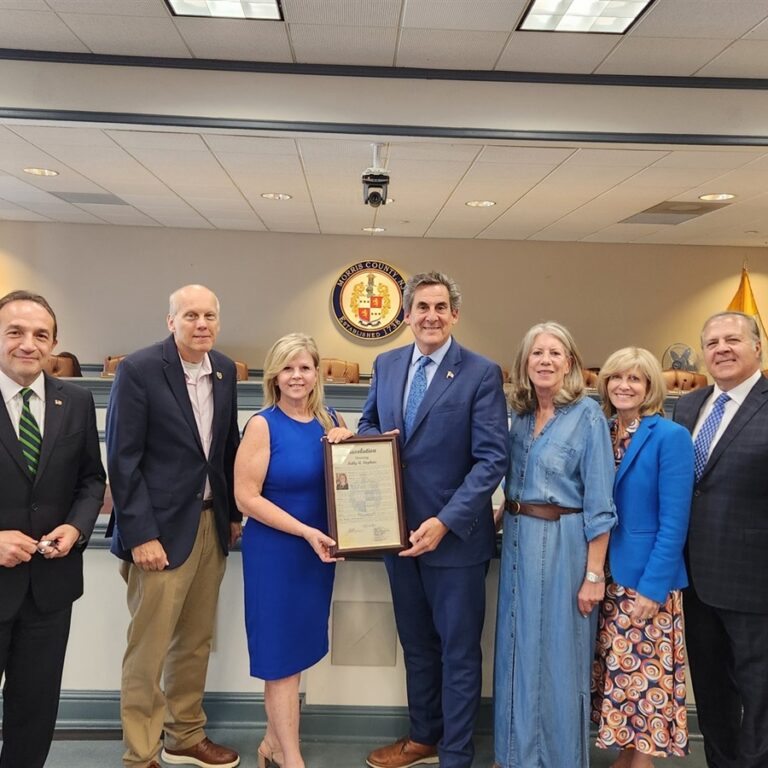
Morris County officials have unveiled a comprehensive 2026 Capital Spending Plan that reinforces the county’s commitment to infrastructure, public safety, and essential services for residents across all 39 municipalities. Presented at a public meeting in Morristown by the Morris County Board of County Commissioners, the plan outlines strategic investments totaling just over $50 million, offset by $13.1 million in grant funding, bringing the county’s net contribution to approximately $36.9 million.

Deputy Director Stephen H. Shaw, alongside Commissioners Deborah Smith and Christine Myers, chaired the Capital Budget Committee, highlighting the months of evaluation across county departments, partner agencies, and constitutional offices that informed the plan. “Our 2026 Capital Plan strikes the right balance between maintaining our existing assets and making strategic investments in the county’s future,” Shaw said. He emphasized that the plan ensures Morris County remains prepared to support economic opportunity, public safety, and a high quality of life for residents.

The plan is structured around three primary pillars — Infrastructure, Standard, and Strategic investments — to ensure county operations remain safe, efficient, and resilient.

Infrastructure Investments

Infrastructure forms the backbone of Morris County operations, covering 287 miles of county roads, over 1,000 bridges and culverts, three freight railroads, more than 3.4 million square feet of county facilities, 1,200 vehicles, and 20,611 acres of parkland. The county also maintains trees along rights-of-way and facilities required for public safety, judiciary, mosquito control, and other essential services.

More than 60% of the total plan, over $30 million, is allocated to infrastructure improvements, including road resurfacing, bridge design and construction, stormwater management, rail upgrades, dam repairs, and park enhancements. “These investments directly impact residents’ daily lives, supporting safety, mobility, and economic development,” Commissioner Smith noted.

Key 2026 road resurfacing projects include:

  • 3.6 miles of Fairmount Avenue in Chatham Borough and Chatham Township
  • 1.3 miles of Green Pond Road in Rockaway Township
  • 1.8 miles of Ridgedale Avenue in Florham Park and East Hanover
  • 4 miles of West Mill Road in Washington Township

Standard Investments

The plan dedicates approximately $13.3 million to standard investments, covering necessary but often unseen projects that keep county operations running smoothly. Funds will support security upgrades, Sheriff’s Office equipment, building and grounds improvements, vehicle replacements, and IT infrastructure enhancements. Commissioner Myers explained, “These investments ensure that essential services operate efficiently and safely every day for residents.”

Strategic Investments

Strategic investments, totaling $6.65 million, focus on forward-looking projects that enhance public safety and operational efficiency. The plan includes upgrades to fire alarm and sprinkler systems, improvements to emergency communications, Sheriff’s Patrol building fit-outs, and downtown parking facility enhancements. Commissioner Smith emphasized that these high-priority projects are designed to improve service delivery and safeguard county assets.

Before the 2026 Capital Spending Plan is incorporated into the county budget, the Capital Budget Committee invited feedback from commissioners and stakeholders to refine priorities. The plan is scheduled to be introduced formally in the first quarter of 2026, setting the stage for a year of substantial investment in Morris County’s infrastructure, public safety, and essential services.

Residents and businesses interested in county development initiatives, infrastructure updates, and strategic investment projects can follow detailed reporting and updates in Explore New Jersey’s North Jersey section.

With a robust approach to maintaining and modernizing roads, bridges, public facilities, and emergency systems, Morris County’s 2026 plan reflects a forward-thinking strategy designed to enhance safety, connectivity, and the overall quality of life for all its communities.

Trump Signs Executive Order Rescheduling Cannabis: Implications for New Jersey Dispensaries and Industry Growth

New Jersey’s cannabis industry is entering a new era following President Donald Trump’s Dec. 18 signing of a sweeping executive order directing the federal government to finalize the rescheduling of marijuana. The move shifts cannabis from the highly restrictive Schedule I category, alongside heroin and LSD, to the less restrictive Schedule III, alongside substances such as Tylenol and certain steroids. While this does not legalize cannabis nationwide or override state laws, it could have significant effects on New Jersey dispensaries, medical research, and business operations.

Under current federal law, cannabis is classified as having “no accepted medical use” and a “high potential for abuse,” creating barriers to research, banking, and taxation for state-licensed businesses. Reclassification to Schedule III allows operators to deduct ordinary business expenses from federal taxes, a major relief under Section 280E, and may encourage banks and financial institutions to engage with licensed cannabis businesses. This could provide critical financial stability for New Jersey dispensaries and cultivators while attracting new investment into the state’s rapidly growing cannabis market.

Medical and scientific research also stands to benefit. Schedule I restrictions have historically imposed extensive federal bureaucracy on researchers, delaying clinical studies and new treatment development. With cannabis in Schedule III, universities, pharmaceutical companies, and medical institutions in New Jersey can conduct research more efficiently, potentially accelerating clinical trials for cannabis-derived medications and CBD-based therapies.

For dispensaries such as Blue Violets in Hoboken, which recently launched e-bike delivery services, rescheduling creates opportunities for business expansion and investor confidence. Industry leaders describe the change as stabilizing, allowing companies to plan for growth while maintaining compliance in a state-regulated environment. JRSY Girl Growers, a Class I cultivator and soon-to-launch Class II manufacturer in Ocean Township, anticipates that rescheduling will restore investor confidence and facilitate recapitalization efforts, further boosting the local market.

Despite the positive effects, experts note that rescheduling does not equal full federal legalization. Cannabis remains a controlled substance, interstate commerce remains prohibited, and existing criminal penalties are not automatically erased. Comprehensive reform, including decriminalization and descheduling, would still require congressional action. Nevertheless, state-licensed businesses in New Jersey may see immediate benefits, including eased regulatory burdens, access to banking services, and relief from punitive tax restrictions.

The executive order also addresses access to CBD-based treatments for seniors on Medicare, a potential milestone for patient care that could begin as soon as April 2026. Advocates see the signing as overdue recognition of cannabis’s medical potential and an opening for continued evolution of state-level regulations.

New Jersey, already a leader in East Coast cannabis policy, could experience significant growth in investment, research, and retail activity as federal restrictions ease. Readers interested in tracking the evolving cannabis market, including legal, financial, and real estate implications for dispensaries and cultivation facilities, can follow Explore New Jersey’s Real Estate section.

For New Jersey’s cannabis industry, Trump’s executive order marks a historic turning point. While it does not resolve all legal and social inequities associated with prohibition, it offers tangible benefits for state-licensed businesses, investors, researchers, and patients, signaling a major step toward integrating cannabis into mainstream commerce and medical practice.

Hoboken North End Set for Major Transformation With 729-Unit Rockefeller Redevelopment Plan

Hoboken’s northern gateway is poised for a dramatic transformation as plans for a multi-phase, four-building project were advanced this week, signaling the end of decades-long vacancies along 15th Street. The City Council unanimously approved redevelopment agreements on December 17 for parcels long held by subsidiaries of the Rockefeller Group, marking a significant step toward revitalizing one of the city’s fastest-growing neighborhoods.

The four parcels, largely dormant since the early 2000s, have drawn increasing interest as Hoboken continues to grow and densify. Rockefeller Group’s plan, designed by CetraRuddy Architects, envisions a combination of residential, retail, public parking, and open space improvements across more than 700 new units. The phased approach aims to balance community needs, commercial opportunities, and enhanced urban infrastructure.

Phase one of the project will focus on the iconic Stahl Soap Company site at 1413-1425 Willow Avenue. This initial phase will introduce 233 rental units, including a 10% affordable housing component, along with 5,621 square feet of public open space. Addressing local parking challenges, a 424-space garage will be constructed, 275 spaces of which will be leased to the city under a long-term agreement, with the remaining spaces reserved for tenants. Additionally, a temporary surface lot with 50 public spaces will be maintained during construction to mitigate neighborhood disruption.

Subsequent phases will expand the development footprint along 1501-1507 Clinton Street and 1500 Willow Avenue, currently occupied by a car wash. This portion will include 188 rental units with a continued 10% affordable housing allocation, over 11,000 square feet of retail space, and public open areas totaling more than 21,700 square feet. A 6,000-square-foot promenade will connect the phases, creating a continuous public gathering space and pedestrian corridor. Another building at 1524-1530 Willow Avenue will feature 126 condominium units, retail space, and 135 parking spaces, further enhancing the pedestrian-oriented plaza.

The final phase, located at 1500 Park Avenue near the under-construction Harborside Park, will add 182 condominiums, 152 parking spaces, and nearly 16,000 square feet of ground-floor retail. Gateway Plaza, encompassing over 20,600 square feet along 16th Street across from the 1600 Park athletic fields, will provide additional public space and reinforce community accessibility throughout the project.

While the City Council’s approval of redevelopment agreements is a major milestone, Rockefeller Group will still need planning board clearance and other municipal approvals before construction can begin. Community engagement, adherence to affordable housing commitments, and integration with ongoing city infrastructure projects will remain central considerations as the project moves forward.

This ambitious redevelopment signals Hoboken’s continued evolution and represents one of the most significant north-end transformations in the city’s recent history. Residents and investors alike are anticipating the creation of vibrant mixed-use spaces that combine residential living with retail opportunities, improved public amenities, and thoughtful urban design. Coverage of Hoboken’s ongoing urban development and other real estate projects across the state can be found in Explore New Jersey’s Real Estate section.

With nearly 730 new units, expanded public plazas, and integrated retail, Rockefeller Group’s vision promises to redefine the city’s northern corridor, blending historic preservation with modern urban growth and creating a more connected, lively, and accessible Hoboken community.

New Jersey Legislature Advances Controversial Law Enforcement Mask Identification Bill

Trenton lawmakers are advancing legislation that would significantly change how law enforcement officers interact with the public in New Jersey by restricting when officers can conceal their identities while performing official duties. The move has drawn sharp attention from civil liberties advocates, law enforcement groups, and legal experts, setting up a potential debate over public safety, transparency, and constitutional limits.

The proposal, known as the “Law Enforcement Officer Protection Act,” recently cleared a key legislative committee and now moves through the State House for further consideration. Under the measure, officers at all levels — including local police, county sheriffs, state investigators, and even federal agents operating within New Jersey — would be required to show their faces and identify themselves before detaining or arresting a person. The legislation is championed by Assembly members who argue that visible identification promotes trust and reduces community tension during police interactions. Assembly Democrats

Proponents of the bill contend that seeing a uniformed officer’s face and knowing the agency they represent fosters mutual respect and reduces misunderstandings in tense situations. Assembly sponsors have emphasized that clear identification can reassure residents, particularly in diverse and immigrant communities, who may feel uneasy when approached by officers whose faces are obscured. The Jersey Vindicator

However, the scope of the bill extends beyond identification requirements. It also includes language that would prohibit law enforcement officers from wearing masks or any disguises while interacting with the public unless specific exceptions apply. Exemptions written into the legislation would cover undercover operations, protective face shields that do not obscure identity, medically necessary masks backed by a physician’s statement, and masks used for protection from smoke in declared emergencies. Violations of the provision would be classified as a disorderly persons offense, carrying potential fines and jail time, underscoring the seriousness with which the Legislature is approaching enforcement. New Jersey Legislature+1

Supporters maintain that the rule against masked interactions targets misuse of anonymity in official duties, including instances where federal personnel operating in the state may conceal their faces during sensitive operations. They assert that stronger visibility standards will make it easier for members of the public to distinguish legitimate law enforcement from impersonators, a concern lawmakers say has increased amid reports of individuals misrepresenting themselves as officers. New Jersey Monitor

Critics of the measure raise a host of concerns. Some law enforcement professionals caution that limiting face coverings could compromise officer safety in high-risk assignments where anonymity is essential. Others worry about potential legal challenges, especially where the bill’s restrictions would apply to federal agents; constitutional scholars note that states generally lack authority to regulate federal operations, opening the measure to court challenges if enacted. New Jersey Monitor

Civil liberties advocates also argue that such a mandate could have unintended consequences beyond policing. They note that masks and face coverings serve legitimate purposes — from medical protections to religious observance — and that blanket restrictions tied to law enforcement could set precedents affecting public interaction rights more broadly.

As the conversation unfolds in Trenton, New Jersey’s legislative session is likely to see extensive testimony from law enforcement officials, civil rights organizations, and community representatives. The bill’s journey through successive committee votes and potential amendments will be closely watched by stakeholders across the state.

Readers interested in developments related to policing, public safety, and legislative action throughout New Jersey can find continued tracking and reporting in Explore New Jersey’s Law & Order section.

The outcome of this bill will influence not only how officers approach civilian encounters but also how New Jersey balances transparency, safety, and civil liberties in law enforcement policy.

New Jersey Faces Weather Whiplash With Warmth, Heavy Rain, Strong Winds, and Icy Risks Ahead

New Jersey residents are in for a dramatic stretch of weather as the state shifts from midweek warmth to stormy conditions, followed by a sharp temperature drop that could create hazardous travel conditions. Meteorologists are tracking a series of high-confidence developments that will bring everything from soaking rain and gusty winds to refreezing surfaces and the first real conversation of a possible white Christmas.

The pattern began with a surge of synoptic-driven warmth that pushed afternoon temperatures well into the 40s and low 50s from North Jersey through South Jersey. That brief warmup took a noticeable toll on existing snowpack, melting accumulated snow and leaving behind widespread runoff. As temperatures fall back into the 20s overnight, that melted snow is expected to refreeze, setting the stage for icy patches and prominent icicles by Thursday morning.

Thursday brings a temporary rebound above freezing during the day, but the bigger story arrives late Thursday night. A powerful storm system is forecast to move into the region, bringing widespread rain and increasing winds. Rain is expected to overspread New Jersey from west to east around midnight, becoming heavy at times through early Friday morning. Most areas should see steady rainfall until roughly mid-morning Friday, followed by a narrower band of precipitation before conditions improve.

Rainfall totals are projected to range from roughly three-quarters of an inch to over an inch in North Jersey, with somewhat lower totals across South Jersey. Alongside the rain, winds will become increasingly strong. Southerly and south-southwesterly winds will dominate ahead of the storm and during the heaviest rainfall overnight. As the system evolves early Friday, a brief but intense period of shifting winds could develop, particularly if a narrow convective band moves through. This window carries the potential for isolated thunderstorms and localized wind damage.

By late Friday morning, conditions will change rapidly as a cold front sweeps through the state. Winds will shift to the northwest and strengthen further, ushering in a much colder air mass. Temperatures are expected to drop sharply through Friday afternoon and evening. While this is not expected to meet flash-freeze criteria, the drop will be fast enough to refreeze standing water on untreated roads, sidewalks, and areas with poor drainage.

Compounding the risk is the fact that heavy rain will wash away road salt, increasing the likelihood of black ice Friday night into early Saturday. Drivers are urged to use caution, particularly on secondary roads that may appear wet but are actually frozen.

Looking ahead, attention is turning to the broader late-December pattern. Confidence is lower, but there is increasing interest in the potential for wintry weather around the Christmas holiday. A shifting jet stream pattern could place New Jersey near a sharp temperature boundary, meaning small changes could determine whether upcoming systems bring rain or snow. Several disturbances are being monitored between December 23 and New Year’s Eve, including the Christmas Eve and Christmas Day timeframe. While a white Christmas is far from guaranteed, the signal is stronger than it has been in recent years.

Saturday is expected to moderate somewhat after a cold Friday night, but another cold front is forecast to arrive Sunday night, returning the state to a colder pattern punctuated by brief warmups. This setup favors continued weather volatility through the end of the year.

In plain terms, New Jersey is entering a classic winter roller coaster. After brief warmth, the state will deal with heavy rain and strong winds late Thursday into Friday morning, followed by a rapid freeze and icy conditions Friday night. Temperatures rebound slightly over the weekend before colder air settles back in. Several potential systems could bring rain, ice, or snow as the holiday period unfolds.

For continued updates and in-depth coverage as conditions evolve, readers can follow Explore New Jersey’s Weather Report section, which will track changes and provide timely guidance as this active winter pattern develops.

Haddonfield Secures Major Federal Funding to Transform Downtown Pedestrian Access

Haddonfield is moving closer to a safer, more walkable downtown after securing a substantial federal grant aimed at improving pedestrian connections to public transit. The borough has been awarded approximately $800,000 through the “Safe Streets to Transit” initiative, funding that will support targeted upgrades along the Kings Highway corridor, one of South Jersey’s most active and visible main streets.

The new award builds on momentum already underway. Over the past year, Haddonfield has captured more than $1 million in transportation-related grants, underscoring a coordinated effort to enhance accessibility, safety, and mobility for residents, commuters, and visitors. Together, the funding packages position the borough to make meaningful infrastructure improvements that align with modern transit-oriented planning.

Kings Highway serves as the heart of Haddonfield’s downtown, linking shops, restaurants, neighborhoods, and the PATCO High-Speed Line station. Borough officials have identified the corridor as a priority area where pedestrian safety improvements can deliver immediate benefits. Planned enhancements are expected to include upgraded crosswalks, improved sidewalk conditions, traffic-calming measures, and clearer pedestrian routes leading to transit hubs.

The Safe Streets to Transit funding is designed to reduce the risk of pedestrian and cyclist injuries while encouraging greater use of public transportation. By improving how people move between neighborhoods and transit stations on foot, Haddonfield aims to support a more connected, environmentally friendly, and inclusive downtown experience.

Local leaders have emphasized that the initiative is not just about infrastructure, but about quality of life. Safer streets can encourage more foot traffic, support local businesses, and make downtown more accessible for seniors, families, and individuals with disabilities. Enhancing walkability also strengthens the borough’s appeal as a regional destination while preserving its historic character.

Preliminary planning and design work is expected to continue over the next year, with construction on the first phase of improvements potentially beginning in the summer of 2026. Officials have indicated that community input will play an important role as plans are refined, ensuring that the upgrades reflect local needs and priorities.

Haddonfield’s investment mirrors a broader trend across South Jersey, where municipalities are pursuing grant funding to modernize infrastructure and create safer, more livable communities. Readers interested in similar local initiatives, downtown revitalization efforts, and regional development news can find more coverage in Explore New Jersey’s South Jersey section.

As planning moves forward, the Kings Highway pedestrian improvements are expected to serve as a model for how historic towns can balance preservation with progress, using strategic funding to create safer streets and stronger connections to public transit.

New Jersey Appeals Court Ruling Highlights High Stakes of Precision in Public Construction Bidding

A recent New Jersey appellate decision is sending a clear message to contractors and public agencies alike: strict adherence to bid requirements is not optional, and even seemingly minor technical missteps can cost companies major public contracts. The ruling, which arose from a school construction project in Edison Township, reinforces the authority of public entities to enforce detailed bidding specifications and underscores the growing importance of procedural accuracy in public procurement.

The dispute stemmed from bids submitted for an addition to a school overseen by the Edison Township Board of Education. Three construction firms were in contention, with two companies submitting lower-priced bids than the eventual contract winner. Despite the higher cost, the Board awarded the project to Vanas Construction Co., determining it was the lowest responsible bidder because its submission fully complied with all bid requirements.

The lower bids, submitted by ML, Inc. and Benard Associates, were rejected due to defects the Board classified as material and non-waivable. Both firms challenged the decision, arguing that the issues identified should not have disqualified their bids. The courts disagreed.

At the center of the case were timing and accuracy requirements tied to mandatory bid documents. ML’s submission included a required disclosure form detailing ongoing project obligations for its subcontractor. While the form itself was completed properly, it was dated several months before the bid opening. The Board concluded that the information was no longer “current” and therefore unreliable, a determination the courts found to be reasonable given the explicit language in the bid specifications.

Benard’s bid was rejected for a different but equally critical reason. Its bid bond was dated more than a month before the bid opening and prior to a significant project addendum that altered the scope and pricing of the work. The Board determined that the bond did not adequately protect the district, as the surety may not have agreed to cover the revised project terms. The appellate court upheld that reasoning, noting that bid bonds are fundamental to ensuring enforceability and financial security in public contracting.

The ruling reinforces a long-standing principle in New Jersey public procurement: public entities have broad discretion to draft bid requirements and enforce them as written, particularly when the defects affect the integrity of the bidding process. Courts are generally reluctant to override those decisions unless they are arbitrary or unreasonable, a threshold that was not met in this case.

For contractors, the implications are significant. Competitive pricing alone is no longer enough to secure public work. Every required document must be accurate, timely, and aligned precisely with bid instructions. Forms that are outdated, bonds that are improperly dated, or submissions that fail to account for late-stage addenda can all be grounds for rejection, even when the bid offers substantial cost savings.

Public boards and agencies, meanwhile, may view the decision as confirmation that detailed specifications matter and that enforcing them protects both taxpayers and project integrity. Clear bid language, consistent enforcement, and careful review of submissions remain essential components of responsible public contracting.

As technology continues to shape procurement systems, document management, and compliance tracking, cases like this highlight the intersection of legal standards and operational execution. Contractors increasingly rely on digital tools to manage complex bid requirements, while public entities use technology to standardize and scrutinize submissions. Readers interested in how technology intersects with legal, business, and infrastructure developments across the state can explore additional coverage in Explore New Jersey’s Real Estate & Construction section.

The Edison Township case serves as a cautionary tale for anyone involved in public bidding in New Jersey. In an environment where compliance is paramount, attention to detail is not just best practice—it is often the deciding factor between winning and losing a contract.

Gallery Digital Signage Brings Museum-Quality Digital Art Displays to the U.S. With Vieunite Pro Launch

Gallery Digital Signage is expanding the possibilities of how digital art is presented in professional and residential spaces with the U.S. debut of its Vieunite Pro line, highlighted by the introduction of the Textura Pro digital canvas. The new product offering signals a growing demand for high-end display technology that blends visual artistry with advanced digital performance.

Designed to elevate how art is experienced on screen, the Vieunite Pro series targets environments where presentation quality is paramount. From corporate offices and hospitality venues to galleries and upscale homes, these professional-grade displays aim to replicate the depth, texture, and presence of traditional artwork while delivering the flexibility of digital content.

The Textura Pro digital canvas serves as the flagship of the lineup. Built with an emphasis on visual realism, the display is engineered to minimize glare, enhance color accuracy, and create a more natural viewing experience. Unlike conventional digital signage, which often prioritizes brightness and motion, the Textura Pro focuses on subtlety and refinement—qualities that allow digital art, photography, and curated visual content to feel intentional rather than intrusive.

This launch reflects a broader shift within the digital signage industry, where technology is increasingly intersecting with design and aesthetics. As businesses and institutions look for ways to create more engaging environments, displays are being asked to do more than convey information. They are becoming part of the architecture and atmosphere of a space, contributing to brand identity and visitor experience.

For Gallery Digital Signage, entering the U.S. market with Vieunite Pro represents an expansion of its vision for how digital displays can function as art-forward solutions. The company’s approach emphasizes professional reliability alongside creative expression, offering tools that can support rotating exhibitions, branded visuals, or permanent digital installations without sacrificing visual integrity.

The timing of the launch is notable as well. Advances in display technology, content management, and digital curation have made it easier than ever to integrate sophisticated visual systems into everyday settings. As a result, demand is rising for displays that meet both technical and artistic standards, particularly in design-conscious markets like New Jersey.

Readers interested in emerging innovations, smart display systems, and the evolving role of technology in creative spaces can explore more coverage in Explore New Jersey’s Technology & Tech section.

With the introduction of Vieunite Pro and the Textura Pro digital canvas, Gallery Digital Signage is positioning itself at the intersection of technology and art, offering U.S. audiences a new way to experience digital visuals that feel curated, immersive, and intentionally designed for modern spaces.

Morven Museum & Garden Prepares Yearlong Celebration Marking America’s 250th Anniversary

As the United States approaches its 250th anniversary, Morven Museum & Garden in Princeton is positioning itself as a central destination for reflection, education, and cultural engagement throughout 2026. The National Historic Landmark, once home to Founding Father Richard Stockton, is unveiling a comprehensive slate of exhibitions, public programs, and special events designed to explore the nation’s past while connecting it to the present.

Morven’s historic grounds and storied interiors provide a fitting setting for the semiquincentennial. The site has long served as a window into American political, social, and cultural history, and its upcoming programming builds on that legacy by offering visitors multiple ways to engage with the ideas and individuals that shaped the country. Rather than focusing on a single commemorative moment, the museum’s plans span the entire year, encouraging ongoing participation from residents, students, and visitors from across the region.

New exhibitions will anchor the celebration, drawing from Morven’s collections and broader historical scholarship to examine themes such as civic leadership, independence, and the evolving meaning of democracy. These exhibitions are expected to present history as a living conversation, highlighting both well-known figures and the diverse voices that contributed to the nation’s development over the past two and a half centuries.

In addition to gallery experiences, Morven will host an expanded calendar of lectures, panel discussions, educational workshops, and community-oriented events. These programs are designed to invite dialogue and deepen public understanding, making the anniversary relevant to contemporary audiences. Families, educators, and history enthusiasts alike will find opportunities to engage with the semiquincentennial in ways that are accessible and meaningful.

The museum’s outdoor spaces will also play an important role. Morven’s gardens, already a draw for visitors year-round, are expected to host special events and seasonal programming tied to the anniversary. By blending history with its natural setting, the museum aims to create experiences that appeal to a broad audience while reinforcing Princeton’s role as a cornerstone of New Jersey’s historical landscape.

Morven’s yearlong initiative aligns with a broader statewide and national effort to recognize America’s 250th anniversary, but its approach remains distinctly local. By centering the story within the context of New Jersey and Princeton’s role in the nation’s founding, the museum offers visitors a chance to see how national history unfolded at a human scale.

Those interested in cultural institutions, historic celebrations, and major public events happening across the state can find additional coverage and related stories in Explore New Jersey’s Entertainment section.

With its thoughtful programming and immersive setting, Morven Museum & Garden’s semiquincentennial plans promise to make 2026 a year of discovery and reflection, reinforcing the enduring relevance of history and New Jersey’s place at the heart of the American story.