
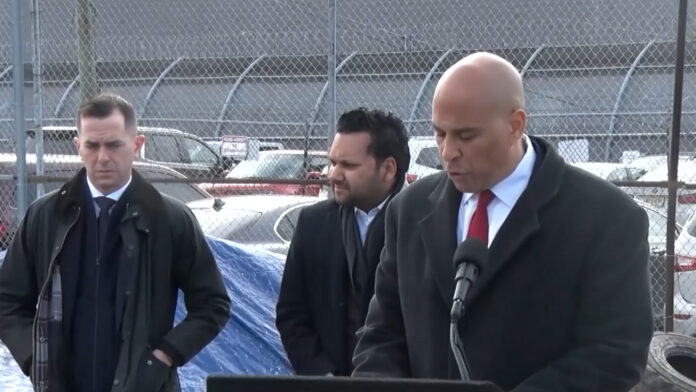

The national debate surrounding immigration detention facilities has increasingly shifted beyond questions of border policy and enforcement, focusing instead on transparency, accountability, public health, and the treatment of individuals housed within detention centers. Now, New Jersey is once again at the center of that conversation as U.S. Senator Cory Booker and U.S. Representative Adriano Espaillat have introduced legislation that would significantly expand the authority of state governments to inspect immigration detention facilities operating within their borders.
The proposed Governors’ Right to Inspect Act arrives during a period of heightened scrutiny surrounding detention centers nationwide and growing concerns among state officials who argue they lack the tools necessary to independently verify conditions inside facilities located within their own jurisdictions. Supporters of the legislation contend that governors and designated public health and safety officials should have the ability to conduct inspections, review records, and evaluate living conditions without federal interference, particularly when questions arise regarding detainee welfare and compliance with health and safety standards.
For New Jersey, the legislation carries special significance because recent disputes surrounding access to detention facilities have already become a major political issue. The debate has intensified following public concerns about conditions at Delaney Hall and broader national discussions regarding oversight, detainee rights, healthcare access, and operational transparency within immigration detention systems.
The legislation proposed by Booker and Espaillat seeks to establish a framework that would allow governors and authorized state officials to conduct health and safety inspections of immigration detention facilities located within their states. Under the proposal, federal funds could not be used to prevent those inspections, creating a mechanism through which states could independently evaluate facility conditions and identify potential deficiencies.
The proposal reflects a broader shift in how many policymakers view detention oversight. While immigration enforcement remains a federal responsibility, advocates for increased inspections argue that state governments also have legitimate interests in protecting public health, ensuring compliance with applicable standards, and safeguarding the well-being of individuals housed within facilities operating inside their borders.
At its core, the legislation is centered on access.
If enacted, state officials conducting inspections would be authorized to enter all areas of detention facilities, privately interview detainees regarding health and safety concerns, review relevant records, and document conditions through written reports and photographic evidence. The measure would also require the Department of Homeland Security to respond formally to inspection findings submitted to Congress, outlining any corrective actions planned or already implemented.
Supporters believe these provisions would create a more transparent oversight process and establish clearer accountability mechanisms when concerns emerge.
The proposal comes at a time when immigration detention remains one of the most closely watched issues in national politics. Questions surrounding detention standards, medical care, facility conditions, and detainee treatment have generated extensive debate among policymakers, advocacy organizations, state governments, and federal agencies. Reports of inadequate medical care, overcrowding concerns, delayed treatment, and facility management issues have fueled calls for stronger oversight structures.
Advocates for expanded inspections argue that independent evaluations provide an important safeguard against potential abuses and help ensure that facilities meet accepted health and safety standards. They contend that transparency not only protects detainees but also strengthens public confidence in the operation of detention systems.
Critics of expanded state involvement, however, may raise concerns regarding jurisdictional authority and the balance between federal immigration enforcement responsibilities and state oversight interests. Those debates are likely to play a central role as the legislation moves through Congress and encounters broader discussions regarding immigration policy and federal-state relations.
For Senator Booker, the proposal represents the latest step in a broader effort to increase accountability within immigration detention operations. Over the past several years, he has advocated for reforms aimed at improving detention conditions, strengthening oversight mechanisms, and expanding protections for individuals held within immigration facilities.
The Governors’ Right to Inspect Act builds upon those efforts by focusing specifically on state-level inspection authority. Rather than creating an entirely new oversight bureaucracy, the legislation seeks to empower existing state public health and safety officials with access and authority to evaluate conditions firsthand.
Representative Espaillat has similarly emphasized the importance of ensuring that detention facilities remain subject to meaningful review and public accountability. Supporters of the bill point to increasing concerns regarding detainee health outcomes and reports of deteriorating conditions as evidence that additional oversight tools are needed.
The proposal also highlights the growing role governors are playing in national policy debates. State leaders increasingly find themselves addressing issues that intersect with federal authority, particularly when those issues affect communities, facilities, or residents located within their states. Whether related to public health, infrastructure, environmental protection, or immigration detention, governors have sought greater involvement in matters that directly impact local populations.
New Jersey has emerged as one of the states most actively engaged in these conversations. The state has frequently positioned itself at the forefront of debates concerning immigration policy, detention standards, and civil rights protections. The introduction of this legislation reflects that continuing engagement and underscores the state’s role in shaping national discussions on these issues.
Beyond the political implications, the legislation raises broader questions about transparency in government operations. Public institutions and private contractors operating government facilities are increasingly facing demands for greater openness regarding conditions, performance metrics, compliance standards, and operational practices. In that context, detention facilities have become part of a larger national conversation about accountability and public oversight.
For residents of New Jersey, the proposal may resonate beyond immigration politics alone. It touches on fundamental questions about the responsibilities of government, the protection of vulnerable populations, and the role state officials should play when concerns arise regarding facilities operating within their borders.
The measure also reflects growing recognition that oversight is often most effective when multiple layers of accountability exist. Federal inspections, state reviews, public reporting, and independent evaluations can collectively create stronger systems for identifying problems and addressing deficiencies before they escalate into larger crises.
As Congress considers the Governors’ Right to Inspect Act, the proposal is likely to attract attention from policymakers across the country, particularly in states that host immigration detention facilities. Supporters view it as a practical mechanism for improving transparency and strengthening protections. Opponents may view it as an expansion of state authority into an area traditionally managed by federal agencies.
Regardless of where the debate ultimately lands, the legislation underscores the increasing importance of transparency in public policy discussions. In an era when citizens expect greater visibility into government operations and institutional decision-making, proposals aimed at expanding oversight often generate significant public interest.
For New Jersey, the introduction of the Governors’ Right to Inspect Act represents another chapter in an ongoing conversation about accountability, public safety, civil rights, and governmental responsibility. Whether the legislation advances or encounters significant resistance, it has already succeeded in drawing renewed attention to the conditions inside detention facilities and the broader question of who should have the authority to inspect them.
As policymakers continue debating the future of immigration detention oversight, one issue remains clear: transparency, accountability, and public confidence will continue to play central roles in shaping the next generation of detention policy both in New Jersey and across the nation.
















