
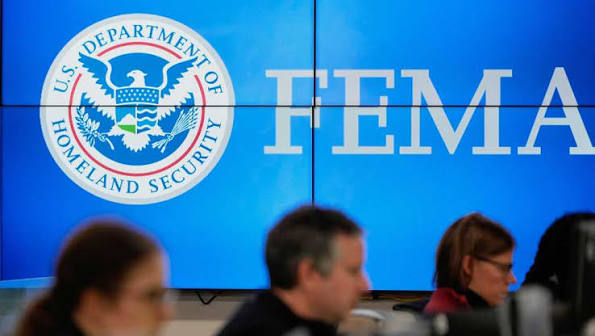

New Jersey has joined a coalition of roughly two dozen states in suing the federal government over new conditions attached to Department of Homeland Security and FEMA grant funding, arguing that the requirements unlawfully leverage disaster relief, cybersecurity, and emergency preparedness dollars to advance the administration’s election and immigration policy priorities. New Jersey Attorney General Jennifer Davenport says the state has roughly $55 million in fiscal year 2026 grants at stake, funding tied to programs supporting counterterrorism preparedness, cybersecurity infrastructure, and disaster response capability across the state.
The lawsuit, filed Thursday, July 23, in the U.S. District Court for the District of Rhode Island, specifically challenges a set of new requirements attached to Homeland Security Grant Program funding for fiscal year 2026. According to the complaint, those conditions would require states to transition to paper ballot voting systems, conduct a mandatory manual audit covering at least 5 percent of voting systems, reconcile voter and ballot records using a methodology DHS has not publicly disclosed, and run every registered voter and election worker in a state’s database through DHS’s Systematic Alien Verification for Entitlements system specifically to check citizenship status. States that decline to comply would face DHS and FEMA withholding at least 20 percent of their total Homeland Security Grant Program funding.
The coalition’s legal argument centers heavily on the accuracy and legal authority behind that verification requirement specifically. According to the states’ filing, DHS itself does not dispute that its SAVE system can erroneously flag actual U.S. citizens as noncitizens, raising genuine concerns about relying on that same system to verify the citizenship status of an entire state’s voter rolls and election workforce. The states also argue that election administration requirements bear no clear legal connection to counterterrorism funding that Congress specifically authorized for entirely different purposes, along with a separate objection to language in the new grant conditions that the states say grants DHS effectively unrestricted authority to terminate the funding at any time and for any reason, a level of discretion the coalition argues undermines the basic stability and reliability these emergency preparedness programs depend on to function effectively.
This isn’t the first time New Jersey and allied states have challenged this kind of funding condition. New Jersey co-led two related lawsuits in 2025, both filed in the same Rhode Island federal court, successfully challenging separate DHS efforts, one attempting to condition billions in federal emergency funding on states agreeing to actively enforce federal immigration law, and another attempting to unlawfully reallocate homeland security funding away from jurisdictions DHS viewed as insufficiently supportive of the administration’s broader political agenda. A federal judge ruled against DHS in both of those earlier cases. The new lawsuit argues that DHS and FEMA have continued pursuing substantially similar coercive conditions despite those prior losses, this time across three distinct categories tied to fiscal year 2026 funding notices, covering election administration, immigration enforcement cooperation, and the agencies’ own termination authority.
Rhode Island Attorney General Peter Neronha, one of the coalition’s co-leading attorneys general alongside Davenport, California’s Rob Bonta, and Illinois’s Kwame Raoul, characterized the administration’s approach as effectively using public safety funding as leverage to pressure states into surrendering constitutional authority they’re otherwise entitled to exercise independently. Davenport herself has argued that FEMA cannot legally use counterterrorism and other essential federal funding as a tool to coerce states into assisting with civil immigration enforcement or altering their own election administration practices. A DHS spokesperson has defended the new requirements publicly, characterizing them as measures specifically designed to protect election integrity nationally, a justification the plaintiff states dispute directly, arguing the requirements exceed the authority Congress actually granted DHS and FEMA and violate both the Administrative Procedure Act and the U.S. Constitution’s spending clause.
Beyond New Jersey, the coalition challenging the new conditions includes attorneys general from Arizona, California, Colorado, Connecticut, Delaware, Hawaii, Illinois, Maine, Maryland, Massachusetts, Michigan, Minnesota, Nevada, New Mexico, New York, North Carolina, Oregon, Rhode Island, Vermont, Virginia, and Wisconsin, along with the District of Columbia and the governors of Kentucky and Pennsylvania, reflecting a genuinely broad, multistate response to funding conditions that collectively affect billions of dollars nationally, including more than a billion dollars specifically within the Homeland Security Grant Program that states rely on to fund security measures protecting residents from terrorism, cyberattacks, and related threats.
With litigation now underway and a federal judge having already ruled against substantially similar conditions in 2025, the coming months are likely to determine whether this latest round of funding conditions survives judicial review or joins its predecessors in being blocked before ever taking effect, a decision that carries direct financial stakes for New Jersey’s own counterterrorism, cybersecurity, and emergency preparedness programs heading into the new fiscal year.
















