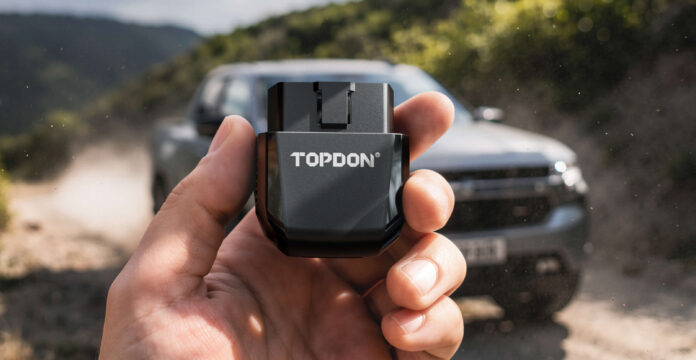

New Jersey has long been a state where automotive culture thrives. From weekend car shows and performance gatherings to the thousands of contractors, tradespeople, commuters, towing enthusiasts, and truck owners who rely on their vehicles every day, reliability remains one of the most important factors influencing purchasing decisions. That reality is one reason a newly released automotive technology product from TOPDON USA is generating significant attention among General Motors vehicle owners throughout the Garden State and across North America.
The company has officially introduced its new AFM/DFM Disabler, a plug-and-play device designed specifically for General Motors vehicles equipped with Active Fuel Management (AFM) and Dynamic Fuel Management (DFM) systems. The product arrives at a time when discussions surrounding long-term engine reliability, preventative maintenance, and vehicle longevity continue to dominate automotive forums, repair shops, dealerships, and enthusiast communities.
For many GM owners, the launch represents more than just another aftermarket accessory. It addresses one of the most frequently discussed engineering concerns associated with modern V6 and V8 powertrains found in some of the most popular vehicles on American roads.
From the Chevrolet Silverado and Tahoe to the GMC Sierra and Yukon, and from work trucks to luxury SUVs like the Cadillac Escalade, millions of drivers operate vehicles equipped with cylinder deactivation technology. While these systems were originally engineered to improve fuel economy and meet increasingly stringent emissions standards, many owners and technicians have spent years debating the long-term mechanical consequences associated with constantly transitioning between full-power and reduced-cylinder operation.
TOPDON’s newest product enters that conversation with a straightforward objective: keeping every cylinder operating continuously while preserving factory vehicle programming.
The technology behind AFM and DFM was developed with efficiency in mind. Under light-load driving situations, such as steady highway cruising, the engine automatically shuts down selected cylinders. A V8 engine, for example, may temporarily operate as a four-cylinder powerplant until additional power is required. Once acceleration increases, all cylinders reactivate and normal operation resumes.
On paper, the concept delivers measurable fuel savings.
In practice, however, many vehicle owners have reported concerns ranging from drivability issues to long-term mechanical wear. Over time, repeated transitions between operating modes can place additional demands on specialized internal engine components. Among the most frequently cited concerns are lifter failures, oil consumption issues, carbon buildup, inconsistent throttle response, and vibration during cylinder activation or deactivation cycles.
Automotive repair facilities across the country have become increasingly familiar with these issues, particularly among higher-mileage vehicles.
The new TOPDON AFM/DFM Disabler seeks to eliminate those transitions altogether.
Unlike traditional tuning solutions that require software modifications, ECU flashes, or permanent programming changes, the device connects directly through the vehicle’s OBD-II diagnostic port. Once installed, it communicates with the vehicle’s existing systems and prevents activation of cylinder deactivation modes while leaving factory programming intact.
That distinction is significant for vehicle owners who prefer reversible solutions.
Because the system does not permanently alter factory calibrations, owners can simply remove the device at any time and instantly restore original operating behavior. There are no software downloads, no complicated installation procedures, and no permanent changes to factory settings. The approach provides flexibility while addressing concerns that many drivers have expressed regarding AFM and DFM operation.
For New Jersey drivers, particularly those who rely on their vehicles for work, towing, or long-distance travel, the practical benefits extend beyond engine preservation.
Consistent power delivery remains one of the primary advantages cited by users of cylinder deactivation disablers. Anyone who has experienced the subtle hesitation, vibration, or transmission shudder that can occur when a vehicle transitions between operating modes understands how noticeable those changes can become over thousands of miles.
Maintaining continuous eight-cylinder or six-cylinder operation creates a more predictable driving experience, especially under varying load conditions.
This is particularly relevant in a state like New Jersey where drivers encounter virtually every driving environment imaginable. Daily commutes can involve stop-and-go traffic near Newark, highway travel along the Garden State Parkway, towing boats toward the Jersey Shore, hauling equipment through South Jersey agricultural regions, or navigating mountain roads in Sussex County.
Each scenario places different demands on a vehicle’s drivetrain.
For towing applications, maintaining uninterrupted power delivery becomes even more valuable. Whether pulling trailers, boats, campers, landscaping equipment, or commercial cargo, drivers often prefer consistent engine performance rather than allowing the vehicle to cycle repeatedly between operating modes.
Many enthusiasts also point to reduced engine stress as a significant benefit.
The specialized lifters used in AFM and DFM systems represent some of the most discussed components within modern GM powertrains. By eliminating the constant activation and deactivation cycle, owners hope to reduce wear on these components and potentially extend engine longevity.
Another frequently cited advantage involves combustion consistency.
When cylinders are deactivated for extended periods, conditions inside those cylinders differ from actively firing chambers. Some technicians believe maintaining continuous operation can help reduce carbon accumulation and oil-related issues that may develop over time. While opinions vary throughout the automotive community, the popularity of cylinder deactivation disablers reflects the widespread interest in preventative maintenance strategies.
TOPDON’s engineering team also addressed one concern commonly associated with OBD-connected accessories: battery drain.
The device incorporates a Smart Sleep feature designed to minimize power consumption when the vehicle is turned off. By reducing standby draw to extremely low levels, the system can remain connected without creating unnecessary strain on the vehicle’s battery.
Compatibility is another major selling point.
The AFM/DFM Disabler supports a broad range of General Motors platforms spanning model years from 2005 through 2025. Coverage includes numerous V6 and V8 powertrains found in some of GM’s highest-volume vehicles, making the device relevant to a massive portion of the North American vehicle fleet.
That extensive compatibility means the product appeals to a diverse customer base ranging from daily commuters and family SUV owners to contractors, fleet operators, performance enthusiasts, and recreational vehicle users.
The timing of the release also reflects broader trends within the automotive industry.
As vehicle prices continue rising and replacement costs reach historic levels, consumers are increasingly focused on maximizing the lifespan of existing vehicles. Owners who once traded vehicles every few years are now holding onto them significantly longer. Preventative maintenance, reliability enhancements, and technology solutions designed to protect major drivetrain components have become increasingly attractive investments.
The aftermarket automotive sector has responded accordingly, introducing products focused on preserving factory performance while reducing potential maintenance concerns.
For New Jersey’s automotive community, the arrival of technologies like the TOPDON AFM/DFM Disabler highlights a growing intersection between digital vehicle management and mechanical reliability. Modern vehicles rely more heavily than ever on software-controlled systems, creating new opportunities for products that influence vehicle behavior without permanently altering factory engineering.
As drivers continue seeking ways to balance efficiency, performance, and long-term durability, solutions that offer flexibility and reversibility are likely to attract increasing attention.
Whether viewed as an engine protection tool, a drivability enhancement, a towing upgrade, or simply a preventative maintenance investment, TOPDON USA’s latest release enters a market where demand for reliability-focused automotive technology continues to grow. For thousands of General Motors owners throughout New Jersey and beyond, that combination of simplicity, compatibility, and mechanical peace of mind may prove to be exactly what they have been waiting for.