

Professional theatre has long depended on more than what audiences see under stage lights. The strongest companies build communities, cultivate artists, create educational opportunities, encourage new voices, and continually reinvent themselves in response to changing audiences and evolving creative landscapes. Throughout New Jersey, few organizations have embraced that philosophy as completely as Vivid Stage. While audiences have come to know the company for its acclaimed theatrical productions, original works, cabarets, improv performances, educational programming, and commitment to developing new plays, the organization has quietly expanded its influence far beyond the traditional boundaries of regional theatre.
That broader vision is now taking center stage through Local, Vivid Stage’s ongoing podcast and digital series hosted by Artistic Director Laura Ekstrand and Associate Artistic Director Dave Maulbeck. More than simply promoting upcoming productions, the series has evolved into an engaging behind-the-scenes chronicle of a professional theatre company navigating artistic growth, community partnerships, independent filmmaking, education, and the countless creative decisions that shape every season.
As Season 6 unfolds, Local reveals an organization operating with remarkable momentum. Each episode offers an intimate look at the work happening before audiences ever take their seats, illustrating how productions emerge from early conversations and rehearsals into fully realized performances while documenting the collaborative relationships that sustain a thriving arts organization. The podcast has become an extension of Vivid Stage’s artistic mission, inviting audiences to participate in the creative process rather than simply witness its finished results.
For New Jersey’s arts community, that level of transparency carries particular significance. Regional theatre often exists in public perception as a sequence of opening nights and closing performances. The reality is considerably more complex. Every production represents months—or even years—of development involving playwrights, directors, actors, designers, technicians, educators, volunteers, and administrators working together to create meaningful artistic experiences. Local shines a light on that process, transforming what might otherwise remain unseen into an ongoing conversation between artists and audiences.
The reboot of Local marked more than the return of a familiar program. It represented a renewed commitment to documenting the company’s artistic evolution while expanding the ways audiences can connect with Vivid Stage throughout the year. Instead of limiting engagement to performance weekends, the podcast keeps conversations alive between productions, allowing listeners to experience the creative rhythm that defines the organization.
The opening episode of the sixth season immediately establishes this expanded perspective. Rather than focusing exclusively on upcoming performances, Laura Ekstrand and Dave Maulbeck guide listeners through the remarkable diversity of projects taking place simultaneously. The discussion illustrates an important reality about Vivid Stage that many patrons may not fully appreciate. The company is not solely producing plays. It is developing new theatrical works, offering educational programs, cultivating improvisational performers, producing cabarets, supporting emerging artists, experimenting with interdisciplinary performance, and increasingly exploring opportunities in independent film.
That breadth reflects years of careful organizational development. While many regional theatres concentrate exclusively on established productions, Vivid Stage has steadily positioned itself as an incubator for original artistic work. New scripts receive developmental readings. Experimental performances are encouraged. Educational initiatives welcome artists at multiple experience levels. Community collaborations broaden the organization’s reach beyond conventional theatre audiences.
The podcast gives these parallel efforts equal attention, reinforcing the idea that artistic success is measured not only by ticket sales or critical recognition but by sustained creative activity across multiple disciplines.
One of the defining characteristics of Season 6 is its willingness to invite audiences inside the rehearsal room. Rather than presenting polished marketing narratives, Laura and Dave openly discuss the uncertainties, discoveries, and occasional surprises that accompany every production. Stories from rehearsals, technical preparation, casting decisions, and artistic experimentation reveal professional theatre as a living, evolving process rather than a finished product delivered fully formed.
That openness has become one of the podcast’s greatest strengths. Listeners gain an appreciation for the countless creative choices that influence every performance, from script interpretation and staging to musical direction and collaborative problem-solving. For aspiring artists, the series offers practical insight into the realities of professional production. For longtime patrons, it deepens appreciation for the craftsmanship behind each performance.
The conversations also highlight the enduring partnership between Laura Ekstrand and Dave Maulbeck, whose creative collaboration continues to shape nearly every aspect of Vivid Stage’s identity. Their dialogue moves comfortably between artistic reflection, production updates, humorous backstage stories, and thoughtful discussion about the evolving role of theatre in contemporary society. The result feels less like a promotional program and more like an ongoing journal documenting the life of a creative organization.
Education remains another cornerstone of that mission. Throughout the season, the podcast repeatedly returns to the importance of nurturing developing performers through improv classes, workshops, and specialized training opportunities. These programs are not presented as secondary initiatives but as essential components of Vivid Stage’s long-term vision.
Improvisation occupies a particularly significant place within that philosophy. Beyond generating laughter, improv teaches collaboration, communication, active listening, confidence, adaptability, and creative risk-taking. Those skills extend well beyond performance, benefiting educators, business professionals, healthcare workers, students, and community members seeking stronger interpersonal connections.
The company’s expanding improv curriculum reflects growing interest from participants of varying experience levels. Beginners discover a welcoming environment for creative exploration, while experienced performers continue refining advanced techniques through ongoing workshops and performance opportunities. This educational pipeline also strengthens New Jersey’s broader artistic ecosystem by cultivating performers who may eventually contribute to professional productions throughout the region.
Season 6 also emphasizes Vivid Stage’s willingness to experiment with performance formats that challenge traditional expectations. Productions move fluidly between scripted theatre, improvisation, musical performance, staged readings, developmental workshops, and interdisciplinary collaborations. Rather than viewing these forms as separate artistic disciplines, the company treats them as interconnected expressions of storytelling.
That philosophy becomes especially evident through projects such as Crossroads on the Canvas, which explores the relationship between visual art and live performance. By embracing cross-disciplinary experimentation, Vivid Stage continues expanding the possibilities of what regional theatre can represent within New Jersey’s cultural landscape.
Another recurring theme throughout the season is artistic accessibility. The company consistently demonstrates that professional theatre should not be confined to longtime subscribers or experienced patrons. Educational classes, cabarets, community conversations, workshops, intimate performances, and podcast discussions all create multiple entry points for audiences discovering the organization for the first time.
This accessibility extends beyond programming into the tone of the podcast itself. Laura and Dave never speak down to listeners unfamiliar with theatrical terminology or production processes. Instead, they translate professional experiences into engaging conversations that welcome newcomers while remaining informative for dedicated theatre enthusiasts.
That balance helps demystify an industry that can sometimes appear inaccessible. By openly discussing rehearsals, production schedules, artistic revisions, funding realities, and creative collaboration, Local reminds audiences that professional theatre is ultimately built by people working together toward a shared artistic goal.
The season also illustrates how Vivid Stage continues adapting to an increasingly digital arts environment. While live performance remains the organization’s foundation, podcasts, video content, behind-the-scenes features, and independent film projects demonstrate an understanding that contemporary audiences engage with artists across multiple platforms. Digital storytelling is no longer viewed simply as marketing. Instead, it has become another meaningful extension of artistic expression.
That evolution is particularly evident as conversations begin shifting toward A Relative Comedy, an independent feature film emerging from Vivid Stage’s creative community. Rather than separating theatrical and cinematic storytelling into unrelated endeavors, the organization embraces filmmaking as another avenue through which compelling narratives can reach audiences.
Early discussions surrounding the project reveal the excitement and complexity involved in transitioning from stage to screen. The process demands new creative decisions, different production logistics, expanded technical considerations, and an entirely different collaborative rhythm. Yet the same commitment to character, storytelling, and emotional authenticity remains at the center of the work.
Those conversations naturally lead into another important aspect of Vivid Stage’s identity: the cultivation of long-term artistic relationships. Many collaborators return season after season, creating an environment built on trust, familiarity, and shared creative language. Rather than assembling entirely new teams for every production, the company has developed an ensemble-oriented culture where artists grow together over time.
That continuity strengthens both the organization and its productions. Actors become increasingly comfortable taking creative risks. Directors gain deeper understanding of performers’ strengths. Designers build visual continuity across seasons. Educators refine curriculum based on years of experience with returning students. The result is an artistic community rather than a collection of isolated productions.
Perhaps most importantly, Season 6 demonstrates that Vivid Stage refuses to stand still. Every episode introduces another initiative, another collaboration, another educational opportunity, or another creative experiment. The organization consistently looks ahead instead of relying solely on past accomplishments. New plays continue entering development. Improvisation programs expand. Film projects advance toward production. Community partnerships deepen. Educational offerings evolve alongside artistic ambitions.
This forward momentum reflects an understanding that cultural organizations remain relevant by continually responding to new ideas while preserving the artistic values that define their identity. Vivid Stage has managed to strike that balance with impressive consistency, embracing innovation without abandoning the craftsmanship that has earned the company a respected place within New Jersey’s performing arts community.
As the early episodes of Local establish this broader narrative, listeners begin to recognize that the series is documenting far more than a theatre season. It is capturing an organization in the midst of meaningful growth—one that continues broadening its creative reach while remaining firmly rooted in its commitment to exceptional storytelling, artistic collaboration, education, and community engagement. Those themes would become even more pronounced as the season progressed, with acclaimed productions, expanding educational initiatives, ambitious filmmaking projects, and new artistic partnerships collectively shaping one of the most dynamic periods in Vivid Stage’s continuing evolution.
The season opens by orienting listeners to the scope of Vivid Stage’s activity, emphasizing a point that recurs throughout the series: the organization is rarely working on a single project at a time. Instead, it operates as a layered ecosystem of concurrent artistic processes. Early discussions introduce audiences to the breadth of programming underway, from improv development and cabaret performances to new play readings and early-stage film work. That framing is important, because it shifts the perception of the company away from a seasonal presenter model and toward a continuous creative institution.
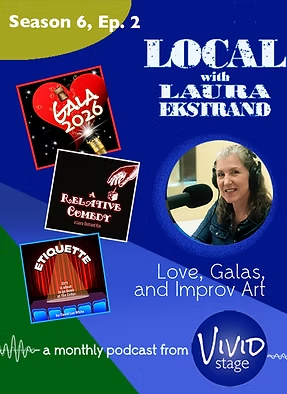
In the second episode, the focus turns toward the company’s Valentine’s gala programming and its blend of theatrical parody, musical performance, and community event structure. The tone is intentionally lighter, but the underlying emphasis is on craft and adaptability. The episode highlights how Vivid Stage uses special events not as ancillary entertainment but as laboratories for performance ideas that may later evolve into more formal productions. Alongside this, there is discussion of A Relative Comedy, including early teaser material and the momentum building around its development cycle. The sense is of multiple creative tracks moving simultaneously, each informing the others.
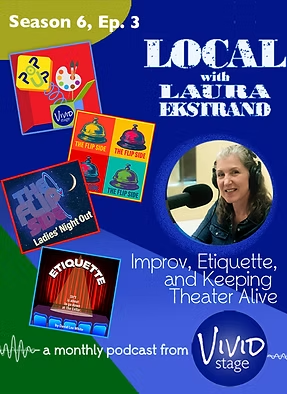
By the third episode, the series begins to sharpen its focus on live performance and improvisational work. Pop-up improv events and The Flip Side performances in Madison, New Jersey are used as case studies in real-time audience engagement. These segments highlight the company’s investment in spontaneity as a disciplined art form rather than a casual exercise. Improv is presented not only as entertainment, but as a foundational training tool that feeds into scripted work, ensemble cohesion, and audience responsiveness. The episode also references Etiquette during its rehearsal and early performance phase, capturing the transitional moment when a production moves from conceptual development into public presentation.
The fourth episode deepens the developmental narrative by focusing on process-driven theatre-making. A live screenplay reading is positioned as a central example of how Vivid Stage integrates rehearsal, audience feedback, and iterative writing into its creative methodology. The presence of collaborators in multiple roles underscores the company’s fluid structure, where artists often move between acting, directing, producing, and teaching. The discussion reinforces a core operational philosophy: that theatre development is not linear but cyclical, with each reading or workshop feeding back into revisions and future iterations.
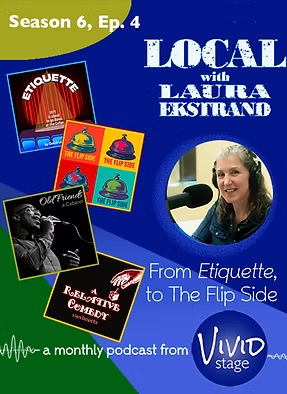
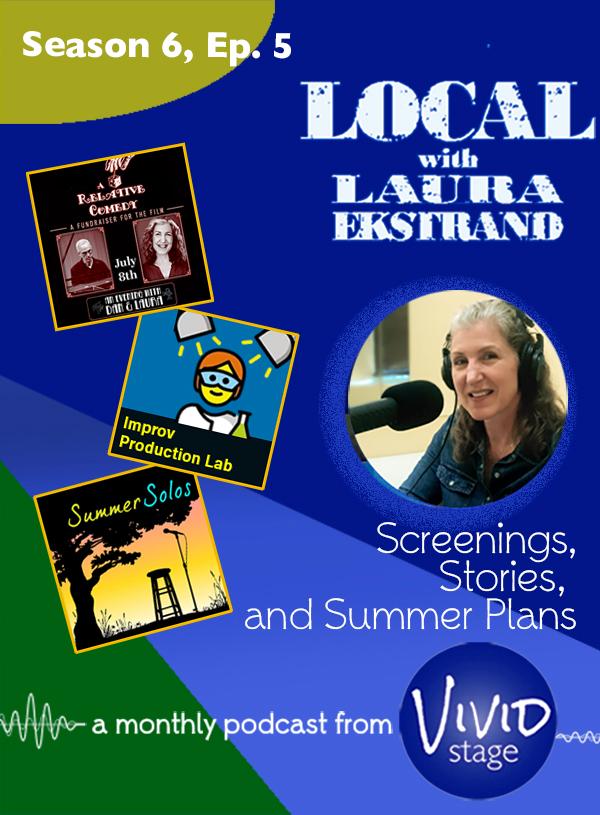
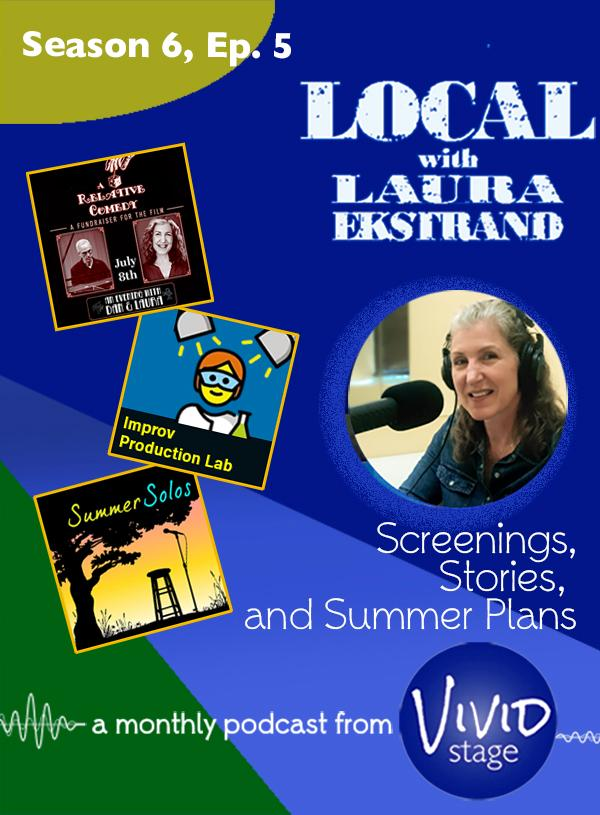
The fifth episode expands outward again, connecting performance activity to broader institutional momentum. Attention returns to A Relative Comedy, but now in the context of a growing production pipeline that includes improv training programs, experimental works like Crossroads on the Canvas, and ongoing Flip Side programming. The episode also situates Etiquette in its rehearsal phase, emphasizing how the company sustains multiple production timelines simultaneously. Educational programming is again highlighted, particularly the expansion of improv classes, which function as both community outreach and talent development infrastructure.
Across these early episodes, a consistent pattern emerges: Vivid Stage is not documenting discrete artistic events so much as mapping an interconnected system of creative work. Productions are not isolated milestones but nodes in a larger network of development that includes training, experimentation, public performance, and media adaptation. The podcast reflects this structure by refusing to compartmentalize activity. Instead, it allows conversations to move fluidly between rehearsal rooms, performance spaces, educational environments, and emerging film projects.
Taken together, the early portion of Season 6 establishes the framework for understanding Vivid Stage as a hybrid arts organization. It is simultaneously a producing theatre, an educational institution, an improvisational laboratory, and a developing media collective. What Local captures in these episodes is not simply what the company is presenting to audiences, but how it is continuously building and rebuilding the conditions for those presentations to exist. The result is a rare, internally grounded view of regional theatre as an ongoing process rather than a sequence of finished products.
















