
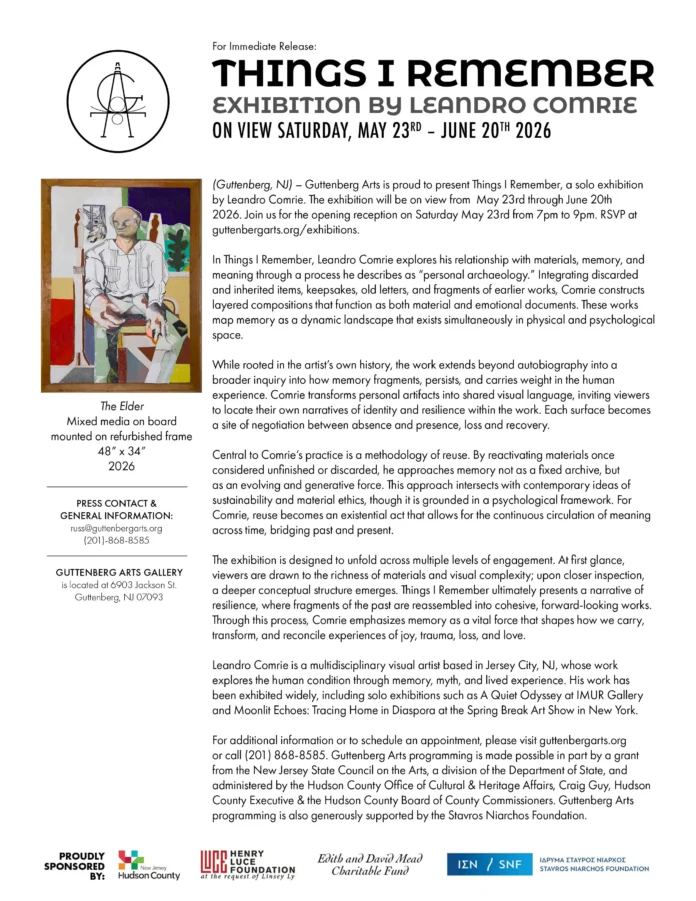

New Jersey’s arts community has long been defined by its diversity of voices, cultures, and experiences, but every so often an exhibition arrives that transcends traditional portraiture and invites viewers into something far more personal. That is precisely what visitors will discover in “Things I Remember,” the latest exhibition by artist Leandro Comrie, now on display at Guttenberg Arts in Hudson County.
Running through June 20, the exhibition transforms the gallery into a deeply reflective exploration of memory, migration, identity, family history, and personal resilience. Through richly textured portraits and layered mixed-media compositions, Comrie presents a body of work that feels both intimate and universal, encouraging viewers to examine not only the stories embedded within each canvas but also the memories they carry themselves.
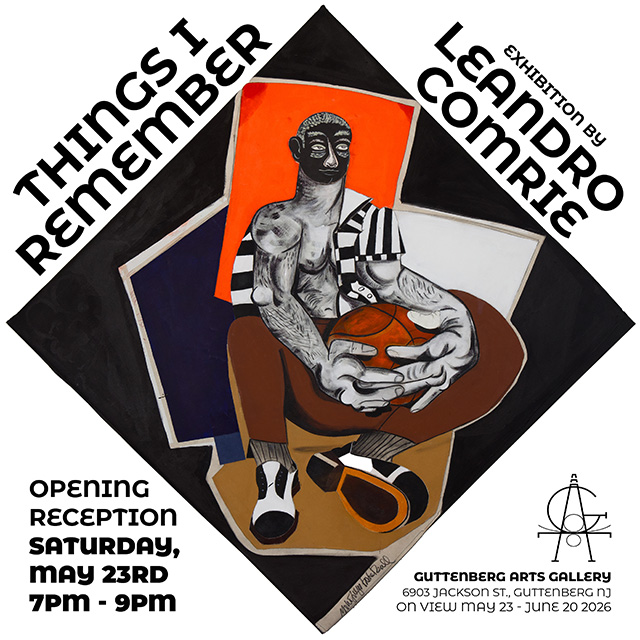
Located at Guttenberg Arts on Jackson Street, the exhibition arrives at a moment when New Jersey’s cultural institutions continue to showcase artists whose work reflects the evolving experiences of communities across the state. In a region known for its extraordinary diversity, Comrie’s paintings stand out because they celebrate ordinary people while elevating their stories into something profoundly meaningful.
At first glance, visitors may be drawn to the visual power of the paintings themselves. Thick layers of pigment, dramatic contrasts, bold lines, and textured surfaces create compositions that command attention from across the room. Yet the deeper one studies the work, the more apparent it becomes that these paintings are about far more than appearance.
Comrie’s artistic process is rooted in what he describes as personal archaeology, an approach that involves excavating fragments of memory and history in much the same way an archaeologist uncovers artifacts buried beneath the earth. Instead of relying solely on paint and canvas, he incorporates personal documents, old letters, discarded keepsakes, unfinished historical research, and remnants of past experiences into the foundation of his work.
The result is art that functions simultaneously as portraiture, historical record, and emotional landscape.
Every layer contributes to a larger narrative. Every texture contains evidence of a story. Every face becomes a vessel carrying generations of experience.
This concept of personal archaeology gives the exhibition extraordinary emotional depth. Rather than presenting memory as something fixed or static, Comrie portrays it as something living and evolving. Memories overlap. Histories intersect. Personal experiences become connected to broader cultural narratives. The paintings reveal how identity is shaped not by a single moment but by countless layers of experience accumulated over time.
That theme resonates throughout the exhibition.
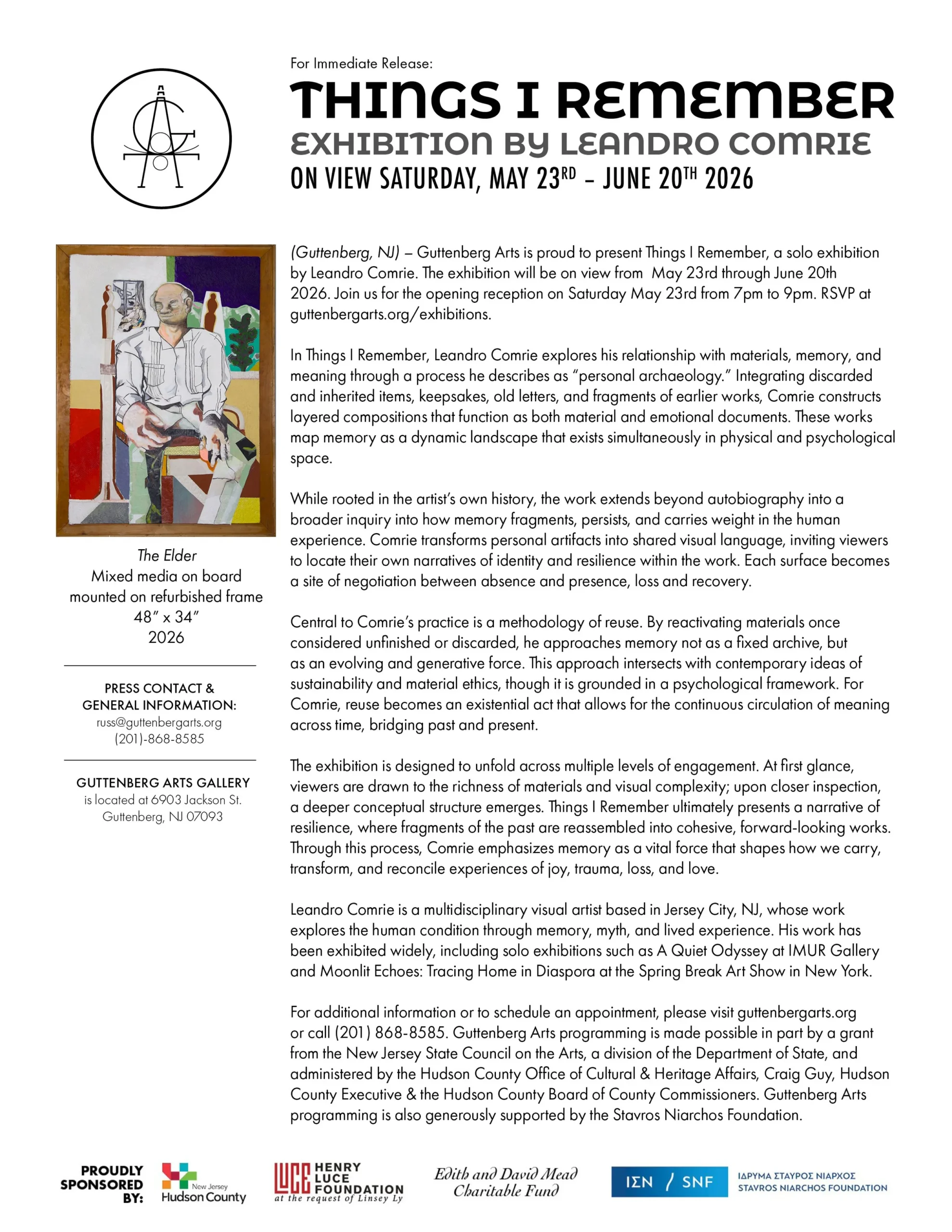
Several standout works have already attracted significant attention from visitors and critics alike. Among them are “The Quiet Lady” and “The Elder,” two portraits that showcase Comrie’s remarkable ability to capture both physical presence and emotional complexity. The subjects appear familiar yet mysterious, inviting viewers to imagine the lives that exist beyond the boundaries of the canvas.
There is a striking humanity in these works. The faces are not idealized. They are not presented as celebrities, historical figures, or larger-than-life icons. Instead, they are everyday individuals rendered with extraordinary dignity and depth. Their expressions suggest wisdom, perseverance, vulnerability, and strength all at once.
In an era often dominated by fleeting digital imagery and carefully curated online personas, Comrie’s portraits feel refreshingly authentic. They slow viewers down. They encourage observation. They demand engagement.
Another significant piece within the exhibition, “The Immigrant,” explores themes that are particularly meaningful within New Jersey’s multicultural landscape. The work examines migration, belonging, and adaptation through a uniquely personal lens. Rather than focusing on politics or policy, the painting emphasizes the emotional realities of relocation, cultural transition, and family legacy.
Viewed through the perspective of childhood memory, the piece captures both uncertainty and hope. It reflects experiences shared by countless families throughout New Jersey, where generations of immigrants have helped shape communities, neighborhoods, businesses, and cultural traditions.
This connection between individual stories and collective experiences is one of the exhibition’s greatest strengths.
Although deeply personal, the work never feels exclusive. Visitors do not need to share the artist’s exact background to understand the emotions conveyed. Themes of family, memory, aging, resilience, migration, and identity are universal. They transcend cultural boundaries and speak to experiences that resonate across generations.
The visual language Comrie employs further enhances that accessibility.
His signature style relies heavily on dense pigment application, creating surfaces rich with movement and energy. Thick brushstrokes build dimension. Colors collide and interact. Forms emerge from textured backgrounds filled with hidden details and subtle references. The paintings often reveal new elements with each viewing, rewarding careful observation.
This approach creates an almost sculptural quality. The work appears to extend beyond the flat surface of the canvas, allowing viewers to feel as though they are encountering memory in physical form.
The exhibition also highlights the increasingly important role organizations like Guttenberg Arts play within New Jersey’s cultural landscape.
Hudson County has emerged as one of the state’s most vibrant centers for creative expression, attracting artists from diverse backgrounds while providing opportunities for meaningful community engagement. Spaces like Guttenberg Arts help foster connections between artists and audiences, creating environments where challenging ideas, personal narratives, and cultural conversations can flourish.
“Things I Remember” exemplifies that mission perfectly.
The exhibition demonstrates how contemporary art can remain accessible while addressing complex themes. It proves that portraiture can still surprise, challenge, and inspire. Most importantly, it reminds visitors that every face contains a story worth telling.
For New Jersey residents seeking meaningful cultural experiences this summer, Comrie’s exhibition offers an opportunity to engage with work that is visually compelling, emotionally resonant, and intellectually rewarding. It is an exhibition that asks viewers to consider how memory shapes identity, how history informs the present, and how ordinary lives often contain extraordinary stories.
As visitors move through the gallery, they may arrive expecting to see portraits. What they leave with is something much more significant: an appreciation for the countless memories, struggles, triumphs, and experiences that shape human lives.
In that sense, “Things I Remember” succeeds on multiple levels. It is a celebration of art, a meditation on memory, and a powerful reminder that every individual carries a history worthy of preservation.
Through June 20, Leandro Comrie invites New Jersey audiences to step into that history, explore its layers, and perhaps rediscover pieces of their own stories along the way.
















