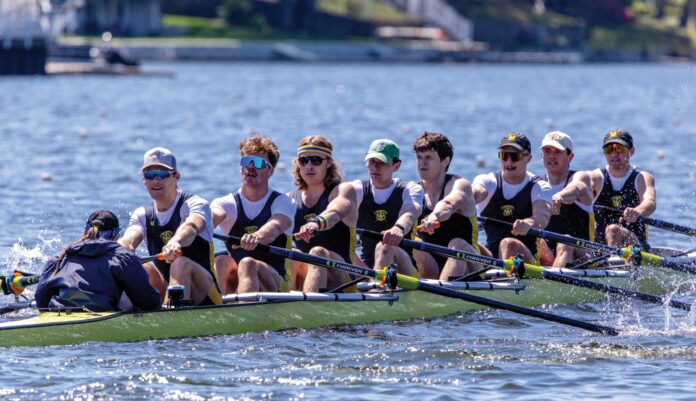

Rowing returns to the forefront of the regional sports calendar this spring as the Knecht Cup Regatta prepares for its 27th running, bringing elite collegiate competition, rising talent, and deep-rooted tradition back to the Delaware River. Scheduled for Saturday, April 11 and Sunday, April 12, the regatta once again positions the Philadelphia–South Jersey corridor as a centerpiece of East Coast rowing, while adding a powerful tribute to one of the sport’s most enduring figures.
This year’s event will honor Mark Valenti, a coach, mentor, and regatta leader whose influence has shaped more than six decades of rowing in the region. In recognition of his extraordinary contribution, the Men’s Freshman/Novice Four event will now bear his name—ensuring that every future generation of athletes competing in that category is directly connected to a legacy built on dedication, leadership, and the long-term development of the sport.
For New Jersey, the Knecht Cup represents more than a competition. It is a continuation of the state’s deep and often underappreciated relationship with rowing, a sport that thrives along its rivers, collegiate programs, and training institutions. Events like this align seamlessly with the broader momentum seen across New Jersey’s sports landscape, where both traditional and emerging athletic disciplines continue to draw national attention and regional pride.
The Knecht Cup has evolved into one of the premier early-season regattas in the country, attracting collegiate programs from across the United States and beyond. Its timing on the calendar makes it a critical proving ground, offering teams an opportunity to test lineups, refine strategy, and establish competitive identity ahead of championship season. For freshmen and novice athletes, in particular, the regatta serves as an introduction to high-level racing—an experience that often defines the trajectory of their collegiate careers.
That makes the naming of the Men’s Frosh/Novice Four trophy after Mark Valenti especially significant. Valenti’s career has been defined not just by wins or titles, but by his unwavering commitment to developing athletes at the earliest stages of their journey. His work has impacted countless rowers, many of whom have gone on to achieve success at the national and international levels. By attaching his name to this specific event, the regatta is making a statement about what truly matters in the sport: mentorship, foundation, and the cultivation of future talent.
The Delaware River, stretching between Pennsylvania and New Jersey, provides a uniquely dynamic setting for competition. Its conditions demand precision, endurance, and adaptability—qualities that define successful rowing programs. For New Jersey-based athletes and spectators, the proximity of the event reinforces the state’s role in supporting and sustaining the sport’s growth. It is a reminder that while Philadelphia may host the regatta, the regional ecosystem that fuels it extends deeply into New Jersey’s athletic infrastructure.
From a competitive standpoint, the Knecht Cup is known for its depth. Varsity eights, second varsity crews, lightweight boats, and novice entries all converge in a schedule that is both demanding and highly strategic. Programs arrive with different objectives—some seeking early dominance, others focused on development—but all operate within an environment that rewards discipline and execution.
The regatta’s structure also reflects the evolving nature of collegiate rowing. Increased parity across programs, enhanced training methodologies, and a growing emphasis on data-driven performance have elevated the overall level of competition. The Knecht Cup has kept pace with these changes, maintaining its reputation as a benchmark event where emerging contenders and established powerhouses intersect.
For spectators, the experience extends beyond the races themselves. Regattas like the Knecht Cup create a distinct atmosphere—part sporting event, part community gathering. Coaches, alumni, families, and fans line the course, creating an environment that is both intensely competitive and deeply communal. It is this balance that continues to draw participants and audiences back year after year.
The decision to honor Mark Valenti adds an emotional dimension to this year’s event, anchoring the competition in a broader narrative of legacy and continuity. In a sport where tradition plays a central role, recognizing individuals who have dedicated their lives to its advancement is not just appropriate—it is essential.
Valenti’s impact is measured not only in the athletes he has coached, but in the culture he has helped sustain. Rowing, at its core, is a discipline built on teamwork, resilience, and incremental improvement. These values are not easily taught, yet they define the sport at every level. Through decades of leadership, Valenti has embodied and transmitted those principles, ensuring that they remain central to the rowing experience.
As the 27th Knecht Cup Regatta approaches, it carries with it all the elements that have made it a cornerstone of the collegiate rowing calendar: high-level competition, regional significance, and a deep respect for the sport’s history. This year, with the addition of the Mark Valenti Men’s Frosh/Novice Four Trophy, it also carries a renewed focus on the individuals who make that history possible.
For New Jersey’s sports community, the event reinforces a broader truth. The state’s athletic identity is not limited to its major professional teams or headline-grabbing moments. It is also defined by events like the Knecht Cup—where dedication, development, and tradition intersect to create something enduring.
As crews take to the water this April, they will be racing not only for medals and rankings, but as part of a legacy that continues to evolve. And in honoring Mark Valenti, the Knecht Cup ensures that legacy remains grounded in the values that have sustained the sport for generations.