

- This event has passed.
Celebrate the Irving Berlin Songbook w/The Anderson Brothers Trio
The Great American Songbook Comes to Madison as The Anderson Brothers Trio Celebrates Irving Berlin in a Landmark New Jersey Jazz Performance
June 7 @ 8:00 PM – 11:30 PM
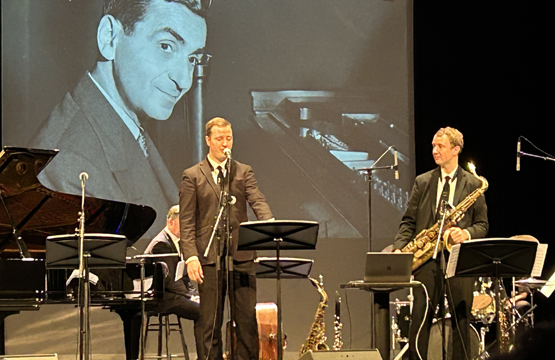
New Jersey’s live music calendar has long been defined by its ability to balance contemporary touring acts with preservation of America’s deeper musical traditions. From Newark jazz clubs and Jersey Shore concert halls to university stages and historic community theaters, the state continues to function as one of the Northeast’s most important homes for live performance across generations and genres. On Sunday, June 7, Madison will add another notable chapter to that tradition when The Anderson Brothers Trio brings its celebrated “Best of Berlin” program to the Madison Community Arts Center for an afternoon dedicated to one of the most influential songwriters in American history.
The 3:00 p.m. performance will feature acclaimed multireedists Peter and Will Anderson alongside renowned jazz pianist Ehud Asherie in a live celebration of Irving Berlin’s extraordinary contribution to the Great American Songbook. Framed as both a concert and a historical exploration, the event will blend live jazz interpretation with storytelling centered around Berlin’s life, career, and lasting impact on American music.
For New Jersey audiences, the performance represents more than a nostalgic tribute concert. It arrives at a moment when live jazz programming throughout the region continues expanding beyond traditional club settings and into multidisciplinary arts spaces that emphasize education, cultural preservation, and intergenerational access to performance.
That broader shift has become increasingly important throughout New Jersey’s music scene over the last several years. Community arts organizations, nonprofit performance spaces, and regional cultural centers are increasingly curating events that reconnect audiences with foundational American music while simultaneously introducing younger musicians to the traditions that shaped modern jazz, Broadway, film music, and popular songwriting itself.
The Anderson Brothers have become especially effective ambassadors for that approach.
Widely respected throughout jazz circles for their technical precision, versatility, and deep knowledge of early American swing traditions, Peter and Will Anderson have built national reputations through performances that merge virtuosic musicianship with historical context. Their work frequently revisits the music of artists such as Duke Ellington, Benny Goodman, Charlie Parker, and George Gershwin, but their Irving Berlin program carries particular cultural resonance because of Berlin’s unique role in shaping twentieth-century American identity through music.
Very few composers occupy the same historical territory as Irving Berlin.
His catalog did not simply produce popular songs. It helped define the emotional and cultural vocabulary of modern America itself. Songs such as “Cheek to Cheek,” “Blue Skies,” “Puttin’ on the Ritz,” “There’s No Business Like Show Business,” and “God Bless America” became embedded within multiple generations of American life, extending far beyond Broadway or Tin Pan Alley into film, radio, wartime patriotism, and popular culture.
Berlin’s story itself also remains one of the most extraordinary immigrant narratives in American artistic history.
Born in Imperial Russia before immigrating to the United States as a child, Berlin rose from poverty on New York’s Lower East Side to become one of the most commercially successful and culturally influential songwriters ever produced by the American entertainment industry. His work crossed class, regional, ethnic, and generational boundaries in ways few composers ever achieved.
That legacy gives performances like this unusual weight inside modern jazz programming.
The music survives not because it functions as museum material, but because the compositions themselves remain structurally brilliant, emotionally direct, and endlessly adaptable for live interpretation. Jazz musicians continue returning to the Great American Songbook precisely because the songwriting still allows room for reinvention, improvisation, rhythmic reinterpretation, and personal expression.
The Anderson Brothers Trio approaches that tradition with both technical sophistication and accessibility.
Their performances often emphasize warmth and audience connection rather than academic distance, making them particularly effective in community arts settings where audiences may range from dedicated jazz enthusiasts to casual listeners simply looking for a compelling live cultural experience. Reviews of the group frequently highlight their ability to balance disciplined musicianship with energetic stage presence, an approach that has helped them develop a loyal following throughout the Northeast and national jazz circuits.
The addition of pianist Ehud Asherie further elevates the musical pedigree of the Madison performance.
Asherie remains one of the most respected pianists working within traditional and swing-based jazz idioms today. Known for his command of stride piano traditions and improvisational fluency, he has collaborated with major figures throughout the jazz world while earning widespread recognition for his ability to bridge historical styles with contemporary performance energy.
Together, the trio creates a format especially suited for intimate performance environments like the Madison Community Arts Center, where audiences can experience both the technical interplay between musicians and the conversational atmosphere that often defines great live jazz performances.
The June 7 event will also feature an important educational and developmental component through its Rising Stars opening showcase.
Young musicians Sofia Carrasco on tenor saxophone and Victor Sotomayor on piano, both representing New Jersey City University, will open the afternoon’s program. Their inclusion reflects another increasingly important trend throughout New Jersey’s arts landscape: the intentional integration of emerging student artists alongside established professionals within the same performance spaces.
That mentorship pipeline has become critical to the long-term health of jazz and live instrumental music overall.
Unlike many commercial entertainment formats, jazz has historically survived through apprenticeship, live collaboration, and direct generational transmission between experienced performers and younger musicians. New Jersey institutions, universities, conservatories, and arts organizations continue playing a major role in sustaining that ecosystem by creating opportunities where young artists can perform before live audiences while sharing stages connected to established touring professionals.
Events like this help reinforce New Jersey’s position as more than simply a pass-through market between New York and Philadelphia.
The state increasingly functions as a cultural destination in its own right, particularly in live music. Smaller theaters, community arts centers, and nonprofit venues throughout New Jersey have become essential anchors for programming that larger commercial venues often overlook. Audiences seeking sophisticated but accessible live performance experiences increasingly turn toward spaces like the Madison Community Arts Center because they offer something more intimate and community-oriented than arena entertainment or corporate touring productions.
That intimacy feels particularly appropriate for a concert centered around the Great American Songbook.
These songs were originally written for live rooms, orchestras, theaters, dance halls, and vocal performance spaces where audience connection mattered as much as technical execution. Experiencing them inside a community arts venue rather than a massive commercial setting arguably restores some of the music’s original emotional environment.
The Madison Community Arts Center itself continues contributing significantly to that regional arts culture by hosting programming that spans visual art, music, performance, and educational initiatives. Events like The Anderson Brothers Trio concert help strengthen the role of smaller New Jersey arts institutions at a time when sustaining accessible cultural programming has become increasingly challenging nationwide.
The concert has also received additional support through sponsorship provided by board member Paul Flexner and his wife Barbara, reflecting the continued importance of local patronage and community investment within New Jersey’s nonprofit arts landscape.
That support matters now more than ever.
Across the country, arts organizations continue navigating rising operational costs, changing audience habits, and an increasingly competitive entertainment environment. Yet performances like this continue drawing audiences because they provide something digital entertainment cannot fully replicate: the experience of live musicians interpreting timeless music in real time inside a shared communal setting.
For Explore New Jersey readers following the evolving cultural landscape of the Garden State, The Anderson Brothers Trio’s June 7 performance in Madison represents another example of how New Jersey continues preserving, supporting, and reintroducing foundational American artistic traditions through local performance spaces that remain deeply connected to their communities.
At a moment when so much modern entertainment moves at accelerated speed, an afternoon devoted to Irving Berlin, live jazz musicianship, and the enduring power of the Great American Songbook feels not only culturally valuable, but increasingly necessary.
On June 7 in Madison, that tradition takes center stage once again.











