

- This event has passed.
Sizwe Banzi Is Dead
Crossroads Theatre Brings a Global Masterpiece to New Jersey: Why Sizwe Banzi Is Dead Remains One of the Most Powerful Plays Ever Written
May 19 @ 7:00 PM – June 14 @ 11:00 PM
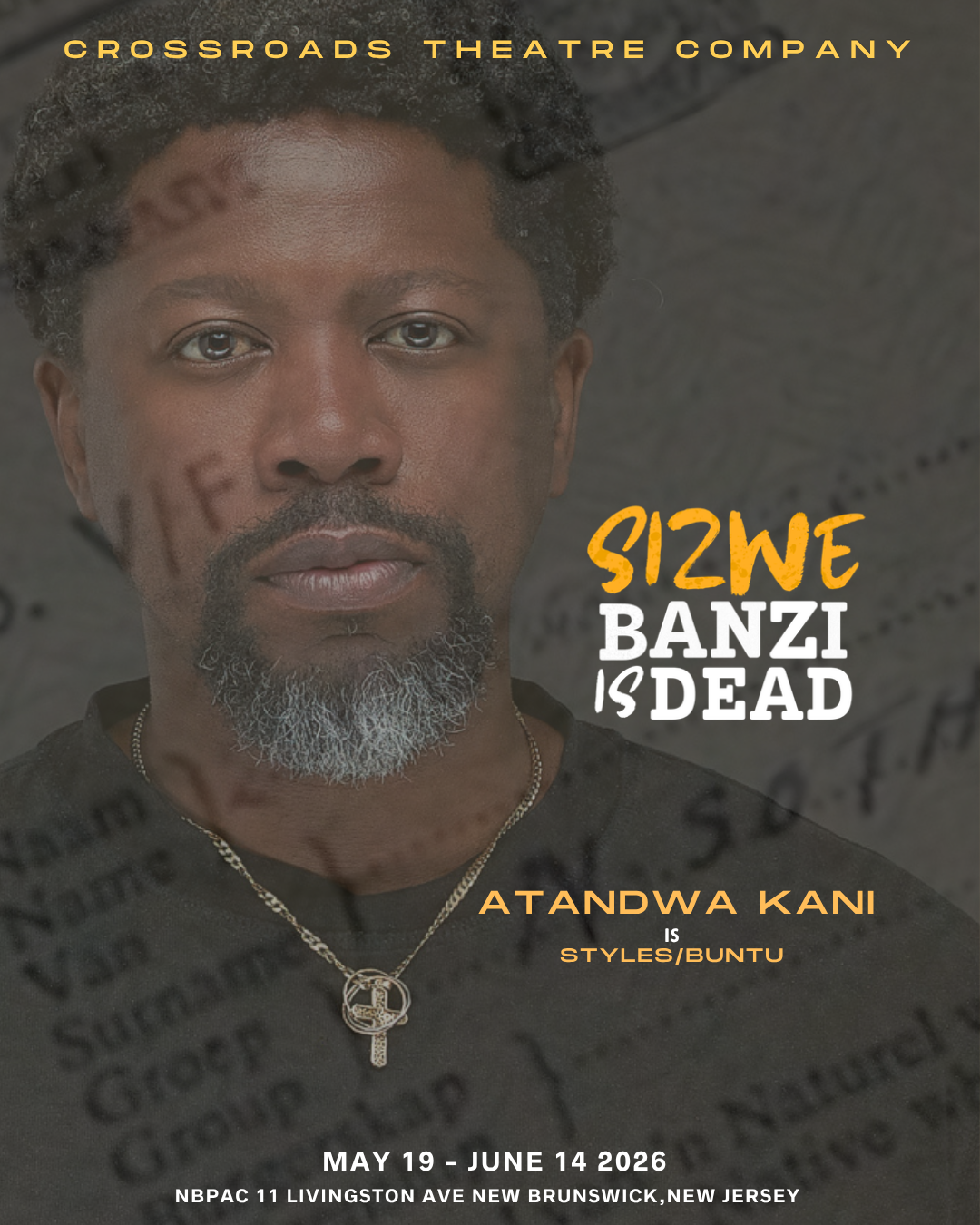
New Jersey’s thriving theater community has long served as a gateway to some of the most important artistic voices in the world, but few productions arrive with the historical significance, emotional impact, and enduring relevance of Sizwe Banzi Is Dead. Now being presented in a landmark revival by Crossroads Theatre Company at the New Brunswick Performing Arts Center through June 14, 2026, this internationally acclaimed work stands as one of the most influential pieces of modern theater ever created and one of the most urgent productions currently appearing on a New Jersey stage.
More than fifty years after it first challenged audiences and transformed conversations about race, identity, justice, and human dignity, Sizwe Banzi Is Dead continues to resonate with extraordinary power. At a time when societies around the world continue to grapple with questions of belonging, bureaucracy, citizenship, and personal identity, the play feels as relevant today as it did when it emerged from apartheid-era South Africa in the early 1970s.
For theater lovers across New Jersey, this production represents far more than another stage presentation. It is an opportunity to experience a living piece of theatrical history brought to life by artists deeply connected to its legacy and significance.
Originally developed in Cape Town in 1972, Sizwe Banzi Is Dead was created through a groundbreaking collaboration between celebrated playwright Athol Fugard and South African actors John Kani and Winston Ntshona. The production emerged during one of the darkest periods of South Africa’s apartheid regime, when racial segregation and government control dictated virtually every aspect of daily life.
Creating theater under such conditions was itself an act of courage. The collaboration crossed racial boundaries that apartheid laws actively sought to enforce, making the very existence of the production a challenge to the system it portrayed. Rather than presenting a straightforward political lecture, the creators developed a deeply human story filled with humor, intelligence, compassion, and emotional complexity.
The result became a theatrical landmark.
When the production eventually reached international audiences, critics and theatergoers immediately recognized its significance. In 1975, John Kani and Winston Ntshona made history when they received Tony Awards for their performances, bringing worldwide attention to both the play and the realities of apartheid. Decades later, the work remains a cornerstone of global theater and a powerful example of storytelling’s ability to confront injustice while celebrating human resilience.
At the heart of the story is a deceptively simple but profoundly unsettling question: What happens when a government system strips away a person’s ability to exist as themselves?
The play follows Sizwe Banzi, a Black migrant worker struggling to support his wife and children. Seeking employment in a South African city, he discovers that the government’s restrictive pass laws prevent him from legally remaining there. Without proper documentation, he faces expulsion, unemployment, and the loss of any opportunity to provide for his family.
His situation becomes even more complicated when he and his friend Buntu encounter the body of a deceased man whose official papers are still valid.
The discovery presents an impossible choice.
By assuming the identity of the dead man, Sizwe could legally remain in the city, find work, and support his family. Yet doing so would require him to abandon his own name, his own identity, and effectively declare himself dead in the eyes of the government.
The brilliance of Sizwe Banzi Is Dead lies in its ability to transform this bureaucratic dilemma into a profound exploration of humanity itself.
The play asks audiences to consider what truly defines a person. Is identity merely a collection of official documents, photographs, permits, and government records? Or does something deeper survive regardless of what authorities choose to recognize?
These questions drive the narrative while simultaneously exposing the absurdity and cruelty of systems designed to reduce human beings to paperwork and classifications.
Yet despite its serious subject matter, the production is not relentlessly bleak.
One of the reasons the play has remained so beloved is its remarkable balance of humor and heartbreak. The characters display warmth, wit, and resilience throughout the story. Their laughter becomes a form of resistance. Their friendships become acts of survival. Their humanity refuses to disappear despite the forces attempting to erase it.
This combination of comedy and tragedy allows audiences to connect with the characters as people rather than symbols. The result is an emotional experience that feels personal, immediate, and unforgettable.
The current Crossroads Theatre production carries additional significance because of the involvement of Tony Award-winning actor and playwright John Kani, one of the original creators of the work. Kani’s influence extends far beyond the theater world. Contemporary audiences may recognize him from blockbuster productions including Black Panther and Mufasa: The Lion King, but his contributions to international theater remain among his most enduring achievements.
Adding another layer of historical continuity is the participation of his son, Atandwa Kani, an accomplished South African actor whose career spans film, television, and theater. His presence creates a remarkable bridge between generations, connecting the original revolutionary production to a new era of audiences discovering its message.
Atandwa Kani brings substantial experience to the role, having appeared in acclaimed productions throughout South Africa and internationally. His work in theater, television, and film has established him as one of the most respected performers of his generation, while his connection to the play’s history gives the production unique emotional depth.
Joining him is Kelcey Watson, whose impressive stage and screen career has included performances in productions ranging from August Wilson classics to contemporary dramas. Together, the cast helps transform a historic text into a living, breathing theatrical event.
Under the direction of Ricardo Khan, the production embraces both the historical importance of the material and its contemporary relevance. Khan’s longstanding reputation for creating powerful theatrical experiences makes him an ideal steward for a play that demands both emotional authenticity and intellectual rigor.
The production is further enhanced by an accomplished creative team, including scenic designer Beowulf Boritt, lighting designer Victor En Yu Tan, costume designer Mika Eubanks, sound designer Justin Ellington, projection designer Stefania Bulbarella, and dramaturg Sydné Mahone. Their combined efforts create an immersive theatrical environment that supports the story while allowing its themes to resonate with modern audiences.
For New Jersey theatergoers, the production also highlights the ongoing importance of Crossroads Theatre Company itself.
For decades, Crossroads has stood as one of America’s most influential cultural institutions, dedicated to presenting stories that reflect diverse experiences while fostering meaningful dialogue and artistic excellence. The organization’s commitment to inclusion, accessibility, equity, and cultural understanding has made it a cornerstone of New Jersey’s arts community.
By presenting Sizwe Banzi Is Dead during a period when conversations about identity, citizenship, justice, and human rights continue to shape public discourse, Crossroads once again demonstrates the essential role theater can play in helping communities engage with complex issues through empathy and storytelling.
The production also arrives at a moment when audiences increasingly seek experiences that offer both entertainment and substance. While many contemporary productions prioritize spectacle, Sizwe Banzi Is Dead reminds viewers of theater’s unique ability to create profound human connection through performance, language, and shared experience.
Perhaps that is why the play continues to endure across generations and continents.
Its setting may be apartheid-era South Africa, but its themes are universal. Its characters face circumstances shaped by a specific historical moment, yet their struggles for dignity, identity, opportunity, and recognition remain instantly recognizable. The questions the play raises about survival, belonging, and the value of human life transcend geography and time.
As New Jersey continues to strengthen its reputation as a destination for world-class arts and culture, productions like Sizwe Banzi Is Dead demonstrate why live theater remains one of the most powerful forms of storytelling available today.
For audiences attending performances at the New Brunswick Performing Arts Center, this is not merely an opportunity to see an acclaimed play. It is a chance to experience a work that helped change the course of modern theater, challenged injustice through art, and continues to inspire conversations about humanity more than five decades after its creation.
Powerful, funny, heartbreaking, and ultimately uplifting, Sizwe Banzi Is Dead stands as a reminder that even under the harshest circumstances, human dignity endures. Through its unforgettable characters, brilliant writing, and timeless message, the production offers an experience that will remain with audiences long after the final curtain falls.
In a theater season filled with impressive productions throughout New Jersey, few carry the historical importance, artistic excellence, and emotional impact of this extraordinary revival. For anyone passionate about great storytelling, cultural history, and the transformative power of live performance, Sizwe Banzi Is Dead is essential viewing and one of the most significant theatrical events currently taking place anywhere in the Garden State.











