

- This event has passed.
Dark Star Orchestra
Dark Star Orchestra and the Count Basie Center Launch a New Era of Live Music in Monmouth County as ParkStage Debuts with a Celebration of the Grateful Dead Experience
June 20 @ 8:00 AM – 5:00 PM
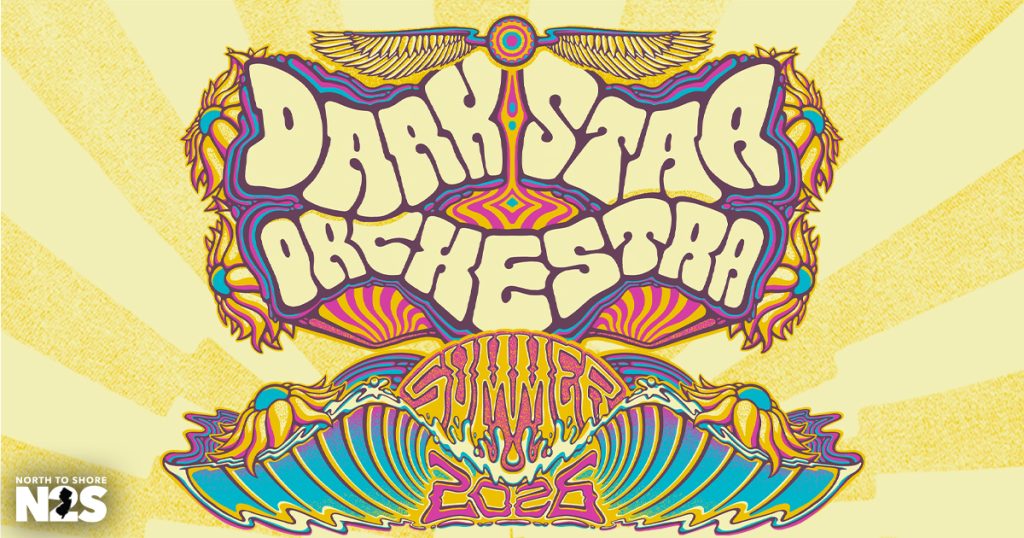
New Jersey’s live music landscape is preparing for one of its most significant additions in years as the Count Basie Center for the Arts, in collaboration with Monmouth County Tourism, officially launches ParkStage, a major new open-air concert destination set to debut during the summer of 2026 at the East Freehold Park Showgrounds. Designed to expand the region’s already thriving live entertainment ecosystem while introducing large-scale outdoor programming to central New Jersey, the venue’s inaugural season immediately signals ambitious intentions with the announcement of Dark Star Orchestra performing Saturday, June 20 at 6 PM, bringing one of the most respected and enduring Grateful Dead live concert experiences in the world to Monmouth County for what is expected to become one of the defining music events of the summer.
For New Jersey music fans, the significance of this announcement extends far beyond a single concert. The launch of ParkStage represents another major evolution in the state’s rapidly expanding live entertainment infrastructure at a time when outdoor concert experiences, destination music events, and immersive fan-driven performances are increasingly shaping the future of regional entertainment economies. Positioned within one of the Northeast’s most densely populated and culturally active corridors, the new venue arrives as New Jersey continues strengthening its identity not simply as a pass-through market between New York and Philadelphia, but as a premier entertainment destination capable of hosting nationally recognized artists, large-scale touring productions, and uniquely communal live experiences rooted deeply in audience culture.
Few bands embody that communal spirit more authentically than Dark Star Orchestra.
For nearly three decades and more than 3,300 performances, Dark Star Orchestra has established itself as far more than a tribute act. Within the expansive and emotionally devoted Grateful Dead community, the group has become a living continuation of the improvisational philosophy, concert energy, musical exploration, and communal ritual that transformed the Grateful Dead into one of the most culturally influential live acts in American music history. Rather than merely covering songs, Dark Star Orchestra reconstructs the entire Grateful Dead concert experience with extraordinary attention to musical detail, emotional atmosphere, improvisational spontaneity, and historical authenticity.
That distinction matters enormously to generations of Deadheads who understand that the Grateful Dead legacy was never solely about individual songs. It was about the unpredictability of the live performance itself.
Every night offered something different.
Every show became its own ecosystem.
Every performance created a temporary community.
Dark Star Orchestra embraces that philosophy completely. The seven-piece ensemble performs concerts based either on actual historical Grateful Dead setlists pulled directly from the band’s legendary touring archives or entirely original combinations built from the Dead’s enormous songbook. This approach creates an experience that feels simultaneously nostalgic and alive, historical and spontaneous, familiar yet unpredictable. Longtime fans who attended original Grateful Dead performances decades ago often describe Dark Star Orchestra concerts as emotionally transporting, while younger audiences who never had the opportunity to experience the original band live increasingly view the group as the closest living connection to that cultural phenomenon.
The emotional authenticity of those performances has helped elevate Dark Star Orchestra into a uniquely respected position within American touring culture.
Over the years, the band has earned the admiration not only of audiences but of members of the Grateful Dead themselves. Guest appearances throughout the group’s history have included Phil Lesh, Bob Weir, Bill Kreutzmann, Mickey Hart, Donna Jean Godchaux-MacKay, Vince Welnick, and Tom Constanten, alongside longtime Grateful Dead sound engineer Dan Healy. Additional collaborations with musicians such as Phish members Mike Gordon and Jon Fishman, Warren Haynes, Steve Kimock, and numerous others further reinforced Dark Star Orchestra’s credibility throughout the broader improvisational rock world.
That level of recognition reflects the seriousness with which the band approaches its craft.
Keyboardist and vocalist Rob Barraco has frequently described the project not as imitation, but as preservation — an opportunity to recreate the emotional magic that shaped generations of music fans while simultaneously allowing the material to remain vibrant and evolving within a live environment. For audiences who never witnessed the Grateful Dead during earlier eras, Dark Star Orchestra offers an experiential window into what attending a 1978 or 1985 performance may have felt like. For veteran Deadheads, the concerts tap directly into memories, emotions, and musical traditions that remain deeply personal decades later.
That multi-generational appeal makes Dark Star Orchestra particularly well suited to help launch ParkStage.
The Grateful Dead community has always thrived within outdoor environments where music, atmosphere, freedom, and communal gathering merge together into something larger than a conventional concert. Open-air venues carry a special emotional resonance within jam-band culture, and the East Freehold Park Showgrounds setting appears positioned to capture exactly that spirit. The venue’s debut immediately signals that ParkStage intends to become more than simply another regional amphitheater. Instead, the project appears designed to cultivate immersive, destination-style concert experiences capable of drawing audiences from throughout New Jersey, New York, Pennsylvania, and the broader Northeast.
That ambition reflects the larger transformation currently happening across New Jersey’s entertainment economy.
Throughout the state, investment in live music infrastructure continues accelerating as cultural institutions, municipalities, tourism organizations, and private entertainment operators increasingly recognize the enormous economic and cultural value attached to year-round event programming. Outdoor venues in particular have become increasingly attractive due to changing audience preferences favoring experiential entertainment environments that combine music, food, community gathering, nightlife, and regional tourism into unified social experiences.
ParkStage enters that evolving landscape at a strategically important moment.
Monmouth County already possesses one of New Jersey’s richest music histories, with legendary connections to artists, venues, and scenes spanning generations. From Asbury Park’s foundational role in American rock history to the region’s expanding festival culture and active touring circuit, the county remains one of the Northeast’s most vibrant live entertainment hubs. The addition of a new large-scale outdoor performance venue significantly expands that infrastructure while potentially attracting even broader national touring opportunities in the years ahead.
The Count Basie Center for the Arts’ involvement further reinforces the seriousness of the project.
Long recognized as one of New Jersey’s premier cultural institutions, the Basie Center has spent years steadily expanding its influence far beyond traditional theater programming, increasingly positioning itself as a central driver of regional arts development, education, performance innovation, and large-scale entertainment programming. The launch of ParkStage represents another major step within that broader evolution, extending the organization’s reach into outdoor live music experiences while strengthening Monmouth County’s cultural identity as a major entertainment destination.
The partnership with Monmouth County Tourism additionally highlights the increasingly interconnected relationship between arts programming and regional economic development.
Large-scale concerts now function as significant tourism generators capable of driving hotel occupancy, restaurant traffic, transportation usage, retail spending, nightlife activity, and broader visitor engagement throughout surrounding communities. Particularly during the summer months, destination concert venues can become major economic engines supporting both cultural visibility and local business ecosystems simultaneously.
Dark Star Orchestra’s appearance therefore represents more than simply opening-night programming. It establishes the venue’s broader identity.
The band’s concerts naturally attract deeply engaged audiences who treat performances as immersive communal events rather than passive entertainment experiences. That atmosphere aligns perfectly with the type of identity ParkStage appears eager to cultivate moving forward — a venue where music culture, shared experience, nostalgia, improvisation, and large-scale community gathering intersect under the open sky.
The timing of the event also speaks to the remarkable endurance of Grateful Dead culture itself.
Decades after the original band’s formation, the music continues transcending generational boundaries in ways few American musical institutions ever achieve. Younger listeners continue discovering the Dead’s enormous catalog, improvisational philosophy, and community-driven concert traditions, while longtime fans remain fiercely devoted to the music’s emotional and spiritual resonance. Bands like Dark Star Orchestra play an essential role in sustaining that living tradition, ensuring the music remains not simply archived history but an actively evolving live experience.
That vitality continues shaping modern jam-band culture, festival culture, and improvisational rock communities across the country.
In many ways, Dark Star Orchestra concerts function as temporary celebrations of freedom, musical spontaneity, emotional openness, and collective memory — qualities increasingly valuable within a hyper-digital entertainment era dominated by fragmented attention spans and algorithmic consumption habits. The enduring appeal of these performances reminds audiences that live music still possesses the power to create genuine human connection in ways digital experiences cannot fully replicate.
As ParkStage prepares to open its gates for the first time this summer, the choice to launch its concert identity with Dark Star Orchestra feels both strategically smart and culturally meaningful. It signals a venue interested not only in booking acts, but in curating experiences rooted in community, musical depth, emotional atmosphere, and cultural longevity.
On June 20, thousands of fans will gather beneath the New Jersey summer sky as one of America’s most beloved live music traditions helps inaugurate one of the state’s newest entertainment destinations. The songs may come from another era, but the communal spirit driving them forward remains as alive as ever.
And for Monmouth County, ParkStage may only be beginning.
Listen to the Music Plays The Band Radio Show on The Grateful Dead Live.











