

What began as demonstrations over conditions inside an immigration detention facility has now evolved into one of the most politically charged and nationally watched confrontations unfolding anywhere in New Jersey.
For more than a week, Delaney Hall in Newark has become the focal point of a widening conflict involving immigrant rights activists, federal immigration authorities, state officials, local elected leaders, counter-protesters, national political organizations, and hundreds of demonstrators arriving from across the region. What was initially a debate about detainee treatment and facility oversight has transformed into a broader battle over immigration enforcement, federal authority, public safety, civil disobedience, constitutional rights, and the future relationship between New Jersey and federal immigration operations.
As of June 1, Delaney Hall remains under intense scrutiny, with law enforcement maintaining a significant presence around the facility, an emergency curfew still in effect, dozens of arrests reported over the course of the unrest, and state leaders continuing to call for greater transparency regarding conditions inside the detention center.
The situation has become so volatile that many observers now describe Delaney Hall as the most significant political flashpoint in New Jersey since the beginning of the Trump administration’s renewed immigration enforcement initiatives.
At the heart of the conflict is Delaney Hall itself.
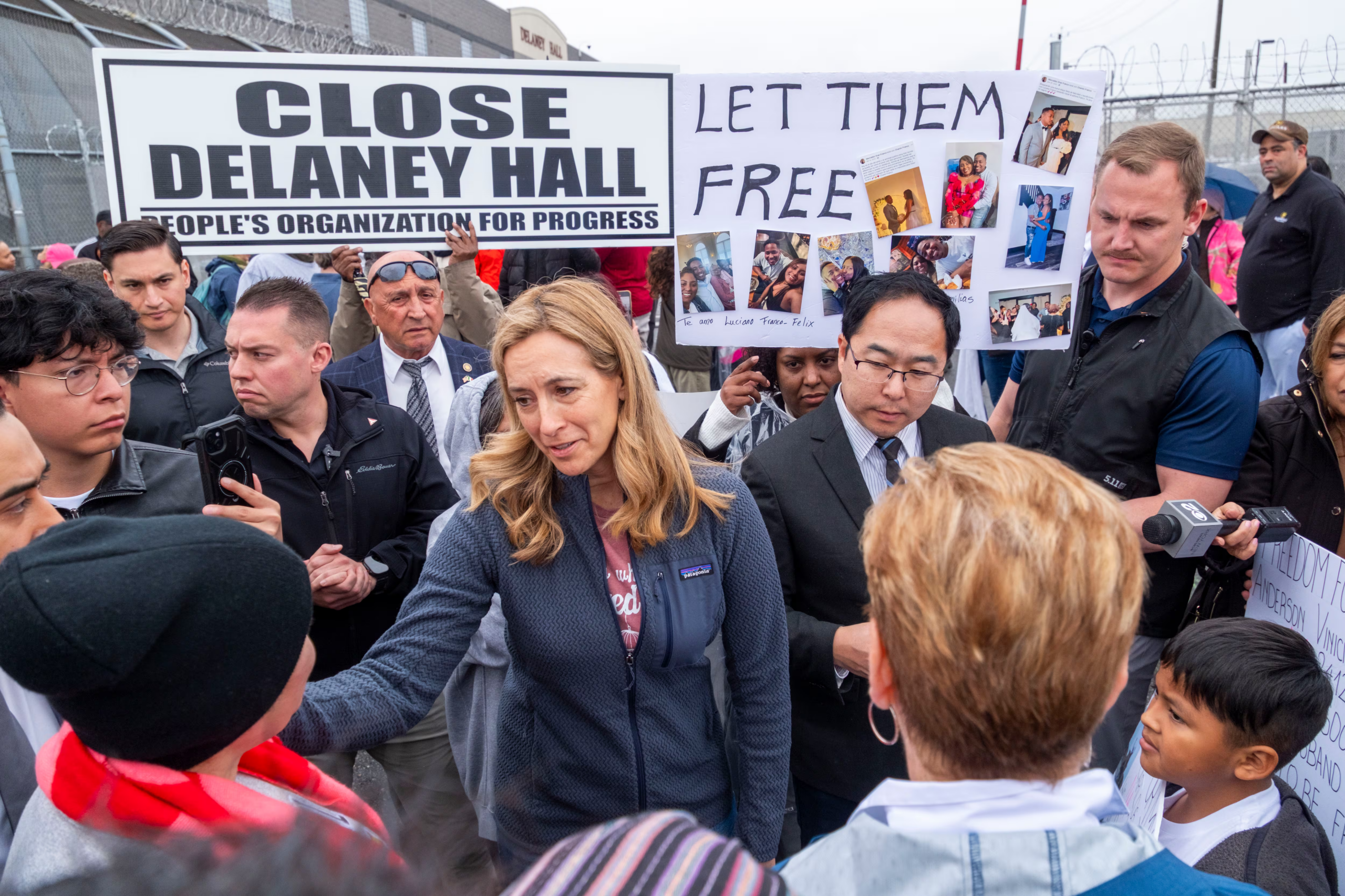
Located in Newark and operated by the private prison contractor GEO Group under federal authority, the facility has become one of the largest immigration detention centers on the East Coast. The center plays a significant role in federal immigration detention operations, housing individuals awaiting immigration proceedings and other federal actions.
The current crisis intensified after detainees reportedly launched a rolling hunger strike and labor strike inside the facility during Memorial Day weekend.
According to advocates, attorneys, family members, and immigrant rights organizations, detainees initiated the protest to draw attention to what they describe as inadequate living conditions, insufficient medical care, poor food quality, and broader concerns about treatment inside the facility.
Supporters of the detainees argue that the strike represents a desperate effort by individuals who believe they have exhausted traditional avenues for addressing grievances.
The allegations have generated widespread concern among advocacy organizations and elected officials throughout New Jersey.
Federal authorities, however, strongly dispute many of those claims.
Officials with the Department of Homeland Security have repeatedly maintained that Delaney Hall operates within federal detention standards and that detainees receive appropriate meals, medical services, and accommodations. Federal officials have also accused some detainees of engaging in disruptive conduct and have characterized portions of the unrest differently than advocates and protesters.
Those conflicting narratives have become a defining feature of the controversy.
While activists and civil rights organizations portray the facility as a symbol of broader concerns surrounding immigration detention practices, federal officials argue that misinformation and political rhetoric have fueled much of the unrest occurring outside the facility.
As tensions grew inside Delaney Hall, the situation outside rapidly escalated.
Protests that initially involved local activists soon attracted larger crowds, drawing participants from across New Jersey and eventually from neighboring states. Demonstrations expanded throughout the week, with protesters gathering outside facility entrances, staging marches, organizing vigils, and demanding independent inspections of the detention center.
The demonstrations quickly evolved into a major political event.
State lawmakers, congressional representatives, advocacy groups, immigration reform organizations, faith leaders, and civil rights activists all converged on Newark, turning Delaney Hall into a symbol within the broader national immigration debate.
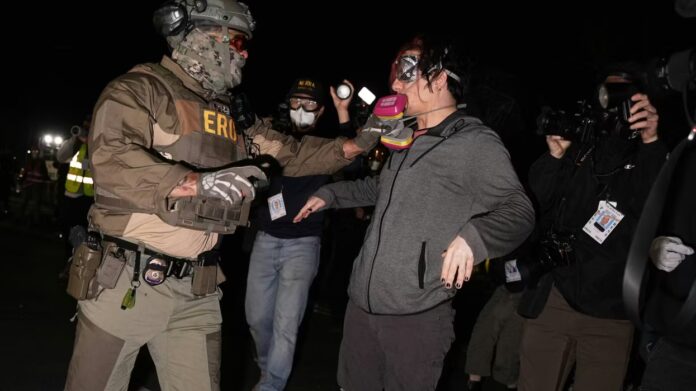
The situation escalated dramatically as confrontations emerged between protesters and federal agents.
Reports of pepper spray deployments, physical confrontations, barricades, and crowd-control measures fueled growing public attention. Video footage from the scene circulated widely across social media platforms and national news outlets, transforming what had initially been a regional issue into a story receiving nationwide coverage.
The arrival of high-profile elected officials further intensified public interest.
Several Democratic leaders publicly criticized conditions at the facility and demanded greater oversight. Governor Mikie Sherrill emerged as one of the most prominent voices calling for accountability, publicly stating that Delaney Hall should be shut down while simultaneously emphasizing the need to maintain public safety.
The governor’s involvement significantly altered the trajectory of events.
Rather than allowing federal authorities alone to manage the growing unrest, Sherrill directed the New Jersey State Police to assume a greater role in maintaining order outside the facility.
The decision represented a significant intervention by state government.
State officials argued that tensions had reached a level where independent management of public safety was necessary to protect both demonstrators and law enforcement personnel. The objective, according to state leaders, was to reduce the likelihood of further escalation while preserving the constitutional rights of peaceful protesters.
The result was the creation of designated protest zones and a significant restructuring of security operations around Delaney Hall.
New Jersey State Police established extensive barriers, controlled access points, and implemented crowd management strategies designed to separate opposing groups.
By that point, the protests were no longer limited to anti-ICE demonstrators.
Pro-ICE organizations, conservative activists, and supporters of federal immigration enforcement had also begun arriving in Newark. Competing demonstrations transformed portions of the area surrounding Delaney Hall into a politically charged environment where opposing groups frequently exchanged chants, slogans, and accusations across police barricades.
The arrival of outside political organizations added another layer of complexity.
State leaders repeatedly expressed concerns about individuals traveling from outside New Jersey to participate in demonstrations. Governor Sherrill and other officials argued that some of the most aggressive actions appeared to involve outside agitators rather than local residents.
Meanwhile, anti-ICE activists countered that people across the country viewed Delaney Hall as emblematic of larger concerns surrounding immigration detention policies and therefore felt compelled to participate.
As crowds grew larger, tensions became increasingly difficult to manage.
By Saturday evening, demonstrations had swelled into one of the largest gatherings seen outside the facility since the controversy began.
The atmosphere shifted dramatically.
Reports emerged of burning debris, projectiles being thrown, confrontations with police lines, and protesters attempting to breach barriers established around protected areas. Law enforcement responded with riot-control tactics as officers sought to restore order amid escalating disorder.
Scenes from the area quickly spread across television broadcasts and social media feeds.
Images of mounted troopers, riot shields, flash-bang devices, burning barricades, and shouting crowds created a striking visual representation of how rapidly the situation had deteriorated.
For many Newark residents, the events were unlike anything seen in the city in recent years.
Mayor Ras Baraka responded by implementing extraordinary measures.
Declaring that public safety concerns had reached an unacceptable level, the mayor established an emergency nightly curfew covering a half-mile radius surrounding Delaney Hall. The restrictions prohibit public presence within the designated zone between 9:00 p.m. and 6:00 a.m.
The decision reflected growing concern among city officials regarding the potential for additional violence.
Baraka emphasized that while peaceful protest remains protected, activities involving weapons, vandalism, fires, and attacks on law enforcement threaten both public safety and the credibility of legitimate demonstrations.
His statement attempted to strike a delicate balance.
The mayor strongly criticized federal immigration practices, reiterated support for immigrant communities, condemned the use of excessive force against peaceful protesters, and continued advocating for greater transparency regarding conditions inside Delaney Hall.
At the same time, he made clear that violence, property destruction, and dangerous conduct by demonstrators could not be tolerated.
That balancing act reflects the broader challenge confronting New Jersey leaders.
Many elected officials simultaneously oppose aspects of federal immigration policy while also recognizing their responsibility to prevent violence and maintain order.
The result has been a complex political landscape in which state and local leaders find themselves navigating competing pressures from activists, residents, law enforcement agencies, and federal authorities.
Adding further complexity are the ongoing legal disputes surrounding Delaney Hall itself.
The facility remains the subject of continuing litigation involving municipal oversight, permitting questions, and broader disputes regarding operations. Calls for inspections, access requests from elected officials, and demands for independent reviews have become central components of the controversy.
Governor Sherrill has repeatedly argued that state health officials should be granted access to evaluate conditions inside the facility.
Federal authorities have maintained their own position regarding operational procedures and security requirements.
Meanwhile, families of detainees continue waiting for answers.
After visitation was suspended amid the unrest, state officials announced plans to restore family visits while utilizing law enforcement escorts to guide visitors through heavily secured areas surrounding the facility.
That development serves as a reminder that behind the political arguments, legal battles, and televised confrontations are hundreds of detainees and family members directly affected by events unfolding at Delaney Hall.
For them, the conflict is not simply a political debate.
It is a deeply personal reality involving separation, uncertainty, legal proceedings, and concerns about the future.
As June begins, no immediate resolution appears likely.
The curfew remains active. State Police continue controlling access around the facility. Activists remain committed to ongoing demonstrations. Federal authorities have indicated that detention and enforcement operations will continue. Political leaders remain sharply divided over the appropriate path forward.
What is certain is that Delaney Hall has evolved far beyond a local dispute.
It now represents one of the most significant intersections of immigration policy, civil rights activism, federal-state relations, public safety, and political protest currently unfolding in New Jersey.
Whether the coming days bring de-escalation, further confrontation, or meaningful negotiations remains unclear. What is clear is that Delaney Hall has become a defining issue in New Jersey politics, one that is drawing attention from across the nation and forcing difficult conversations about immigration, government authority, public accountability, and the limits of protest in an increasingly polarized America.
















