
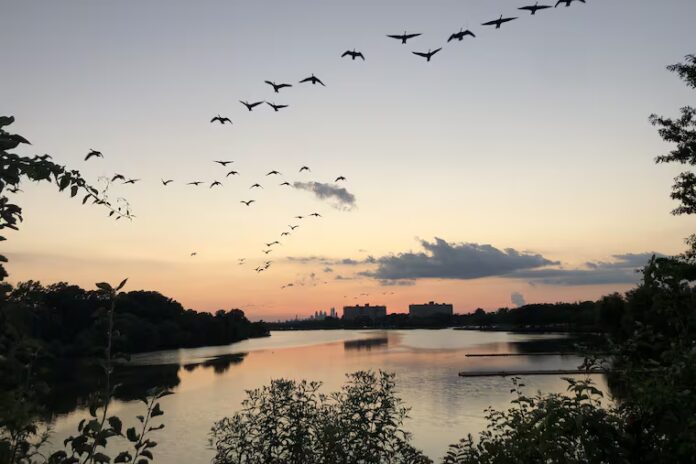

For anyone who grew up around Cooper River the way I did, ice skating on it as a kid and hearing the same local jokes everyone else did about the water practically glowing in the dark, seeing a $400 million price tag attached to cleaning it up is genuinely jarring. My first instinct, honestly, was to assume the number belonged to the Delaware River running through Camden rather than Cooper River itself. That is a staggering amount of money for a body of water locals have spent decades joking about. And yet, once you actually look at what that number is paying for, it starts to make considerably more sense, and it becomes clear this isn’t a punchline so much as a genuine engineering assault on one of South Jersey’s most persistent environmental headaches.
Camden County officials, working alongside the Camden County Municipal Utilities Authority, announced on July 14, 2026 a sweeping $400 million, multiyear master plan designed to overhaul the region’s aging water infrastructure, restore polluted lakes, and eliminate the severe flooding that has plagued communities across the county for years. Officials are calling it a genuinely generational environmental undertaking, and its most ambitious stated goal is nothing less than making Cooper River clean enough for residents to safely swim in once again.
Understanding why that goal costs $400 million to achieve requires looking at three distinct, deeply entrenched problems the project is designed to solve simultaneously. The first is Camden City’s century old combined sewer system, in which toilet water and rainwater flow through the exact same pipes rather than separate ones. During heavy rainfall, that combined system becomes overwhelmed, and the excess simply overflows directly into the Cooper and Delaware Rivers as raw sewage, a genuinely serious public health and environmental problem that has persisted for generations. Fixing it isn’t a matter of a quick repair. It requires literally ripping up miles of city streets to physically separate the sewage and stormwater systems from each other, an undertaking that is both disruptive and genuinely expensive at the scale required.
The second major problem lies beneath the water’s surface entirely. Decades of industrial runoff, heavy metals, and accumulated silt have choked the riverbed, particularly within Cooper River Lake, turning parts of it into a shallow, stagnant mud pit rather than a genuinely healthy body of water. Removing that toxic sediment through a process known as dredging ranks among the more expensive environmental engineering undertakings that exist, since it involves carefully scooping out contaminated material from the bottom of the waterway without simply stirring pollution back into the water column in the process.
The third problem involves the surrounding land rather than the water itself. Years of overdevelopment across Cherry Hill and Collingswood have left enormous stretches of pavement and parking lots with nowhere for rainwater to go except rushing directly into the Cooper River basin during storms, a dynamic that has caused significant flooding on local roads while steadily eroding the river’s own banks over time. Addressing that runoff problem requires building out substantial green infrastructure networks, including stormwater holding basins and artificial wetlands specifically designed to slow rainwater down and let it absorb naturally rather than flooding straight into the river all at once.
The project’s $400 million budget breaks down directly across these three core challenges, along with the recreational restoration work tied to all of them. The single largest allocation, $200 million, goes toward reducing combined sewer overflows, the exact problem responsible for raw sewage mixing with stormwater during heavy rain events. Another $75 million is earmarked specifically for sediment remediation and dredging across the county’s choked waterways, while $50 million goes toward rehabilitating the broader aging sanitary sewer system beyond the combined sewer areas alone. A separate $50 million is dedicated to restoring recreational lakes and stabilizing eroded shorelines, and the remaining $25 million funds green infrastructure improvements like rain gardens, bioswales, and permeable pavement designed to help the surrounding landscape absorb runoff naturally rather than funneling it straight into the water.
This isn’t a project confined to Cooper River alone, either. The initiative covers rivers, streams, and public parks throughout Camden County, with Cooper River Lake itself, which winds through Cherry Hill, Collingswood, Pennsauken, Haddon Township, and Camden, standing as the project’s most prominent target. Beyond Cooper River, the plan also addresses Kirkwood Lake in Lindenwold, Atco Lake in Waterford, Pennsauken Creek, and Evans Pond and Wallworth Lake in Haddonfield, reflecting a genuinely countywide approach to water quality rather than a narrow, single site cleanup effort.
Paying for a project of this scale requires layering multiple funding sources on top of one another. County officials plan to aggressively pursue federal EPA funding, state grants through the New Jersey Department of Environmental Protection, and FEMA hazard mitigation awards, but securing that outside funding still requires local matching dollars. To generate that local share, voters will decide a ballot referendum this coming Election Day, November 3, 2026, on whether to raise the county’s Open Space tax rate. The proposal calls for a one cent increase per $100 of assessed property value, raising the current rate from two cents to three cents. For a home assessed at $500,000, that increase translates to $150 a year dedicated to open space and water protection, up from the current $100 annual cost, a genuinely modest increase relative to the scale of infrastructure work it would help fund. County leaders have also pointed out that even with this proposed increase, Camden County’s open space tax rate would still remain lower than the rates currently charged in neighboring Burlington and Gloucester counties, both of which already sit at four cents per $100 of assessed value.
Beyond that ballot measure, the county intends to pursue low interest borrowing, additional state and federal grant funding, and a rate increase through the CCMUA itself to help cover the remaining costs not offset by the Open Space tax increase alone. Taken together, the plan reflects a genuinely comprehensive attempt to solve problems that have accumulated across Camden County for the better part of a century, aging sewage infrastructure, contaminated waterways, and unchecked stormwater runoff, all within a single, coordinated master plan rather than piecemeal fixes scattered across individual towns. Whether $400 million ultimately proves enough to make Cooper River swimmable again remains to be seen, but for anyone who grew up hearing the same jokes about that water that I did, this project represents the first genuinely serious attempt in a generation to make those jokes obsolete.
















