
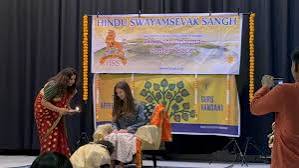

Recognition of outstanding educators has long been part of American school culture, but this year thousands of students and families added another dimension to that tradition through Guru Vandana, a series of ceremonies held across the United States that combined teacher appreciation with one of Hinduism’s oldest educational values. From local community centers to school districts throughout New Jersey, students, parents, teachers, administrators, and civic leaders gathered to celebrate the role educators play in shaping lives, reinforcing the idea that respect for learning transcends cultural, religious, and geographic boundaries.
For New Jersey, the movement carried particular significance. The state has one of the nation’s largest and most diverse Hindu-American communities, and many of the largest Guru Vandana celebrations took place throughout communities including Woodbridge, Parsippany, Randolph, Plainfield, South Brunswick, and surrounding municipalities. Each event reflected the same central purpose: bringing students together with the teachers who have influenced them throughout the academic year while offering those educators an opportunity to experience traditions that have been part of Hindu culture for centuries.
The ceremonies demonstrated how cultural heritage can complement, rather than replace, the traditions already established within American public education. Teachers from elementary schools, middle schools, high schools, colleges, and universities were welcomed by families representing numerous backgrounds. Rather than focusing solely on awards or formal recognition, Guru Vandana emphasizes gratitude expressed through ceremony, conversation, and personal interaction.
In Sanskrit, the word “guru” extends beyond the modern understanding of a classroom instructor. Traditionally, a guru is regarded as an individual who removes the darkness of ignorance through the light of knowledge. The word “vandana” refers to reverence, respect, and sincere appreciation. Together, Guru Vandana represents an acknowledgment of those who dedicate their lives to education and personal development. While rooted in Hindu philosophy, the ceremonies are intentionally inclusive, honoring teachers regardless of their faith, background, or profession.
Across New Jersey, educators who attended often found themselves participating in customs that were unfamiliar but deeply meaningful. Students welcomed their teachers through traditional greetings and ceremonies that highlighted the importance of humility, gratitude, and lifelong learning. Many celebrations included Aarti, a ceremonial offering of light symbolizing wisdom and enlightenment. In another longstanding tradition, some students respectfully bowed before their teachers and sought their blessings, an expression that reflects reverence for education rather than worship of an individual.
For many educators, the experience provided insight into customs they had never previously encountered. Teachers who spend every school year introducing students to new subjects suddenly became students themselves, learning about another culture through direct participation rather than textbooks. Those moments of mutual learning became one of the defining characteristics of the celebrations.
Throughout New Jersey, the events also showcased student performances that reflected the breadth of Indian cultural traditions. Children recited Sanskrit verses emphasizing knowledge and ethical living, performed classical and contemporary Indian dance, demonstrated yoga, presented musical performances, and delivered speeches explaining why teachers occupy such an important place within Hindu philosophy. Families viewed the programs not simply as entertainment but as an opportunity for younger generations to preserve cultural traditions while sharing them with their schools and local communities.
The ceremonies were intentionally scheduled around Teacher Appreciation Week, creating a bridge between an established American tradition and one that has existed for centuries throughout India and across the global Hindu diaspora. Rather than creating a separate observance, organizers sought to contribute another perspective to a celebration already familiar within American education.
New Jersey’s role extended well beyond hosting local gatherings. Rockaway has become an important organizational center for nationwide planning efforts connected with Guru Vandana, reflecting the state’s growing influence within Hindu-American educational and cultural initiatives. As one of the country’s most diverse states, New Jersey has increasingly served as a meeting place where cultural traditions from around the world become part of everyday civic life.
That diversity was evident in the range of public officials who attended ceremonies throughout the state. School superintendents, principals, district administrators, board of education members, municipal officials, and community leaders joined families in recognizing educators whose work often extends far beyond classroom instruction. Their participation reflected an understanding that education remains one of the strongest institutions connecting communities regardless of language, ethnicity, religion, or political affiliation.
Woodbridge emerged as one of the most visible examples of that partnership. Teachers, district leadership, diversity officials, elected representatives, and community members gathered for a ceremony that highlighted not only appreciation for educators but also the importance of intercultural understanding within one of New Jersey’s largest municipalities. The presence of Mayor John McCormac alongside education leaders illustrated how teacher recognition can become a broader community event rather than remaining confined to individual schools.
Similar celebrations throughout Parsippany, Randolph, Plainfield, South Brunswick, and neighboring communities reflected the demographic transformation that has reshaped New Jersey during the past several decades. The state’s expanding Indian-American population has contributed significantly to business, medicine, engineering, higher education, technology, scientific research, and public service. Guru Vandana offered another example of that contribution by sharing educational traditions that emphasize respect, discipline, lifelong learning, and gratitude.
Nationally, the scale of participation underscored the growing interest in the initiative. More than one hundred individual Guru Vandana events were organized across the United States during the 2026 season. Nearly two thousand teachers received recognition alongside principals, superintendents, school board members, and higher education leaders. More than 7,500 participants attended ceremonies nationwide, making the program one of the largest coordinated teacher appreciation initiatives organized within the Hindu-American community.
Those numbers represent more than attendance statistics. They illustrate the growing confidence of second- and third-generation Hindu Americans who increasingly view cultural heritage not as something reserved for private family life but as something that can be shared openly within schools and communities. Rather than existing separately from American civic life, these traditions are becoming part of the broader conversation about diversity, inclusion, and cultural literacy.
Universities also participated in the initiative, expanding Guru Vandana beyond elementary and secondary education. Higher education administrators, professors, academic leaders, and faculty members were recognized during campus ceremonies organized by Hindu student organizations. These events reflected the same principles evident in local community celebrations while acknowledging the role colleges and universities play in preparing future scientists, educators, healthcare professionals, entrepreneurs, and public servants.
The ceremonies also challenged conventional assumptions about teacher appreciation. In many communities, recognition often takes the form of gifts, certificates, or appreciation luncheons. Guru Vandana instead emphasizes personal gratitude expressed directly from student to teacher. Organizers believe that taking time to acknowledge educators face-to-face reinforces the enduring relationships that exist long after report cards are issued and classrooms change.
For many teachers, the experience provided affirmation during a period when education continues to face significant challenges. Public school educators routinely balance expanding academic expectations with growing social responsibilities, evolving technology, changing curricula, and increasing demands from families and communities. Events centered on appreciation rather than evaluation offered a reminder that students often remember not only what they were taught but how they were encouraged to grow.
The broader significance extends beyond Hindu communities themselves. Guru Vandana demonstrates how cultural traditions can foster dialogue rather than division. Students invited teachers from every background to participate in ceremonies designed to share values rather than convert beliefs. That distinction has helped the events become opportunities for education in both directions, allowing teachers to better understand their students while giving students a chance to express appreciation through customs meaningful to their families.
For New Jersey, where classrooms regularly include students representing dozens of national origins and languages, such exchanges reflect the realities of modern education. Schools increasingly serve not only as places of academic instruction but also as environments where cultural understanding develops through everyday interaction. Celebrations like Guru Vandana reinforce the idea that diversity becomes most meaningful when communities actively share traditions instead of simply acknowledging differences.
As New Jersey continues to evolve as one of America’s most culturally diverse states, initiatives that encourage dialogue between families, educators, and civic institutions are likely to become increasingly important. Guru Vandana offers one example of how longstanding traditions can find new relevance within contemporary American education while strengthening relationships between schools and the communities they serve.
Ultimately, the ceremonies were about more than ritual. They reflected a universal belief shared across cultures: that teachers leave lasting marks on the lives of their students. Whether through mathematics, literature, science, music, history, athletics, or simple acts of encouragement, educators shape future generations in ways that often become fully apparent only years later. By placing gratitude at the center of public celebration, communities across New Jersey joined a nationwide effort reminding both students and teachers that education remains one of society’s most enduring partnerships, built on knowledge, respect, and the shared pursuit of a brighter future.
















