
New Jersey doesn’t need a marine park stadium to witness something extraordinary in the water. It has a coastline full of boats willing to take you to where the whales and dolphins actually live.
Opinion: The Real Show Was Never Behind Glass. It’s Off the Jersey Coast.
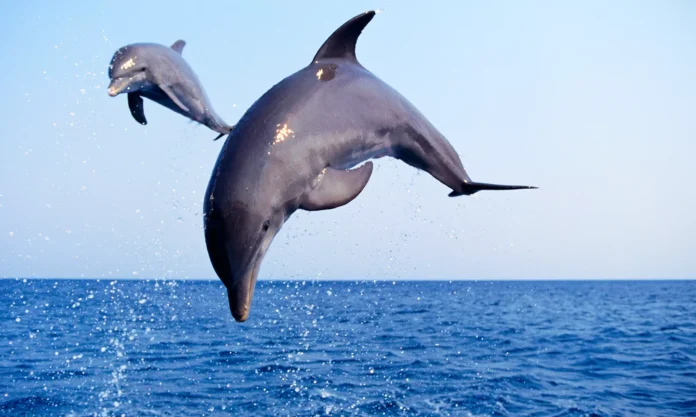
Picture two versions of the same moment. In the first, a killer whale glides through a chlorinated tank under stadium lights, cued by a trainer’s whistle to leap on command for a crowd holding cameras. In the second, a pod of wild bottlenose dolphins breaks the surface of the open Atlantic on its own schedule, chasing baitfish, playing in a boat’s wake because it wants to, answerable to nothing and no one. Only one of those moments is actually wild. New Jersey’s coastline offers a genuine, year round chance to witness the second version, and choosing it over the first is not just a matter of preference. It is an active ethical decision, and it happens to be one of the more rewarding choices a Jersey Shore visitor can make.
What a Tank Actually Costs an Animal
Marine mammal parks like SeaWorld have spent decades defending captivity as conservation and education, but the structural reality of the enclosures tells a different story. A concrete tank, no matter how large it looks from the stands, represents a sliver of the range a wild cetacean would cover in open water, where orcas and dolphins routinely travel dozens of miles a day following prey, currents, and their own social groups. Confined to a fraction of that range for life, captive orcas have been documented developing dorsal fin collapse, a condition rarely seen in wild populations, believed to result from swimming in tight, repetitive circles rather than the open water dives and directional swimming their bodies evolved for. Repetitive, stereotypic behaviors, gnawing on enclosure walls, floating motionless for extended stretches, circling endlessly, have been well documented in captive marine mammals and are widely recognized by animal behaviorists as signs of chronic stress rather than contentment.
The social cost compounds the physical one. Wild orcas and dolphins live in complex, often lifelong family groups with their own dialects and social structures. Captive breeding and trading between parks has repeatedly fractured those groups, separating related animals and forcing unrelated individuals into artificial pods that do not reflect how these species actually organize themselves in the wild. None of that comes through in a 20 minute stadium show built around trained leaps and splash zones. What comes through is a performance, engineered for an audience rather than the animal performing it.
What You Actually Learn on the Open Water
The case for wild encounters is not purely about what they avoid. It is about what they actually teach. Watching a humpback whale lunge feed on its own terms, watching a dolphin pod communicate and coordinate a hunt, watching any of these animals navigate open water using instincts no trainer installed, builds a genuinely different kind of respect than watching a scripted routine ever could. That respect tends to translate into real conservation minded thinking in a way canned entertainment rarely manages, because you are witnessing an intelligent, wild creature being exactly what it is, rather than what an entertainment company has trained it to perform.
The economics matter too. Money spent on a wild excursion flows directly into local maritime economies, family owned charter operations, working marinas, and, on several New Jersey boats, actual marine biology research and population data collection happening in real time alongside paying passengers. That is a meaningfully different economic chain than ticket revenue flowing up to a publicly traded entertainment corporation’s shareholders. One model funds the ocean it depends on. The other monetizes an animal removed from it.
New Jersey’s Fleet Proves Wild Doesn’t Mean Tame
Skeptics sometimes assume an ethical choice means sacrificing excitement, that avoiding a marine park means settling for something quieter or less dynamic. New Jersey’s own coastline argues otherwise, with a genuinely varied fleet, spanning the full length of the coast from Cape May to the Highlands, proving wild encounters can be every bit as thrilling as anything staged indoors.
Cape May Whale Watcher, Cape May
A 110-foot super ship operating out of Miss Chris Marina, with climate-controlled indoor cabins, an open-air upper deck, full lower bars, and rental binoculars. Its signature 3-hour Cetacean Spectacular cruise and 2-hour Sunset Dolphin tours come backed by a lifetime marine mammal sighting guarantee.
Cape May Whale Watch & Research Center, Cape May
Based at South Jersey Marina aboard the American Star, this is the most direct bridge between tourism and science on the list. Passengers sit alongside actual marine biologists logging real-time population data during 3-hour whale tours and 2-hour morning Dolphin and Bird watches tracking the resident Atlantic bottlenose population.
Atlantic City Cruises, Atlantic City
Departing from the Historic Gardner’s Basin aboard the Cruisn 1, this operator runs a focused 1.5 to 2 hour Dolphin Watching Adventure Cruise through local coastal waters, backed by a free return ticket if no dolphins are spotted.
Jersey Shore Whale Watch, Belmar
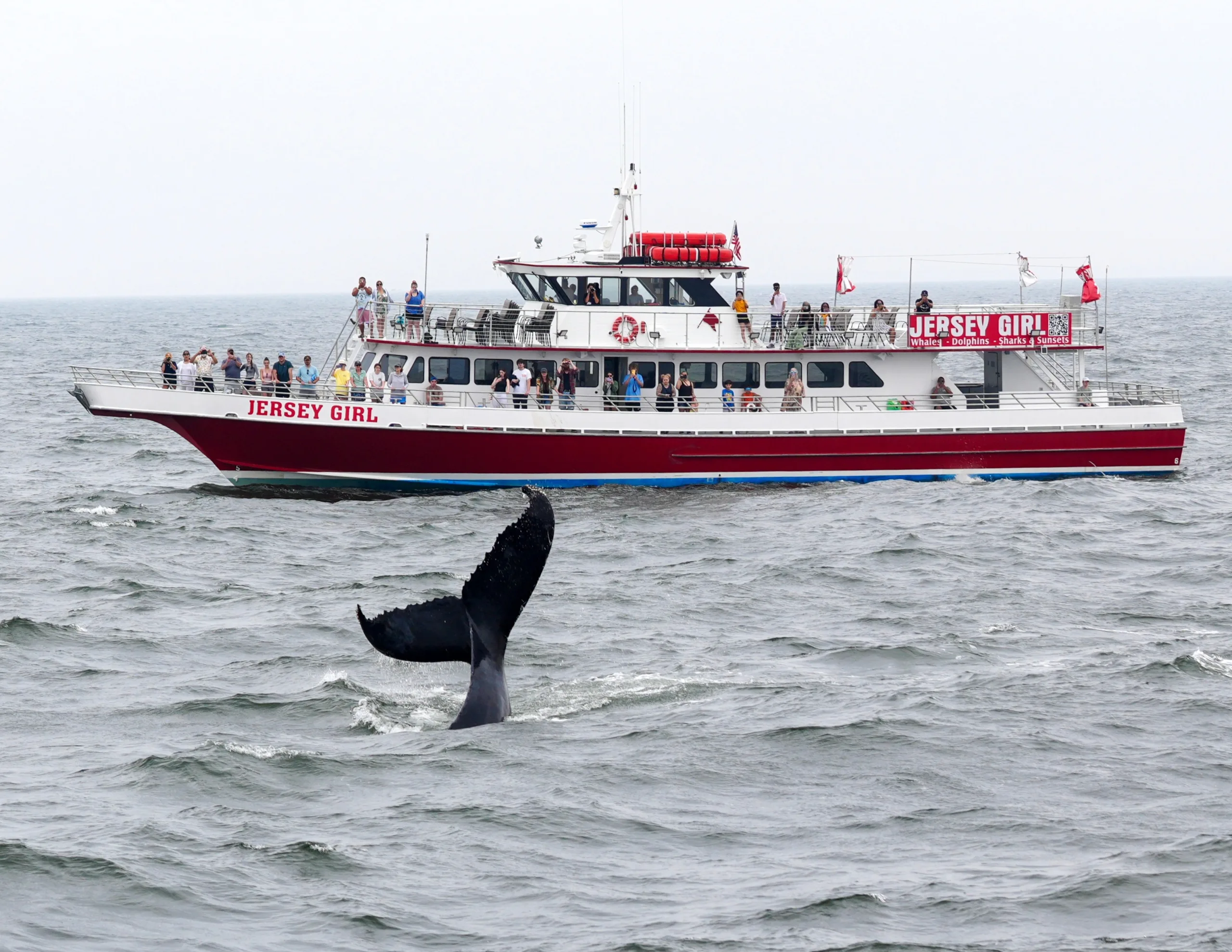
Founder Bill McKim commands the bright red, 120-passenger Jersey Girl out of Belmar Marina, running 3 to 4 hour whale watching tours with a sighting guarantee, alongside shorter 2-hour evening dolphin and sunset nature cruises.
Seastreak Whale Watching, Highlands
A high-speed, multi-deck catamaran departing the Seastreak Ferry Terminal, tracking migrating humpback whales, bottlenose dolphins, and pelagic sea birds on the open ocean with the New York City skyline visible in the background.
Thunder Cat Dolphin Watch, Wildwood Crest
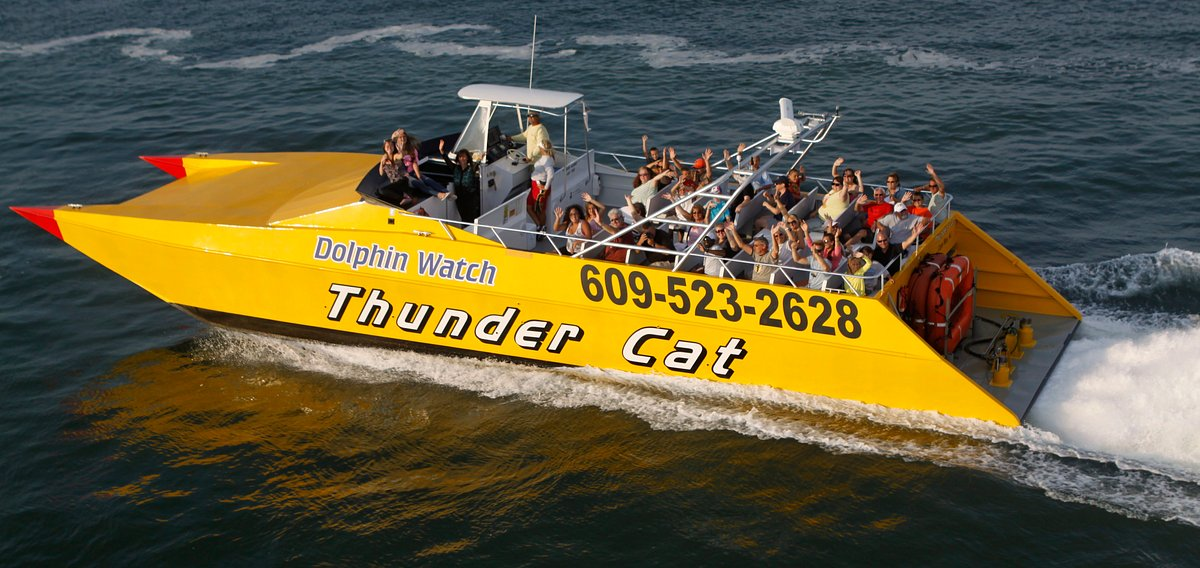
A custom-built, USCG-certified catamaran speedboat with a specialized hull and surface-piercing propellers engineered to draw marine life in. On a 90-minute sprint, pods of dolphins actively pursue the boat to jump through its twin-hull wake.
Silver Bullet Speedboat Tours, Wildwood
A 65-foot, flag-painted twin-engine speedboat departing near the bridge into town. Ninety minutes of full-throttle open-ocean thrill riding, sharp banking turns, and music, slowing down to track local dolphin pods, with a near guarantee riders will get soaked.
From a 65 foot flag painted speedboat blasting music through open water to a research vessel where a marine biologist is genuinely working while you watch, and a full roster of established operators running the length of the Jersey coast between them, New Jersey offers every register of experience a marine park promises, minus the tank.
Every Ticket Is a Vote
Every ticket purchased for a marine encounter is a small but real economic vote for one model or the other. A ticket to a captive show funds continued breeding, continued confinement, and continued demand for exactly the enclosures critics have spent decades documenting the costs of. A ticket to a wild excursion funds a local captain, a research program, and a genuine encounter with an animal that owes you nothing and performs for no one. The real magic of seeing a whale or dolphin was never the trick. It was always the animal itself, completely unconfined, moving through water it actually belongs in, on terms it set entirely on its own. New Jersey’s coast has been offering that the whole time. All that’s required is choosing the boat over the stadium.
This is an opinion piece. Marine parks maintain that professionally accredited facilities provide veterinary care, breeding programs, and public education that have measurably contributed to species research and rescue efforts for stranded or injured animals, an argument its defenders consider a genuine, if different, form of conservation.