
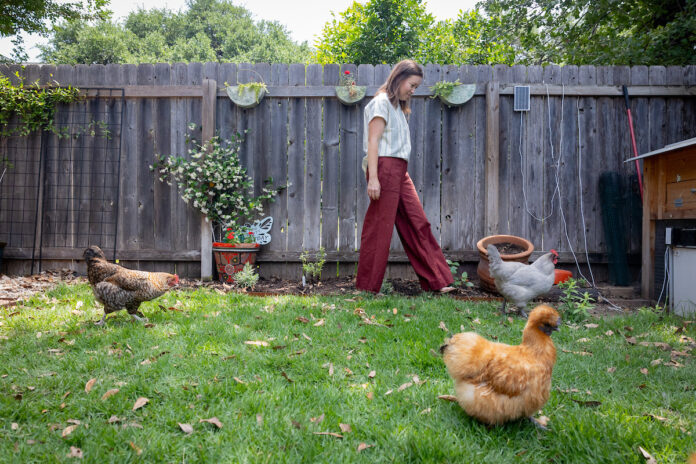

One of South Jersey’s most intriguing local debates is no longer centered on redevelopment projects, restaurant openings, transportation improvements, or municipal budgets. Instead, it revolves around a question that would have seemed unlikely in one of the region’s most densely populated and walkable communities just a few years ago: Should residents be allowed to keep backyard chickens?
The issue has emerged as a growing topic of discussion throughout Collingswood, where a grassroots coalition of residents is urging local officials to reconsider the borough’s longstanding prohibition on backyard poultry and explore the possibility of a carefully regulated pilot program for hen ownership.
The proposal, recently presented to borough commissioners, reflects a broader movement taking place across suburban America. Advocates argue that backyard hens provide families with a more direct connection to food production, offer educational opportunities for children, promote sustainability, and support local self-sufficiency. Opponents, meanwhile, raise concerns about neighborhood compatibility, noise, sanitation, rodents, property values, and animal welfare.
In Collingswood, where historic homes sit close together and backyard space is often limited, the debate has become particularly complex.
Unlike many suburban communities with larger lot sizes and more separation between properties, Collingswood is celebrated for its compact, pedestrian-oriented design. The borough’s vibrant downtown district along Haddon Avenue has become one of South Jersey’s most successful examples of smart growth, walkability, independent business development, and community-centered planning.
Its residential neighborhoods are equally distinctive.
Tree-lined streets feature a mix of historic single-family homes, twins, and row houses, many of which sit on relatively modest lots. Those characteristics contribute significantly to the borough’s charm, but they also create unique challenges when considering agricultural uses traditionally associated with larger suburban or rural properties.
Current borough ordinances prohibit the keeping of poultry and livestock within municipal boundaries. Residents found in violation can face fines and enforcement actions under existing regulations.
Now, however, a group known as Collingswood Citizens for Backyard Chickens is asking local leaders to revisit those rules.
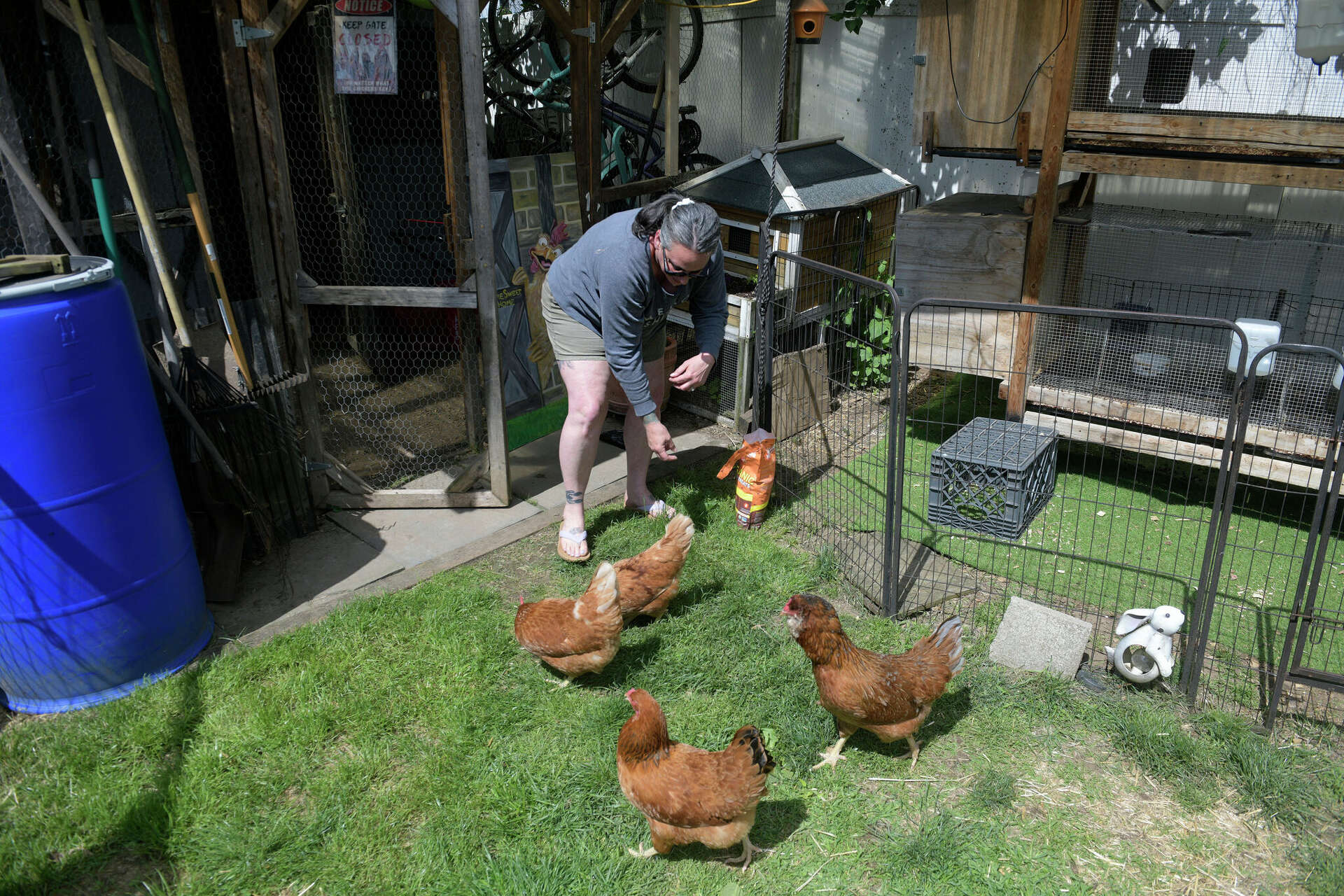
Rather than pursuing unrestricted poultry ownership, advocates are proposing a limited and highly regulated framework modeled in part after programs implemented elsewhere in South Jersey. One frequently cited example is neighboring Haddon Township, which established an advisory approach that allows a restricted number of households to keep hens while imposing educational, operational, and compliance requirements.
Under similar models used throughout the country, residents are typically required to complete training programs, maintain secure coops, follow sanitation standards, limit flock sizes, and prohibit roosters entirely.
The rooster prohibition is often considered non-negotiable in suburban environments.
Even many backyard chicken advocates acknowledge that crowing roosters would create unacceptable disruptions in residential neighborhoods. The focus instead is on small flocks of hens intended primarily for personal egg production.
Supporters argue that modern backyard chicken keeping has evolved far beyond traditional perceptions of farm animals.
Many owners view hens as companion animals similar to dogs, cats, or rabbits. Families frequently give their birds names, provide specialized care, and incorporate them into daily household routines. Unlike conventional pets, however, chickens also produce fresh eggs, creating a practical benefit that many advocates cite as a major attraction.
The movement has gained momentum nationally as interest in local food systems continues to grow.
For some households, backyard hens represent a way to reduce dependence on commercial food supply chains. Others are motivated by concerns about food quality, nutrition, and sustainability. Many appreciate the ability to know exactly how their birds are raised and what they consume.
Supporters also point to environmental benefits.
Chickens naturally forage for insects, including ticks, beetles, fleas, and other pests that can damage gardens or create nuisance issues. Their waste can be composted and used to enrich soil, while their constant scratching helps aerate garden beds and assist with natural landscaping processes.
Educational opportunities represent another frequently cited advantage.
Parents often describe backyard flocks as a hands-on learning experience that teaches children responsibility, biology, animal care, food production, and environmental stewardship. For many families, raising hens provides lessons that are difficult to replicate in more traditional settings.
Yet despite these perceived benefits, significant concerns remain.
In communities with larger properties, many potential conflicts can be mitigated through distance and space. In Collingswood, however, geography itself becomes part of the conversation.
The borough’s residential density means that coops would often be located relatively close to neighboring homes. Even if regulations established setback requirements, available space on many lots could make compliance difficult.
That reality raises concerns about odor management.
While properly maintained coops can remain relatively clean, critics argue that not every owner will consistently maintain the required standards. Poor sanitation practices could create unpleasant conditions for adjacent neighbors, particularly during warmer months.
Noise is another frequent point of contention.
Although hens are far quieter than roosters, they are not silent animals. Small flocks routinely cluck, vocalize after laying eggs, and communicate throughout the day. In neighborhoods where homes sit close together, some residents worry that those sounds could become a persistent nuisance.
Rodent control represents another major issue.
Animal feed naturally attracts mice, rats, raccoons, and other wildlife. Even responsible owners may struggle to completely eliminate food sources that appeal to local pest populations. Critics of backyard chicken programs often cite rodent infestations as one of the most common unintended consequences.
Animal welfare advocates also raise important considerations.
While many families successfully care for backyard hens, chickens require more attention and expertise than some prospective owners initially realize. Daily maintenance, coop cleaning, predator protection, veterinary care, weather considerations, and long-term commitments can create challenges for inexperienced owners.
Suburban predators remain a significant threat as well.
Raccoons, foxes, hawks, and other animals are highly adaptable and frequently target backyard poultry. Poorly designed or inadequately secured coops can result in injury or death for the birds.
Municipal officials throughout the country have also encountered situations where owners become overwhelmed by the responsibilities associated with flock management, resulting in abandonment or surrender of animals.
These concerns help explain why local governments often approach such proposals cautiously.
For Collingswood commissioners, the challenge lies in balancing competing priorities.
On one side are residents advocating for greater flexibility, sustainability initiatives, and personal choice. On the other are neighbors concerned about preserving quality of life, protecting property values, maintaining public health standards, and ensuring that residential neighborhoods remain consistent with community expectations.
The discussion also reflects larger questions about how suburban communities evolve.
Across New Jersey, municipalities are increasingly examining issues that would have seemed unusual a generation ago. Urban agriculture, community gardens, pollinator habitats, native landscaping, food resilience programs, and sustainability initiatives are becoming more common components of local planning conversations.
Backyard chicken proposals often emerge from that broader cultural shift.
What makes the Collingswood debate particularly compelling is the borough’s unique identity.
This is not a rural community seeking to preserve agricultural traditions. Nor is it a sprawling suburb where large properties can easily accommodate small livestock operations. Collingswood is one of South Jersey’s most densely developed, walkable, and highly regarded residential communities.
The question facing local leaders is whether backyard poultry can coexist with that identity.
Supporters believe carefully crafted regulations can make it work. Critics remain unconvinced that the realities of lot sizes, population density, and neighborhood proximity can be overcome through ordinance language alone.
As borough officials gather public input and evaluate potential options, the discussion is likely to continue generating strong opinions on both sides.
What began as a proposal involving a handful of hens has evolved into a broader conversation about sustainability, property rights, community expectations, neighborhood compatibility, and the future of suburban living in South Jersey.
Whether Collingswood ultimately embraces a pilot program or maintains its existing restrictions, the debate itself highlights an important reality: residents are increasingly engaged in shaping how their communities balance tradition, innovation, environmental stewardship, and quality of life.
For now, the future of backyard chickens in Collingswood remains uncertain. What is certain, however, is that the discussion has already become one of the borough’s most closely watched local issues, demonstrating how even the smallest policy proposals can spark meaningful conversations about the character and direction of a community.
















