

On July 1, 2026, the Centers for Medicare and Medicaid Services launched one of the most consequential changes to Medicare’s prescription drug coverage in the program’s recent history — a short-term demonstration program called the Medicare GLP-1 Bridge that, for the first time, provides eligible Medicare beneficiaries with access to Wegovy, Zepbound, and Foundayo, the branded GLP-1 weight-loss medications that have transformed obesity treatment but remained inaccessible to most Medicare enrollees for the simple reason that federal law has historically prohibited Medicare from covering drugs prescribed for weight loss alone. The Bridge program operates outside the standard Part D drug benefit, runs through December 31, 2027, and caps each eligible beneficiary’s monthly out-of-pocket cost at $50 — a figure that compares to the medications’ retail prices of several hundred dollars per month and represents a meaningful, though not unconditional, reduction in the financial barrier that has prevented millions of older Americans from accessing medications their physicians have recommended for clinically significant weight management.
For New Jersey specifically, where approximately 1.7 million residents are enrolled in Medicare and where the state’s aging population has been among the most attentive to the rapidly evolving landscape of GLP-1 prescribing across the past several years, the program’s launch is immediately relevant — not as a distant federal policy development but as a practical healthcare access question that New Jersey seniors and their physicians are already navigating at their pharmacies and medical offices. CMS Administrator Mehmet Oz, M.D., whose public profile has made him a recognizable figure for this specific health policy issue, specifically urged Medicare beneficiaries at the program’s launch to reach out to their physicians to determine whether they are eligible. For the New Jersey seniors who meet the program’s eligibility criteria and have been managing obesity alongside the kinds of cardiovascular, metabolic, or renal comorbidities that make GLP-1 treatment clinically compelling, July 1 represents the start of an access pathway that did not exist on June 30.
The program’s mechanics are specific enough that understanding them in detail matters considerably to any individual evaluating whether they qualify and how to access the benefit. The Medicare GLP-1 Bridge operates entirely outside the standard Part D drug benefit — meaning a Medicare beneficiary’s enrolled Part D plan does not need to opt into the program, does not adjudicate the claims, and does not bear financial risk for the program’s covered drugs. A central processor administered by Humana, drawing on the company’s existing infrastructure as the administrator of the Low-Income Newly Eligible Transition program, manages prior authorization requests, processes claims submitted by participating pharmacies, and makes reimbursement payments to those pharmacies. When a beneficiary receives a GLP-1 medication through the Bridge, their pharmacy submits the claim to this central system rather than to their regular Part D plan.
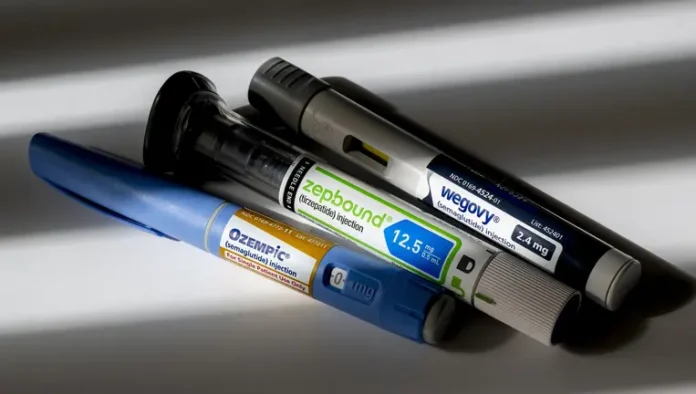
Three specific branded medications are covered under the Bridge in its current form: Wegovy, which is the semaglutide injectable formulation approved specifically for chronic weight management; Zepbound, the tirzepatide formulation for obesity treatment, but only in its KwikPen configuration — the single-dose vial and single-dose pen formulations are not included in the program; and Foundayo, a formulation that received FDA approval in April 2026 and was added to the Bridge’s covered drug list shortly thereafter. The omission of specific Zepbound formulations is a meaningful operational detail that physicians and pharmacists managing Medicare patients should be aware of, since it means a patient who has been using a non-KwikPen Zepbound formulation through an alternative access pathway may need to shift to the KwikPen to access the Bridge benefit. Other GLP-1 medications — including Ozempic and Victoza, the diabetes-indication formulations of semaglutide and liraglutide — remain covered under standard Part D for their approved non-weight-loss indications and are not affected by the Bridge program.
Eligibility for the Bridge is determined by a combination of Medicare enrollment status, clinical criteria, and a prior authorization process that requires a physician to submit documentation to the central processor confirming that the patient meets the program’s threshold requirements. Eligible Medicare beneficiaries must be enrolled in a standalone Part D prescription drug plan or a Medicare Advantage plan that includes drug coverage — specifically a coordinated care plan, which includes HMOs, HMO-POS plans, and local and regional PPOs. Beneficiaries enrolled in certain special plan types, including private fee-for-service plans and PACE organizations, are not eligible unless they are also enrolled in a standalone PDP. Beneficiaries who are already receiving a GLP-1 medication covered under their regular Part D benefit for an approved indication — diabetes management, cardiovascular risk reduction, or another covered use — must continue accessing those medications through their Part D plan and are not eligible to switch to the Bridge program for the same drugs.
The clinical eligibility criteria establish two distinct BMI-based pathways with different comorbidity requirements. Beneficiaries with a BMI of 30 or higher who have been diagnosed with heart failure, uncontrolled hypertension, or chronic kidney disease are eligible under the first pathway. Those with a BMI of 27 or higher — a lower threshold that makes somewhat more patients eligible — qualify if they have a documented history of stroke, prediabetes, a previous heart attack, or peripheral artery disease. In both cases, the treating physician must document not only that the patient meets the weight and comorbidity criteria but also that the patient has received counseling on lifestyle changes while taking GLP-1 medications — a requirement that reflects CMS’s stated commitment to ensuring obesity treatment involves comprehensive medical management rather than medication alone. When the prior authorization is approved, the pharmacy is notified and can dispense the medication, with the beneficiary paying the $50 copayment at the pharmacy counter.
The $50 monthly copayment carries important structural characteristics that differentiate it from standard Part D cost-sharing. Because the Bridge operates outside the Part D benefit, the $50 copayment does not count toward a beneficiary’s annual Part D deductible or out-of-pocket maximum — meaning a beneficiary cannot accumulate Bridge copayments toward the thresholds that trigger catastrophic coverage. Equally significant, Medicare’s Low-Income Subsidy program — also known as Extra Help, which subsidizes Part D cost-sharing for lower-income beneficiaries to as little as $5 to $10 per prescription — cannot be applied to reduce the Bridge’s $50 copayment. For Medicare beneficiaries who rely on Extra Help, accustomed to paying minimal amounts for their standard prescriptions, a fixed $50 monthly obligation represents a meaningful ongoing expense. The Congressional Budget Office has projected the Bridge program’s total cost in the billions annually, though CMS has not publicly released its own cost projections, and the program’s temporary nature — currently authorized through December 31, 2027, with no guaranteed extension — raises the clinical concern that patients who initiate GLP-1 treatment through the Bridge and achieve significant weight loss may face discontinuation when the program expires, with documented consequences including weight regain and the return of obesity-related comorbidities.
Against this backdrop of a new federal access program with significant eligibility complexity and important limitations for vulnerable populations, RPM Healthcare has released a white paper that situates the Medicare GLP-1 Bridge within a broader clinical argument about what adequate obesity treatment actually requires — and why access to the medication alone, at whatever price point, is insufficient to produce the outcomes that both patients and the healthcare system need. The core of RPM Healthcare’s position is built around two interconnected clinical propositions supported by the company’s own data and by the broader body of research on GLP-1 adherence and long-term outcomes.
The first proposition is that patients taking GLP-1 medications for obesity — particularly older Medicare-age patients — face specific and measurable physiological risks during the treatment period that require active monitoring rather than passive prescription management. Rapid weight loss associated with GLP-1 medications, especially in older adults whose muscle mass is already reduced relative to their younger counterparts, can produce accelerating sarcopenia — the progressive loss of skeletal muscle mass — that undermines the metabolic benefits of the weight reduction itself while creating functional disability risks. Dehydration, blood pressure fluctuations, nutritional deficiencies, and adverse drug interactions with existing medications for the cardiovascular and renal comorbidities that many Bridge-eligible patients carry simultaneously are all documented concerns that the GLP-1 prescribing literature consistently identifies as requiring systematic clinical attention. RPM Healthcare’s argument is that this monitoring function should be formalized through remote patient monitoring technology — digital health tools including smart scales, blood pressure monitors, and app-based symptom tracking that allow treating physicians to receive regular data on their patients’ physiological status between office visits, enabling earlier identification of adverse effects and more responsive dosage management.
The second proposition addresses the long-term efficacy question that has emerged as the most practically significant challenge in GLP-1 prescribing at scale: the medication works while patients are taking it, but discontinuation rates are high and long-term adherence requires behavioral support that medication alone does not provide. RPM Healthcare’s data shows that patients receiving GLP-1 treatment in combination with regular health coaching — structured, accountable touchpoints with clinically trained coaches who help patients understand the lifestyle changes that complement and sustain the medication’s effects — achieve meaningfully higher long-term weight-loss outcomes and experience fewer complications than patients receiving medication alone. The organization argues that any serious attempt to maximize the Medicare GLP-1 Bridge’s public health impact should incorporate health coaching as a mandatory companion to the prescription itself, rather than treating it as an optional add-on that financially strained seniors and their healthcare providers may or may not access depending on other priorities and resources.
The clinical logic behind both propositions is particularly compelling in the Medicare context because the Bridge program’s eligibility criteria are specifically designed to reach patients with significant cardiovascular, metabolic, and renal comorbidities — the exact population for whom the monitoring and coaching arguments are most medically relevant and for whom the consequences of unmonitored treatment or early discontinuation are most severe. A 72-year-old New Jersey Medicare beneficiary with obesity, hypertension, and a history of heart attack who begins Wegovy through the Bridge in August 2026 is not a low-risk patient receiving a lifestyle drug for cosmetic purposes. That patient is managing multiple serious chronic conditions simultaneously, taking a medication that produces physiological changes across multiple organ systems, and doing so in an environment where their treating physician’s capacity for continuous monitoring is constrained by the same time and resource pressures that constrain all of primary care medicine.
For New Jersey Medicare beneficiaries who believe they may be eligible for the Bridge program, the starting point is a conversation with their primary care physician or specialist to determine whether they meet the clinical criteria and whether a GLP-1 medication is appropriate for their specific clinical situation. Physicians who are ready to prescribe can submit prior authorization requests to the Bridge program’s central processor — administered by Humana — beginning immediately, with the pharmacy notified upon approval. Medicare’s official program information, including the CMS fact sheet and frequently asked questions, is available at Medicare.gov and through the 1-800-MEDICARE helpline. For beneficiaries who rely on the Low-Income Subsidy and are concerned about the $50 fixed copayment, it is worth discussing with a State Health Insurance Assistance Program counselor — New Jersey’s SHIP program operates through the state’s Area Agencies on Aging — whether the Bridge program’s specific cost structure fits their budget before initiating a medication that will require monthly renewal.
New Jersey’s obesity rate among adults aged 65 and older has tracked broadly with national trends, making the Bridge program’s potential impact on the state’s Medicare population substantial in absolute numbers even if the proportion of eligible beneficiaries who actually navigate the prior authorization process and sustain treatment long-term is lower than the raw eligibility figures would suggest. Whether the program successfully translates its access potential into durable health outcomes for the New Jersey seniors it is designed to reach will depend substantially on the quality of the clinical infrastructure surrounding each prescription — which is precisely the argument RPM Healthcare’s white paper is making. The medication is now, for the first time, accessible to millions of Medicare beneficiaries. How it is monitored, supported, and sustained will determine whether the access was also effective.
















