

The movement of fuel across the United States is one of the least visible yet most essential components of the modern economy. Every gas station, transportation fleet, airport, construction site, emergency service provider, manufacturing facility, and commercial operation depends on an intricate logistics network that delivers petroleum products safely, efficiently, and on schedule. While consumers often focus on prices at the pump, an enormous technology infrastructure works behind the scenes to ensure those products reach their destinations every day without interruption.
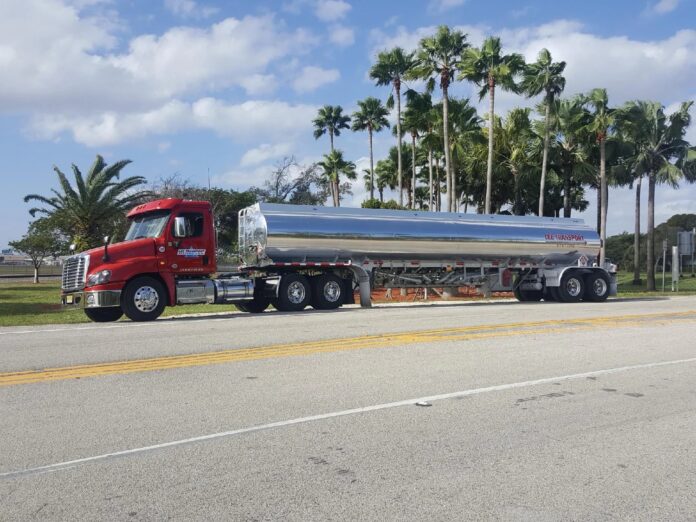
That reality is driving a new wave of digital transformation throughout the transportation and energy sectors, and one of the latest developments comes as Lee Transport, a 200-truck common carrier with a significant footprint in fuel transportation, has selected Gravitate TMS to modernize its dispatch operations, customer integrations, and overall transportation management capabilities.
The decision reflects a growing trend throughout the logistics industry as carriers increasingly move away from fragmented systems, manual workflows, spreadsheets, and disconnected communications in favor of purpose-built technology platforms designed specifically for highly specialized transportation sectors. In the case of petroleum logistics, where precision, regulatory compliance, safety requirements, inventory management, and real-time scheduling all intersect, the need for advanced transportation management technology has become increasingly important.
For New Jersey, a state that serves as one of the nation’s most critical transportation and energy distribution hubs, developments such as this highlight the ongoing evolution of the logistics ecosystem that powers the regional economy. Positioned between major metropolitan markets and supported by extensive highway networks, ports, rail infrastructure, pipelines, and distribution facilities, New Jersey continues to play a central role in the movement of energy products throughout the Northeast.
The selection of Gravitate’s Transportation Management System underscores how technology is reshaping that movement. Unlike general transportation software designed for broad freight applications, Gravitate was developed specifically for petroleum transportation, providing carriers with tools tailored to the unique operational requirements of fuel delivery networks. This specialization allows companies to manage dispatching, routing, customer communication, inventory visibility, scheduling, and regulatory compliance through a unified platform built around the realities of fuel transportation.
As fuel distributors and transportation providers face increasing pressure to operate more efficiently, technology has become one of the most powerful competitive advantages available. Dispatch centers today must coordinate thousands of moving variables simultaneously, including delivery schedules, driver availability, equipment utilization, customer requirements, traffic conditions, terminal loading times, weather impacts, and changing market demand. The complexity of these operations makes digital integration not simply beneficial but essential.
Lee Transport’s adoption of a purpose-built transportation management system reflects the industry’s recognition that operational excellence increasingly depends on real-time visibility and automation. Modern transportation platforms can streamline dispatch workflows, reduce manual data entry, improve customer communication, optimize routes, and provide management teams with actionable insights that were difficult or impossible to generate through traditional methods.
The announcement also demonstrates the broader modernization occurring across fuel supply chains nationwide. While petroleum transportation remains rooted in physical infrastructure such as tanker trucks, storage terminals, pipelines, and fueling stations, the systems coordinating those assets are becoming increasingly sophisticated. Artificial intelligence, predictive analytics, cloud computing, automated scheduling, and advanced reporting capabilities are transforming how transportation companies make decisions and allocate resources.
These developments are particularly significant in regions like New Jersey, where fuel demand remains consistently high due to population density, commercial activity, transportation infrastructure, and proximity to major East Coast markets. Every improvement in transportation efficiency can have meaningful impacts throughout the supply chain, reducing costs, improving service reliability, and strengthening overall operational resilience.
The growing network effect surrounding Gravitate’s platform is another notable aspect of the announcement. As more carriers, distributors, retailers, and transportation partners adopt shared technology ecosystems, the benefits extend beyond individual companies. Information can move more efficiently between stakeholders, reducing communication delays and improving coordination across the entire supply chain. This interconnected approach reflects the future direction of logistics, where digital collaboration becomes just as important as physical transportation assets.
For businesses operating in the petroleum sector, customer expectations have also evolved significantly. Retailers, commercial customers, municipalities, and industrial clients increasingly expect the same level of visibility, communication, and responsiveness that has become standard in other sectors of the economy. Real-time updates, automated notifications, digital documentation, and transparent scheduling are rapidly becoming baseline requirements rather than premium features.
Transportation management systems help bridge that gap by providing a centralized platform through which carriers can manage both internal operations and external customer interactions. The result is often greater operational efficiency combined with stronger customer relationships, creating advantages that extend well beyond simple dispatch improvements.
The modernization of fuel logistics also carries broader economic implications. Transportation remains one of the foundational industries supporting commerce, manufacturing, healthcare, construction, public safety, and consumer activity. Improvements in logistics efficiency ripple outward across countless sectors, helping businesses control costs while ensuring reliable access to critical resources.
Throughout New Jersey, where transportation and logistics continue to serve as major economic engines, investments in technology-driven operational improvements reinforce the state’s role as a leader in supply chain innovation. The region’s strategic location, infrastructure assets, and concentration of logistics expertise create an environment where advancements in transportation technology can deliver significant regional impact.
As the transportation industry continues embracing digital transformation, partnerships between carriers and specialized technology providers are likely to become increasingly common. The challenges facing logistics operators—from labor shortages and regulatory requirements to rising customer expectations and competitive pressures—require solutions capable of delivering measurable operational improvements while supporting long-term growth.
Lee Transport’s decision to implement Gravitate TMS represents more than a software deployment. It reflects a larger industry movement toward smarter, more connected, and more efficient transportation networks capable of meeting the demands of a rapidly changing marketplace. It also serves as another example of how technology is quietly reshaping the infrastructure that powers daily life across New Jersey and the broader Northeast region.
While consumers may never see the sophisticated systems coordinating fuel deliveries behind the scenes, those technologies are becoming increasingly important to the reliability and efficiency of the supply chains that keep businesses operating, vehicles moving, and communities functioning. As transportation providers continue investing in modernization initiatives, the future of fuel logistics appears poised to become more intelligent, more integrated, and more responsive than ever before.
For New Jersey’s business community, where logistics, transportation, energy, and technology intersect in powerful ways, the continued evolution of digital supply chain infrastructure represents not only operational progress but a glimpse into the future of commerce itself. The adoption of advanced transportation management platforms by major carriers signals that the next generation of logistics is already arriving, one integration, one dispatch center, and one delivery network at a time.
















