
In communities across New Jersey, public safety often reveals its greatest value during moments that residents hope never happen. A sudden emergency, an unexpected evacuation, a call placed to dispatch, and within minutes an entire network of trained professionals mobilizes to protect lives, preserve property, and restore a sense of normalcy. While major incidents frequently dominate headlines, many of the most important public safety successes are measured not by what happened, but by what was prevented from happening.
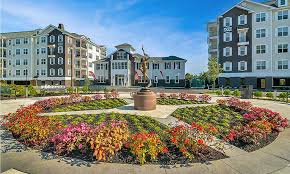
That reality was on full display in Haddon Township when firefighters from multiple South Jersey departments responded to a fire at the Haddon Towne Center apartment complex, quickly containing the incident before it could spread into occupied residential areas. The response, which brought together personnel from several local fire companies shortly after 6 p.m. on a summer evening, demonstrated the effectiveness of regional cooperation, rapid emergency deployment, and the ongoing commitment of New Jersey’s first responders to protecting their communities.
Although the incident was ultimately resolved without injuries and with limited damage, it serves as an important reminder of how quickly conditions can change inside multi-family residential properties and how critical coordinated emergency response remains throughout New Jersey’s densely populated communities.
Located in one of Camden County’s most active residential corridors, Haddon Towne Center is home to numerous residents who depend on the safety and reliability of modern apartment living. Like many mixed-use and residential developments throughout South Jersey, the property includes shared amenities and common-use areas that support daily life for tenants. One of those facilities—a dedicated mailroom—became the focus of emergency operations when smoke and fire conditions were reported inside the building.
Fire incidents within apartment complexes present unique challenges for emergency personnel. Unlike detached residential homes, multi-unit buildings require firefighters to simultaneously manage fire suppression, smoke control, resident safety, evacuation procedures, and protection of adjoining units. Even a relatively small fire can create significant risks if smoke spreads through hallways, utility spaces, or ventilation systems.
Fortunately, the response unfolded exactly as emergency planners hope it will.
Personnel from five local fire companies were dispatched to the scene and arrived quickly to assess conditions and begin suppression efforts. Among the responding agencies were firefighters from Westmont Fire Company No. 1 and Squad 14 of Haddon Fire Company No. 1, joined by additional regional resources that helped ensure the incident remained contained.
As crews entered the building, residents were evacuated as a precautionary measure. Temporary evacuations are standard protocol in many apartment fire responses, particularly when smoke conditions create uncertainty about how quickly a fire may spread. While such evacuations can be disruptive for residents, they remain one of the most effective tools for ensuring public safety during developing emergencies.
The decision proved prudent as firefighters worked to control smoke conditions and prevent the incident from affecting additional portions of the property.
The encouraging outcome emerged quickly.
Firefighters successfully subdued the blaze before it could extend into surrounding residential spaces. More importantly, no civilian injuries were reported, and no firefighters were harmed during the response. In the world of emergency services, those outcomes represent the ultimate measure of success.
For residents, the event may have lasted only a brief portion of their evening. For emergency personnel, however, the incident represented the culmination of countless hours of preparation, training, equipment maintenance, and interagency coordination.
Across New Jersey, local fire departments continuously prepare for incidents exactly like this one. Whether responding to residential fires, vehicle accidents, hazardous materials situations, severe weather emergencies, or rescue operations, firefighters must be prepared to make critical decisions under rapidly changing conditions.
The Haddon Towne Center response underscores another important aspect of public safety in New Jersey: regional collaboration.
Modern emergency response rarely operates in isolation. Municipal boundaries become largely irrelevant when public safety is at stake. Fire companies routinely support one another through mutual aid agreements that allow departments to share personnel, apparatus, specialized equipment, and expertise. These partnerships help ensure that communities receive an appropriate response regardless of where an emergency occurs.
In Camden County and throughout South Jersey, those relationships have become increasingly important as communities continue growing and residential development expands. Apartment complexes, mixed-use projects, senior housing communities, and transit-oriented developments all present unique emergency response considerations that require both planning and coordination.
The successful containment of the Haddon Towne Center fire reflects the effectiveness of those preparations.
It also highlights the evolving role of fire departments within modern communities. Today’s firefighters are not solely tasked with extinguishing fires. They serve as emergency medical responders, rescue specialists, public educators, disaster response personnel, and community safety advocates. Their responsibilities extend far beyond the traditional image of firefighting, requiring ongoing training in increasingly complex environments.
Apartment fires in particular demand specialized expertise.
Modern building materials, electronic systems, delivery infrastructure, package storage areas, and high-density occupancy patterns create new challenges that firefighters must navigate. Mailrooms, once relatively simple spaces, now often contain significant volumes of packaging materials, cardboard containers, and deliveries associated with modern e-commerce habits. As online shopping continues growing, apartment communities throughout New Jersey have adapted by creating larger centralized package and mail facilities, making fire prevention and safety planning even more important.
The Haddon Towne Center incident also serves as a reminder of the value of proactive building safety measures. Fire detection systems, alarm notifications, evacuation procedures, and communication protocols all play critical roles during emergencies. While residents may rarely think about these systems during everyday life, their importance becomes immediately apparent when an incident occurs.
Across New Jersey, municipalities continue investing in public safety infrastructure, emergency preparedness initiatives, and community awareness programs designed to reduce risk and improve outcomes. Fire prevention education remains one of the most effective tools available to both emergency responders and property managers. From smoke detector awareness to evacuation planning and building maintenance, prevention efforts often determine whether an incident remains manageable or escalates into something far more serious.
For Haddon Township, the incident ultimately became a story of preparedness rather than tragedy.
What could have developed into a far more significant emergency was brought under control through the rapid actions of responding firefighters and the effectiveness of established emergency protocols. Residents were protected, injuries were avoided, and the building itself was spared more extensive damage.
Those outcomes should not be viewed as routine simply because they ended positively. They represent the successful execution of systems designed to protect communities during moments of uncertainty.
As South Jersey continues evolving and welcoming new residential development, stories like this reinforce the importance of maintaining strong emergency services, supporting local fire departments, and recognizing the professionals who stand ready to respond whenever their communities need them.
The Haddon Towne Center mailroom fire may ultimately be remembered as a relatively minor incident within a busy year of local news. Yet it also serves as a powerful example of how effective public safety systems function at their best. A potential threat emerged, multiple agencies mobilized, residents were protected, firefighters performed their duties with professionalism, and the community returned to normal.
In a state where public safety partnerships remain among the strongest in the nation, that outcome is something worth recognizing—and appreciating.