Every state has a defining moment, a period when history accelerates so rapidly that events unfolding over the course of days permanently alter the future of generations to come. For New Jersey, that moment was not July 4, 1776. It was the extraordinary month that preceded it.
Long before the Declaration of Independence was publicly read in town squares and before the newly formed United States began its struggle for survival, New Jersey underwent one of the most dramatic political transformations in colonial America. During June 1776, the colony abandoned its remaining ties to British rule, removed royal authority, adopted a new government, and positioned itself to become one of the original states in a new nation that did not yet officially exist.
Today, those events are often condensed into a few paragraphs in history books. Yet for the people living through them, June 1776 represented a period of uncertainty, upheaval, courage, fear, division, and extraordinary consequence. It was a month when neighbors chose sides, families fractured, loyalties were tested, and the future of New Jersey hung in the balance.
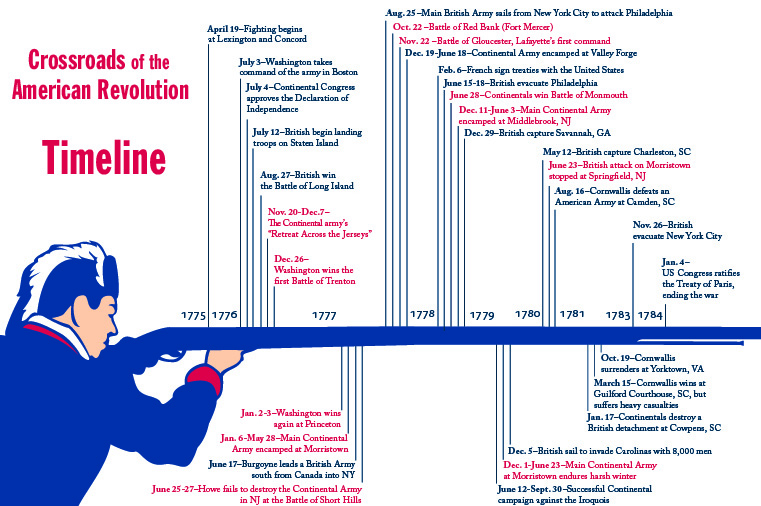
As America approaches the 250th anniversary of its founding, understanding what happened in New Jersey during June 1776 provides a deeper appreciation of how revolutionary change actually occurred. Independence was not simply declared. It was debated, contested, resisted, and ultimately embraced through a series of decisions that reshaped the political landscape of an entire colony.
At the beginning of 1776, New Jersey occupied a unique and precarious position within British North America. Geographically situated between New York and Philadelphia, the colony was economically important, politically influential, and deeply divided. While resistance to British policies had been growing for years, many residents still hoped reconciliation with the Crown might be possible.
Unlike some colonies where revolutionary sentiment had become dominant early in the conflict, New Jersey remained politically complicated. Merchants, farmers, religious communities, and local leaders held varying opinions about independence. Many residents opposed British taxation and imperial policies while simultaneously remaining loyal to the monarchy.
That ambiguity began disappearing rapidly during the spring and early summer of 1776.
As military conflict intensified and support for independence grew across the colonies, New Jersey’s Provincial Congress faced a fundamental question: would the colony remain tied to Britain, or would it join the growing movement toward self-government?
The answer emerged during one of the most consequential months in the state’s history.
Throughout June, revolutionary leaders moved swiftly to replace political structures that had governed New Jersey for generations. Loyalist influence weakened dramatically as supporters of independence consolidated power. Delegates who remained reluctant to support a complete break from Britain were replaced by representatives willing to embrace the revolutionary cause.
The transformation accelerated as the colony’s leadership recognized that neutrality was becoming impossible.
Events unfolding throughout North America demanded a choice.
Either New Jersey would remain under British authority or it would participate in creating something entirely new.
One of the most symbolic moments occurred when Royal Governor William Franklin was removed from power and placed under arrest. The son of Benjamin Franklin, William Franklin had remained steadfastly loyal to the Crown even as revolutionary sentiment swept through the colonies.
His arrest represented far more than a political maneuver.
It signaled the collapse of royal authority within New Jersey and demonstrated that the colony’s revolutionary leadership intended to move decisively toward independence.
The personal dimensions of that moment continue to resonate nearly 250 years later.
The conflict between William Franklin and his father remains one of the most famous examples of how the Revolution divided families. Benjamin Franklin emerged as one of the most influential advocates for independence, while his son remained committed to the British Empire. Their relationship never recovered.
Yet the Franklin family was hardly unique.
Across New Jersey, households found themselves confronting painful choices. Friends, neighbors, business partners, and relatives frequently found themselves on opposite sides of an increasingly bitter political struggle.
Modern Americans often remember the Revolution primarily as a war against Britain. For many New Jersey residents, however, it also functioned as a civil conflict that unfolded within communities themselves.
The political revolution occurring in June 1776 soon led to another extraordinary achievement: the drafting and adoption of New Jersey’s first state constitution.
This document established a new framework for governance and formally positioned New Jersey to function independently from British control. The constitution was adopted with remarkable speed, reflecting both the urgency of the moment and the determination of revolutionary leaders to establish legitimacy before broader events overtook them.
What makes the 1776 New Jersey Constitution particularly fascinating is its unexpectedly progressive approach to voting rights.
Under the original language, voting eligibility extended to all free inhabitants who met certain property qualifications. While far from universal suffrage by modern standards, the provision effectively allowed many women and free Black residents to participate in elections, making New Jersey one of the most politically inclusive jurisdictions in the early United States.
Although those rights would later be restricted in the early nineteenth century, the 1776 constitution reflected an ambitious attempt to rethink governance during a period of revolutionary change.
The adoption of the constitution also positioned New Jersey to participate fully in the larger independence movement unfolding across North America.
When the Continental Congress formally approved independence in early July, New Jersey was no longer merely a colony debating its future. It had already begun constructing the foundations of statehood.
The timing was extraordinary.
Within weeks, New Jersey moved from being a British colony governed under royal authority to a self-governing state preparing to join a new republic.
Yet the triumph celebrated by supporters of independence came with enormous costs.
For Patriots, June 1776 represented liberation, self-government, and the birth of political freedoms that would eventually become central to American identity. They viewed the month’s events as a courageous rejection of distant authority and a necessary step toward representative government.
For Loyalists, however, the same events appeared dramatically different.
Many believed a legitimate government had been overthrown and replaced by an uncertain political experiment. They feared economic instability, military conflict, and the social upheaval that often accompanies revolution.
Their concerns were not entirely unfounded.
In the years that followed, New Jersey would become one of the most contested regions of the Revolutionary War. Battles, raids, occupations, confiscations, and political reprisals would touch communities throughout the state.
The Garden State earned its nickname as the “Crossroads of the Revolution” because armies repeatedly moved across its landscape. More battles and skirmishes occurred in New Jersey than in almost any other colony.
The decisions made during June 1776 helped set those events in motion.
The month marked the point at which debate gave way to commitment.
Compromise gave way to action.
Possibility became reality.
Today, visitors exploring New Jersey’s historic sites can still connect with this remarkable period. Courthouses, preserved homes, museums, churches, battlefields, and public spaces throughout the state offer tangible links to the people who experienced these events firsthand. From Morristown and Princeton to Trenton and countless smaller communities, the legacy of June 1776 remains embedded within the state’s cultural landscape.
The significance of the month extends beyond military history or political symbolism.
It reminds us that transformative moments rarely unfold neatly. The decisions that shape nations are often accompanied by disagreement, uncertainty, sacrifice, and profound human consequences.
June 1776 was not simply the month New Jersey chose revolution.
It was the month New Jersey chose a future that could not yet be seen.
The people making those decisions had no guarantee of success. They could not know whether independence would survive, whether the colonies would remain united, or whether the revolutionary experiment would endure.
What they did know was that history demanded a choice.
Over the course of a few extraordinary weeks, New Jersey made that choice. In doing so, the colony transformed itself into a state, aligned its destiny with the cause of independence, and helped shape the birth of a nation that would continue evolving for centuries to come.
As the United States approaches its semiquincentennial and New Jersey commemorates its role in the Revolution, June 1776 deserves recognition not merely as a precursor to Independence Day, but as one of the most consequential months in the state’s history. It was the moment when New Jersey stopped being a colony, embraced the uncertainties of self-government, and stepped into the center of the American story.