
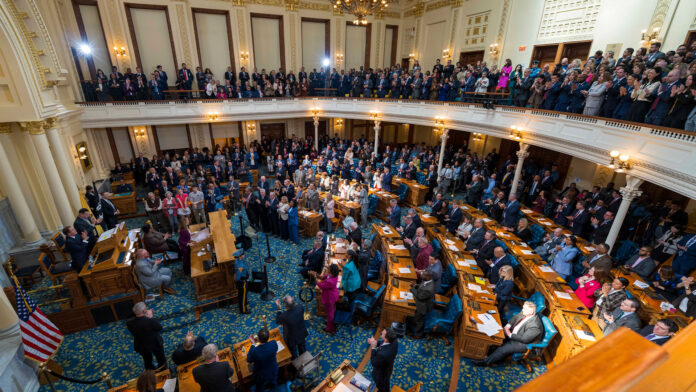

With New Jersey’s constitutionally mandated budget deadline rapidly approaching, attention in Trenton is shifting from legislative policy battles to the high-pressure negotiations that ultimately determine how billions of taxpayer dollars will be allocated across the Garden State. While public proceedings at the State House appeared relatively routine, a brief announcement from Senate President Nick Scutari offered the clearest indication yet that lawmakers are entering the final and most consequential phase of budget season.
At the close of a recent Senate session, Scutari outlined the anticipated timeline that will carry New Jersey toward the end of the fiscal year, signaling that legislative leaders are preparing for a compressed series of committee hearings, negotiations, and final votes that will shape the state’s financial priorities for the coming year.
“I anticipate the budget committee meeting Wednesday and Friday of next week and final summer votes will be Monday the 29th and or Tuesday the 30th,” the Senate President told lawmakers before ending the session. While the statement was delivered without fanfare, it carried significant weight for legislators, advocates, local governments, businesses, and taxpayers awaiting clarity on the final spending plan.
The current schedule calls for the Senate Budget and Appropriations Committee to convene next week, with Wednesday expected to focus primarily on non-budget legislation while Friday is reserved for budget-related matters. If the timeline holds, final legislative action would occur during the closing days of June, just before the state’s fiscal deadline.
Yet beneath the calm public schedule lies a far more complicated reality.
Multiple sources within State House circles indicate that negotiations remain ongoing regarding several major issues, including one of the most politically sensitive programs currently before lawmakers: StayNJ.
The property tax relief initiative has become one of the most closely watched policy battles in New Jersey government. Originally promoted as a transformative effort to help seniors remain in their homes amid escalating property taxes, StayNJ has generated substantial debate over funding mechanisms, long-term sustainability, implementation timelines, and its interaction with existing relief programs.
While the concept of providing significant tax relief to older residents has broad political appeal, the practical details have proven far more challenging. Legislators, budget analysts, local government officials, and taxpayer advocates have spent months debating how the program should be structured and whether sufficient funding exists to support its promises without creating future fiscal pressures.
As budget negotiations intensify, StayNJ remains one of the largest unresolved questions hanging over the broader spending package.
Sources familiar with discussions suggest that divisions persist among legislative leaders regarding how aggressively the program should move forward. While the issue continues to dominate behind-the-scenes conversations, there appears to be a notable difference in urgency among various factions within the Legislature.
Political observers note that Assembly leadership has shown a heightened focus on resolving the matter, while Senate leadership appears less willing to allow the debate to derail the broader budget process. The differing approaches have created additional complexity as negotiators attempt to finalize agreements before the June deadline.
The disagreement underscores a larger reality that often defines budget season in New Jersey: the most important decisions rarely occur during public hearings or floor debates. Instead, they emerge from private negotiations among legislative leaders, committee chairs, administration officials, and policy advisors working to reconcile competing priorities.
Those priorities are particularly significant this year.
New Jersey continues to face pressure from rising costs associated with healthcare, education, transportation infrastructure, public safety, environmental initiatives, economic development programs, and property tax relief efforts. At the same time, lawmakers must navigate economic uncertainty, inflationary concerns, shifting federal policies, and evolving revenue forecasts that can dramatically affect long-term planning.
The challenge for policymakers is balancing immediate demands with future obligations.
Property tax relief remains a dominant concern throughout the state. Utility costs have become a growing political issue. Infrastructure modernization projects continue requiring substantial investment. Workforce development, education funding, housing affordability, and public transportation all remain key priorities competing for limited resources.
Every budget cycle requires difficult decisions, but this year’s negotiations carry added significance because of the broader economic environment facing residents and businesses.
For many New Jersey families, affordability remains the defining issue.
Property taxes continue ranking among the highest in the nation. Housing costs remain elevated across much of the state. Transportation expenses, insurance premiums, and utility bills continue affecting household budgets. Against that backdrop, lawmakers face increasing pressure to demonstrate that state spending is delivering measurable benefits to residents while maintaining fiscal stability.
The outcome of the StayNJ debate may ultimately serve as a broader test of how Trenton approaches those affordability concerns.
Supporters argue that property tax relief is essential for helping seniors remain in their communities and preserving long-term housing stability. Critics question whether current proposals can be sustained financially without creating future budget challenges. Others have urged lawmakers to focus on broader structural reforms that address affordability for residents of all ages rather than targeting specific populations.
Those discussions are expected to intensify as budget negotiations enter their final stages.
Despite the unresolved issues, legislative leaders appear committed to maintaining the current timetable. The expectation remains that committee reviews will move forward next week, followed by final votes before the conclusion of June. Whether that schedule survives the remaining negotiations remains uncertain.
Even Scutari appeared to acknowledge the unpredictability that often accompanies the final days of budget season.
After outlining the anticipated calendar, he added a brief but telling observation.
“It could be later — who knows.”
That simple remark may ultimately prove to be the most revealing statement of all.
Veterans of New Jersey politics understand that budget deadlines frequently create momentum, but they do not automatically resolve disagreements. Significant policy disputes have a history of resurfacing at the last moment, sometimes requiring extended negotiations, revised language, or last-minute compromises before final votes can proceed.
As Trenton enters the closing stretch of budget season, lawmakers face the familiar challenge of balancing political realities, fiscal responsibilities, and public expectations. The coming days will determine not only the final shape of New Jersey’s spending plan but also whether unresolved issues such as StayNJ can be addressed in a way that satisfies competing interests across government.
For now, the calendar is set. Committee hearings are expected. Leadership discussions continue. Budget negotiations remain active. And one of the most important periods in New Jersey’s political year is entering its decisive phase.
The public may see committee meetings, press conferences, and floor votes. Behind the scenes, however, the real work continues as legislative leaders attempt to finalize agreements that will impact taxpayers, businesses, municipalities, schools, and communities across New Jersey for the year ahead.
With the deadline approaching and major issues still unresolved, the next several days are likely to determine not only the contents of the budget but also the political narrative surrounding affordability, tax relief, and fiscal stewardship heading into the second half of 2026.
















