
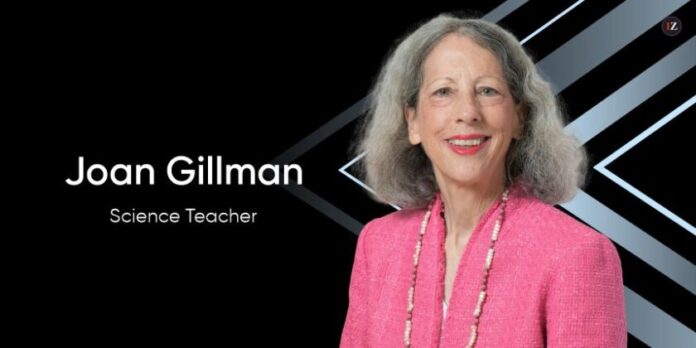

New Jersey has long been home to educators, researchers, inventors, and innovators who have helped shape generations of students, but few have built a career as wide-ranging, impactful, and enduring as Joan Ava Gillman. A nationally recognized science educator, STEM curriculum developer, author, environmental advocate, and lifelong learner, Gillman has spent more than four decades helping young people discover the excitement of scientific exploration while simultaneously influencing the broader conversation surrounding modern education.
Her recent appearance on Close Up Radio has renewed attention on a remarkable professional journey that spans classrooms, curriculum development, educational publishing, environmental leadership, international advocacy, and the performing arts. At a time when educators across the country continue searching for ways to inspire curiosity, improve science literacy, and prepare students for an increasingly technology-driven future, Gillman’s career offers a compelling example of how innovative teaching can transform learning experiences and leave a lasting impact far beyond the classroom.
For New Jersey, her story also highlights something that has become increasingly important throughout the state’s educational landscape: the growing emphasis on STEM education as a foundation for future workforce development, scientific advancement, and economic competitiveness. Across the Garden State, schools, universities, research institutions, and community organizations continue investing in science, technology, engineering, and mathematics initiatives designed to equip students with the skills necessary to thrive in rapidly evolving industries. Gillman has spent much of her career helping to shape exactly that mission.
Her educational philosophy centers on a simple but powerful belief: students learn best when they actively engage with concepts rather than simply memorizing them. Throughout her career, she has consistently sought ways to transform scientific principles into hands-on experiences that allow students to experiment, discover, question, and create.
That approach has become one of the defining characteristics of her work.
For many educators, science instruction often becomes constrained by textbooks, worksheets, and standardized assessments. Gillman has spent decades moving in the opposite direction. Her lessons encourage exploration, experimentation, and practical problem-solving, helping students understand not only what scientific concepts mean but why they matter.
Among her most widely recognized contributions is her innovative curriculum project, “Straw Rockets Are Out of This World,” a program that has become a respected example of integrated STEM instruction. The project combines engineering, mathematics, physics, design thinking, and real-world experimentation into a single engaging experience. Students build and launch their own rockets while learning about motion, trajectory, measurement, force, and problem-solving.
What makes programs like these particularly significant is their ability to transform abstract concepts into memorable learning experiences. Rather than teaching formulas in isolation, Gillman’s approach encourages students to apply scientific principles in meaningful ways, creating the kind of active engagement that often sparks lifelong interest in science and technology.
That commitment to practical, student-centered learning has made her a respected voice within educational circles throughout New York and New Jersey.
Over the course of more than forty years in education, Gillman has worked with elementary and middle school students while developing curriculum frameworks that continue influencing science instruction beyond her own classroom. Her educational methods have been featured in professional publications, teacher resources, and academic discussions focused on improving STEM engagement among younger learners.
Her contributions extend well beyond individual lessons.
Gillman has authored educational content and contributed to respected professional journals, helping other educators adopt innovative approaches to science instruction. Her work has appeared in educational publications that reach teachers throughout the country, allowing her classroom experiences and teaching strategies to influence science education on a broader scale.
The recognition she has received throughout her career reflects the impact of those efforts.
Named the 2025 Top Educator of the Year by the International Association of Top Professionals, Gillman has earned a reputation as both an outstanding classroom teacher and a thought leader in STEM education. Her credentials also include designation as a National Geographic Certified Educator, an honor reflecting her commitment to inquiry-based learning, environmental stewardship, and global awareness.
Yet one of the most compelling aspects of her career may be her focus on ensuring that science education remains accessible, relevant, and inclusive.
As conversations surrounding diversity and representation continue shaping educational policy nationwide, Gillman has consistently advocated for curricula that recognize contributions from scientists, innovators, and cultures that have historically received less attention in traditional educational materials. Through her involvement with organizations dedicated to equity, diversity, and social justice in science education, she has worked to broaden how students understand scientific achievement and human innovation.
Her lessons often connect scientific concepts to larger social and environmental issues, helping students understand how science intersects with everyday life, public policy, and community well-being.
That connection is particularly evident in her environmental education work.
As a Green Team leader, Gillman has helped students explore practical approaches to sustainability through initiatives focused on recycling, composting, energy conservation, and environmental responsibility. Rather than presenting environmental stewardship as an abstract concept, she encourages students to take meaningful local actions that demonstrate how individual choices can contribute to broader environmental goals.
This approach aligns closely with many of the environmental education initiatives gaining momentum throughout New Jersey. Across the state, schools increasingly integrate sustainability programs into classroom instruction, reflecting growing recognition that environmental literacy is becoming an essential component of modern education.
Gillman’s work demonstrates how those concepts can be introduced effectively at an early age.
By encouraging students to investigate environmental challenges and participate in practical solutions, she helps cultivate habits of responsibility, critical thinking, and civic engagement that extend far beyond science class.
Her influence also extends into international educational and policy discussions.
Recently appointed as a United Nations Representative to the AWWG at the United Nations Economic and Social Council, Gillman continues expanding her advocacy efforts beyond traditional classroom settings. This role allows her to contribute to broader conversations surrounding education, sustainability, equity, and global development while bringing decades of educational experience into international dialogue.
For many educators, such achievements might represent the culmination of a career. For Gillman, they are simply another chapter in an ongoing commitment to learning and service.
That commitment becomes even more remarkable when considering the breadth of her interests beyond education.
In addition to her accomplishments in science and curriculum development, Gillman is an accomplished classical musician whose performances have included appearances with the Bergen Philharmonic Orchestra and the North Jersey Symphony Orchestra. Music and science are often viewed as separate disciplines, but her career illustrates how creativity, discipline, curiosity, and lifelong learning frequently connect the arts and sciences in meaningful ways.
Those connections are increasingly recognized by educators who understand that innovation often emerges at the intersection of multiple fields rather than within isolated disciplines.
The ability to think creatively, solve problems, collaborate effectively, and communicate ideas clearly has become as important as technical expertise in many modern professions. Gillman’s career reflects that multidisciplinary philosophy, demonstrating how education can prepare students not simply for specific jobs but for lives of continuous learning and adaptation.
Her recent feature on Close Up Radio serves as a reminder of the profound influence educators can have on communities, industries, and future generations. While technological advancements, policy initiatives, and educational reforms often capture headlines, the foundation of those achievements frequently begins with teachers who inspire students to ask questions, seek answers, and imagine possibilities.
For New Jersey, Joan Gillman represents the best traditions of educational excellence, innovation, and public service. Her career embodies the values that continue to make the state a leader in science, research, technology, and academic achievement.
As STEM education becomes increasingly central to preparing students for the future, the lessons of her career remain particularly relevant. Curiosity matters. Creativity matters. Hands-on learning matters. Environmental stewardship matters. Diversity of thought matters. Most importantly, educators who encourage students to think critically and engage actively with the world around them continue to shape the future in ways that cannot always be measured by test scores or rankings.
For more than forty years, Joan Gillman has done exactly that.
In classrooms, through curriculum development, in professional publications, through environmental initiatives, in international advocacy, and now through renewed public recognition, she continues demonstrating that education is not simply about transferring knowledge. It is about inspiring discovery, cultivating confidence, and empowering young people to become thoughtful participants in a complex and rapidly changing world.
That legacy continues growing with every student she inspires, every educator she influences, and every new generation encouraged to see science not as a subject to be studied, but as a lifelong journey of exploration.
















