

New Jersey’s energy future has become one of the most consequential policy discussions unfolding in Trenton today. As electricity demand rises, utility costs remain a growing concern for households and businesses, and the state continues pursuing ambitious environmental goals, lawmakers are increasingly focused on one question that could shape the Garden State’s economy for decades to come: where will New Jersey find the reliable power needed to support its future?
That question is now at the center of a significant legislative effort that is gaining momentum in the State Legislature.
A proposal widely associated with Governor Mikie Sherrill’s energy agenda has taken a major step forward as lawmakers advance legislation designed to pave the way for a new generation of nuclear energy development in New Jersey. The measure, known as the Power NJ Act, represents one of the most ambitious energy infrastructure proposals considered by the state in decades and signals a dramatic shift in how policymakers are approaching long-term power generation.
For supporters, the legislation offers a path toward greater energy independence, long-term price stability, and expanded clean-energy capacity. For critics, it raises questions about cost, construction timelines, and the financial risks associated with large-scale energy projects. Regardless of perspective, few dispute the significance of the debate.
The legislation arrives only months after Governor Sherrill initiated a major policy change that effectively ended New Jersey’s decades-long reluctance to consider new nuclear development. For years, regulatory and political barriers made the construction of new reactors highly unlikely. The administration’s decision to remove those obstacles fundamentally changed the conversation, opening the door for policymakers to explore whether nuclear energy should play a larger role in the state’s future energy portfolio.
Now, the Power NJ Act seeks to transform that policy shift into practical action.
At its core, the proposal directs state agencies to begin the process of identifying and evaluating opportunities to develop at least 1,100 megawatts of new nuclear generating capacity. While the figure may seem abstract to many residents, the implications are substantial. A project of that size could provide enough electricity to power hundreds of thousands of homes while delivering continuous energy regardless of weather conditions, time of day, or seasonal fluctuations.
The proposal reflects growing concerns about New Jersey’s future energy needs.
The state’s population continues to grow. Commercial development remains active throughout major economic corridors. New industries, particularly data centers and artificial intelligence infrastructure, are placing unprecedented demands on electric grids nationwide. At the same time, electrification initiatives involving transportation, buildings, and industrial operations are expected to increase overall electricity consumption in coming years.
Meeting those demands presents a significant challenge.
Unlike traditional fossil-fuel plants, renewable resources such as solar and wind depend heavily on environmental conditions. While renewable energy continues to play an expanding role in New Jersey’s energy strategy, many energy planners argue that reliable, around-the-clock generation remains necessary to maintain grid stability during periods of peak demand.
That reality has renewed interest in nuclear power.
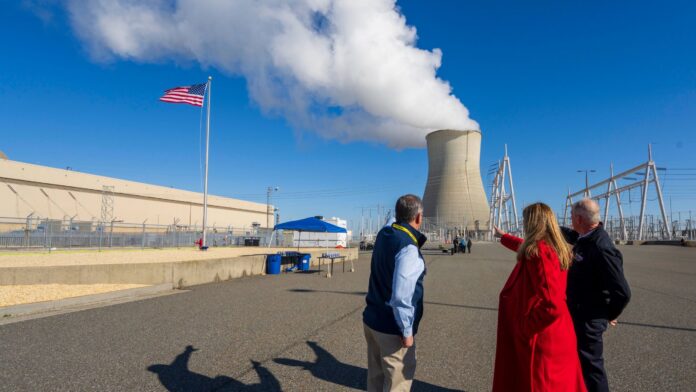
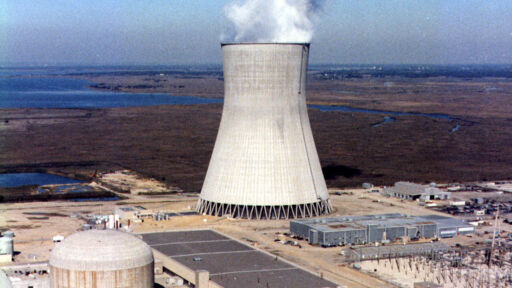
New Jersey already possesses one of the strongest nuclear energy footprints in the United States. Existing facilities in Salem County currently generate a substantial portion of the state’s electricity and provide the overwhelming majority of its carbon-free power generation. Those facilities have long served as the backbone of New Jersey’s clean-energy infrastructure, delivering continuous power without producing greenhouse gas emissions during operation.
Supporters of expansion argue that building upon that foundation is the logical next step.
Labor organizations, energy experts, and some business leaders contend that increasing nuclear capacity would reduce reliance on imported electricity while strengthening long-term energy security. Currently, New Jersey imports a significant portion of the power consumed by residents and businesses. That dependence exposes ratepayers to market volatility, regional supply constraints, and price fluctuations occurring beyond the state’s borders.
Advocates believe additional in-state generation would help mitigate those vulnerabilities.
The conversation is increasingly centered on advanced nuclear technologies rather than the massive reactor complexes commonly associated with earlier generations of nuclear development. Emerging designs known as Small Modular Reactors have attracted attention across the energy sector because of their potential to reduce construction costs, accelerate deployment schedules, and provide greater flexibility compared to traditional facilities.
Unlike conventional nuclear plants that require enormous sites and multi-decade planning horizons, these next-generation systems are designed to be constructed in modular components that can be assembled more efficiently. Supporters view the technology as a potential breakthrough capable of delivering reliable carbon-free energy while avoiding some of the challenges historically associated with nuclear construction.
The economic implications are equally significant.
Large-scale energy projects generate substantial employment opportunities throughout design, engineering, construction, operations, maintenance, manufacturing, and supporting industries. New Jersey’s skilled labor force, extensive transportation infrastructure, and existing energy expertise position the state as a potentially attractive location for future nuclear investment.
Supporters frequently point to the potential for thousands of high-paying jobs while simultaneously strengthening the state’s long-term economic competitiveness.
Yet the proposal faces meaningful opposition.
Environmental advocates and consumer organizations acknowledge the need for reliable power generation but question whether nuclear expansion represents the most effective solution. Critics point to the substantial costs historically associated with nuclear development and warn that construction overruns could ultimately be passed on to utility customers.
Those concerns are not theoretical.
Across the country, several large nuclear projects have experienced significant budget increases and schedule delays. Opponents argue that while advanced reactor technology offers promising possibilities, many designs remain relatively unproven at commercial scale. They caution that ratepayers could face financial burdens long before new facilities begin generating electricity.
Construction timelines also remain a central concern.
Even under optimistic scenarios, major energy infrastructure projects require extensive regulatory review, environmental assessments, permitting processes, engineering work, and construction efforts. Federal oversight by the Nuclear Regulatory Commission adds additional layers of review intended to ensure safety and compliance.
As a result, critics argue that nuclear expansion cannot provide immediate relief to residents currently facing elevated utility costs.
That argument resonates with consumers who have experienced rising energy bills and are seeking more immediate solutions.
The debate therefore extends beyond energy policy into broader questions about affordability, economic development, environmental stewardship, and long-term planning.
State leaders find themselves balancing competing priorities. They must address present-day affordability concerns while simultaneously preparing for future electricity demand. They must pursue environmental objectives while maintaining grid reliability. They must encourage investment while protecting consumers from excessive costs.
The Power NJ Act represents one possible pathway through those challenges.
Its advancement through legislative committees demonstrates growing interest among policymakers in reconsidering nuclear energy’s role within a modern clean-energy framework. The bipartisan support shown during early discussions suggests that nuclear power is increasingly being viewed through a different lens than in previous decades.
National energy trends reinforce that shift.
Across the United States, states are reevaluating nuclear energy as part of broader strategies to achieve carbon reduction goals while ensuring reliable electricity supplies. Technology companies, manufacturing firms, utilities, and policymakers are all grappling with the same reality: electricity demand is expected to rise significantly, and dependable generation resources will be essential.
New Jersey’s conversation reflects that broader national transformation.
What was once considered a controversial or politically difficult topic has become a mainstream policy discussion centered on reliability, affordability, sustainability, and economic growth.
As the legislation continues moving through the legislative process, stakeholders from across the energy sector will closely watch its progress. Business leaders, environmental advocates, labor organizations, utilities, regulators, and consumers all have significant interests in the outcome.
For New Jersey residents, the stakes are substantial.
The decisions being made today could shape how electricity is generated, delivered, and priced for decades. They could influence economic competitiveness, environmental outcomes, infrastructure investment, and quality of life throughout the state.
Whether the Power NJ Act ultimately becomes the foundation of a new nuclear era remains to be seen. What is clear is that New Jersey has entered a new chapter in its energy conversation. The debate is no longer whether nuclear power should be part of the discussion. The debate now centers on how much of a role it should play in building a reliable, affordable, and sustainable energy future for the Garden State.
















