

For generations, navigating local government in New Jersey has often meant navigating a maze.
Whether applying for a construction permit, renewing a business license, requesting zoning approvals, registering rental properties, securing inspections, or filing countless municipal applications, residents and business owners have become accustomed to a fragmented system spread across hundreds of independent local governments. Each municipality developed its own procedures, forms, requirements, software platforms, and timelines. What seemed straightforward in one town could become entirely different just a few miles away.
For contractors working across multiple counties, developers managing projects in several municipalities, small business owners expanding operations, or residents simply trying to complete routine government transactions, the process frequently required maintaining multiple accounts, learning different systems, and repeatedly entering the same information over and over again.
That reality may soon begin to change.
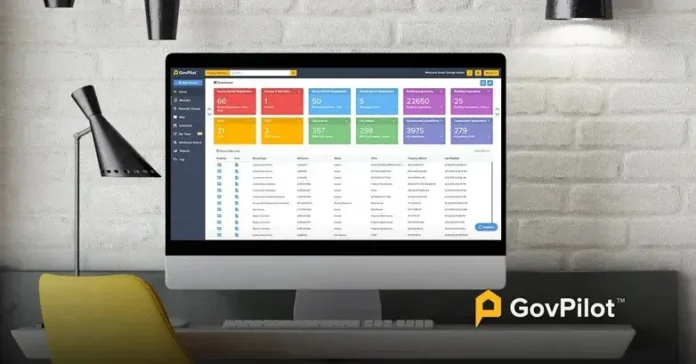
GovPilot, one of New Jersey’s most recognized government technology companies, has announced the development of a new statewide Unified Local Permitting and Licensing Portal designed to modernize how residents, businesses, contractors, and local governments interact throughout the Garden State.
The initiative represents one of the most ambitious local government technology projects ever undertaken in New Jersey and arrives at a moment when digital modernization has become a central priority for public agencies at every level.
At its core, the concept is remarkably simple.
Instead of forcing users to navigate dozens or even hundreds of separate municipal platforms, the new portal aims to provide a single digital gateway through which permits, licenses, applications, inspections, and municipal services can be managed across participating local governments.
The vision is straightforward: one account, one login, one platform.
Yet the potential impact could be profound.
New Jersey is home to 564 municipalities, making it one of the most locally governed states in the nation. That municipal diversity is often celebrated as one of the state’s defining characteristics. Local governments maintain unique identities, priorities, and community needs. However, that same fragmentation can create significant challenges when it comes to technology, administrative efficiency, and public access.
For decades, businesses and residents have adapted to a system where local government services often vary dramatically from town to town.
A contractor working on projects in Bergen County, Monmouth County, Camden County, and Mercer County may currently encounter multiple software systems, different document submission processes, varying permit formats, and separate user accounts. Each interaction requires time, administrative effort, and familiarity with local procedures.
The cumulative impact can be substantial.
Administrative delays increase project costs. Repetitive paperwork consumes staff resources. Incomplete applications slow approvals. Residents become frustrated. Municipal employees spend valuable time processing corrections and assisting applicants through avoidable technical obstacles.
The new GovPilot platform is designed to address many of these longstanding challenges.
Among its most significant features is the introduction of a unified user account that allows individuals and businesses to access participating municipalities through a single login. Instead of creating and managing separate credentials for multiple jurisdictions, users can move seamlessly between communities while maintaining one consistent digital identity.
For professionals who regularly operate across municipal boundaries, that change alone could represent a dramatic improvement in efficiency.
The portal also incorporates artificial intelligence-powered functionality intended to streamline the application process itself.
Traditionally, permit applications require applicants to repeatedly enter information already contained within supporting documentation. Site plans, architectural drawings, contractor registrations, engineering reports, property records, insurance certificates, and business credentials often contain information that must be manually re-entered into municipal forms.
The new platform seeks to eliminate much of that duplication.
Artificial intelligence tools will automatically analyze uploaded documents, extract relevant information, and populate application fields where appropriate. Rather than serving as a replacement for municipal review, the technology functions as an administrative assistant, helping users complete applications more quickly while reducing data-entry errors.
The implications extend beyond convenience.
Incomplete applications remain one of the most common causes of permitting delays throughout the country. Missing documentation, incorrect information, omitted signatures, and improperly completed forms can trigger repeated rounds of corrections and resubmissions.
By guiding applicants through requirements more effectively and automating portions of the submission process, the platform aims to improve accuracy before applications ever reach municipal desks.
The result could be faster review cycles, reduced administrative workloads, and improved experiences for both applicants and government employees.
The announcement also reflects broader trends reshaping public administration nationwide.
Government agencies increasingly recognize that residents expect the same level of digital accessibility from public services that they receive from banks, retailers, healthcare providers, and other organizations. Citizens increasingly expect online access, real-time status updates, mobile compatibility, and streamlined digital experiences.
The pandemic accelerated many of these expectations, demonstrating the importance of digital government infrastructure capable of supporting remote interactions and online service delivery.
Today, modernization is no longer viewed as optional.
Across New Jersey, municipalities have invested heavily in upgrading systems, digitizing records, expanding online services, and improving constituent engagement. GovPilot has been at the forefront of many of these efforts, providing cloud-based government management solutions that support local operations ranging from permitting and licensing to code enforcement, public works, health departments, and citizen service requests.
The new statewide portal represents a natural evolution of that mission.
Importantly, the initiative aligns with a broader movement toward government efficiency emerging at the state level.
Governor Mikie Sherrill has emphasized permitting reform and administrative modernization as key priorities during the early months of her administration. Recent initiatives focused on cross-agency permit tracking, transparency improvements, and the creation of statewide permitting dashboards have sought to reduce bureaucratic delays while improving public visibility into government processes.
While many of those efforts focus on state agencies, GovPilot’s initiative targets the municipal side of the equation.
Together, these parallel efforts suggest a growing recognition that permitting and licensing processes are more than administrative functions. They directly affect economic development, housing production, infrastructure improvements, small business growth, and overall public confidence in government.
Every delayed permit can impact construction schedules.
Every complicated licensing process can create obstacles for entrepreneurs.
Every inefficient administrative procedure ultimately carries costs for taxpayers, businesses, and communities.
Modernizing those systems can create benefits that extend far beyond government offices.
The economic implications are particularly significant.
New Jersey remains one of the nation’s most active markets for construction, redevelopment, infrastructure investment, and small business formation. Streamlined permitting systems can help accelerate projects, reduce uncertainty, improve predictability, and support economic activity across multiple sectors.
Developers benefit from faster approvals.
Businesses benefit from reduced administrative burdens.
Municipal employees benefit from improved workflows.
Residents benefit from more accessible government services.
The platform’s upcoming launch also reflects the growing role that New Jersey-based technology companies are playing in solving complex public-sector challenges.
Often overshadowed by larger technology hubs, New Jersey has quietly developed a strong reputation for government innovation, civic technology, healthcare technology, logistics systems, financial technology, and public-sector software development. Companies headquartered in the state continue producing solutions that influence government operations far beyond New Jersey’s borders.
GovPilot’s statewide portal represents another example of locally developed innovation addressing a challenge experienced by millions of residents.
As development continues through collaboration with founding municipal partners, refinements are expected before the system becomes publicly available. Those partnerships allow local governments to provide practical feedback on workflows, user experiences, and administrative needs while ensuring the platform reflects real-world operational requirements.
The ultimate goal extends beyond software.
The broader objective is creating a more accessible relationship between residents and government itself.
When people can interact with public services more efficiently, government becomes easier to navigate. When processes become more transparent, trust improves. When administrative barriers are reduced, communities become more responsive and productive.
For a state known for its entrepreneurial energy, municipal diversity, and economic dynamism, a unified permitting and licensing platform could represent a significant step toward a more connected future.
As the anticipated launch approaches later this summer, New Jersey finds itself at the forefront of a conversation taking place across the country: how technology can simplify government without sacrificing local control.
If successful, GovPilot’s statewide portal may become more than a convenience tool. It could serve as a model for how modern technology can strengthen civic engagement, improve government efficiency, and help residents, businesses, and municipalities work together more effectively in an increasingly digital world.
















