
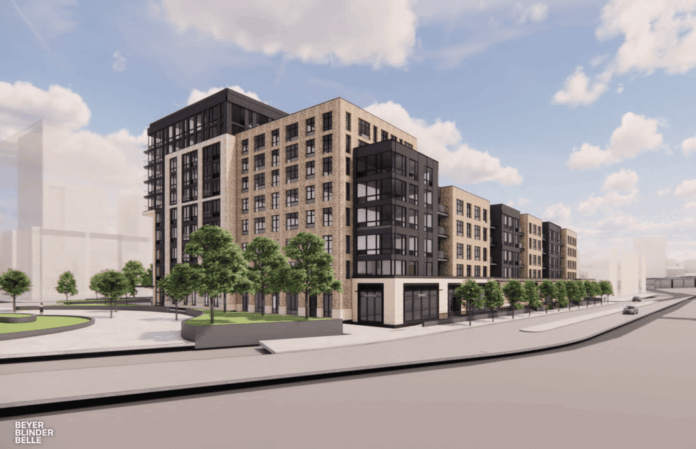

Few places in New Jersey better illustrate the state’s remarkable urban transformation than Jersey City. Once defined by shipping terminals, rail yards, factories, and industrial infrastructure, large sections of the city are now being reimagined as vibrant mixed-use neighborhoods that blend housing, retail, transportation access, public spaces, and economic opportunity. The latest chapter in that ongoing evolution is unfolding in Bergen-Lafayette, where newly released renderings and development plans are offering the clearest glimpse yet into the future of Canal Crossing, one of the most ambitious redevelopment projects currently planned in Hudson County.
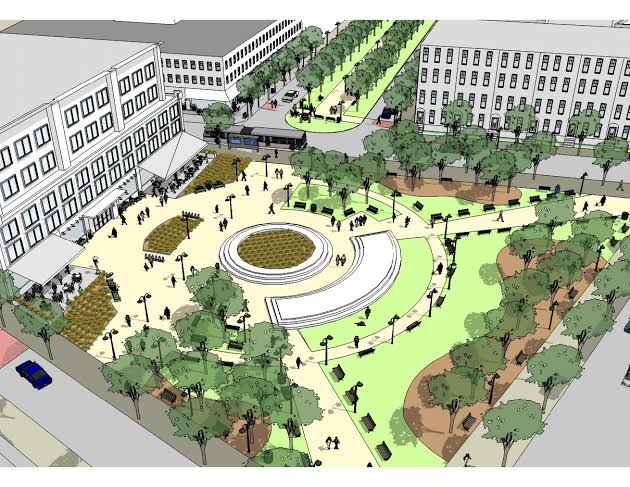
The unveiling of additional phases for Canal Crossing provides a significant milestone not only for the project itself but also for the broader revitalization occurring along Jersey City’s southern corridor. For years, the property has represented both the challenges and possibilities associated with transforming former industrial land into thriving residential and commercial communities. Now, with new details emerging, the scale of that vision is becoming increasingly tangible.
Located near the Garfield Avenue Light Rail Station, the Canal Crossing property occupies a strategically important section of Jersey City. The site sits within an area that has undergone substantial change during the last decade, fueled by infrastructure investment, growing demand for housing, improved public transportation access, and a wave of redevelopment extending beyond the city’s traditionally booming waterfront districts.
Unlike many recent developments built on vacant lots or underutilized commercial parcels, Canal Crossing carries a far more complex history. Decades ago, portions of the property were used for industrial manufacturing operations, including chromium production activities that left behind environmental challenges requiring extensive remediation efforts. The site’s transformation from contaminated industrial land into a future mixed-use neighborhood represents one of the most dramatic examples of urban environmental recovery currently underway in New Jersey.
The journey from industrial brownfield to residential destination has required years of planning, environmental cleanup, regulatory approvals, engineering studies, and collaboration among public agencies and private developers. That lengthy process is now beginning to produce visible results.
The first approved phase of Canal Crossing establishes the foundation for what could ultimately become one of Jersey City’s most significant residential developments outside the downtown core. The initial building planned for 900 Garfield Avenue is designed as a ten-story structure containing nearly 300 residential units. Importantly, the project incorporates a meaningful affordable housing component, helping address one of the most pressing challenges facing Jersey City and the broader New Jersey housing market.
Housing affordability continues to dominate discussions throughout the state as population growth, limited inventory, and strong demand place pressure on both renters and buyers. Developments that integrate affordable housing into larger market-rate projects are increasingly viewed as essential tools in addressing these concerns while supporting inclusive neighborhood growth.
Beyond housing, the first phase introduces commercial space designed to activate the streetscape and encourage neighborhood-oriented retail activity. The combination of residential density and ground-floor commercial uses reflects a development philosophy increasingly embraced throughout New Jersey’s transit-accessible communities.
The newly revealed details regarding Canal Crossing’s second phase offer further insight into how the neighborhood will evolve.
The next stage includes a six-story mixed-use residential building featuring more than 200 additional housing units. Similar to the first phase, the project incorporates affordable housing while expanding the site’s overall residential capacity. The unit mix includes a variety of floor plans intended to attract a diverse range of residents, from young professionals and first-time renters to families seeking transit-oriented living options within Jersey City.
The second phase also introduces an expanded amenity package that reflects changing expectations among modern residents. Planned features include fitness facilities, community gathering spaces, rooftop amenities, and outdoor recreational areas designed to create a more complete residential experience. These amenities have become increasingly important as developers seek to build communities rather than simply apartment buildings.
One of the most striking aspects of the newly released renderings is the project’s emphasis on public-facing design. Rather than functioning as isolated residential towers disconnected from the surrounding neighborhood, the buildings are envisioned as components of a larger urban district integrated with streets, public spaces, retail destinations, and transit infrastructure.
That integration could prove particularly important given the site’s proximity to the Hudson-Bergen Light Rail system. Transit-oriented development continues to serve as a central planning objective throughout New Jersey, particularly in locations where growing populations can be accommodated without placing additional strain on road networks.
Easy access to public transportation remains one of Jersey City’s greatest advantages. Residents increasingly seek neighborhoods that offer alternatives to car-dependent lifestyles, and developments positioned near rail stations often experience strong demand as a result.
The broader Canal Crossing vision extends well beyond the first two buildings.
Newly released renderings suggest a much larger master-planned community taking shape across multiple phases. Future structures appear to include additional residential buildings, expanded commercial offerings, pedestrian-friendly public areas, and new streetscapes that would transform what is currently a largely vacant and underutilized section of Bergen-Lafayette.
While specific details regarding future phases remain limited, the images reveal a coordinated development strategy rather than a collection of standalone projects. The long-term goal appears focused on creating an entirely new neighborhood district capable of serving thousands of residents while contributing to the economic growth of the surrounding community.
The project’s timing also coincides with broader momentum throughout Bergen-Lafayette.
Several nearby developments have secured approvals in recent months, signaling increased investor confidence in an area that was often overlooked during earlier waves of Jersey City redevelopment. For years, much of the city’s growth concentrated around the waterfront, Downtown, Journal Square, and portions of the Heights. Today, however, attention is increasingly turning toward southern neighborhoods where significant redevelopment opportunities remain available.
The result is a more geographically diverse pattern of investment that spreads economic activity across a wider portion of the city.
The continuing evolution of Bergen-Lafayette reflects larger trends affecting urban development throughout New Jersey. Communities are increasingly seeking ways to balance housing growth, affordability, economic development, environmental remediation, transportation access, and quality-of-life improvements within a single planning framework.
Canal Crossing embodies many of those objectives simultaneously.
Its environmental restoration story demonstrates how formerly contaminated sites can be transformed into productive community assets. Its housing program addresses growing residential demand while incorporating affordability measures. Its transit-accessible location supports sustainable growth patterns. Its commercial elements create opportunities for business activity and neighborhood services. And its phased approach allows for long-term community building rather than isolated construction projects.
Of course, significant challenges remain. Large-scale redevelopment projects often face changing market conditions, construction costs, financing considerations, regulatory hurdles, and ongoing legal complexities. Questions surrounding future phases, total buildout density, infrastructure improvements, and project timelines will continue to shape discussions as Canal Crossing advances.
Yet despite those uncertainties, the latest renderings offer perhaps the strongest indication to date that this long-discussed redevelopment effort is moving from concept toward reality.
For Jersey City, the implications extend beyond a single project. Canal Crossing represents another step in the city’s ongoing reinvention, demonstrating how former industrial corridors can become thriving mixed-use communities that support residents, businesses, and future generations.
For Bergen-Lafayette, it signals growing momentum and renewed attention as one of Jersey City’s emerging destinations.
And for New Jersey as a whole, it serves as a powerful example of how strategic redevelopment, environmental stewardship, housing investment, and thoughtful urban planning can work together to transform challenges from the past into opportunities for the future.
As new phases continue to emerge and construction gradually reshapes the landscape near Garfield Avenue, Canal Crossing is poised to become far more than another residential project. It has the potential to become one of the defining redevelopment success stories of modern Jersey City and a model for how New Jersey’s post-industrial properties can be reimagined for a new century.
















