

As New Jersey residents continue to navigate rising housing costs, utility bills, and inflation, water affordability has become an increasingly urgent issue across the Garden State.
NRDC’s Water Shutoff Dashboard for New Jersey has just been updated with 2025 data and we found some troubling information about NJ American Water:
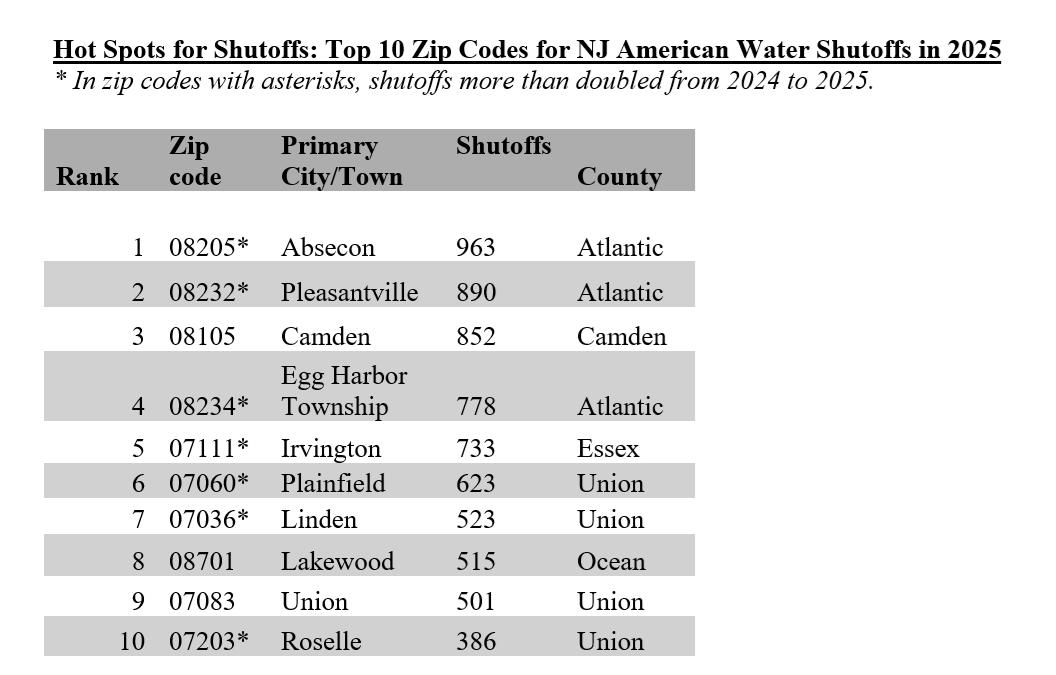
- NJ American Water had a total of 18,074 shutoffs in New Jersey in 2025. This is a 106% increase from 2024.
- These shutoffs account for 3% of the total customer accounts handled by NJ American Water. This shutoff rate is higher than electric utility shutoffs by some of the state’s largest electric utilities (Atlantic City Electric: 2.8%; and JCPL: 1.3%).
- Atlantic (Absecon, Pleasantville, Egg Harbor Township), Camden (Camden), Essex (Irvington), Union (Plainfield, Linden, Union, Roselle), and Ocean (Lakewood) counties had zip codes that are in the top 10 list for most shutoffs by NJ American Water.
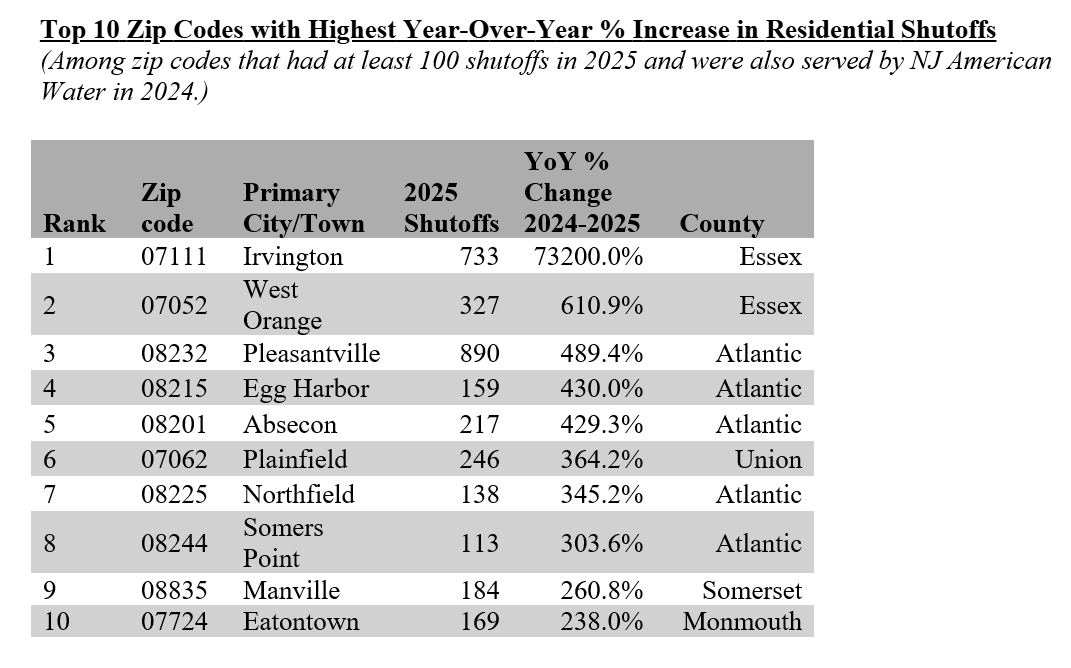
- There were zip codes across the state that have seen a steep year-over-year change to the shutoffs from NJ American Water. For example, Irvington had a 73,200% increase in shutoffs from 2024 to 2025; West Orange had a 610.9% increase; and Pleasantville had a 489.4% increase.
- After a year of being owned by NJ American Water (purchased in June 2024), the City of Salem soared to 124 shutoffs, which is 8.3% of the number of residential customers in the city.
Last week, the New Jersey Board of Public Utilities held a public hearing regarding NJ American Water’s proposed 12% rate increase for water and wastewater services. The request comes at a time when many households are already struggling to keep up with essential monthly expenses.
The rate case itself carries significant implications for households across New Jersey. New Jersey American Water has petitioned the New Jersey Board of Public Utilities for an 11.9% increase in water and wastewater rates. If approved, the average residential water bill would rise from approximately $83.87 to $93.89 per month, while wastewater customers could see monthly bills increase by roughly $8. According to the utility, the proposed increase would support approximately $1.4 billion in infrastructure investments through the end of 2026, including replacement of aging water systems, removal of lead service lines, and treatment upgrades designed to address emerging contaminants such as PFAS.
The company has also proposed expanding access to customer assistance programs by automatically identifying eligible low-income households that already receive energy assistance benefits. Public hearings remain ongoing as regulators, consumer advocates, and residents weigh the impact of higher rates against the need for long-term infrastructure improvements.
The proposed increase has drawn scrutiny from consumer advocates and environmental organizations, particularly as new data reveals a troubling increase in water shutoffs across New Jersey and continued challenges in connecting eligible families with available assistance programs.
Low-Income Assistance Program Reaches Only a Fraction of Eligible Households. Although NJ American Water currently offers a discount program designed to assist low-income customers, enrollment remains surprisingly low.
According to advocates monitoring the issue, only 4% of eligible households have been enrolled in the program, leaving thousands of potentially qualified New Jersey residents without access to available financial relief.
That enrollment gap has become a focal point in the ongoing debate surrounding affordability, access, and utility accountability.
Legislation Advances to Improve Water Assistance Access. The Natural Resources Defense Council (NRDC), which has intervened in the rate increase proceedings, is supporting two bills that recently advanced through a Senate Committee and are intended to improve water affordability for New Jersey residents.
S4374 is for Automatic Enrollment for Eligible Households. This legislation would expand requirements concerning automatic enrollment for utility bill payment assistance programs. Currently, approximately 200,000 New Jersey households receive state assistance with electric utility bills. Many of those households are also customers of NJ American Water.
Under the proposal, eligible customers already receiving electric bill assistance would be automatically enrolled in NJ American Water’s low-income discount program. Supporters argue that the legislation would remove bureaucratic barriers and help ensure that residents receive assistance for which they already qualify.
S4374: “Expands certain requirements concerning automatic enrollment for utility bill payment assistance programs” to facilitate enrollment in NJ American Water’s low-income water discount program. About 200,000 New Jersey households currently get state help with their electric bills and many of them are also NJ American Water customers. This bill would require the company to automatically enroll those customers in its water bill discount program. (There is no state program for water bill assistance.)
S4373 is the Streamlining the Application Process. A second bill seeks to expand existing memorandum of understanding requirements for residential utility assistance programs. The legislation would require the Department of Community Affairs to integrate NJ American Water’s discount program into the state’s online utility assistance portal. Advocates believe this change would simplify the application process, increase participation, and make assistance programs easier for residents to access.
S4373: “Expands memorandum of understanding requirements for the purpose of consolidated application for residential utility assistance programs” to facilitate enrollment in NJ American Water’s low-income water discount program. This bill would require the Department of Community Affairs to add NJ American Water’s bill discount program to the state’s online utility assistance application portal.
New Water Shutoff Data Raises Serious Concerns. The latest update to New Jersey’s Water Shutoff Dashboard paints a concerning picture regarding water service disconnections throughout the state.
Among the most notable findings: 18,074 Water Shutoffs in 2025. NJ American Water recorded a total of 18,074 shutoffs across New Jersey during 2025. That figure represents a staggering 106% increase compared with 2024. Shutoff Rates Exceed Some Major Electric Utilities. The 18,074 shutoffs account for approximately 3% of all NJ American Water customer accounts.
By comparison:
- Atlantic City Electric reported a shutoff rate of 2.8%
- Jersey Central Power & Light reported a shutoff rate of 1.3%
The comparison has fueled concerns that water service interruptions are becoming an increasingly significant affordability issue across the state. Communities Experiencing the Highest Impact. Several New Jersey communities appeared prominently in the data.
Zip codes located in the following counties ranked among the highest for water shutoffs:
- Atlantic County, including Absecon, Pleasantville, and Egg Harbor Township
- Camden County, including Camden
- Essex County, including Irvington
- Union County, including Plainfield, Linden, Union, and Roselle
- Ocean County, including Lakewood
The geographic spread demonstrates that water affordability challenges are affecting communities throughout New Jersey rather than being isolated to one specific region. Dramatic Year-Over-Year Increases. Some municipalities experienced particularly alarming increases in shutoffs between 2024 and 2025.
Among the most significant:
- Irvington experienced a 73,200% increase
- West Orange experienced a 610.9% increase
- Pleasantville experienced a 489.4% increase
These dramatic jumps have intensified calls for closer examination of utility practices, customer outreach efforts, and enrollment barriers within assistance programs.
Salem Emerges as a Growing Concern. The City of Salem also drew attention in the updated data. After being acquired by NJ American Water in June 2024, Salem recorded 124 residential shutoffs during the following year.
That total represents approximately 8.3% of residential customers within the city, one of the highest concentrations highlighted in the latest reporting.
The Larger Debate Over Water Affordability. The growing controversy surrounding NJ American Water’s proposed rate increase reflects a broader conversation unfolding across New Jersey. Supporters of infrastructure investment point to the need for modernization, system upgrades, reliability improvements, and long-term resiliency.
Consumer advocates, however, argue that affordability must remain a central consideration, particularly when thousands of residents continue to face financial hardship and assistance programs remain significantly underutilized. As lawmakers debate new consumer protections and regulators evaluate the proposed rate increase, many residents are asking a fundamental question: how can access to one of life’s most essential resources remain affordable for every New Jersey family?
The answer may shape the future of water policy, utility oversight, and affordability programs across the Garden State for years to come.
















