

New Jersey is quickly becoming one of the nation’s most important battlegrounds in the debate over artificial intelligence, energy demand, water consumption, land use, and local control. As technology companies race to build the massive digital infrastructure needed to power AI systems, cloud computing, automation, and next-generation data processing, communities across the Garden State are asking a direct and increasingly urgent question: at what cost?
The answer is now driving one of the most significant development fights unfolding anywhere in New Jersey.
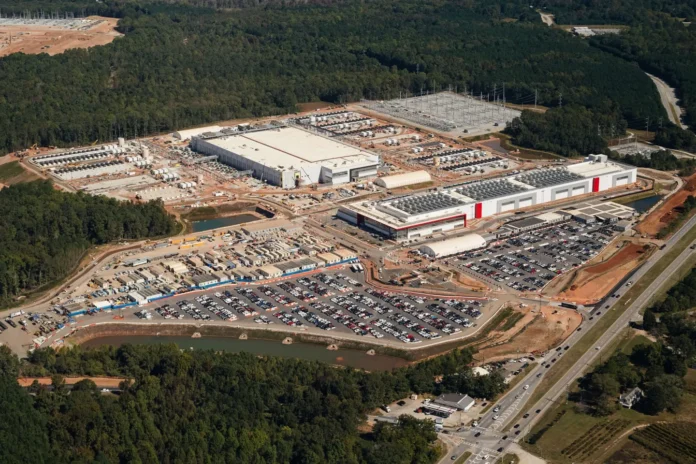
Across the state, local officials, environmental advocates, residents, planners, and business leaders are confronting the rapid rise of large-scale data centers, the warehouse-like facilities filled with servers, cooling systems, backup power equipment, and complex networking infrastructure that make the modern internet economy possible. Once viewed as quiet, technical facilities located away from public attention, data centers have become the focus of intense public scrutiny as their scale, energy demands, water requirements, and neighborhood impacts have grown dramatically alongside the AI boom.
The issue has moved from planning board agendas to municipal ordinances, from local public comment sessions to the governor’s office, and from isolated zoning disputes to a statewide policy debate about how New Jersey should participate in the artificial intelligence economy without forcing residents, ratepayers, and communities to absorb unacceptable costs.
In Cherry Hill, South Jersey’s largest municipality, concern surfaced publicly when a resident recently warned Township Council about the growing impact of data centers on electricity bills, water supplies, noise, and nearby residential neighborhoods. His comments reflected anxieties increasingly heard throughout New Jersey, particularly in communities watching large-scale projects emerge elsewhere in the region. The example most frequently cited is Vineland, where a major AI-oriented hyperscale data center project has drawn attention because of its size, noise concerns, and proximity to residential areas.
Cherry Hill Mayor David Fleisher responded forcefully, making clear that his administration does not want the township to become a testing ground for massive data center development. His position reflects a broader sentiment gaining traction across New Jersey: municipalities are no longer willing to wait until developers arrive with formal applications before deciding whether these facilities fit within their long-term land-use vision.
That proactive approach is now reshaping the political and development landscape.
Cherry Hill is preparing a formal ban, according to the mayor, not because a data center proposal has already landed at the township’s door but because local leaders want to prevent that scenario altogether. For a community that has spent decades managing suburban growth, commercial redevelopment, traffic concerns, stormwater challenges, and neighborhood preservation, the possibility of adding an energy-intensive industrial-scale data center is viewed by opponents as incompatible with the township’s character and infrastructure priorities.
Cherry Hill is not alone.
In Millville, located in Cumberland County, local officials recently took an even more dramatic step by unanimously adopting a law banning data centers outright. The ordinance declared that large-scale data centers are not compatible with the city’s land-use planning objectives, citing their substantial infrastructure demands, electrical consumption, cooling needs, water use, noise, heat generation, environmental impacts, and limited permanent job creation relative to the amount of land consumed.
The Millville action effectively ended a proposed 2.6-million-square-foot data center development, one of the largest projects of its kind contemplated in New Jersey. The decision sent a message far beyond Cumberland County: local governments are prepared to reject even major development opportunities if they believe the long-term burdens outweigh the benefits.
That decision also placed South Jersey at the center of a national conversation.
As AI companies, cloud providers, and technology infrastructure firms seek enormous amounts of computing power, data centers have become one of the hottest commercial real estate sectors in the country. Their rapid expansion has been particularly visible in states with abundant land, access to transmission infrastructure, and lower development costs. Virginia, Texas, California, Illinois, and Georgia currently lead the nation in data center activity, but New Jersey’s location between New York and Philadelphia, its dense fiber networks, and its access to regional power infrastructure have made it increasingly attractive to developers.
More than 80 data centers are already operating in New Jersey, and thousands more exist across the United States. But the newest generation of AI-driven facilities is different in size, intensity, and public visibility. The infrastructure required for artificial intelligence computing can place extraordinary pressure on electrical grids. Cooling systems can require significant water consumption. Backup generators and mechanical systems can produce noise concerns. Large facilities can occupy substantial land while producing fewer permanent jobs than traditional manufacturing or logistics operations.
Those realities have changed the public conversation.
For years, warehouses dominated New Jersey’s land-use battles as municipalities weighed tax revenue and logistics growth against truck traffic, open-space loss, stormwater runoff, and neighborhood disruption. Now, data centers are emerging as the next major flashpoint. They offer the promise of investment and technological relevance, but residents increasingly question whether that promise translates into meaningful local benefits.
The concern is especially acute because many data centers require enormous power commitments. Residents fear that grid upgrades needed to serve these facilities could ultimately be passed along to ordinary ratepayers unless strict safeguards are imposed. Water use has become another major issue, particularly in areas already concerned about drought conditions, aquifer stress, and climate resilience.
Environmental organizations have seized on those concerns.
The Pinelands Alliance has launched a petition campaign urging Governor Mikie Sherrill to impose a three-year statewide moratorium on new large-scale data centers. Supporters argue that the pause is necessary to study energy, water, public health, environmental, and community impacts before irreversible development decisions are made. More than 60 environmental, labor, grassroots, and community organizations have joined calls for stronger protections, with advocates warning that data centers could place new stress on water supplies, increase utility costs, contribute to pollution, and undermine local planning goals if allowed to expand without comprehensive regulation.
The debate places New Jersey in a complicated position.
On one hand, artificial intelligence is expected to shape the future of technology, medicine, finance, logistics, education, manufacturing, and government services. States that attract AI infrastructure may gain strategic advantages in investment, innovation, and workforce development. On the other hand, the physical infrastructure supporting AI is not invisible. It requires land, electricity, water, cooling, transmission upgrades, roads, backup systems, and local tolerance.
Governor Sherrill has attempted to thread that needle with a statewide plan that stops short of a full moratorium or ban while calling for stronger guardrails.
Her proposal focuses on four central pillars: requiring data centers to bring new clean energy online and help pay for the grid infrastructure needed to support their growth; mandating greater transparency around energy and water consumption; creating strong statewide standards for community benefits agreements so municipalities can negotiate from a position of strength; and ensuring that data center construction and operations create good-paying jobs through local trades and prevailing wage standards.
The administration’s approach recognizes both sides of the issue. New Jersey does not want to cede the future of AI innovation entirely to other states, but it also cannot allow communities to shoulder the costs of private technology infrastructure without meaningful accountability.
That balance will be difficult to maintain.
For technology companies, speed matters. AI development is moving rapidly, and the demand for computing power continues to surge. Developers are seeking sites where they can secure approvals, interconnection agreements, utility capacity, water access, and local support as quickly as possible. From their perspective, states that create uncertain or hostile regulatory environments risk losing investment.
For local residents, however, speed is precisely the problem. Many communities fear that data center proposals can move through redevelopment channels or zoning processes before residents fully understand their implications. Advocates argue that the scale of these facilities requires deliberate review, public transparency, and clear statewide standards rather than a patchwork of local decisions made under pressure.
The result is likely to be a hybrid approach across New Jersey.
Some towns may impose outright bans. Others may enact strict zoning limits, special use standards, environmental review requirements, noise restrictions, water-use controls, or local community benefit mandates. The state may move forward with broader oversight requirements intended to protect ratepayers and ensure developers pay for the infrastructure they need. Environmental groups will continue pushing for a moratorium, while business and technology interests will argue that New Jersey should remain competitive in the AI economy.
The question is not whether artificial intelligence will require physical infrastructure. It will. The question is where that infrastructure belongs, who pays for it, who benefits from it, and what safeguards are necessary to protect communities.
That is why the debate has become so intense.
For Cherry Hill, the answer may be simple: not here. For Millville, the decision has already been made through a local ban. For the governor’s office, the challenge is building a statewide framework that allows innovation without sacrificing affordability, environmental protection, or community quality of life. For residents, the priority is ensuring that decisions affecting their electric bills, water resources, neighborhoods, and health are not made behind closed doors in the name of technological progress.
New Jersey has always been a state where land-use battles carry enormous consequences. With limited space, dense development, aging infrastructure, high utility costs, and intense competition for economic growth, every major development category eventually forces hard questions about priorities.
AI data centers are now forcing those questions faster than many communities expected.
The facilities may power the future of technology, but they are also revealing the limits of what communities are willing to accept in exchange for promises of innovation. New Jersey’s challenge will be to determine whether it can lead in artificial intelligence without repeating the mistakes of past development waves, where local impacts were often understood only after projects were already built.
As the AI boom accelerates, one thing is already clear: data centers are no longer a quiet back-end piece of the digital economy. In New Jersey, they have become a front-line political, environmental, and economic issue that could shape the next generation of development across the Garden State.
















