

New Jersey has spent generations building one of the most diverse, educated, and economically productive business environments in the United States. From pharmaceuticals and telecommunications to finance, logistics, manufacturing, and technology, the Garden State has long served as a strategic headquarters location for companies seeking access to global markets, highly skilled workers, and proximity to New York City.
Yet another major corporate relocation is now raising difficult questions about the future of New Jersey’s competitive position in an increasingly aggressive national battle for jobs, investment, and headquarters operations.
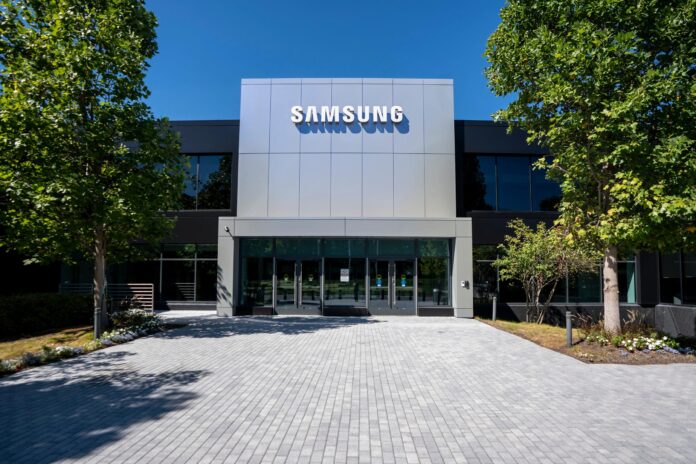
Samsung Electronics has announced plans to relocate the headquarters of its U.S. subsidiary from Englewood Cliffs to Plano, Texas, later this year, delivering another significant blow to New Jersey’s corporate landscape and continuing a broader trend that has seen major companies shift operations toward lower-cost states throughout the South and Southwest.
The move affects one of the most recognizable technology brands in the world and arrives less than a year after Samsung celebrated the opening of its new headquarters operations in Englewood Cliffs.
Now, after investing heavily in consolidating its New Jersey presence, the global electronics giant is preparing to move much of its American executive and corporate leadership operation more than 1,500 miles away.
The decision represents more than a simple address change.
It reflects the growing competition among states seeking to attract and retain major employers, and it underscores the economic pressures facing regions where taxes, regulatory costs, real estate expenses, and operating costs continue to rise.
For New Jersey, the announcement creates concerns that extend far beyond the loss of a single corporate office.
Samsung’s presence in Bergen County has long represented a unique intersection of business, culture, technology, and international investment.
The company employs approximately 1,000 workers at its current headquarters operation, with most expected to be reassigned to Texas as part of the relocation. A smaller group will reportedly remain in New Jersey to support local operations, although the company has not publicly disclosed how many positions may ultimately remain in the state or how many employees may choose not to relocate.
The uncertainty surrounding those workforce decisions adds another layer of concern for local leaders and economic development officials.
While some jobs may technically remain attached to Samsung, history has shown that not every employee is willing or able to relocate across the country. Family obligations, housing considerations, educational commitments, and personal preferences often result in workforce attrition following large-scale corporate relocations.
As a result, the long-term employment impact may not be fully understood until the transition is complete.
The economic implications also extend directly into the local community.
Corporate headquarters generate significant economic activity beyond payroll.
Professional services firms, restaurants, hotels, contractors, transportation providers, retailers, commercial landlords, and countless small businesses often benefit from the presence of major employers. When headquarters operations leave, those economic relationships frequently shrink or disappear entirely.
For Englewood Cliffs and surrounding communities, Samsung’s departure represents the potential loss of one of the area’s highest-profile corporate anchors.
The timing has amplified concerns.
The company only recently completed a major move from Ridgefield Park to Englewood Cliffs in September 2025. That transition was celebrated by state and local officials as evidence that New Jersey remained an attractive destination for global corporations.
Less than a year later, the narrative has changed dramatically.
Samsung’s decision now joins a growing list of corporate relocations that have fueled debate about New Jersey’s long-term business climate.
The move follows the recent departure of ExxonMobil, which completed its own relocation to Texas after more than a century of historical ties to New Jersey. That decision ended a corporate presence that stretched back approximately 144 years and was viewed by many business leaders as a symbolic loss for the state.
Together, those departures have intensified discussions regarding New Jersey’s ability to compete with emerging business hubs throughout the Sun Belt.
Texas, in particular, has become one of the nation’s most aggressive destinations for corporate relocation.
The state offers no personal income tax, no traditional corporate income tax, lower real estate costs, streamlined permitting processes in many jurisdictions, and a business-friendly regulatory environment that has attracted companies from California, New York, Illinois, and New Jersey alike.
Technology firms have been especially active participants in this migration.
Over the past decade, Texas has transformed into one of the country’s premier technology centers, attracting investments from semiconductor manufacturers, software companies, artificial intelligence firms, and advanced manufacturing operations.
For Samsung, the strategic logic appears clear.
The company already operates significant semiconductor manufacturing facilities in Austin and is investing heavily in a next-generation semiconductor complex in Taylor, Texas. Bringing executive leadership closer to those operations creates operational efficiencies while placing decision-makers nearer to some of the company’s largest American investments.
The Austin semiconductor facility has been part of Samsung’s footprint since the mid-1990s, while the Taylor project represents one of the largest manufacturing investments in the company’s history.
As semiconductor production becomes increasingly central to national economic and security priorities, proximity to those facilities likely played a major role in the company’s decision-making process.
From a corporate perspective, consolidating leadership functions near manufacturing assets can improve communication, accelerate decision-making, and enhance coordination across business divisions.
From New Jersey’s perspective, however, the move raises difficult questions about why the state continues losing major corporate operations despite possessing many competitive advantages.
New Jersey remains one of the most educated states in the country. It maintains exceptional transportation infrastructure, world-class universities, proximity to global financial markets, access to major airports and ports, and a highly skilled workforce.
Those strengths remain significant.
Yet many business leaders argue that the state’s cost structure increasingly offsets those advantages.
New Jersey currently maintains one of the nation’s highest corporate tax burdens, along with elevated housing costs, labor expenses, insurance costs, energy prices, and regulatory requirements.
For large corporations evaluating long-term operating expenses, those factors often become central considerations.
Business organizations have repeatedly warned that unless those structural issues are addressed, additional companies may continue evaluating alternatives elsewhere.
The concern is not merely theoretical.
The number of Fortune 500 companies headquartered in New Jersey has declined over recent years, reflecting broader shifts in corporate geography and economic development strategies.
For organizations seeking rapid growth, lower operating costs, and expansive development opportunities, states such as Texas, Florida, Tennessee, North Carolina, and Arizona have become increasingly attractive.
The Samsung relocation highlights another important dimension of the story: culture.
Bergen County is home to one of the largest Korean-American populations in the United States and possesses one of the most vibrant Korean communities anywhere outside South Korea.
Communities including Fort Lee, Palisades Park, Leonia, and neighboring municipalities have become cultural, commercial, and social centers for Korean-American families and businesses.
Samsung’s presence carried symbolic significance within that ecosystem.
The company’s headquarters represented a direct connection between one of South Korea’s most globally recognized corporations and one of America’s largest Korean-American communities.
While Samsung will maintain some level of New Jersey presence, the relocation of its headquarters operation inevitably alters that relationship.
The move also arrives during a period when economic development has become a central political issue across New Jersey.
Leaders throughout government, business organizations, chambers of commerce, and economic development agencies increasingly acknowledge that attracting investment is only part of the challenge.
Retaining existing employers has become equally important.
Many policymakers argue that future economic success will depend on creating an environment where companies can grow without feeling compelled to relocate.
That includes addressing tax structures, permitting timelines, infrastructure investment, workforce development, housing affordability, and regulatory predictability.
Some business leaders remain optimistic that change is possible.
Recent discussions regarding permitting reform, economic competitiveness, workforce training initiatives, and targeted business incentives suggest growing recognition that New Jersey must remain proactive if it hopes to reverse current trends.
Samsung’s departure may ultimately become part of a larger conversation about the future direction of the state’s economy.
The company’s decision reflects realities facing corporations throughout the country as they evaluate where to place employees, invest capital, and build long-term operations.
For New Jersey, it serves as both a warning and an opportunity.
A warning that even globally recognized companies with deep regional ties will make difficult business decisions when economic conditions dictate. And an opportunity to examine what policies, investments, and reforms may be necessary to ensure the next generation of corporate growth occurs within New Jersey rather than somewhere else.
Samsung’s move to Texas may be one corporate decision, but its implications extend much further.
It touches questions of competitiveness, economic strategy, workforce retention, community identity, and the future of New Jersey’s role in an increasingly competitive national economy.
As the company prepares to complete its transition later this year, state leaders, business advocates, and local communities will undoubtedly be watching closely—not simply because of what Samsung is doing today, but because of what its decision may signal about the challenges and opportunities that lie ahead for New Jersey’s economy tomorrow.
















