

Evan Sherman
New Jersey’s Own Evan Sherman Returns to the Back Deck for a World-Class Summer Jazz Evening at the Morris Museum
August 13 @ 7:30 PM – 11:30 PM
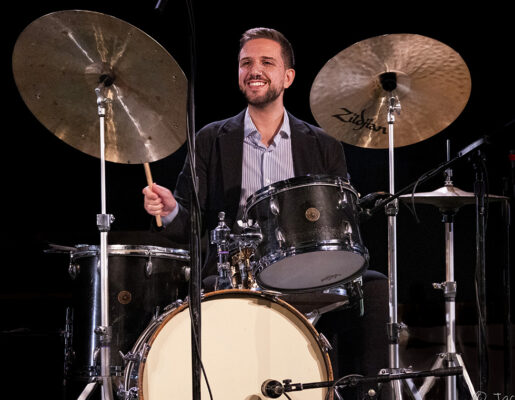
There are moments when a musician’s career trajectory moves so quickly that even longtime jazz audiences find themselves stopping mid-performance to fully process what they are witnessing. That phenomenon surrounds Evan Sherman right now. Although still only in his thirties, the New Jersey-born drummer, bandleader, arranger, and GRAMMY-winning performer has already assembled a résumé that many jazz musicians spend entire lifetimes attempting to build. On Thursday, August 13, 2026, Sherman brings that extraordinary momentum back home to New Jersey as part of the Morris Museum’s acclaimed Back Deck 2026 concert series for what promises to be one of the summer’s premier live jazz performances.
The concert immediately stands out as more than simply another stop on a seasonal outdoor schedule. Sherman’s return represents the intersection of New Jersey roots, elite contemporary jazz artistry, and the increasingly important role the Morris Museum’s Back Deck series now occupies within the state’s cultural landscape. Over the last several years, the Back Deck has evolved into one of New Jersey’s most respected outdoor performance environments, presenting artists who are not merely touring musicians, but major contributors shaping the future of jazz, chamber music, fusion, Latin music, and contemporary performance culture itself.
Sherman fits that mission perfectly because his career embodies both tradition and forward momentum simultaneously. His musicianship is deeply grounded in classic jazz vocabulary, yet his career path reflects the modern global reality of elite jazz performance in the twenty-first century. He is equally comfortable driving a small acoustic ensemble, powering a large jazz orchestra, supporting iconic legends, arranging for vocalists, or performing in front of massive international audiences across multiple continents.
What makes Sherman especially compelling for New Jersey audiences is the fact that his ascent feels genuinely local in origin while simultaneously international in scope. Before he became associated with some of the biggest names in contemporary jazz and vocal performance, Sherman was simply a young musician from New Jersey whose talent became impossible to ignore. That regional connection adds emotional weight to performances like this because audiences are not merely watching a touring artist stop through town. They are watching one of New Jersey’s own return after emerging onto the world stage.
Sherman began playing professionally as a teenager, a detail that immediately reveals the seriousness of his talent and discipline from an early age. Jazz drumming at a professional level requires far more than technical coordination or raw speed. It demands musical maturity, dynamic sensitivity, deep listening ability, rhythmic sophistication, stylistic versatility, and the capacity to elevate every musician sharing the stage. Great jazz drummers do not merely keep time. They shape atmosphere, control momentum, guide transitions, build tension, create release, and establish the emotional architecture of live performance itself.
Those qualities became evident quickly enough that Sherman earned a Presidential Scholarship to attend the Manhattan School of Music in 2011. Yet perhaps the most revealing detail about his rise is that before graduating in 2015, he had already been personally hired by towering jazz figures including Ron Carter, Roy Hargrove, Jimmy Heath, Branford Marsalis, Wynton Marsalis, Cyrus Chestnut, and John Lee.
That list alone places Sherman within extraordinarily rare company. These are not casual collaborations or brief industry encounters. They are endorsements from some of the most respected and discerning musicians in jazz history. In jazz culture, especially at the highest professional level, trust is everything. Legendary artists do not hand over rhythmic control of their music to drummers incapable of handling the responsibility. Sherman earned that trust extraordinarily young.
His work alongside Ron Carter particularly helped solidify his reputation among serious jazz audiences. Critics praised Sherman’s playing on the 2017 release Masters Legacy, with observers marveling at how a drummer still in his twenties could perform with the maturity, confidence, and restraint associated with veteran masters decades older. That reaction reflects one of Sherman’s defining artistic strengths: his playing never feels forced or over-performed. He possesses the ability to generate immense energy and sophistication while maintaining elegance, patience, and groove.
In recent years, Sherman’s profile has expanded even further through his ongoing work with Samara Joy, one of the most important breakout vocalists in contemporary jazz. Beginning in 2022, Sherman joined Joy’s rapidly ascending international touring and recording orbit, performing across five continents at some of the world’s most prestigious venues and festivals. That global schedule included appearances at Carnegie Hall, Royal Albert Hall, the Montreux Jazz Festival, the Newport Jazz Festival, and the Monterey Jazz Festival alongside major television appearances on the Grammy Awards, The Tonight Show, The Late Show, Today, 60 Minutes, and additional national broadcasts.
That level of visibility reflects not only technical excellence but adaptability. Modern jazz musicians increasingly operate across multiple worlds simultaneously. Sherman moves seamlessly between traditional jazz performance, contemporary vocal accompaniment, orchestral arrangement, television production environments, recording studios, and international touring circuits. That versatility has become one of the defining characteristics of elite modern jazz careers.
Importantly, Sherman’s artistry extends beyond sideman work. His own projects increasingly showcase his vision as both a bandleader and composer. His 2021 debut quintet album Sidewalkin’ introduced audiences to a broader picture of his musical identity beyond accompaniment roles alone. The recording demonstrated Sherman’s understanding of ensemble architecture, melodic pacing, rhythmic storytelling, and modern jazz presentation while preserving the swing traditions foundational to the music itself.
For the Morris Museum audience, that broader artistic identity is exactly what makes this Back Deck appearance so intriguing. Promoted as “Evan Sherman & Friends,” the evening carries the sense of openness and spontaneity that often defines the best jazz performances. Rather than rigidly scripted presentation, audiences can likely expect the kind of collaborative interplay, musical conversation, improvisational energy, and ensemble chemistry that transforms great jazz concerts into singular experiences unique to that exact evening.
The Back Deck itself provides an ideal environment for that kind of performance. Since debuting in 2020, the series has become one of New Jersey’s most distinctive outdoor concert destinations by rejecting the stiffness often associated with traditional concert halls while preserving artistic seriousness. Guests arrive early with chairs, refreshments, picnic spreads, and wine before settling into designated viewing spaces atop the Morris Museum’s elevated parking deck. The atmosphere blends sophistication with relaxed summer intimacy, creating an environment where audiences feel simultaneously connected to the performers and socially immersed within the evening itself.
Jazz thrives within spaces like this because the music depends heavily on atmosphere, audience energy, and human interaction. Outdoor summer performances naturally encourage a different kind of listening experience than formal theater seating. Conversations happen before the music begins. Sunset shifts across the skyline. Audiences settle into communal rhythms. By the time the band takes the stage, the environment already feels emotionally alive.
For Sherman specifically, the setting allows audiences to appreciate the full scope of his musicianship in a way large festival stages sometimes cannot. Drummers are often physically positioned behind ensembles, making their influence felt more than visually centered. Yet in intimate performance settings, audiences gain a clearer understanding of how profoundly great drummers shape musical flow. Sherman’s ability to guide momentum, sculpt dynamics, and generate rhythmic elasticity becomes especially compelling in close listening environments.
The concert also reinforces New Jersey’s increasingly important position within the national jazz ecosystem. Historically overshadowed by New York’s larger institutional scene, New Jersey has quietly developed an extraordinarily rich arts infrastructure built around festivals, museums, educational institutions, regional venues, and artist communities. Performers like Sherman demonstrate how deeply the state continues contributing to the broader evolution of American jazz culture.
The practical structure surrounding the concert maintains the now familiar Back Deck format. Ticket blocks are available for one or two attendees, encouraging guests to create personalized seating areas for the evening. Concertgoers are welcome to arrive beginning at 6:30 PM to enjoy picnics and refreshments before the 7:30 PM start time. Should weather conditions require adjustment, performances relocate indoors to the Morris Museum’s Bickford Theatre.
The continued growth of the Back Deck series itself remains one of New Jersey’s most impressive arts success stories of the last several years. Since launching during the uncertain cultural landscape of 2020, the series has welcomed more than 11,000 attendees while presenting over 72 performances featuring internationally acclaimed artists, emerging stars, chamber ensembles, jazz innovators, and genre-crossing performers. The elevated rooftop venue has evolved into something much larger than a seasonal concert series. It has become a signature regional arts destination capable of attracting audiences seeking sophisticated live performance experiences without leaving New Jersey.
Evan Sherman’s return represents exactly the kind of artist the series was designed to showcase: technically elite, artistically ambitious, culturally relevant, and deeply connected to both tradition and innovation. His career already spans collaborations with legendary jazz masters, international touring acclaim, major television appearances, award-winning recordings, and rapidly growing recognition as both a drummer and creative force.
On August 13, the Back Deck audience will not simply witness a talented drummer returning home. They will experience one of contemporary jazz’s most accomplished young musicians performing within one of New Jersey’s most unique live music environments, combining world-class artistry with the unmistakable atmosphere of a summer evening built around rhythm, improvisation, collaboration, and the enduring power of live jazz performance.











