
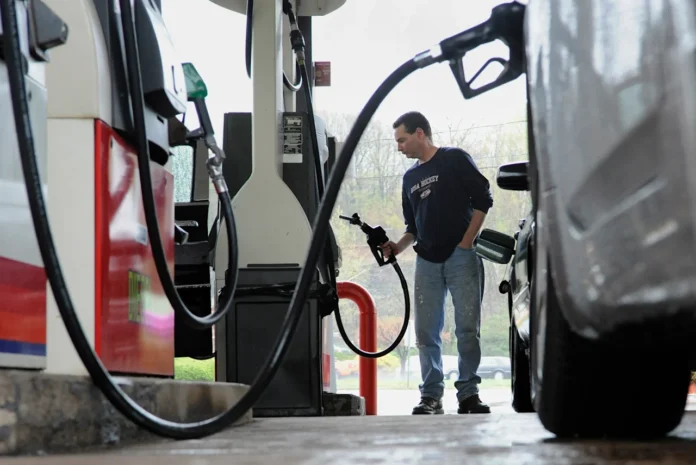

A new statewide poll shows New Jersey’s preference for full-service gas has barely budged in more than a decade, even as a bipartisan bill in Trenton tries once again to give drivers the option to pump their own fuel at a discount.
New Jersey Voters Have Spoken Again, and They Still Don’t Want to Pump Their Own Gas
A newly released statewide poll finds that 64 percent of New Jersey voters want to keep the state’s ban on self-service gas, while just 24 percent favor joining every other state in the country by allowing drivers to pump their own fuel. The survey, conducted by the Fairleigh Dickinson University Poll, arrives as lawmakers once again push legislation aimed at chipping away at a restriction that has defined the New Jersey driving experience since 1949, and it shows a preference that has barely moved in more than a decade.
A Preference That Refuses to Budge
What stands out most in the new numbers is how little they have shifted over time. The same FDU poll found 63 percent support for full-service and 23 percent support for self-service back in 2012, meaning New Jersey’s attitude toward pumping its own gas has remained essentially frozen for well over a decade despite considerable turnover in the state’s political landscape over that same span. Dan Cassino, executive director of the FDU Poll and a professor of government and politics at Fairleigh Dickinson, put the consistency plainly, noting that New Jersey voters have never wanted to pump their own gas and still do not want to now.
The poll’s demographic breakdown adds some texture to that overall consistency. Support for full-service runs meaningfully higher among women, at 74 percent, than among men, at 56 percent, though a clear majority of men still favor keeping the current system rather than switching to self-service. Cassino offered a couple of possible explanations for that gap, suggesting full-service gas has historically been viewed as something of a safety measure for women pumping fuel alone, while also noting some of the gap could simply reflect men expressing a general preference for doing more things with their own vehicles. Somewhat counterintuitively, support for full-service actually runs slightly higher among younger voters, with 68 percent of voters 30 and under preferring the current system compared with 61 percent among seniors.
A Law That Has Outlasted Every Other State’s Version
New Jersey’s ban traces back to the Retail Gasoline Dispensing Safety Act of 1949, which restricted fuel pump operation to trained station employees, citing fire risk and the general danger of untrained motorists handling flammable liquid. The law remains a permanent statutory restriction rather than a temporary policy, and violating it can still result in municipal fines for drivers caught pumping their own fuel. When Oregon, the only other state that maintained a comparable statewide ban, authorized self-service fueling throughout the state, New Jersey became the sole holdout in the entire country, the last state in America where pumping your own gas remains flatly illegal everywhere.
The Bill That Wants to Split the Difference
Rather than pushing for outright repeal, the most active current legislative effort takes a hybrid approach. Senate Bill 1047, formally titled the Motorist Fueling Choice and Convenience Act, would preempt any local ordinance restricting self-service and require any station with more than four fuel dispensers to continue offering full-service lanes between 8 a.m. and 8 p.m., while giving station owners the option to offer a discounted self-service lane alongside it.
Hybrid Model
Stations with more than four dispensers must keep full-service lanes running 8 AM to 8 PM.
Self-Serve Discount
Stations may offer a discounted rate for customers who choose to pump their own gas.
Disability Protections
Free full-service assistance at self-serve pricing is guaranteed for drivers with a disability placard.
Current Status
Introduced in the Senate, referred to Commerce Committee, and largely stalled.
The bill’s own legislative findings state the case directly, arguing that New Jersey motorists who would prefer to pump their own gas rather than wait for an attendant should not be denied that choice by state law, and that voluntary self-service could actually expand fuel access in the evening by helping more stations stay open later. Supporters, including the New Jersey Gasoline, Convenience Store and Automotive Association, have specifically pushed back on how the full-service versus self-service question tends to get polled in the first place, arguing that framing it as a binary choice misrepresents legislation that would preserve full-service entirely while simply adding a self-service option alongside it, rather than replacing the current system outright.
The Deeper Reasons the Ban Survives
Beyond raw public opinion, several structural forces continue propping up the status quo. Pumping gas has become something closer to regional identity than pure regulation for many longtime residents, particularly during harsh winter weather when staying inside a warm car has an obvious appeal. Proponents of self-service have long argued that removing mandatory attendant labor would lower prices at the pump, with one industry estimate suggesting stations could cut prices by as much as 15 cents a gallon if allowed to offer a self-serve option. Critics of that argument counter that New Jersey’s gas prices already run consistently lower than neighboring self-service states like New York and Pennsylvania, driven by the state’s high sales volume and competitive market rather than its staffing model, which undercuts the savings case in practice even if the underlying economics of removing labor costs hold true in theory.
Organized labor groups and independent station owner coalitions have also pushed back against past deregulation efforts, warning that ending the full-service requirement would eliminate a meaningful source of entry level jobs across the state. At the same time, some station owners describe a genuinely difficult staffing reality working against them from the other direction, struggling to find and retain enough attendants to keep every pump legally staffed, occasionally forcing stations to close lanes early or shut down entirely rather than risk selling fuel without an employee present, since doing so remains a violation of state law regardless of the reason behind the staffing gap.
With Senate Bill 1047 currently stalled in committee and public opinion showing no meaningful movement after more than a decade of similar legislative attempts, New Jersey’s full-service tradition appears likely to remain intact for the foreseeable future, less a live policy debate at this point than a recurring test of just how attached the state remains to one of its most distinctive quirks.
















