
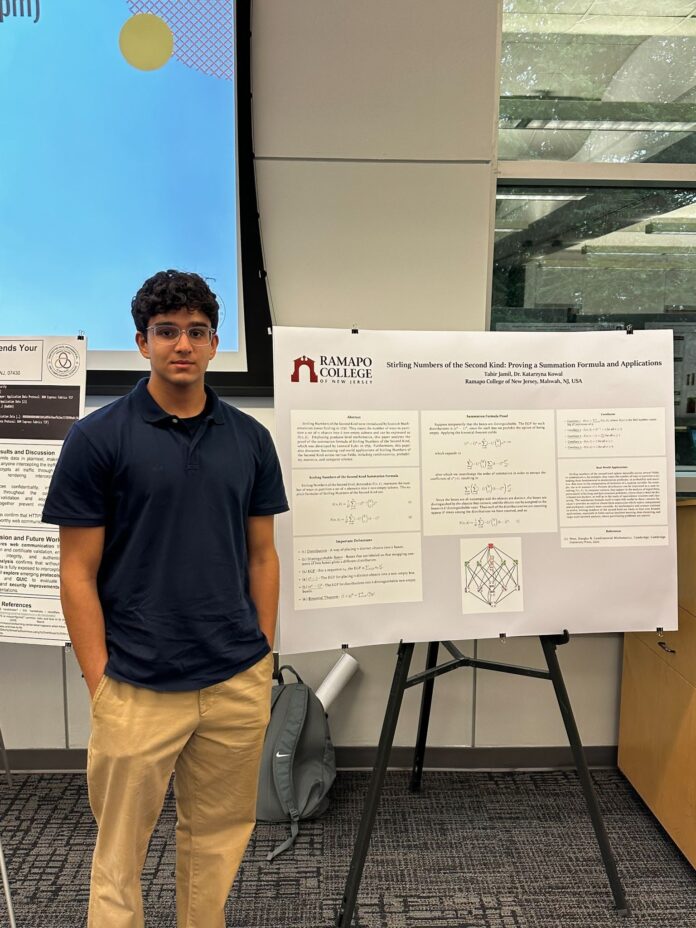

Tahir Jamil, a Don Bosco Preparatory High School student who has already conducted college level math research and contributed to national mathematics journals, has published Math Joy, a free activity e-book built to keep young students from ever learning to dread the subject in the first place.
A Ramsey Teen Is Trying to Fix Math Anxiety Before It Ever Starts
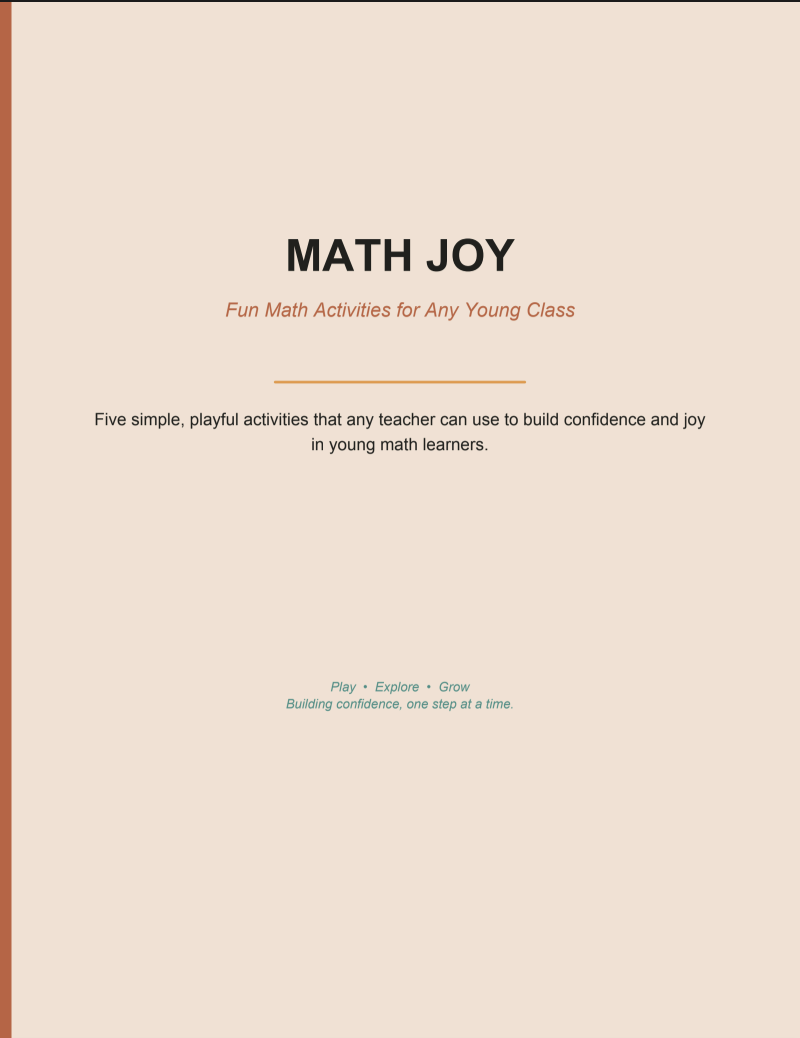
Math Joy, a free activity e-book by Ramsey student Tahir Jamil.
Tahir Jamil has written Math Joy, a free activity e-book built to reduce math anxiety among young students before it has a chance to take hold, drawing on his own experience as both a lifelong math enthusiast and a working math instructor to reshape how elementary classrooms approach the subject. Rather than another set of worksheets or timed drills, the book centers on curiosity driven, interactive activities designed to make math feel like something to explore rather than something to survive.
A Problem Jamil Never Personally Had, But Could Clearly See
The statistic driving the project is a real and well documented one. Roughly 40 percent of students worldwide report feeling nervous, helpless, or anxious when working through math problems or homework, according to findings from the OECD’s 2022 PISA study across participating countries. Jamil has said math never felt that way to him personally, but he understood early on that a student’s relationship with the subject tends to form long before they ever reach advanced coursework, often shaped by a single stressful classroom experience or an unsupportive early introduction to the material.
Jamil traces his own comfort with math back to a specific teacher, crediting his second grade instructor, Mrs. Clarice Nicol, with shaping the way he came to see the subject as something genuinely enjoyable rather than intimidating. That early, positive experience became the model behind Math Joy, a book built explicitly around giving other students the same kind of curiosity driven introduction to math that Jamil credits with shaping his own trajectory, before stress and anxiety ever get the chance to define how a child relates to the subject.
Built to Scale Across Ages and Skill Levels
Each activity inside Math Joy is intentionally scalable, giving teachers and parents room to adjust the underlying math concepts to fit different age groups and skill levels without needing an entirely separate resource for each classroom. That flexibility reflects Jamil’s own approach to developing the material, which combined his personal research into early numeracy with classroom strategies gathered directly from local educators, giving the book a foundation grounded in both mathematical theory and real, practical classroom experience rather than either alone.
Jamil’s own mathematical background runs considerably deeper than a typical high school student’s. A National Honor Society member, student ambassador, and varsity rugby athlete at Don Bosco Preparatory High School in Ramsey, he also works as a math instructor at Mathnasium and has conducted research at Ramapo College of New Jersey specifically on Stirling numbers of the second kind, a genuinely advanced combinatorics topic more commonly associated with undergraduate or graduate level mathematics than high school coursework. He has also contributed to the American Mathematical Monthly and submitted original problems to the College Mathematics Journal, giving him direct experience inside the same academic mathematics community that most students his age have not yet been exposed to at all.
A Project Built to Grow
Jamil has described Math Joy as an ongoing initiative rather than a finished product, with plans to expand its reach across New Jersey classrooms and eventually build a dedicated student team to design new educational games and activities for future editions. That growth minded framing fits the project’s underlying goal, treating early math anxiety not as an inevitable rite of passage but as a genuinely solvable problem, one Jamil has approached with the same rigor he brings to his own advanced research, just aimed at second graders instead of academic journals. Educators, parents, and youth program leaders interested in the free e-book can reach the initiative directly through the Math Joy Project’s contact email for more information.
















