
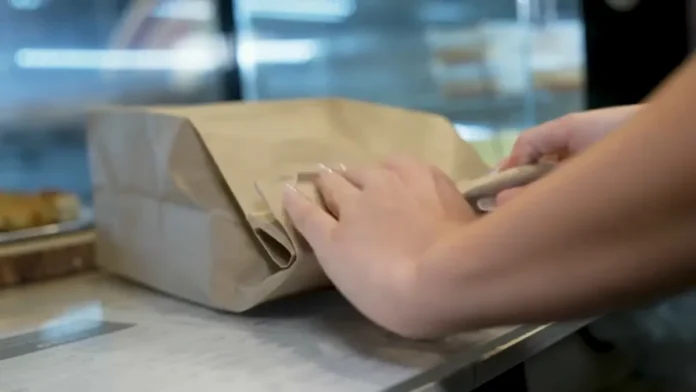

New Jersey’s Skip the Stuff law saves restaurants money, cuts down on real waste, and asks nothing more of anyone than saying the word please. The manufactured outrage over it says a lot more about who is looking for a fight than about the law itself.
Nobody Actually Cares About the Fork Law. Plus It Saves Money For Businesses.
Let’s be honest about what actually happened here. A law took effect requiring restaurants to hand out plastic forks and ketchup packets only when a customer asks for them, and for about a week, a small, predictable slice of New Jersey’s online commentary treated it like the state had seized private property. It hadn’t. It still hasn’t. And by the time Halloween decorations go up, almost nobody outside a handful of radio hosts and party press accounts will remember this was ever a topic of conversation at all.
Run the actual math, not the outrage, and there is barely a controversy here to begin with. Every takeout bag that used to get an automatic fork, a fistful of napkins, and three condiment packets nobody asked for now only gets those items when a customer actually requests them. That is not a burden on a business. That is the opposite of a burden. Every one of those items costs a restaurant real money, multiplied across every single order, every single day, whether or not the customer ever opens the packet. Cut that automatic waste and the owner keeps more of the margin on every transaction, with zero new expense, zero new equipment, and zero new labor required to make it happen. The New Jersey Restaurant and Hospitality Association, an organization that exists specifically to represent restaurant owners’ interests, has said exactly that publicly, calling the law a genuine, ongoing cost saver rather than a burden imposed on its members. That is not spin from Trenton. That is the industry’s own trade group agreeing with the premise.
So Who, Exactly, Is Upset?
This is the part worth actually examining, because the answer is a lot narrower than the headlines suggest. There is no organized backlash here. No boycott. No sustained grassroots movement of angry diners showing up at township meetings. What exists is a familiar pattern, conservative media outlets and a handful of Republican political accounts treating a low stakes regulation as proof of government run amok, because manufacturing outrage over something trivial is cheaper and easier than building an actual policy argument around something that matters. The New York Post ran a piece about diners fuming. Talk radio gave it airtime. The Assembly GOP’s social media account framed four days of adjustment period as evidence of dysfunction. That is not the same thing as a genuine public backlash. That is a small number of people with microphones deciding a fork is worth a news cycle.
Meanwhile, the actual lived experience of most New Jersey residents has been almost aggressively unremarkable. Restaurant workers have described a short adjustment period, some initial confusion at the counter, and then people simply remembering to ask, the same way anyone adapts to literally any small change in a routine transaction within a couple of weeks. That is not a crisis. That is Tuesday. The gap between how loudly this has been covered and how little it has actually disrupted anyone’s life is, frankly, the entire story here, and it is a story about media incentives and political theater far more than it is a story about plastic utensils.
Pick Your Fights
New Jersey has genuinely difficult, genuinely contentious policy fights happening constantly, on housing, on property taxes, on energy costs, on any number of issues where reasonable people actually disagree about real tradeoffs. This is not one of them. A rule that reduces unnecessary plastic waste, saves business owners money on every transaction, and requires a customer to say four extra words if they actually want a fork is about as close to a policy free lunch as government regulation gets. Treating it as an outrage requires either not understanding the actual mechanics of the law, or understanding them perfectly well and manufacturing a grievance anyway because outrage performs better online than nuance does.
Either way, the shelf life on this one is short. Nobody is going to remember the Skip the Stuff law as a defining controversy of 2026, because there is nothing underneath it to sustain the attention past the initial adjustment period. The people currently getting mileage out of mocking it know that too. That is precisely why the smart move is to stop pretending this deserves the airtime it has gotten and call it what it actually is, a minor operational adjustment being loudly cosplayed as a crisis by a small number of people who picked the easiest possible fight to pick.
Note: Not every critic of the law is acting in bad faith. Some diners and drive-thru customers have raised a genuine, if minor, practical complaint about remembering to request items during a rushed order, and reasonable people can disagree about how much friction a regulation should add to an everyday transaction, however small. This piece reflects Explore New Jersey’s opinion desk and argues one side of that debate; readers are encouraged to weigh the law’s practical impact for themselves.
















