
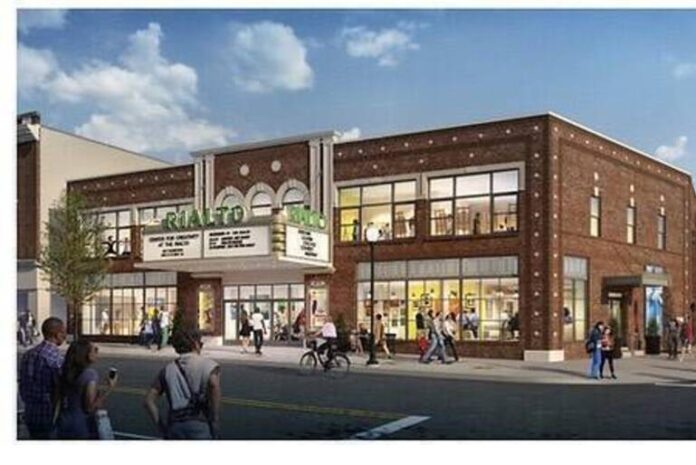

For nearly a hundred years, the Rialto Theater has stood on Westfield’s main commercial strip as a quiet fixture of small town memory, the kind of building longtime residents pass without quite noticing until someone announces plans to bring it back to life. That moment has now arrived. The New Jersey Economic Development Authority’s board has approved a tax credit award of up to 43.3 million dollars to transform the century old movie house into the Rialto Center for Creativity, a full scale reinvention that will turn a single screen relic of early twentieth century entertainment into a modern performing arts, education, and gallery hub serving Union County and the broader region.
The scope of what is planned inside the building goes well beyond a cosmetic refresh. The project calls for a complete adaptive reuse and gut renovation, reconfiguring the first floor into a flexible performance and event space capable of holding 450 people, alongside a proper lobby and ticketing area, a catering kitchen and cafe, dressing rooms for performers, and dedicated gallery space for visual art.
The second floor is being converted into four multi use classrooms intended for arts education, workshops, and rehearsal use, along with administrative offices and an additional gallery.
Beyond the visible renovation, the building is also getting a substantial infrastructure upgrade, including new mechanical systems, a geothermal wellfield, modern heating, ventilation, and air conditioning, and the addition of an elevator, the kind of unglamorous but essential work that determines whether a historic building can actually function as a year round public venue rather than an occasional event space propped up by temporary fixes.
What makes this project particularly notable is the funding mechanism behind it. The award comes through New Jersey’s Cultural Arts Facilities Expansion program, known as CAFE, a relatively new state initiative modeled conceptually on the federal New Markets Tax Credit program but purpose built to redirect that kind of development financing tool specifically toward cultural institutions rather than general commercial real estate. New Jersey is among a fairly small group of states willing to structure tax credit programs explicitly around the arts, a distinction that matters because it treats cultural infrastructure the same way a state might treat a manufacturing plant or a corporate headquarters relocation, as a legitimate driver of local economic activity rather than a philanthropic afterthought. Eligible CAFE applicants can receive credits covering up to the full cost of a project, capped at 75 million dollars, which gives the state real leverage to attract ambitious cultural redevelopment projects that might otherwise stall out for lack of private financing willing to take on a historic renovation of this complexity.
NJEDA Chief Executive Officer Evan Weiss framed the award as part of a broader strategy tying cultural investment directly to economic development, describing the arts and culture sector as a genuine economic driver that supports local businesses and job creation across the state. That framing lines up with how the Rialto’s operating plan has been designed from the outset. Rather than positioning itself as a premium venue accessible mainly to those who can afford top tier ticket prices, the theater’s model is built around sliding scale rental fees, scholarship opportunities, and discounted ticketing meant to keep the space genuinely open to the surrounding community. Plans also include dedicated youth programming and partnerships with organizations serving individuals with cognitive and mobility challenges, positioning the Rialto as something closer to a civic gathering space than a conventional commercial theater.
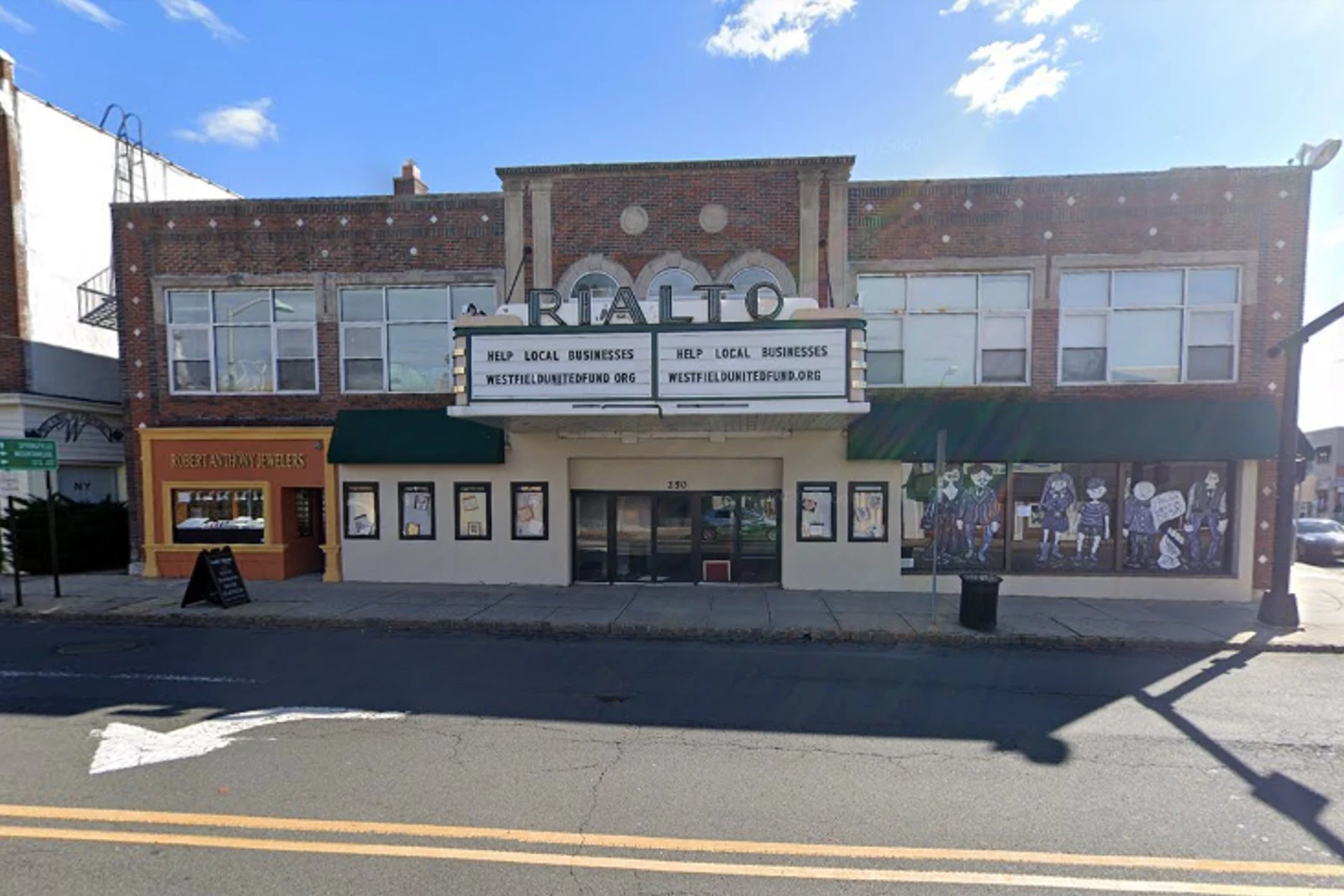
Westfield Mayor Jeremy Berman has described the Rialto as one of the town’s most cherished historic landmarks, and the timing of its revival carries a certain symbolic weight given the town’s outsized creative pedigree. Westfield has produced or been home to an unusually notable list of figures across entertainment and popular culture, including Charles Addams, the cartoonist behind The Addams Family, Kevin Feige, the president of Marvel Studios and one of the most influential figures in modern blockbuster filmmaking, and John Rzeznik, the lead singer and guitarist of the Goo Goo Dolls. A town with that kind of creative lineage reclaiming its own century old theater as a working arts institution reads less like a coincidence and more like a natural continuation of a local identity that has quietly shaped mainstream American culture for decades.
There is also a broader cultural argument embedded in a project like this one, beyond the renovation specs and financing structure. A hundred year old single screen theater reinventing itself for a very different entertainment landscape than the one it was built for speaks to a need that has become increasingly visible in towns across the country, which is the demand for genuine third spaces, places outside of home and work where residents of every age can gather, create, and take part in something communal rather than purely transactional. Movie theaters built in the 1920s were designed to serve exactly that function for their era, and the Rialto’s transformation into a multi use performance, education, and gallery space suggests the same basic instinct, community gathering built around shared cultural experience, translating naturally into a twenty first century format built for live performance, art exhibition, and hands on arts education rather than passive film screenings alone.
The Rialto’s award was not an isolated action either. The same NJEDA board meeting also approved a separate CAFE tax credit of up to 24.8 million dollars for a Front of House renovation project at the Paper Mill Playhouse in nearby Millburn, a theater founded in 1938 that stands as the largest producing theater in New Jersey and serves a statewide audience of more than 200,000 people annually, including 40,000 students. That project focuses on rebuilding the theater’s entrance and lobby to correct long standing accessibility and circulation problems, replacing outdated restrooms with modern, Americans with Disabilities Act compliant facilities and upgrading mechanical, electrical, and plumbing systems that Executive Director Mike Stotts has described as severely outdated. Taken together, the two awards signal that the state’s CAFE program is not simply funding isolated passion projects but actively investing in a cluster of cultural anchors across Union and Essex counties, each designed to draw visitors, support surrounding small businesses, and extend meaningful access to underserved communities and students.
For Westfield specifically, the implications extend well past the theater’s front doors. Bill Crandall, president of the Rialto’s board of trustees, has framed the restoration as an effort to rebuild more than a single building, describing it instead as creating a home where creativity can genuinely take root and where the community can come together around it. That kind of framing, paired with a state funding mechanism built specifically to treat cultural infrastructure as economic infrastructure, suggests the Rialto’s reopening will be measured by more than attendance figures. It represents a bet that a century old theater, restored with modern systems and a genuinely accessible operating model, can once again function as the kind of anchor institution that shapes a downtown’s identity for the next hundred years, much as it did for the last one.
















