
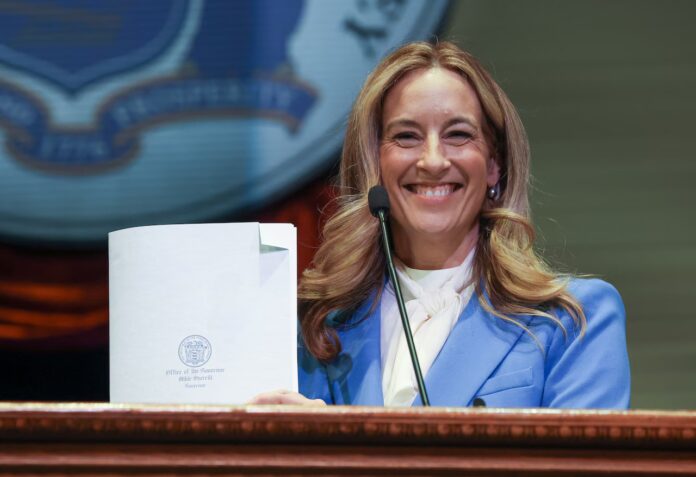

New Jersey is investing more money in public education than at any other time in its history. For the 2026-2027 school year, the state has committed a record $12.4 billion in K-12 aid, a figure that reflects both the state’s longstanding commitment to public education and the growing costs associated with operating one of the nation’s highest-performing school systems. On paper, the historic investment appears to represent another significant step toward strengthening classrooms, supporting educators, and ensuring every student has access to quality educational opportunities.
Yet across the Garden State, a very different reality is unfolding.
Despite the unprecedented level of state funding, school districts in nearly every region of New Jersey continue grappling with financial pressures that have forced administrators and locally elected school boards to make increasingly difficult decisions. Budget deficits, staff reductions, larger class sizes, delayed capital improvements, reductions in academic and extracurricular programs, and ongoing concerns about long-term financial stability have become common themes during this year’s budget planning process.
The contrast has left many parents, educators, taxpayers, and local officials asking the same question. How can New Jersey be providing more education funding than ever before while so many school districts continue facing serious financial challenges?
The answer lies in a combination of rapidly increasing operational costs, evolving enrollment patterns, contractual obligations, inflationary pressures, transportation expenses, special education costs, employee healthcare expenditures, and continued debate surrounding the state’s school funding formula.
For decades, New Jersey has consistently ranked among the nation’s strongest public education systems. Students routinely perform well on national assessments, graduation rates remain high, and many districts continue earning recognition for academic excellence, arts education, athletics, and college preparation. Those achievements, however, require significant financial investment.
Operating a modern public school system extends far beyond classroom instruction. Districts must fund teacher and staff salaries, healthcare benefits, transportation services, building maintenance, utilities, technology infrastructure, special education programs, school security, counseling services, extracurricular activities, athletics, food services, curriculum development, classroom materials, and ongoing professional development. Nearly every one of those expenses has increased substantially over the past several years.
Inflation has affected virtually every aspect of school operations. Utility costs have risen. Construction materials and facility maintenance have become more expensive. Technology investments continue expanding as schools replace aging equipment while integrating new digital learning tools. Transportation contracts have become increasingly costly due to fuel prices, vehicle maintenance, insurance, and a nationwide shortage of qualified school bus drivers. Food service operations continue experiencing higher supply costs, while insurance premiums and employee healthcare expenses remain among the fastest-growing budget categories for many districts.
Special education represents another significant financial responsibility.
Federal and state laws require school districts to provide appropriate educational services for students with disabilities, often involving individualized instruction, specialized equipment, transportation, therapeutic services, and highly trained personnel. These services are essential and legally mandated, yet they also represent one of the fastest-growing components of many district budgets. Even districts receiving additional aid frequently find those increases absorbed almost immediately by rising special education expenditures.
Personnel costs remain the largest portion of nearly every school budget.
Teachers, administrators, instructional aides, custodians, transportation employees, food service workers, nurses, counselors, librarians, technology specialists, and support staff collectively provide the services that allow schools to operate successfully each day. As negotiated salary agreements, pension contributions, healthcare costs, and other contractual obligations continue increasing, districts face growing financial commitments that often outpace annual revenue growth.
While many districts have received additional state funding this year, those increases frequently do not keep pace with overall cost growth.
At the same time, more than 160 New Jersey school districts are experiencing reductions in state aid under the current funding formula, with decreases generally capped at three percent during this budget cycle. Although the cap prevents larger immediate reductions, even relatively modest aid losses can create significant budget gaps for districts already managing rising operating expenses.
School administrators often describe these reductions as cumulative rather than isolated.
A district losing aid over multiple consecutive years may gradually reach a point where reserves become depleted and meaningful spending reductions become unavoidable. Because the overwhelming majority of district budgets are devoted to personnel, staffing frequently becomes the area where administrators have the greatest ability to reduce expenditures.
As a result, communities throughout New Jersey are seeing announcements involving layoffs, hiring freezes, early retirement incentives, vacant positions remaining unfilled, and organizational restructuring designed to balance budgets without exceeding available revenue.
Those decisions extend well beyond payroll.
When teaching positions are eliminated, remaining educators frequently assume additional responsibilities while class sizes increase. Elective courses may become more limited. Intervention programs can experience reduced staffing. Student support services may become more difficult to expand even when demand continues growing. Extracurricular activities sometimes operate with fewer resources, while building maintenance projects and technology upgrades are often postponed until future budget cycles.
School boards rarely approach these decisions lightly.
Throughout New Jersey, locally elected board members spend months reviewing financial projections, enrollment trends, contractual obligations, state aid calculations, and community priorities before adopting annual budgets. Public hearings often attract concerned parents, educators, students, and taxpayers who recognize that every financial decision ultimately affects classroom experiences.
The challenge becomes particularly complicated because each district operates under unique circumstances.
Enrollment growth in one community may require additional classrooms and staff, while declining enrollment elsewhere creates different financial pressures. Urban districts frequently encounter different operational demands than suburban or rural systems. Transportation costs vary dramatically depending upon geography. Aging school facilities require greater maintenance investments than newer buildings. Student demographics, special education enrollment, multilingual learner populations, and local property tax bases all influence financial planning in different ways.
These differences help explain why statewide funding increases do not produce identical outcomes across every district.
Much of the ongoing discussion centers on New Jersey’s school funding formula, which was designed to distribute state aid according to factors including enrollment, local property wealth, and student needs. Supporters argue that the formula promotes greater equity by directing resources toward districts requiring additional financial assistance. Critics contend that changing enrollment patterns, demographic shifts, and evolving economic conditions have exposed limitations within the current model, particularly for communities experiencing declining aid while facing many of the same fixed operating costs as districts receiving increases.
School buildings do not become significantly less expensive to operate because enrollment declines modestly. Heating systems, roofs, transportation networks, security measures, administrative services, and many instructional costs remain relatively constant regardless of small enrollment fluctuations. Consequently, districts losing aid often argue they cannot reduce expenditures at the same pace funding declines.
The issue has become one of the most closely watched education policy discussions in New Jersey.
Educators, municipal leaders, lawmakers, advocacy organizations, and parents continue debating whether adjustments to the funding formula are necessary to better reflect today’s financial realities while maintaining the state’s commitment to educational equity.
The broader context also deserves consideration.
New Jersey consistently ranks among the nation’s leading states for educational achievement. Students regularly score above national averages in reading, mathematics, and science. Graduation rates remain strong, and many districts offer extensive Advanced Placement courses, career and technical education, performing arts programs, athletics, and specialized academic opportunities that prepare students for college and the workforce.
Maintaining that level of excellence requires continuous investment.
Modern education encompasses far more than traditional classroom instruction. Schools increasingly provide mental health services, career readiness programs, STEM education, cybersecurity instruction, early childhood initiatives, workforce development partnerships, expanded technology integration, school safety enhancements, and individualized learning supports. Each new expectation brings additional financial responsibilities.
The record state investment demonstrates New Jersey’s continued commitment to public education, but it also highlights how rapidly educational costs continue evolving.
For families, the immediate effects often become visible through larger classroom sizes, staffing changes, modified course offerings, or postponed facility improvements. For educators, financial uncertainty can influence recruitment, retention, and long-term planning. For local governments and taxpayers, school funding remains one of the most important public policy issues because of its direct connection to both educational quality and property taxes.
Looking ahead, the conversation surrounding school finance is unlikely to diminish.
Population changes, inflation, labor market conditions, infrastructure needs, technological advancement, and evolving educational expectations will continue shaping budget discussions throughout the state. Policymakers will face the challenge of balancing fiscal responsibility with the investments necessary to preserve one of America’s strongest public education systems.
What remains clear is that record funding alone does not automatically eliminate financial challenges. School finance is ultimately shaped by the relationship between revenue and rapidly changing operational costs. As expenses continue rising across nearly every area of district operations, ensuring long-term financial stability will require ongoing evaluation of funding policies alongside careful local budget management.
New Jersey’s public schools remain among the state’s greatest strengths. The educators, administrators, staff members, and local leaders working through this year’s budget process continue demonstrating an unwavering commitment to students despite increasingly difficult financial circumstances. As discussions surrounding school funding continue in Trenton and in communities across the Garden State, the shared objective remains unchanged: providing every student with access to a high-quality public education while building a funding system capable of supporting that mission for generations to come.
















