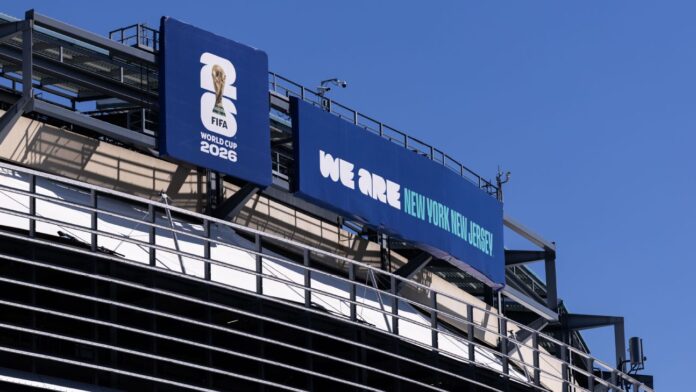

The FIFA World Cup was supposed to represent a once-in-a-generation celebration for New Jersey. Instead, less than a year before the first whistle blows at MetLife Stadium — temporarily rebranded as New York New Jersey Stadium during the tournament — one of the largest sporting spectacles in global history has become entangled in a rapidly escalating political, financial, and consumer controversy stretching across both sides of the Hudson River.
In a stunning move carrying enormous implications for the future of major-event ticketing in America, the Attorneys General of New Jersey and New York have officially subpoenaed FIFA as part of a joint investigation into alleged manipulative ticket sales practices, soaring prices, seat assignment discrepancies, and accusations that fans were misled during the purchasing process for the 2026 FIFA World Cup. The investigation specifically centers around the eight matches scheduled for MetLife Stadium, including the globally anticipated FIFA World Cup Final on July 19, 2026.
The probe instantly transforms what had been simmering online frustration into a full-scale interstate legal and political confrontation involving one of the most powerful sports organizations on earth.
For New Jersey officials, the issue extends far beyond sports fandom. The World Cup represents one of the largest tourism, transportation, hospitality, entertainment, and economic opportunities the state has ever hosted. Yet officials increasingly fear that consumer trust surrounding the tournament has already begun deteriorating before the event itself even arrives.
New Jersey Attorney General Jennifer Davenport delivered perhaps the most direct criticism yet aimed at FIFA’s handling of the ticket rollout, accusing the organization of creating an environment dominated by confusion, artificial scarcity, and pricing practices that many consumers believed bordered on exploitative.
“Being honest about ticket sales is not complicated,” Davenport stated while announcing the investigation alongside New York Attorney General Letitia James. “But FIFA has turned buying a ticket to the World Cup into a gauntlet of confusion, fake scarcity, and impossibly high prices.”
That language reflects the seriousness now surrounding the situation. According to both state offices, the subpoenas seek extensive internal FIFA documentation related to dynamic pricing models, ticket release structures, seat classification changes, marketing strategies, and the controversial introduction of newly created “Front Categories” that allegedly reshaped seating expectations after tickets had already gone on sale.
At the center of the backlash is the widespread perception among consumers that FIFA fundamentally altered the ticketing system midstream while dramatically increasing prices in the process.
Originally, tickets inside World Cup venues were organized into four traditional seating categories, with Category 1 representing premium sightlines closest to midfield and ideal viewing areas. However, after initial ticket sales had already begun, FIFA reportedly introduced an additional premium layer called “Front Categories,” effectively carving out the best portions within each seating zone and repricing them at dramatically higher rates.
That shift immediately generated outrage among fans who believed they had already purchased premium seating, only to later discover their assignments were farther from the field, positioned behind goals, or otherwise downgraded relative to what had initially been implied.
Consumer complaints intensified as resale prices exploded throughout the tournament market. Reports of World Cup Final tickets approaching or exceeding $33,000 quickly spread online, fueling growing public anger over accessibility, affordability, and transparency. Even standard match tickets across the broader tournament reportedly experienced dramatic increases between late 2025 and spring 2026, with state investigators citing average ticket price increases exceeding 30 percent across major categories.
For many New Jersey residents, the issue became symbolic of a broader frustration surrounding modern sports economics, where ordinary fans increasingly feel priced out of the biggest cultural moments despite public investment, taxpayer-supported infrastructure, and years of local anticipation leading up to the event.
The emotional tension surrounding the World Cup feels especially significant in New Jersey because the tournament is not merely passing through the region. The state is effectively functioning as one of the central global hubs of the entire competition. MetLife Stadium alone will host five massive group-stage matches, followed by knockout-round contests and ultimately the championship final itself.
The current match schedule at New York New Jersey Stadium already reads like an international sports blockbuster. Brazil faces Morocco on June 13. France meets Senegal on June 16. Norway returns against Senegal on June 22. Ecuador battles Germany on June 25. Panama faces England on June 27. The venue then transitions into elimination play with a Round of 32 matchup on June 30, a Round of 16 game on July 5, and finally the FIFA World Cup Final on July 19.
For New Jersey tourism officials, hospitality operators, bars, restaurants, transportation agencies, hotels, and entertainment venues, the event represents an unprecedented economic opportunity capable of generating billions in regional spending. Yet alongside that optimism now exists mounting concern that the tournament’s consumer controversies could begin overshadowing the excitement itself.
Political tensions between New Jersey and New York have also quietly emerged underneath the larger FIFA dispute. Frustration intensified after New York City leadership announced a special subsidized ticket lottery program offering 1,000 discounted $50 match tickets exclusively for New York City residents. The move immediately angered several New Jersey lawmakers, who criticized the initiative as politically performative while demanding that Garden State residents receive comparable affordable-access opportunities for matches taking place directly inside New Jersey itself.
That conflict highlights a broader regional dynamic already surrounding the tournament. Although the venue sits physically in East Rutherford, much of the international branding surrounding the World Cup has leaned heavily toward New York’s global identity. New Jersey officials have increasingly pushed back against any perception that the state is functioning merely as logistical support rather than a primary host destination in its own right.
Governor Mikie Sherrill’s administration has responded aggressively by launching several tourism-focused initiatives intended to maximize New Jersey’s visibility and economic participation throughout the tournament. One of the most ambitious is the newly announced Welcome World Rewards Program, which encourages fans to visit local businesses, participate in community watch parties, and engage with New Jersey tourism destinations in exchange for opportunities to win match-related experiences, merchandise, concert access, and host committee invitations.
Simultaneously, the state has begun preparing for the massive logistical strain the tournament will place on infrastructure, transportation, nightlife, and regional operations.
One of the more controversial decisions already announced involves NJ Transit pricing. Round-trip rail fares to the stadium during World Cup matchdays are reportedly being set near $98 — a dramatic increase from standard NFL game-day transportation costs. Officials argue the premium pricing reflects extraordinary operational demands, expanded staffing, crowd management expenses, security coordination, and transportation infrastructure pressures associated with hosting one of the world’s largest sporting events.
Transit restrictions are also expected to reshape normal commuter behavior throughout the tournament. New York Penn Station plans to limit access for regular NJ Transit riders during several pre-match windows, prioritizing ticket-holding World Cup attendees on inbound trains toward New Jersey. Those measures have already generated criticism among some commuters concerned about disruptions to daily transportation patterns during tournament periods.
Inside MetLife Stadium itself, major engineering and reconstruction work continues in preparation for FIFA’s strict tournament standards. Crews are replacing the stadium’s narrow artificial turf system with a wider natural grass soccer pitch designed specifically to comply with FIFA field dimensions and international match regulations. The transformation reflects the enormous operational differences between hosting NFL football and staging the world’s largest soccer competition.
At the same time, New Jersey’s broader hospitality industry is preparing for an unprecedented global audience. Fan festivals, watch parties, concerts, sponsor activations, and entertainment districts are expected to emerge throughout the state, particularly near Hoboken, Jersey City, Newark, the Meadowlands corridor, and various Jersey Shore destinations.
Governor Sherrill has already signed statewide measures easing restrictions on late-night bar operations during tournament periods, allowing sports bars, restaurants, and hospitality venues greater flexibility in accommodating international match schedules and postgame crowds. The move reflects expectations that the World Cup will generate a statewide festival atmosphere extending far beyond the stadium itself.
The official NYNJ World Cup 26 Jersey Fan Hub at Sports Illustrated Stadium in Harrison is expected to become one of the region’s central gathering points during the competition, hosting multiple group-stage and knockout-round fan events throughout the tournament calendar.
Yet despite all the planning, optimism, and economic anticipation, the growing FIFA investigation threatens to fundamentally reshape public perception surrounding the event.
For many fans, the controversy cuts deeper than ticket pricing alone. It touches on broader anxieties regarding corporate control over major sporting events, dynamic pricing systems increasingly dominating entertainment industries, and the growing belief that ordinary supporters are being squeezed out of experiences once considered culturally accessible.
The investigation launched by New Jersey and New York now places FIFA under enormous scrutiny precisely because the World Cup traditionally represents something emotionally larger than sports. It is marketed as a global celebration meant to unite nations, communities, cultures, and generations. Allegations that fans were misled about seating locations or pressured into inflated pricing structures threaten to undermine that ideal before the tournament even begins.
Whether the investigation ultimately results in legal action, policy changes, consumer restitution, or revised ticketing practices remains uncertain. FIFA has thus far declined substantive public comment regarding the subpoenas and broader allegations.
What is already undeniable, however, is that the road to World Cup 2026 in New Jersey has become significantly more complicated than anyone anticipated. The state still stands poised to host one of the defining global events of the decade. The excitement remains enormous. The economic possibilities remain historic. The international spotlight remains firmly fixed on the Meadowlands.
But now, alongside the anticipation, another storyline has emerged — one centered not around goals, trophies, or international glory, but around fairness, transparency, accessibility, and whether ordinary fans still have a place inside the modern business machinery of global sports.
Match Schedule at New York New Jersey Stadium – MetLife Stadium is hosting five highly anticipated group stage games ahead of the single-elimination knockout rounds:
| Date | Matchup / Round |
|---|---|
| June 13, 2026 | |
| June 16, 2026 | |
| June 22, 2026 | |
| June 25, 2026 | |
| June 27, 2026 | |
| June 30, 2026 | Round of 32 |
| July 5, 2026 | Round of 16 |
| July 19, 2026 | FIFA World Cup 2026™ Final |
Fan Zones & Entertainment
- Jersey Fan Hub: The official NYNJ World Cup 26 Jersey Fan Hub will be hosted at Sports Illustrated Stadium in Harrison, NJ, opening for 8 group stage dates and 8 knockout dates.
- Welcome World Rewards: Launching June 1, Governor Sherrill announced the Welcome World Rewards Program. Fans who support local New Jersey small businesses and check in at community watch parties can earn milestones toward winning concert tickets, merchandise, and host committee guest passes to the matches.
- Final Halftime Show: The July 19 final will feature the tournament’s first-ever official halftime show, with Madonna, Shakira, and BTS scheduled to perform.