
New Jersey’s cultural narrative continues to evolve through a powerful intersection of art, identity, and place, and few projects capture that transformation with as much clarity and intention as NJ Spotlight News’ special edition of “Painting Community – Jersey City,” released April 10, 2026. This installment of the ongoing digital documentary series moves beyond surface-level appreciation of murals and instead positions public art as a defining force in how communities express themselves, preserve their histories, and shape their future. Centered on the work of internationally influenced artist El Cekis, the episode delivers a layered exploration of how large-scale street art operates not only as visual expression but as cultural infrastructure within one of New Jersey’s most dynamic cities.
Jersey City has long been a focal point for artistic experimentation, but in recent years it has emerged as one of the most significant hubs for public art in the region. The city’s walls, facades, and overlooked spaces have been transformed into canvases that reflect a broad spectrum of voices, styles, and narratives. Within this environment, El Cekis stands out as an artist whose work carries both global perspective and local resonance. Born and raised in Santiago, Chile, Cekis developed his artistic voice in a context where murals were deeply tied to political expression, social commentary, and community identity. That foundation continues to inform his work today, even as his canvas has expanded to include cities like Jersey City, where the cultural landscape is equally complex and layered.
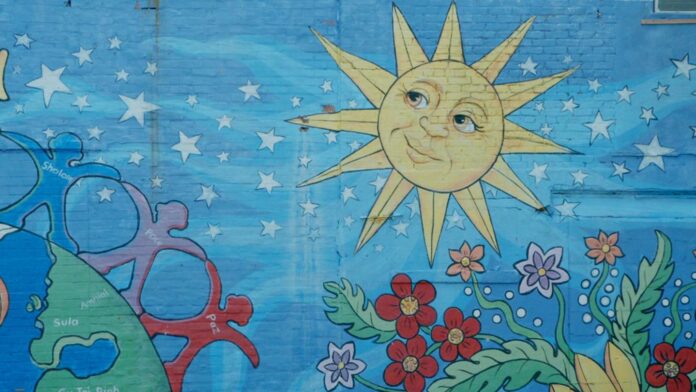
The documentary situates Cekis’ work within this broader context, emphasizing how his murals do more than decorate urban space—they activate it. His pieces are characterized by bold color palettes, intricate character design, and a visual language that blends surrealism with grounded human emotion. These elements are not purely aesthetic; they are intentional, designed to engage viewers on multiple levels. In Jersey City, where neighborhoods are defined by a convergence of cultures, histories, and economic realities, this kind of work becomes a point of connection. It invites interpretation, encourages dialogue, and ultimately contributes to a shared sense of place.
What makes “Painting Community – Jersey City” particularly effective is its ability to frame public art as a living, evolving dialogue rather than a static installation. The documentary captures not just the finished murals, but the process behind them—the planning, the execution, and the interaction between artist and environment. This process is critical to understanding the role of public art in a city like Jersey City, where each mural exists within a specific social and physical context. The act of creating the work becomes as important as the work itself, reinforcing the idea that art is not something imposed on a community, but something developed in conversation with it.
This perspective aligns closely with the broader cultural framework highlighted through Explore New Jersey’s art and culture coverage, which consistently emphasizes the importance of accessible, community-driven artistic expression. Across the state, public art has become a key component of cultural development, transforming spaces that were once overlooked into destinations that attract both local engagement and regional attention. Jersey City represents a particularly strong example of this trend, with initiatives that support artists while also integrating their work into the fabric of the city.
The influence of artists like El Cekis extends beyond individual murals. Their work contributes to a larger ecosystem in which art becomes a catalyst for economic activity, tourism, and community pride. Murals draw visitors, create opportunities for local businesses, and redefine how neighborhoods are perceived both internally and externally. In this sense, public art operates as both cultural expression and strategic development, offering a model for how cities can invest in creativity as a means of growth.
At the same time, the documentary does not shy away from the deeper implications of this transformation. It acknowledges the tension that can exist between artistic expansion and the realities of urban change, where increased visibility and desirability can lead to shifts in demographics and economic dynamics. By focusing on the artist’s perspective, “Painting Community – Jersey City” provides insight into how creators navigate these complexities, striving to maintain authenticity and connection even as their work gains broader recognition.
Cekis’ journey from Santiago to Jersey City underscores the global nature of contemporary public art. While his influences are rooted in Chilean mural traditions, his work in New Jersey reflects a dialogue between cultures, demonstrating how artistic language can transcend geographic boundaries while remaining deeply tied to local context. This duality is one of the defining characteristics of modern public art—it is simultaneously global and hyper-local, informed by diverse influences yet shaped by the specific environment in which it exists.
The production quality of the documentary further reinforces its impact. Through thoughtful cinematography and narrative pacing, the episode captures the scale and detail of Cekis’ work while also providing a sense of the surrounding environment. The visuals are complemented by a narrative structure that prioritizes clarity and depth, ensuring that the viewer not only sees the art but understands its significance. This approach elevates the documentary beyond a simple profile, positioning it as a meaningful contribution to the ongoing conversation about art and community in New Jersey.
From a broader perspective, “Painting Community – Jersey City” reflects a shift in how media platforms approach cultural storytelling. Rather than focusing solely on established institutions or traditional forms of art, the series highlights work that exists in public, accessible spaces, redefining what constitutes a cultural landmark. This shift is essential in a state as diverse as New Jersey, where artistic expression often emerges outside conventional venues and thrives in the spaces where people live and interact daily.
The timing of this release is particularly relevant. As cities across the region continue to invest in cultural programming and public art initiatives, there is a growing need for documentation and analysis that captures not just the outcomes, but the processes and motivations behind them. “Painting Community – Jersey City” meets that need, offering a detailed, thoughtful examination of how art functions within a real-world context.
For audiences, the documentary provides both inspiration and insight. It invites viewers to look more closely at the environments they move through every day, to recognize the layers of meaning embedded in the artwork that surrounds them, and to consider the role they play in shaping and sustaining their communities. It also reinforces the idea that art is not confined to galleries or museums—it exists wherever creativity intersects with public space.
In positioning Jersey City as a focal point for this conversation, NJ Spotlight News has effectively highlighted one of New Jersey’s most compelling cultural assets. The city’s commitment to public art, combined with the presence of artists like El Cekis, creates a model that other communities can look to as they develop their own approaches to cultural engagement. It is a reminder that the most impactful art is often the most accessible, existing not behind walls, but within the shared spaces that define everyday life.
“Painting Community – Jersey City” ultimately stands as a testament to the power of public art to shape identity, foster connection, and transform perception. It captures a moment in time while also pointing toward the future, where art continues to play an integral role in how New Jersey defines itself culturally. For those paying attention to the evolution of the state’s creative landscape, this is not just a documentary—it is a clear signal of where that landscape is heading and why it matters.