Home Blog Page 48

Tio Live

0

Tio PITO Colón Takes Over HACPAC on May 30 with “Tio Live,” Delivering a High-Energy Night of Culture, Comedy, and Connection in Hackensack – Two Shows On May 30, 2026, at 7:30 p.m. & 9:30 p.m.

May 30 @ 8:00 AM 5:00 PM

On May 30, 2026, at 7:30 p.m. & 9:30 p.m., the Hackensack Meridian Health Theatre will host one of the most anticipated stand-up events of the late spring season as Tio PITO Colón brings his signature brand of high-impact, culturally rooted comedy to the stage with “Tio Live.” With tickets ranging from $35 to $55, including a VIP meet-and-greet experience, this event at HACPAC is positioned to deliver more than a night of laughter—it is set to become a defining live comedy moment that reflects the evolving diversity, authenticity, and emotional resonance of New Jersey’s stand-up scene.

As audiences across the state continue to seek out live experiences that feel personal, energetic, and grounded in real storytelling, performances like “Tio Live” are gaining traction as must-attend events. Within the broader ecosystem highlighted by Explore New Jersey Stand-Up Comedy, this show represents a distinct and important voice—one that blends heritage, humor, and lived experience into a format that feels both immediate and universally accessible.

Tio PITO Colón arrives with a comedic identity that is both unmistakable and deeply relatable. Born in Hoboken, New Jersey, and raised in Puerto Rico, his material draws from a dual cultural perspective that informs every aspect of his performance. His stage persona—reminiscent of the unforgettable uncle figure present in so many family dynamics—serves as both an entry point and a narrative anchor, allowing audiences to immediately connect with the tone and rhythm of his storytelling. This is comedy built on recognition, where the humor emerges not just from punchlines but from the shared understanding of family, tradition, and memory.

What distinguishes Tio PITO’s work is its balance between raw delivery and emotional authenticity. His approach is intentionally unfiltered, leaning into the cadence and energy of real conversation rather than polished abstraction. This creates a performance style that feels direct and unscripted, even when carefully constructed. The result is a comedic voice that resonates across cultural lines, inviting audiences from all backgrounds to find themselves within the stories being told.

The content of “Tio Live” centers on the moments that define everyday life—family gatherings that spiral into chaos, childhood experiences that linger in memory, and the small, often overlooked interactions that reveal larger truths about identity and belonging. These themes are not presented as isolated anecdotes; they are woven into a cohesive narrative that builds momentum over the course of the evening. Each story feeds into the next, creating a layered experience where laughter is sustained rather than episodic.

A key component of Tio PITO’s appeal is his ability to translate culturally specific experiences into broadly relatable humor. His references to Puerto Rican life, traditions, and social dynamics are delivered with clarity and context, ensuring that audiences unfamiliar with those experiences are not excluded but instead brought into the narrative. This inclusive approach enhances the impact of the material, allowing it to function on multiple levels simultaneously—personal, cultural, and universal.

The atmosphere of the performance is further elevated by Tio PITO’s stage presence, which is defined by energy, confidence, and a clear command of the room. He engages directly with the audience, creating a sense of immediacy that transforms the performance into a shared event rather than a one-sided presentation. This interaction is not incidental; it is central to the experience, reinforcing the idea that comedy is at its most powerful when it is experienced collectively.

Adding to the dynamic of the evening is the hosting presence of “IMAGINE,” a performer recognized for bringing both humor and continuity to live comedy events. As host, IMAGINE plays a critical role in shaping the flow of the night, bridging performances, maintaining energy, and ensuring that the audience remains fully engaged from start to finish. The inclusion of additional acts, with the full lineup to be announced, suggests a layered program that will offer a range of comedic styles and perspectives, further enriching the overall experience.

From a production standpoint, “Tio Live” reflects HACPAC’s continued commitment to presenting programming that aligns with the diversity and vibrancy of its audience base. By hosting performers who bring culturally specific narratives into a mainstream performance space, the venue reinforces its role as a platform for voices that expand the definition of contemporary stand-up comedy. This approach not only broadens audience engagement but also contributes to a more inclusive and representative live entertainment landscape.

The VIP ticket option, which includes a post-show meet-and-greet, adds another dimension to the event. In an era where audiences increasingly value access and interaction, this offering creates an opportunity for direct engagement with the performer, transforming the experience from a passive viewing into a more personal connection. It is an element that reflects a broader trend in live entertainment, where the boundaries between performer and audience continue to evolve.

The significance of this event extends beyond its immediate entertainment value. It represents a broader shift within the comedy industry toward storytelling that is rooted in identity and experience. As audiences become more attuned to authenticity, performers like Tio PITO Colón are redefining what it means to connect through humor. Their work demonstrates that comedy can be both deeply personal and widely accessible, capable of bridging cultural divides while maintaining a clear and confident voice.

For New Jersey, this performance underscores the state’s growing influence within the live comedy circuit. Venues like HACPAC are not only attracting talent but also creating an environment where that talent can thrive, supported by audiences that are engaged, diverse, and eager for meaningful entertainment experiences. Events like “Tio Live” contribute to a cultural narrative that positions New Jersey as an active and essential participant in the national comedy landscape.

As May 30 approaches, the anticipation surrounding “Tio Live” reflects both the strength of Tio PITO Colón’s reputation and the appeal of a performance that promises laughter with substance. With ticket options designed to accommodate a range of audiences and an evening structured to deliver sustained engagement, the event is poised to stand out as one of the season’s most memorable live experiences.

In bringing his unique voice to the Hackensack Meridian Health Theatre, Tio PITO Colón offers more than a comedy show—he delivers a celebration of culture, connection, and the shared moments that define us. It is an evening where humor becomes a bridge, linking past and present, individual and collective, and reminding audiences of the enduring power of laughter to bring people together.


Hackensack Performing Arts Center

(201) -820-3007

View Organizer Website

Hackensack Performing Arts Center (HACPAC)

102 State St
Hackensack, New Jersey 07601 United States
+ Google Map
(201) -820-3007
View Venue Website

Corey Rodrigues

0

Corey Rodrigues Headlines “PAC the House” at HACPAC as New Jersey’s Stand-Up Scene Delivers One of the Spring’s Must-See Comedy Events

April 25 @ 8:00 PM 11:30 PM

On April 25, 2026, at 8:00 p.m., the Hackensack Meridian Health Theatre will once again become a focal point for live comedy in New Jersey as the “PAC the House” series returns with a lineup designed to deliver a full-spectrum stand-up experience. Anchored by nationally recognized headliner Corey Rodrigues and supported by a sharply curated bill, this $35 event at HACPAC reflects the continued rise of North Jersey as a serious destination for top-tier comedic talent and live performance programming that resonates beyond the region.

As audiences increasingly seek out authentic, in-room comedy experiences, productions like “PAC the House” have become essential fixtures in the state’s entertainment calendar. Within the broader ecosystem highlighted by Explore New Jersey Stand-Up Comedy, this series stands out for its consistent ability to bring together nationally touring performers and emerging voices in a format that prioritizes both quality and accessibility. It is not simply a comedy night—it is a curated event that reflects the evolving expectations of modern audiences who value originality, precision, and presence.

Corey Rodrigues arrives at the top of this bill with a résumé that places him firmly among the most compelling stand-up performers working today. His career trajectory reflects a steady ascent built on credibility within the comedy circuit and sustained audience connection. As a winner of The Funniest Comic in New England and the 2017 Big Sky Comedy Festival, Rodrigues established early on that his material and delivery could stand alongside the best in the industry. That foundation has since been reinforced through a series of high-profile appearances across multiple platforms, including televised sets on Gotham Live, Laughs on Fox, and TruTV’s Laff Mobb’s Laff Tracks, as well as his widely viewed Dry Bar Comedy special.

His late-night debut on Conan O’Brien in 2019 marked a pivotal moment, introducing his work to a broader national audience and affirming his ability to translate club success into mainstream recognition. The release of his 30-minute special on EPIX’s Unprotected Sets in 2020 further expanded that reach, showcasing a performer who is not only technically proficient but also deeply attuned to the rhythms of storytelling and audience engagement.

Rodrigues’ style is defined by a balance of authenticity and structure. His material often draws from lived experience, but it is the framing—the deliberate construction of narrative arcs, the timing of reveals, the precision of language—that elevates his work beyond anecdotal humor. There is a clarity to his perspective that allows audiences to immediately connect with the premise, followed by a series of escalations that build toward punchlines that feel both surprising and inevitable. This approach creates a sustained engagement that carries through an entire set, rather than relying on isolated moments of humor.

Complementing the headliner is Linette Palladino, whose presence adds both depth and range to the evening’s lineup. Palladino’s career reflects a global perspective, with performances spanning not only the United States but international stages from Iceland to Hong Kong, as well as appearances for U.S. troops in Iraq. This breadth of experience informs a comedic voice that is both adaptable and sharply defined, capable of navigating diverse audiences while maintaining a clear and confident point of view.

Her recognition as a finalist in the HBO Latino Stand-up Competition and her 2022 title as Jersey’s Funniest Female at The Eagle Theatre underscore her standing within the comedy community. On stage, Palladino combines observational insight with a direct, engaging delivery that draws audiences into her perspective. Her material often explores identity, relationships, and the nuances of everyday life, presented with a wit that is both incisive and approachable.

Hosting duties for the evening fall to Kim Jonny, whose experience at venues such as The Stand and New York Comedy Club positions her as an ideal connective presence between performers and audience. A strong host is critical to the success of a live comedy event, setting the tone, managing transitions, and maintaining energy throughout the show. Jonny’s familiarity with high-paced comedy environments and her ability to engage a room ensure that the evening unfolds with cohesion and momentum.

The structure of “PAC the House” is intentionally designed to maximize audience experience. Rather than presenting a single headliner in isolation, the series builds a layered program where each performer contributes to the overall arc of the night. This approach mirrors the format of premier comedy clubs while benefiting from the scale and production capabilities of a dedicated performing arts venue. The result is a hybrid experience that combines intimacy with polish, allowing audiences to feel connected to the performance while enjoying the comfort and acoustics of a professionally designed space.

HACPAC’s role in hosting events like this continues to reinforce its position as a central hub for live entertainment in Bergen County and beyond. By programming stand-up comedy alongside theatre, music, and multidisciplinary performances, the venue reflects a broader understanding of contemporary audience interests. It recognizes that comedy is not a niche offering but a core component of the live entertainment landscape, capable of drawing diverse audiences and creating shared cultural moments.

From a broader industry perspective, the continued success of events like “PAC the House” speaks to the resilience and adaptability of stand-up comedy as an art form. In an era where digital content is abundant and easily accessible, live comedy offers something fundamentally different: immediacy, unpredictability, and a direct connection between performer and audience. The laughter generated in a room cannot be replicated through a screen, and it is this collective experience that continues to drive demand for live performances.

For New Jersey audiences, the significance of this event extends beyond a single evening of entertainment. It represents the ongoing maturation of the state’s comedy scene, where local venues are not only hosting talent but actively contributing to the development of a vibrant, interconnected network of performers and audiences. By bringing nationally recognized comedians into local spaces, events like this create opportunities for cultural exchange and elevate the overall standard of live performance within the region.

As April 25 approaches, the anticipation surrounding this installment of “PAC the House” reflects both the strength of its lineup and the reputation the series has built over time. Tickets at $35 position the event as an accessible yet high-value experience, appealing to both dedicated comedy fans and those seeking a memorable night out.

In bringing Corey Rodrigues, Linette Palladino, and Kim Jonny together on one stage, HACPAC delivers a program that captures the full spectrum of contemporary stand-up comedy. It is an evening defined by sharp writing, confident delivery, and the kind of sustained audience engagement that only live performance can achieve. For those looking to experience the best of what New Jersey’s comedy scene has to offer, “PAC the House” stands as a definitive event—one that not only meets expectations but actively raises them.

Hackensack Performing Arts Center

(201) -820-3007

View Organizer Website

Hackensack Performing Arts Center (HACPAC)

102 State St
Hackensack, New Jersey 07601 United States
+ Google Map
(201) -820-3007
View Venue Website

Liberace featuring David Maiocco

0

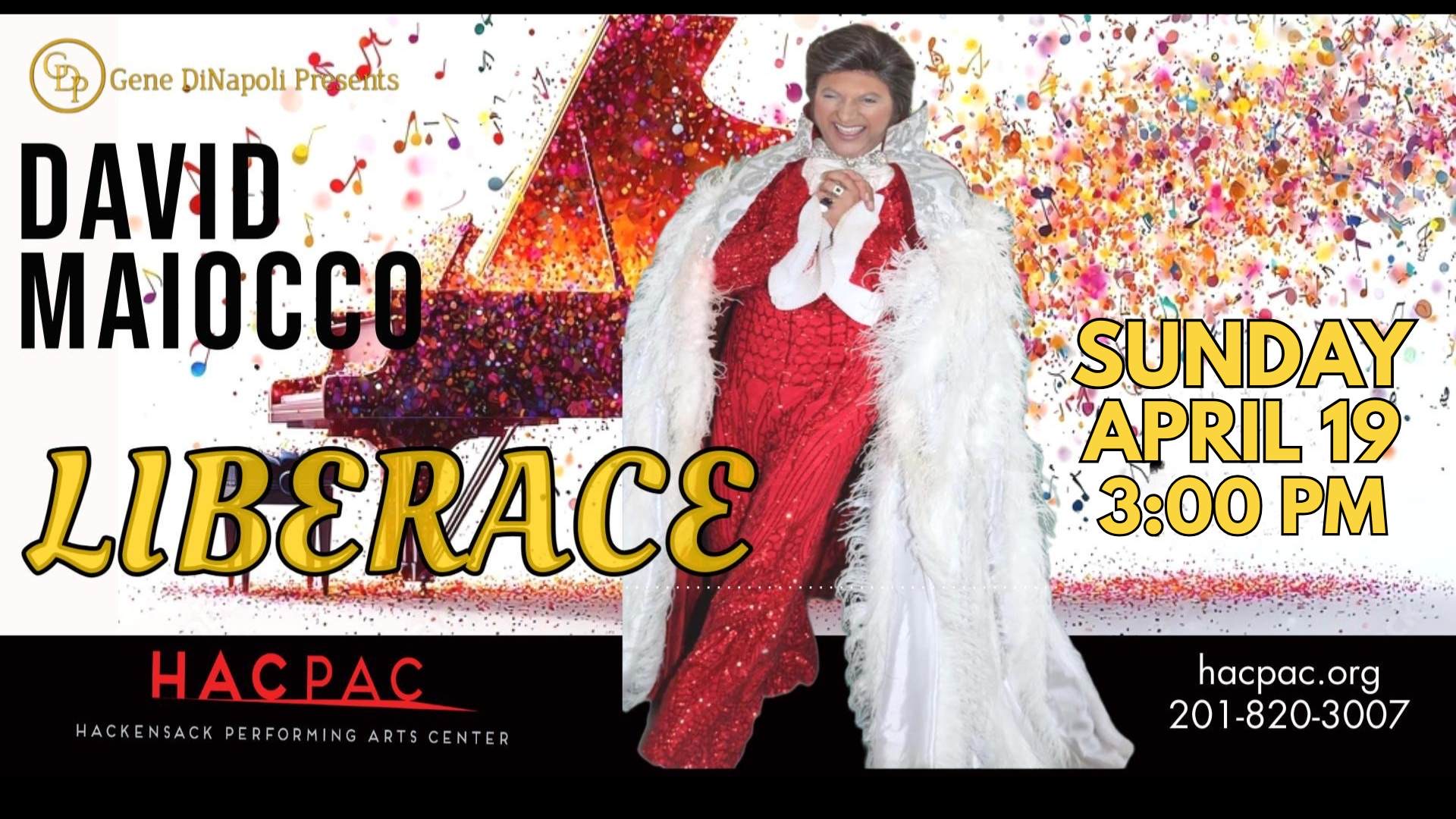
David Maiocco Brings the Spirit of Liberace to Life at HACPAC in a Dazzling Afternoon of Virtuosity, Glamour, and Pure Showmanship

April 19 @ 3:00 PM 10:00 PM

On April 19, 2026, at 3:00 p.m., the Hackensack Meridian Health Theatre will host a performance that promises to blur the line between tribute and transformation as David Maiocco delivers his celebrated homage to one of entertainment’s most flamboyant and technically gifted icons. Set inside HACPAC, this $45 ticketed event is poised to become one of the most distinctive musical experiences of the season, merging classical excellence with theatrical spectacle in a way that reflects both the legacy of Liberace and the evolving sophistication of New Jersey’s live performance scene.

At a time when audiences are increasingly drawn to immersive, personality-driven performances, Maiocco’s interpretation stands out for its precision and authenticity. This is not a superficial tribute built on imitation alone; it is a deeply studied, fully embodied performance that captures the essence of Liberace’s artistry—his technical mastery, his comedic timing, and his ability to command a stage with unmatched charisma. For those exploring the breadth of live music across the state, the Explore New Jersey Music platform continues to spotlight performances like this as essential cultural experiences, where musicianship and theatricality intersect in compelling ways.

Maiocco’s approach is rooted in a comprehensive understanding of Liberace’s influence on American entertainment. Known for redefining what a pianist could be in a live setting, Liberace transformed concerts into full-scale productions, blending classical repertoire with popular music, humor, and visual spectacle. Maiocco channels this multidimensional approach with remarkable clarity, delivering a performance that feels both historically grounded and immediately engaging for contemporary audiences.

From the moment he takes the stage, the visual impact is undeniable. Elaborate costumes—rich with sequins, satin, and signature flair—set the tone for an afternoon that prioritizes both sound and spectacle. Yet it is the piano work that anchors the performance, demonstrating a level of technical proficiency that commands respect even before the theatrical elements fully unfold. Maiocco navigates complex classical passages with ease, then pivots seamlessly into lighter, more playful material, creating a dynamic range that keeps the audience fully engaged.

The repertoire itself is carefully curated to reflect the breadth of Liberace’s musical identity. Classical compositions are presented with precision and reverence, highlighting the foundational training that underpinned Liberace’s career. These are balanced by interpretations of American standards and works by composers like George Gershwin, where rhythm, phrasing, and emotional nuance take center stage. Even seemingly simple pieces, such as “Chopsticks,” are elevated through inventive arrangement and performance flair, transforming familiar melodies into moments of genuine surprise and delight.

What distinguishes Maiocco’s performance is not just the technical execution, but the narrative thread that runs throughout the show. Each piece contributes to a larger story about performance, personality, and the relationship between artist and audience. Humor is woven into the fabric of the production, delivered with timing and confidence that reflects years of stage experience. The result is a performance that feels both polished and spontaneous, structured yet alive.

Audience engagement plays a critical role in this dynamic. Much like Liberace himself, Maiocco understands that a successful performance extends beyond the music. It is about connection—about creating an atmosphere where the audience feels not just entertained, but included. This sense of participation transforms the event from a traditional concert into a shared experience, where laughter, applause, and collective energy become integral components of the performance.

Maiocco’s credentials further reinforce the significance of this event. His work in productions such as “Liberace!” and appearances with “The Greatest Piano Men” have established him as one of the foremost interpreters of Liberace’s legacy. These performances have earned widespread acclaim, with critics consistently highlighting both his musical ability and his capacity to capture the spirit of a larger-than-life figure without reducing it to caricature. Bringing that level of artistry to Hackensack represents a notable moment for local audiences, offering access to a performance that has resonated on stages across the country.

Within the broader context of New Jersey’s cultural landscape, events like this underscore the state’s growing prominence as a destination for high-quality live entertainment. Venues like HACPAC continue to play a pivotal role in this evolution, curating programming that appeals to diverse audiences while maintaining a clear commitment to artistic excellence. By hosting performances that combine technical skill with theatrical innovation, HACPAC reinforces its position as a key player in the region’s performing arts ecosystem.

The timing of this performance also aligns with a broader resurgence of interest in live, in-person entertainment. As audiences seek experiences that offer immediacy and authenticity, productions like Maiocco’s tribute to Liberace provide a compelling alternative to digital consumption. There is an irreplaceable quality to live performance—the way sound fills a room, the way a performer responds to the energy of the audience, the way a moment unfolds in real time—and this event is designed to maximize that impact.

For those considering attendance, the appeal is multifaceted. Music enthusiasts will appreciate the technical precision and thoughtful programming. Fans of theatrical performance will be drawn to the visual elements and character-driven presentation. Casual attendees will find themselves immersed in an atmosphere that is both welcoming and exhilarating. It is this broad appeal that positions the event as a standout offering within the season’s lineup.

As April 19 approaches, anticipation continues to build around what promises to be an unforgettable afternoon at the Hackensack Meridian Health Theatre. With tickets available through HACPAC, the opportunity to witness this performance firsthand is within reach for audiences across the region. The combination of accessibility, artistry, and spectacle ensures that this event will not only meet expectations but redefine them.

In bringing David Maiocco’s tribute to Liberace to New Jersey, HACPAC delivers a performance that honors a legendary entertainer while showcasing the enduring power of live music and theatrical expression. It is an event that captures the essence of what makes performance art compelling—skill, personality, and the ability to create moments that resonate long after the final note has been played.

Gene DiNapoli Presents

(917) 567-5842

View Organizer Website

Hackensack Performing Arts Center (HACPAC)

102 State St
Hackensack, New Jersey 07601 United States
+ Google Map
(201) -820-3007
View Venue Website

Howdy Stranger Scripted | Sketch Comedy Show

0

New Jersey’s Funniest Night Returns: Howdy Stranger Brings “Scripted” Back to Hackensack for a Must-See Comedy Event at HACPAC

April 17 @ 6:00 PM April 18 @ 11:30 PM

On April 17, 2026 & April 18, 2026, at 8:00 p.m., the stage at the Hackensack Meridian Health Theatre will transform into a fast-moving, laugh-loaded showcase of original comedy as Howdy Stranger, widely regarded as one of New Jersey’s premier improv ensembles, unveils its annual scripted production, “Scripted.” Returning for a two-night run on April 17 and April 18, this highly anticipated event at HACPAC signals more than just another comedy show—it represents a defining moment in the state’s evolving live performance scene, where improvisation meets precision writing and local talent commands the spotlight with national-level execution.

Set within one of North Jersey’s most dynamic cultural venues, “Scripted” is positioned as both a crowd-pleasing night out and a serious showcase of comedic craft. With ticket prices ranging from $15 to $25, the accessibility of the event stands in sharp contrast to the level of talent on display, reinforcing HACPAC’s growing reputation as a hub for high-caliber performances that remain rooted in community engagement. For audiences exploring the breadth of live entertainment across the state, the Explore New Jersey Theatre landscape continues to highlight productions like this as essential viewing—events that combine originality, energy, and a distinctly local voice.

What sets “Scripted” apart is its deliberate shift from improvisation to structured comedy. Known throughout the region for their quick-thinking, audience-driven performances, Howdy Stranger takes a different approach once a year, stepping away from spontaneous creation and embracing the rigor of written material. The result is a tightly constructed, 90-minute experience built entirely from original sketches, each crafted with the precision of seasoned comedy writers and delivered with the timing and chemistry that only an experienced ensemble can achieve.

The creative team behind the production—Ryan Huban, Dreena Moran, Chris Fitzgerald, and JJ Lynn—serves as both the writing engine and the onstage force driving the show. Their collaborative dynamic is evident in every aspect of the performance, from the pacing of individual sketches to the seamless transitions that keep the audience fully engaged. This is not a collection of disconnected bits; it is a cohesive comedic experience designed to build momentum, layering humor in a way that keeps the room energized from the opening moment to the final curtain.

Audiences can expect a wide-ranging comedic palette that reflects both contemporary influences and timeless comedic structures. There are echoes of classic sketch formats—sharp setups, escalating absurdity, and punchlines that land with precision—alongside more experimental pieces that push into unexpected territory. The characters are intentionally exaggerated yet grounded enough to feel recognizable, creating a balance that allows the humor to resonate across a broad audience.

The comparison to Saturday Night Live is inevitable, but “Scripted” distinguishes itself through its immediacy and intimacy. Unlike televised comedy, where production layers can create distance, this performance unfolds in real time, with no buffer between performer and audience. That proximity amplifies every reaction, turning laughter into a shared experience that feeds back into the performance itself. It is this feedback loop that gives live sketch comedy its unique power, and Howdy Stranger leverages it with remarkable effectiveness.

While the show is rooted in scripted material, the ensemble’s improvisational background remains a defining advantage. There is an elasticity to their performance style—a willingness to adapt, to stretch a moment, or to respond to the energy in the room—that keeps the production feeling alive and unpredictable. Even within a structured framework, there is space for spontaneity, ensuring that no two performances feel exactly the same.

Thematically, “Scripted” navigates a range of comedic territory, from sharp observational humor to more surreal, character-driven pieces. The writing is intentionally bold, leaning into the bizarre when necessary while maintaining a clear throughline of intelligent, well-crafted humor. It is this combination—fearless creativity anchored by disciplined writing—that elevates the show beyond standard local comedy fare and positions it as a standout production within the region.

Audience response to previous iterations of “Scripted” underscores its impact. Reviews consistently highlight not just the volume of laughter, but the sustained engagement throughout the performance. Attendees describe moments where the humor is so immediate and effective that it becomes physically overwhelming—the kind of laughter that disrupts composure and lingers long after the show ends. Others point to the originality of the material, noting that the sketches avoid predictable patterns in favor of inventive, sharply executed ideas.

The draw extends beyond New Jersey, with audiences traveling from New York City and beyond to experience the performance firsthand. That level of interest speaks to the show’s growing reputation and the broader appeal of live, original comedy in an era where much of the content landscape is dominated by digital platforms. “Scripted” offers something fundamentally different: a shared, in-person experience that cannot be replicated on a screen.

From an industry perspective, productions like this play a critical role in sustaining and advancing the local arts ecosystem. They provide a platform for performers to develop and showcase original work, while also cultivating an audience that values and supports live performance. In doing so, they contribute to a broader cultural narrative that positions New Jersey not just as a peripheral market, but as an active and influential participant in the performing arts.

HACPAC’s role in this ecosystem cannot be overstated. By consistently programming events that blend accessibility with artistic integrity, the venue has established itself as a cornerstone of North Jersey’s cultural infrastructure. Hosting a production like “Scripted” reinforces that identity, demonstrating a commitment to showcasing talent that is both locally rooted and broadly relevant.

For those considering their next night out, “Scripted” offers a compelling proposition. It delivers the immediacy of live performance, the precision of well-crafted writing, and the unpredictability of a seasoned ensemble operating at full capacity. Whether you are a longtime fan of sketch comedy or approaching the format for the first time, the show provides an entry point that is both accessible and deeply rewarding.

As April 17 approaches, anticipation continues to build around what has become one of the most talked-about comedy events in the region. The combination of strong word-of-mouth, proven talent, and a venue that consistently delivers high-quality experiences positions “Scripted” as more than just a show—it is an event that defines the moment, capturing the energy and creativity of New Jersey’s live performance scene at its best.

For two nights only, the Hackensack Meridian Health Theatre will host a production that embodies everything audiences seek in live entertainment: originality, connection, and the unmistakable thrill of shared laughter. In a landscape crowded with options, “Scripted” stands out as a clear choice—an evening that not only meets expectations but exceeds them, reaffirming the enduring power of live comedy done right.

Hackensack Performing Arts Center

(201) -820-3007

View Organizer Website

Hackensack Performing Arts Center (HACPAC)

102 State St
Hackensack, New Jersey 07601 United States
+ Google Map
(201) -820-3007
View Venue Website

Far-Fetched Gallery Reception

0

Ever Blanco Valverde Brings a Powerful Meditation on Humanity, Nature, and Inner Vision to HACPAC This April

April 9 @ 5:00 PM 9:00 PM

On April 9, 2026, at 6:00 p.m., the Ruth Bauer Neustadter Gallery at HACPAC will open its doors for an exhibition that invites viewers to slow down, look deeper, and confront the emotional architecture beneath everyday life. The event is free to the public, but the experience it offers is anything but ordinary. This presentation of work by Ever Blanco Valverde arrives as one of the most compelling visual arts moments on New Jersey’s spring cultural calendar—an exhibition that aligns seamlessly with the state’s growing reputation as a destination for serious, thought-provoking contemporary art, as showcased across the broader HACPAC programming and the evolving landscape highlighted on Explore New Jersey Theatre.

Set within the intimate and increasingly influential Ruth Bauer Neustadter Gallery, this exhibition positions Valverde’s work in a space designed for reflection and close engagement. The gallery itself has become a focal point for emerging and established voices who challenge conventional aesthetics and narratives, and Valverde’s arrival here signals a continuation of that curatorial intent—art that does not simply decorate a wall, but interrogates the viewer.

Valverde’s work operates at the intersection of observation and introspection. His artistic philosophy is rooted in the belief that imagery serves as a conduit for translating internal experience into tangible form. Each piece unfolds as part of a larger narrative sequence, where meaning is not immediately declared but gradually revealed through layered visual language. This approach creates a dynamic relationship between artist and audience, where interpretation becomes participatory rather than passive.

What distinguishes Valverde’s practice is his sustained examination of the tensions that define modern existence. His work navigates the fragile boundary between chaos and order, individuality and collectivity, and the interplay between spiritual awareness and the routines of daily life. These are not abstract concepts in his hands—they are rendered through material, line, and composition in ways that feel immediate and emotionally grounded. By resisting sentimentality, Valverde instead exposes the underlying structures of feeling, asking viewers to confront not only what they see, but what they bring to the act of seeing.

The technical execution of his work reinforces this conceptual depth. Valverde begins with sketches that evolve into fully realized drawings, often expanding into painting or sculpture as the process unfolds. His methodology is rooted in construction and deconstruction, layering materials such as charcoal, oil, clay, and found objects. These layers are not merely aesthetic choices; they function as a visual record of thought, revision, and transformation. The surface becomes a site of negotiation, where multiple ideas coexist, collide, and ultimately resolve into a cohesive image.

This emphasis on layering gives his work a distinct physicality. The viewer is not just observing an image but encountering a process—one that reveals itself through texture, density, and the interplay of light and shadow. Line, in Valverde’s work, carries a luminous quality, acting almost as a conduit for light itself, while tonal variation establishes mood and emotional resonance. The balance between these elements is critical; for Valverde, an image reaches completion only when light and mood enter into a sustained and meaningful dialogue.

That balance is what gives his work its quiet intensity. There is a sense that each piece has been arrived at through careful negotiation rather than spontaneous expression. The result is artwork that feels both deliberate and alive, structured yet open to interpretation. It invites viewers to “read between the lines,” engaging not just with the visible image but with the implied narratives and emotional undercurrents that lie beneath.

Valverde’s background adds further dimension to this exhibition. His journey into the art world is marked by a combination of formal study and experiential learning. After attending Passaic County Community College in New Jersey, where he completed his GED and pursued American Sign Language studies, he expanded his perspective at the Kripalu School of Yoga in Lenox, Massachusetts. This influence is evident in the meditative qualities of his work—the sense of presence, awareness, and attention to internal states.

His artistic development continued at the Art Students League of New York, one of the country’s most respected independent art schools. There, Valverde not only studied but became an active member of the community, serving as a class monitor and contributing to the institution’s ongoing dialogue around contemporary practice. His work has since been featured in the League’s catalog and ASL Linea Magazine, as well as in publications such as The Village Voice and the Silver Point Book, reflecting a growing recognition of his voice within the broader art world.

Residency experience at the Vytlacil Campus in Sparkill, New York, further expanded his practice, providing an environment for focused exploration and experimentation. Since then, his work has been exhibited across the United States and internationally, appearing in museums, galleries, and cultural institutions as well as private collections. This breadth of exposure underscores the universality of his themes, even as his work remains deeply personal.

Bringing this body of work to Hackensack is significant. New Jersey’s arts ecosystem continues to evolve, with venues like HACPAC playing a central role in bridging local audiences with artists of national and international stature. Events like this exhibition demonstrate that the state’s cultural offerings extend far beyond traditional expectations, positioning New Jersey as a serious participant in contemporary artistic discourse.

For audiences, the April 9 opening is more than a gallery event—it is an opportunity to engage with work that challenges perception and encourages reflection. The accessibility of the exhibition, offered free of charge, removes barriers while reinforcing the idea that meaningful art experiences should be available to a wide and diverse audience. It is a reminder that some of the most impactful cultural moments are not defined by scale or spectacle, but by depth and intention.

Within the broader context of New Jersey’s thriving arts scene, this exhibition stands out as a defining moment of the season. It aligns with the mission of platforms like Explore New Jersey to highlight experiences that are both culturally significant and locally accessible. By bringing attention to artists like Ever Blanco Valverde, the state continues to build a narrative that values innovation, introspection, and the power of visual storytelling.

As visitors step into the Ruth Bauer Neustadter Gallery on April 9, they will encounter more than a collection of works—they will enter into a dialogue. It is a dialogue about how we see, how we feel, and how we exist within an increasingly complex world. Valverde’s work does not offer easy answers, nor does it seek to. Instead, it provides a framework for inquiry, a space where meaning is constructed through engagement.

In a cultural moment often defined by speed and distraction, this exhibition offers something increasingly rare: the chance to pause, to observe, and to experience art that demands—and rewards—attention.

Hackensack Performing Arts Center

(201) -820-3007

View Organizer Website

Hackensack Performing Arts Center (HACPAC)

102 State St
Hackensack, New Jersey 07601 United States
+ Google Map
(201) -820-3007
View Venue Website

Delsea Drive-In Theatre Reopens for 2026 Season, Preserving New Jersey’s Cinematic Legacy Under the Stars

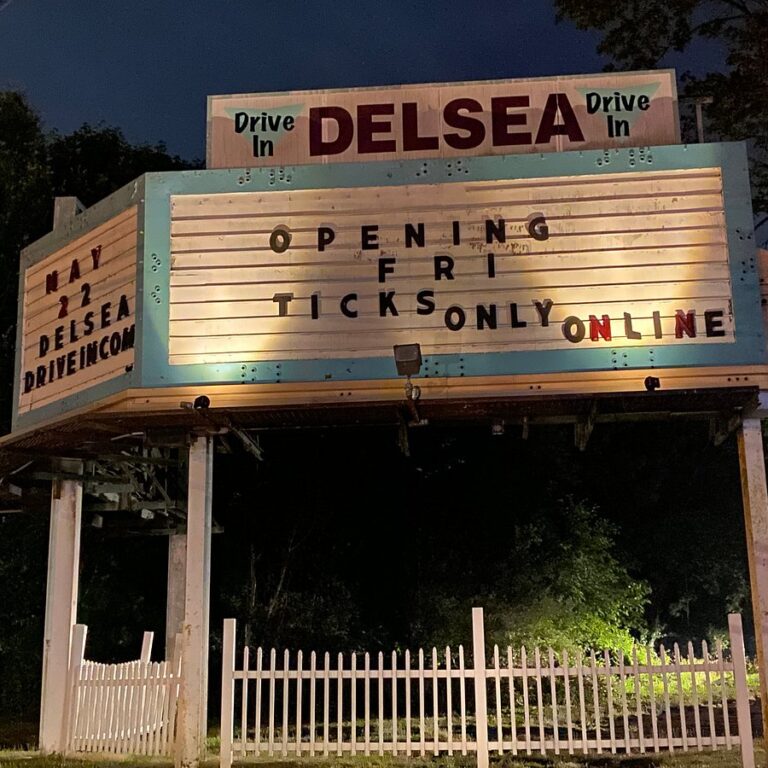
New Jersey’s place in film history is not just a matter of production credits or studio investments—it is foundational. The very first drive-in movie theater in the United States opened in Pennsauken in 1933, introducing a uniquely American way to experience cinema that blended technology, community, and open-air freedom. Nearly a century later, that legacy lives on in a single, enduring location. The Delsea Drive-In Theatre in Vineland, the last remaining drive-in in New Jersey, has officially opened its gates for the 2026 season, reaffirming its role as both a cultural landmark and a living piece of entertainment history.

As of Friday, April 3, 2026, the screens are once again illuminated, marking the return of a tradition that continues to resonate with audiences seeking something more than a conventional movie night. Located at 2203 South Delsea Drive, just south of Cumberland Mall, the theater offers a rare experience—one that combines nostalgia with accessibility, and simplicity with a sense of occasion.

The Delsea Drive-In operates on a focused early-season schedule, welcoming guests on Fridays and Saturdays, with box office hours running from 6:15 PM through 10:45 PM. Shows begin at approximately 7:45 PM, timed to align with the natural transition from daylight to evening, when the atmosphere shifts and the screens become the focal point. Every ticket, priced at $14.97, includes access to a double feature on one of the theater’s two screens, reinforcing the value and tradition that have long defined the drive-in experience.

Opening weekend programming reflects a deliberate balance between broad appeal and variety. Screen one features family-oriented selections, pairing The Super Mario Galaxy Movie with Goat, both rated PG and positioned to draw younger audiences and families. Screen two offers a more diverse lineup, combining the science-driven narrative of Project Hail Mary with the intensity of Crime 101, catering to viewers seeking a more layered cinematic experience. This dual-screen format allows the theater to serve multiple audiences simultaneously while maintaining the communal energy that defines the venue.

What distinguishes the Delsea Drive-In is not just its programming, but the way in which that programming is delivered. Guests remain in their vehicles, tuning their car radios to designated frequencies to receive audio—a method that preserves the authenticity of the drive-in format while ensuring modern clarity. It is a system that feels both retro and functional, connecting today’s audience with a format that has remained largely unchanged for decades.

The theater’s commitment to authenticity extends beyond the screening itself. The concession stand plays a central role in the overall experience, offering a menu that goes well beyond traditional movie snacks. While classic items are available, the inclusion of options such as pierogies, shrimp kabobs, and spring rolls reflects a broader approach to food service—one that recognizes the importance of variety and quality in enhancing the evening. For those who prefer to bring their own food and beverages, a food permit option is available, reinforcing the theater’s flexible and customer-focused model.

Pets are also welcome on both operating nights, adding another layer of accessibility and reinforcing the drive-in’s identity as a community-oriented destination. It is this combination of flexibility, tradition, and thoughtful adaptation that has allowed the Delsea Drive-In to remain viable in an era where most of its counterparts have disappeared.

The history of the theater itself adds further depth to the experience. Originally constructed in 1949, the Delsea Drive-In operated for decades before closing in 1987, a casualty of shifting entertainment habits and the rise of indoor multiplexes. Its revival in 2004 marked not just a reopening, but a restoration of a cultural artifact—one that has since been maintained with care and purpose. Today, it stands as the only drive-in in New Jersey, a distinction that carries both significance and responsibility.

That responsibility is reflected in the theater’s ongoing effort to balance preservation with relevance. While the core format remains unchanged, the programming, amenities, and operational strategies have evolved to meet contemporary expectations. This adaptability ensures that the drive-in is not simply a relic, but an active participant in the state’s current entertainment landscape.

Within the broader context of New Jersey’s film and television ecosystem, the Delsea Drive-In occupies a unique position. As the state continues to expand its presence in production and media, with increasing investment in studios, locations, and creative infrastructure, venues like Delsea serve as a reminder of where that story began. They connect the past to the present, offering a tangible link to the origins of an industry that continues to evolve.

For those exploring the full scope of New Jersey’s film and entertainment offerings, from historic venues to contemporary productions, additional coverage and insights can be found through Explore New Jersey’s film and TV section, where the state’s role in shaping and supporting the industry is documented in detail.

The reopening of the Delsea Drive-In for the 2026 season is more than a seasonal milestone—it is a reaffirmation of the enduring appeal of shared, outdoor experiences. In a time when entertainment is increasingly individualized and digital, the drive-in offers something different: a collective moment, experienced under an open sky, where the boundaries between audience and environment are intentionally blurred.

For families, it provides a setting that is both relaxed and engaging. For film enthusiasts, it offers a connection to cinematic history. For New Jersey, it stands as a symbol of continuity—a reminder that even as the industry advances, there is lasting value in preserving the experiences that defined it.

As the screens light up once again in Vineland, the message is clear. The drive-in is not just surviving—it is continuing, adapting, and inviting a new generation to experience cinema in a way that feels both timeless and uniquely its own.

AdventureFest Kids Markets at Historic Smithville Transforms South Jersey into a Living Storybook of Young Entrepreneurship and Family Creativity

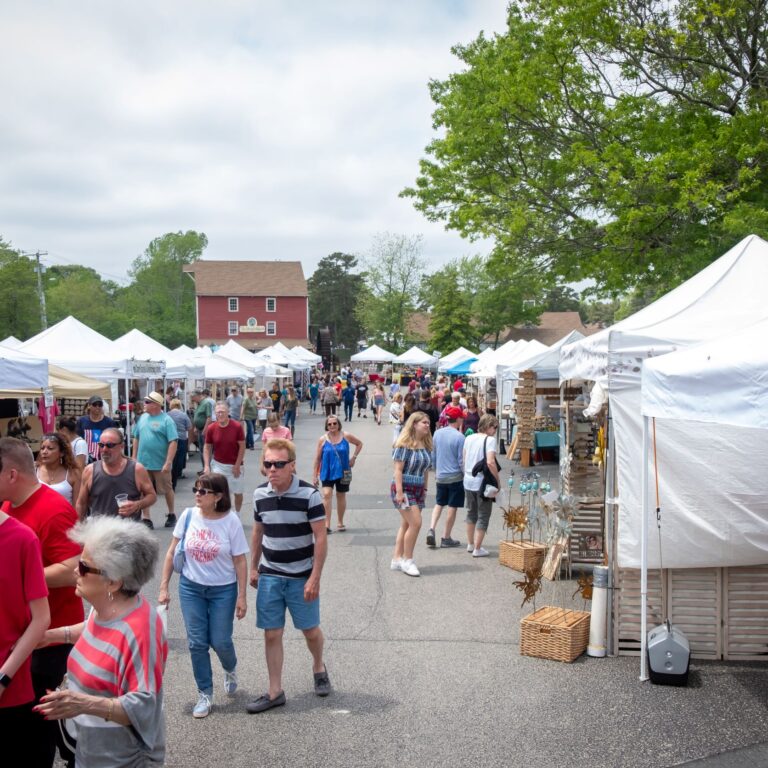
In a state where community events often blend entertainment with purpose, few experiences capture imagination and opportunity quite like AdventureFest Kids Markets at Historic Smithville. Set against one of South Jersey’s most charming and historically rich backdrops, this uniquely curated event introduces a dynamic platform where young entrepreneurs step into the spotlight—offering not only handmade goods, but a powerful glimpse into the next generation of creators, innovators, and business minds.

At its core, AdventureFest is more than a marketplace. It is an immersive, story-driven environment brought to life by the Riddlesbrood Theatre Company, known for its ability to transform spaces into interactive worlds that engage audiences of all ages. Drawing inspiration from Alice in Wonderland, the event reimagines Historic Smithville as a whimsical, living narrative—one where families don’t simply attend, but actively participate in a journey that blends performance, commerce, and creativity.

For families across New Jersey, the appeal is immediate and multifaceted. Children with entrepreneurial ambitions are given a rare opportunity to showcase their ideas in a real-world setting, learning firsthand what it means to create, present, and sell their own products. From handcrafted items and original designs to imaginative concepts that reflect each child’s unique perspective, the Kids Markets serve as both a launchpad and a learning experience—one that emphasizes confidence, communication, and the value of turning ideas into tangible outcomes.

What sets AdventureFest apart is the intentional integration of storytelling with commerce. Rather than isolating the marketplace as a standalone feature, the event embeds it within a broader theatrical framework. As visitors move through Historic Smithville, they encounter characters, performances, and interactive moments that extend the Alice in Wonderland theme, creating a seamless environment where fantasy and entrepreneurship coexist. This approach elevates the experience, transforming what could be a simple vendor event into a fully realized destination.

Historic Smithville itself plays a critical role in shaping that atmosphere. Known for its walkable layout, scenic pathways, and distinctive architecture, the location provides a natural stage for immersive events. Its established reputation as a hub for seasonal festivals and family-friendly activities makes it an ideal setting for AdventureFest, where the physical environment enhances the storytelling and encourages exploration.

The involvement of the Riddlesbrood Theatre Company brings a level of creative direction that distinguishes AdventureFest from traditional markets. Their expertise in interactive performance ensures that the event maintains a cohesive narrative while allowing for spontaneity and engagement. Visitors are not confined to a linear experience; instead, they are invited to wander, discover, and interact, creating a sense of unpredictability that mirrors the spirit of the source material.

For the young participants, this environment offers more than exposure—it provides context. Selling a product within a themed, immersive setting requires adaptability and creativity, encouraging children to think not only about what they are offering, but how they present it. This blend of business and storytelling introduces skills that extend beyond the event itself, reinforcing lessons in branding, customer interaction, and problem-solving.

Parents and families benefit from an experience that balances entertainment with meaningful engagement. AdventureFest creates a space where children are not just entertained, but empowered—where their ideas are taken seriously and their efforts are visible. It also fosters a sense of community, bringing together families who share an interest in creativity, learning, and supporting local initiatives.

Within the broader landscape of New Jersey activities, AdventureFest reflects a growing trend toward experiences that combine education, entertainment, and community involvement. Across the state, events are increasingly designed to offer more than passive participation, encouraging attendees to engage, create, and contribute. Those interested in discovering similar experiences can explore additional opportunities through Explore New Jersey’s activities and fun coverage, where a wide range of family-friendly events and destinations are highlighted.

The timing of AdventureFest also aligns with a seasonal shift toward outdoor and community-centered gatherings. As families look for experiences that offer both value and variety, events like this provide a compelling alternative to more traditional outings. The combination of open-air exploration, interactive performance, and entrepreneurial showcases creates an environment that feels both expansive and focused, accommodating a wide range of interests within a single destination.

For South Jersey, the event reinforces the region’s role as a center for creative programming and family-oriented activities. It highlights the capacity of local organizations and venues to collaborate in ways that produce experiences of real depth and impact. By bringing together theater, commerce, and community, AdventureFest demonstrates what is possible when multiple disciplines intersect with a shared vision.

As families plan their visits, the expectation is not just to attend, but to engage—to explore the marketplace, interact with performers, and support the young entrepreneurs who are at the heart of the event. Each purchase, each conversation, and each moment of encouragement contributes to an environment where creativity is recognized and ambition is nurtured.

AdventureFest Kids Markets at Historic Smithville stands as a compelling example of how events can evolve beyond traditional formats, offering experiences that are immersive, purposeful, and memorable. It is a celebration of imagination, a platform for emerging talent, and a reflection of New Jersey’s ongoing commitment to fostering creativity at every level.

For those seeking an experience that blends storytelling with real-world impact, this is not simply another event on the calendar. It is a destination—one where the boundaries between play and purpose dissolve, and where the next generation of entrepreneurs takes center stage in a setting as imaginative as the ideas they bring with them.

New Jersey Supreme Court Clarifies Jury Eligibility Law in Landmark Gilliano Decision Following Executive Order 411 Expansion

A pivotal ruling from the New Jersey Supreme Court is now shaping how courts across the state will interpret jury eligibility, constitutional fairness, and the real-time impact of executive policy changes. In the case of State v. Walter J. Gilliano, decided on February 24, 2026, the Court delivered a unanimous opinion that strikes a precise balance between expanding civic inclusion and maintaining the structural integrity of the judicial process.

At the center of the case is a moment of legal and procedural collision—where policy reform moved faster than the mechanics of the court system. Just two days before jury selection was scheduled to begin in the Gilliano trial, Phil Murphy signed Executive Order 411, a sweeping measure that restored jury service eligibility to approximately 350,000 New Jersey residents who had previously been permanently excluded due to indictable offense convictions. The order represented a major shift in state policy, reframing jury service as a right that could be restored following the completion of a sentence rather than a privilege permanently revoked.

The timing, however, created an immediate legal question. Jury summonses for the Gilliano trial had already been issued weeks earlier under the previous statutory framework. Individuals with qualifying convictions had been screened out in accordance with longstanding rules, and the jury pool had been finalized before the executive order took effect. The defense argued that proceeding with this pre-existing pool—one that did not include newly eligible jurors—violated the constitutional guarantee of a fair trial by a jury drawn from a representative cross-section of the community.

The Court rejected that argument in full.

Writing for the unanimous bench, Chief Justice Stuart Rabner laid out a clear and structured rationale grounded in constitutional law. The decision reaffirmed that, to establish a violation of the Sixth Amendment’s fair cross-section requirement, a defendant must meet a three-part test: identify a constitutionally cognizable group, demonstrate that the group has been substantially underrepresented over time, and show that the exclusion resulted from systematic or discriminatory practices.

In applying that framework, the Court determined that the group defined by Executive Order 411—individuals whose jury rights were newly restored under specific conditions—does not constitute a “cognizable group” in the constitutional sense. The ruling emphasized that such a group must be one historically excluded due to entrenched bias or systemic discrimination, rather than a category created by a recent, time-bound policy change.

The Court further found no evidence that the existing jury selection process produced discriminatory outcomes or reflected any intent to exclude a protected class. The procedures used to assemble the Gilliano jury pool were neutral, consistent with established law, and executed prior to the issuance of the executive order. As such, they did not violate constitutional standards.

Equally important was the Court’s recognition of practical constraints. Reconstructing a jury pool on such short notice—recalling previously dismissed individuals or reissuing summonses—was deemed operationally unreasonable. The judiciary, while responsive to changes in law, is not structured to retroactively reengineer active proceedings in response to last-minute policy shifts. This acknowledgment reinforces a key principle: legal systems must balance adaptability with procedural stability.

The outcome of the case allowed the Gilliano trial to proceed using the originally assembled jury pool, but its implications extend far beyond a single proceeding. Executive Order 411 remains fully in effect, meaning that future jury selections across New Jersey will reflect the expanded eligibility criteria. Individuals who meet the order’s conditions—having completed all non-monetary aspects of their sentence for qualifying New Jersey indictable offenses—are now eligible to serve, marking a significant expansion of civic participation.

This dual outcome—upholding the validity of the existing trial while affirming the forward-looking impact of the executive order—captures the complexity of the moment. It is a legal acknowledgment that reform does not always operate retroactively, even when its intent is to correct or expand access.

Within the broader legal landscape, the ruling provides critical clarity for courts, attorneys, and policymakers navigating the intersection of executive action and constitutional rights. It establishes that while policy changes can reshape eligibility standards, they do not automatically invalidate procedures that were lawful at the time they were executed. This distinction is essential for maintaining confidence in the judicial process, particularly in cases where timing introduces ambiguity.

The decision also contributes to an ongoing national conversation about jury diversity and representation. Expanding eligibility to individuals with past convictions has been framed as a step toward a more inclusive system, one that better reflects the communities it serves. At the same time, the Court’s ruling underscores that inclusion must be implemented within a framework that preserves due process and operational feasibility.

Coverage across the Law & Order section continues to examine how legal reforms and court decisions are reshaping New Jersey’s justice system. The Gilliano case stands as a defining example of how courts interpret and apply new policies in real time, offering a blueprint for how similar issues may be addressed in the future.

For legal practitioners, the ruling reinforces the importance of timing, procedural compliance, and the evidentiary burden required to challenge jury composition. For policymakers, it highlights the need to consider implementation timelines when enacting reforms that intersect with active judicial processes. And for the public, it provides a clearer understanding of how constitutional principles are applied in practice—balancing fairness, inclusion, and the realities of institutional operation.

New Jersey now moves forward with an expanded vision of jury service, one that opens the door to broader participation while maintaining the structural safeguards that underpin the legal system. The Gilliano decision does not slow that progress; it defines its boundaries, ensuring that reform is integrated in a way that is both effective and legally sound.

Bayonne Approves Transformational South Cove Development Featuring Twin Residential Towers, Hotel, and Retail Hub Along the Waterfront

Bayonne is positioning itself for a defining shift in its urban and economic landscape as a long-anticipated redevelopment project at South Cove moves forward with renewed clarity and approval. The city’s Planning Board has officially greenlit a comprehensive plan for 1 LeFante Way that will introduce two high-rise residential towers alongside a full-scale hospitality and mixed-use complex—an ambitious undertaking that signals Bayonne’s continued emergence as a serious player in New Jersey’s evolving waterfront real estate market.

The approved development, backed by South Cove Development II LLC and South Cove Development III LLC, falls within the Riverwalk at South Cove Redevelopment Plan, an area that has been under strategic consideration for years. With this latest approval, what has long existed as a conceptual vision is now transitioning into a project with real momentum, capable of reshaping not just a single parcel, but the surrounding neighborhood and its long-term trajectory.

At the center of the plan is a hospitality component designed to anchor the development and activate the waterfront with year-round economic activity. The proposed hotel will rise eight stories and encompass more than 98,000 square feet, delivering 125 guest rooms along with a full-service lobby, a nearly 20,000-square-foot banquet facility, and a dedicated restaurant space spanning approximately 9,400 square feet. Complementing these features will be over 9,500 square feet of retail, integrating the hotel into a broader mixed-use environment that encourages both visitor engagement and local utilization.

The decision to reposition the hotel and banquet facilities within the site—specifically near a previously occupied restaurant location—reflects a refined approach to site planning, one that prioritizes accessibility, visibility, and functional flow. This is not simply a standalone hotel project; it is a carefully integrated component of a larger ecosystem designed to support events, tourism, and community activity in a cohesive and scalable way.

However, it is the residential component that elevates the project into a new category of development for Bayonne. The plan includes two towers, each rising to approximately 300 feet, collectively delivering 696 residential units. This level of vertical density represents a significant evolution for the area, aligning Bayonne more closely with the high-rise residential trends seen in neighboring Hudson County markets while maintaining its own distinct identity.

These towers are not being introduced in isolation. The development includes 508 parking spaces, along with a suite of amenities designed to meet the expectations of modern urban residents. The scale and scope of these offerings indicate a clear target demographic: individuals and families seeking proximity to New York City, access to waterfront living, and the convenience of integrated retail and hospitality services within a single development footprint.

The architectural design, led by Hoboken-based MHS Architects, reflects a contemporary approach that balances height, density, and aesthetic integration with the surrounding environment. While final construction timelines have not yet been announced, the project’s progression through the approval process—after nearly a decade of planning and revisions—suggests that the groundwork has been firmly established for eventual development.

This extended timeline is itself indicative of the complexities involved in large-scale urban redevelopment. Projects of this magnitude require alignment across multiple layers, including zoning, infrastructure, financing, and community impact considerations. The fact that the South Cove plan has continued to evolve rather than stall speaks to both the persistence of its developers and the strategic importance of the site within Bayonne’s long-term planning framework.

From a broader perspective, the approval of this project reflects a larger trend shaping New Jersey’s real estate market, particularly along its waterfront corridors. Demand for residential properties that offer both connectivity and lifestyle amenities continues to grow, driven by shifts in work patterns, housing preferences, and regional migration dynamics. Bayonne, with its proximity to Manhattan and its expanding transit and infrastructure network, is increasingly positioned to capture that demand.

Coverage within the Real Estate section consistently highlights how municipalities across the state are leveraging redevelopment opportunities to attract investment, increase housing supply, and stimulate local economies. The South Cove project fits squarely within this narrative, representing a convergence of residential expansion, hospitality growth, and mixed-use integration.

The inclusion of a banquet facility within the hotel component is particularly notable, as it introduces a new dimension of economic activity to the area. Event-driven spaces have the potential to draw regional traffic, support local businesses, and create a steady stream of activity that extends beyond traditional residential or retail use. In this context, the development is not just adding buildings—it is creating a destination.

For Bayonne, the implications are both immediate and long-term. In the short term, the project brings renewed attention to the city’s development pipeline, reinforcing its position within the competitive Hudson County market. In the long term, it contributes to a broader transformation of the waterfront, one that emphasizes density, accessibility, and integrated urban living.

The absence of a confirmed construction start date leaves certain questions unanswered, particularly around timing and phasing. However, the approval itself represents a critical milestone, removing a significant barrier and allowing the project to move into its next phase of development. For stakeholders—including residents, investors, and local businesses—the focus now shifts to execution and the pace at which the vision becomes reality.

What is clear is that Bayonne is no longer operating on the periphery of New Jersey’s real estate conversation. Projects like South Cove are redefining its role, positioning the city as an emerging hub for large-scale, mixed-use development that combines residential density with commercial and hospitality infrastructure.

The transformation of 1 LeFante Way is emblematic of that shift. It is a project rooted in long-term planning, shaped by evolving market conditions, and now positioned to deliver a new standard of development for the area. As it moves forward, it will serve as both a catalyst and a benchmark—demonstrating what is possible when vision, persistence, and strategic alignment come together in one of New Jersey’s most dynamic regions.

Leadership Transition at Statewide Hispanic Chamber of Commerce of New Jersey Signals Strategic Continuity and Accelerated Growth for Latino Business Community

A significant leadership transition is now underway within one of New Jersey’s most influential business advocacy organizations, marking both the end of a transformative era and the beginning of a strategically focused next chapter. The Statewide Hispanic Chamber of Commerce of New Jersey has appointed John Lucas as interim president, a move that reflects both continuity in leadership philosophy and a renewed emphasis on scaling opportunity for Latino and small business communities across the state.

Lucas steps into the role effective immediately following the departure of Carlos Medina, whose tenure spanned more than two decades and fundamentally reshaped the organization’s trajectory. Under Medina’s leadership, the Chamber evolved from a developing advocacy group into a multimillion-dollar institution with a membership base exceeding 7,000 businesses, establishing itself as a central force in advancing economic inclusion, entrepreneurial growth, and statewide business development.

The decision to appoint Lucas was unanimous, underscoring a strong internal consensus around both his qualifications and his alignment with the Chamber’s long-term mission. His professional background—anchored in enterprise strategy, organizational transformation, and stakeholder integration—positions him to navigate a complex economic environment while maintaining the operational momentum built over the past two decades.

This transition arrives at a time when New Jersey’s business landscape is undergoing rapid evolution. Small businesses, particularly those within minority communities, are facing a mix of opportunity and pressure—from access to capital and workforce development to digital transformation and market expansion. Organizations like the Statewide Hispanic Chamber of Commerce play a critical role in bridging those gaps, providing not only advocacy but also tangible pathways for growth.

Lucas’s connection to the Chamber is not newly formed. His involvement began through corporate sponsorship of the organization’s Latina Entrepreneurship Training Series, a program that has since evolved into the Level-Up Entrepreneurship Training Series. What began as institutional support quickly developed into a deeper engagement, ultimately leading to his role on the Chamber’s board, where he has contributed to strategic initiatives for more than five years.

That trajectory is important. It signals that this appointment is not an external insertion of leadership, but rather the elevation of someone who understands the organization’s internal dynamics, its partnerships, and its broader mission. It also reflects a leadership model that values continuity while embracing the need for forward movement.

There is also a personal dimension to Lucas’s leadership that reinforces his connection to the Chamber’s purpose. His family background, including ties to Puerto Rico and Spain, and his father’s work within Hispanic communities, informs a perspective that blends professional expertise with cultural understanding. In organizations centered on community advancement, that combination is not incidental—it is foundational.

Statements from leadership within the Chamber reinforce the strategic intent behind the appointment. Chairman Luis O. De La Hoz emphasized both Lucas’s operational clarity and his ability to guide the organization through its next phase, noting that the goal is not to pivot away from the foundation built under Medina, but to build upon it with purpose and precision.

That foundation is substantial. During his tenure, Medina transformed the Chamber into a nationally recognized entity, expanding its reach, strengthening its advocacy platform, and creating measurable opportunities for Latino-owned businesses throughout New Jersey. He navigated periods of financial challenge and positioned the organization for long-term sustainability, ensuring that it could operate not only as a voice for the community but as a driver of economic progress.

The challenge now is not reinvention, but acceleration. Lucas has made it clear that the mission remains unchanged: strengthening Latino and small businesses across New Jersey. What will evolve is the pace and scale at which that mission is executed. In today’s environment, where economic conditions can shift rapidly, the ability to move with agility while maintaining strategic focus is essential.

This is where Lucas’s background in transformation becomes particularly relevant. Leading large-scale organizational change requires more than vision—it requires execution, alignment, and the ability to translate strategy into measurable outcomes. For the Chamber, this could mean expanding programmatic offerings, deepening partnerships, and increasing its influence within both public and private sectors.

The broader context of New Jersey’s economic landscape further elevates the importance of this transition. Latino-owned businesses represent one of the fastest-growing segments within the state’s economy, contributing significantly to job creation, innovation, and community development. Supporting that growth requires coordinated effort across multiple dimensions, including education, access to capital, mentorship, and policy advocacy.

Coverage within the Explore New Jersey ecosystem continues to highlight how interconnected these elements are. Economic development, community resilience, and even broader regional conditions—from infrastructure to environmental factors—shape the environment in which businesses operate. Leadership within organizations like the Chamber must navigate all of these variables simultaneously, ensuring that their members are positioned not just to survive, but to thrive.

Lucas’s appointment signals a recognition of that complexity. It reflects an understanding that leadership today is not about maintaining status quo operations, but about anticipating change and positioning organizations to respond effectively. It also underscores the importance of continuity—ensuring that the progress achieved under Medina is not only preserved, but expanded.

For the Chamber’s members and the broader business community, this transition represents both stability and opportunity. Stability in the sense that the organization’s core mission remains firmly intact, and opportunity in the sense that new leadership brings fresh perspective, renewed energy, and the potential for expanded impact.

As the Statewide Hispanic Chamber of Commerce of New Jersey moves forward under interim leadership, the focus will remain on delivering tangible results—supporting entrepreneurs, strengthening businesses, and advancing economic inclusion across the state. The foundation has been built. The next phase is about scale, execution, and sustained growth.

In a state where small businesses are a central driver of economic vitality, the importance of this moment cannot be overstated. Leadership transitions at this level are not simply organizational changes—they are inflection points that shape how effectively institutions can respond to the needs of the communities they serve. With Lucas now at the helm, the trajectory is clear: build on what works, move with intention, and continue expanding the reach and impact of one of New Jersey’s most influential business organizations.

Fatal Collision in Haddon Township Prompts Ongoing Investigation and Renewed Focus on Road Safety Across South Jersey

A tragic collision in Haddon Township has left a South Jersey community in mourning and intensified conversations around roadway safety, cyclist protection, and the shared responsibility of navigating increasingly busy local corridors. Authorities confirmed that a cyclist was killed following a crash involving a commercial vehicle at the intersection of Cuthbert Boulevard and South Park Drive, a well-traveled area that serves as a key connector for both residential and commercial traffic.

According to police, emergency responders were dispatched to the scene following reports of a serious incident involving a bicycle and a commercial driver. The cyclist sustained critical injuries and was transported from the scene for medical treatment. Despite those efforts, the victim did not survive. The identity of the individual has not been publicly detailed at this time, pending appropriate notifications and the continuation of the investigation.

The circumstances surrounding the collision remain under active review. Detectives are currently working to reconstruct the sequence of events, analyzing roadway conditions, vehicle positioning, and any contributing factors that may have played a role. Authorities have also issued a request for witnesses or anyone with relevant information to come forward, emphasizing the importance of community input in establishing a complete and accurate understanding of what occurred.

The intersection of Cuthbert Boulevard and South Park Drive is a location familiar to many residents of Haddon Township and the surrounding Camden County area. As a corridor that accommodates a mix of local traffic, commuter flow, and commercial vehicle movement, it reflects the broader challenges facing South Jersey’s infrastructure—balancing accessibility, efficiency, and safety across multiple modes of transportation. Incidents like this bring those challenges into sharp focus, highlighting the need for continued evaluation of how roads are designed, monitored, and used.

For cyclists, the risks associated with sharing roadways with larger vehicles are well documented. Visibility, speed differentials, and limited space can create conditions where even minor miscalculations result in severe consequences. At the same time, commercial drivers operate under pressures that include tight schedules, heavy loads, and complex routes, all of which require heightened awareness and precision. The intersection of these two realities underscores the importance of vigilance on all sides.

Local officials and law enforcement agencies often stress that roadway safety is not solely a matter of enforcement—it is a matter of culture. It involves consistent adherence to traffic laws, clear communication between drivers and cyclists, and an ongoing commitment to reducing preventable incidents. In communities like Haddon Township, where residential neighborhoods and commercial routes intersect, that commitment becomes even more critical.

The investigation into this incident will likely examine a range of factors, including traffic signal timing, signage visibility, and any potential environmental conditions that may have influenced the outcome. These assessments are standard in serious collisions and are essential for identifying whether changes—whether infrastructural or procedural—are necessary to improve safety moving forward.

Beyond the immediate investigation, the incident has broader implications for South Jersey as a whole. As population density increases and transportation patterns evolve, the demand for safer, more adaptable road systems continues to grow. This includes not only physical infrastructure such as bike lanes and traffic-calming measures, but also public awareness initiatives that reinforce safe practices for all road users.

Communities across the region have increasingly embraced cycling as both a recreational activity and a viable mode of transportation. With that growth comes a corresponding need to ensure that cyclists can navigate roadways with a reasonable expectation of safety. Incidents like the one in Haddon Township serve as a sobering reminder that progress in this area requires ongoing attention, investment, and collaboration.

For residents seeking updates on this developing story and broader coverage of issues impacting the region, additional reporting and community-focused news can be found through Explore New Jersey’s South Jersey coverage, where local developments, public safety concerns, and regional initiatives are tracked in real time.

As the investigation continues, the focus remains on understanding the full scope of the incident and ensuring that all relevant information is brought to light. At the same time, the loss of life serves as a powerful reminder of the stakes involved in everyday travel—whether by vehicle, bicycle, or on foot.

In Haddon Township and throughout South Jersey, the path forward will involve not only answers, but action—efforts to strengthen safety measures, improve awareness, and reinforce the shared responsibility that defines every road.

Stamp Out Hunger Returns to South Jersey on May 9, Mobilizing Communities to Fight Food Insecurity Across New Jersey

Across New Jersey, where culinary innovation, local dining culture, and community-driven food initiatives continue to define the state’s identity, one of the most impactful annual efforts to combat hunger is set to return with renewed urgency and purpose. On Saturday, May 9, mail carriers across South Jersey will once again transform their daily routes into lifelines for thousands of residents in need as part of the National Association of Letter Carriers’ 33rd annual Stamp Out Hunger Food Drive—a coordinated effort that stands as the largest single-day food collection initiative in the United States.

This year’s drive will take place throughout Atlantic, Cape May, and Cumberland counties, where residents are encouraged to participate in one of the simplest yet most effective acts of community support: placing nonperishable food donations next to their mailboxes for collection. What may seem like a small gesture at the individual level becomes, through scale and coordination, a powerful force capable of addressing a growing and deeply rooted issue—food insecurity across New Jersey.

The numbers underscore both the impact and the necessity of the initiative. Last year’s effort in South Jersey alone resulted in nearly 140,000 pounds of food collected, translating into enough resources to provide more than 116,000 meals in a single day. These figures are not abstract—they represent tangible relief for families, seniors, and individuals navigating economic challenges that make consistent access to food uncertain.

Statewide, the need continues to be significant. Nearly 1.1 million New Jersey residents experience food insecurity, including more than 70,000 individuals in South Jersey. These are not isolated cases; they are part of a broader pattern that reflects rising living costs, shifting economic conditions, and the ongoing strain on household budgets. In this context, initiatives like Stamp Out Hunger are not supplemental—they are essential components of the state’s response to hunger.

What distinguishes this food drive is not only its scale, but its accessibility. Participation requires no travel, no registration, and no specialized knowledge—only a willingness to contribute. By leveraging the existing infrastructure of the postal service, the program eliminates barriers that often limit participation in traditional donation efforts. Every mailbox becomes a collection point, every route a distribution channel, and every contribution a direct investment in community well-being.

The logistics are both straightforward and highly effective. Residents simply place nonperishable food items—such as canned goods, pasta, rice, and shelf-stable products—near their mailboxes before regular mail delivery on May 9. Letter carriers then collect the donations as part of their route, ensuring that contributions are gathered efficiently and delivered to local food banks and pantries. This integration of service and support is what allows the program to operate at such a масштаб, transforming a routine system into a statewide network of aid.

While the official drive in South Jersey is concentrated within Atlantic, Cape May, and Cumberland counties, the impact and participation extend far beyond those boundaries. Residents throughout New Jersey can engage by connecting with their local National Association of Letter Carriers branches, identifying opportunities to contribute within their own communities. This decentralized approach ensures that the benefits of the initiative are felt across the state, reinforcing the idea that addressing food insecurity is a shared responsibility.

The significance of the Stamp Out Hunger Food Drive also extends into New Jersey’s broader food and beverage ecosystem. At a time when the state’s culinary scene continues to gain national recognition—through innovative restaurants, local sourcing, and a growing emphasis on quality and experience—it is essential to acknowledge the parallel reality that access to food remains uneven. The same state that celebrates its dining culture must also confront the challenges that prevent many residents from participating in it.

This duality has led to a growing alignment between the food industry and community initiatives, with restaurants, suppliers, and organizations increasingly engaging in efforts that address both access and sustainability. Those interested in exploring the full scope of New Jersey’s evolving food landscape, from dining experiences to community-driven initiatives, can find additional insights through Explore New Jersey’s food and beverage coverage, where the intersection of culture, cuisine, and community continues to take shape.

For South Jersey, the May 9 drive represents more than a one-day event—it is a moment of collective action, a demonstration of what can be achieved when individuals, institutions, and communities align around a common goal. It is also a reminder that solutions to complex challenges often begin with simple, coordinated efforts that leverage existing systems in innovative ways.

The role of mail carriers in this initiative cannot be overstated. Beyond their daily responsibilities, they serve as the operational backbone of the drive, ensuring that donations are collected, transported, and delivered with consistency and care. Their participation transforms a logistical challenge into a streamlined process, reinforcing the importance of public service in addressing community needs.

As the date approaches, the message is clear: participation matters. Every item placed by a mailbox contributes to a larger network of support, one that has already demonstrated its ability to deliver meaningful impact. In a state as diverse and dynamic as New Jersey, where communities are defined by both individuality and shared experience, the Stamp Out Hunger Food Drive stands as a unifying effort—one that bridges gaps, addresses need, and reinforces the fundamental idea that no one should go without access to food.

On May 9, the opportunity is both immediate and accessible. It requires only awareness, intention, and a willingness to act. And in that simplicity lies its strength—a statewide movement built not on complexity, but on collective commitment.

New Jersey Weather Turns the Corner: Milder Weekend Ahead Before Another Spring Shift Brings Showers, Fog, and a Cooler Reset

New Jersey’s early April weather pattern is beginning to show exactly what defines spring across the region: rapid transitions, competing air masses, and a constant push-and-pull between warmth and lingering seasonal chill. After a noticeably cooler and damp Thursday, a developing southwest flow is now setting the stage for a significantly milder and more comfortable stretch heading into the weekend—before another system reshapes conditions once again.

Hour [, 2, 3, 4, 5]Sky ConditionTemperature
9 AM – 11 AMweatherIconCloudy Cloudy46°F – 54°F
12 PM – 3 PMweatherIconMostly cloudy Mostly Cloudy59°F – 68°F
4 PM – 7 PMweatherIconCloudy Cloudy71°F – 67°F
8 PM – 11 PMweatherIconMostly cloudy Mostly Cloudy64°F – 62°F

7-Day Outlook

A warm start to the weekend will give way to a rainy Sunday and a cooler trend early next week. [1, 2]

Day [, 2, 3, 4, 5, 6]Sky ConditionTemperatureChance of Rain
Fri, Apr 3weatherIconCloudy Cloudy71°F / 43°F10%
Sat, Apr 4weatherIconCloudy Cloudy70°F / 47°F20%
Sun, Apr 5weatherIconRain Rain70°F / 41°F75%
Mon, Apr 6weatherIconPartly sunny Partly Sunny55°F / 40°F5%
Tue, Apr 7weatherIconSunny Sunny51°F / 30°F20%
Wed, Apr 8weatherIconSunny Sunny48°F / 31°F0%
Thu, Apr 9weatherIconMostly sunny Mostly Sunny62°F / 38°F5%

This evolving forecast is not an anomaly. It is the blueprint of spring in the Northeast, where no single pattern holds for long and where even the most promising warm-up can be interrupted by a passing front, a burst of showers, or a sudden drop in temperature. The coming days reflect that volatility with precision, offering New Jersey residents a preview of both the best and most unpredictable aspects of the season.

Thursday night transitions into a setup that highlights one of spring’s most overlooked variables: moisture. As temperatures settle into the 40s across much of the state, a combination of lingering drizzle, saturated ground conditions, and incoming warmer air creates the perfect environment for dense fog formation. Visibility may become a concern into early Friday morning, particularly in low-lying and coastal areas, where humidity levels remain elevated and winds stay relatively light. This is a classic spring signal—warm air attempting to reclaim ground while cooler surface conditions resist.

By Friday, that warmer air begins to assert itself more confidently. Temperatures are expected to climb into the low-to-mid 70s across inland New Jersey, with coastal regions remaining cooler, generally topping out in the mid-60s due to marine influence. The day may begin under a blanket of clouds with pockets of drizzle, but improvement is expected by late morning as breaks of sun emerge and the southwest flow strengthens. Breezy conditions will develop, reinforcing the transition toward a more springlike feel across the state.

Friday night maintains that milder profile, with temperatures holding in the mid-to-upper 50s—well above what would typically be expected just days earlier. However, the atmosphere remains unsettled enough to allow for the possibility of an isolated passing shower into early Saturday, reinforcing the idea that this is not a fully stable warm pattern, but rather a transitional one.

Saturday stands out as the most favorable day of the stretch. Temperatures are projected to reach the mid-to-upper 70s across much of New Jersey, offering a brief but notable window of near-ideal spring conditions. Skies will feature a mix of sun and clouds, and while a stray shower cannot be ruled out, the overall trend favors extended dry periods and comfortable outdoor conditions. Winds will shift from light southeasterly in the morning to a more active southerly flow by evening, occasionally becoming gusty as the next system begins to organize to the west.

That system arrives Sunday, bringing a renewed shift in the pattern. A frontal boundary associated with a low-pressure system tracking through Canada is expected to move through the region, introducing a more unsettled environment. Temperatures will ease back into the mid-to-upper 60s, but the more significant change comes in the form of increased cloud cover, scattered showers, and the potential for isolated thunderstorms. Timing will become clearer as the system approaches, but the overall expectation is for a more active weather day compared to the relative calm of Saturday.

Behind the front, cooler air begins to filter back into the state, setting up a noticeably chillier start to the following week. Overnight lows Sunday into Monday are expected to drop into the upper 30s to mid-40s, depending on location, marking a sharp contrast from the warmth experienced just 24 to 48 hours earlier. This type of rapid fluctuation is a hallmark of April weather in New Jersey, where seasonal boundaries are constantly being tested.

Looking ahead to the broader week of April 6 through April 10, the pattern continues to reflect instability. Early to midweek conditions are expected to remain on the cooler and more unsettled side, with a mix of clouds, intermittent showers, and below-average temperatures dominating the forecast. By the second half of the week, however, moderation is expected to return, bringing a gradual warming trend and more stable conditions.

What makes this forecast particularly notable is not any single temperature reading or rainfall event, but the consistency of variability. Long-range outlooks suggest that April will continue this “roller coaster” trajectory, with swings between warm and cool periods accompanied by above-normal precipitation potential. This aligns with broader seasonal expectations, where spring progresses unevenly rather than in a steady, linear fashion.

Current conditions already reflect this transitional state. Cloud cover, elevated humidity levels, and light winds have combined to create a damp, subdued atmosphere across much of New Jersey, with temperatures hovering in the mid-40s. Yet even within a single day, significant warming is expected, illustrating how quickly conditions can evolve when competing air masses are in play.

Coverage within the Weather Report section continues to track these rapid shifts, providing context for how individual forecast elements connect to broader seasonal trends. For residents, the key takeaway is adaptability. Spring in New Jersey does not reward static planning—it requires flexibility, awareness, and a willingness to adjust as conditions change.

The immediate outlook offers a clear example. A foggy, damp start gives way to a warm and breezy Friday, followed by a near-ideal Saturday, before Sunday reintroduces showers and a cooler reset. Beyond that, the pattern continues to evolve, with early-week chill gradually уступing to a more moderate finish.

This is the rhythm of April in New Jersey—unpredictable, dynamic, and constantly shifting. It is a season defined not by stability, but by transition, where each day carries the potential for change and where the path to sustained warmth is anything but straightforward.

Aditya Singh Signs with High Integrity Management as East Brunswick Standout Powers Toward 2026 NFL Draft and a Potential Historic Breakthrough

New Jersey’s football pipeline continues to assert itself on the national stage, producing athletes whose paths reflect not only talent, but resilience, adaptability, and a relentless pursuit of opportunity. From the deeply competitive high school programs across Middlesex County to the evolving collegiate landscape and beyond, the Garden State remains a consistent force in shaping the next generation of professional football players. Now, that pipeline delivers another compelling story—one that is as much about performance as it is about representation. Aditya Singh, a defensive lineman from East Brunswick, has officially signed with High Integrity Management, LLC, marking a pivotal step in his preparation for the 2026 NFL Draft and positioning himself to potentially become one of the first fully Indian-American players in NFL history.

This moment is not a starting point—it is the culmination of a progression defined by discipline and output. Singh has built his profile through sustained production, most recently at Oklahoma Baptist University, where he emerged as one of the most active and durable interior defensive linemen in his conference. His on-field workload alone underscores his reliability and conditioning, logging 710 of 793 defensive snaps over the course of the season. For a player operating in the interior, where physical collisions are constant and recovery time is limited, that level of usage is not just notable—it is a direct indicator of trust from coaching staff and a testament to physical endurance.

Standing at 6-foot and 285 pounds, Singh brings a compact, powerful build suited for interior line play, combining leverage with a high-motor approach that allows him to consistently impact the game beyond traditional stat lines. His production validated that presence, finishing the season as an All-Conference selection while leading all interior defensive tackles in total tackles within his conference. That level of activity from the defensive interior is a differentiator, signaling not only strength at the point of attack but also pursuit, awareness, and the ability to disrupt plays across multiple phases.

His journey to that breakout performance reflects a broader narrative familiar to many New Jersey athletes—one that involves movement, recalibration, and a willingness to seek the right environment for growth. Singh’s collegiate career included stops at UMass Amherst and Southern Connecticut State before arriving at Oklahoma Baptist, where system fit and opportunity aligned to unlock his full potential. Each stage contributed to his development, refining technique, expanding football IQ, and building the consistency required to transition from contributor to standout.

Recognition followed performance. Invitations to both the FCS National Bowl and the Dream Bowl placed Singh within a national evaluation pool, providing exposure to scouts, coaches, and decision-makers assessing talent for the next level. These postseason showcases are critical inflection points in a prospect’s trajectory, offering a controlled environment where performance, measurables, and adaptability are evaluated in direct comparison with peers. For Singh, they represented both validation and opportunity—a chance to demonstrate that his production translates beyond a single system or conference.

The decision to sign with High Integrity Management introduces a new phase in that progression—one centered on strategic positioning within the professional landscape. Founded by Dr. Willie Earl Fowler and based in Champaign, Illinois, the agency specializes in navigating the complexities of the NFL’s collective bargaining framework while advocating for athletes throughout the pre-draft and professional process. For Singh, this partnership is not merely administrative; it is foundational. It provides the structure, resources, and representation necessary to maximize visibility, refine messaging, and ensure that his performance is evaluated within the broader context of his trajectory.

Preparation for the draft has already intensified. Singh has been engaged in high-level training, including work with Olympic gold medalist Ato Boldon, whose expertise in speed development and performance optimization has added another layer to Singh’s preparation. Reports from within that training environment point to rapid improvement, particularly in areas that translate directly to the professional game—explosiveness off the line, lateral quickness, and sustained effort across extended series. These are the marginal gains that often separate draft selections from undrafted prospects, and Singh’s focus on refinement reflects a clear understanding of what is required at this stage.

He is now actively participating in pro days, combines, and evaluation showcases, each serving as a critical checkpoint in the lead-up to the 2026 NFL Draft. These environments demand precision, consistency, and the ability to perform under scrutiny, as every repetition is measured, recorded, and analyzed. For a player with Singh’s production profile, the objective is clear: confirm what the tape already suggests and demonstrate that his physical tools align with his on-field impact.

Yet beyond the metrics, there is a broader dimension to Singh’s pursuit—one that resonates deeply within New Jersey and across the sport as a whole. His potential to become one of the first fully Indian-American players in the NFL carries significance that extends beyond individual achievement. It represents a shift in visibility within a league that has historically lacked representation from South Asian communities. In a state as diverse as New Jersey, where football serves as both a cultural and communal touchpoint, Singh’s rise offers a tangible example of what is possible for a new generation of athletes.

Singh’s trajectory reflects that environment. It is built on the foundational principles that define New Jersey football—discipline, resilience, and an unrelenting work ethic—combined with a willingness to adapt and pursue opportunity wherever it presents itself. His path has not been linear, but it has been purposeful, each step contributing to the player he is today and the prospect he is becoming.

As the draft approaches, the evaluation process will intensify, and the margins will narrow. Teams will analyze every aspect of his profile, from physical measurements and performance metrics to film study and intangibles. For Singh, the objective is not simply to be evaluated—it is to stand out within that evaluation, to demonstrate that his combination of production, durability, and development warrants a place at the next level.

For New Jersey, his journey is both familiar and distinct. It follows the state’s long tradition of producing high-level football talent, yet it also introduces a new dimension to that legacy, expanding the boundaries of representation and redefining what the pathway to the NFL can look like. It is a story rooted in East Brunswick but reaching toward a national stage, carrying with it the weight of expectation and the promise of something larger.

Singh’s story begins in East Brunswick, where he developed his game at East Brunswick High School, a program that has steadily contributed to the region’s competitive football culture. Like many New Jersey athletes, his path was not defined by a single moment of recognition, but by sustained growth, adaptability, and the willingness to pursue opportunity wherever it emerged. That trajectory took him through multiple collegiate stops, each adding a layer to his development and refining the skill set that now defines him as a legitimate professional prospect.

His early collegiate experience at UMass Amherst placed him in a Division I environment, where the demands of high-level competition began to shape his approach to the game. From there, his move to Southern Connecticut State allowed for expanded playing opportunities and a chance to further develop his presence on the defensive line. Most recently, his transfer to Oklahoma Baptist University has positioned him in a system where performance, visibility, and preparation for the next level are closely aligned.

Now, with the 2026 NFL Draft on the horizon, Singh has taken a significant step forward by signing with High Integrity Management, a move that signals both readiness and intent. Representation at this stage is more than administrative—it is strategic. It reflects a commitment to navigating the complex transition from collegiate athlete to professional prospect with the guidance necessary to maximize exposure, refine positioning, and ultimately secure a place at the next level.

Yet what makes Singh’s journey particularly compelling is not just the progression through programs or the measurable aspects of his game. It is the broader significance of his pursuit. As he works toward entering the NFL, Singh is also aiming to become one of the first Indian-American players in league history—a milestone that carries cultural, social, and representational weight. In a sport that has historically lacked visibility for athletes of South Asian descent, his presence alone challenges long-standing narratives and opens the door for future generations.

This dimension of Singh’s story resonates deeply within New Jersey, a state defined by its diversity and its capacity to produce athletes from a wide range of backgrounds. It also aligns with the evolving identity of football at both the collegiate and professional levels, where inclusion and representation are becoming increasingly central to the sport’s future. Singh’s journey is not simply about reaching the NFL—it is about expanding what that pathway looks like and who it includes.

That culture is evident in the way New Jersey athletes approach the game. There is a distinct combination of technical discipline, physical preparation, and mental resilience that defines players coming out of the state. Singh embodies that profile. As a defensive lineman, his role demands not only strength and explosiveness but also an understanding of leverage, timing, and spatial awareness. These are not attributes developed overnight; they are the result of years of training, competition, and adaptation across multiple systems.

The decision to continue his career at Oklahoma Baptist University represents a calculated move within that framework. It provides a platform where he can showcase his abilities in a system designed to highlight defensive impact while continuing to refine the aspects of his game that translate to the professional level. For NFL scouts, versatility, consistency, and progression are key indicators—and Singh’s journey across programs offers a comprehensive view of his development in each of those areas.

As the draft cycle approaches, attention will naturally turn to measurable metrics—size, speed, strength, and production. But for players like Singh, the evaluation extends beyond numbers. It includes trajectory, adaptability, and the ability to perform within different schemes and environments. These are the qualities that often separate prospects who reach the next level from those who fall just short.

Back in New Jersey, the significance of his rise is already being felt. Young athletes across the state, particularly those from underrepresented backgrounds, now have a tangible example of what is possible. Singh’s path reinforces the idea that the journey to professional football is not linear, nor is it limited to a single route. It is built through persistence, strategic decisions, and the willingness to continue evolving.

As Aditya Singh prepares for the next phase of his career, the stakes are both personal and historic. The 2026 NFL Draft represents an opportunity to secure a place in the league, but it also represents something broader—a chance to redefine representation within the sport and to carry the legacy of New Jersey football into new territory.

The journey from East Brunswick to the professional stage is not guaranteed, and the path ahead will demand continued growth, performance, and resilience. But if Singh’s trajectory to this point is any indication, he is not approaching this opportunity passively. He is pursuing it with intention, backed by experience, and driven by a vision that extends beyond individual success.

For New Jersey, this is more than a prospect story. It is a reflection of what the state continues to produce—athletes who are not only capable of competing at the highest level, but who are prepared to redefine what that level looks like. As April turns toward the final stretch of the draft cycle, one thing is clear: Aditya Singh is not approaching this opportunity as a passive participant. He is entering it prepared, supported, and fully aware of what is at stake—not just for his career, but for the broader narrative he represents.

New Jersey’s Literacy Challenge Demands Action: Why the State Must Turn Urgency Into Execution to Get Every Child Reading at Grade Level

As National Reading Month concludes, New Jersey finds itself confronting a defining education reality—one that sits in sharp contrast to its reputation as a top-tier academic state. While classrooms across the state have spent weeks celebrating reading through creative engagement and community participation, a deeper and more urgent issue remains: too many children are still not reading at grade level, and enthusiasm alone is no longer enough to close that gap.

A recent opinion piece from NJ Spotlight News, authored by Tahina Perez, brings this issue into clear focus, arguing that New Jersey is not only capable of solving its literacy challenge—but is uniquely positioned to lead the nation in doing so. That perspective aligns with what many educators and policymakers across the state are increasingly acknowledging: the foundation is already in place, but the strategy must evolve.

The central premise is both simple and uncompromising. A love of reading cannot be fully realized if a child lacks the ability to read. This distinction has become critical as data continues to show that a significant portion of New Jersey’s early learners are not meeting grade-level literacy benchmarks. In a state known for high performance, that gap represents not just an academic concern, but a systemic one—one that directly impacts long-term educational outcomes, workforce readiness, and economic mobility.

The path forward, as outlined through both statewide discussion and reinforced by Perez’s argument, begins with a fundamental shift in instructional approach. For years, literacy education in many districts leaned heavily on methods that encouraged contextual guessing and visual association. While these techniques were intended to build engagement, they often failed to provide the structured foundation necessary for decoding language. The growing consensus now centers on the science of reading—an evidence-based framework that prioritizes phonics, language structure, and explicit instruction.

This is not a marginal adjustment. It represents a recalibration of how literacy is taught at its earliest and most critical stages. Schools that have implemented these approaches with fidelity are already seeing measurable gains, suggesting that the issue is not one of capability, but of consistency and scale. New Jersey has the opportunity to standardize these practices across districts, ensuring that every student—regardless of location—has access to instruction that is aligned with how the brain actually learns to read.

However, instructional change alone is insufficient without investment in the professionals responsible for delivering it. Teachers remain the most influential factor in student learning, and their success depends on access to training, support, and ongoing development. The idea of embedding literacy coaches within schools has emerged as a key strategy, providing educators with real-time guidance and reinforcing best practices in the classroom. Where these models have been implemented, the results consistently point to stronger outcomes—not only for students, but for teacher confidence and effectiveness.

At the same time, any comprehensive literacy strategy must account for variability in student needs. Not every child progresses at the same pace, and some will require additional support to reach proficiency. High-dosage tutoring has proven to be one of the most effective interventions available, offering targeted, sustained instruction that can accelerate learning in meaningful ways. Programs operating within New Jersey and across the country have demonstrated that when students receive consistent, individualized support, the gains are both measurable and lasting.

Sustaining these interventions, however, requires long-term commitment. Funding structures must align with the scale of the challenge, ensuring that successful programs are not limited by short-term resources. The willingness to invest—strategically and consistently—will ultimately determine whether progress is incremental or transformative.

Beyond the classroom, literacy must also become a shared community priority. Efforts in cities such as Newark and Camden are already demonstrating what is possible when schools, families, and local organizations work in alignment. These initiatives are not simply about improving test scores; they are about building ecosystems where reading is supported at every level. Access to books, parental engagement, and community-driven programming all contribute to an environment where literacy can thrive.

This broader approach reflects an important truth: reading proficiency is not developed in isolation. It is reinforced through repetition, exposure, and cultural value. When communities rally around literacy, the impact extends far beyond individual classrooms, creating momentum that can carry students forward throughout their academic journeys.

What makes this moment particularly significant is the convergence of awareness, strategy, and opportunity. New Jersey is not facing an unknown problem. The data is clear, the solutions are well-documented, and the urgency is widely recognized. The challenge now lies in execution—aligning policy, practice, and resources in a way that delivers consistent results across the state.

The ongoing coverage within the Education section continues to track these developments, highlighting both the progress being made and the work that remains. Literacy sits at the center of that conversation, not as one initiative among many, but as the foundation upon which all educational success is built.

New Jersey has long set the standard for academic excellence. The current literacy challenge presents an opportunity to reinforce that leadership in a way that is both measurable and transformative. Ensuring that every child can read at grade level is not simply an educational goal—it is a commitment to equity, opportunity, and long-term success.

The state has the tools, the talent, and the framework to meet this challenge. What remains is the discipline to follow through, the willingness to invest, and the collective resolve to treat literacy not as a seasonal focus, but as a year-round priority.

Lyzr AI Introduces GitClaw, Redefining Enterprise Control Over Multi-Agent Systems as New Jersey’s Technology Sector Tracks the Next Phase of AI Governance

The enterprise artificial intelligence landscape is entering a new phase—one defined not by experimentation, but by control, governance, and scalable deployment. At the center of that transition is Lyzr AI, which has announced the launch of GitClaw, a Git-native framework engineered to establish a unified governance standard for multi-agent AI systems. The release positions GitClaw not as another tool in an already crowded ecosystem, but as a foundational control layer designed to bring order, traceability, and operational discipline to enterprise-scale AI adoption.

This development arrives at a critical inflection point for organizations navigating the rapid expansion of AI agents across internal workflows, customer-facing applications, and data infrastructure. While early adoption cycles focused heavily on capability—what AI could do—today’s enterprise priorities have shifted toward oversight: how these systems are monitored, controlled, versioned, and aligned with regulatory and operational requirements. GitClaw is built to address that exact challenge, offering a centralized control plane that allows organizations to manage diverse AI agents without requiring costly rebuilds or architectural overhauls.

At its core, GitClaw introduces a Git-native approach to AI governance. By leveraging the familiar structure and discipline of version control systems, the platform enables enterprises to treat AI agents as managed, auditable assets rather than isolated experimental deployments. This means that every change, update, and deployment can be tracked with the same rigor applied to software development, bringing a level of accountability that has often been missing in AI operations.

The implications of this approach are substantial. In large organizations—particularly those operating at the scale of Fortune 50 and Fortune 100 enterprises—AI agents are rarely confined to a single model or environment. Instead, they exist as a distributed network of systems, often built on multiple models, integrated across various platforms, and deployed in parallel across departments. Managing this complexity without a centralized governance framework introduces significant risk, from inconsistent performance to compliance vulnerabilities. GitClaw addresses this by enabling multi-model interoperability while maintaining a unified layer of control.

One of the most significant aspects of the platform is its ability to convert existing AI agents into what Lyzr AI defines as a GitAgent Registry without requiring redevelopment. This capability directly addresses one of the most persistent barriers to enterprise AI adoption: the cost and complexity of retrofitting legacy systems to meet new governance standards. By allowing organizations to onboard existing agents into a governed environment, GitClaw accelerates adoption timelines while reducing operational friction.

This model aligns with broader enterprise technology trends, where the emphasis is shifting toward integration rather than replacement. Organizations are increasingly seeking solutions that enhance existing infrastructure rather than forcing disruptive transitions. GitClaw’s architecture reflects that reality, positioning itself as an overlay that brings coherence to fragmented AI ecosystems.

Within the context of New Jersey’s growing technology and innovation sector, developments like GitClaw are particularly relevant. The state has become an increasingly active participant in enterprise technology adoption, with businesses across finance, healthcare, logistics, and telecommunications integrating AI into core operations. As these deployments scale, the need for governance frameworks becomes more urgent. Platforms that can deliver both flexibility and control are likely to play a defining role in how New Jersey-based enterprises—and those operating within the broader Northeast corridor—approach the next phase of digital transformation.

Coverage across the <a href="https://explorenewjersey.org/category/sunset-daily-news/technology-tech/">Technology & Tech</a> sector consistently reflects this shift. The conversation is no longer centered solely on innovation for its own sake, but on the systems required to manage that innovation responsibly. Governance, compliance, and operational transparency are emerging as the pillars of enterprise AI strategy, and solutions like GitClaw are designed to operationalize those priorities.

From a technical perspective, GitClaw’s multi-agent framework introduces a level of standardization that has been notably absent in the AI space. By establishing a consistent structure for how agents are defined, deployed, and monitored, the platform reduces variability and enhances predictability—two factors that are critical for enterprise adoption. This standardization also facilitates collaboration across teams, enabling developers, data scientists, and operations leaders to work within a shared framework rather than navigating siloed systems.

Security and compliance considerations further elevate the importance of this development. As regulatory scrutiny around AI continues to intensify, organizations must be able to demonstrate not only what their systems do, but how they are managed. Auditability, version control, and policy enforcement are no longer optional features—they are requirements. GitClaw’s Git-native architecture inherently supports these capabilities, providing a structured environment where governance is embedded into the operational fabric rather than layered on as an afterthought.

The introduction of a central control plane also has strategic implications for leadership within enterprise organizations. Chief Information Officers and technology executives are increasingly tasked with balancing innovation with risk management. Tools that provide visibility across all AI deployments—while enabling granular control—offer a pathway to achieving that balance. GitClaw’s design speaks directly to this need, positioning it as a strategic asset rather than a purely technical solution.

From a market perspective, the launch signals a maturation of the enterprise AI ecosystem. The initial wave of AI adoption was characterized by rapid experimentation and decentralized development. The current phase, however, is defined by consolidation, standardization, and governance. Platforms that can bridge the gap between these phases—enabling organizations to scale without losing control—are likely to define the competitive landscape in the years ahead.

For New Jersey’s business community, the relevance is immediate. As companies continue to integrate AI into operations ranging from financial modeling to supply chain optimization, the need for structured governance frameworks will only intensify. The ability to manage AI systems with the same precision and accountability as traditional software infrastructure is becoming a baseline expectation, not a differentiator.

GitClaw’s entry into the market represents a clear response to that demand. By combining Git-native principles with multi-agent interoperability and enterprise-grade governance, Lyzr AI is positioning itself at the forefront of a critical shift in how AI is deployed and managed at scale. It is a shift that moves beyond capability and into control—beyond experimentation and into execution.

As enterprise AI continues to evolve, the question is no longer whether organizations will adopt these technologies, but how effectively they can manage them. With the introduction of GitClaw, the conversation advances toward a more structured, disciplined approach—one that recognizes governance not as a constraint, but as the foundation for sustainable innovation in an increasingly complex digital landscape.

Bruce Springsteen Quietly Moves to Sell Historic Rumson Estate as New Jersey Luxury Real Estate Market Continues Its High-End Evolution

In a move that underscores both the enduring value of New Jersey’s luxury real estate market and the quiet reshaping of elite property portfolios, Bruce Springsteen is finalizing the sale of a sprawling 7.4-acre estate in Rumson—a property he has owned for more than four decades but rarely occupied. The transaction marks the second consecutive divestment of adjacent holdings in one of Monmouth County’s most exclusive enclaves, signaling a deliberate recalibration of assets by one of the state’s most iconic figures.

This latest deal follows the previously completed sale of a neighboring residence, acquired by Randy Foye for $1.737 million, reinforcing a clear pattern: high-profile, legacy-owned properties in coastal New Jersey are being repositioned into the hands of a new class of affluent buyers, many of whom are tied to finance, sports, and investment sectors. The current estate—nearly 6,000 square feet and set deep within a tree-lined private parcel—is now under contract to a New York City-based portfolio manager, reflecting the continued migration of capital from urban centers into premium suburban and coastal real estate markets.

The property itself represents a distinct architectural and historical asset. Built in 1917, the residence is enveloped in mature landscaping, with vine-covered facades and a long, secluded driveway that reinforces both privacy and prestige. Aerial views reveal a composition that is increasingly rare in densely developed regions: expansive open green space, a manicured approach, and a clear separation between main residence and auxiliary structures. The estate includes a guest house and an outdoor pool, both positioned to maintain discretion while enhancing the usability of the property as a private retreat.

Springsteen originally acquired the Rumson estate in November 1983 through trusted collaborators, including his longtime manager Jon Landau, embedding the purchase within a broader strategy of long-term asset ownership during a pivotal era in his career. Over time, however, the property transitioned from a potential residence into more of a legacy holding—one that remained largely off-market and outside the public eye for decades. Its recent emergence through a private transaction, rather than a traditional listing, highlights a growing trend within the upper tier of the real estate market: discreet, relationship-driven deals that prioritize confidentiality over exposure.

Within the broader framework of New Jersey’s real estate landscape, this transaction carries layered significance. Monmouth County, and Rumson in particular, has long been associated with waterfront estates, generational wealth, and proximity to both New York City and the Jersey Shore. In recent years, demand for properties in this corridor has intensified, driven by a combination of lifestyle shifts, remote work flexibility, and sustained interest in high-quality suburban living environments. Properties that offer acreage, architectural character, and privacy—especially those with historical pedigree—have become increasingly scarce and correspondingly valuable.

Coverage across the Real Estate vertical continues to reflect this transformation. The market is no longer defined solely by location, but by a convergence of factors that include land availability, design integrity, and long-term investment potential. Estates like Springsteen’s Rumson property sit at the intersection of these dynamics, offering a combination of tangible and intangible value that extends beyond square footage or assessed price.

The financial dimensions of the current transaction remain undisclosed, though county records place the assessed value at approximately $3 million. In the context of comparable properties and recent market activity, that figure serves more as a baseline than a ceiling. High-end transactions in this segment often reflect premiums tied to privacy, provenance, and the intrinsic appeal of legacy ownership. While the exact sale price may not be publicly confirmed, the underlying narrative is clear: demand for elite New Jersey real estate remains resilient, even as broader market conditions fluctuate.

For Springsteen, the sale represents a continued refinement of a diverse property portfolio that spans multiple regions. He maintains a primary residence in Colts Neck, New Jersey—a horse farm where he lives with his wife, Patti Scialfa—as well as holdings in Florida and California, including a property in Beverly Hills’ Benedict Canyon. This geographic distribution reflects both lifestyle considerations and long-term asset diversification, a strategy increasingly mirrored by high-net-worth individuals navigating complex real estate markets.

At a deeper level, the Rumson estate sale speaks to the evolving relationship between celebrity ownership and regional identity. For decades, properties associated with figures like Springsteen have carried symbolic weight, reinforcing cultural connections between artist and place. As these properties change hands, they transition from personal landmarks into components of a broader economic ecosystem—assets that continue to shape local markets even as their ownership evolves.

For prospective buyers and investors, the transaction offers a case study in how value is constructed and transferred within the luxury segment. It underscores the importance of timing, discretion, and strategic positioning, particularly in markets where supply is limited and demand is highly targeted. It also highlights the role of New Jersey as a competitive player in the national real estate landscape, capable of attracting both legacy owners and new capital at the highest levels.

The Rumson estate, with its century-old architecture, expansive grounds, and layered history, now enters a new chapter. Its transition from a quietly held asset to an actively traded property reflects broader shifts in how high-end real estate is perceived, utilized, and valued. For New Jersey, it is another signal that the state’s most exclusive markets continue to evolve—driven by a combination of heritage, opportunity, and the enduring appeal of place.

Kayal Orthopaedic Center Expands into Allendale, Reinforcing a Patient-First Model and Advancing Orthopaedic Care Access Across New Jersey

New Jersey’s healthcare landscape continues to evolve with strategic expansions that reflect both population needs and a broader shift toward integrated, patient-centered care. In Bergen County, that evolution is now taking tangible form as Kayal Orthopaedic Center announces the opening of its newest location in Allendale—a move that not only extends its regional footprint but also signals a deeper commitment to accessibility, collaboration, and high-performance musculoskeletal care.

This expansion arrives at a critical moment for healthcare delivery in the state. As more residents seek specialized treatment options closer to home, providers are being challenged to rethink how care is delivered, coordinated, and experienced. Kayal Orthopaedic Center’s Allendale location is positioned to meet that demand head-on, offering a comprehensive orthopaedic care model designed to streamline treatment pathways while maintaining a strong emphasis on individualized patient outcomes.

At its core, the Allendale facility represents more than geographic growth. It reflects a deliberate strategy to integrate advanced orthopaedic services into community-centered environments, reducing the friction that often accompanies specialized medical care. By bringing board-certified expertise directly into Bergen County, the center aims to eliminate unnecessary barriers—whether that means long travel times, fragmented referrals, or delays in diagnosis and treatment.

The Kayal Orthopaedic Center has built its reputation on a multidisciplinary approach that prioritizes precision, efficiency, and continuity of care. Patients entering the Allendale location can expect access to a full spectrum of services, from initial consultation and diagnostic imaging to surgical intervention and post-operative rehabilitation. This end-to-end model is increasingly recognized as a best practice in orthopaedics, allowing for tighter coordination between providers and more consistent patient outcomes.

What distinguishes this expansion is its focus on collaboration—not only within the clinical team but across the broader healthcare ecosystem. The Allendale location is designed to function as a hub where physicians, specialists, physical therapists, and support staff operate in alignment, creating a unified care experience that minimizes fragmentation. In a field where timing and coordination can significantly impact recovery trajectories, this level of integration is not just beneficial—it is essential.

Equally important is the center’s emphasis on patient-centered care, a term often used but not always fully realized. In this context, it translates into measurable improvements in how patients move through the healthcare system. From streamlined appointment scheduling to clear communication of treatment options and recovery expectations, the Allendale facility is structured to ensure that patients remain informed, engaged, and supported at every stage of their care journey.

This approach aligns closely with broader trends across New Jersey’s health and wellness sector, where the focus is shifting toward holistic care models that address not only injury and illness but also long-term mobility, performance, and quality of life. Across the state, providers are increasingly integrating preventative strategies, rehabilitation sciences, and wellness-focused programming into their offerings. Readers exploring this evolving landscape can discover additional insights and resources through Explore New Jersey’s health and wellness coverage, where innovation in patient care continues to take shape.

The decision to establish a presence in Allendale is also a reflection of demographic and regional dynamics. Bergen County remains one of the most active and densely populated areas in New Jersey, with a diverse population that includes athletes, working professionals, and aging residents—all of whom require varying levels of orthopaedic care. By situating a facility in Allendale, Kayal Orthopaedic Center is positioning itself to serve a broad cross-section of patients, from those managing acute injuries to individuals navigating chronic conditions or seeking preventative care.

From a clinical perspective, the expansion allows for the deployment of advanced treatment methodologies and technologies that are reshaping the field. Modern orthopaedics is increasingly driven by data-informed decision-making, minimally invasive techniques, and accelerated recovery protocols. Facilities like the Allendale location are designed to support these advancements, providing the infrastructure necessary to deliver high-level care while maintaining efficiency and patient comfort.

The timing of this announcement also underscores a larger shift in how healthcare providers are approaching growth. Rather than concentrating services in centralized, high-density hubs, organizations are moving toward distributed care models that bring expertise closer to the communities they serve. This not only improves access but also fosters stronger relationships between providers and patients, creating a more responsive and adaptive healthcare environment.

For patients, the practical implications are significant. Access to a local orthopaedic center with comprehensive capabilities means faster evaluations, quicker treatment initiation, and more convenient follow-up care. It also reduces the logistical challenges that often accompany specialized medical treatment, allowing patients to focus more fully on recovery and rehabilitation.

For the broader New Jersey healthcare system, expansions like this contribute to a more balanced and resilient network of care. By distributing resources and expertise across multiple locations, providers can better manage patient volume, reduce strain on existing facilities, and ensure that high-quality care remains consistently available.

As Kayal Orthopaedic Center opens its doors in Allendale, it does so with a clear objective: to redefine how orthopaedic care is delivered at the community level while maintaining the clinical excellence that has defined its brand. The emphasis on collaboration, accessibility, and patient experience positions the new location as a significant addition to Bergen County’s healthcare infrastructure.

This is not simply an expansion—it is a strategic investment in the future of patient care in New Jersey. It reflects an understanding that modern healthcare must be both advanced and accessible, both specialized and community-driven. In bringing these elements together, the Allendale location sets a new standard for what patients can expect from orthopaedic care in the region, reinforcing New Jersey’s role as a leader in health innovation and patient-focused treatment.

New Jersey Devils Erupt for Seven Goals Against Capitals as Urgency, Identity, and a Playoff Push Collide in a Defining April Moment

The New Jersey Devils may have entered Thursday night searching for a response, but what unfolded at Prudential Center on April 2, 2026, was something far more emphatic—a statement performance that reestablished their offensive identity, reignited belief inside the locker room, and injected real tension back into the Eastern Conference playoff race. In a commanding 7–3 victory over the Washington Capitals, the Devils didn’t just win—they overwhelmed, dictated, and reminded everyone exactly what this roster is capable of when it plays with pace, precision, and purpose.

At the center of the explosion was Jack Hughes, who delivered one of the most dominant individual performances of the NHL season. With two goals and three assists, Hughes orchestrated the Devils’ attack with elite-level control, turning every shift into a threat and every possession into opportunity. Jesper Bratt matched that production with a five-point night of his own, reinforcing the reality that when this duo is fully engaged, the Devils’ offensive ceiling rivals any team in the league. Dawson Mercer added two goals, capitalizing on the momentum created by the top line and reinforcing the kind of secondary scoring that becomes essential as the postseason approaches.

This was not simply a high-scoring game—it was a complete offensive takeover, executed with structure and confidence. The Devils attacked in waves, stretched the Capitals’ defensive coverage, and forced breakdowns that translated directly into goals. More importantly, they did so in a game that carried real implications. Washington entered the night firmly in the playoff mix, and the Devils’ victory didn’t just boost their own position—it directly disrupted a competitor’s path forward.

As of April 3, 2026, the Devils sit at 39-34-2 with 80 points, positioned seventh in the Metropolitan Division. On paper, that placement still leaves them outside the traditional playoff cutoff. In reality, however, the context tells a different story. A 7-3-0 record over their last ten games signals a team trending upward at precisely the right moment. The win over Washington is not an isolated result—it is part of a broader shift in performance that suggests the Devils are far from finished in this race.

Goaltender Jake Allen provided stability behind the offensive surge, stopping 29 shots and delivering the kind of composed performance that allows an aggressive team to play freely. His presence, alongside Jacob Markström, continues to fuel discussion about the organization’s long-term strategy in net. What is becoming increasingly clear is that the Devils have the foundation of a reliable tandem—something that has eluded them in previous seasons and often defined their inconsistency.

Yet even in the wake of a dominant win, the broader picture surrounding the Devils remains complex. The team is navigating a difficult injury landscape, with Arseny Gritsyuk, Stefan Noesen, and Zack MacEwen all sidelined for the remainder of the season, while Brett Pesce continues to deal with a lower-body issue. These are not minor absences—they are structural losses that impact depth, physicality, and lineup flexibility. That the Devils are producing at this level despite those setbacks only reinforces the underlying talent within the roster.

The front office has also been active in shaping the current iteration of the team. March acquisitions Maxim Tsyplakov and Nick Bjugstad were clear signals that management recognized the urgency of the moment and sought to reinforce the lineup for a late push. At the same time, speculation surrounding Dougie Hamilton’s future introduces another layer of uncertainty, with offseason trade conversations already beginning to circulate. This is a team in motion, balancing present ambition with long-term decision-making.

And that tension—between what the Devils are now and what they could be—sits at the core of the conversation surrounding this franchise. Because as impressive as Thursday’s performance was, it also raises a larger question: why has this level of urgency not been more consistent?

Across the NHL, few organizations embody urgency more aggressively than the Vegas Golden Knights. Their willingness to make immediate, sometimes ruthless decisions—whether it involves coaching changes, roster moves, or strategic pivots—has defined their identity since entering the league. It is a model built on a simple principle: if something is not working, it is changed without hesitation.

The Devils, by contrast, have often operated with a more measured approach, one that prioritizes patience and continuity but has at times drifted into stagnation. The difference between those philosophies is not theoretical—it is visible in the standings, in playoff appearances, and ultimately in championships. For a Devils team that has shown flashes of elite capability, the question is no longer whether the talent exists. It is whether the organization will consistently match that talent with the same level of urgency displayed by the league’s most aggressive contenders.

Thursday night offered a glimpse of what happens when everything aligns. The speed was there. The execution was there. The confidence was undeniable. It is the version of the Devils that fans have been waiting to see—not in isolated bursts, but as a sustained identity.

And the timing could not be more critical. The upcoming schedule presents both opportunity and pressure, with matchups against the Montreal Canadiens, Philadelphia Flyers, and Pittsburgh Penguins set to define the final stretch of the season. Each game carries weight, not just in terms of points but in shaping the narrative of whether this team can convert potential into results when it matters most.

For New Jersey, hockey is not just a sport—it is part of the state’s cultural fabric, woven into a broader landscape of live entertainment, community engagement, and shared experience. That same energy extends across the region’s theaters, arenas, and performance spaces, where audiences gather for moments that resonate beyond the event itself. Those looking to explore more of what the state has to offer, from live performances to major events, can find a wide range of experiences through Explore New Jersey’s theatre coverage, where the spirit of live entertainment continues to thrive.

What the Devils delivered against Washington was not just a win—it was a reminder. A reminder of their offensive firepower. A reminder of their ability to control a game from start to finish. And perhaps most importantly, a reminder that the difference between falling short and making a run often comes down to urgency, execution, and belief.

The pieces are in place. The window is still open. The question now is whether the Devils will continue to play like a team chasing something—or finally become one that expects to take it.

Millbrook Avenue Closure in Randolph Signals Major Infrastructure Investment as Gas Main Upgrade Advances Across Morris County

A key stretch of roadway in Morris County is entering a temporary but highly consequential period of disruption as New Jersey continues to modernize its underground energy infrastructure. Beginning Monday, April 6, Millbrook Avenue in Randolph will be closed between Quaker Church Road and South Morris Street as crews initiate a critical gas main installation project—an upgrade that reflects a broader statewide push to reinforce reliability, safety, and long-term capacity across New Jersey’s energy and transportation corridors.

The closure, scheduled to run through early July pending weather conditions, is more than a localized inconvenience. It is part of a strategic infrastructure initiative designed to strengthen the integrity of natural gas delivery systems while aligning with evolving regulatory standards and regional growth demands. The work is being carried out by Gray Supply under contract with New Jersey Natural Gas, placing experienced operators at the forefront of a project that will directly impact both daily commuters and the long-term resilience of essential services in the region.

Construction activity will take place weekdays from 8 a.m. to 4 p.m., with the roadway reopening at the end of each workday. This phased closure approach is deliberate, balancing the urgency of infrastructure upgrades with the realities of community mobility. By restoring access each evening, project planners are attempting to minimize disruption while maintaining a consistent pace of progress during active work hours.

For residents and commuters throughout Randolph and the surrounding Morris County area, the closure introduces immediate changes to traffic patterns that require both awareness and adjustment. Millbrook Avenue serves as a functional connector within the township’s local road network, and its temporary closure redirects traffic flow onto adjacent routes that may already be operating near peak capacity during certain hours. As a result, motorists should expect increased congestion, particularly during morning and afternoon travel windows, and should plan accordingly by allowing additional time or identifying alternate routes.

Local law enforcement will maintain a controlled access system through the work zone, ensuring that essential services remain uninterrupted. Residents living within the closure area, along with school transportation, sanitation operations, and emergency response vehicles, will be permitted limited entry as needed. This layered access model reflects a coordinated effort between municipal authorities, county engineering teams, and contractors to preserve critical services while maintaining a secure and efficient work environment.

The significance of this project extends beyond traffic management. Gas main installation and replacement projects are foundational to modern infrastructure strategy, particularly in states like New Jersey where aging systems must be upgraded to meet current performance and safety expectations. These upgrades reduce the risk of system failures, improve pressure consistency, and support the integration of newer technologies that enhance monitoring and operational control. In practical terms, this means safer neighborhoods, more reliable service delivery, and a system better equipped to handle both seasonal demand fluctuations and long-term population growth.

Within the broader context of New Jersey’s transportation and infrastructure landscape, projects like the Millbrook Avenue closure illustrate the intersection of utility modernization and roadway management. Every underground upgrade requires surface-level coordination, and that coordination increasingly relies on data-driven planning, interagency communication, and community engagement. The ability to execute these projects efficiently—while maintaining public trust and minimizing disruption—is a defining characteristic of effective infrastructure governance.

Coverage across the Transportation section continues to highlight how these localized projects contribute to a larger statewide narrative. From roadway improvements and transit enhancements to utility upgrades and traffic management strategies, New Jersey is actively reshaping the systems that support daily life. The Millbrook Avenue project fits squarely within that framework, representing a targeted investment with ripple effects that extend well beyond its immediate footprint.

For businesses operating in the Randolph area, the closure presents both challenges and opportunities. Reduced pass-through traffic may temporarily impact visibility and accessibility, particularly for establishments that rely on drive-by customers. At the same time, the influx of construction personnel and the heightened focus on the area can create new patterns of local engagement. Businesses that proactively communicate with customers—updating directions, promoting alternate access points, and maintaining clear messaging—are often best positioned to navigate these transitional periods successfully.

Residents, meanwhile, are encouraged to remain informed and engaged throughout the duration of the project. Clear communication between the community and project stakeholders plays a critical role in ensuring that concerns are addressed promptly and that adjustments can be made when necessary. The Morris County Division of Engineering and Transportation remains a central point of contact for inquiries, providing a direct line for updates, feedback, and issue resolution as the project progresses.

From a planning perspective, the timeline through early July reflects a realistic assessment of both the scope of work and the variables that can influence construction schedules. Weather conditions, subsurface discoveries, and logistical considerations all play a role in determining project pacing. By establishing a defined but flexible timeframe, project leaders are positioning themselves to maintain momentum while adapting to on-the-ground realities.

The Millbrook Avenue closure ultimately underscores a critical reality: infrastructure improvement is inherently disruptive, but that disruption is the cost of progress. Roads may close, traffic patterns may shift, and routines may be temporarily altered, but the outcome is a more reliable, more resilient system that benefits the entire community.

As New Jersey continues to invest in its transportation and utility networks, projects like this serve as tangible reminders of the work happening beneath the surface—work that is essential, complex, and foundational to the state’s future. For Randolph and Morris County, the months ahead will bring temporary inconvenience, but also meaningful advancement toward a stronger, more dependable infrastructure framework that will support the region for years to come.

New Jersey State Police Selects Jobs4Blue to Lead Security Workforce Operations for FIFA World Cup at MetLife Stadium

New Jersey is once again stepping onto the global stage—and this time, the stakes extend far beyond the pitch. As preparations accelerate for the FIFA World Cup’s arrival at MetLife Stadium, state officials are making decisive, infrastructure-driven moves to ensure that one of the largest sporting events in the world unfolds with precision, safety, and operational excellence. At the center of that effort is a critical decision: the selection of Jobs4Blue, a workforce management platform developed by VCS HR, to organize and coordinate security operations across what will be one of the most complex event environments ever executed in the region.

This is not an experimental deployment. It is a strategic return to a system that has already demonstrated measurable success under pressure. The New Jersey State Police have tapped Jobs4Blue based on its proven performance in prior high-profile operations throughout the state—deployments where coordination, accountability, and real-time responsiveness were not optional, but essential. In doing so, New Jersey is signaling a broader commitment to modernized public safety infrastructure, leveraging specialized technology to manage the scale and complexity of global event security.

The FIFA World Cup represents an unprecedented operational challenge. MetLife Stadium will serve as a focal point for international attention, drawing tens of thousands of spectators per match, alongside global media, dignitaries, sponsors, and logistical personnel. Surrounding areas will experience heightened activity across transportation systems, hospitality networks, and regional infrastructure. Against this backdrop, security operations must function as a seamlessly integrated system—one capable of managing personnel at scale while maintaining strict compliance, visibility, and adaptability.

Jobs4Blue is designed specifically for this environment. The platform operates as a centralized workforce coordination system, allowing law enforcement agencies and security administrators to manage scheduling, assignments, certifications, communications, and compliance in a unified digital framework. For the State Police, this means the ability to deploy officers, track credentials, monitor shifts, and maintain operational awareness in real time—all from a single, integrated platform.

What distinguishes Jobs4Blue is not just its functionality, but its alignment with the realities of modern law enforcement operations. Large-scale events require dynamic resource allocation. Personnel must be reassigned quickly, coverage gaps must be addressed immediately, and compliance standards must be enforced without delay. Traditional systems—often fragmented or manual—introduce risk at every stage. Jobs4Blue eliminates those vulnerabilities by creating a structured, data-driven environment where every aspect of workforce management is visible, verifiable, and adaptable.

The decision to bring Jobs4Blue back into active deployment reflects confidence built through prior success. In earlier operations across New Jersey, the platform demonstrated its ability to streamline coordination between agencies, reduce administrative overhead, and improve response times. For leadership within the State Police, those outcomes are not abstract—they are operational advantages that directly impact public safety. Re-engaging a system with a known track record reduces uncertainty and accelerates readiness, particularly as timelines tighten ahead of the World Cup.

This move also aligns with broader trends shaping law enforcement and event security nationwide. As large-scale events become more complex, agencies are increasingly turning to specialized technology to manage workforce logistics. The integration of digital platforms like Jobs4Blue represents a shift away from reactive models toward proactive, data-informed operations. It allows decision-makers to anticipate needs, allocate resources efficiently, and maintain continuous oversight—all critical factors in environments where margins for error are effectively zero.

For New Jersey, the implications extend beyond a single event. The World Cup serves as both a proving ground and a catalyst. By deploying advanced workforce management tools at this scale, the state is establishing a framework that can be adapted for future high-profile events, emergency response scenarios, and ongoing public safety operations. It is an investment not just in execution, but in long-term capability.

MetLife Stadium itself will operate as a microcosm of this broader strategy. Security planning for the venue encompasses multiple layers: perimeter control, access management, crowd monitoring, transportation coordination, and interagency communication. Each layer requires precise staffing, clear lines of authority, and the ability to adjust in real time. Jobs4Blue functions as the connective tissue between these layers, ensuring that personnel deployment is not only efficient, but strategically aligned with operational priorities.

The scale of coordination required cannot be overstated. Multiple agencies—state, local, and federal—will be working in parallel, each with distinct roles and responsibilities. Integrating those efforts into a cohesive system is one of the defining challenges of World Cup security planning. By centralizing workforce management, Jobs4Blue provides a shared operational framework, reducing friction and enhancing collaboration across jurisdictions.

There is also a significant compliance dimension to consider. Security personnel assigned to World Cup operations must meet specific training, certification, and credentialing standards. Managing those requirements across a large workforce is a complex administrative task, one that carries legal and operational implications. Jobs4Blue addresses this directly by embedding compliance tracking into its core functionality, ensuring that only qualified personnel are deployed and that records are maintained with full transparency.

From a public-facing perspective, the impact of these decisions will be measured in experience. For fans attending matches at MetLife Stadium, the goal is clear: a secure, efficient, and seamless environment where safety measures are present but not intrusive. Achieving that balance requires meticulous planning behind the scenes—planning that depends on systems capable of handling scale without sacrificing precision.

The selection of Jobs4Blue also reinforces New Jersey’s position as a leader in hosting major international events. By combining experienced law enforcement leadership with advanced technological infrastructure, the state is demonstrating its ability to meet the demands of a global audience. It is a statement of readiness, backed by tangible investments in systems that deliver results.

As the countdown to the FIFA World Cup continues, attention will increasingly focus on logistics, infrastructure, and execution. Security operations will remain at the forefront of that conversation, and the tools chosen to support those operations will play a defining role in the event’s success. In selecting Jobs4Blue, the New Jersey State Police have made a calculated decision—one grounded in performance, scalability, and operational clarity.

This is how modern event security is built: not through improvisation, but through systems that are tested, trusted, and engineered for complexity. With Jobs4Blue returning to the field, New Jersey is not just preparing for the World Cup—it is setting a standard for how large-scale events are managed in an era where precision is paramount and expectations are global.

Good Witch Bad Witch

0

Good Witch Bad Witch Casts a Spell Over New Jersey — A Broadway-Caliber Musical Event Takes the Stage at The Elizabeth Ross Johnson Theater

June 25 @ 6:00 PM 11:30 PM

New Jersey’s theater scene continues to elevate its national profile with a summer event that blends Broadway prestige, beloved musical storytelling, and pure vocal power into one unforgettable night. On June 25, 2026, Good Witch Bad Witch arrives at The Elizabeth Ross Johnson Theater for a one-day-only live concert experience that taps directly into the cultural phenomenon of modern musical theater while delivering a polished, high-energy performance built for audiences who demand more than nostalgia—they want to feel it live.

This is not a traditional stage production, and it is not a touring replica. Good Witch Bad Witch is a curated musical concert event that distills the magic, emotion, and theatrical spectacle of some of the most iconic stage and film scores into a single, immersive performance. With two showtimes—3:00 PM and 7:30 PM—and ticket pricing starting at $52 inclusive of all fees, the event is positioned to draw theatergoers from across New Jersey and beyond, offering a premium experience that remains accessible while maintaining a high standard of artistry.

At the center of this production are two performers who bring undeniable authenticity and star power to the stage: Ali Mauzey and Dee Roscioli. Both are celebrated for their commanding performances in Wicked, with Mauzey known for her work as Glinda and Roscioli widely recognized for her portrayal of Elphaba. Their combined experience, vocal precision, and deep familiarity with the material transform Good Witch Bad Witch from a tribute-style concert into a fully realized theatrical event driven by performers who have lived these roles at the highest level.

The concept is deceptively simple yet expertly executed. Audiences are invited to revisit the music that has defined a generation of theater lovers—songs from Wicked, Frozen, and other standout productions—reimagined through a dynamic live performance that blends storytelling, humor, and vocal excellence. What sets this event apart is its ability to move beyond a playlist format. Instead, the show unfolds as a conversation between characters, performers, and audience, with playful banter and narrative framing that deepen the emotional connection to each piece.

There is a reason these songs continue to resonate so strongly. They are built on themes of identity, transformation, power, and belonging—ideas that feel especially relevant in today’s cultural landscape. Good Witch Bad Witch taps into that resonance, creating a space where audiences are not simply listening but actively engaging with the material in a live, communal setting. The result is a performance that feels immediate, personal, and elevated by the presence of artists who understand both the technical demands and emotional weight of the music.

The Elizabeth Ross Johnson Theater provides the ideal environment for this kind of experience. Known for presenting high-quality performances across a range of disciplines, the venue offers an intimate yet sophisticated setting that allows the audience to fully absorb the nuance of each vocal performance and the chemistry between the artists on stage. The theater’s design enhances clarity, connection, and immersion—key elements for a concert-driven production that relies on vocal storytelling as its primary vehicle.

As part of the broader landscape of live performance in the state, this event reinforces New Jersey’s position as a destination for serious theater audiences. The region continues to attract productions that rival major metropolitan offerings, supported by venues that prioritize both artistic integrity and audience experience. Those looking to explore the full scope of what is happening across the state’s stages can find additional performances and venues through Explore New Jersey’s theatre coverage, where the depth and diversity of the local arts scene are on full display.

What distinguishes Good Witch Bad Witch is its ability to operate at the intersection of familiarity and reinvention. For longtime fans of Wicked, it offers a rare opportunity to hear beloved songs performed by artists who have defined the roles themselves. For newer audiences, it serves as an entry point into the world of contemporary musical theater, presenting the material in a format that is both accessible and artistically rich. The inclusion of selections beyond Oz-inspired storytelling further broadens the appeal, ensuring that the performance remains dynamic and varied from start to finish.

The live concert format also allows for a level of spontaneity that traditional productions often cannot accommodate. Each performance carries its own energy, shaped by the interaction between performers and audience. The humor, the vocal improvisation, the subtle shifts in delivery—these are the elements that transform a great performance into a memorable one, and they are central to the experience Good Witch Bad Witch aims to deliver.

From a production standpoint, the emphasis is on vocal excellence and emotional clarity. Rather than relying on elaborate staging or visual effects, the show places its confidence in the strength of its performers and the enduring power of its music. This approach not only highlights the technical skill of the artists but also allows the audience to connect more directly with the material, free from distraction and fully engaged in the performance.

For New Jersey audiences, this event represents a rare convergence of Broadway-level talent, beloved musical repertoire, and a venue capable of delivering a refined, immersive experience. It is a reminder of why live performance continues to matter—why hearing a voice fill a room, why sharing a moment with a live audience, why experiencing music in real time remains unmatched by any recorded format.

With tickets already on sale and limited seating available for both afternoon and evening performances, Good Witch Bad Witch is positioned to be one of the standout live entertainment events of the summer. It offers not just a night at the theater, but a carefully crafted musical journey that celebrates the stories, songs, and performers that have shaped modern Broadway.

For those who have ever found themselves returning to these songs again and again, this is the opportunity to experience them in their most powerful form—live, immediate, and delivered by voices that define the genre.

George Street Playhouse

(732) 246-7717

View Organizer Website

Hackensack Performing Arts Center (HACPAC)

102 State St
Hackensack, New Jersey 07601 United States
+ Google Map
(201) -820-3007
View Venue Website

My Lord, What a Night

0

My Lord, What a Night Arrives at The Arthur Laurents Theater — A Powerful Princeton Production Reimagines a Defining Moment Between Albert Einstein and Marian Anderson – Showtimes are on Wednesday, May 6 at 1:00 PM, Friday, May 8 at 7:30 PM, Saturday, May 9 at 7:30 PM, Sunday, May 10 at 7:00 PM, Tuesday, May 12 at 7:00 PM

May 6 @ 5:00 PM May 12 @ 11:30 PM

In a state known for its layered history, intellectual legacy, and thriving performing arts culture, New Jersey once again takes center stage with a production that bridges past and present in extraordinary fashion. This spring, My Lord, What a Night arrives at the Arthur Laurents Theater, bringing audiences into a deeply human, historically grounded narrative set in Princeton in 1937—a moment where two towering figures, Albert Einstein and Marian Anderson, crossed paths under circumstances that would echo far beyond a single evening.

Running from April 28 through May 17, 2026, this highly anticipated theatrical engagement positions itself as more than just a stage production—it is a cultural event, an educational experience, and a profound reflection on race, resilience, and unlikely connection. With tickets starting at $35 and a flexible “Choose Your Price” initiative opening the doors to broader audiences, this production underscores New Jersey’s ongoing commitment to accessible, meaningful theater.

At the heart of My Lord, What a Night lies a true story that feels as urgent and relevant today as it did nearly a century ago. Marian Anderson, already a globally recognized contralto with a voice that transcended boundaries, arrives in Princeton only to be denied lodging due to the color of her skin. What follows is an act of quiet defiance and unexpected compassion: Albert Einstein, already one of the most brilliant scientific minds in history, welcomes her into his home. That singular act evolves into a friendship rooted in mutual respect, intellectual curiosity, and a shared awareness of injustice.

Playwright Deborah Brevoort constructs this encounter with nuance and emotional depth, crafting dialogue that explores not only the personal dimensions of Anderson and Einstein but also the broader societal tensions that defined the era. Under the direction of Sheldon Epps—one of the most respected voices in American theater—the production elevates this story into a layered, intimate experience that resonates with contemporary audiences while honoring its historical foundation.

The significance of this moment in Princeton extends far beyond the walls of Einstein’s home. The events surrounding Anderson’s treatment would ultimately lead to one of the most iconic performances in American history: her 1939 concert on the steps of the Lincoln Memorial, a defining act of artistic defiance that drew a crowd of 75,000 and broadcast a message of dignity and unity across the nation. My Lord, What a Night traces the emotional and intellectual groundwork of that moment, offering audiences a rare glimpse into the personal interactions that helped shape history.

The Arthur Laurents Theater provides the ideal setting for this production, combining an intimate performance space with a legacy of presenting bold, thought-provoking works. Located in Princeton—a town synonymous with academic excellence and historical significance—the venue enhances the authenticity of the story, grounding the audience in the very place where these events unfolded. This is not simply a play about history; it is history performed where it happened, adding a layer of immediacy and immersion that few productions can achieve.

Performance dates begin Tuesday, April 28 at 7:30 PM, continuing with evening performances on April 29 and 30, as well as May 1, alongside select matinee offerings including Saturday, May 2 at 2:00 PM. The extended run through mid-May allows ample opportunity for audiences across New Jersey and the broader region to experience what is shaping up to be one of the most compelling theatrical presentations of the season.

As part of New Jersey’s vibrant arts ecosystem, this production aligns seamlessly with the broader offerings highlighted across the state’s thriving theater community. From historic stages to contemporary performance spaces, the Garden State continues to deliver a dynamic range of cultural programming. Those looking to explore more productions, venues, and live performance opportunities can discover additional offerings through Explore New Jersey’s dedicated theatre coverage, where the state’s rich performing arts landscape continues to expand and evolve.

What distinguishes My Lord, What a Night is its ability to operate on multiple levels simultaneously. It is, at once, a character study, a historical narrative, and a meditation on the power of empathy in the face of systemic injustice. The dialogue between Einstein and Anderson—two individuals shaped by vastly different experiences yet united by intellect and humanity—serves as the emotional core of the production. Their conversations move fluidly between music, science, politics, and personal identity, creating a theatrical experience that is as intellectually stimulating as it is emotionally resonant.

For audiences in New Jersey, this production represents more than an evening at the theater. It is an opportunity to engage with a story that remains deeply relevant in today’s cultural climate. It challenges viewers to consider the ways in which individual actions can ripple outward, influencing larger movements and shaping collective memory. It also reinforces the enduring role of the arts as a platform for dialogue, reflection, and change.

With strong creative leadership, a historically rich narrative, and a setting that amplifies its authenticity, My Lord, What a Night stands as a defining theatrical event for the 2026 season. It is a production that honors the past while speaking directly to the present, inviting audiences to witness a moment of connection that helped alter the course of American cultural history.

Tickets are currently on sale, and demand is expected to be high as word spreads about the production’s emotional depth and historical significance. For those seeking a meaningful, expertly crafted theatrical experience in New Jersey this spring, this is not simply a recommendation—it is essential viewing.

George Street Playhouse

(732) 246-7717

View Organizer Website

Hackensack Performing Arts Center (HACPAC)

102 State St
Hackensack, New Jersey 07601 United States
+ Google Map
(201) -820-3007
View Venue Website

My Lord, What a Night

0

My Lord, What a Night Arrives at The Arthur Laurents Theater — A Powerful Princeton Production Reimagines a Defining Moment Between Albert Einstein and Marian Anderson – Showtimes are on Tuesday, Apr 28 at 7:30 PM, Wednesday, Apr 29 at 7:30 PM, Thursday, Apr 30 at 7:30 PM, Friday, May 1 at 7:30 PM & Saturday, May 2 at 2:00 PM

April 28 @ 5:00 PM May 2 @ 11:30 PM

In a state known for its layered history, intellectual legacy, and thriving performing arts culture, New Jersey once again takes center stage with a production that bridges past and present in extraordinary fashion. This spring, My Lord, What a Night arrives at the Arthur Laurents Theater, bringing audiences into a deeply human, historically grounded narrative set in Princeton in 1937—a moment where two towering figures, Albert Einstein and Marian Anderson, crossed paths under circumstances that would echo far beyond a single evening.

Running from April 28 through May 17, 2026, this highly anticipated theatrical engagement positions itself as more than just a stage production—it is a cultural event, an educational experience, and a profound reflection on race, resilience, and unlikely connection. With tickets starting at $35 and a flexible “Choose Your Price” initiative opening the doors to broader audiences, this production underscores New Jersey’s ongoing commitment to accessible, meaningful theater.

At the heart of My Lord, What a Night lies a true story that feels as urgent and relevant today as it did nearly a century ago. Marian Anderson, already a globally recognized contralto with a voice that transcended boundaries, arrives in Princeton only to be denied lodging due to the color of her skin. What follows is an act of quiet defiance and unexpected compassion: Albert Einstein, already one of the most brilliant scientific minds in history, welcomes her into his home. That singular act evolves into a friendship rooted in mutual respect, intellectual curiosity, and a shared awareness of injustice.

Playwright Deborah Brevoort constructs this encounter with nuance and emotional depth, crafting dialogue that explores not only the personal dimensions of Anderson and Einstein but also the broader societal tensions that defined the era. Under the direction of Sheldon Epps—one of the most respected voices in American theater—the production elevates this story into a layered, intimate experience that resonates with contemporary audiences while honoring its historical foundation.

The significance of this moment in Princeton extends far beyond the walls of Einstein’s home. The events surrounding Anderson’s treatment would ultimately lead to one of the most iconic performances in American history: her 1939 concert on the steps of the Lincoln Memorial, a defining act of artistic defiance that drew a crowd of 75,000 and broadcast a message of dignity and unity across the nation. My Lord, What a Night traces the emotional and intellectual groundwork of that moment, offering audiences a rare glimpse into the personal interactions that helped shape history.

The Arthur Laurents Theater provides the ideal setting for this production, combining an intimate performance space with a legacy of presenting bold, thought-provoking works. Located in Princeton—a town synonymous with academic excellence and historical significance—the venue enhances the authenticity of the story, grounding the audience in the very place where these events unfolded. This is not simply a play about history; it is history performed where it happened, adding a layer of immediacy and immersion that few productions can achieve.

Performance dates begin Tuesday, April 28 at 7:30 PM, continuing with evening performances on April 29 and 30, as well as May 1, alongside select matinee offerings including Saturday, May 2 at 2:00 PM. The extended run through mid-May allows ample opportunity for audiences across New Jersey and the broader region to experience what is shaping up to be one of the most compelling theatrical presentations of the season.

As part of New Jersey’s vibrant arts ecosystem, this production aligns seamlessly with the broader offerings highlighted across the state’s thriving theater community. From historic stages to contemporary performance spaces, the Garden State continues to deliver a dynamic range of cultural programming. Those looking to explore more productions, venues, and live performance opportunities can discover additional offerings through Explore New Jersey’s dedicated theatre coverage, where the state’s rich performing arts landscape continues to expand and evolve.

What distinguishes My Lord, What a Night is its ability to operate on multiple levels simultaneously. It is, at once, a character study, a historical narrative, and a meditation on the power of empathy in the face of systemic injustice. The dialogue between Einstein and Anderson—two individuals shaped by vastly different experiences yet united by intellect and humanity—serves as the emotional core of the production. Their conversations move fluidly between music, science, politics, and personal identity, creating a theatrical experience that is as intellectually stimulating as it is emotionally resonant.

For audiences in New Jersey, this production represents more than an evening at the theater. It is an opportunity to engage with a story that remains deeply relevant in today’s cultural climate. It challenges viewers to consider the ways in which individual actions can ripple outward, influencing larger movements and shaping collective memory. It also reinforces the enduring role of the arts as a platform for dialogue, reflection, and change.

With strong creative leadership, a historically rich narrative, and a setting that amplifies its authenticity, My Lord, What a Night stands as a defining theatrical event for the 2026 season. It is a production that honors the past while speaking directly to the present, inviting audiences to witness a moment of connection that helped alter the course of American cultural history.

Tickets are currently on sale, and demand is expected to be high as word spreads about the production’s emotional depth and historical significance. For those seeking a meaningful, expertly crafted theatrical experience in New Jersey this spring, this is not simply a recommendation—it is essential viewing.

George Street Playhouse

(732) 246-7717

View Organizer Website

Hackensack Performing Arts Center (HACPAC)

102 State St
Hackensack, New Jersey 07601 United States
+ Google Map
(201) -820-3007
View Venue Website

What Became of Us

0

“What Became of Us” at The Arthur Laurents Theater Delivers a Powerful, Intimate Portrait of Family, Identity, and the Bonds That Refuse to Break – Shows are on Friday, Apr 3 at 2:00 PM, Saturday, Apr 4 at 2:00 PM & 7:30 PM & Sunday, Apr 5 at 2:00 PM

April 3 @ 5:30 PM April 5 @ 11:30 PM

New Jersey’s theater landscape continues to assert itself as a destination for bold, emotionally resonant storytelling, and few productions this season embody that momentum more than What Became of Us, now playing at The Arthur Laurents Theater through April 5, 2026. This deeply personal and intricately constructed sibling drama offers audiences a rare kind of theatrical experience—one that is at once intimate in scale and expansive in emotional reach, anchored by two extraordinary performances and a narrative that explores the enduring complexity of family.

Positioned within the evolving programming spotlighted across the Explore New Jersey Theatre section, What Became of Us represents the kind of production that defines the state’s current creative trajectory. It is not driven by spectacle or scale, but by precision, language, and performance—elements that, when executed at this level, create a connection between stage and audience that is immediate and lasting.

Written by Shayan Lotfi and directed by Laiona Michelle, the play unfolds as a dual-perspective exploration of two siblings whose shared beginnings ultimately lead them down dramatically different paths. The structure is deceptively simple, yet profoundly layered, allowing the story to move fluidly across time as it examines how memory, identity, and personal choices shape not only individual lives but also the relationships that define them.

At the center of the production are Q and Z, siblings whose lives are inextricably linked by origin yet divided by experience. Born into a family shaped by immigration, their story begins in what is referred to as the “Old Country,” before transitioning into the realities of life in a new cultural and social landscape. This duality serves as a foundation for the play’s exploration of belonging, displacement, and the ways in which shared history can both unite and fracture those who experience it.

Christine Toy Johnson, a Tony Award honoree, brings a remarkable depth and nuance to the role of Q. Her performance is defined by a quiet intensity, capturing the internal conflicts and emotional complexities that arise from navigating identity across cultures and expectations. Opposite her, Tony Award winner Francis Jue delivers an equally compelling portrayal of Z, infusing the character with a blend of vulnerability and resilience that underscores the play’s central tensions.

Together, Johnson and Jue create a dynamic that is both authentic and electrifying. Their interactions are marked by a sense of lived history, as though each moment on stage is informed by years of unspoken experiences and unresolved emotions. This chemistry is essential to the success of the production, as the narrative relies heavily on the interplay between these two perspectives to drive its emotional arc.

Director Laiona Michelle approaches the material with a clear understanding of its emotional and structural demands, crafting a staging that emphasizes clarity and connection. The production’s minimalist approach allows the performances to take center stage, ensuring that the audience remains fully engaged with the characters and their journey. This restraint is particularly effective, creating a space where the language and the performances can resonate without distraction.

Thematically, What Became of Us operates on multiple levels, addressing not only the specifics of one family’s experience but also broader questions about identity, assimilation, and the long-term impact of shared beginnings. The play challenges the audience to consider how two individuals can emerge from the same environment with fundamentally different perspectives, and what it means to reconcile those differences over time.

This exploration is particularly relevant within the context of New Jersey, a state defined by its diversity and its history as a destination for immigrants. The story’s focus on cultural transition and generational experience reflects realities that are deeply embedded in the region’s identity, making the production both timely and locally resonant.

The Arthur Laurents Theater provides an ideal setting for this kind of work. Known for its commitment to presenting productions that prioritize storytelling and performance, the venue offers an environment where intimacy enhances impact. The proximity between performers and audience creates a sense of immediacy that is essential for a play of this nature, allowing every nuance, every shift in tone, and every moment of silence to carry weight.

Running from March 17 through April 5, the production offers multiple opportunities for audiences to engage with a work that stands out not only for its subject matter but also for its execution. Ticket pricing remains accessible, reinforcing the broader goal of ensuring that high-quality theater remains within reach for a wide audience.

What distinguishes What Became of Us within the current theater season is its ability to balance specificity with universality. While the narrative is rooted in the experiences of two particular characters, the themes it explores—family, identity, conflict, and reconciliation—are universally understood. This balance allows the play to resonate across a diverse audience, inviting viewers to see aspects of their own experiences reflected on stage.

As New Jersey continues to build its reputation as a center for meaningful, high-caliber theater, productions like this play a critical role in shaping that identity. They demonstrate that the state’s stages are not only capable of hosting exceptional performances but also of presenting work that challenges, engages, and ultimately enriches its audiences.

What Became of Us is more than a production—it is an experience that lingers, prompting reflection long after the final scene. It is a testament to the power of theater to illuminate the complexities of human relationships and to remind us that even the most fractured connections carry the potential for understanding. In a season filled with notable performances, this stands as one of the most compelling and emotionally resonant offerings on the New Jersey stage.

George Street Playhouse

(732) 246-7717

View Organizer Website

Hackensack Performing Arts Center (HACPAC)

102 State St
Hackensack, New Jersey 07601 United States
+ Google Map
(201) -820-3007
View Venue Website

Dunbar Repertory Company Presents Seven Guitars

0

Dunbar Repertory Company Brings August Wilson’s Seven Guitars to Middletown Arts Center in a Powerful Celebration of American Theater and Cultural Legacy – Show’s are at 3PM & 8PM on Saturday and 4PM on Sunday!

May 23 @ 7:00 PM May 24 @ 11:30 PM

New Jersey’s performing arts scene continues to deepen its cultural impact with productions that challenge, inspire, and resonate far beyond the stage, and this spring, the Dunbar Repertory Company delivers one of the most significant theatrical events of the season with its presentation of Seven Guitars at the Middletown Arts Center. Running May 23 through May 31, 2026, this production brings the work of one of America’s most important playwrights, August Wilson, into sharp focus, offering audiences an experience that is as intellectually engaging as it is emotionally powerful.

Set within the framework of New Jersey’s evolving theater landscape—regularly highlighted through the Explore New Jersey Theatre section—this production underscores the growing demand for work that not only entertains but also examines identity, history, and the complexities of the human experience. Seven Guitars stands as a defining example of that kind of theater, blending lyrical storytelling with unflinching realism to create a narrative that remains deeply relevant decades after it was first written.

The play unfolds in Pittsburgh’s Hill District in 1948, a setting that serves as both backdrop and character within the story. At its center is Floyd Barton, a musician whose aspirations for success are as expansive as the obstacles that stand in his way. The narrative begins in the aftermath of his funeral, immediately positioning the audience within a space of reflection and inevitability. Through a structure that weaves together present-day moments and flashbacks, the story gradually reveals the relationships, choices, and systemic pressures that shape Floyd’s journey.

Director Mark Antonio Henderson approaches this material with a clear understanding of its weight and nuance, guiding the production in a way that honors Wilson’s text while allowing the performers to fully inhabit the emotional and psychological depth of their characters. The result is a staging that feels both grounded and expansive, capturing the intimacy of personal relationships while acknowledging the broader social forces at play.

Central to the play’s impact is its exploration of relationships—particularly between Floyd and Vera, whose connection is marked by both love and tension, and Hedley, whose presence introduces a spiritual and philosophical dimension that challenges the audience’s perception of reality and fate. These interactions are not merely narrative devices; they are the foundation through which Wilson examines themes of ambition, identity, resilience, and the enduring effects of systemic inequality.

What distinguishes Seven Guitars within the canon of American theater is its language. Wilson’s writing is often described as poetic, but that description only begins to capture its complexity. The dialogue moves with a rhythm that mirrors music itself, creating a cadence that is both natural and elevated. This musicality is particularly fitting given the central role of Floyd as a musician, reinforcing the idea that the play itself operates as a kind of composition—layered, dynamic, and deeply expressive.

The production’s schedule reflects a commitment to accessibility and audience engagement, with multiple performances across two weekends, including both matinee and evening showings. This structure allows a wide range of attendees to experience the production, from dedicated theatergoers to those encountering Wilson’s work for the first time. The Middletown Arts Center, located at 36 Church Street, provides an intimate yet professional setting that enhances the immediacy of the performance, ensuring that every moment is felt with clarity and intensity.

The Dunbar Repertory Company’s role in bringing this production to life cannot be overstated. Recognized throughout Central New Jersey as Monmouth County’s African American theater company, the organization has built its reputation on a mission that extends beyond performance. Through mainstage productions, literary readings, and educational initiatives, Dunbar is actively shaping how stories of cultural significance are presented and understood within the community. Their commitment to celebrating African American culture through live theater positions them as a vital contributor to the state’s artistic ecosystem.

In staging Seven Guitars, the company continues that mission with a work that is both historically grounded and contemporarily relevant. August Wilson’s “Pittsburgh Cycle,” of which this play is a part, remains one of the most comprehensive explorations of the African American experience in the twentieth century. Each play within the cycle captures a different decade, collectively forming a narrative that is both expansive and deeply personal. Wilson’s ability to translate lived experience into compelling drama has earned him numerous accolades, including multiple Pulitzer Prizes, and solidified his place as one of the most influential playwrights in American history.

For audiences, this production offers more than an evening of theater—it provides an opportunity to engage with a story that reflects broader societal realities while maintaining a deeply human focus. The themes explored in Seven Guitars—dreams deferred, the search for identity, the weight of history, and the resilience required to navigate systemic barriers—are as relevant today as they were in 1948. This enduring relevance is a testament to Wilson’s insight and to the continued importance of staging his work in contemporary settings.

The decision to present this play at the Middletown Arts Center further reinforces the venue’s role as a cultural anchor within the region. By hosting productions of this caliber, the center continues to elevate its programming and attract audiences seeking meaningful, high-quality artistic experiences. It also highlights the growing synergy between local theater companies and performance spaces, creating a network that supports both artistic excellence and community engagement.

Ticketing for the production is structured to encourage both individual attendance and group participation, with special pricing available for larger parties. This approach aligns with the broader goal of making theater accessible while fostering shared experiences that extend beyond the performance itself. The general admission format, combined with the venue’s accommodating approach to accessibility, ensures that all attendees can engage with the production comfortably and fully.

As New Jersey’s theater scene continues to expand, productions like Seven Guitars serve as a benchmark for what local theater can achieve. They demonstrate that regional companies are capable of delivering work that is not only professionally executed but also culturally significant and intellectually rigorous. They also reinforce the idea that theater remains one of the most powerful mediums for storytelling, capable of bridging gaps, sparking dialogue, and creating lasting impact.

With its combination of masterful writing, thoughtful direction, and a mission-driven production team, Seven Guitars stands as one of the most compelling theatrical offerings in New Jersey this spring. It is a production that demands attention, invites reflection, and ultimately affirms the enduring power of live performance to illuminate the complexities of the human experience.

The Middletown Arts Center

732.706.4100

View Organizer Website

Hackensack Performing Arts Center (HACPAC)

102 State St
Hackensack, New Jersey 07601 United States
+ Google Map
(201) -820-3007
View Venue Website

Dunbar Repertory Company Presents Seven Guitars

0

Dunbar Repertory Company Brings August Wilson’s Seven Guitars to Middletown Arts Center in a Powerful Celebration of American Theater and Cultural Legacy – Show’s are at 3PM & 8PM on Saturday and 4PM on Sunday!

May 30 @ 7:00 PM May 31 @ 11:30 PM

New Jersey’s performing arts scene continues to deepen its cultural impact with productions that challenge, inspire, and resonate far beyond the stage, and this spring, the Dunbar Repertory Company delivers one of the most significant theatrical events of the season with its presentation of Seven Guitars at the Middletown Arts Center. Running May 23 through May 31, 2026, this production brings the work of one of America’s most important playwrights, August Wilson, into sharp focus, offering audiences an experience that is as intellectually engaging as it is emotionally powerful.

Set within the framework of New Jersey’s evolving theater landscape—regularly highlighted through the Explore New Jersey Theatre section—this production underscores the growing demand for work that not only entertains but also examines identity, history, and the complexities of the human experience. Seven Guitars stands as a defining example of that kind of theater, blending lyrical storytelling with unflinching realism to create a narrative that remains deeply relevant decades after it was first written.

The play unfolds in Pittsburgh’s Hill District in 1948, a setting that serves as both backdrop and character within the story. At its center is Floyd Barton, a musician whose aspirations for success are as expansive as the obstacles that stand in his way. The narrative begins in the aftermath of his funeral, immediately positioning the audience within a space of reflection and inevitability. Through a structure that weaves together present-day moments and flashbacks, the story gradually reveals the relationships, choices, and systemic pressures that shape Floyd’s journey.

Director Mark Antonio Henderson approaches this material with a clear understanding of its weight and nuance, guiding the production in a way that honors Wilson’s text while allowing the performers to fully inhabit the emotional and psychological depth of their characters. The result is a staging that feels both grounded and expansive, capturing the intimacy of personal relationships while acknowledging the broader social forces at play.

Central to the play’s impact is its exploration of relationships—particularly between Floyd and Vera, whose connection is marked by both love and tension, and Hedley, whose presence introduces a spiritual and philosophical dimension that challenges the audience’s perception of reality and fate. These interactions are not merely narrative devices; they are the foundation through which Wilson examines themes of ambition, identity, resilience, and the enduring effects of systemic inequality.

What distinguishes Seven Guitars within the canon of American theater is its language. Wilson’s writing is often described as poetic, but that description only begins to capture its complexity. The dialogue moves with a rhythm that mirrors music itself, creating a cadence that is both natural and elevated. This musicality is particularly fitting given the central role of Floyd as a musician, reinforcing the idea that the play itself operates as a kind of composition—layered, dynamic, and deeply expressive.

The production’s schedule reflects a commitment to accessibility and audience engagement, with multiple performances across two weekends, including both matinee and evening showings. This structure allows a wide range of attendees to experience the production, from dedicated theatergoers to those encountering Wilson’s work for the first time. The Middletown Arts Center, located at 36 Church Street, provides an intimate yet professional setting that enhances the immediacy of the performance, ensuring that every moment is felt with clarity and intensity.

The Dunbar Repertory Company’s role in bringing this production to life cannot be overstated. Recognized throughout Central New Jersey as Monmouth County’s African American theater company, the organization has built its reputation on a mission that extends beyond performance. Through mainstage productions, literary readings, and educational initiatives, Dunbar is actively shaping how stories of cultural significance are presented and understood within the community. Their commitment to celebrating African American culture through live theater positions them as a vital contributor to the state’s artistic ecosystem.

In staging Seven Guitars, the company continues that mission with a work that is both historically grounded and contemporarily relevant. August Wilson’s “Pittsburgh Cycle,” of which this play is a part, remains one of the most comprehensive explorations of the African American experience in the twentieth century. Each play within the cycle captures a different decade, collectively forming a narrative that is both expansive and deeply personal. Wilson’s ability to translate lived experience into compelling drama has earned him numerous accolades, including multiple Pulitzer Prizes, and solidified his place as one of the most influential playwrights in American history.

For audiences, this production offers more than an evening of theater—it provides an opportunity to engage with a story that reflects broader societal realities while maintaining a deeply human focus. The themes explored in Seven Guitars—dreams deferred, the search for identity, the weight of history, and the resilience required to navigate systemic barriers—are as relevant today as they were in 1948. This enduring relevance is a testament to Wilson’s insight and to the continued importance of staging his work in contemporary settings.

The decision to present this play at the Middletown Arts Center further reinforces the venue’s role as a cultural anchor within the region. By hosting productions of this caliber, the center continues to elevate its programming and attract audiences seeking meaningful, high-quality artistic experiences. It also highlights the growing synergy between local theater companies and performance spaces, creating a network that supports both artistic excellence and community engagement.

Ticketing for the production is structured to encourage both individual attendance and group participation, with special pricing available for larger parties. This approach aligns with the broader goal of making theater accessible while fostering shared experiences that extend beyond the performance itself. The general admission format, combined with the venue’s accommodating approach to accessibility, ensures that all attendees can engage with the production comfortably and fully.

As New Jersey’s theater scene continues to expand, productions like Seven Guitars serve as a benchmark for what local theater can achieve. They demonstrate that regional companies are capable of delivering work that is not only professionally executed but also culturally significant and intellectually rigorous. They also reinforce the idea that theater remains one of the most powerful mediums for storytelling, capable of bridging gaps, sparking dialogue, and creating lasting impact.

With its combination of masterful writing, thoughtful direction, and a mission-driven production team, Seven Guitars stands as one of the most compelling theatrical offerings in New Jersey this spring. It is a production that demands attention, invites reflection, and ultimately affirms the enduring power of live performance to illuminate the complexities of the human experience.

The Middletown Arts Center

732.706.4100

View Organizer Website

Hackensack Performing Arts Center (HACPAC)

102 State St
Hackensack, New Jersey 07601 United States
+ Google Map
(201) -820-3007
View Venue Website

The Little Mermaid Auditions

0

The MAC Players Bring Disney’s The Little Mermaid to Life at Middletown Arts Center with Open Auditions and a Full-Scale Summer Production on the Horizon

April 10 @ 4:00 PM 10:00 PM

New Jersey’s theater scene continues to thrive as a cornerstone of the state’s cultural identity, and this summer, one of the most beloved stories in musical theater will take center stage in Middletown. The MAC Players at the Middletown Arts Center are preparing a full-scale production of Disney’s The Little Mermaid, inviting performers from across the region to audition for a show that promises to combine professional-level production value with the heart and accessibility that define community theater at its best.

Set to run across two weekends—July 10, 11, 12, and July 17, 18, 19—this production represents a major seasonal highlight for Monmouth County and a standout addition to the programming featured across the Explore New Jersey Theatre section. It also reinforces the Middletown Arts Center’s growing reputation as a hub for high-quality performing arts, where emerging talent and experienced performers come together to create work that resonates with audiences of all ages.

At the center of the production is a creative team committed to delivering a visually engaging and musically dynamic interpretation of the classic story. Under the direction of Bailey Dumlao, with musical direction by Lauryn Boyle and choreography by Njelama Dacas Johnson, the show is positioned to capture both the emotional depth and the theatrical spectacle that have made The Little Mermaid a staple of stages worldwide. The production draws from the iconic score by Alan Menken, paired with lyrics by Howard Ashman and Glenn Slater and a book by Doug Wright, bringing together a creative foundation that blends Broadway-level composition with timeless storytelling.

Based on Hans Christian Andersen’s original tale and popularized through the Disney animated film, The Little Mermaid remains one of the most enduring narratives in modern theater. Its themes—longing, identity, transformation, and the pursuit of belonging—continue to resonate across generations, making it a compelling choice for a community production that aims to engage both performers and audiences on multiple levels. Songs like “Part of Your World,” “Under the Sea,” and “Kiss the Girl” are not just recognizable—they are integral to the emotional architecture of the show, offering performers the opportunity to connect with audiences through music that is both familiar and deeply expressive.

The upcoming auditions, scheduled for April 10 from 6:00 PM to 10:00 PM with callbacks on April 12 from 4:00 PM to 9:00 PM, mark the beginning of an extensive production process that will unfold over several months. Rehearsals are expected to begin around May 18, following a structured schedule that includes evening sessions multiple times per week. This timeline reflects the level of commitment required to bring a production of this scale to life, particularly one that incorporates complex musical arrangements, choreography, and character-driven performances.

Open casting across all roles underscores the inclusive philosophy of the MAC Players, offering opportunities for performers of varying experience levels to take part in a professionally guided production. From principal roles such as Ariel, Prince Eric, and Ursula to a robust ensemble that includes sea creatures, sailors, and featured characters, the casting process is designed to build a cohesive, dynamic cast capable of delivering both individual standout moments and strong ensemble work.

The role of Ariel, with its demanding vocal range and emotional arc, presents a significant opportunity for performers to showcase both technical ability and interpretive depth. Similarly, characters like Ursula and Sebastian require a balance of vocal strength and theatrical presence, while supporting roles and ensemble parts contribute to the immersive world-building that defines the show. This layered casting approach ensures that every participant plays a meaningful role in shaping the overall production.

What distinguishes this production within New Jersey’s theater landscape is its ability to bridge professional standards with community accessibility. The Middletown Arts Center provides a setting that supports both artistic ambition and audience connection, creating an environment where performances feel polished yet approachable. This balance is increasingly important as audiences seek live experiences that are both high-quality and locally rooted.

The use of Music Theatre International’s licensed materials ensures that the production adheres to the highest standards of theatrical presentation, from score accuracy to staging guidelines. This commitment to quality extends to every aspect of the production, reinforcing the MAC Players’ position as a serious contributor to the state’s performing arts ecosystem.

Beyond the stage, productions like The Little Mermaid play a critical role in strengthening community engagement. They bring together performers, creative teams, volunteers, and audiences in a shared cultural experience that extends beyond the performance itself. For participants, the process offers opportunities for artistic growth, collaboration, and connection. For audiences, it provides access to live theater that is both entertaining and meaningful, reinforcing the value of local arts programming in shaping community identity.

As New Jersey continues to expand its cultural offerings, the importance of institutions like the Middletown Arts Center becomes increasingly clear. They serve as incubators for talent, platforms for storytelling, and gathering spaces where creativity is both celebrated and sustained. Productions like The Little Mermaid are a direct reflection of that mission, demonstrating how classic material can be reinterpreted through local voices while maintaining its universal appeal.

With auditions set to begin and anticipation building for the summer performances, the MAC Players’ production of The Little Mermaid is positioned to be one of the season’s most engaging theatrical events in New Jersey. It represents not only a return to a beloved story but also a continuation of the state’s commitment to accessible, high-quality performing arts. As the curtain rises this July, audiences can expect a production that honors the original while bringing new energy and perspective to a story that continues to captivate hearts across generations.

The Middletown Arts Center

732.706.4100

View Organizer Website

Hackensack Performing Arts Center (HACPAC)

102 State St
Hackensack, New Jersey 07601 United States
+ Google Map
(201) -820-3007
View Venue Website

JBJ Soul Foundation Earns 2026 James Beard Impact Award as New Jersey’s Most Transformative Dining Model Expands Its Reach and Redefines Community Restaurants

New Jersey’s restaurant landscape has long been defined by innovation, diversity, and an unwavering connection to community, but few organizations have reshaped the meaning of dining quite like the JBJ Soul Foundation. On March 31, 2026, that impact received national recognition as the foundation was named a James Beard Impact Award honoree—one of the most respected distinctions in the culinary world, reserved for those who are not only redefining food but using it as a vehicle for lasting social change. This recognition does not simply celebrate a restaurant concept; it validates a model that has fundamentally altered how communities think about access, dignity, and the role of hospitality in addressing real-world challenges.

At the center of this achievement is JBJ Soul Kitchen, a network of nonprofit community restaurants operating across New Jersey with a mission that goes far beyond traditional dining. Built on a “pay-it-forward” structure, the concept removes financial barriers while preserving the experience of a restaurant meal. Guests who are able to pay can cover their own meal or contribute toward someone else’s, while those facing food insecurity have the option to volunteer their time in exchange for a high-quality, three-course dining experience. This approach does more than provide food—it restores dignity, fosters connection, and creates a shared space where everyone participates in the same experience, regardless of circumstance.

The recognition from the James Beard Foundation reflects years of sustained impact. Since its founding in 2006 by Jon Bon Jovi and Dorothea Bongiovi, the JBJ Soul Foundation has served more than 234,000 meals across its New Jersey locations, each one prepared with the same level of care and attention found in traditional farm-to-table restaurants. But the organization’s reach extends far beyond the plate. Through its broader initiatives, the foundation has helped support nearly 1,000 units of affordable and supportive housing across 12 states, addressing the interconnected challenges of hunger, homelessness, and economic instability with a comprehensive, solutions-driven approach.

Within New Jersey’s evolving dining ecosystem, highlighted across the Explore New Jersey Restaurants section, JBJ Soul Kitchen stands apart as a model that merges culinary excellence with social purpose. It demonstrates that restaurants can serve as both economic engines and community anchors, capable of delivering high-quality food while simultaneously addressing systemic issues. This dual impact is precisely what the James Beard Impact Award is designed to recognize, placing the foundation among a select group of organizations redefining the boundaries of the industry.

Despite recent confusion surrounding the status of one of its locations, the JBJ Soul Foundation is not closing—it is evolving. The temporary pop-up at the Ocean County Library in Toms River, located at 101 Washington Street, is scheduled to serve its final meal on April 30, 2026, following a decision by the Ocean County Library Commission not to renew the lease. The space will be repurposed as an intergenerational meeting room, marking the end of a successful but temporary chapter. However, this transition does not signal a reduction in the foundation’s presence. Its permanent Toms River location at 1769 Hooper Avenue, housed within The B.E.A.T. Center, will continue to operate and serve the community, maintaining its role as a critical resource for individuals and families in need.

Beyond Toms River, JBJ Soul Kitchen’s footprint remains strong and continues to grow. Its Red Bank location and its site at Rutgers University–Newark remain active, each serving as a hub for both dining and community engagement. These locations embody the core principles of the foundation, offering not just meals but access to a network of support services that include job training, resume assistance, employment resources, and partnerships with local mental health providers. This integrated approach ensures that guests are not only nourished in the moment but also equipped with tools to improve their long-term stability.

The organization’s next phase of growth is already underway in Asbury Park, where it is preparing to move into a significantly larger space at a former Walgreens site in partnership with the Mercy Center. This expansion represents a strategic step forward, allowing the foundation to scale its impact and reach more individuals in need while continuing to innovate within its model. Asbury Park, already recognized as a cultural and culinary destination, provides an ideal setting for this next chapter, reinforcing the connection between community-driven initiatives and the broader vibrancy of New Jersey’s dining scene.

The James Beard Impact Award arrives at a moment when the role of restaurants is being reconsidered on a national scale. Increasingly, there is an expectation that food institutions will contribute to the communities they serve in meaningful ways, whether through sustainability, accessibility, or social engagement. JBJ Soul Kitchen not only meets that expectation—it sets a standard. By demonstrating that a restaurant can operate successfully without traditional pricing structures, it challenges long-held assumptions about profitability, value, and the purpose of dining itself.

The foundation’s recognition will culminate in a formal ceremony in Chicago on June 14, 2026, where Jon Bon Jovi and the JBJ Soul Foundation team will be honored among other leaders in the culinary and social impact space. For New Jersey, this moment represents more than national visibility—it is a reaffirmation of the state’s ability to lead in areas that extend beyond conventional metrics of success. It highlights a model that is not only effective but replicable, offering a blueprint for how communities across the country can address hunger and inequality through innovative, hospitality-driven solutions.

Events like the foundation’s annual Chili Cookoff fundraiser further reinforce its role as both a community builder and a cultural fixture. These gatherings bring together supporters, volunteers, and guests in a setting that celebrates the mission while generating resources to sustain and expand its work. They serve as a reminder that the success of the foundation is not solely the result of its leadership, but of a broader network of individuals who believe in its purpose and actively contribute to its growth.

As New Jersey continues to shape its identity as a destination for exceptional dining and meaningful experiences, the JBJ Soul Foundation occupies a unique and essential position within that narrative. It proves that the most impactful restaurants are not defined solely by their menus, but by their ability to create change, foster connection, and address the needs of the communities they serve.

The recognition from the James Beard Foundation is not an endpoint—it is a milestone within an ongoing journey. With continued expansion, sustained community engagement, and a model that continues to inspire, the JBJ Soul Foundation is poised to deepen its impact in the years ahead. In doing so, it reinforces a powerful idea: that in New Jersey, the future of dining is not just about what is served, but about how it serves others.

Asbury Park Spring Bazaar 2026 Returns to the Grand Arcade with Mother’s Day Weekend Celebration of Shopping, Music, Food, and Coastal Culture

As spring settles into full bloom along the Jersey Shore, one of New Jersey’s most anticipated seasonal traditions is set to return with renewed energy, expanded experiences, and a continued commitment to showcasing the state’s thriving creative community. The Asbury Park Spring Bazaar 2026 will once again transform the iconic Grand Arcade inside Convention Hall into a vibrant marketplace and cultural hub, delivering a two-day celebration that blends curated shopping, live entertainment, family-friendly activities, and elevated coastal food experiences into one of the most dynamic Mother’s Day weekend destinations in the region.

Taking place on Saturday, May 9 and Sunday, May 10 from 12:00 PM to 5:00 PM each day, the Spring Bazaar is designed to be as accessible as it is immersive. With free admission, a welcoming all-ages environment, and pet-friendly access, the event reflects a broader shift in how New Jersey approaches community-driven experiences—removing barriers and creating inclusive spaces where visitors can engage, explore, and celebrate together. This approach aligns seamlessly with the direction highlighted across the Activities & Fun section of Explore New Jersey, where experiential events are redefining how residents and visitors connect with local culture.

Set within the historic Grand Arcade, the bazaar benefits from one of the most visually striking and architecturally significant indoor spaces on the Jersey Shore. The setting itself plays a critical role in shaping the experience, offering a blend of coastal charm and historic character that enhances every aspect of the event. The open, airy layout allows for seamless movement between vendors, entertainment zones, and food offerings, creating a natural flow that encourages discovery without feeling crowded or overwhelming.

At the core of the Spring Bazaar is its carefully curated marketplace, featuring more than 30 regional makers and small businesses. This is not a generic vendor lineup—it is a thoughtfully assembled collection of artisans, designers, and creators who represent the depth and diversity of New Jersey’s independent retail scene. From handcrafted jewelry and vintage apparel to art prints, home décor, and specialty beauty products, the selection reflects both craftsmanship and originality. Each booth offers something distinct, reinforcing the event’s reputation as a destination for finding meaningful, one-of-a-kind items rather than mass-produced goods.

The timing of the event adds another layer of significance. Positioned squarely within Mother’s Day weekend, the bazaar has become a go-to destination for those seeking thoughtful, locally sourced gifts. Interactive experiences such as the Floral Bouquet Bar elevate this aspect of the event, allowing attendees to create personalized arrangements that feel both intentional and memorable. Similarly, the Permanent Jewelry Bar introduces a modern, experiential element, offering guests the opportunity to leave with a lasting keepsake that captures the moment in a tangible way.

Beyond shopping, the Spring Bazaar delivers a full-scale entertainment experience that underscores Asbury Park’s long-standing identity as a music-driven destination. Live performances and DJ sets will run throughout both days, providing a dynamic soundtrack that evolves alongside the energy of the crowd. This integration of music is not incidental—it is a defining feature that transforms the bazaar from a marketplace into a cultural event, reinforcing the connection between commerce, creativity, and community.

Family engagement remains a central focus, with dedicated activities designed to ensure that visitors of all ages find something to enjoy. A spring-themed photo wall offers a visually engaging backdrop for family and pet portraits, while face painting and interactive elements create an inviting environment for younger attendees. The result is an event that balances sophistication with accessibility, appealing equally to families, couples, and groups of friends.

The culinary component of the Spring Bazaar further elevates the experience, bringing together a selection of on-site favorites that reflect the diverse and evolving food scene within Asbury Park. Offerings from standout vendors provide a range of options, from fresh seafood and casual coastal fare to coffee and dessert selections that round out the day. This integration of food is carefully aligned with the overall atmosphere of the event, ensuring that dining feels like a natural extension of the experience rather than a separate component.

The Spring Bazaar is also part of a broader series of events that highlight the region’s growing reputation as a destination for immersive, themed experiences. In the weeks leading up to Mother’s Day weekend, organizers are presenting additional activations that expand the reach and impact of the concept. The 3rd Annual Spring Disco + Night Market introduces a nightlife-driven variation, combining late-night shopping with a music-forward atmosphere designed for a 21+ audience. Meanwhile, the New Brunswick Spring Festival & Bazaar brings a nostalgic, 90s-themed outdoor celebration to a different part of the state, demonstrating the adaptability and scalability of the format.

What ties these events together is a shared commitment to creating environments that feel both curated and organic—spaces where local businesses can thrive, where artists can connect with new audiences, and where attendees can engage with New Jersey’s cultural landscape in a meaningful way. The Asbury Park Spring Bazaar stands as the flagship expression of that vision, bringing together all of these elements in a setting that is both iconic and accessible.

As New Jersey continues to refine its identity as a destination for experiential events, the importance of gatherings like the Spring Bazaar cannot be overstated. They serve as economic engines for small businesses, cultural touchpoints for communities, and entry points for visitors looking to experience the state beyond its traditional attractions. They also reflect a broader understanding that modern audiences are seeking more than passive entertainment—they are looking for experiences that are interactive, authentic, and rooted in place.

The return of the Asbury Park Spring Bazaar in 2026 reinforces its position as a cornerstone of the state’s seasonal calendar. It is not simply an event to attend, but an experience to be part of—a celebration of creativity, community, and the unique character that defines New Jersey’s coastal culture. As Mother’s Day weekend approaches, the Grand Arcade will once again come alive with energy, color, and connection, offering a reminder of what makes Asbury Park not just a destination, but a cultural force within the region.