Home Blog Page 2

Bruce Springsteen Center for American Music to Spotlight Indigenous Legacy and Storytelling During Landmark “Native American Music Experience” at Monmouth University

As anticipation continues building around the official opening of the Bruce Springsteen Center for American Music at Monmouth University, one of the institution’s earliest public programs is already signaling the broader cultural ambitions behind the project. Rather than launching solely with nostalgia, celebrity appearances, or conventional music-history retrospectives, the center is positioning itself as a serious institution focused on exploring the deeper, more expansive story of American music itself — including the voices, traditions, and communities that helped shape the country’s artistic identity long before modern commercial music industries ever existed.

That mission comes sharply into focus on Wednesday, June 3, 2026, when the Springsteen Center hosts “The Native American Music Experience,” a major free public concert and cultural program at Pollak Theatre in West Long Branch. Presented in partnership with Hard Rock International, which is owned by the Seminole Tribe of Florida, the evening will serve both as a celebration of Indigenous musical traditions and as one of the centerpiece events leading into the center’s official grand opening week.

The significance of the event extends far beyond a single concert.

At a time when cultural institutions across the country are increasingly reassessing how American history is presented, the Springsteen Center appears intent on framing American music not as a narrow commercial timeline dominated solely by mainstream genres and celebrity narratives, but as a far broader cultural continuum shaped by regional traditions, migration, resistance, oral storytelling, spirituality, and Indigenous influence. “The Native American Music Experience” immediately establishes that perspective at the very beginning of the center’s public life.

The choice feels particularly meaningful in New Jersey, a state whose musical identity has long been tied to cultural intersection and artistic hybridity. Through Explore New Jersey’s continuing arts, sports, and cultural coverage, it has become increasingly clear that many of the state’s most important modern institutions are no longer content simply preserving legacy. They are attempting to reinterpret it.

The Bruce Springsteen Center for American Music appears positioned squarely within that movement.

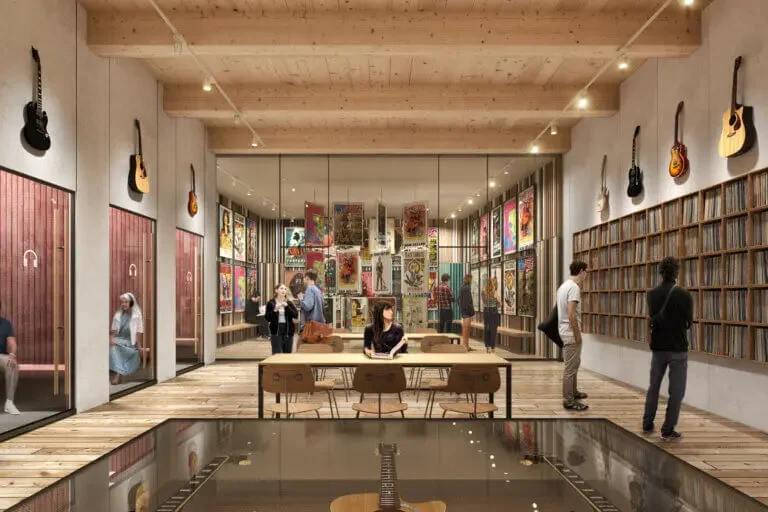
Located at Monmouth University, the new 32,000-square-foot facility has been designed not merely as a museum dedicated to Bruce Springsteen’s career, but as a larger educational and cultural institution examining how American music intersects with politics, social change, labor history, migration, identity, regional storytelling, and collective memory. Springsteen’s work naturally functions as an anchor within that conversation, but the institution’s broader vision appears far more expansive than a traditional artist-centered museum experience.

“The Native American Music Experience” may ultimately become one of the clearest early examples of that philosophy in action.

The evening’s lineup reflects remarkable artistic range, bringing together performers, poets, musicians, and storytellers whose work spans multiple genres and generations while remaining deeply connected to Indigenous identity and creative expression. The program includes performances by the Osceola Brothers, the Seminole Tribe-based rock band whose sound blends contemporary rock structures with cultural influence rooted in tribal identity and Southern musical traditions. Acclaimed singer-songwriter and lap steel guitarist Pura Fé will also perform, bringing her internationally respected fusion of blues, folk, and Indigenous musical heritage to the stage.

Gary Farmer & the Dish and Spoon Band add another dimension entirely. Farmer, widely known to many audiences through his acting career, has long maintained a parallel presence within music, where his work frequently incorporates blues-rock structures alongside Native storytelling traditions and social commentary. The inclusion of the Julia Keefe Indigenous Big Band further expands the evening’s musical scope by connecting jazz traditions with Indigenous compositional perspectives, demonstrating how Native artists have continually contributed to and reshaped American musical language across genres often discussed separately from Indigenous influence.

Perhaps most significantly, the evening will also feature poetry and spoken-word contributions from Joy Harjo, the former United States Poet Laureate and member of the Muscogee Nation. Harjo’s presence elevates the event beyond performance alone. Her work has consistently explored memory, displacement, spirituality, land, music, and survival through language that operates simultaneously as literature, history, and cultural preservation. Including poetry alongside live music reinforces the broader thematic structure of the evening: American music cannot be understood fully without understanding storytelling itself.

That larger idea may ultimately define the Springsteen Center’s long-term cultural importance.

Because American music history is often presented through simplified commercial narratives centered around chart success, recording industries, and celebrity mythology. What gets lost in that approach are the foundational cultural traditions that predate commercial recording entirely. Indigenous music traditions, oral histories, ceremonial rhythms, storytelling structures, and vocal techniques helped shape the broader architecture of American music in ways often overlooked by mainstream institutions.

This event appears designed to confront that omission directly.

The partnership with Hard Rock International also carries deeper symbolic significance than casual observers may initially realize. Because Hard Rock is owned by the Seminole Tribe of Florida, the collaboration represents not simply corporate sponsorship, but Indigenous ownership participating directly in the preservation and presentation of Indigenous cultural history within a major American music institution. That distinction matters within the larger context of representation and cultural authority.

The concert also arrives during a transformative moment for Monmouth University itself. The university’s investment in the Bruce Springsteen Center for American Music signals an increasingly ambitious role within New Jersey’s cultural and educational landscape. By positioning the institution as both museum and active programming hub, Monmouth is creating a space capable of hosting ongoing national conversations surrounding music, identity, politics, history, and artistic influence.

The opening week schedule reflects those ambitions clearly.

The sold-out “America 250: A Jersey Shore Celebration” on May 29 has already demonstrated enormous public interest surrounding the center’s launch programming. Additional major events, including “Music America: The Songs that Shaped Us,” featuring Bruce Springsteen, Jon Bon Jovi, and other artists at the OceanFirst Bank Center on June 4 and 5, will further expand the institution’s national profile ahead of the official June 7 public opening.

Yet “The Native American Music Experience” may prove to be one of the week’s most culturally important events precisely because it shifts attention away from celebrity-centered spectacle and toward historical continuity.

That is where the evening gains real depth.

The program is not simply presenting Indigenous artists as a separate cultural category disconnected from broader American music traditions. Instead, it frames Indigenous music as central to the story itself. The event argues implicitly that American music history cannot be fully understood without recognizing Indigenous contributions that existed long before rock, country, folk, blues, jazz, or modern commercial genres took shape.

For New Jersey audiences, the event also reinforces how dramatically the state’s cultural footprint continues evolving. New Jersey has long produced globally influential artists across virtually every major genre, but institutions capable of exploring those connections thoughtfully and historically have often lagged behind the state’s artistic output. The Springsteen Center appears intent on changing that.

Importantly, the concert remains free to the public, though registration is required due to expected demand. That accessibility aligns with the broader ethos surrounding the opening week itself, which appears designed not merely as a high-profile launch, but as an attempt to establish the center as a living public institution rooted in education, dialogue, and community participation.

In many ways, “The Native American Music Experience” sets the tone for what the Bruce Springsteen Center for American Music may ultimately become.

Not a shrine.

Not nostalgia.

Not celebrity preservation.

But a place where the larger story of American music — complicated, layered, unfinished, and deeply interconnected — can be explored honestly through the artists and communities who continue shaping it.


South Orange Rescue Squad’s “Sound The Siren” 5K and EMS Expo Brings Community, Public Service, and Family Wellness Together in One of New Jersey’s Most Meaningful Local Events

In an era when many public gatherings are increasingly built around spectacle, branding opportunities, or social media visibility, some of New Jersey’s most meaningful community events continue to succeed for a far simpler reason: they genuinely connect people to one another. That is part of what has allowed the South Orange Rescue Squad’s annual “Sound The Siren” 5K & EMS Expo to evolve into far more than a traditional charity run. The event has become a community-wide demonstration of civic engagement, public education, volunteerism, and local support for the emergency medical professionals who quietly serve New Jersey residents every single day.

Set against the backdrop of one of Essex County’s most active and community-oriented towns, the event combines athletic participation, emergency services education, family activities, and neighborhood celebration into a uniquely approachable experience that reflects the broader spirit of South Orange itself. Participants can choose between a full 5K course or a shorter 1.3-mile walking route designed to welcome runners, walkers, families, children, and residents of all ages and ability levels. Yet the event’s importance extends well beyond the race itself.

What distinguishes “Sound The Siren” from countless other local 5Ks is the way the South Orange Rescue Squad has transformed the day into an immersive public-service experience that allows residents to engage directly with emergency medical services personnel and equipment in a relaxed, accessible environment. At the finish line, the atmosphere shifts from athletic event to educational expo, where ambulances become hands-on learning spaces rather than intimidating emergency vehicles seen only during moments of crisis.

Children climb through rescue units while EMTs explain how equipment works. Families ask questions about emergency response. Residents gain a deeper understanding of the people behind the flashing lights and sirens that move through New Jersey streets every day. What emerges is not simply entertainment, but familiarity and trust between the public and the emergency responders serving them.

That relationship matters more than people sometimes realize.

Across New Jersey, volunteer rescue squads and emergency medical organizations continue operating under increasing pressure as demand for emergency services rises while recruitment challenges affect departments nationwide. Community-facing events like “Sound The Siren” help bridge that gap by making EMS work visible in positive, educational, and human terms rather than exclusively during emergencies. They introduce younger generations to public service while simultaneously strengthening community support for local emergency organizations that often operate quietly behind the scenes.

Through Explore New Jersey’s sports and community coverage, it has become increasingly clear that many of the state’s strongest local traditions are no longer defined solely by professional franchises or major sporting venues. Community-centered athletic events are increasingly functioning as gathering points that connect wellness, public engagement, philanthropy, and local identity into one shared experience. The South Orange Rescue Squad’s event fits directly within that growing movement.

The physical activity component remains central to the day’s energy. The 5K route brings runners and walkers through portions of South Orange while creating an atmosphere that feels less hyper-competitive and more genuinely communal. Parents push strollers. Local athletes chase personal records. Friends walk together casually. Children participate in the Kids Fun Run. Residents line portions of the course cheering participants forward. The event intentionally creates space for both serious runners and families simply looking to spend a meaningful day outdoors together.

That accessibility is one of the reasons these types of events continue resonating so strongly throughout New Jersey communities.

They create participation rather than passive attendance.

The EMS Expo component further separates the event from standard charity races. Emergency medical equipment demonstrations, ambulance tours, and public interaction with first responders allow the day to function almost like an open house for emergency services. For children especially, the experience can fundamentally reshape how emergency responders are perceived. Ambulances stop being abstract vehicles associated with fear and become spaces connected to care, professionalism, and public service.

The educational dimension is particularly valuable given the increasing importance of public awareness surrounding emergency preparedness, CPR education, and community health literacy. Events like these create opportunities for informal learning that often reaches people more effectively than traditional public information campaigns.

At the same time, the atmosphere remains intentionally celebratory rather than clinical.

Food vendors and local businesses help transform the finish area into a neighborhood festival environment. Participants and spectators are treated to complimentary food and drinks, including gourmet waffles from Waffle De Lys, coffee and donuts from Dunkin, and bagels from Sonny’s Bagels, creating a distinctly local texture that reinforces the event’s community roots. Rather than feeling corporate or overproduced, the event leans into the character of South Orange itself — welcoming, walkable, family-oriented, and deeply civic-minded.

That local identity matters.

Because one of the defining characteristics of New Jersey’s strongest community events is authenticity. Residents respond to events that feel genuinely tied to place rather than interchangeable promotional experiences. “Sound The Siren” succeeds because it reflects the actual culture of the community surrounding it.

The event also arrives during a period when conversations surrounding public health, emergency services, and community resilience remain especially relevant. The pandemic years fundamentally altered public awareness regarding healthcare workers, first responders, and emergency response systems nationwide. Organizations like the South Orange Rescue Squad spent years operating under extraordinary pressure while continuing to provide frontline emergency medical support to their communities.

Events like this now function partly as celebration, partly as outreach, and partly as reaffirmation of the relationship between communities and the people who serve them.

For younger participants, the event may also plant the seeds for future involvement in public service fields. EMS recruitment and volunteerism remain critical issues nationally, and direct exposure to emergency medicine in approachable settings can have lasting impact. Seeing EMTs interact positively with families, demonstrate equipment, and explain how emergency response works may inspire future careers in healthcare, public safety, or community service.

The event’s structure also reflects the increasingly interconnected nature of wellness culture itself. Physical health, community engagement, public safety education, and mental well-being all intersect within the experience. Participants are not simply attending a race. They are engaging with neighbors, supporting public-service infrastructure, spending time outdoors, learning about emergency response, and contributing to organizations directly serving their communities.

That broader sense of civic wellness may ultimately explain why events like “Sound The Siren” continue growing in importance throughout New Jersey.

They remind people that community infrastructure is not abstract.

It is personal.

It is local.

It is built through relationships between residents, volunteers, responders, businesses, and organizations willing to invest time and energy into the places they call home.

For the South Orange Rescue Squad, the event serves as both fundraiser and mission statement. It demonstrates that emergency medical services are not distant institutions operating separately from community life. They are woven directly into the neighborhoods they protect.

And in South Orange, “Sound The Siren” continues proving that some of New Jersey’s most powerful public events are not necessarily the loudest or largest. Sometimes they are the ones that bring an entire community together around service, health, education, and shared purpose for a single afternoon — while reminding residents just how much work quietly happens every day behind the sound of a siren.

Savor Newark Returns as New Jersey Positions Its Culinary Identity at the Center of the FIFA World Cup 2026 Conversation

As New Jersey prepares for the arrival of the FIFA World Cup 2026, much of the public conversation has understandably focused on stadiums, transportation, tourism infrastructure, global media attention, and the extraordinary logistical undertaking required to host one of the largest sporting events in modern history. Yet quietly unfolding alongside those preparations is another story that may ultimately define how visitors remember the region long after the final whistle blows: the food.

And nowhere is that cultural conversation becoming more visible than in Newark.

With the return of Savor Newark, city officials, chefs, entrepreneurs, restaurateurs, creatives, and business leaders are positioning Newark’s culinary identity not simply as a supporting attraction surrounding the World Cup, but as one of the defining cultural experiences attached to New Jersey’s global moment. The initiative represents far more than a food festival or restaurant showcase. It is an ambitious attempt to place Newark’s immigrant communities, neighborhood food culture, entrepreneurial spirit, and evolving hospitality economy directly into the international spotlight as millions of visitors prepare to descend upon the region next year.

At a time when cities worldwide increasingly compete through culture as much as infrastructure, Newark appears determined to make cuisine part of its global introduction.

That strategy makes sense.

Because while stadiums host matches, cities are remembered through experience.

The restaurants.

The neighborhoods.

The late-night conversations.

The music drifting from open windows.

The bakeries opening before sunrise.

The family-owned dining rooms passed down through generations.

The aromas that define entire blocks before a visitor even reaches the front door.

Those are the details that stay with people.

Savor Newark is attempting to capture exactly that.

Positioned as Newark’s premier culinary symposium and cultural platform, Savor Newark has rapidly evolved into one of the city’s most important efforts to connect food, economic development, tourism, entrepreneurship, and cultural storytelling into a unified civic identity. Organized through a partnership involving creative agency Plusable and Invest Newark, the initiative reflects a broader understanding that food is not merely hospitality. It is infrastructure. It is commerce. It is culture. It is immigration history. It is small business development. It is neighborhood identity. And increasingly, it is one of the most powerful economic engines urban centers possess.

For Newark, that realization arrives at a particularly important moment.

The city is entering one of the most internationally visible periods in its modern history as the FIFA World Cup 2026 transforms the entire New York-New Jersey region into a month-long global destination. Through expanded coverage surrounding New Jersey’s World Cup 2026 preparations, it has become increasingly clear that state and local leaders are aggressively working to ensure economic opportunities connected to the tournament extend beyond the immediate footprint of MetLife Stadium.

That includes Newark.

And Savor Newark may become one of the city’s most effective vehicles for translating international tourism into direct local economic participation.

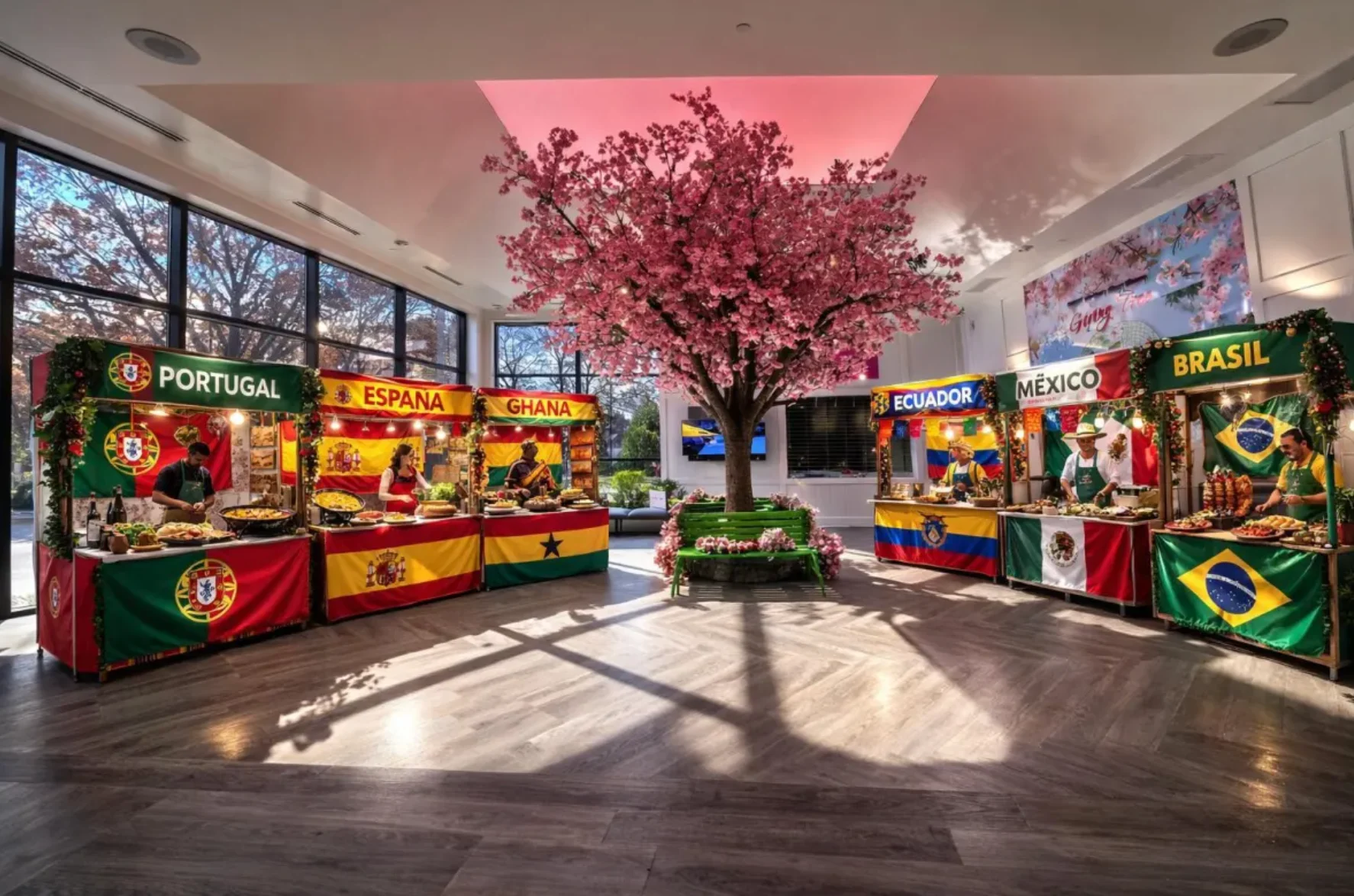
The centerpiece of the initiative arrives on May 16, 2026, with Savor Newark 2026: The Culinary Cup, a large-scale symposium and culinary celebration scheduled for the Cherry Blossom Welcome Center at Branch Brook Park. Designed as Newark’s official kickoff to FIFA World Cup festivities, the free public event combines chef demonstrations, culinary tastings, cultural storytelling, business discussions, panel conversations, and live programming intended to showcase the extraordinary diversity embedded within Newark’s food ecosystem.

But reducing the event to a food festival misses the larger point entirely.

What Newark is building is narrative.

The city wants visitors to understand that Newark’s food culture is inseparable from the communities that created it.

That means Portuguese restaurants in the Ironbound.

Brazilian bakeries and rodizios.

Cape Verdean cooking traditions.

West African cuisine.

Caribbean food culture.

Latin American influences.

Soul food institutions.

Family-owned cafes.

Independent food entrepreneurs.

Multi-generational businesses.

Corner restaurants operating as neighborhood anchors for decades.

Savor Newark is designed to place all of those stories into one larger civic identity.

Importantly, the initiative also reflects how dramatically Newark’s public perception has evolved during the last decade. Once discussed nationally almost exclusively through outdated narratives surrounding crime or economic struggle, Newark is increasingly presenting itself as one of the Northeast’s most dynamic cultural cities — one built not around corporate reinvention alone, but around authentic neighborhood identity and immigrant-driven entrepreneurial growth.

Food becomes one of the clearest entry points into that story.

The Ironbound District alone has become one of the most respected dining destinations anywhere in the tri-state region, drawing visitors from New York City, Philadelphia, North Jersey, and beyond for its concentration of Portuguese, Spanish, Brazilian, and international cuisine. Yet Savor Newark intentionally expands the lens beyond a single district, arguing that the city’s culinary identity exists across multiple neighborhoods and communities.

That broader approach matters economically.

Because one of the primary goals behind the initiative is ensuring that local businesses — particularly independent operators — benefit directly from increased tourism activity tied to FIFA World Cup traffic. Large international events often generate enormous economic headlines while smaller neighborhood businesses struggle to access meaningful participation. Savor Newark appears specifically designed to prevent that disconnect.

Food becomes the mechanism for local inclusion.

The platform’s emphasis on storytelling reinforces that strategy further.

Through the Savor Newark podcast and accompanying media initiatives, chefs, restaurant owners, immigrant entrepreneurs, and community voices are given space to discuss not simply menus, but migration stories, business challenges, cultural preservation, generational transitions, and neighborhood identity. The result is a culinary initiative that feels far more grounded than traditional tourism marketing campaigns often do.

That authenticity may ultimately become Newark’s greatest advantage.

Because modern travelers increasingly seek cities with cultural depth rather than polished artificiality.

And Newark has depth everywhere.

You can feel it in the bakeries.

In the corner cafes.

In the butcher shops.

In the soccer bars filled during international matches.

In the longstanding restaurants where entire communities gather around food that connects directly to family history and homeland memory.

Savor Newark understands that culinary culture is not just about consumption.

It is about belonging.

The timing of the initiative also aligns perfectly with the larger global energy surrounding FIFA World Cup 2026. Soccer itself functions as one of the world’s most culturally interconnected sports, with immigrant communities often serving as the emotional heartbeat of tournament culture throughout host cities. Newark’s international population naturally positions the city as a uniquely authentic environment for that atmosphere to thrive.

The city is not manufacturing international culture for tourists.

It already lives it every day.

That distinction becomes increasingly important as New Jersey prepares for a level of international visibility unlike anything the region has experienced in generations. Visitors arriving for the World Cup will not simply be attending matches. They will be searching for atmosphere, identity, local flavor, and memorable experiences between games.

Newark intends to give them all of it.

At the same time, Savor Newark also reflects broader economic development trends reshaping American cities nationwide. Culinary economies now play major roles in urban revitalization strategies because restaurants, hospitality spaces, and food-centered experiences generate tourism, foot traffic, employment, branding opportunities, and neighborhood investment simultaneously.

Cities increasingly compete through culture.

And culture often begins at the table.

For Newark, the return of Savor Newark signals confidence in the city’s ability to stand not merely as a transportation corridor adjacent to New York City, but as a destination worthy of international attention in its own right.

That confidence feels increasingly justified.

Because as FIFA World Cup 2026 approaches, New Jersey’s most compelling global story may not simply be the matches themselves.

It may be the communities surrounding them.

And in Newark, those communities are preparing to introduce themselves through food.

Mount Laurel Animal Hospital Sounds the Alarm Over National Canine Blood Shortage as Demand for Lifesaving Veterinary Transfusions Continues to Rise

Across the country, veterinary hospitals are quietly confronting a growing medical crisis that most pet owners never realize exists until their own animal faces an emergency. Blood shortages are no longer limited to human healthcare systems. Veterinary medicine is now dealing with the same problem, and for emergency animal hospitals, trauma centers, surgical units, and specialty veterinary teams, the shortage of canine blood products has become an increasingly urgent issue affecting lifesaving care every single day.

In South Jersey, Explore New Jersey’s Health & Wellness coverage continues spotlighting organizations working at the center of public and animal health, and Mount Laurel Animal Hospital is now emerging as one of the state’s most important voices in the growing push to expand canine blood donor participation before shortages worsen further.

The challenge facing veterinary providers is significant.

Unlike traditional medications or manufactured medical supplies, blood products cannot simply be produced on demand. Every emergency transfusion relies entirely on donor animals. Every trauma surgery, internal bleeding case, cancer treatment complication, immune disorder, or emergency operation requiring blood support depends on another healthy dog previously participating in a donor program.

And right now, there are not enough donor dogs available nationally to keep pace with growing veterinary demand.

That reality is beginning to place pressure on hospitals throughout the country, particularly large regional veterinary centers handling advanced emergency medicine and specialty care. Mount Laurel Animal Hospital, long recognized as one of New Jersey’s leading veterinary emergency and specialty facilities, is now actively encouraging dog owners to consider participation in donor programs as part of a broader effort to stabilize blood supply availability for critically ill animals.

The issue is not theoretical.

For veterinary teams working emergency shifts overnight, blood availability can determine whether a patient survives long enough to undergo surgery, stabilize after traumatic injury, or respond to treatment. Dogs struck by vehicles, suffering from clotting disorders, undergoing emergency operations, battling severe infections, or experiencing internal bleeding often require immediate transfusions where timing becomes critically important.

Veterinary medicine has advanced dramatically during the past two decades. Procedures once considered impossible for companion animals are now routine at advanced specialty hospitals. Complex surgeries, oncology care, emergency trauma response, cardiology, neurology, and intensive care medicine have all evolved into highly sophisticated disciplines capable of extending and improving animal lives in extraordinary ways.

But none of that progress matters without access to blood products.

That is where the shortage becomes dangerous.

Unlike larger human hospital systems that operate within extensive regional blood networks, veterinary medicine still relies heavily on voluntary donor participation and specialized collection programs that remain far less visible to the general public. Many pet owners simply do not realize canine blood donation exists until veterinarians specifically mention it.

Mount Laurel Animal Hospital is attempting to change that.

The hospital’s donor recruitment efforts are centered not only around increasing awareness but also educating owners about how straightforward and safe the process typically is for healthy donor dogs. Veterinary blood donation programs are highly regulated medically, with donor animals undergoing health screenings, weight requirements, temperament evaluations, and routine wellness monitoring to ensure safety for both donor and recipient.

Most canine donors are calm, healthy adult dogs with friendly temperaments and sufficient body weight to safely participate in blood collection procedures. In many cases, donor dogs actually receive enhanced routine medical oversight as part of their participation, including wellness testing and health evaluations performed throughout the donation cycle.

Still, despite the importance of these programs, participation numbers nationally remain insufficient compared to expanding demand.

Part of the problem stems from the rapid evolution of veterinary healthcare itself.

Pet ownership has fundamentally changed in America over the last generation. Dogs are no longer viewed simply as household animals by many families. They are increasingly treated as deeply integrated members of the family structure, leading owners to pursue far more advanced medical care than previous generations might have considered possible or practical.

As veterinary medicine becomes more sophisticated, transfusion demand naturally rises alongside it.

Cancer treatments often require blood support.

Emergency surgeries require blood support.

Severe gastrointestinal conditions, toxin exposure cases, autoimmune diseases, orthopedic trauma, and post-operative complications can all require transfusions. Certain breeds are genetically predisposed to conditions involving anemia or clotting disorders. Even routine emergency scenarios can suddenly escalate into transfusion-dependent situations.

And because veterinary hospitals cannot predict emergencies, blood inventories must remain consistently available before crises happen.

That unpredictability makes shortages particularly difficult.

Blood products also carry limited shelf lives, meaning hospitals cannot simply stockpile unlimited reserves indefinitely. Veterinary blood banks require continuous donor participation to maintain fresh supply availability across multiple blood types and product categories. As demand rises nationally, hospitals increasingly compete for access to limited inventories.

For facilities like Mount Laurel Animal Hospital, maintaining adequate supply is directly connected to patient outcomes.

The hospital has built a reputation throughout the region as a major referral center for emergency and specialty veterinary medicine, serving pet owners across South Jersey, Central Jersey, Philadelphia suburbs, and surrounding areas. Cases arriving at the hospital frequently involve highly complex emergencies requiring advanced stabilization resources and rapid medical response capabilities.

Blood availability often becomes part of that equation immediately.

Veterinary professionals nationwide have increasingly warned that public awareness around canine blood donation simply has not kept pace with modern veterinary care expectations. Many owners readily support emergency intervention for critically ill pets but remain unaware that those interventions often depend on donor animals behind the scenes.

The system only works if healthy dogs continue participating.

That creates a uniquely emotional aspect to veterinary blood donation programs.

Unlike many areas of medical infrastructure, donor participation becomes intensely personal for animal owners because recipients are often pets facing life-threatening emergencies. One donor dog may ultimately contribute to saving multiple animal lives through separated blood products distributed across different medical cases.

Veterinary teams witness those outcomes constantly.

Dogs recovering from emergency surgery.

Animals surviving severe trauma.

Cancer patients stabilizing long enough for treatment.

Puppies overcoming critical illness.

Older dogs receiving additional months or years of quality life because blood products were available at the exact moment they were needed.

Those are the stories quietly unfolding inside emergency veterinary hospitals every day.

Mount Laurel Animal Hospital’s push for donor recruitment also reflects a broader national shift toward treating veterinary healthcare infrastructure with greater seriousness overall. The pandemic years dramatically accelerated pet ownership across the country while simultaneously increasing pressure on veterinary staffing, emergency systems, specialty hospitals, and resource availability.

Many hospitals are still managing the aftereffects.

Veterinary professionals across multiple specialties have reported increasing caseload complexity, rising emergency volumes, staffing shortages, and growing demand for advanced care capabilities. Blood supply shortages now exist within that broader healthcare strain.

Yet despite the seriousness of the issue, veterinary hospitals remain optimistic that awareness efforts can improve donor participation substantially if more owners understand the role donor animals play in emergency medicine.

In many ways, canine blood donation programs embody the same community-based spirit that defines broader healthcare support systems overall.

Healthy animals helping save sick animals.

Owners contributing to medical care that may ultimately help families they will never meet.

Hospitals building networks of support before emergencies happen rather than reacting afterward.

That structure becomes especially important in regions like South Jersey where advanced veterinary hospitals serve large geographic populations with growing demand for specialty medicine.

For Mount Laurel Animal Hospital, the current shortage represents more than a logistical concern.

It is fundamentally about preparedness.

Because emergency medicine only works when critical resources are available before they are needed.

And as veterinary medicine continues evolving into increasingly advanced territory, the need for reliable canine blood donor networks may become one of the most important — and least publicly understood — components of modern animal healthcare infrastructure throughout New Jersey and beyond.

Governor Mikie Sherrill Draws a Line in the Sand Over FIFA World Cup Transit Costs as New Jersey Pushes to Protect Taxpayers Ahead of 2026 Global Showcase

As New Jersey prepares to become one of the central stages for the FIFA World Cup 2026, a growing debate surrounding transportation costs, public funding, and corporate responsibility is beginning to reveal the immense financial and logistical pressure that accompanies hosting one of the largest sporting events on Earth. At the center of that conversation now stands Governor Mikie Sherrill, who is making it abundantly clear that New Jersey taxpayers will not be expected to subsidize the operational burden tied to transporting international soccer crowds to MetLife Stadium during next summer’s tournament.

The issue escalated rapidly this week after concerns emerged over the cost of round-trip NJ Transit service between New York Penn Station and MetLife Stadium during FIFA World Cup events. Originally projected to cost fans approximately $150 round-trip for the brief 18-mile journey, the proposed pricing structure immediately triggered backlash from commuters, residents, sports fans, and public officials alike. Within days, NJ Transit revised the proposed cost downward to $105, but even with that reduction, the controversy surrounding who ultimately pays for the transportation infrastructure tied to FIFA’s arrival remains very much alive.

Governor Sherrill, speaking candidly to reporters, has positioned herself firmly on one side of the debate. Her message has been direct, disciplined, and politically significant: New Jersey residents should not be financially responsible for underwriting a global event that is expected to generate enormous revenues for FIFA and its corporate partners.

“I said from the start I didn’t want this put on the back of the New Jersey taxpayers,” Sherrill stated during remarks that quickly became one of the defining political soundbites surrounding New Jersey’s World Cup preparations. “Certainly, FIFA should take on some of this burden as they stand to make millions.”

That statement reflects a broader tension now emerging across host regions worldwide as governments balance the economic prestige associated with hosting the FIFA World Cup against the very real costs attached to security, transportation, infrastructure, staffing, crowd management, and public services. While FIFA often presents the tournament as an economic catalyst capable of generating tourism, investment, and international visibility, local governments increasingly face scrutiny regarding who absorbs the operational realities once the cameras arrive.

In New Jersey’s case, transportation has become one of the most visible flashpoints.

MetLife Stadium in East Rutherford will host multiple marquee FIFA World Cup 2026 matches, including the tournament final, placing New Jersey at the center of one of the largest sporting spectacles in modern history. Millions of global viewers will see the region showcased throughout the month-long event, while hundreds of thousands of visitors are expected to move through transit systems, hotels, restaurants, entertainment districts, airports, and public gathering spaces throughout the state.

That opportunity carries undeniable economic upside.

But it also carries enormous logistical costs.

NJ Transit officials estimate that expanded World Cup-related rail service alone could cost approximately $48 million, a figure that immediately intensified concerns regarding how those expenses would be covered without impacting daily commuters or burdening state taxpayers already navigating broader economic pressures. Governor Sherrill has repeatedly emphasized that ordinary residents should not experience fare increases or financial consequences linked to FIFA operations.

According to NJ Transit CEO Kris Kolluri, the governor’s position was communicated clearly from the outset.

“Governor Sherrill made two broad points,” Kolluri explained. “First, she would not impose financial burden on New Jersey taxpayers or commuters, but said the World Cup was an opportunity for New Jersey to showcase the state, the economy and its culture and we are excited to host the games.”

That balancing act now defines the state’s entire approach toward FIFA 2026 preparations.

On one hand, the World Cup represents an extraordinary international platform capable of elevating New Jersey’s tourism economy, hospitality sector, entertainment industry, and global visibility in ways few events can match. The tournament is expected to drive massive spending throughout North Jersey, the Meadowlands corridor, Jersey City, Newark, Hoboken, and surrounding regions while also feeding economic activity into South Jersey through statewide fan festivals and community initiatives already being organized under the broader FIFA World Cup 2026 umbrella.

The state has aggressively leaned into that opportunity through initiatives connected to the growing network of World Cup fan experiences being planned throughout New Jersey. Through programs highlighted across Explore New Jersey’s World Cup coverage, officials and regional organizers have already begun positioning the state as more than simply a host venue. New Jersey wants to become an active cultural participant in the tournament itself.

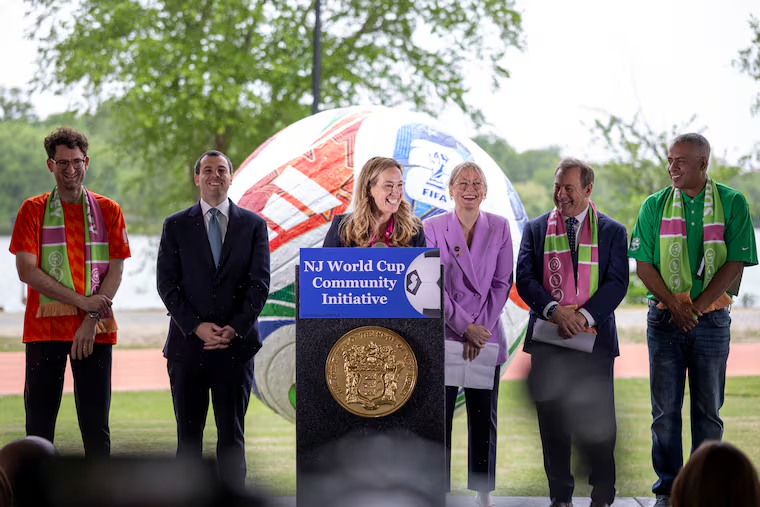
That includes large-scale public viewing festivals, youth soccer initiatives, entertainment events, hospitality activations, and international tourism campaigns stretching from Newark and Jersey City to Camden County and the Jersey Shore. Massive fan festivals are planned at Liberty State Park, while Sports Illustrated Stadium in Harrison will host large-scale family programming including the upcoming FIFA World Cup 2026 Family Day featuring KIDZ BOP LIVE. Additional community-centered programming tied to the NJ World Cup Community Initiative is expected to spread economic activity beyond the immediate Meadowlands footprint.

Yet despite the excitement, the transportation issue underscores a larger reality often overlooked during major-event announcements.

Mega-events create winners and losers financially depending on how costs are allocated.

Sherrill appears determined to ensure New Jersey residents do not become the latter.

The governor’s comments also subtly reflect growing skepticism among state and local governments nationwide regarding how international sporting organizations distribute financial responsibility. FIFA, while enormously profitable, has frequently faced criticism globally over the public costs associated with tournament infrastructure, policing, transportation upgrades, and operational services.

In this case, New Jersey officials appear to be pressuring FIFA and corporate sponsors to contribute more directly toward offsetting transit-related expenses rather than allowing those costs to migrate onto the public sector.

“We’ve gone out to corporate sponsors to try to get those costs lowered and we’ve seen a great response from them,” Sherrill explained. “So I’m happy they’ve come forward. I’m waiting to see if FIFA will come through although we’re not holding our breath.”

That line may ultimately become one of the defining political summaries of New Jersey’s World Cup strategy.

Because while state officials clearly recognize the enormous value attached to hosting the world’s most-watched sporting event, they are simultaneously signaling that prestige alone is not sufficient justification for unchecked public spending.

The numbers themselves help explain why the issue escalated so quickly.

Under normal conditions, a round-trip NJ Transit ticket from New York Penn Station to MetLife Stadium costs approximately $12.90. The proposed World Cup pricing structure that initially surged toward $150 represented more than an eleven-fold increase, immediately generating national headlines and criticism across sports media, commuter advocacy groups, and social media platforms.

Even the revised $105 price point remains dramatically higher than standard fare structures, though officials argue those costs reflect expanded service demands, crowd management requirements, and operational complexities associated with handling World Cup-scale attendance.

Sales for transportation packages are expected to begin soon, adding additional urgency to negotiations involving FIFA, corporate sponsors, and transit authorities.

Meanwhile, the broader economic implications continue to expand beyond transportation alone.

Hotels throughout North Jersey are already preparing for unprecedented demand spikes tied to the tournament. Restaurants, bars, breweries, retailers, event venues, and entertainment districts are actively positioning themselves to capitalize on the projected international tourism wave expected to sweep through the region. Sports bars across Newark, Hoboken, Jersey City, Morristown, Asbury Park, Atlantic City, and the Meadowlands corridor are expected to become gathering points for fans representing dozens of nations throughout the tournament.

MetLife Stadium itself will become one of the focal points of the entire World Cup.

And with that visibility comes immense pressure to execute flawlessly.

Transportation reliability will be essential not only for fan experience but also for New Jersey’s international reputation during one of the most heavily televised events in global sports. Any logistical breakdowns would instantly become worldwide headlines, which helps explain why transit planning has become such a high-stakes issue politically and operationally.

Still, Sherrill’s stance suggests New Jersey is attempting to establish a framework that supports international tourism and economic growth without sacrificing fiscal discipline.

That distinction matters.

Because increasingly, residents want transparency regarding how public dollars are used when major corporations and international organizations enter local markets promising economic impact. The governor’s refusal to allow taxpayers to absorb World Cup transit costs appears designed not merely as a transportation policy decision, but as a broader statement about accountability, public priorities, and financial responsibility.

For New Jersey, the FIFA World Cup 2026 represents both extraordinary opportunity and enormous complexity.

The state is preparing to welcome the world.

But Governor Mikie Sherrill is making it clear that welcoming the world should not come with an unlimited invoice for New Jersey residents.

Augustana

0

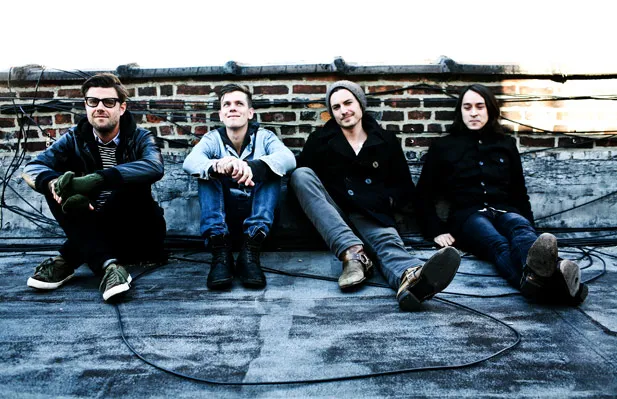
Platinum-selling American rock band Augustana remains best known for the emotionally resonant hit “Boston,” a song that became one of the defining piano-driven alternative rock anthems of the 2000s

July 15 @ 7:30 PM 11:30 PM

Opening Act: Sharing Contest (Acoustic)

Platinum-selling American rock band Augustana remains best known for the emotionally resonant hit “Boston,” a song that became one of the defining piano-driven alternative rock anthems of the 2000s. Led by frontman Dan Layus, the band has earned a loyal following through its heartfelt songwriting, cinematic melodies, rich piano arrangements, and emotionally expressive vocals that balance vulnerability with sweeping rock instrumentation. Their music blends introspective storytelling with soaring choruses and atmospheric production, creating a sound that feels both deeply personal and universally relatable. In a live setting, Augustana delivers a powerful mix of nostalgia, emotional intensity, and polished musicianship that continues to connect with audiences across generations.

Camden County’s Sundown Music Series Returns to Haddon Lake Park With One of Its Strongest Lineups Yet. Every summer, New Jersey proves once again that some of its most meaningful live music experiences do not happen inside arenas, casinos, or major amphitheaters. They happen in county parks, downtown streets, waterfront stages, and community gathering spaces where audiences arrive carrying lawn chairs, blankets, coolers, and the expectation that live music still has the power to transform an ordinary night into something memorable. That atmosphere has long defined the Sundown Music Series at Haddon Lake Park, and in 2026, the Camden County concert tradition returns with perhaps its most musically diverse and culturally ambitious lineup to date.

Running throughout the summer at the McLaughlin-Norcross Memorial Dell in Haddon Township, the free Wednesday night concert series continues evolving into one of South Jersey’s most important public music programs. Sponsored by AAA South Jersey and hosted by the Camden County Board of Commissioners, the series has steadily grown beyond a simple seasonal entertainment schedule into something much larger: a regional cultural institution that blends nationally touring artists, rising independent performers, local community identity, and accessible public arts programming inside one of the state’s most naturally atmospheric outdoor venues.

That distinction matters because free public concert series have become increasingly important to the overall health of local arts ecosystems.

At a time when ticket prices for major touring acts continue climbing dramatically nationwide, events like the Sundown Music Series create rare spaces where live music remains accessible across generations, economic backgrounds, and communities. Families, longtime music fans, younger concertgoers, casual listeners, and neighborhood residents all occupy the same environment together. The result is not simply a concert series but an ongoing summer gathering that reinforces how deeply music remains tied to local identity throughout New Jersey.

And few settings in South Jersey feel more naturally suited for that experience than the Dell at Haddon Lake Park.

Tucked inside a wooded section of Haddon Township, the McLaughlin-Norcross Memorial Dell possesses the kind of old-school outdoor concert atmosphere that increasingly feels rare in modern entertainment development. The natural amphitheater layout, surrounded by trees and open green space, creates an environment that feels intimate without feeling small. As the sun lowers and the lights begin illuminating the stage, the setting takes on an atmosphere somewhere between neighborhood gathering and hidden festival site.

That environment has become central to the Sundown Series identity itself.

The concerts do not feel overly commercialized or detached from the surrounding community. They feel rooted in place. Audience members spread across the lawn while dogs on leashes wander between groups, children move through open areas near the stage, and longtime attendees reconnect week after week throughout the season. It is the kind of event structure that reminds people why public arts programming still matters.

The 2026 lineup reinforces that broader cultural ambition.

Rather than building the schedule around a single genre or demographic, organizers assembled a season that moves fluidly between soul, indie rock, funk, Americana, tribute performance, alternative pop, and retro-inspired contemporary acts. That variety allows the series to function almost like a curated survey of modern live music culture while still maintaining broad public accessibility.

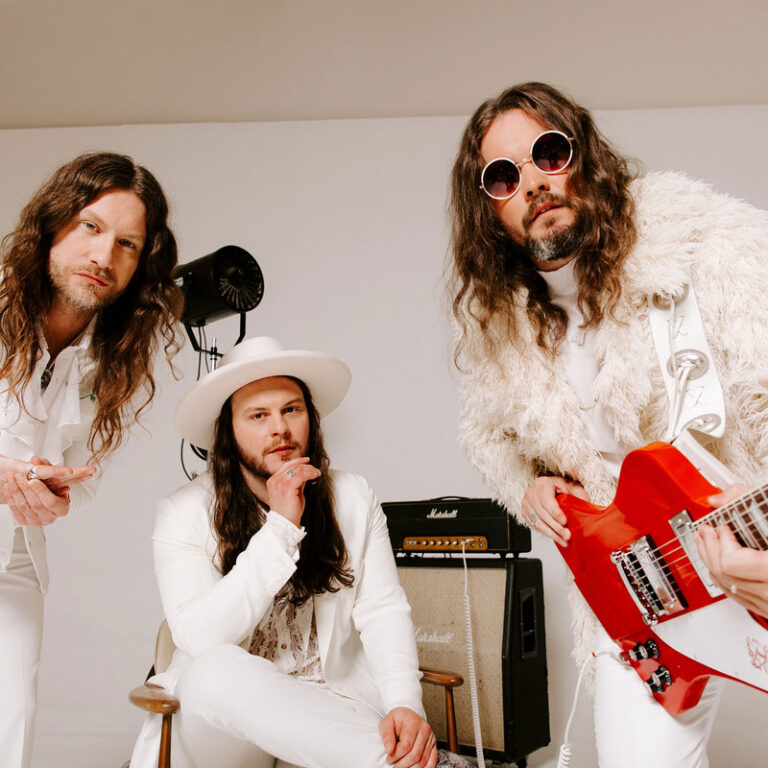
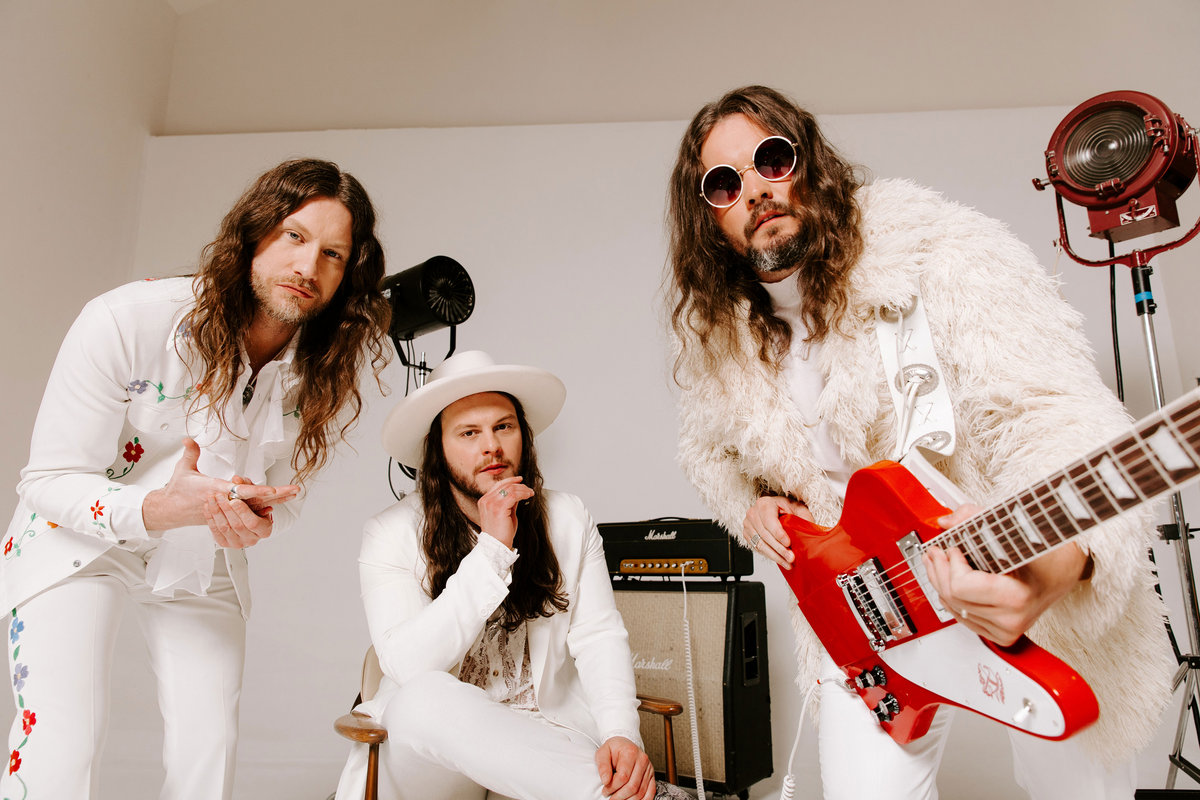
The season opens June 3 with Goodbye June, a Tennessee-based rock trio whose sound fuses Southern blues influences, gospel energy, and hard-driving classic rock structure into something that feels both modern and deeply rooted in American rock tradition. Built around three cousins whose chemistry has become central to the band’s identity, Goodbye June arrives carrying the kind of muscular, riff-heavy sound that feels designed for outdoor summer stages.

Their presence also signals something notable about the overall direction of the series.

The Sundown Music Series is not simply booking nostalgia acts or low-risk regional entertainment. Increasingly, it is attracting nationally recognized touring artists with legitimate followings and distinctive musical identities. Goodbye June’s combination of blues-infused hard rock and emotionally driven songwriting gives the opening night an immediate sense of scale and energy.

Joshua Chase Miller opens the June 3 performance, continuing the series’ longstanding practice of integrating emerging artists alongside more established acts.

That balance remains one of the stronger aspects of the Sundown Music Series overall. Too often, public concert programming becomes overly dependent on either tribute acts or legacy nostalgia bookings. The Sundown lineup consistently attempts to introduce audiences to newer or developing performers while still delivering recognizable names capable of drawing large crowds.

The remainder of the schedule continues that approach aggressively.

June 10 brings Edgardo Cintron & the Inca Band with a Santana tribute performance that feels particularly well-suited for the outdoor Dell setting. Santana’s music has always existed at the intersection of rhythm, improvisation, Latin influence, blues, and communal concert energy, making it ideal for a summer evening environment where audiences can spread out and absorb the atmosphere rather than remain confined to fixed seating structures.

Later in June, Devon Gilfillian arrives with one of the most critically respected voices on the schedule. Gilfillian’s blend of soul, rock, Americana, and socially conscious songwriting has made him one of the more compelling modern artists operating within the broader roots music landscape. His appearance significantly elevates the artistic credibility of the entire season while reinforcing the series’ willingness to pursue musically substantive bookings rather than purely commercial familiarity.

July’s lineup shifts stylistically again.

Work Drugs, the Philadelphia-based synth-pop and chillwave project, brings a completely different sonic texture to the Dell. Their shimmering, nostalgic electronic sound feels almost custom-built for humid summer nights, sunset lighting, and open-air environments. The inclusion of artists like Work Drugs demonstrates how far the series has expanded beyond conventional county concert programming.

Then comes Augustana, Sixpence None the Richer, and The Verve Pipe — artists whose catalogs remain deeply embedded within multiple generations of alternative and adult contemporary music listeners.

What makes those bookings especially effective is that they avoid feeling like cynical nostalgia programming. Each act still maintains legitimate audience recognition while carrying songs that remain emotionally connected to listeners decades after their initial release cycles. Outdoor summer concerts thrive when audiences feel collective familiarity with the music unfolding around them, and those performances are likely to generate exactly that kind of communal atmosphere.

One of the more intriguing entries on the schedule may be Here Come the Mummies in September.

The band’s elaborate funk-comedy presentation has developed a cult following nationally, built around musicians performing as ancient Egyptian “mummies” while delivering aggressively danceable funk arrangements and theatrical stage performance. Their inclusion reflects the broader willingness of the Sundown Series to embrace unpredictability and personality rather than programming only safe, straightforward concert experiences.

That creative variety ultimately strengthens the entire season.

The Sundown Music Series understands that modern audiences are increasingly searching for experiences rather than simply performances. The setting, crowd atmosphere, accessibility, environment, and emotional tone of an event all matter nearly as much as the music itself. By combining strong bookings with a uniquely welcoming outdoor environment, the series creates a full-evening cultural experience rather than just another concert calendar entry.

Importantly, the accessibility remains central to the event’s identity.

Free admission fundamentally changes the psychology of audience participation. People arrive more relaxed. Families feel comfortable attending casually. Younger listeners discover artists they may never have purchased tickets to see independently. Older attendees return repeatedly throughout the season because the environment feels open rather than transactional.

That community-oriented accessibility is becoming increasingly valuable in today’s live entertainment economy.

Large-scale concert touring continues becoming more expensive, more corporate, and increasingly concentrated around major metropolitan venues. Public concert series like Sundown help preserve a version of live music culture that still feels local, communal, and organically connected to the people attending it.
And that connection may ultimately be why the series continues thriving year after year.

Because beyond the lineup announcements, sponsorship structures, or individual performances, the Sundown Music Series succeeds by creating something audiences increasingly crave: authentic public gathering spaces centered around music, atmosphere, and shared experience.

In a state with one of the richest live music histories anywhere in the country, that tradition still matters enormously.

And throughout the summer of 2026, Wednesday nights at Haddon Lake Park appear ready to remind people exactly why.

Camden County Board of Commissioners

1-866-226-3362

View Organizer Website

Wiggins Waterfront Park

2 Riverside Dr
Camden, New Jersey 08103 United States
+ Google Map
(856) 541-7222
View Venue Website

Work Drugs

0

Philadelphia-based duo Work Drugs has built a devoted following with its signature “smooth-fi” sound, crafting atmospheric indie music that blends shimmering synth textures

July 8 @ 7:30 PM 11:30 PM

Opening Act: Naeemah Maddox

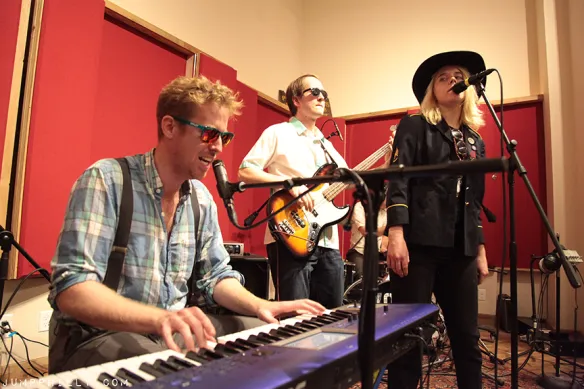
Philadelphia-based duo Work Drugs has built a devoted following with its signature “smooth-fi” sound, crafting atmospheric indie music that blends shimmering synth textures, retro pop influences, chillwave energy, and cinematic summer-night nostalgia into something both modern and deeply transportive. Known for creating music that feels tailor-made for late-night drives, waterfront sunsets, and immersive live experiences, the group delivers a polished yet relaxed sound built around melodic grooves, dreamy production, and effortlessly cool rhythms. Their performances create a laid-back but emotionally rich atmosphere that perfectly complements an outdoor summer concert setting.

Camden County’s Sundown Music Series Returns to Haddon Lake Park With One of Its Strongest Lineups Yet. Every summer, New Jersey proves once again that some of its most meaningful live music experiences do not happen inside arenas, casinos, or major amphitheaters. They happen in county parks, downtown streets, waterfront stages, and community gathering spaces where audiences arrive carrying lawn chairs, blankets, coolers, and the expectation that live music still has the power to transform an ordinary night into something memorable. That atmosphere has long defined the Sundown Music Series at Haddon Lake Park, and in 2026, the Camden County concert tradition returns with perhaps its most musically diverse and culturally ambitious lineup to date.

Running throughout the summer at the McLaughlin-Norcross Memorial Dell in Haddon Township, the free Wednesday night concert series continues evolving into one of South Jersey’s most important public music programs. Sponsored by AAA South Jersey and hosted by the Camden County Board of Commissioners, the series has steadily grown beyond a simple seasonal entertainment schedule into something much larger: a regional cultural institution that blends nationally touring artists, rising independent performers, local community identity, and accessible public arts programming inside one of the state’s most naturally atmospheric outdoor venues.

That distinction matters because free public concert series have become increasingly important to the overall health of local arts ecosystems.

At a time when ticket prices for major touring acts continue climbing dramatically nationwide, events like the Sundown Music Series create rare spaces where live music remains accessible across generations, economic backgrounds, and communities. Families, longtime music fans, younger concertgoers, casual listeners, and neighborhood residents all occupy the same environment together. The result is not simply a concert series but an ongoing summer gathering that reinforces how deeply music remains tied to local identity throughout New Jersey.

And few settings in South Jersey feel more naturally suited for that experience than the Dell at Haddon Lake Park.

Tucked inside a wooded section of Haddon Township, the McLaughlin-Norcross Memorial Dell possesses the kind of old-school outdoor concert atmosphere that increasingly feels rare in modern entertainment development. The natural amphitheater layout, surrounded by trees and open green space, creates an environment that feels intimate without feeling small. As the sun lowers and the lights begin illuminating the stage, the setting takes on an atmosphere somewhere between neighborhood gathering and hidden festival site.

That environment has become central to the Sundown Series identity itself.

The concerts do not feel overly commercialized or detached from the surrounding community. They feel rooted in place. Audience members spread across the lawn while dogs on leashes wander between groups, children move through open areas near the stage, and longtime attendees reconnect week after week throughout the season. It is the kind of event structure that reminds people why public arts programming still matters.

The 2026 lineup reinforces that broader cultural ambition.

Rather than building the schedule around a single genre or demographic, organizers assembled a season that moves fluidly between soul, indie rock, funk, Americana, tribute performance, alternative pop, and retro-inspired contemporary acts. That variety allows the series to function almost like a curated survey of modern live music culture while still maintaining broad public accessibility.

The season opens June 3 with Goodbye June, a Tennessee-based rock trio whose sound fuses Southern blues influences, gospel energy, and hard-driving classic rock structure into something that feels both modern and deeply rooted in American rock tradition. Built around three cousins whose chemistry has become central to the band’s identity, Goodbye June arrives carrying the kind of muscular, riff-heavy sound that feels designed for outdoor summer stages.

Their presence also signals something notable about the overall direction of the series.

The Sundown Music Series is not simply booking nostalgia acts or low-risk regional entertainment. Increasingly, it is attracting nationally recognized touring artists with legitimate followings and distinctive musical identities. Goodbye June’s combination of blues-infused hard rock and emotionally driven songwriting gives the opening night an immediate sense of scale and energy.

Joshua Chase Miller opens the June 3 performance, continuing the series’ longstanding practice of integrating emerging artists alongside more established acts.

That balance remains one of the stronger aspects of the Sundown Music Series overall. Too often, public concert programming becomes overly dependent on either tribute acts or legacy nostalgia bookings. The Sundown lineup consistently attempts to introduce audiences to newer or developing performers while still delivering recognizable names capable of drawing large crowds.

The remainder of the schedule continues that approach aggressively.

June 10 brings Edgardo Cintron & the Inca Band with a Santana tribute performance that feels particularly well-suited for the outdoor Dell setting. Santana’s music has always existed at the intersection of rhythm, improvisation, Latin influence, blues, and communal concert energy, making it ideal for a summer evening environment where audiences can spread out and absorb the atmosphere rather than remain confined to fixed seating structures.

Later in June, Devon Gilfillian arrives with one of the most critically respected voices on the schedule. Gilfillian’s blend of soul, rock, Americana, and socially conscious songwriting has made him one of the more compelling modern artists operating within the broader roots music landscape. His appearance significantly elevates the artistic credibility of the entire season while reinforcing the series’ willingness to pursue musically substantive bookings rather than purely commercial familiarity.

July’s lineup shifts stylistically again.

Work Drugs, the Philadelphia-based synth-pop and chillwave project, brings a completely different sonic texture to the Dell. Their shimmering, nostalgic electronic sound feels almost custom-built for humid summer nights, sunset lighting, and open-air environments. The inclusion of artists like Work Drugs demonstrates how far the series has expanded beyond conventional county concert programming.

Then comes Augustana, Sixpence None the Richer, and The Verve Pipe — artists whose catalogs remain deeply embedded within multiple generations of alternative and adult contemporary music listeners.

What makes those bookings especially effective is that they avoid feeling like cynical nostalgia programming. Each act still maintains legitimate audience recognition while carrying songs that remain emotionally connected to listeners decades after their initial release cycles. Outdoor summer concerts thrive when audiences feel collective familiarity with the music unfolding around them, and those performances are likely to generate exactly that kind of communal atmosphere.

One of the more intriguing entries on the schedule may be Here Come the Mummies in September.

The band’s elaborate funk-comedy presentation has developed a cult following nationally, built around musicians performing as ancient Egyptian “mummies” while delivering aggressively danceable funk arrangements and theatrical stage performance. Their inclusion reflects the broader willingness of the Sundown Series to embrace unpredictability and personality rather than programming only safe, straightforward concert experiences.

That creative variety ultimately strengthens the entire season.

The Sundown Music Series understands that modern audiences are increasingly searching for experiences rather than simply performances. The setting, crowd atmosphere, accessibility, environment, and emotional tone of an event all matter nearly as much as the music itself. By combining strong bookings with a uniquely welcoming outdoor environment, the series creates a full-evening cultural experience rather than just another concert calendar entry.

Importantly, the accessibility remains central to the event’s identity.

Free admission fundamentally changes the psychology of audience participation. People arrive more relaxed. Families feel comfortable attending casually. Younger listeners discover artists they may never have purchased tickets to see independently. Older attendees return repeatedly throughout the season because the environment feels open rather than transactional.

That community-oriented accessibility is becoming increasingly valuable in today’s live entertainment economy.

Large-scale concert touring continues becoming more expensive, more corporate, and increasingly concentrated around major metropolitan venues. Public concert series like Sundown help preserve a version of live music culture that still feels local, communal, and organically connected to the people attending it.
And that connection may ultimately be why the series continues thriving year after year.

Because beyond the lineup announcements, sponsorship structures, or individual performances, the Sundown Music Series succeeds by creating something audiences increasingly crave: authentic public gathering spaces centered around music, atmosphere, and shared experience.

In a state with one of the richest live music histories anywhere in the country, that tradition still matters enormously.

And throughout the summer of 2026, Wednesday nights at Haddon Lake Park appear ready to remind people exactly why.

Camden County Board of Commissioners

1-866-226-3362

View Organizer Website

Wiggins Waterfront Park

2 Riverside Dr
Camden, New Jersey 08103 United States
+ Google Map
(856) 541-7222
View Venue Website

Devon Gilfillian

0

Goodbye June Brings Hard Rock, Southern Blues, and Gospel-Infused Swing to the Sundown Music Series on June 3

June 3 @ 7:30 PM 11:30 PM

Opening Act: Moustapha Noumbissi

Delaware County native Devon Gilfillian has emerged as one of the most compelling voices in modern soul music, earning widespread acclaim and a Grammy nomination for his powerful blend of classic soul traditions, contemporary grooves, roots rock influences, and deeply personal songwriting. Known for his emotionally charged vocals and dynamic live performances, Gilfillian seamlessly bridges vintage R&B textures with modern energy, creating music that feels both timeless and unmistakably current. His performances combine infectious rhythm, rich musicianship, and heartfelt storytelling, delivering a concert experience that resonates far beyond genre boundaries.

Camden County’s Sundown Music Series Returns to Haddon Lake Park With One of Its Strongest Lineups Yet. Every summer, New Jersey proves once again that some of its most meaningful live music experiences do not happen inside arenas, casinos, or major amphitheaters. They happen in county parks, downtown streets, waterfront stages, and community gathering spaces where audiences arrive carrying lawn chairs, blankets, coolers, and the expectation that live music still has the power to transform an ordinary night into something memorable. That atmosphere has long defined the Sundown Music Series at Haddon Lake Park, and in 2026, the Camden County concert tradition returns with perhaps its most musically diverse and culturally ambitious lineup to date.

Running throughout the summer at the McLaughlin-Norcross Memorial Dell in Haddon Township, the free Wednesday night concert series continues evolving into one of South Jersey’s most important public music programs. Sponsored by AAA South Jersey and hosted by the Camden County Board of Commissioners, the series has steadily grown beyond a simple seasonal entertainment schedule into something much larger: a regional cultural institution that blends nationally touring artists, rising independent performers, local community identity, and accessible public arts programming inside one of the state’s most naturally atmospheric outdoor venues.

That distinction matters because free public concert series have become increasingly important to the overall health of local arts ecosystems.

At a time when ticket prices for major touring acts continue climbing dramatically nationwide, events like the Sundown Music Series create rare spaces where live music remains accessible across generations, economic backgrounds, and communities. Families, longtime music fans, younger concertgoers, casual listeners, and neighborhood residents all occupy the same environment together. The result is not simply a concert series but an ongoing summer gathering that reinforces how deeply music remains tied to local identity throughout New Jersey.

And few settings in South Jersey feel more naturally suited for that experience than the Dell at Haddon Lake Park.

Tucked inside a wooded section of Haddon Township, the McLaughlin-Norcross Memorial Dell possesses the kind of old-school outdoor concert atmosphere that increasingly feels rare in modern entertainment development. The natural amphitheater layout, surrounded by trees and open green space, creates an environment that feels intimate without feeling small. As the sun lowers and the lights begin illuminating the stage, the setting takes on an atmosphere somewhere between neighborhood gathering and hidden festival site.

That environment has become central to the Sundown Series identity itself.

The concerts do not feel overly commercialized or detached from the surrounding community. They feel rooted in place. Audience members spread across the lawn while dogs on leashes wander between groups, children move through open areas near the stage, and longtime attendees reconnect week after week throughout the season. It is the kind of event structure that reminds people why public arts programming still matters.

The 2026 lineup reinforces that broader cultural ambition.

Rather than building the schedule around a single genre or demographic, organizers assembled a season that moves fluidly between soul, indie rock, funk, Americana, tribute performance, alternative pop, and retro-inspired contemporary acts. That variety allows the series to function almost like a curated survey of modern live music culture while still maintaining broad public accessibility.

The season opens June 3 with Goodbye June, a Tennessee-based rock trio whose sound fuses Southern blues influences, gospel energy, and hard-driving classic rock structure into something that feels both modern and deeply rooted in American rock tradition. Built around three cousins whose chemistry has become central to the band’s identity, Goodbye June arrives carrying the kind of muscular, riff-heavy sound that feels designed for outdoor summer stages.

Their presence also signals something notable about the overall direction of the series.

The Sundown Music Series is not simply booking nostalgia acts or low-risk regional entertainment. Increasingly, it is attracting nationally recognized touring artists with legitimate followings and distinctive musical identities. Goodbye June’s combination of blues-infused hard rock and emotionally driven songwriting gives the opening night an immediate sense of scale and energy.

Joshua Chase Miller opens the June 3 performance, continuing the series’ longstanding practice of integrating emerging artists alongside more established acts.

That balance remains one of the stronger aspects of the Sundown Music Series overall. Too often, public concert programming becomes overly dependent on either tribute acts or legacy nostalgia bookings. The Sundown lineup consistently attempts to introduce audiences to newer or developing performers while still delivering recognizable names capable of drawing large crowds.

The remainder of the schedule continues that approach aggressively.

June 10 brings Edgardo Cintron & the Inca Band with a Santana tribute performance that feels particularly well-suited for the outdoor Dell setting. Santana’s music has always existed at the intersection of rhythm, improvisation, Latin influence, blues, and communal concert energy, making it ideal for a summer evening environment where audiences can spread out and absorb the atmosphere rather than remain confined to fixed seating structures.

Later in June, Devon Gilfillian arrives with one of the most critically respected voices on the schedule. Gilfillian’s blend of soul, rock, Americana, and socially conscious songwriting has made him one of the more compelling modern artists operating within the broader roots music landscape. His appearance significantly elevates the artistic credibility of the entire season while reinforcing the series’ willingness to pursue musically substantive bookings rather than purely commercial familiarity.

July’s lineup shifts stylistically again.

Work Drugs, the Philadelphia-based synth-pop and chillwave project, brings a completely different sonic texture to the Dell. Their shimmering, nostalgic electronic sound feels almost custom-built for humid summer nights, sunset lighting, and open-air environments. The inclusion of artists like Work Drugs demonstrates how far the series has expanded beyond conventional county concert programming.

Then comes Augustana, Sixpence None the Richer, and The Verve Pipe — artists whose catalogs remain deeply embedded within multiple generations of alternative and adult contemporary music listeners.

What makes those bookings especially effective is that they avoid feeling like cynical nostalgia programming. Each act still maintains legitimate audience recognition while carrying songs that remain emotionally connected to listeners decades after their initial release cycles. Outdoor summer concerts thrive when audiences feel collective familiarity with the music unfolding around them, and those performances are likely to generate exactly that kind of communal atmosphere.

One of the more intriguing entries on the schedule may be Here Come the Mummies in September.

The band’s elaborate funk-comedy presentation has developed a cult following nationally, built around musicians performing as ancient Egyptian “mummies” while delivering aggressively danceable funk arrangements and theatrical stage performance. Their inclusion reflects the broader willingness of the Sundown Series to embrace unpredictability and personality rather than programming only safe, straightforward concert experiences.

That creative variety ultimately strengthens the entire season.

The Sundown Music Series understands that modern audiences are increasingly searching for experiences rather than simply performances. The setting, crowd atmosphere, accessibility, environment, and emotional tone of an event all matter nearly as much as the music itself. By combining strong bookings with a uniquely welcoming outdoor environment, the series creates a full-evening cultural experience rather than just another concert calendar entry.

Importantly, the accessibility remains central to the event’s identity.

Free admission fundamentally changes the psychology of audience participation. People arrive more relaxed. Families feel comfortable attending casually. Younger listeners discover artists they may never have purchased tickets to see independently. Older attendees return repeatedly throughout the season because the environment feels open rather than transactional.

That community-oriented accessibility is becoming increasingly valuable in today’s live entertainment economy.

Large-scale concert touring continues becoming more expensive, more corporate, and increasingly concentrated around major metropolitan venues. Public concert series like Sundown help preserve a version of live music culture that still feels local, communal, and organically connected to the people attending it.

And that connection may ultimately be why the series continues thriving year after year.

Because beyond the lineup announcements, sponsorship structures, or individual performances, the Sundown Music Series succeeds by creating something audiences increasingly crave: authentic public gathering spaces centered around music, atmosphere, and shared experience.

In a state with one of the richest live music histories anywhere in the country, that tradition still matters enormously.

And throughout the summer of 2026, Wednesday nights at Haddon Lake Park appear ready to remind people exactly why.

Camden County Board of Commissioners

1-866-226-3362

View Organizer Website

Wiggins Waterfront Park

2 Riverside Dr
Camden, New Jersey 08103 United States
+ Google Map
(856) 541-7222
View Venue Website

Edgardo Cintron & The Incaband: A Celebration of the Music of Santana

0

Internationally recognized Latin-jazz musician Edgardo Cintron leads an electrifying celebration of the music of Santana, blending soaring guitar work, Afro-Latin rhythms, jazz improvisation, blues influences, and high-energy percussion into a live performance designed to capture the spirit and musical sophistication that made Santana one of the most influential bands in rock history.

June 10 @ 7:30 PM 11:30 PM

Opening Act: Sahara Moon

Backed by The Inca Band, the performance delivers a powerful mix of timeless classics, rich instrumentation, and rhythmic intensity that honors Santana’s unmistakable sound while creating an immersive summer concert experience at the Dell.

Camden County’s Sundown Music Series Returns to Haddon Lake Park With One of Its Strongest Lineups Yet. Every summer, New Jersey proves once again that some of its most meaningful live music experiences do not happen inside arenas, casinos, or major amphitheaters. They happen in county parks, downtown streets, waterfront stages, and community gathering spaces where audiences arrive carrying lawn chairs, blankets, coolers, and the expectation that live music still has the power to transform an ordinary night into something memorable. That atmosphere has long defined the Sundown Music Series at Haddon Lake Park, and in 2026, the Camden County concert tradition returns with perhaps its most musically diverse and culturally ambitious lineup to date.

Running throughout the summer at the McLaughlin-Norcross Memorial Dell in Haddon Township, the free Wednesday night concert series continues evolving into one of South Jersey’s most important public music programs. Sponsored by AAA South Jersey and hosted by the Camden County Board of Commissioners, the series has steadily grown beyond a simple seasonal entertainment schedule into something much larger: a regional cultural institution that blends nationally touring artists, rising independent performers, local community identity, and accessible public arts programming inside one of the state’s most naturally atmospheric outdoor venues.

That distinction matters because free public concert series have become increasingly important to the overall health of local arts ecosystems.

At a time when ticket prices for major touring acts continue climbing dramatically nationwide, events like the Sundown Music Series create rare spaces where live music remains accessible across generations, economic backgrounds, and communities. Families, longtime music fans, younger concertgoers, casual listeners, and neighborhood residents all occupy the same environment together. The result is not simply a concert series but an ongoing summer gathering that reinforces how deeply music remains tied to local identity throughout New Jersey.

And few settings in South Jersey feel more naturally suited for that experience than the Dell at Haddon Lake Park.

Tucked inside a wooded section of Haddon Township, the McLaughlin-Norcross Memorial Dell possesses the kind of old-school outdoor concert atmosphere that increasingly feels rare in modern entertainment development. The natural amphitheater layout, surrounded by trees and open green space, creates an environment that feels intimate without feeling small. As the sun lowers and the lights begin illuminating the stage, the setting takes on an atmosphere somewhere between neighborhood gathering and hidden festival site.

That environment has become central to the Sundown Series identity itself.

The concerts do not feel overly commercialized or detached from the surrounding community. They feel rooted in place. Audience members spread across the lawn while dogs on leashes wander between groups, children move through open areas near the stage, and longtime attendees reconnect week after week throughout the season. It is the kind of event structure that reminds people why public arts programming still matters.

The 2026 lineup reinforces that broader cultural ambition.

Rather than building the schedule around a single genre or demographic, organizers assembled a season that moves fluidly between soul, indie rock, funk, Americana, tribute performance, alternative pop, and retro-inspired contemporary acts. That variety allows the series to function almost like a curated survey of modern live music culture while still maintaining broad public accessibility.

The season opens June 3 with Goodbye June, a Tennessee-based rock trio whose sound fuses Southern blues influences, gospel energy, and hard-driving classic rock structure into something that feels both modern and deeply rooted in American rock tradition. Built around three cousins whose chemistry has become central to the band’s identity, Goodbye June arrives carrying the kind of muscular, riff-heavy sound that feels designed for outdoor summer stages.

Their presence also signals something notable about the overall direction of the series.

The Sundown Music Series is not simply booking nostalgia acts or low-risk regional entertainment. Increasingly, it is attracting nationally recognized touring artists with legitimate followings and distinctive musical identities. Goodbye June’s combination of blues-infused hard rock and emotionally driven songwriting gives the opening night an immediate sense of scale and energy.

Joshua Chase Miller opens the June 3 performance, continuing the series’ longstanding practice of integrating emerging artists alongside more established acts.

That balance remains one of the stronger aspects of the Sundown Music Series overall. Too often, public concert programming becomes overly dependent on either tribute acts or legacy nostalgia bookings. The Sundown lineup consistently attempts to introduce audiences to newer or developing performers while still delivering recognizable names capable of drawing large crowds.

The remainder of the schedule continues that approach aggressively.

June 10 brings Edgardo Cintron & the Inca Band with a Santana tribute performance that feels particularly well-suited for the outdoor Dell setting. Santana’s music has always existed at the intersection of rhythm, improvisation, Latin influence, blues, and communal concert energy, making it ideal for a summer evening environment where audiences can spread out and absorb the atmosphere rather than remain confined to fixed seating structures.

Later in June, Devon Gilfillian arrives with one of the most critically respected voices on the schedule. Gilfillian’s blend of soul, rock, Americana, and socially conscious songwriting has made him one of the more compelling modern artists operating within the broader roots music landscape. His appearance significantly elevates the artistic credibility of the entire season while reinforcing the series’ willingness to pursue musically substantive bookings rather than purely commercial familiarity.

July’s lineup shifts stylistically again.

Work Drugs, the Philadelphia-based synth-pop and chillwave project, brings a completely different sonic texture to the Dell. Their shimmering, nostalgic electronic sound feels almost custom-built for humid summer nights, sunset lighting, and open-air environments. The inclusion of artists like Work Drugs demonstrates how far the series has expanded beyond conventional county concert programming.

Then comes Augustana, Sixpence None the Richer, and The Verve Pipe — artists whose catalogs remain deeply embedded within multiple generations of alternative and adult contemporary music listeners.

What makes those bookings especially effective is that they avoid feeling like cynical nostalgia programming. Each act still maintains legitimate audience recognition while carrying songs that remain emotionally connected to listeners decades after their initial release cycles. Outdoor summer concerts thrive when audiences feel collective familiarity with the music unfolding around them, and those performances are likely to generate exactly that kind of communal atmosphere.

One of the more intriguing entries on the schedule may be Here Come the Mummies in September.

The band’s elaborate funk-comedy presentation has developed a cult following nationally, built around musicians performing as ancient Egyptian “mummies” while delivering aggressively danceable funk arrangements and theatrical stage performance. Their inclusion reflects the broader willingness of the Sundown Series to embrace unpredictability and personality rather than programming only safe, straightforward concert experiences.

That creative variety ultimately strengthens the entire season.

The Sundown Music Series understands that modern audiences are increasingly searching for experiences rather than simply performances. The setting, crowd atmosphere, accessibility, environment, and emotional tone of an event all matter nearly as much as the music itself. By combining strong bookings with a uniquely welcoming outdoor environment, the series creates a full-evening cultural experience rather than just another concert calendar entry.

Importantly, the accessibility remains central to the event’s identity.

Free admission fundamentally changes the psychology of audience participation. People arrive more relaxed. Families feel comfortable attending casually. Younger listeners discover artists they may never have purchased tickets to see independently. Older attendees return repeatedly throughout the season because the environment feels open rather than transactional.

That community-oriented accessibility is becoming increasingly valuable in today’s live entertainment economy.

Large-scale concert touring continues becoming more expensive, more corporate, and increasingly concentrated around major metropolitan venues. Public concert series like Sundown help preserve a version of live music culture that still feels local, communal, and organically connected to the people attending it.
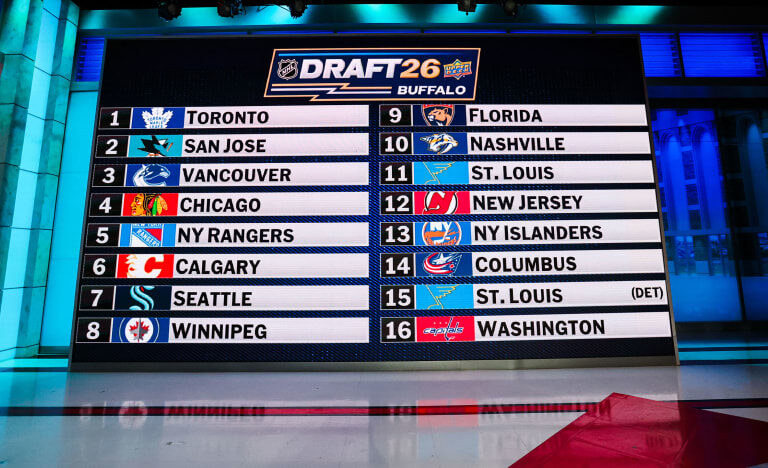
And that connection may ultimately be why the series continues thriving year after year.

Because beyond the lineup announcements, sponsorship structures, or individual performances, the Sundown Music Series succeeds by creating something audiences increasingly crave: authentic public gathering spaces centered around music, atmosphere, and shared experience.

In a state with one of the richest live music histories anywhere in the country, that tradition still matters enormously.

And throughout the summer of 2026, Wednesday nights at Haddon Lake Park appear ready to remind people exactly why.

Camden County Board of Commissioners

1-866-226-3362

View Organizer Website

Wiggins Waterfront Park

2 Riverside Dr
Camden, New Jersey 08103 United States
+ Google Map
(856) 541-7222
View Venue Website

Goodbye June

0

Goodbye June Brings Hard Rock, Southern Blues, and Gospel-Infused Swing to the Sundown Music Series on June 3

June 3 @ 7:30 PM 11:30 PM

Fueled by a passion for crafting timeless, catchy, and anthemic rock songs, the trio of cousins behind Goodbye June blends hard rock riffs with deep Southern blues and gospel-infused swing in a high-energy live performance.

Camden County’s Sundown Music Series Returns to Haddon Lake Park With One of Its Strongest Lineups Yet. Every summer, New Jersey proves once again that some of its most meaningful live music experiences do not happen inside arenas, casinos, or major amphitheaters. They happen in county parks, downtown streets, waterfront stages, and community gathering spaces where audiences arrive carrying lawn chairs, blankets, coolers, and the expectation that live music still has the power to transform an ordinary night into something memorable. That atmosphere has long defined the Sundown Music Series at Haddon Lake Park, and in 2026, the Camden County concert tradition returns with perhaps its most musically diverse and culturally ambitious lineup to date.

Running throughout the summer at the McLaughlin-Norcross Memorial Dell in Haddon Township, the free Wednesday night concert series continues evolving into one of South Jersey’s most important public music programs. Sponsored by AAA South Jersey and hosted by the Camden County Board of Commissioners, the series has steadily grown beyond a simple seasonal entertainment schedule into something much larger: a regional cultural institution that blends nationally touring artists, rising independent performers, local community identity, and accessible public arts programming inside one of the state’s most naturally atmospheric outdoor venues.

That distinction matters because free public concert series have become increasingly important to the overall health of local arts ecosystems.

At a time when ticket prices for major touring acts continue climbing dramatically nationwide, events like the Sundown Music Series create rare spaces where live music remains accessible across generations, economic backgrounds, and communities. Families, longtime music fans, younger concertgoers, casual listeners, and neighborhood residents all occupy the same environment together. The result is not simply a concert series but an ongoing summer gathering that reinforces how deeply music remains tied to local identity throughout New Jersey.

And few settings in South Jersey feel more naturally suited for that experience than the Dell at Haddon Lake Park.

Tucked inside a wooded section of Haddon Township, the McLaughlin-Norcross Memorial Dell possesses the kind of old-school outdoor concert atmosphere that increasingly feels rare in modern entertainment development. The natural amphitheater layout, surrounded by trees and open green space, creates an environment that feels intimate without feeling small. As the sun lowers and the lights begin illuminating the stage, the setting takes on an atmosphere somewhere between neighborhood gathering and hidden festival site.

That environment has become central to the Sundown Series identity itself.

The concerts do not feel overly commercialized or detached from the surrounding community. They feel rooted in place. Audience members spread across the lawn while dogs on leashes wander between groups, children move through open areas near the stage, and longtime attendees reconnect week after week throughout the season. It is the kind of event structure that reminds people why public arts programming still matters.

The 2026 lineup reinforces that broader cultural ambition.

Rather than building the schedule around a single genre or demographic, organizers assembled a season that moves fluidly between soul, indie rock, funk, Americana, tribute performance, alternative pop, and retro-inspired contemporary acts. That variety allows the series to function almost like a curated survey of modern live music culture while still maintaining broad public accessibility.

The season opens June 3 with Goodbye June, a Tennessee-based rock trio whose sound fuses Southern blues influences, gospel energy, and hard-driving classic rock structure into something that feels both modern and deeply rooted in American rock tradition. Built around three cousins whose chemistry has become central to the band’s identity, Goodbye June arrives carrying the kind of muscular, riff-heavy sound that feels designed for outdoor summer stages.

Their presence also signals something notable about the overall direction of the series.

The Sundown Music Series is not simply booking nostalgia acts or low-risk regional entertainment. Increasingly, it is attracting nationally recognized touring artists with legitimate followings and distinctive musical identities. Goodbye June’s combination of blues-infused hard rock and emotionally driven songwriting gives the opening night an immediate sense of scale and energy.

Joshua Chase Miller opens the June 3 performance, continuing the series’ longstanding practice of integrating emerging artists alongside more established acts.

That balance remains one of the stronger aspects of the Sundown Music Series overall. Too often, public concert programming becomes overly dependent on either tribute acts or legacy nostalgia bookings. The Sundown lineup consistently attempts to introduce audiences to newer or developing performers while still delivering recognizable names capable of drawing large crowds.

The remainder of the schedule continues that approach aggressively.

June 10 brings Edgardo Cintron & the Inca Band with a Santana tribute performance that feels particularly well-suited for the outdoor Dell setting. Santana’s music has always existed at the intersection of rhythm, improvisation, Latin influence, blues, and communal concert energy, making it ideal for a summer evening environment where audiences can spread out and absorb the atmosphere rather than remain confined to fixed seating structures.

Later in June, Devon Gilfillian arrives with one of the most critically respected voices on the schedule. Gilfillian’s blend of soul, rock, Americana, and socially conscious songwriting has made him one of the more compelling modern artists operating within the broader roots music landscape. His appearance significantly elevates the artistic credibility of the entire season while reinforcing the series’ willingness to pursue musically substantive bookings rather than purely commercial familiarity.

July’s lineup shifts stylistically again.

Work Drugs, the Philadelphia-based synth-pop and chillwave project, brings a completely different sonic texture to the Dell. Their shimmering, nostalgic electronic sound feels almost custom-built for humid summer nights, sunset lighting, and open-air environments. The inclusion of artists like Work Drugs demonstrates how far the series has expanded beyond conventional county concert programming.

Then comes Augustana, Sixpence None the Richer, and The Verve Pipe — artists whose catalogs remain deeply embedded within multiple generations of alternative and adult contemporary music listeners.

What makes those bookings especially effective is that they avoid feeling like cynical nostalgia programming. Each act still maintains legitimate audience recognition while carrying songs that remain emotionally connected to listeners decades after their initial release cycles. Outdoor summer concerts thrive when audiences feel collective familiarity with the music unfolding around them, and those performances are likely to generate exactly that kind of communal atmosphere.

One of the more intriguing entries on the schedule may be Here Come the Mummies in September.

The band’s elaborate funk-comedy presentation has developed a cult following nationally, built around musicians performing as ancient Egyptian “mummies” while delivering aggressively danceable funk arrangements and theatrical stage performance. Their inclusion reflects the broader willingness of the Sundown Series to embrace unpredictability and personality rather than programming only safe, straightforward concert experiences.

That creative variety ultimately strengthens the entire season.

The Sundown Music Series understands that modern audiences are increasingly searching for experiences rather than simply performances. The setting, crowd atmosphere, accessibility, environment, and emotional tone of an event all matter nearly as much as the music itself. By combining strong bookings with a uniquely welcoming outdoor environment, the series creates a full-evening cultural experience rather than just another concert calendar entry.

Importantly, the accessibility remains central to the event’s identity.

Free admission fundamentally changes the psychology of audience participation. People arrive more relaxed. Families feel comfortable attending casually. Younger listeners discover artists they may never have purchased tickets to see independently. Older attendees return repeatedly throughout the season because the environment feels open rather than transactional.

That community-oriented accessibility is becoming increasingly valuable in today’s live entertainment economy.

Large-scale concert touring continues becoming more expensive, more corporate, and increasingly concentrated around major metropolitan venues. Public concert series like Sundown help preserve a version of live music culture that still feels local, communal, and organically connected to the people attending it.

And that connection may ultimately be why the series continues thriving year after year.

Because beyond the lineup announcements, sponsorship structures, or individual performances, the Sundown Music Series succeeds by creating something audiences increasingly crave: authentic public gathering spaces centered around music, atmosphere, and shared experience.

In a state with one of the richest live music histories anywhere in the country, that tradition still matters enormously.

And throughout the summer of 2026, Wednesday nights at Haddon Lake Park appear ready to remind people exactly why.

Camden County Board of Commissioners

1-866-226-3362

View Organizer Website

Wiggins Waterfront Park

2 Riverside Dr
Camden, New Jersey 08103 United States
+ Google Map
(856) 541-7222
View Venue Website

Banana Ball Is Coming to the Jersey Shore, and It May Be the Wildest Baseball Event New Jersey Has Seen in Years

There are baseball games, there are entertainment spectacles, and then there is Banana Ball — a phenomenon that has effectively detonated the traditional boundaries separating sports, theater, comedy, live performance, social media culture, and fan experience. On June 13, ShoreTown Ballpark in Lakewood will become the latest stop inside that rapidly expanding national movement when the Loco Beach Coconuts face the Party Animals in what is already one of the most anticipated live sports events on the New Jersey summer calendar.

The fact that the event sold out almost immediately says a great deal not only about Banana Ball itself, but also about where live sports entertainment is heading overall.

Because what the Savannah Bananas organization has built is not simply an alternative baseball league. It is a complete rethinking of how sports audiences consume live events in the modern era. Attention spans are shorter. Entertainment competition is endless. Traditional sports leagues increasingly battle against streaming platforms, gaming, social media, short-form content, and nonstop digital distraction. Banana Ball recognized that reality earlier than most.

Instead of resisting entertainment culture, it embraced it fully.

The result has become one of the fastest-growing live event brands in the country.

And now, that energy is arriving directly on the Jersey Shore.

The June 13 matchup between the Loco Beach Coconuts and the Party Animals transforms ShoreTown Ballpark into something far bigger than a standard minor league baseball environment. For one night, the home of the Jersey Shore BlueClaws becomes part baseball stadium, part concert atmosphere, part comedy show, part crowd-interaction experience, and part organized chaos.

That may sound exaggerated until you actually examine what Banana Ball has become.

The games operate under an entirely different rules structure designed specifically to eliminate downtime and maximize audience engagement. There are no bunts allowed. Games operate under a strict two-hour framework. Fans can record outs by catching foul balls. Batters can attempt to steal first base under certain conditions. Players dance on the field, perform choreographed routines, interact directly with crowds, and routinely turn innings into live entertainment segments rather than rigid competitive sequences.

Purists sometimes recoil at the concept initially.

But that reaction increasingly misses the point.

Banana Ball was never created to replace Major League Baseball. It was created to ask a much larger question: what happens when baseball fully prioritizes entertainment value, pace, crowd interaction, accessibility, and fun without apology?

The answer, judging by nationwide demand, appears to be massive success.

That success has now created a touring ecosystem featuring multiple teams beyond the original Savannah Bananas themselves. The Lakewood series will showcase two of those traveling franchises: the Party Animals and the newly introduced Loco Beach Coconuts, one of the newest additions to the Banana Ball universe and arguably one of the most perfectly branded teams imaginable for a Jersey Shore appearance.

The Coconuts lean heavily into beach culture aesthetics and tropical absurdity while being led by former Major League Baseball star Shane Victorino, whose “Prime Time Coach” role further blurs the line between competitive sports and live entertainment performance. The Party Animals, meanwhile, have become one of the franchise’s signature attractions, known for their theatrics, crowd work, elaborate entrances, and ability to function almost like baseball’s equivalent of a traveling improv comedy troupe.

That combination arriving in New Jersey feels particularly fitting.

Because the Jersey Shore has always embraced entertainment that operates slightly outside the traditional boundaries of convention. Whether it is boardwalk culture, summer concert scenes, independent wrestling promotions, live music festivals, themed nightlife events, or minor league baseball itself, the Shore has historically rewarded experiences that feel immersive, communal, and larger than life.

Banana Ball fits directly inside that tradition.

And ShoreTown Ballpark may ultimately prove to be one of the ideal environments for it.

Over the years, the BlueClaws organization has consistently understood that minor league baseball works best when it becomes a full-community entertainment destination rather than simply a baseball operation. That philosophy helped make the franchise one of the more successful and recognizable minor league brands in the region. Hosting Banana Ball feels less like an outside rental event and more like a natural extension of that broader entertainment identity.

The atmosphere surrounding June 13 is expected to reflect exactly that.

Fans are not simply attending for nine innings of baseball. They are showing up for unpredictability. For interaction. For spectacle. For the possibility that literally anything could happen between pitches. Banana Ball intentionally creates an environment where traditional sports structure constantly collides with performance art and crowd participation.

And importantly, the players fully commit to the experience.

That commitment may be the most critical ingredient in the entire formula. Banana Ball would collapse instantly if participants approached it ironically or half-heartedly. Instead, players embrace the theatricality completely, understanding that athletic ability and entertainment value are not mutually exclusive concepts.

In many ways, the model resembles what professional wrestling understood decades ago: audiences remember emotional engagement and memorable moments as much as competitive outcomes themselves.

Banana Ball simply applies that principle to baseball.

The event’s sellout status reinforces just how strong demand has become nationally. Official ticket inventory disappeared rapidly through the primary lottery system, sending secondary-market prices soaring well beyond standard minor league baseball pricing structures. Resale tickets have reportedly climbed into the several-hundred-dollar range, a remarkable development for what is essentially an independent touring baseball entertainment property.

That demand also created the opening for one of the more creative charity promotions currently happening in New Jersey sports.

BlueClaws Charities, the official nonprofit arm of the Jersey Shore BlueClaws organization, is now offering what may effectively be the final realistic chance for many fans to attend the June 13 game through a luxury suite raffle tied directly to the organization’s annual grant initiatives.

The concept is straightforward but significant.

For $50, participants purchase one of only 300 raffle entries. One winner receives a private 20-person luxury suite for the sold-out Banana Ball game. The raffle winner will be selected May 29 during the BlueClaws’ ShoreTown Beach Badgers game before that night’s fireworks celebration.

What elevates the promotion beyond simple ticket access is where the proceeds are going.

BlueClaws Charities continues functioning as one of the more active community-focused nonprofit sports organizations throughout Ocean and Monmouth Counties. The organization distributes grants to dozens of regional nonprofit groups annually, recently awarding more than $52,000 across over 50 separate organizations serving local communities.

That community integration has long been part of the BlueClaws identity overall.

The ShoreTown Beach Badgers identity itself reflects that local-first approach. The alternate branding honors the badge checkers who have become an iconic part of Jersey Shore beach culture for generations, demonstrating how the organization consistently ties baseball entertainment back into the region’s broader cultural identity.

Banana Ball’s arrival simply amplifies that atmosphere to another level.

But beyond the spectacle itself, the event also represents something larger happening across live entertainment generally. Increasingly, audiences are gravitating toward experiences that feel participatory rather than passive. They want environments where crowd energy matters, where unpredictability exists, and where events create memorable moments extending beyond the scoreboard itself.

Banana Ball understands that instinct exceptionally well.

The games are engineered not only for in-person audiences but also for social media circulation, viral clips, fan interaction, and shareable moments. Every inning potentially contains content designed to travel digitally beyond the ballpark itself. That hybrid entertainment strategy has helped transform Banana Ball from niche curiosity into a national touring phenomenon.

And now New Jersey becomes part of that story.

On June 13, ShoreTown Ballpark will temporarily transform from a traditional baseball venue into one of the loudest, strangest, funniest, and most unpredictable entertainment environments anywhere on the East Coast. There will be baseball, certainly. But there will also be dancing players, theatrical entrances, audience participation, chaos, comedy, music, nonstop motion, and an atmosphere that intentionally refuses to resemble conventional sports presentation.

Which, frankly, is exactly why demand exploded in the first place.

Because whether traditionalists want to admit it or not, Banana Ball has tapped directly into something modern audiences increasingly crave: sports experiences that prioritize joy, energy, personality, and shared experience every bit as much as the final score.

And for one summer night in Lakewood, the Jersey Shore becomes the center of that spectacle.

Cinderella

0

Princeton Youth Ballet Brings a Reimagined “Cinderella” to the Stage With Heart, Humor, and the Next Generation of New Jersey Dance Talent

May 7 @ 8:00 AM 5:00 PM

New Jersey’s arts community has always thrived when institutions balance tradition with reinvention, and this spring, Princeton Youth Ballet appears poised to do exactly that with its upcoming production of Cinderella at the Princeton High School Performing Arts Center on May 9 and 10. At first glance, the announcement may read like another seasonal staging of one of ballet’s most recognizable stories. But beneath the familiar title is a production rooted in something much deeper: original interpretation, serious artistic craftsmanship, and a continued commitment to developing young performers inside one of New Jersey’s most respected youth dance organizations.

That distinction matters because productions like this increasingly represent the backbone of the state’s performing arts ecosystem. While New York and Philadelphia often dominate national conversations surrounding dance and theater, New Jersey’s regional arts organizations continue producing ambitious work that develops future professionals while simultaneously cultivating audiences who value live performance as something far more meaningful than disposable entertainment.

Princeton Youth Ballet has long occupied an important place within that conversation.

Its productions are not built around novelty or spectacle alone. They are built around storytelling, disciplined performance, and the idea that young artists deserve the opportunity to work within productions that demand real theatrical commitment. Cinderella becomes particularly interesting through that lens because it requires far more than technical dance ability. It requires emotional clarity, timing, theatricality, comedy, musical awareness, and an understanding of narrative pacing that can be difficult even for seasoned professional companies to achieve successfully.

This new production appears designed to embrace all of those challenges directly.

At the center of the ballet is Artistic Director and choreographer Risa Kaplowitz, whose creative philosophy reflects a growing movement within contemporary ballet that values both classical structure and personal interpretation. Rather than simply recreating an existing version of Cinderella, Kaplowitz approached the production through extensive narrative and musical exploration, building a version that blends emotional familiarity with a distinct point of view.

That process alone separates serious choreographic work from routine repertory staging.

Kaplowitz has spoken openly about her lifelong attraction to choreography and storytelling, tracing it back to childhood performances staged in her family living room alongside neighborhood productions she organized herself. That instinct for narrative construction eventually evolved through years of professional performance experience, including extensive exposure to original ballet creation during her time dancing with Dayton Ballet.

Those formative experiences clearly continue influencing her work today.

In discussing Cinderella, Kaplowitz describes a process rooted first in emotional connection rather than technical design. Before choreography begins, she immerses herself in the story’s history, themes, variations, and emotional architecture. In this case, she explored both the gentler Charles Perrault version familiar to many audiences and the darker Grimm Brothers interpretation, ultimately blending elements of each into a version that feels cohesive to her artistic sensibilities.

That willingness to reinterpret rather than merely reproduce gives the production a stronger artistic identity.

The result is expected to deliver the romantic fantasy audiences associate with Cinderella while also emphasizing atmosphere, character nuance, and theatrical humor in ways that make the ballet feel alive rather than preserved behind glass. According to PYB, the production leans heavily into magical and comedic elements, which may ultimately become one of its defining strengths. Too often, youth productions approach classical storytelling with excessive caution, prioritizing technical execution while losing spontaneity and personality in the process. This staging appears interested in the opposite approach: using movement to fully communicate character and emotional energy.

That philosophy aligns closely with Kaplowitz’s belief that dance can express things words cannot.

The production’s musical structure also reflects an unusually detailed level of creative involvement. Kaplowitz has described the process of building a ballet score as assembling a massive emotional puzzle, spending countless hours listening through compositions, testing arrangements, restructuring sequences, and shaping transitions until the narrative rhythm feels emotionally correct. Rather than treating music as accompaniment alone, she approaches it as a collaborative storytelling force.

That attention to musical architecture often separates memorable dance productions from forgettable ones.

And in ballet specifically, where dialogue is absent, music becomes inseparable from character psychology and dramatic movement. Every entrance, pause, gesture, and ensemble sequence depends on musical momentum. The strongest narrative ballets succeed because audiences instinctively feel the emotional transitions happening underneath the choreography itself.

That appears to be exactly the kind of immersive theatrical experience Princeton Youth Ballet is attempting to create.

The production also arrives at a moment when youth arts education continues facing growing pressure nationally. Across many school systems and communities, arts programming has increasingly been treated as secondary despite overwhelming evidence that music, theater, dance, and visual arts education contribute directly to cognitive development, emotional intelligence, discipline, collaboration, and confidence.

Organizations like Princeton Youth Ballet continue proving the opposite of the argument that arts programs are expendable.

Productions such as Cinderella require months of preparation, technical rehearsal, character development, physical training, costume coordination, musical synchronization, and collaborative problem-solving. Young dancers are not merely memorizing steps. They are learning timing, adaptability, emotional communication, professionalism, and stage discipline inside an environment that mirrors the expectations of professional performing arts organizations.

That developmental process becomes visible to audiences whether they consciously recognize it or not.

It is one reason live performance still matters in an era dominated by streaming entertainment and digital distraction. Theater asks audiences to remain present. Ballet asks viewers to engage emotionally without relying on dialogue-heavy exposition or cinematic shortcuts. When done successfully, the effect can feel remarkably immediate.

That immediacy is part of what continues making productions like Cinderella resonate across generations.

The story itself remains remarkably durable because it operates on multiple levels simultaneously. For younger audiences, it is fantasy and transformation. For older viewers, it often becomes a meditation on resilience, identity, isolation, hope, and recognition. Ballet intensifies those themes because movement strips away literal explanation and forces emotional clarity through physical expression.

Kaplowitz’s choreographic influences help illuminate why that emotional storytelling appears central to the production’s vision. She has frequently cited Frederick Ashton’s narrative ballets for their humanity and romantic nuance while also admiring George Balanchine’s extraordinary musicality and structural precision. More contemporary influences such as Alexei Ratmansky and Justin Peck further reveal a creative interest in balancing classical technique with modern energy and interpretive freedom.

Those influences collectively suggest a production interested not simply in preserving ballet tradition, but in keeping it emotionally relevant.

That idea has become increasingly important within New Jersey’s evolving performing arts landscape. Audiences today are highly selective. They are not attending productions simply because they are familiar titles. They are searching for experiences that feel thoughtful, immersive, and artistically alive. Regional arts organizations that survive long term tend to be the ones capable of offering both accessibility and artistic seriousness at the same time.

Princeton Youth Ballet has steadily built that reputation over the years.

Its continued investment in full-scale productions demonstrates confidence not only in its dancers but also in New Jersey audiences themselves. There remains a strong appetite throughout the state for ambitious live arts programming that values craftsmanship over gimmickry. Productions like Cinderella help reinforce that reality while also strengthening New Jersey’s broader cultural identity beyond the shadow of neighboring metropolitan markets.

The setting itself also contributes to the production’s accessibility. Staging the performances at the Princeton High School Performing Arts Center allows audiences to experience the ballet inside a community-centered environment that feels welcoming rather than inaccessible. That matters because one of ballet’s longstanding challenges nationally has been the misconception that the art form exists only for elite or specialized audiences.

Productions like this help dismantle that perception.

They create entry points for younger viewers, families, students, and first-time theatergoers while still delivering the artistic sophistication serious dance audiences appreciate. The balance between those worlds is not easy to achieve, but when organizations manage it successfully, the result often becomes one of the most valuable forms of regional arts programming.

This year’s Cinderella production appears determined to occupy exactly that space.

At a time when live arts organizations continue navigating changing audience habits, economic pressures, and shifting cultural attention spans, productions built around sincerity, craftsmanship, and genuine artistic investment stand out more than ever. Princeton Youth Ballet’s upcoming performances are not simply another entry on the regional arts calendar. They represent the continuation of a longstanding New Jersey tradition where community arts institutions create work that is simultaneously educational, ambitious, entertaining, and emotionally resonant.

And in a cultural landscape increasingly dominated by disposable content, that kind of live theatrical experience still carries enormous value.

Princeton Youth Ballet (PYB)

609-583-0605

View Organizer Website

Wiggins Waterfront Park

2 Riverside Dr
Camden, New Jersey 08103 United States
+ Google Map
(856) 541-7222
View Venue Website

Why Corn Salsa Has Become One of the Most Reliable Summer Staples in New Jersey Kitchens

Some recipes survive because they are complicated. Others survive because they become part of ordinary life.

Corn salsa belongs firmly in the second category.

It is not dramatic food. It is not designed around culinary spectacle, social media trends, or impossible preparation techniques. Nobody needs specialized equipment to make it. There is no twelve-hour cooking process, no elaborate reduction, no expensive ingredients flown in from another country. And yet, despite its simplicity, a well-made corn salsa consistently outperforms far more ambitious dishes because it understands something essential about modern cooking: people want food that tastes fresh, feels adaptable, and actually works in real life.

That is exactly why corn salsa continues becoming one of the defining warm-weather staples across New Jersey kitchens, backyard tables, summer cookouts, beach gatherings, taco nights, brewery patios, and casual family dinners.

At its best, corn salsa accomplishes something many recipes fail to do. It feels effortless without tasting lazy.

The version currently gaining momentum throughout home kitchens leans heavily into freshness, texture, balance, and flexibility. Sweet corn forms the foundation, but the real strength of the dish comes from the contrast built around it. Sharp lime juice cuts through the sweetness. Jalapeños bring heat without overwhelming the palate. Red onion adds crunch and acidity. Cilantro brightens everything. Cumin and chili powder provide depth without turning the salsa into something heavy or overly smoky.

The result is a dish that feels bright, clean, and layered while remaining incredibly easy to assemble.

That combination matters more than ever right now.

Modern home cooking increasingly revolves around versatility rather than rigid meal structures. Families are looking for recipes that can move between appetizers, side dishes, toppings, quick lunches, party food, and meal-prep staples without requiring completely separate preparation strategies. Corn salsa fits naturally into that shift because it functions almost everywhere.

Serve it with tortilla chips and it immediately works as a casual appetizer. Spoon it onto tacos and it becomes part of the main course. Add it to grilled chicken, steak bowls, burritos, quinoa dishes, rice bowls, or roasted vegetables and it instantly changes the entire plate without demanding much additional effort.

That flexibility explains why recipes like this continue thriving even as food trends constantly rotate online.

In New Jersey specifically, corn salsa also aligns perfectly with the state’s seasonal food culture. Once summer arrives, local produce markets, roadside farm stands, and neighborhood grocery stores become saturated with fresh sweet corn from throughout South Jersey and the state’s agricultural corridors. New Jersey corn has long been one of the state’s most recognizable seasonal staples, and recipes capable of showcasing that ingredient without burying it beneath excessive preparation naturally resonate with home cooks.

Corn salsa does exactly that.

Even when frozen corn is used, the recipe still retains much of its appeal because the structure itself is fundamentally ingredient-driven rather than technique-driven. Fresh corn may elevate texture and sweetness slightly, particularly during peak summer harvest season, but the broader success of the dish comes from the balance between acidity, crunch, sweetness, and restrained spice.

That restraint is important.

One reason corn salsa continues outperforming many trend-driven recipes is because it avoids overcomplication. Too many contemporary food trends confuse intensity with quality. Every ingredient becomes overloaded with sauces, toppings, excessive spice levels, or unnecessary embellishments designed more for visual impact than actual balance. Corn salsa succeeds because it remains disciplined.

Nothing dominates the dish completely.

The corn stays recognizable.

The lime stays fresh rather than acidic.

The jalapeño provides heat without hijacking the flavor profile.

The seasoning enhances rather than overwhelms.

That balance allows the salsa to move across multiple kinds of meals without becoming exhausting after two bites.

Corn Salsa

This vibrant corn salsa is easy to make in 10 minutes with frozen corn and goes great with chips, tacos, burritos or as a simple side dish.

Ingredients

  • 24 oz frozen corn thawed
  • ½ red onion finely diced
  • 2 jalapenos seeded and finely diced
  • 1 bunch cilantro finely chopped
  • 2 limes juiced
  • ½ teaspoon salt
  • ¼ teaspoon black pepper
  • ¼ teaspoon chili powder
  • ⅛ teaspoon ground cumin

Want To Save This Recipe?

Enter your email below and I’ll send the recipe straight to your inbox.Save This Recipe

We use your personal data for interest-based advertising, as outlined in our Privacy Notice.

Instructions

  • Add the corn, red onion, jalapenos, and cilantro to a large bowl. In a smaller bowl, combine the lime juice and seasonings. Pour lime dressing over the corn salsa and toss together.
  • Cover and refrigerate until ready to serve. Serve with tortilla chips!

Notes

For extra flavor, char corn in a frying pan with a TBS of olive oil. This will give it a deeper roasted flavor.  

Nutrition

Calories: 93kcal | Carbohydrates: 23g | Protein: 3g | Fat: 1g | Saturated Fat: 0.1g | Polyunsaturated Fat: 0.3g | Monounsaturated Fat: 0.2g | Sodium: 152mg | Potassium: 290mg | Fiber: 3g | Sugar: 1g | Vitamin A: 86IU | Vitamin C: 16mg | Calcium: 12mg | Iron: 1mg

The texture also plays a major role in why the recipe continues working so effectively. Good corn salsa should feel crisp, layered, and cold without becoming watery. That is why preparation details matter more than people sometimes realize. Properly draining thawed corn, finely dicing onions and peppers, allowing the mixture time to chill before serving, and balancing salt correctly all directly affect the finished result.

These are not restaurant tricks.

They are small technical details that determine whether simple food tastes genuinely polished or merely assembled.

One of the more interesting aspects of corn salsa’s popularity is how easily it accommodates personalization without collapsing structurally. Some cooks char the corn slightly in a skillet to introduce smokier depth and mild caramelization. Others fold in black beans for additional texture and protein. Avocado, tomatoes, serrano peppers, roasted poblano peppers, cotija cheese, or even diced mango occasionally appear in expanded variations.

Yet even with those additions, the foundation remains stable.

That is usually the sign of a strong recipe.

Weak recipes rely heavily on novelty. Strong recipes create frameworks flexible enough to absorb variation while retaining identity.

Corn salsa falls into the second category.

Its practicality also aligns perfectly with the broader realities of contemporary home cooking. Most people are not preparing restaurant-level dinners every night of the week. They are balancing work schedules, commuting, parenting, errands, social obligations, and increasingly unpredictable daily routines. Recipes that demand excessive preparation time often become unrealistic outside special occasions.

Corn salsa avoids that problem entirely.

Ten or fifteen minutes of preparation can produce something usable across multiple meals for several days. The flavor often improves after sitting in the refrigerator for a few hours, making it particularly effective for advance preparation ahead of parties, cookouts, or busy workweeks. Unlike many salads or fresh sides that deteriorate quickly, corn salsa tends to hold its structure well if properly stored.

That reliability becomes incredibly valuable in real kitchens.

It is also one of the reasons dishes like this continue thriving throughout New Jersey’s outdoor dining and summer entertainment culture. Whether at backyard barbecues, beach rentals along the Shore, brewery patios, graduation parties, pool gatherings, or casual weekend cookouts, people increasingly gravitate toward foods that feel fresh without requiring constant maintenance.

Corn salsa sits comfortably inside that environment.

The dish also reflects a broader shift happening throughout American food culture overall. Increasingly, people are moving away from excessively processed side dishes and toward ingredient-focused preparations that still feel approachable rather than performative. Freshness has become more important than complexity. Texture matters more. Acid balance matters more. Simplicity, when executed properly, is increasingly valued rather than dismissed.

That is exactly where corn salsa thrives.

Perhaps most importantly, though, recipes like this endure because they remain emotionally useful. They become dependable. Familiar. Repeatable. The kind of dish people stop needing recipes for because they instinctively understand how it should taste and feel. Those are often the recipes that survive longest within families and communities.

Not because they are flashy.

Because they consistently work.

And in a food culture increasingly overwhelmed by trends, algorithms, and visual gimmicks, there is something refreshing about a recipe that succeeds simply because it tastes good, adapts easily, and belongs naturally at the table.

That may be the real reason corn salsa continues earning its place throughout New Jersey kitchens every summer.

It is not trying to become the center of attention.

It is simply becoming one of the dishes people keep making again and again because it never really stops fitting into everyday life.

The Corn Salsa Recipe is a Jersey Girl Cooks Recipe.

Mayo Performing Arts Center Launches Historic $65 Million Expansion as Morristown’s Cultural Future Enters a New Era

For nearly nine decades, the Mayo Performing Arts Center has stood as one of New Jersey’s defining cultural institutions. Long before Morristown evolved into one of the state’s premier downtown destinations for dining, nightlife, business, and arts programming, the theater already occupied a central place within the community’s identity. Generations of audiences have passed through its doors. Broadway tours, symphony performances, comedians, dance companies, educational programs, film screenings, and nationally recognized artists have all contributed to transforming the venue into far more than a traditional theater. It has functioned as a civic anchor for Morris County and one of the most important regional arts institutions anywhere in the state.

Now, the organization is preparing for the most ambitious transformation in its history.

On May 6, 2026, the Mayo Performing Arts Center officially broke ground on a sweeping $65 million expansion and restoration project that will dramatically reshape both the theater itself and the surrounding Morristown arts corridor. The project represents not only a major investment into the future of MPAC, but also a significant statement about the evolving role arts institutions continue to play in New Jersey’s economic, educational, and cultural infrastructure.

The scale of the project is difficult to overstate.

At the center of the expansion is the creation of the new Ilene and Bruce Jacobs Arts & Education Center, a 31,000-square-foot addition that will rise directly behind the historic theater. The facility is designed to become a major educational and community arts hub while simultaneously modernizing MPAC’s operational capacity for the next generation of performances, touring productions, and arts programming.

Importantly, the expansion is not being framed as modernization for modernization’s sake.

What makes the project particularly compelling is the organization’s effort to balance large-scale growth with historic preservation. MPAC’s original 1937 Art Deco character remains central to the theater’s identity, and the restoration effort appears designed to preserve that architectural legacy rather than erase it beneath contemporary redesign trends that have affected many older performance venues across the country.

That decision matters culturally.

Historic theaters occupy a unique position within American downtowns. Unlike new entertainment venues designed primarily around efficiency or capacity, older theaters carry emotional memory embedded directly into their architecture. Their lobbies, balconies, facades, seating layouts, plasterwork, and stage design become part of a community’s collective experience over decades. Preserving those details while upgrading infrastructure requires both financial commitment and institutional restraint.

MPAC appears determined to accomplish both.

The historic 1,300-seat theater itself will undergo extensive restoration work, including new period-style seating, repairs to aging Art Deco plaster finishes, upgraded public areas, and refreshed lobby spaces designed to maintain the venue’s original visual character while improving overall guest experience. Outdoor public spaces surrounding the theater will also be redesigned and modernized, further integrating the venue into Morristown’s increasingly active pedestrian-centered downtown environment.

But while restoration preserves the theater’s past, the expansion clearly focuses on its future.

The new Ilene and Bruce Jacobs Arts & Education Center represents a major escalation of MPAC’s educational ambitions. The facility will house the Jacobs Performing Arts School, creating a significantly larger and more sophisticated educational environment for students throughout the region. Seven dedicated education studios will support expanded arts instruction, rehearsals, workshops, and youth programming, while a new 150-seat rehearsal and performance space will create additional opportunities for smaller-scale productions, community events, student showcases, and developmental programming.

That educational component may ultimately become one of the project’s most important long-term contributions.

Arts education has increasingly become one of the most unstable areas within public education systems nationwide. Budget reductions, shifting curriculum priorities, and uneven district funding have left many arts organizations serving as supplemental educational institutions alongside schools themselves. Regional arts centers like MPAC increasingly occupy dual roles as both entertainment venues and educational providers, helping expose younger generations to music, theater, dance, visual arts, and live performance experiences that might otherwise become inaccessible.

The expansion acknowledges that reality directly.

Production infrastructure also forms a major part of the project’s scope. As touring productions become more technologically demanding and logistically complex, older theaters frequently face operational limitations involving load-in capacity, backstage movement, freight access, storage, and dressing room accommodations. MPAC’s expansion addresses those challenges through new loading facilities, a freight elevator system, modernized backstage areas, and upgraded technical support infrastructure designed to accommodate larger national productions and more advanced touring shows.

That operational modernization carries major implications not only for the theater itself but for Morristown’s local economy overall.

According to officials associated with the project, MPAC already functions as an estimated $18 million annual economic engine for surrounding businesses. Restaurants, bars, hotels, retail shops, parking operations, and surrounding hospitality businesses all benefit directly from theater traffic generated throughout the year. On performance nights, downtown Morristown’s economic activity is visibly tied to the movement of audiences entering and leaving the theater district.

In that sense, the expansion is not simply an arts project.

It is also a downtown development project.

Over the last fifteen years, Morristown has steadily evolved into one of New Jersey’s most vibrant mixed-use downtowns. Residential growth, office redevelopment, hospitality expansion, nightlife activity, and restaurant investment have transformed the town into a destination far beyond its historical identity as a commuter suburb or Revolutionary War landmark. MPAC has remained central to that transformation, serving as one of the foundational institutions helping anchor Morristown’s cultural identity amid its broader economic evolution.

This new expansion reinforces that role significantly.

The project also highlights the increasingly important relationship between public-private partnerships and large-scale arts development throughout New Jersey. Major funding support includes a substantial $7.5 million lead gift from Ilene and Bruce Jacobs, whose names will now become permanently associated with the new arts and education center. Additional support comes through the New Jersey Economic Development Authority’s CAFE Program, which contributed $65 million in tax credits toward the project.

That type of state-level investment into arts infrastructure reflects a broader recognition that cultural institutions are no longer viewed solely as nonprofit amenities. Increasingly, they are being treated as economic drivers capable of generating tourism, business activity, educational development, and regional identity simultaneously.

New Jersey’s arts sector has become increasingly central to redevelopment conversations throughout cities and suburban downtowns alike. From Newark and Jersey City to Asbury Park, Red Bank, Princeton, Montclair, and Morristown, cultural venues have emerged as essential anchors in broader urban and suburban revitalization strategies.

MPAC’s expansion exists directly within that larger statewide movement.

The project’s timeline also underscores its scale. Construction is expected to continue for approximately 18 to 24 months, with likely completion targeted for late 2027 or early 2028. Despite the magnitude of the renovation, the theater itself is expected to remain operational through much of the process, allowing performances and programming to continue while construction progresses around the facility.

That continuity feels particularly symbolic.

Rather than shutting down completely during redevelopment, MPAC will continue functioning as an active performance venue while simultaneously reinventing itself in real time. That balancing act mirrors the larger challenge facing many historic arts institutions across America today: preserving tradition while adapting aggressively enough to remain relevant, competitive, and financially sustainable within rapidly changing entertainment and cultural landscapes.

MPAC appears intent on doing both.

The addition of spaces like the Starlight Veranda, new meeting and reception areas overlooking Pine Street, dedicated gallery space, and expanded community gathering areas further demonstrates how modern arts institutions increasingly function as multi-use civic environments rather than single-purpose theaters. Today’s successful performing arts centers often operate simultaneously as concert halls, educational facilities, business event venues, public gathering spaces, and community cultural hubs.

This expansion positions MPAC firmly within that future.

At a moment when arts funding, downtown development, cultural preservation, and economic growth are all intersecting throughout New Jersey, the Mayo Performing Arts Center project stands as one of the most ambitious arts infrastructure investments currently underway anywhere in the region.

And when construction is complete, Morristown will not simply have a restored theater.

It will have one of the most advanced and culturally significant performing arts campuses in the Northeast, built upon nearly ninety years of history while positioning itself for decades still to come.

New Jersey Devils, UFC Foundation, and Newark Leaders Launch First-Ever Youth Wellness Center Inside Boys & Girls Club of Newark

The relationship between professional sports organizations and the communities surrounding them has evolved dramatically over the last decade. Once largely centered around charity appearances, ceremonial donations, and occasional youth clinics, modern sports-driven community investment has become significantly more ambitious, more strategic, and in many cases, more necessary. Increasingly, franchises are being asked not simply to entertain or compete, but to serve as long-term institutional partners capable of addressing real social challenges within the cities they represent.

This week in Newark, the New Jersey Devils helped unveil one of the strongest examples yet of what that modern model can look like.

On Wednesday, May 6, 2026, the UFC Foundation officially opened its first-ever Youth Wellness Center at the Boys & Girls Club of Newark, marking a major collaborative initiative involving the UFC Foundation, the New Jersey Devils, the Devils Youth Foundation, Prudential Center, and the New Jersey Sports and Exposition Authority. The project represents far more than a ceremonial ribbon cutting. It signals a growing recognition among major sports organizations that mental health, emotional support, youth stability, and community wellness are no longer secondary conversations within urban development and youth outreach efforts. They are central priorities.

And in Newark, that reality carries enormous significance.

The new Wellness Center was designed specifically as a safe, structured, supportive environment for local youth navigating pressures that extend far beyond athletics or recreation. The facility integrates mental, emotional, and physical wellness resources within a community-centered setting that prioritizes accessibility and long-term support rather than temporary programming.

That distinction matters.

Across New Jersey and throughout the country, conversations surrounding youth mental health have accelerated rapidly in recent years. Schools, parents, healthcare professionals, and community organizations have increasingly acknowledged the growing pressures facing younger generations, including anxiety, depression, trauma exposure, social instability, academic stress, and the lingering psychological effects connected to both pandemic-era disruptions and broader economic uncertainty.

The Wellness Center directly addresses those realities.

Inside the facility are sensory-friendly decompression areas intentionally designed to help children regulate stress and emotions in safe, calming environments. These spaces are structured to support youth dealing with challenges both inside and outside school settings, recognizing that emotional wellness cannot be separated from broader daily life experiences. The center also facilitates access to professional mental health services, including one-on-one psychotherapy opportunities, group counseling, and family support systems coordinated through licensed clinical social workers.

Importantly, the project was not positioned as symbolic philanthropy alone.

Officials confirmed that more than $100,000 was invested into the facility, reinforcing that this initiative was designed as a serious operational commitment rather than a temporary awareness campaign. In today’s sports landscape, where public-facing charitable announcements can sometimes feel transactional or image-driven, the structural investment behind the Newark Wellness Center stands out as particularly meaningful.

The involvement of the Devils organization also reflects the franchise’s increasingly visible commitment to Newark itself.

For years, the Devils and Prudential Center have expanded their presence beyond game nights and entertainment programming into broader civic engagement throughout the city. Youth development, education initiatives, neighborhood partnerships, and nonprofit collaborations have steadily become larger components of the organization’s public identity. The Devils Youth Foundation, in particular, has become an increasingly active force within Newark-area community investment efforts, helping fund programs tied to education, food insecurity, recreation, and family support.

The Wellness Center project fits naturally within that expanding mission.

What made Wednesday’s unveiling especially effective, however, was the way it combined institutional support with personal visibility from athletes themselves.

Representatives from both the Devils and UFC were present throughout the day, creating an atmosphere that felt less corporate and more community-driven. Devils defenseman Johnny Kovacevic, goaltender Jake Allen, former Devils defenseman Colin White, and mascot NJ Devil participated directly in the ribbon-cutting ceremony and youth activities that followed. UFC athletes Khalil Rountree Jr. and former bantamweight champion Aljamain Sterling also spent extensive time interacting with children at the event.

But beyond the appearances themselves, the messaging surrounding the day felt notably grounded.

Rountree’s remarks about his own mental health journey carried particular weight. Rather than speaking in generic motivational language, he discussed how mixed martial arts helped him navigate adversity, emotional struggle, and personal instability earlier in life. That type of honesty resonates differently with young audiences, especially within environments specifically focused on emotional wellness and support.

Athletes today increasingly occupy roles extending far beyond performance alone. Younger audiences often connect more deeply to vulnerability, authenticity, and lived experience than polished public relations messaging. Events like this work best when athletes engage not simply as celebrities but as individuals willing to discuss personal challenges honestly and constructively.

By many accounts, that is exactly what happened in Newark.

Following the formal unveiling ceremony, the atmosphere shifted from institutional presentation into something far more organic. Athletes joined kids in dodgeball games, field day activities, casual conversations, and interactive programming throughout the afternoon. That transition mattered because it reinforced the central purpose of the facility itself: creating environments where support systems feel approachable, human, and integrated into ordinary community life rather than distant clinical structures.

The timing of the project also aligns with the broader momentum surrounding Newark’s continuing civic and cultural evolution.

Over the past several years, Newark has increasingly emerged as one of the Northeast’s most important redevelopment stories. Large-scale investment surrounding transportation, arts, entertainment, higher education, housing, sports, and technology has steadily reshaped the city’s economic and cultural profile. Prudential Center has played a major role in that transformation, serving not only as a sports venue but as a major anchor within Newark’s ongoing downtown revitalization efforts.

Yet projects like the Wellness Center highlight a different but equally important dimension of long-term urban growth.

Sustainable city development is not measured solely through construction projects, real estate activity, or corporate investment. It is also measured through the strength of community infrastructure supporting the people already living there. Youth programs, wellness resources, educational access, and family support systems often determine whether redevelopment benefits remain inclusive and durable over time.

The Newark Wellness Center represents investment in that type of infrastructure.

The collaboration between the UFC Foundation and the Devils organization is also notable because it reflects an increasingly interconnected sports and entertainment ecosystem inside New Jersey. Major leagues and organizations are recognizing that collaborative community initiatives often create broader impact than isolated charitable efforts operating independently. By combining resources, visibility, and outreach capacity, partnerships like this can extend both funding and awareness further into communities that need sustained support.

This week’s event marked the fourth consecutive year the UFC has partnered with the Devils Youth Foundation during UFC fight week activities surrounding events at Prudential Center. That consistency matters because repeated engagement tends to build far stronger community trust than isolated appearances or short-term campaigns.

In many ways, the Youth Wellness Center also represents a broader cultural shift occurring throughout professional sports itself.

Mental health discussions that once remained largely private are now becoming central components of athlete advocacy, organizational responsibility, and public dialogue. Across hockey, basketball, football, baseball, and mixed martial arts, athletes have increasingly spoken openly about anxiety, depression, emotional burnout, trauma, and psychological wellness. Organizations have slowly begun responding not only internally for players and staff, but externally through community-facing initiatives as well.

The Newark project exists within that larger evolution.

For the Devils specifically, the event reinforced something increasingly important about the franchise’s role inside New Jersey. The organization is not simply positioning itself as a hockey team operating within Newark. It is increasingly functioning as a civic institution participating directly in the city’s broader community identity and long-term social development.

That distinction matters both culturally and organizationally.

Professional sports franchises often talk about community. Fewer consistently build infrastructure capable of creating measurable long-term impact.

This week in Newark, the Devils, UFC Foundation, and their partners unveiled something designed to do exactly that.

And as conversations surrounding youth wellness, emotional health, and community investment continue growing across New Jersey, the new Youth Wellness Center stands as one of the clearest examples yet of how sports organizations can use their platforms to build something that extends far beyond the arena itself.

New Jersey Craft Beer 2026 World Beer Cup Victories, Massive Festival Season, Anniversary Celebrations, and a Live Music Explosion Across the State

New Jersey’s craft beer scene is no longer emerging. It is established, nationally respected, economically influential, culturally connected, and increasingly impossible to ignore. What was once viewed as a regional movement built around small taprooms and experimental brewing has evolved into one of the most dynamic craft beverage ecosystems on the East Coast. And as summer 2026 approaches, the Garden State’s brewery culture is entering one of its most active and celebratory stretches in years.

The momentum became unmistakable following major victories at the 2026 World Beer Cup, one of the most prestigious international brewing competitions in the industry. Breweries from New Jersey captured multiple medals on the global stage, reinforcing what local craft beer supporters have argued for years: New Jersey brewing is operating at a world-class level.

The awards also arrive at a time when brewery culture in New Jersey has expanded far beyond beer itself. Taprooms have increasingly become live music venues, community gathering spaces, entertainment destinations, arts hubs, culinary incubators, and anchors for local downtown development. Across the state, breweries are functioning less like isolated beverage producers and more like modern cultural centers.

The latest World Beer Cup results only accelerated that momentum.

Gold: Wander Back Beerworks (Vineland) for their Wander Back Lager (Munich-Style Helles).
Silver: MudHen Brewing Co. (Wildwood) for Captain Doug’s Porter.
Bronze: Odd Bird Brewing (Stockton) for House Red and Subculture Artisan Ales (Florence) for Burton Reynolds

Wander Back Beerworks in Vineland earned a gold medal for its Wander Back Lager in the Munich-Style Helles category, a major achievement in one of brewing’s most technically demanding traditional styles. Winning international recognition for a lager is particularly significant within craft brewing circles because lighter styles leave little room for flaws or imbalance. The award further elevates Wander Back’s growing reputation as one of South Jersey’s standout breweries.

MudHen Brewing Co. in Wildwood secured a silver medal for Captain Doug’s Porter, reinforcing Cape May County’s increasingly important role within the state’s brewing landscape. Meanwhile, Odd Bird Brewing in Stockton captured bronze for House Red, while Subculture Artisan Ales in Florence earned bronze for Burton Reynolds, continuing the rise of smaller independent breweries specializing in highly distinctive and style-focused brewing programs.

Collectively, the wins represent more than isolated accolades.

They reflect how dramatically New Jersey’s brewing industry has matured over the last decade. Breweries throughout the state are now competing directly with internationally recognized producers while simultaneously maintaining the localized identity that helped define the state’s craft beer movement in the first place.

That local identity remains central to why New Jersey’s brewery culture continues growing.

Unlike heavily commercialized beverage districts elsewhere in the country, many New Jersey breweries still retain a deeply community-driven atmosphere. Owners are often present in the taprooms. Brewers regularly interact directly with customers. Local musicians perform weekly. Food trucks rotate constantly. Neighborhood events, charity fundraisers, trivia nights, markets, live bands, and themed festivals have transformed breweries into some of the state’s most active independent entertainment venues.

As warmer weather arrives, that culture is preparing for one of its busiest seasons yet.

Festival calendars throughout the state are quickly filling with large-scale beer events designed to merge brewing, music, food, arts, and community experiences into destination weekends.

One of the first major events arriving this spring is the Hops into Spring Beer Festival on May 9 at The Deauville Inn in Strathmere. Positioned along the Jersey Shore, the event blends New Jersey craft breweries with live music, local artists, coastal energy, and seasonal tourism activity as shore communities move into the summer season.

That same weekend, Brick Township’s Icarus Brewing will host Seltzfest, a specialized event spotlighting house-made hard seltzers alongside live performances from Kyle Ahern and the Lawrence Haber Collective. The event reflects how breweries are continuing to diversify their beverage offerings while building entertainment programming around increasingly broad consumer interests.

Hard seltzers, fruited ales, low-ABV offerings, hybrid beverages, and alternative fermentation styles have all become part of the modern taproom landscape. Breweries are no longer competing solely on IPAs or traditional craft styles alone. Instead, many are functioning as experimental beverage laboratories designed to attract casual drinkers, craft enthusiasts, music fans, and social audiences simultaneously.

The expansion of event programming continues later in May with the Meadowlands Racetrack Beer Fest on May 16 in East Rutherford.

The event will feature more than 60 producers while integrating live horse racing and a simulcast of the Preakness Stakes, creating one of the largest hybrid sports-and-beverage entertainment experiences of the spring. That combination highlights another defining characteristic of New Jersey’s brewery culture: its ability to integrate seamlessly into broader entertainment ecosystems.

Craft beer in New Jersey increasingly overlaps with sports culture, live music, tourism, gaming, food festivals, waterfront events, and community celebrations. Breweries are not operating separately from those industries anymore. They are actively helping shape them.

Upcoming Events & Festivals

Meadowlands Racetrack Beer Fest (May 16): Over 60 producers, live horse racing, and a Preakness Stakes simulcast in East Rutherford.

Hops into Spring Beer Festival (May 9): Held at The Deauville Inn in Strathmere, featuring NJ craft beers, local artists, and live music.

Seltzfest at Icarus Brewing (May 9): A spotlight on house-made hard seltzers in Brick, featuring live music from Kyle Ahern and the Lawrence Haber Collective.

For many breweries across the state, music programming has become just as important as beverage releases themselves.

That crossover is especially visible in the nonstop weekly entertainment schedules now filling taprooms statewide.

Asbury Park Brewery continues leaning into the city’s deep musical identity, hosting Iron Lion World and its reggae-driven performances. Mechanical Brewery features live acts like Relics, while Cape May Brewery welcomes performers including Andrew Moorer. Wild Air Beerworks hosts Billy Liar & The Haunted Hearts, Double Tap Brewing continues showcasing regional acts like Jersey Bound, and Berlin Brewing Company’s open mic nights further reinforce how breweries have evolved into grassroots performance venues supporting local creative communities.

This entertainment-driven identity is increasingly important economically as well.

Taprooms now compete not simply through beer quality, but through atmosphere, experience, programming, and community engagement. A successful brewery today often functions simultaneously as a concert venue, restaurant alternative, social club, event hall, and neighborhood meeting space.

Double Tap Brewing in Whippany offers one of the clearest examples of that community-first approach.

Its recurring Music Bingo nights, held every second Thursday from 7:00 p.m. to 9:00 p.m., reflect the increasingly interactive nature of modern brewery entertainment. Rather than relying solely on passive consumption, breweries are creating recurring social experiences that encourage repeat visitation and community familiarity. Events like Music Bingo may seem small on the surface, but they represent a major part of how breweries sustain loyal local followings.

The state’s brewing creativity is equally visible in the newest beer releases entering taprooms this season.

Tonewood Brewing recently introduced Eventide Hoppy Ale, a draft-only seasonal release featuring notes of pineapple and orange sherbet designed for warmer-weather drinking. Cape May Brewery continues seeing strong demand for beers such as Always Ready, a hazy pale ale, and Sunnie Tan, a tropical Motueka-hopped offering currently performing strongly within the brewery’s ongoing Beer Bracket series.

Meanwhile, Cold Spring Brewery recently tapped Lipman Lichtenhainer, a highly distinctive low-ABV smoky and sour ale that reflects the increasing willingness of New Jersey breweries to embrace obscure historical styles and experimental flavor profiles.

That willingness to experiment remains one of the defining traits of New Jersey brewing overall.

The state’s breweries consistently balance technical brewing discipline with stylistic creativity. Traditional lagers coexist alongside fruited sours, farmhouse ales, pastry stouts, barrel-aged projects, European-inspired styles, hop-forward experimentation, and hybrid beverages designed specifically for modern taproom audiences.

Even newer entrants into the brewing scene are embracing that mindset.

Erratic Fermentations, which recently opened in Bradley Beach, is already attracting attention for its homebrew-inspired draft list and unconventional stylistic direction. Beers like Duke of Nowhere, a dark mild ale, reflect a growing trend among newer breweries toward niche styles and brewer-driven experimentation rather than chasing purely commercial trends.

That evolution speaks to the maturity of New Jersey’s beer audience as much as the breweries themselves.

Consumers throughout the state have become increasingly knowledgeable, adventurous, and style-aware. Drinkers are now seeking authenticity, craftsmanship, uniqueness, and atmosphere rather than simply following national hype cycles. That cultural sophistication has allowed smaller breweries throughout New Jersey to thrive even as the broader national craft beer market becomes more competitive.

It also explains why New Jersey’s brewery scene continues attracting national recognition.

The World Beer Cup medals matter because they validate what has already become obvious throughout the state itself: New Jersey breweries are producing elite-level beer while simultaneously building some of the strongest community-oriented taproom cultures anywhere in the Northeast.

As summer 2026 approaches, that momentum shows no signs of slowing.

From international awards to anniversary festivals, from live reggae shows in Asbury Park to Music Bingo nights in Whippany, from experimental farmhouse ales to traditional medal-winning lagers, New Jersey’s brewery scene is entering the season with extraordinary energy, depth, and cultural relevance.

And increasingly, the story is no longer simply about beer.

It is about the way breweries have helped redefine how New Jersey gathers, celebrates, creates, performs, socializes, and experiences local culture itself.

Hops Into Spring Beer Festival Returns to the Jersey Shore as New Jersey Craft Brewing Culture Takes Over the Bayside in Strathmere

As New Jersey’s craft beer industry continues evolving into one of the state’s most influential cultural and tourism-driving forces, beer festivals themselves have become far more than simple tasting events. Increasingly, they function as regional showcases for independent business, live music, local art, food culture, and community identity — immersive gatherings that reflect the broader personality of the places hosting them.

That transformation will be fully visible this Saturday when the 3rd Annual Hops Into Spring Beer Festival returns to the Deauville Inn in Strathmere, bringing together more than two dozen New Jersey breweries for a bayside celebration that continues establishing itself as one of the Jersey Shore’s signature spring craft beer events.

Set against the waterfront backdrop of Strathmere’s scenic bayfront landscape, the festival captures something that has become increasingly important to New Jersey’s independent brewery movement: atmosphere matters just as much as the beer itself.

The setting is part of the experience.

Positioned along the water at the Deauville Inn, the Hops Into Spring Beer Festival blends coastal energy, live entertainment, local craftsmanship, and outdoor festival culture into an event that feels uniquely tied to the Jersey Shore. Especially as warmer weather returns and shore towns begin transitioning into summer season mode, festivals like this have become central to how New Jersey breweries connect directly with audiences outside traditional taproom environments.

The event runs Saturday, May 9, 2026, from 12:00 PM through 4:00 PM and will feature unlimited samples from more than 24 New Jersey breweries spanning multiple counties and brewing styles. The participating lineup reflects the remarkable depth of New Jersey’s modern craft beer scene, where small independent producers now compete nationally while maintaining strong regional identities deeply connected to their communities.

Among the breweries confirmed for this year’s festival are several names that have become major players within the state’s rapidly expanding brewing ecosystem, including MudHen Brewing Company, Ludlam Island Brewery, Farmers and Bankers Brewing, 13th Child Brewery, Slack Tide Brewing Company, Spellbound Brewing, and Pinelands Brewing Co.

Each brewery brings its own philosophy, regional flavor profile, and stylistic identity to the event, creating a tasting environment that reflects how diverse New Jersey’s brewing culture has become over the last decade.

That diversity is one of the defining reasons the state’s craft beer industry continues thriving.

What once existed primarily as a collection of isolated local breweries has evolved into a fully interconnected statewide network of independent producers helping drive tourism, nightlife, entertainment, dining culture, and regional branding. Breweries are no longer viewed simply as beverage companies. They now function as community gathering spaces, live music venues, event hubs, collaborative business anchors, and cultural institutions within their respective towns.

The Hops Into Spring Beer Festival taps directly into that broader movement.

Rather than positioning itself as a hyper-commercialized large-scale corporate festival, the event leans heavily into the independent spirit that helped build New Jersey craft beer culture in the first place. Local artists, regional vendors, food offerings, and live music are all integrated into the afternoon’s programming, reinforcing the idea that festivals like this succeed because they create an entire social environment rather than merely offering beer samples.

Live performances from the local band Going Rogue will provide the soundtrack throughout the day, helping maintain the laid-back but energetic atmosphere that has increasingly become synonymous with Jersey Shore beer culture. Especially in coastal communities, breweries and music venues now operate in close parallel, frequently sharing audiences and contributing to the same broader entertainment ecosystem.

That overlap feels particularly natural in shore towns like Strathmere, where seasonal tourism, nightlife, outdoor recreation, and live entertainment all intersect within a relatively compact geographic footprint.

The Deauville Inn itself plays a major role in the event’s growing popularity.

Long regarded as one of the more scenic waterfront destinations along the South Jersey shore, the venue offers expansive bayside views that elevate the festival beyond a standard parking-lot beer event. The visual backdrop matters because modern audiences increasingly seek experiences tied to place — events that feel immersive, regional, and distinct rather than interchangeable.

At Hops Into Spring, the water becomes part of the atmosphere.

That connection to coastal identity also reinforces the larger role craft breweries now play within Jersey Shore tourism itself. Breweries have increasingly become year-round anchors for shore communities historically dependent on seasonal beach traffic. By hosting festivals, concerts, food collaborations, and community gatherings throughout the calendar year, breweries help stabilize local economic activity while simultaneously redefining what shore tourism can look like beyond traditional summer beach weekends.

The participating brewery lineup reflects that growing regional importance.

MudHen Brewing Company has become one of Wildwood’s defining brewery destinations, blending large-scale hospitality operations with highly approachable beer styles that appeal to both casual drinkers and serious craft beer audiences. Ludlam Island Brewery continues strengthening the Cape May County brewery scene with its distinctly coastal identity and strong local following, while Slack Tide Brewing Company has built a reputation as one of South Jersey’s more respected independent producers rooted heavily in shore-town culture and community engagement.

Spellbound Brewing and Pinelands Brewing Co. bring additional stylistic diversity and regional representation, highlighting how breweries from different corners of the state continue contributing to the broader momentum of New Jersey craft beer.

The growth of these festivals also reflects a larger consumer shift toward experiential entertainment.

People increasingly prioritize events that combine social interaction, local business support, live performance, outdoor settings, and culinary exploration into one continuous experience. Beer festivals now operate as lifestyle events as much as tasting events, attracting audiences interested in atmosphere and community just as much as specific breweries or beer styles.

Hops Into Spring understands that dynamic clearly.

The event’s emphasis on local artists and food vendors reinforces the collaborative culture increasingly defining New Jersey’s independent business scene overall. Breweries, musicians, food operators, artists, and event organizers now frequently overlap within the same economic and creative ecosystems, helping smaller communities build stronger local identities through coordinated cultural activity.

At the Jersey Shore, that collaboration becomes even more visible during spring and summer festival season.

As the state’s craft brewing industry continues maturing, festivals like Hops Into Spring increasingly serve another important role as well: they help introduce consumers to breweries they may not otherwise encounter. With so many independent breweries now operating across New Jersey, events like this create opportunities for discovery that continue fueling growth throughout the broader industry.

For many attendees, the festival becomes less about visiting one brewery and more about exploring the evolving identity of New Jersey beer culture itself.

That culture is no longer emerging.

It is established, influential, economically significant, and increasingly central to how New Jersey presents itself as a destination for food, beverage, entertainment, and independent business.

This Saturday in Strathmere, that evolution will once again unfold beside the bay, where breweries, music, food, local art, and Jersey Shore energy come together to create one of the season’s defining spring gatherings.

At Hops Into Spring, the beer may bring people through the gates, but the atmosphere is what keeps the event growing year after year.

Meadowlands Racetrack Beer Fest Returns to East Rutherford as New Jersey’s Craft Beer Boom Collides with Horse Racing, Live Entertainment, and Festival Culture

New Jersey’s craft beer industry has evolved into something far larger than a niche beverage movement. What began years ago as a grassroots network of independent brewers operating out of industrial parks, converted warehouses, and small-town storefronts has now become one of the defining cultural and economic forces shaping entertainment, tourism, nightlife, and hospitality across the Garden State.

That evolution will be on full display once again when the Meadowlands Racetrack Beer Fest returns to East Rutherford on Saturday, May 16, 2026, transforming Meadowlands Racing & Entertainment into one of the largest gatherings of breweries, cideries, horse racing fans, and live entertainment audiences anywhere in the region.

The annual event has steadily grown into one of New Jersey’s premier large-scale beer festivals because it successfully merges several distinctly different entertainment cultures into a single experience. Craft beer, live sports wagering, horse racing tradition, music programming, outdoor festival energy, and regional tourism all converge at the Meadowlands in a way that feels uniquely tied to the identity of North Jersey itself.

This year’s edition continues that expansion.

Scheduled as a rain-or-shine outdoor event inside “The Backyard” at Meadowlands Racing & Entertainment in East Rutherford, the festival will feature more than 60 breweries and cideries alongside live harness racing, a simulcast of the Preakness Stakes, DJ performances, and one of the strongest collections of New Jersey craft breweries assembled at a single event this spring.

The setting itself is part of what makes the festival particularly effective.

The Meadowlands occupies a singular position within New Jersey’s sports and entertainment infrastructure. Situated directly in the shadow of MetLife Stadium and minutes from Manhattan, the complex already functions as one of the region’s most recognizable destinations for major sporting events, concerts, racing, and nightlife-driven entertainment. Integrating a large-scale beer festival into that environment feels increasingly natural as modern entertainment audiences continue seeking experiences that blend multiple forms of recreation into one event.

The Beer Fest capitalizes on that shift exceptionally well.

Attendees are no longer simply arriving for beer tastings alone. They are entering an all-day entertainment environment that combines live competition, outdoor social culture, music, food, regional brewery exposure, and large-event atmosphere into a single experience that appeals to both serious craft beer enthusiasts and casual festivalgoers.

That broader appeal helps explain why New Jersey’s beer festival scene continues expanding even as the national craft beer market becomes increasingly competitive.

Events like the Meadowlands Racetrack Beer Fest have become essential platforms not only for breweries, but for the larger identity of New Jersey craft culture itself. The state’s brewing scene has matured significantly over the last decade, producing breweries now capable of competing nationally while still maintaining strong local followings. Festivals of this scale help reinforce that momentum by bringing together both established names and emerging breweries within one highly visible environment.

This year’s participating brewery list reflects that depth.

Nineteen New Jersey breweries are confirmed for the 2026 festival, showcasing a wide cross-section of the state’s rapidly evolving brewing ecosystem. Returning favorites include highly respected operations such as Bolero Snort, Ghost Hawk, MudHen Brewing Company, Bonesaw Brewing, Departed Soles, Czig Meister, Seven Tribesmen, Montclair Brewery, and Double Tap Brewing, each representing different stylistic identities and regional communities throughout the state.

At the same time, the inclusion of newer additions including Carton Brewing, Hoboken Brewing Company, Leaning Fathers Brewing, and Asturia Brewing Company demonstrates how quickly the New Jersey beer landscape continues evolving.

That constant expansion has become one of the defining characteristics of the state’s brewing industry.

Unlike earlier eras where breweries often clustered heavily within isolated regions, New Jersey’s modern beer scene now stretches aggressively across nearly every county and community type imaginable. Urban breweries, suburban taprooms, rural farmhouse operations, destination brewpubs, shore-based seasonal producers, and industrial craft production facilities all coexist within a statewide network that increasingly drives tourism and local economic development simultaneously.

The Meadowlands Beer Fest effectively compresses that statewide ecosystem into one location for a single evening.

For attendees, that means the ability to experience dramatically different brewing philosophies and styles within one continuous event. Traditional lagers, hop-forward IPAs, barrel-aged specialties, fruit-forward sours, experimental ales, cider programs, and seasonal releases all become part of the larger festival experience.

Yet the event’s appeal extends well beyond beer alone.

Live harness racing beginning at 6:20 PM adds another layer of energy to the evening, reconnecting attendees with one of New Jersey’s longstanding sports traditions. The Meadowlands remains one of the most recognizable racing facilities in the country, and integrating racing into the festival environment creates a distinctly regional identity that separates the event from standard beer-festival formats.

The simulcast of the Preakness Stakes further amplifies that atmosphere, effectively merging the energy of Triple Crown weekend with the rapidly growing popularity of outdoor craft beverage festivals. Especially as sports wagering and racing entertainment continue modernizing their audience engagement strategies, events like this represent an increasingly important crossover between traditional sports audiences and younger experiential entertainment demographics.

Music programming also remains central to the overall experience.

DJ ALX will provide the soundtrack throughout the evening, helping maintain the festival’s high-energy atmosphere while reinforcing the broader entertainment identity that has helped elevate the event beyond a simple tasting session. Increasingly, successful beer festivals function more like lifestyle events than beverage showcases alone. Music, social interaction, visual presentation, and event pacing now matter almost as much as the beer itself.

The Meadowlands Beer Fest clearly understands that dynamic.

The event structure reflects that larger experiential focus as well. VIP attendees gain early access beginning at 4:00 PM, including exclusive beer selections inside a dedicated VIP tent and buffet access designed to create a more premium environment before general admission crowds enter at 5:00 PM. General admission ticket holders receive four hours of sampling and commemorative tasting glasses, while designated driver tickets help reinforce safer transportation practices for attendees traveling throughout North Jersey and the surrounding metropolitan region.

The festival’s continued growth also reflects something larger happening within New Jersey entertainment culture overall.

Independent breweries increasingly function as anchor institutions within the state’s nightlife and social ecosystems. They host concerts, yoga classes, trivia nights, charity events, food collaborations, live podcasts, community fundraisers, and sports-viewing events. Beer culture itself has become intertwined with broader lifestyle culture in ways that extend far beyond alcohol consumption alone.

That shift helps explain why major venues like the Meadowlands continue embracing large-scale craft beer events as part of their annual programming strategy.

Craft beer now represents audience engagement, tourism generation, regional branding, and cultural identity all at once.

For New Jersey specifically, that evolution matters because the state’s independent brewery scene has become one of its strongest modern success stories. Despite operating within one of the most densely populated and commercially competitive regions in the country, New Jersey breweries continue earning national awards, expanding distribution, opening destination taprooms, and helping redefine perceptions about the state’s food and beverage culture.

The Meadowlands Racetrack Beer Fest ultimately serves as a reflection of that momentum.

It is not simply a beer festival anymore.

It is a showcase for how New Jersey’s brewing industry, entertainment infrastructure, sports culture, and independent business economy increasingly intersect to create experiences that feel distinctly local while drawing audiences from across the Northeast.

On May 16 in East Rutherford, those worlds will collide once again — horse racing, live music, craft beer, sports culture, nightlife, and community gathering all unfolding simultaneously beneath the lights of one of New Jersey’s most iconic entertainment destinations.

New Jersey Positions Itself at the Center of the FIFA World Cup 2026 Economic Boom as Governor Mikie Sherrill Launches Statewide Community Initiative and Camden Emerges as a Major Regional Fan Destination

New Jersey’s role in the FIFA World Cup 2026 is no longer confined to stadium headlines or international tourism projections. What is now taking shape across the state is something much broader, more strategic, and potentially more transformative for local communities than many initially anticipated. As global attention begins turning toward the United States ahead of the largest FIFA World Cup ever staged, New Jersey is making a deliberate push to ensure the economic, cultural, and community impact of the tournament reaches far beyond the walls of the region’s marquee venues.

That vision moved into sharper focus on May 6, 2026, when Governor Mikie Sherrill traveled to Camden County to formally announce the NJ World Cup Community Initiative, a statewide grant program designed to spread World Cup-related economic activity into neighborhoods, municipalities, small business districts, and local cultural organizations throughout New Jersey.

The initiative, backed by $5 million in funding, will support 34 organizations across the state as they develop fan zones, public watch parties, soccer festivals, cultural activations, youth programming, waterfront gatherings, and community-driven events tied directly to the FIFA World Cup 2026 experience.

The strategy reflects an increasingly sophisticated understanding of what global sporting events can mean economically and culturally when states move beyond a stadium-centered model.

Rather than concentrating activity solely around host venues, New Jersey’s leadership is positioning the World Cup as a statewide tourism, hospitality, entertainment, and economic development opportunity. Officials estimate that approximately 1.5 million visitors could move through the broader region during the tournament period, creating enormous opportunities not only for transportation hubs and major venues, but for restaurants, hotels, retailers, entertainment districts, cultural institutions, and small businesses throughout New Jersey.

For Camden County specifically, the announcement further solidified the region’s growing role as one of the central public gathering points connected to the tournament.

That positioning is both geographic and symbolic.

With Philadelphia’s Lincoln Financial Field hosting multiple FIFA World Cup 2026 matches directly across the river, Camden finds itself uniquely positioned to absorb major fan activity while simultaneously showcasing its evolving waterfront, entertainment infrastructure, parks system, and cultural identity to an international audience.

The planned Camden County events reveal just how expansive the local vision has become.

World Cup Events in Camden County

Camden will be a major hub for festivities, especially given its proximity to the matches being held across the river at Lincoln Financial Field. Planned events include:

  • SoccerFest26 (June 25–27): A three-day “hub” for fans on the Camden Waterfront, featuring match viewings and interactive activities.
  • World Cup Final Watch Party (July 19): A massive public viewing of the final match at Cooper River Park in Pennsauken.
  • Pop-up Fan Activations: Community-driven events, including soccer festivals for kids and appearances at local festivals like the Down & Derby Wine Festival.
  • Regional Watch Parties: Local celebrations are also slated for nearby Haddon Heights and Mount Holly.

Upcoming Group Stage Matches Near Camden

While the finals will be at MetLife Stadium, several key group stage matches will take place at Lincoln Financial Field in Philadelphia (just across the bridge from Camden):

DateTime (EDT)MatchupLocal Broadcast
June 14, 20267:00 PMIvory Coast vs. EcuadorFox Sports
June 19, 20268:30 PMHaiti vs. BrazilFox Sports
June 22, 20263:00 PMTo Be DeterminedFox Sports

Among the centerpiece activations will be SoccerFest26, a three-day fan hub scheduled for June 25 through June 27 along the Camden Waterfront. Organizers envision the event as a large-scale gathering space blending live match screenings, interactive soccer activities, youth engagement, entertainment programming, community vendors, food experiences, and public celebrations tied directly to the global tournament atmosphere unfolding across the region.

The Camden Waterfront has spent years evolving into one of South Jersey’s most active entertainment and event corridors, and the World Cup presents an opportunity to elevate that visibility on an entirely new level. With skyline views, transit access, public spaces, and direct proximity to Philadelphia’s match venues, Camden becomes more than an adjacent city during the tournament. It becomes part of the World Cup experience itself.

Additional major events are already planned throughout the county and surrounding region.

A large-scale World Cup Final Watch Party is scheduled for July 19 at Cooper River Park in Pennsauken, transforming one of South Jersey’s signature public spaces into a communal international viewing environment expected to draw substantial crowds. Community-focused pop-up activations, youth soccer festivals, cultural programming, and tournament-themed appearances at established regional events such as the Down & Derby Wine Festival are also expected to become part of the broader celebration strategy.

Regional watch parties are additionally planned for municipalities including Haddon Heights and Mount Holly, reflecting the initiative’s emphasis on distributing activity into multiple communities rather than centralizing everything into a single destination.

That decentralized model may ultimately become one of New Jersey’s biggest advantages during the tournament.

Unlike many World Cup host regions that rely heavily on one dominant urban core, New Jersey’s geography allows visitors to move fluidly between cities, shore communities, entertainment districts, suburban downtowns, parks systems, cultural attractions, and hospitality hubs within relatively short travel distances. The result is a far broader economic footprint than what traditional stadium economics alone would normally generate.

For Explore New Jersey readers and businesses throughout the state, that reality could create opportunities extending well beyond sports itself.

Hospitality industries are expected to see enormous increases in demand. Restaurants, bars, breweries, waterfront venues, transportation services, hotels, retail corridors, entertainment spaces, and tourism operators throughout New Jersey are already preparing for the influx of domestic and international visitors expected next summer.

At the same time, the World Cup is creating new momentum for public investment, infrastructure coordination, cultural programming, and regional branding efforts.

The tournament also arrives during a particularly important period for New Jersey’s broader economic and cultural identity.

Over the last several years, the state has aggressively positioned itself as a destination for large-scale events, entertainment tourism, sports infrastructure, film production, waterfront redevelopment, and experiential travel. The FIFA World Cup 2026 now becomes perhaps the largest international showcase New Jersey has ever participated in at this scale.

The state’s proximity to New York City and Philadelphia has historically created both opportunities and challenges for New Jersey branding efforts. Large events often unfolded around the state without fully centering New Jersey itself within the narrative. The NJ World Cup Community Initiative appears designed specifically to avoid that dynamic.

Instead of functioning merely as overflow territory for neighboring host cities, New Jersey is asserting itself as a primary participant in the cultural and economic experience surrounding the tournament.

That matters for long-term tourism positioning as much as short-term economic impact.

The World Cup is expected to generate massive global media exposure, international social media engagement, tourism content creation, and long-lasting destination branding opportunities. Communities that successfully activate around the tournament stand to benefit not only during the event itself, but potentially for years afterward through increased tourism recognition and investment visibility.

Camden County’s role may prove especially significant because of how dramatically the area has evolved over the last decade.

Once discussed primarily through the lens of industrial decline and economic hardship, Camden has increasingly repositioned itself through waterfront development, educational investment, healthcare expansion, arts programming, entertainment initiatives, and regional tourism efforts. The World Cup provides another opportunity to reshape external perceptions while strengthening local economic ecosystems.

The tournament atmosphere itself will likely transform the entire South Jersey and Philadelphia region.

Lincoln Financial Field’s group stage schedule already includes several highly anticipated matches that are expected to draw massive international audiences and traveling fan bases. Among the announced fixtures are Ivory Coast versus Ecuador on June 14 and Haiti versus Brazil on June 19, both expected to generate substantial regional tourism activity and international media attention.

The Brazil match in particular could become one of the largest sporting events the Philadelphia-South Jersey region has hosted in years, given Brazil’s global fan base and the historic passion surrounding the national team.

The proximity of those matches to Camden positions the county as a natural gathering point before and after games, especially for visitors seeking waterfront experiences, public celebrations, dining, entertainment, and alternative viewing environments outside the stadium itself.

That larger regional ecosystem is exactly what the NJ World Cup Community Initiative is attempting to cultivate.

Major Fan Fests in NJ (June 2026)

Date Event TypeLocationFeatured Highlight
June 11–July 19FIFA ExperienceLEGOLAND NYSoccer-themed LEGO builds & games
June 11–July 15FIFA Fan FestivalLiberty State ParkCentral hub for match viewings and food
June 13World Cup ConcertAmerican DreamPerformance by rapper French Montana
June 21Fan FestivalLaurel Hill ParkPre-game festivities for Norway vs. Senegal

Governor Sherrill’s appearance in Camden underscored the state’s belief that the economic upside of the tournament should not remain concentrated solely among large venues or corporate stakeholders. Instead, the initiative emphasizes the importance of local participation, community engagement, and small business inclusion within the broader World Cup economy.

That philosophy reflects changing approaches to major-event planning nationally.

Increasingly, states and municipalities are recognizing that the true long-term success of global events depends on whether local communities feel included in both the experience and the economic benefits attached to it. Public viewing spaces, cultural festivals, youth programming, and local business partnerships help transform an event from a televised spectacle into a regional civic experience.

For New Jersey, the FIFA World Cup 2026 represents something even larger than sports.

It is a test of how effectively the state can coordinate tourism, transportation, entertainment, hospitality, culture, and economic development around a globally significant moment. It is an opportunity to introduce international visitors to communities they might otherwise never experience. It is a chance for local businesses to access unprecedented consumer traffic. And it is a platform for New Jersey to define its own identity within one of the largest sporting events on earth.

As preparations continue accelerating across the state, one thing is already becoming clear: New Jersey does not intend to stand quietly on the sidelines of the FIFA World Cup 2026.

From the Camden Waterfront to Cooper River Park, from neighborhood watch parties to international fan festivals, the Garden State is positioning itself not simply as a host-adjacent location, but as an active and essential part of the World Cup experience itself.

New Jersey’s Healthcare and Recovery Landscape Enters a Defining Era as Public Attitudes Shift, Independent Care Expands, and Hospital Systems Double Down on Patient Safety

New Jersey’s healthcare landscape is moving through a period of rapid transformation that extends far beyond hospital walls and insurance networks. Across the state, healthcare leaders, recovery advocates, technology providers, and frontline medical professionals are confronting a dramatically different reality than the one that existed even a decade ago. Public attitudes surrounding addiction and recovery are changing, independent healthcare practices are fighting to modernize and survive within an increasingly consolidated industry, and hospitals throughout New Jersey are being publicly measured against higher expectations for patient safety and quality outcomes than ever before.

Taken together, these developments point toward something larger unfolding across the Garden State and nationally: a fundamental recalibration of how Americans define healthcare itself.

That shift is becoming particularly visible in the evolving national conversation around addiction and recovery.

A newly released national survey examining American attitudes toward addiction reveals a dramatic cultural and societal change compared to where the country stood twenty years ago. Increasingly, Americans are moving away from viewing addiction through the lens of moral failure or personal weakness and are instead recognizing substance use disorder as a legitimate health issue requiring medical treatment, long-term support, and systemic compassion.

The findings reflect years of gradual cultural evolution driven by expanded mental health awareness, the opioid epidemic, advances in neuroscience, increased public visibility surrounding recovery journeys, and the growing understanding that addiction affects families and communities across every demographic and socioeconomic category.

Yet while public understanding has evolved significantly, major gaps remain between changing attitudes and real-world outcomes.

The survey highlights that discrimination surrounding addiction still persists throughout workplaces, healthcare systems, housing access, and even family structures. Many Americans may now intellectually understand addiction as a health issue, but stigma continues to shape how people in recovery are treated in practical settings. The disconnect between awareness and implementation remains one of the central challenges facing healthcare systems nationwide.

That tension is particularly important in New Jersey, where healthcare, behavioral health services, recovery advocacy, and community wellness initiatives have increasingly become interconnected priorities.

Across the state, healthcare providers are investing more heavily in integrated care models that combine mental health services, substance use support, preventive care, and long-term wellness strategies rather than treating them as isolated categories. The shift reflects growing recognition that healthcare outcomes are shaped not only by clinical treatment, but by emotional stability, social support, economic access, and continuity of care.

The language surrounding recovery itself has evolved as well.

Where earlier generations often treated recovery as improbable or temporary, newer approaches increasingly recognize recovery as achievable, sustainable, and deserving of long-term infrastructure and support. That cultural change matters because perception directly influences policy, funding, insurance access, treatment innovation, and the willingness of individuals to seek help without fear of judgment.

At the same time, the operational side of healthcare continues undergoing massive restructuring.

Independent clinics and private practices across New Jersey and the broader healthcare industry are facing mounting pressure from rising costs, staffing shortages, supply chain instability, and growing consolidation among large healthcare systems. For many smaller providers, access to reliable and certified medical equipment has become a central issue impacting both patient care and financial sustainability.

That environment is helping drive expansion efforts by companies such as MediDepot, which recently announced broader nationwide access to medical equipment specifically designed to support independent clinics and private practices.

The company’s expansion reflects a larger trend within healthcare: the increasing need for flexible infrastructure that allows smaller providers to remain competitive while maintaining high standards of care.

Independent practices occupy a critical role within New Jersey’s healthcare ecosystem. They often provide faster access, stronger patient continuity, localized expertise, and more personalized treatment environments than large institutional systems. But remaining operational has become increasingly difficult amid inflationary pressures, equipment costs, reimbursement challenges, and growing technological demands.

By expanding certified product access and nationwide fulfillment capabilities, MediDepot is positioning itself within an evolving healthcare marketplace that increasingly values speed, accessibility, and decentralized care delivery.

The importance of that decentralization became especially visible during recent years as healthcare systems nationwide experienced capacity strain and operational stress. Smaller clinics and independent facilities frequently became essential access points for communities needing consistent treatment outside large hospital networks.

In New Jersey, where dense population centers coexist alongside suburban and semi-rural communities, maintaining diverse healthcare access points remains especially important.

Yet while independent providers continue adapting to operational realities, New Jersey’s largest healthcare systems are simultaneously reinforcing another critical pillar of public trust: patient safety.

The release of the Spring 2026 Hospital Safety Grades from The Leapfrog Group placed renewed attention on how hospitals throughout the state are performing in areas tied directly to patient protection, medical error prevention, and quality outcomes.

The results offered strong validation for many New Jersey healthcare systems.

Of the 67 acute care hospitals graded statewide, 82 percent earned either an A or B designation, with 29 hospitals receiving the coveted “A” grade. Those numbers reinforce New Jersey’s growing reputation as one of the stronger healthcare states nationally in terms of patient safety performance and institutional accountability.

The Leapfrog Group’s grading system has become increasingly influential because it focuses specifically on preventing medical errors, infections, injuries, and avoidable harm — areas that patients and families increasingly prioritize when evaluating healthcare systems.

For healthcare executives throughout New Jersey, the latest grades became an opportunity not simply to celebrate rankings, but to emphasize long-term institutional commitments to quality and operational consistency.

Atlantic Health System emerged as one of the state’s strongest performers, with five medical centers earning A grades for patient safety. Morristown Medical Center maintained an A grade streak dating back to Fall 2015, while Overlook Medical Center continued its consistent run dating to Spring 2021. Hackettstown Medical Center earned its first-ever A grade, reflecting the growing systemwide emphasis on measurable safety improvements.

Atlantic Health President and CEO Saad Ehtisham described the recognition as evidence of the organization’s broader commitment to delivering high-quality care in the safest possible environment, reinforcing how patient safety metrics have become intertwined with institutional identity and public trust.

Englewood Health achieved another major milestone as Englewood Hospital earned its 26th A rating overall, one of the most consistent performances in the region. Leadership at Englewood emphasized that patient safety is not treated as a temporary initiative or branding strategy, but as an operational standard integrated into every decision, protocol, and patient interaction.

Hackensack Meridian Health also delivered a major showing, with six hospitals earning A grades during the Spring 2026 assessment. Hackensack University Medical Center and Bayshore Medical Center additionally achieved “Straight A” designation status after earning A grades for at least five consecutive grading cycles.

The health system’s leadership framed the recognition as evidence of a broader organizational culture centered on quality, accountability, and continuous improvement.

RWJBarnabas Health similarly posted strong results, with all 12 acute care hospitals receiving high marks and six facilities earning A grades outright. Community Medical Center, Jersey City Medical Center, Monmouth Medical Center, Monmouth Medical Center Southern Campus, Robert Wood Johnson University Hospital Somerset, and Trinitas Regional Medical Center all secured A-level designations.

Across statements from healthcare executives statewide, a consistent theme emerged: patient safety is increasingly being viewed not as a separate department or isolated initiative, but as the foundation upon which healthcare systems are evaluated publicly and operationally.

That shift reflects broader changes occurring throughout healthcare nationally.

Patients today have greater access to healthcare data, public rankings, quality metrics, and institutional transparency than ever before. Hospitals are increasingly expected not only to provide advanced treatment, but to demonstrate measurable consistency in safety performance, infection prevention, communication, and procedural outcomes.

In New Jersey, the emphasis on healthcare quality is becoming deeply connected to the state’s larger identity as a hub for medicine, biotechnology, pharmaceutical innovation, and advanced clinical care.

The state’s healthcare ecosystem now spans massive academic medical centers, independent specialty practices, behavioral health organizations, wellness initiatives, recovery programs, and emerging healthcare technology platforms. Together, these sectors are increasingly intersecting rather than operating independently.

That convergence is redefining how healthcare is delivered and understood.

The evolving public conversation around addiction and recovery reflects the emotional and social dimensions of healthcare. Expanding access to medical equipment for independent clinics reflects the operational realities providers face daily. Hospital safety grades reflect growing institutional accountability and patient expectations.

Each development represents a different layer of the same broader transformation.

Healthcare is no longer being measured solely by treatment after illness occurs. Increasingly, success is being evaluated through prevention, accessibility, safety, emotional support, operational efficiency, mental health integration, and long-term continuity of care.

New Jersey’s healthcare systems, providers, and wellness organizations now find themselves operating at the center of that transformation.

And as the state moves deeper into 2026, one reality is becoming increasingly clear: healthcare in New Jersey is no longer defined simply by hospitals, clinics, or insurance systems alone. It is being shaped by public trust, technological adaptation, emotional awareness, patient safety, and the growing recognition that true healthcare extends far beyond the walls of any single institution.

New Jersey High School Baseball Enters Its Most Volatile Stretch Yet as Delbarton Holds Strong, Six New Teams Surge Into Statewide Rankings, and Jefferson Township Faces a Season Shadowed by Uncertainty

New Jersey high school baseball has entered the part of the season where reputations no longer guarantee survival. County tournaments across the state are reshaping the competitive landscape daily, powerhouse programs are being tested under playoff-level pressure, and teams that were barely part of the statewide conversation two weeks ago are suddenly forcing their way into the spotlight. The latest statewide rankings released on May 6, 2026 reflect exactly how chaotic and competitive the Garden State baseball scene has become heading into the heart of postseason play.

At the top, one thing remains unchanged: Delbarton continues to stand as the No. 1 team in New Jersey baseball. Here is the complete NJ Baseball Top 20 as of May 6, 2026:

RankTeamRecordPrevious Rank
1Delbarton19-31
2Gloucester Catholic14-32
3DePaul14-23
4Gov. Livingston15-34
5Seton Hall Prep14-35
6Don Bosco Prep16-46
7Passaic Tech17-18
8Northern Burlington20-17
9St. Augustine14-49
10Cherry Hill West14-310
11Immaculata12-411
12Red Bank Catholic14-612
13Haddonfield14-3NR
14Lawrence14-4NR
15Bayonne14-413
16Watchung Hills11-4NR
17Bishop Eustace16-314
18Kingsway13-3NR
19Ridgewood15-5NR
20West Morris13-4NR

But beneath that stability, the rest of the rankings tell a much different story.

Six entirely new teams surged into the statewide Top 20 this week as county tournament play intensified across New Jersey, underscoring just how volatile the 2026 season has become. Programs from every corner of the state are battling not only for championships, but for statewide legitimacy in what has evolved into one of the deepest and most unpredictable high school baseball seasons in recent memory.

The newest entrants into the rankings reflect both the parity and the relentless pace of competition defining this spring.

Haddonfield entered at No. 13 with a 14-3 record after continuing its impressive rise through South Jersey competition. Lawrence followed closely at No. 14 with a 14-4 mark, while Watchung Hills cracked the rankings at No. 16 behind an 11-4 campaign built on disciplined pitching and timely offense. Kingsway entered at No. 18 with a strong 13-3 record, Ridgewood appeared at No. 19 after battling through one of North Jersey’s most difficult schedules, and West Morris rounded out the list at No. 20 with a 13-4 season that has increasingly attracted statewide attention.

Their arrivals came at the expense of teams that simply could not survive the turbulence of county tournament baseball.

That is what makes New Jersey baseball different this time of year. Rankings become less about reputation and more about endurance. One difficult week can erase an entire month of momentum. County tournaments in New Jersey are not treated like secondary events or warmups for state play. They carry emotional weight, local intensity, and postseason urgency that often rival the state tournament itself.

Programs are fighting through compressed schedules, emotional rivalry games, unpredictable pitching rotations, and environments where every inning feels amplified.

Even amid that chaos, the so-called “Super Six” at the top of the rankings held their ground.

Delbarton remained firmly at No. 1 with a 19-3 record, continuing to look like the most complete team in the state. Gloucester Catholic stayed at No. 2 at 14-3, while DePaul maintained the No. 3 spot at 14-2. Governor Livingston held steady at No. 4 with a 15-3 mark, Seton Hall Prep remained fifth at 14-3, and Don Bosco Prep continued anchoring the elite tier at No. 6 with a 16-4 record.

Those six programs have separated themselves through consistency, depth, and an ability to survive high-pressure games without major regression.

Delbarton in particular continues to look like the standard against which every other team is measured. Their combination of pitching depth, defensive discipline, situational hitting, and overall composure has allowed them to navigate one of the toughest schedules in the state while maintaining control of the No. 1 ranking.

Yet even with Delbarton sitting atop the rankings, the broader story surrounding New Jersey baseball right now may be less about dominance and more about instability.

No team is comfortable.

The latest rankings reveal just how compressed the gap has become between established powers and emerging contenders. Cherry Hill West, for example, remained locked at No. 10 with a 14-3 record despite widespread upheaval throughout the rankings around them. That stability says as much about their consistency as it does about the unpredictable nature of the surrounding field.

In another season, simply holding position during a chaotic tournament stretch would not seem significant. This year, it feels like an accomplishment.

Passaic Tech climbed into the No. 7 spot with a 17-1 record, continuing one of the strongest overall seasons in the state. Northern Burlington followed at No. 8 after reaching 20 wins already, while St. Augustine maintained its place at No. 9 despite navigating one of South Jersey’s most competitive regions.

Further down the rankings, programs like Immaculata, Red Bank Catholic, Bayonne, and Bishop Eustace continue fighting to remain relevant in a landscape where nearly every game now carries ranking implications.

The intensity surrounding New Jersey baseball this spring has created an environment where statewide attention extends far beyond the traditional powerhouse programs.

That reality becomes even more significant when viewed alongside one of the most emotional stories unfolding anywhere in the state this season: the uncertain future of Jefferson Township baseball.

While elite programs chase championships and rankings movement, Jefferson Township players are competing under circumstances far more serious than wins and losses alone. A reported $4 million budget shortfall has cast uncertainty over the future of athletics and extracurricular programs within the district, creating an emotional backdrop that has transformed every game into something larger than baseball.

For those players, the season has taken on a different kind of urgency.

Every inning now carries the weight of uncertainty. Every game feels tied not only to competitive goals, but to questions about the future of the program itself and what opportunities may remain available moving forward. Situations like this remind people that high school sports are not isolated from broader community realities. They exist within school systems, municipalities, budgets, and public priorities that directly shape what opportunities students receive.

In Jefferson Township’s case, baseball has become intertwined with larger concerns about educational funding, athletic sustainability, and community identity.

That emotional intensity mirrors what makes New Jersey high school sports unique overall.

Across the state, baseball programs are deeply connected to local culture and civic pride. County tournaments routinely draw packed crowds. Rivalries stretch across generations. Communities follow rankings, playoff races, and postseason projections with the same intensity many regions reserve for college or professional sports.

The atmosphere surrounding New Jersey high school baseball has continued evolving into one of the strongest regional baseball cultures anywhere in the Northeast.

Part of that growth comes from the level of talent now consistently emerging across the state. New Jersey programs continue producing high-level collegiate recruits, MLB Draft prospects, and elite multi-sport athletes at a remarkable rate. But another part comes from the competitiveness itself. There are very few easy paths through a New Jersey baseball schedule, especially once county tournament play begins.

Every region presents different styles and challenges.

North Jersey often emphasizes power pitching, aggressive defensive play, and deep lineups. South Jersey programs frequently blend speed, athleticism, and disciplined situational baseball. Shore Conference teams continue bringing physicality and strong pitching traditions, while Central Jersey remains filled with fundamentally sound programs capable of upsetting anyone.

That statewide diversity is part of what makes the rankings so fluid.

A team can look dominant one week and vulnerable the next simply because the competitive environment never relaxes.

As May continues, attention will increasingly shift toward seeding implications, postseason positioning, and which teams can sustain momentum through the final stretch of the regular season. But if the latest rankings proved anything, it is that nothing about the 2026 season feels predictable anymore.

The top programs are still standing, but the margin between security and instability continues shrinking.

For Delbarton, the challenge becomes maintaining its position while every opponent treats a matchup against the state’s No. 1 team like a championship game. For rising teams like Haddonfield, Lawrence, Watchung Hills, Kingsway, Ridgewood, and West Morris, the challenge is proving their arrival is not temporary. For teams like Cherry Hill West, surviving the chaos may ultimately become just as valuable as climbing the rankings themselves.

And for programs like Jefferson Township, the season represents something even deeper: the fight to preserve opportunity, identity, and community connection through the game itself.

That emotional range — from championship pursuit to program uncertainty — is what makes New Jersey high school baseball compelling this year. The rankings matter. The county tournaments matter. The postseason races matter. But underneath all of it is something larger about community, resilience, pressure, and pride.

As the 2026 season pushes deeper into May, one thing is becoming increasingly clear: New Jersey baseball is no longer settling into order. It is accelerating into complete competitive chaos, and every team still standing is being forced to earn every inning of it.

Camden County College Opens New Community Cosmetology Clinic in Camden City, Expanding Career Training and Affordable Beauty Services

Camden County continues building momentum around workforce development, community revitalization, and career-focused education with the opening of a new cosmetology community clinic operated through Camden County College’s Cosmetology Program. Located in Camden City, the newly launched state-of-the-art training center represents a major investment in both student opportunity and accessible public services, creating a space where education, entrepreneurship, technical training, and community engagement intersect in a highly practical way.

At a time when vocational education and career certification programs are becoming increasingly important across New Jersey, the new clinic demonstrates how community colleges are evolving beyond traditional classroom models to create immersive, real-world training environments that directly connect students with professional experience. For Camden County College, the expansion of its cosmetology program into a fully operational public clinic reflects a broader commitment to workforce readiness and economic mobility.

The facility is designed not only as an educational space, but as a functioning professional salon environment where students can refine their skills while serving members of the public through reduced-price beauty and wellness services. The result is a dual-purpose model that benefits both aspiring cosmetologists and local residents seeking affordable access to professional hair and beauty care.

That combination of affordability, accessibility, and hands-on learning has become increasingly significant throughout New Jersey’s education and workforce development landscape.

Across the state, community colleges are expanding technical and career-oriented programming in response to growing demand for specialized trades and service professions. Cosmetology, in particular, remains one of the most resilient and entrepreneurial career sectors within the broader wellness and lifestyle economy. Unlike many industries vulnerable to automation or outsourcing, personal care professions continue relying heavily on human interaction, creativity, technical precision, and relationship-building.

The Camden County College clinic directly addresses that demand by giving students practical experience inside a modern salon setting before they enter the workforce professionally.

Inside the clinic, students work with industry-standard tools, salon equipment, and real client interactions under professional supervision, allowing them to develop both technical proficiency and customer service experience simultaneously. While classroom instruction remains foundational to cosmetology education, live-client environments create the conditions where students learn the pace, communication skills, adaptability, and professionalism required within real salon operations.

That real-world exposure is often what separates academic understanding from career readiness.

For the Camden community itself, the clinic also provides an important public service component. Reduced-cost haircuts, styling, and beauty treatments help expand access to professional personal care services that may otherwise be financially out of reach for some residents. In many communities, salons and barbershops serve as more than cosmetic spaces; they operate as social anchors, confidence-builders, and places of personal transformation.

The clinic embraces that role while simultaneously functioning as an educational platform.

The opening further reinforces the growing importance of lifestyle and wellness industries throughout New Jersey’s regional economy. Beauty, cosmetology, esthetics, and personal care services have evolved dramatically over the past decade, expanding beyond traditional salon models into a broader wellness-driven economy that intersects with fashion, self-care, entrepreneurship, social media branding, and community identity.

Today’s cosmetology students are not simply training for entry-level salon positions. Many are preparing for careers as independent stylists, salon owners, content creators, beauty educators, product consultants, or wellness entrepreneurs. The industry increasingly rewards technical skill alongside branding, communication, and client relationship management.

Facilities like Camden County College’s new clinic are being built with that modern reality in mind.

The emphasis on state-of-the-art infrastructure signals that the college recognizes the rapidly evolving expectations within the beauty and wellness sector. Modern salon environments now incorporate advanced coloring techniques, textured hair specialization, wellness-focused treatments, digital scheduling systems, and customer experience design that mirror broader shifts occurring throughout the service economy.

For students, training within a contemporary professional setting can dramatically improve confidence and employment readiness upon graduation.

At the same time, the clinic’s opening contributes to larger conversations surrounding economic investment and neighborhood activation within Camden City itself. Educational institutions increasingly play a direct role in urban revitalization efforts, particularly when programs create visible community-facing services that generate daily activity and practical local value.

By establishing the clinic within Camden City, Camden County College helps reinforce the idea that career education and public engagement can operate hand-in-hand rather than separately. The clinic creates a visible connection between student success and community participation, strengthening ties between the college and the residents it serves.

That visibility matters.

Programs rooted in technical education often produce some of the most immediate economic impact because students can transition quickly into active professions, local businesses, and entrepreneurial ventures. Cosmetology in particular remains highly entrepreneurial, offering pathways toward independent income generation, small business ownership, and long-term career sustainability.

For many students, cosmetology programs provide access to professional opportunities that are creative, flexible, and community-oriented while avoiding the financial burdens often associated with four-year academic tracks. Community college-based technical programs therefore continue playing an increasingly important role in workforce development across New Jersey.

The Camden County College clinic also reflects broader changes in how education itself is being experienced. Increasingly, successful career programs emphasize immersive, applied learning rather than purely theoretical instruction. Students today often seek environments where they can immediately connect coursework to tangible professional outcomes.

The clinic embodies that philosophy directly.

As clients enter the space for services, they simultaneously become participants in the educational process itself, helping students gain practical repetition and confidence in real time. That interaction creates a dynamic learning environment where technical growth, communication, professionalism, and creativity all develop together.

Beyond the educational and economic dimensions, the opening also speaks to larger lifestyle trends reshaping New Jersey communities. Personal wellness, grooming, and self-care have become increasingly central to how people engage with both their personal identity and everyday routines. Salons and beauty spaces today frequently function as lifestyle destinations that blend aesthetics, confidence, wellness, and social interaction into one experience.

By creating a clinic that is both educational and community-facing, Camden County College positions itself within that evolving lifestyle landscape while providing students direct exposure to the realities of modern beauty culture and customer engagement.

Coverage throughout Explore New Jersey’s lifestyle section increasingly highlights how education, wellness, entrepreneurship, and community development continue overlapping across the state. The opening of the Camden County College cosmetology clinic sits directly within that intersection.

What ultimately makes the project especially meaningful is that it serves multiple purposes simultaneously without compromising any of them. It is a workforce training center, a public service resource, an economic development initiative, an educational investment, and a community engagement project all operating under one roof.

For Camden City, the clinic represents another example of practical, visible investment in opportunity and neighborhood growth. For students, it provides a direct bridge between learning and career development. And for the broader New Jersey community, it reinforces the expanding role community colleges continue playing in shaping workforce readiness, entrepreneurship, and accessible education throughout the state.

As the clinic begins serving clients and training the next generation of beauty professionals, it also underscores something larger happening across New Jersey: the growing recognition that education works best when it connects directly to community, creativity, and real-world experience.

Pinkster Spring Festival at Historic New Bridge Landing Revives One of America’s Oldest and Most Important Cultural Traditions

New Jersey’s cultural identity has always been shaped by the intersection of histories, communities, and traditions that stretch back centuries, but few events illustrate that layered heritage more powerfully than the annual Pinkster Spring Festival at Historic New Bridge Landing in River Edge. Returning on Sunday, May 17, 2026, the festival once again places one of the nation’s oldest and most historically significant celebrations into the spotlight, transforming the Bergen County historic site into a living reflection of early American cultural exchange, resilience, music, storytelling, and springtime tradition.

Hosted by the Bergen County Historical Society, the Pinkster Spring Festival is far more than a seasonal community gathering. It is an immersive cultural and historical experience that reconnects modern audiences with a tradition that evolved from Dutch Pentecost observances into what historians now recognize as the oldest African American holiday in the United States. Through music, dance, historical interpretation, foodways, and educational programming, the event creates a rare opportunity to experience a deeply important chapter of American history not as static information, but as something alive and communal.

Set against the backdrop of Historic New Bridge Landing, one of New Jersey’s most significant Revolutionary War-era sites, the festival carries a sense of authenticity that few historical events can replicate. The preserved buildings, open grounds, and colonial-era atmosphere allow visitors to step directly into an environment where the past feels physically present rather than reconstructed from a distance.

That atmosphere becomes especially meaningful within the context of Pinkster itself.

Originally derived from the Dutch religious observance of Pinksteren, or Pentecost, Pinkster celebrations emerged throughout colonial New York and New Jersey as Dutch settlers established communities across the region. Over time, however, the holiday evolved into something much larger and culturally distinct. Enslaved African Americans throughout the Hudson Valley and surrounding areas were often granted limited time away from labor during the Pinkster period, allowing families and communities to gather, celebrate, exchange traditions, perform music and dance, and preserve cultural identity in spaces otherwise constrained by slavery.

As generations passed, Pinkster transformed into a uniquely African American celebration rooted in resilience, expression, memory, and communal gathering.

That evolution is central to the modern festival’s purpose.

The Bergen County Historical Society has increasingly emphasized not only the Dutch roots of the holiday, but also the essential role African American communities played in reshaping and sustaining Pinkster as a living cultural tradition. The result is an event that does more than recreate colonial customs; it actively explores how traditions evolve through cultural intersection and historical struggle.

One of the festival’s most powerful recurring moments is the pouring ceremony led by BCHS Trustee Muriel Roberts, scheduled this year for 1:15 p.m. and 2:15 p.m. The ceremony honors ancestors who have passed while creating space for remembrance, reflection, and historical acknowledgment. Rather than functioning merely as performance, the ritual serves as a bridge between historical education and cultural continuity.

That focus deepens further during Roberts’ educational talk at 2:30 p.m., which examines how Pinkster evolved from a Jersey Dutch spring celebration into an early African American holiday deeply connected to family reunification, cultural preservation, and communal identity. In a cultural moment where historical interpretation increasingly matters, the festival offers audiences a more nuanced understanding of early American life and the complex intersections that shaped it.

At the same time, the Pinkster Spring Festival remains joyful, interactive, and highly accessible for families and visitors of all ages.

Throughout the afternoon, Historic New Bridge Landing becomes filled with live music, dancing, demonstrations, games, crafts, and community activity that recreate aspects of colonial life while maintaining a celebratory atmosphere rooted in spring renewal. The Tricorne Dance Ensemble, under the direction of dance mistress Denise Piccino, returns with performances of traditional 18th-century dances, including the festival’s iconic Maypole dances scheduled for 1:30 p.m. and 3:30 p.m.

The visual spectacle of dancers circling the Maypole captures one of the festival’s most recognizable traditions, blending European folk customs with the uniquely American evolution of Pinkster itself. The performance also reinforces the festival’s broader emphasis on participation and movement rather than passive observation.

Music plays an equally central role throughout the day. Period musicians Ridley and Anne Enslow provide historically inspired performances featuring fiddle and hammered dulcimer, helping establish the immersive atmosphere that has become one of the festival’s defining strengths. The use of live acoustic instrumentation throughout the grounds adds texture and rhythm to the experience while reinforcing the event’s commitment to historical authenticity.

Historical demonstrations further deepen the festival’s educational value. Interpreters throughout the site showcase open-hearth cooking techniques, including the preparation of traditional Pinkster cakes and gingerbread inside historic out-kitchens that recreate colonial foodways with remarkable detail. Visitors can observe the processes, ingredients, and methods used centuries ago while gaining a deeper understanding of everyday life during the colonial era.

Additional demonstrations often include broom making, lacemaking, and other traditional crafts that illustrate the labor, artistry, and practical skills embedded within early American domestic life.

The festival’s interactivity remains one of its most important features.

Rather than separating historical interpretation from entertainment, the Pinkster Spring Festival integrates both into a shared experience designed to engage visitors directly. Families can participate in colonial-era games, hands-on activities, and scavenger hunts that encourage exploration of the grounds through QR-code technology and self-guided discovery.

That blend of historical authenticity and modern accessibility has helped position the festival as one of New Jersey’s most distinctive cultural events.

For younger visitors especially, the festival provides a rare educational experience that feels immersive rather than instructional. Children are able to move through living history environments while interacting directly with music, food, games, and storytelling traditions that make historical themes tangible and memorable.

The setting itself significantly amplifies the experience. Historic New Bridge Landing has long served as one of Bergen County’s most important preservation sites, with buildings and landscapes tied directly to Revolutionary War history and early American settlement. Events like Pinkster demonstrate how historic preservation can extend beyond architecture into cultural memory and community engagement.

Within the broader context of New Jersey’s arts and culture landscape, the festival also reflects the state’s increasing commitment to inclusive historical storytelling. Cultural organizations throughout New Jersey continue reexamining how local history is presented, emphasizing narratives that acknowledge both complexity and diversity within the region’s development.

Pinkster represents one of the clearest examples of that effort succeeding.

By foregrounding both Dutch and African American influences, the festival avoids reducing history into simplified narratives. Instead, it embraces the layered realities of early American life while creating space for celebration, reflection, and education simultaneously.

That balance helps explain why the Pinkster Spring Festival continues drawing audiences year after year.

For visitors attending the 2026 event, the experience offers much more than a traditional spring festival. It becomes an opportunity to engage with one of America’s oldest surviving cultural traditions in an environment where history feels immediate, personal, and communal.

The combination of music, dance, storytelling, food, ritual, and historical interpretation transforms Historic New Bridge Landing into something larger than a museum or event venue. For one afternoon, it becomes a living cultural crossroads where centuries of tradition continue speaking directly into the present.

And in doing so, the Pinkster Spring Festival continues preserving not only history itself, but the human stories and cultural resilience that shaped it.

NJ Symphony and Undead Arts Reinvent Mozart’s ‘The Magic Flute’ in Jersey City With a Wild, Family-Friendly Journey Through the New Jersey Pine Barrens

New Jersey’s performing arts scene has never been more willing to challenge expectations, and few recent productions captured that spirit more vividly than the ambitious collaboration between the New Jersey Symphony and Undead Arts, whose inventive reinterpretation of The Magic Flute transformed Jersey City’s Harborside Atrium into a surreal, theatrical version of the New Jersey Pine Barrens. Equal parts opera, immersive theater, musical comedy, and regional folklore experience, the production demonstrated how classic works can be reimagined without losing their emotional core or artistic power.

At a time when arts organizations across the country continue searching for ways to make classical performance more accessible to modern audiences, the NJ Symphony and Undead Arts partnership delivered something increasingly rare: a production that felt genuinely original while remaining deeply connected to both Mozart’s music and New Jersey’s cultural identity. Rather than treating opera as a distant or overly formal experience, the performance embraced immediacy, humor, regional mythology, and audience accessibility in ways that made a 235-year-old masterpiece feel unexpectedly current.

The decision to stage the production inside the Harborside Atrium in Jersey City proved central to the experience itself. The vast corporate-style public space became an unlikely but highly effective theatrical environment, allowing the production to blur the line between performance venue and immersive installation. Instead of traditional curtains and velvet theatrical framing, audiences entered a transformed environment where the mythology of the Pine Barrens collided with Mozart’s fantastical storytelling.

That collision became the production’s defining strength.

In this version of The Magic Flute, the familiar European fairy-tale landscape was replaced with a fictional New Jersey summer retreat known as “Camp Starlight,” situated deep within the Pine Barrens. The legendary Jersey Devil took the place of the opera’s traditional serpent, instantly grounding the production within one of the Garden State’s most enduring folk legends. Rather than feeling gimmicky, the adjustment gave the production a regional texture that resonated strongly with local audiences while creating an entirely new visual and thematic framework for Mozart’s score.

The Pine Barrens themselves have long occupied a unique place in New Jersey culture. Simultaneously mysterious, historic, ecological, and mythological, the region continues to inspire filmmakers, musicians, writers, and artists drawn to its isolation and folklore. By transplanting The Magic Flute into that world, Undead Arts effectively created a distinctly New Jersey interpretation of a globally recognized opera.

Critics and audiences responded enthusiastically to the production’s “campy, offbeat” tone, but the humor and theatrical experimentation never overshadowed the music itself. Instead, the balance between comedy, visual invention, and musicianship allowed the production to reach younger audiences and first-time opera attendees without diluting the sophistication of the work underneath.

One of the production’s most important achievements was its pacing and accessibility. Traditional presentations of The Magic Flute can run close to three hours, a runtime that can intimidate casual audiences or families introducing children to opera for the first time. This reimagined version condensed the experience into roughly 90 to 100 minutes, creating a streamlined narrative structure that maintained momentum while preserving the emotional and musical highlights of the original composition.

That decision fundamentally changed the audience dynamic. Families, younger viewers, and nontraditional opera audiences were able to engage with the performance without the endurance test often associated with classical productions. The shortened structure gave the performance an energy and immediacy more aligned with contemporary theater while still allowing Mozart’s music to remain central to the experience.

The inclusion of the Rising Voices Youth Chorus added another powerful layer to the production. Local elementary students appeared throughout the performance as imaginative camp-inspired characters, including Girl Scouts outfitted in animal and bird-themed hats that enhanced the whimsical Pine Barrens atmosphere. Their presence brought genuine warmth and unpredictability to the production while reinforcing the event’s broader community-centered mission.

In many ways, that youthful energy became symbolic of the production itself. Rather than treating opera as a museum piece, the collaboration presented it as something alive, playful, communal, and open to reinterpretation.

Musically, the production embraced a more intimate chamber-style presentation rather than attempting to recreate the scale of a traditional opera house staging. Approximately 30 musicians from the New Jersey Symphony performed an amplified adaptation of Mozart’s score, allowing the music to interact directly with the unconventional performance environment. The reduced orchestration created a surprisingly immersive atmosphere, where audiences felt physically connected to the musicians and singers rather than separated by theatrical distance.

That intimacy proved particularly effective inside the Atrium setting, where sound and movement could travel fluidly through the space. The result was a production that often felt more experiential than observational.

The creative departures from Mozart’s original libretto generated considerable conversation among theatergoers and opera enthusiasts alike. Purists may have bristled at some of the bolder reinterpretations, but even many traditional opera fans acknowledged the production’s inventiveness and commitment to theatrical coherence.

Perhaps the most talked-about creative decision involved the overture itself. Famously, the production interrupted the overture after only the first three chords before launching immediately into the action. The abrupt transition set the tone instantly, signaling to audiences that this would not be a conventional staging.

Other reinterpretations pushed even further into musical comedy and regional absurdism. The character Monostatos, traditionally portrayed as a more overtly sinister figure, became an overenthusiastic arts-and-crafts counselor attempting to drape hand-knitted scarves across unsuspecting characters. Mature allegorical themes from the original opera were softened or reframed in favor of playful theatricality, allowing the production to maintain a genuinely family-friendly atmosphere without becoming overly sanitized.

Modern props and visual gags reinforced the adaptation’s uniquely New Jersey identity. In one particularly memorable twist, Pamina wielded one of the Jersey Devil’s severed horns rather than a traditional dagger during a critical moment in the story. The substitution captured the production’s broader philosophy perfectly: irreverent but purposeful, playful but surprisingly thoughtful.

What ultimately made the collaboration between NJ Symphony and Undead Arts so compelling was its refusal to separate artistic ambition from accessibility. Too often, arts organizations approach audience development through simplification rather than reinvention. This production instead trusted audiences to engage with opera through creativity, humor, regional identity, and emotional immediacy.

The result was not merely a modernized Magic Flute, but a distinctly New Jersey theatrical event.

That distinction matters within the broader context of the state’s evolving cultural identity. Across New Jersey, performing arts organizations increasingly are embracing unconventional venues, interdisciplinary collaboration, and community-based storytelling. Rather than competing directly with Manhattan’s institutional arts ecosystem, many New Jersey organizations have begun developing a more experimental and regionally grounded creative identity of their own.

Productions like this demonstrate why that evolution matters.

The NJ Symphony continues expanding its role far beyond the traditional concert hall experience, while Undead Arts has established a reputation for fearless theatrical experimentation that embraces humor, pop culture, folklore, and visual invention. Together, the organizations created something that felt simultaneously sophisticated and accessible, deeply local yet creatively ambitious.

For Jersey City, the event further reinforced the city’s growing importance as one of the state’s most dynamic arts destinations. The Harborside Atrium itself became proof that transformative performance can emerge far outside conventional theaters when artists are willing to rethink space, audience interaction, and presentation.

As Explore New Jersey continues documenting the growth of the state’s arts and theater scene, productions like this represent an increasingly important shift in how audiences experience live performance. They are immersive without becoming exclusionary, experimental without losing emotional clarity, and accessible without sacrificing artistic intelligence.

Most importantly, they remind audiences that great art does not need to remain frozen in tradition to retain its power.

By the end of the production, what lingered most was not simply the novelty of seeing Mozart collide with the Jersey Devil or the Pine Barrens. It was the realization that opera, when approached with imagination and conviction, can still surprise audiences centuries after its creation.

And in Jersey City, for one unforgettable run inside the Harborside Atrium, The Magic Flute became not just an opera, but a uniquely New Jersey theatrical experience that felt vibrant, strange, communal, and entirely alive.

Tracy Doyle’s Life Storms Finding Your Clear Sky Earns National Recognition at The BookFest Awards as New Jersey’s Literary Community Continues to Expand Its Influence

New Jersey’s literary and creative culture continues to gain national attention as authors across the state increasingly break through into larger conversations surrounding wellness, resilience, personal transformation, and contemporary nonfiction. The latest example arrives through the growing recognition of author Tracy Doyle, whose book Life Storms Finding Your Clear Sky earned Second Place honors at The BookFest Awards Spring 2026, a distinction that places the work among a select group of titles receiving attention from one of the literary industry’s most visible independent award platforms.

For New Jersey’s expanding arts and literary landscape, the recognition represents more than an isolated award announcement. It reflects the broader evolution of storytelling within the region itself, where authors are increasingly producing work that connects deeply personal experience with larger universal themes. Across the state, the literary scene has continued to diversify in recent years, with writers exploring subjects ranging from mental wellness and personal growth to memoir, cultural identity, and emotional resilience. Doyle’s recognition arrives squarely within that growing movement.

The BookFest has emerged as one of the more prominent contemporary literary recognition platforms dedicated to spotlighting authors, publishers, and creatives whose work demonstrates originality, impact, and emotional resonance. Unlike many traditional publishing awards rooted primarily in commercial scale, The BookFest places substantial emphasis on elevating voices capable of creating meaningful human connection through storytelling. In that context, Life Storms Finding Your Clear Sky appears to have resonated not simply because of its subject matter, but because of the emotional clarity and accessibility that readers increasingly seek in modern nonfiction.

The title itself immediately signals the book’s central philosophy. Rather than approaching adversity purely through abstract motivational language, the work frames life’s challenges as storms that, while unavoidable, can ultimately lead toward moments of clarity, renewal, and understanding. That framing has become particularly relevant in a cultural moment where audiences are gravitating toward books that balance realism with hope rather than relying on simplistic self-help formulas.

Recognition from The BookFest further positions Doyle within a larger national conversation surrounding emotionally grounded nonfiction and wellness-centered literature. Readers continue searching for material that feels authentic rather than manufactured, reflective rather than performative. Books capable of speaking honestly about uncertainty, recovery, perseverance, and emotional endurance have gained significant traction across publishing, especially as audiences increasingly value vulnerability and lived experience over polished abstraction.

That broader literary shift has helped create opportunities for independent authors and emerging voices whose work may once have struggled to break through within traditional publishing structures. Today, platforms like The BookFest serve as cultural amplifiers, helping introduce readers to authors whose perspectives might otherwise remain regional or niche despite possessing broad relevance.

For Explore New Jersey’s ongoing coverage of books, arts, and literary culture, Doyle’s recognition also highlights how New Jersey continues strengthening its position as a meaningful creative hub beyond its better-known music, film, and performing arts communities. The state has long produced influential writers, journalists, poets, playwrights, and cultural thinkers, but the contemporary literary ecosystem has become increasingly interconnected with wellness, entrepreneurship, independent publishing, and digital readership communities.

Within that environment, authors capable of creating emotional accessibility while maintaining substance are finding expanding audiences.

The success of Life Storms Finding Your Clear Sky also reflects how readers increasingly engage with literature as part of broader conversations surrounding mental wellness, emotional health, and personal resilience. Modern nonfiction readers are not merely consuming information; they are seeking frameworks for understanding uncertainty, navigating disruption, and reconnecting with purpose during periods of instability. Books that successfully address those themes often become less about instruction and more about companionship through difficult moments.

That emotional accessibility appears central to the response Doyle’s work has received.

Titles focused on resilience frequently risk becoming overly clinical or excessively motivational. The strongest works within the genre instead succeed by grounding larger ideas in recognizable emotional experiences. Readers connect most deeply when authors acknowledge complexity without surrendering entirely to cynicism or easy optimism. The recognition from The BookFest suggests Doyle’s work successfully found that balance.

The award itself arrives during a period of continued expansion for literary festivals, author showcases, and independent book communities throughout New Jersey and the Northeast. Across bookstores, libraries, cultural centers, and literary events, there has been a noticeable resurgence in reader engagement with live discussions, author appearances, and community-based literary programming. Readers increasingly want connection not only to books, but to the people and experiences behind them.

That renewed literary energy continues to strengthen New Jersey’s role within the broader cultural landscape.

Through Explore New Jersey’s expanding books and arts coverage, stories like Doyle’s serve as reminders that the state’s creative identity extends far beyond any single medium or discipline. Whether through music, theater, independent publishing, visual art, or wellness-centered nonfiction, New Jersey creators continue finding national audiences while maintaining strong ties to regional culture and community.

The BookFest recognition may ultimately prove significant not only because of the placement itself, but because of what it signals about the evolving relationship between readers and emotionally driven nonfiction. Audiences today increasingly reward honesty, perspective, and emotional intelligence in literature. Works capable of helping readers navigate uncertainty without reducing complexity are becoming some of the most impactful books in the marketplace.

For Tracy Doyle, earning Second Place honors for Life Storms Finding Your Clear Sky places her work within that growing literary space—one where storytelling, emotional resilience, and personal reflection intersect in ways that continue resonating far beyond the page.

As New Jersey’s literary community continues to expand its national footprint, recognitions like this reinforce the state’s growing influence within contemporary publishing and creative culture. They also demonstrate that meaningful storytelling still holds enormous power in a fast-moving digital era where readers continue searching for clarity, perspective, and connection amid the noise.

And increasingly, some of those voices are emerging directly from New Jersey.

The Devils’ Draft Crossroads and Why the 2026 NHL Draft Could Define the Next Era of Hockey in New Jersey

The 2026 NHL Draft Lottery did more than reshuffle the order of the first round. It immediately reframed the trajectory of multiple franchises across the league and intensified the pressure on front offices already navigating the difficult balance between rebuilding for tomorrow and competing today. For the New Jersey Devils, the outcome reinforced a reality that has become impossible to ignore: the organization has officially entered the stage where every major decision must support a legitimate pursuit of contention.

While the hockey world focused on the surprising rise of the Toronto Maple Leafs to the No. 1 overall selection, the Devils quietly remained positioned at No. 12 overall—a slot that may ultimately become one of the most fascinating pressure points of the entire first round. It is not simply about who New Jersey selects. It is about what the franchise believes it is right now.

That question matters because this organization is no longer building around potential alone. The Devils are built around established stars in their prime years, and that changes the calculus entirely.

The lottery itself delivered one of the biggest surprises in recent NHL history. Toronto, entering with just an 8.5 percent chance at the top pick, vaulted to No. 1 overall and now sits in position to potentially select phenom winger Gavin McKenna out of Penn State University. McKenna’s rise from dominant WHL star to elite NCAA freshman has been one of the defining stories of hockey over the last two seasons. His combination of pace, creativity, and offensive instinct has many evaluators projecting him as a franchise-level player capable of transforming an organization’s identity.

The Maple Leafs suddenly possess the kind of opportunity that can alter the competitive structure of the Eastern Conference for the next decade. That reality alone should command the attention of every Metropolitan Division team, including New Jersey.

Around the league, the lottery also reinforced how aggressively teams continue to pursue elite young talent. The San Jose Sharks landed the No. 2 pick and continue to stack premium prospects after already adding names like Macklin Celebrini, Michael Misa, and Will Smith over recent drafts. The Vancouver Canucks moved into the No. 3 slot, while the Chicago Blackhawks and New York Rangers rounded out the top five.

Meanwhile, the Devils remained steady at No. 12, and in many ways, that may be the most important position in the entire draft outside the top three.

The reason is simple. New Jersey sits directly at the intersection of two competing philosophies.

One side argues the Devils must aggressively push forward now. The other believes sustained contention requires maintaining a healthy pipeline of elite young talent. The 12th overall selection has become the symbol of that debate.

For new general manager Sunny Mehta, this is an immediate organizational test. Does he use the pick to address specific structural weaknesses within the prospect pool, or does he leverage the asset in pursuit of proven NHL help designed to maximize the championship window around Jack Hughes, Nico Hischier, Jesper Bratt, Luke Hughes, Timo Meier, and the existing core?

There are compelling arguments on both sides.

The Devils’ current roster is unquestionably talented, but the playoff shortcomings exposed familiar issues. The team still lacks enough finishers capable of consistently scoring in high-traffic playoff environments. There are also ongoing concerns regarding size, physicality, and the ability to sustain offensive pressure when games tighten defensively in the postseason.

At the same time, New Jersey possesses one of the league’s strongest foundational cores. The temptation to accelerate aggressively is understandable, especially in an Eastern Conference that appears increasingly volatile year to year.

If the Devils choose to keep the pick, several names have emerged as logical targets.

Among the most intriguing is Elton Hermansson, the MoDo winger whose profile appears almost specifically tailored for the Devils’ style of play. Hermansson’s game is built around directness. He attacks downhill, generates shots at a high rate, and thrives in areas where offense becomes difficult to manufacture. Unlike players who require extended puck possession to create opportunities, Hermansson excels at arriving in dangerous spaces quickly and finishing efficiently. That trait matters enormously on a roster already loaded with elite playmakers.

There is also significant intrigue surrounding Ethan Belchetz, the massive Windsor Spitfires winger whose blend of size and offensive touch makes him one of the most physically imposing forwards in the class. At 6-foot-5 and over 220 pounds, Belchetz immediately introduces a dimension the Devils organization currently lacks throughout much of its developmental pipeline. Yet what separates him from purely physical prospects is his ability to score from multiple layers of the offensive zone while maintaining surprisingly soft hands for a player of his frame.

Adam Novotny has also become a favorite among analytics-oriented evaluators. His ability to manipulate small spaces and generate controlled entries projects extremely well to the modern NHL game. Novotny’s skating stride and release allow him to create offense while moving at full pace, a critical characteristic in today’s transition-heavy environment.

If New Jersey pivots toward defense, Daxon Rudolph may become impossible to ignore should he slide outside the top ten. Rudolph’s offensive ceiling is among the highest of any defenseman in the draft class. The Prince Albert blueliner combines size, mobility, and a devastating shot with the kind of puck-moving instincts teams covet in modern top-pair defensemen. Several scouts believe he possesses true franchise-defenseman upside.

Oliver Suvanto represents another fascinating option. The Finnish center may not carry the same explosive offensive profile as some others in the class, but his pro-ready two-way game, physical maturity, and positional reliability could allow him to contribute meaningful NHL minutes much sooner than many peers.

Still, the larger question remains whether the Devils should even make the pick at all.

There is growing belief throughout league circles that the 12th overall selection could become one of the most valuable trade chips available this summer. Teams entering rebuild phases are always willing to move established veterans for premium draft capital, and New Jersey may be uniquely positioned to capitalize.

The argument for trading the pick is rooted entirely in timing.

Jack Hughes is no longer a future superstar. He is one now. Nico Hischier is firmly established as one of the league’s premier two-way centers. Jesper Bratt continues to evolve into one of hockey’s most dynamic offensive creators. Luke Hughes is developing into a foundational defenseman. Timo Meier remains in his prime scoring years.

Championship windows do not stay open forever.

For many within the fanbase, the logic is straightforward: why wait three or four years for a prospect to develop when the core is ready to contend immediately?

That perspective becomes even stronger when examining the current Eastern Conference landscape. Several longtime powers are aging. Others are rebuilding. The Devils have an opportunity to aggressively establish themselves as a long-term contender if they address the remaining gaps correctly.

Yet there is equal logic behind holding the pick.

The 2026 draft is widely viewed as one of the deeper first rounds in recent memory. Evaluators consistently describe the middle of the round as loaded with players who may significantly outperform their draft position. Smart organizations sustain success by continuously replenishing talent internally rather than sacrificing too many future assets chasing immediate upgrades.

That reality likely aligns naturally with Mehta’s reputation as an analytically aggressive executive who values long-term asset optimization.

The broader context of this draft also matters. Beyond McKenna and Swedish sensation Ivar Stenberg, this class features a remarkable collection of defensemen projected to become franchise-level NHL players. Names like Chase Reid, Carson Carels, Keaton Verhoeff, Daxon Rudolph, and Alberts Smits have scouts envisioning future top-pair anchors capable of transforming organizations from the blue line outward.

The overall depth creates opportunities throughout the round, especially for teams drafting outside the top ten.

For the Devils specifically, this moment feels especially significant because of how much expectations have changed across New Jersey hockey.

Not long ago, simply accumulating young talent represented progress. That phase is over.

The conversation now centers around roster construction, playoff readiness, championship timelines, and maximizing elite talent before salary-cap realities complicate the picture further. That is the reality of becoming a serious organization again.

The Devils no longer operate like a rebuilding team. They operate like a team under pressure to win.

And that pressure is healthy.

It reflects how dramatically the organization has evolved over the last several years. Across the expanding coverage within the Explore New Jersey Devils section, the energy surrounding the franchise has shifted from hope to expectation. Fans are no longer asking whether this team can compete eventually. They are asking how quickly management can push the roster from dangerous playoff team to legitimate Stanley Cup contender.

That makes the 12th overall pick far more than a draft selection.

It is a statement about identity.

Whether the Devils select a future scorer like Hermansson, add size through Belchetz, gamble on upside with Rudolph, or move the pick entirely for immediate NHL help, the decision will reveal how the organization views its competitive timeline.

And in many ways, that answer may define the next decade of hockey in New Jersey.

Sheryl Raphael Whitaker Launches “It Starts with Joy – LIVE,” Expanding New Jersey’s Voice in Transformational Media and Purpose-Driven Broadcasting

In a media landscape increasingly defined by immediacy, authenticity, and the demand for meaningful connection, a new wave of programming is emerging—content that moves beyond passive consumption and into active engagement with ideas that shape how people live, work, and lead. At the center of that movement is Sheryl Raphael Whitaker, a leadership transformation expert and Founder & CEO of EdenAnthony Elite Talent Solutions LLC, who is bringing her perspective to a broader audience through the launch of her weekly live show, “It Starts with Joy – LIVE,” on the Mornings in the Lab Live Network.

Positioned within the growing ecosystem of digital-first broadcasting and purpose-driven content, Whitaker’s show represents more than a new entry into the streaming space. It signals a deliberate expansion of New Jersey’s influence within the Film & TV industry in New Jersey, where a combination of independent creators, thought leaders, and emerging platforms is redefining what constitutes compelling programming. Through platforms highlighted across the Explore New Jersey Film & TV category, the state has continued to strengthen its role as both a production hub and a source of original voices capable of resonating far beyond regional boundaries.

“It Starts with Joy – LIVE” enters that environment with a clear thesis: that transformation—whether personal, professional, or organizational—begins not with strategy, but with mindset. Whitaker’s approach reframes leadership as an internal process before it becomes an external one, emphasizing clarity, resilience, and intentionality as foundational elements of success. The show is structured as a live, interactive experience, allowing audiences to engage in real time while exploring topics that range from executive leadership and career growth to emotional intelligence and purpose-driven living.

Whitaker’s background provides the framework for that perspective. With an MBA and more than two decades of experience across corporate leadership, talent strategy, and organizational development, she has built a career centered on helping individuals and companies navigate complexity. Through EdenAnthony Elite Talent Solutions LLC, her work has focused on aligning talent with opportunity while addressing the deeper dynamics that influence performance, culture, and long-term sustainability. That same philosophy carries directly into her broadcast work, where the goal is not simply to inform, but to shift how audiences think about their own potential.

The title of the show itself reflects that intent. “It Starts with Joy” is not positioned as a slogan, but as a strategic anchor—a recognition that clarity, creativity, and effective leadership are often constrained when individuals operate from stress, burnout, or disconnection. By centering joy as a starting point rather than an outcome, Whitaker introduces a framework that challenges conventional narratives around productivity and achievement.

Within the context of modern media, this approach aligns with a broader shift toward content that prioritizes depth over volume. Audiences are increasingly seeking programming that offers not only insight, but applicability—ideas that can be translated into real-world action. Live formats, in particular, have become a critical component of that shift, creating a sense of immediacy and authenticity that pre-recorded content often lacks. The ability to respond, adapt, and engage in the moment transforms the viewing experience into something more participatory.

For New Jersey, the emergence of shows like “It Starts with Joy – LIVE” reinforces the state’s expanding role within the digital media ecosystem. While traditional film and television production continue to grow through studio development and location-based incentives, the parallel rise of independent and networked digital platforms is creating new pathways for content creation. These platforms allow voices like Whitaker’s to reach audiences without the constraints of traditional distribution models, accelerating both reach and impact.

The integration of leadership development into a broadcast format also reflects a convergence of industries that were once distinct. Professional development, wellness, and media are increasingly intersecting, creating hybrid content that addresses multiple dimensions of audience need. In this environment, a show that can speak simultaneously to career growth, personal fulfillment, and emotional resilience occupies a unique position.

Whitaker’s emphasis on interaction further differentiates the format. Rather than delivering static presentations, the live structure allows for dialogue—questions, reflections, and real-time engagement that shape each episode. This dynamic not only enhances the relevance of the content, but reinforces the core principle that transformation is not a one-way process. It is collaborative, iterative, and responsive.

From a production standpoint, the show aligns with the evolving standards of digital broadcasting, where quality is measured not solely by technical execution, but by clarity of voice and consistency of message. The Mornings in the Lab Live Network provides a platform that supports that model, enabling creators to build ongoing relationships with their audiences while maintaining the flexibility to adapt content over time.

As the series continues to develop, its potential impact extends beyond individual viewers. Organizations, teams, and leadership groups are increasingly looking to external content as a supplement to internal development initiatives. Programming that can articulate complex ideas in an accessible, engaging format becomes a valuable resource within that context, bridging the gap between theory and practice.

Within the broader narrative of New Jersey’s media and cultural landscape, “It Starts with Joy – LIVE” represents a continuation of the state’s shift toward innovation-driven content creation. It reflects a willingness to embrace new formats, new voices, and new frameworks for engagement—an evolution that mirrors the changing expectations of audiences themselves.

For Whitaker, the show serves as both an extension of her professional work and a platform for expanding its reach. By translating leadership principles into a live, conversational format, she is effectively redefining how those principles are delivered, moving from traditional consulting environments into a space where they can be experienced in real time.

As digital media continues to expand and diversify, the success of programs like this will depend on their ability to maintain authenticity while delivering consistent value. In that regard, “It Starts with Joy – LIVE” enters the landscape with a clear advantage: a defined perspective, a proven foundation, and a format designed for connection.

In a moment where audiences are actively seeking content that resonates on a deeper level, the emergence of a show built around purpose, clarity, and engagement is not simply timely—it is indicative of where the medium itself is heading.

Flyers Let Early Control Slip Away in Overtime Heartbreaker as Hurricanes Take 2–0 Series Lead

Momentum in the Stanley Cup Playoffs is often dictated by moments—short, decisive stretches that ultimately outweigh long periods of strong play. For the Philadelphia Flyers, Game 2 against the Carolina Hurricanes on May 4, 2026, will be remembered exactly that way: not as a game they were outclassed in, but as one they controlled in critical stretches and still let slip away. The 3–2 overtime loss at the Lenovo Center now puts Philadelphia in a 2–0 series hole, shifting pressure squarely onto their return to home ice.

From the opening shift, the Flyers delivered exactly the type of start that can flip a playoff series. They attacked with pace, confidence, and purpose, jumping out to a 2–0 lead in the first period in a span of just 39 seconds. Jamie Drysdale opened the scoring on the power play, capitalizing on clean puck movement and positioning, and Sean Couturier followed immediately after, doubling the lead before Carolina could reset. It was the kind of sequence that should have tilted the entire game—and potentially the series.

And yet, despite that explosive start, the Flyers never fully built on it. The game gradually shifted into a more conservative structure, and that decision—or instinct—became the defining storyline. Rather than continuing to press, Philadelphia settled into a protective posture far too early, effectively inviting Carolina to dictate the pace. It was not a collapse in the traditional sense. The Flyers did not unravel. They did not lose composure. But they did allow the game to tighten, and in playoff hockey, that margin is everything.

Carolina responded later in the first period with a power-play goal from Nikolaj Ehlers, cutting the deficit to 2–1 and immediately reintroducing doubt into a game that had briefly looked under Philadelphia’s control. From that point forward, the dynamic shifted. The Flyers still showed flashes—moments where they dictated play, controlled possession, and looked capable of extending the lead—but they never regained the sustained offensive push that defined their opening minutes.

The second period passed without scoring, but it was far from uneventful. Carolina continued to apply pressure, leaning into their forecheck and forcing Philadelphia into defensive sequences that limited transition opportunities. The Flyers held their structure, but the balance of play was gradually tilting. It felt less like a game being controlled and more like one being managed—and in a playoff environment, that distinction can be decisive.

The equalizer came midway through the third period, when Seth Jarvis found space and capitalized, tying the game at 2–2. At that point, the sense that the one-goal cushion would not hold had already set in. A two-goal lead earlier might have changed the calculus, but once the margin shrank, the outcome felt increasingly inevitable. The Flyers had opportunities to push back, and there were stretches where they looked capable of reclaiming control, but the game had already shifted into a different phase—one where Carolina’s system thrives.

Overtime ultimately delivered the decisive moment. Taylor Hall scored at 18:54, finishing a sequence defined by persistence and second-effort play. Driving the net, knocked off balance, and recovering just in time to convert a rebound, Hall’s goal encapsulated the difference between the two teams in that moment. Carolina stayed aggressive. They stayed committed to attack. And they were rewarded.

Lost in the result—but not in the evaluation—was the performance of Dan Vladar, who once again gave the Flyers every opportunity to win. Stopping 40 of 43 shots, Vladar delivered a .930 save percentage performance that kept Philadelphia competitive throughout. On the other side, Frederik Andersen matched him with 34 saves on 36 shots, reinforcing the goaltending duel that defined much of the night.

From a structural perspective, the Flyers did not get dominated. In fact, there is a strong argument that they were within reach of winning this game at multiple points. They generated offense early, defended effectively for long stretches, and showed enough composure to suggest they belong in this series. The issue was not effort. It was approach.

Going into a prevent-style game too early—whether intentional or instinctive—shifted the balance. In playoff hockey, protecting a lead is as much about continuing to attack as it is about defending. Waiting too long to re-engage offensively can allow a team like Carolina, built on pressure and possession, to gradually take over. The Flyers did not collapse—they simply allowed the game to evolve on Carolina’s terms.

There were also encouraging signs within the lineup. Certain combinations—particularly the Martone-Segrisi grouping—appeared to generate consistent energy and offensive potential, hinting at adjustments that could become more prominent as the series continues. Those flashes matter. They indicate that Philadelphia has the personnel to push back, even against a team widely viewed as one of the most structured and disciplined in the league.

Now, the series shifts to Philadelphia with the Flyers facing a 2–0 deficit. The margin for error has effectively disappeared, but the takeaway from Game 2 is not one of hopelessness. If anything, it reinforces the idea that the gap between these teams is narrower than the series score suggests. The Flyers have demonstrated they can score, they can defend, and they can compete within Carolina’s system. What remains is the ability to sustain pressure and avoid falling into a defensive posture too early.

Across the broader playoff landscape, as covered through the Explore New Jersey Flyers section, this series continues to evolve as one of the most tactically compelling matchups in the Eastern Conference. Carolina’s structure and consistency have given them the edge, but Philadelphia’s flashes of control suggest there is still room for the narrative to shift.

Game 3 now becomes the defining moment. Returning home with the series at 2–0, the Flyers must translate those early-game strengths into a full 60-minute performance. The blueprint exists—it was visible in the opening minutes of Game 2. The challenge is maintaining it.

Because in the playoffs, the difference between control and outcome often comes down to a single stretch of play. And for the Flyers, that window is no longer measured in minutes—it is measured in games.

Morris County and Denville Secure 57 Acres of Open Space in Landmark Preservation Project Linking History, Community, and the Future of Recreation

In a state where open land is both treasured and increasingly scarce, the preservation of meaningful green space is more than a policy initiative—it is a long-term investment in identity, environment, and quality of life. That reality takes center stage in Morris County, where local officials and community leaders have announced the permanent preservation of more than 57 acres in Denville Township through a coordinated effort that underscores New Jersey’s continued leadership in land conservation. Supported by a $5.7 million grant from the Morris County Open Space Preservation Trust Fund, the St. Francis and Pocono Field Preservation Project represents one of the most significant recent additions to the county’s protected landscape.

At its core, the project is both expansive and strategic, encompassing two distinct but historically connected properties that will now remain permanently deed-restricted as open space. The first, a 17-acre parcel along Diamond Spring Road known locally as the former St. Francis property, carries deep institutional and community roots. The second, a 40-acre portion of land along Pocono Road, includes the widely recognized Pocono Fields along with barns and long-utilized festival grounds that have served as a hub for recreation and community gatherings. Together, these parcels form a unified preservation effort that balances ecological protection with continued public use.

This latest initiative reinforces the broader mission of Morris County Open Space Preservation Trust Fund, which has been instrumental in shaping the county’s environmental footprint since its inception in the mid-1990s. Over that time, more than 18,400 acres have been preserved across Morris County, reflecting a sustained commitment to protecting natural resources while expanding access to recreational space. The funding behind that effort—generated through a voter-approved preservation tax—has now exceeded $300 million, creating a model that many other regions have sought to replicate.

The Denville project exemplifies how that funding translates into tangible outcomes. Through coordinated agreements with Springpoint Realty, Inc., the township has successfully secured both the St. Francis property and the Pocono Fields, with official ownership expected to transfer in July. The announcement, marked by a joint video presentation featuring county and municipal leadership, signals not only the completion of a complex acquisition process but also the beginning of a new chapter for these lands.

For Denville, the significance of the preservation extends beyond acreage. It represents a deliberate effort to protect spaces that have long served as touchstones for the community. The St. Francis property, in particular, carries a layered history that dates back to 1895, when it was acquired by the Sisters of the Sorrowful Mother and developed into a residential community. Over time, the surrounding land evolved, with portions transitioning from agricultural use into recreational fields that have remained active into the present day.

Even deeper historical roots can be traced through sections of the preserved land that once formed part of the Glover estate, a nearly 200-acre property established in the early 19th century by Colonel John Heyward Glover. Known as Rockaway Farms, the estate played a central role in the early development of the region, with Glover himself emerging as a prominent civic figure. His involvement in welcoming the Marquis de Lafayette to Morristown in 1825 and in organizing key county initiatives reflects the broader historical significance embedded within the land now being preserved.

By securing these properties as open space, Morris County and Denville are not only protecting environmental assets but also maintaining a direct connection to that historical continuum. The preserved acreage becomes a living archive, where natural landscapes and community memory coexist, offering residents a tangible link to the past while providing space for future generations to engage with their surroundings.

The vision for the properties moving forward reflects that dual purpose. Township officials have indicated plans to develop a community park at the St. Francis site, creating a space that balances passive recreation with thoughtful design. At the same time, the Pocono Fields will continue to serve as an active recreational area, preserving their role as a gathering place for sports, events, and community activities. This approach aligns with broader trends across Morris County, New Jersey, where preserved lands are increasingly being integrated into multi-use frameworks that support both conservation and accessibility.

The project also highlights the importance of municipal participation in county-wide preservation efforts. Denville has been a consistent and early partner in the Open Space Trust Fund program, dating back to its involvement in the preservation of the Ayres-Knuth Farm in 1994. That early investment set the tone for a series of acquisitions that have gradually expanded the township’s protected footprint, demonstrating how sustained engagement at the local level can amplify the impact of county resources.

In recent years, the county has further enhanced its approach through the development of digital tools designed to increase public awareness and engagement. The Open Space StoryMap, for example, provides an interactive platform where residents can explore preserved sites through maps, photography, and historical context. This initiative reflects a broader shift toward transparency and education, ensuring that the benefits of preservation are both visible and accessible to the public.

Looking ahead, the momentum generated by projects like the St. Francis and Pocono Field Preservation effort is expected to continue. The 2026 Open Space grant application cycle is already underway, supported by a new online portal designed to streamline submissions for municipalities and eligible organizations. With a deadline set for June 12, the program is poised to support the next wave of acquisitions, further expanding the network of protected land across the county.

Within the broader landscape of New Jersey’s parks and open space initiatives, this project stands as a clear example of what coordinated planning, community commitment, and sustained funding can achieve. Across the state, similar efforts are reinforcing the idea that preservation is not simply about limiting development, but about creating opportunities—opportunities for recreation, for education, and for maintaining the environmental integrity that defines New Jersey’s most valued spaces.

As residents look to spend more time outdoors, whether through hiking, sports, or simply experiencing the natural environment, the importance of accessible, well-maintained open space continues to grow. Projects like this ensure that those opportunities remain available, not just in the present, but for decades to come.

In Denville, the preservation of these 57 acres is already being recognized as a defining moment. It is a project that brings together history, community, and forward-thinking planning in a way that reflects the very best of what local government and public investment can accomplish. More importantly, it sets a precedent—one that reinforces the idea that even in a densely populated state, there is still room to protect what matters most.

Masterwork Music and Art Foundation Marks 65 Years of Cultural Impact with Gala Honoring Wayne Walters in Morristown

New Jersey’s arts ecosystem continues to demonstrate the kind of depth, legacy, and forward-looking ambition that defines the state’s cultural identity, and that momentum will be on full display on May 17 in Morristown. The Masterwork Music and Art Foundation, a cornerstone institution dedicated to nurturing artistic excellence and community engagement, will celebrate its 65th anniversary with a milestone gala that not only honors its history but actively invests in the future of the arts. The event, held at the Morristown Unitarian Universalist Fellowship, will recognize the extraordinary contributions of Wayne Walters while showcasing the next generation of artists supported through the Foundation’s expansive grant programs.

For audiences and supporters across the region, this is more than a commemorative gathering. It is a statement about the enduring role of the arts in shaping communities, elevating voices, and sustaining creative expression across generations. As highlighted across the broader Explore New Jersey music coverage, events like this are central to understanding how local institutions continue to drive meaningful cultural development in towns like Morristown and beyond.

Founded in 1960, the Masterwork Music and Art Foundation emerged from a singular vision rooted in artistic advocacy and community-building. Conceived by the late Shirley May, the organization was built on the principle that thriving communities require active investment in creative talent. While originally connected to the Masterwork Chorus, the Foundation evolved into an independent entity with a focused mission: to identify, support, and amplify artists at critical stages of their development while simultaneously enriching the cultural life of the region.

That mission has only grown more relevant over time. In an era where arts funding can often fluctuate and emerging artists face increasing barriers to sustainability, the Foundation’s structure offers a model of direct impact. Every dollar contributed is channeled back into programming that supports artists, projects, and creative initiatives, ensuring that the organization remains both purposeful and accountable in its approach.

At the center of this year’s celebration is Wayne Walters, a figure whose career reflects the very ideals the Foundation was built to promote. His recognition at the gala is not simply honorary—it is emblematic of a lifetime dedicated to artistic excellence, education, and community influence. Walters’ work spans performance, composition, conducting, and teaching, making him one of the most respected and multifaceted musicians in New Jersey’s cultural landscape.

Over nearly three decades in the Morris School District, Walters shaped the musical foundation of countless students, instilling both technical skill and a deeper appreciation for the arts. His influence extended well beyond the classroom, with leadership roles that included guest conducting for the New Jersey School of Music Association and academic appointments at institutions such as Fairleigh Dickinson University and St. Elizabeth University. His recognition as Master Choral Music Teacher and his receipt of the Governor’s Award for excellence through the state’s Arts in Education program underscore the breadth of his impact.

As a performer, Walters’ career has been equally expansive. A professional bass-baritone, he has appeared in a wide range of musical settings, from concert halls and recital stages to opera productions and international performances across Europe. His founding and leadership of the Morris Choral Society further cemented his legacy as both an artistic leader and a community builder. His selection as a conductor for the New York Choral Society’s annual Handel’s Messiah Sing-In at Avery Fisher Hall reflects the level of respect he commands within the broader choral and classical music community.

His connection to the Masterwork Music and Art Foundation runs even deeper. As a former board member, Walters played a role in shaping one of the organization’s most significant initiatives—the Premier Award—helping to establish a framework that continues to support new artistic works across multiple disciplines. His recognition at this milestone event is therefore both personal and institutional, linking his individual contributions to the broader evolution of the Foundation itself.

The gala will also serve as a platform to highlight the Foundation’s three primary areas of impact, each designed to address a different dimension of artistic development. Community Arts Grants remain a cornerstone of the organization’s work, providing funding for local initiatives that bring performances, theater productions, and creative programming directly into communities. These grants have historically supported a wide range of projects, from live performances to award-winning films, reinforcing the idea that access to the arts should be both widespread and inclusive.

The Emerging Artist Awards focus on the next generation, offering critical support to developing artists as they navigate the early stages of their careers. The philosophy behind this program is clear: artistic excellence cannot thrive without sustainability. By providing financial assistance and recognition at key moments, the Foundation ensures that talent is not lost due to lack of resources.

The Premier Award represents the Foundation’s commitment to innovation and new work. Rotating across disciplines such as music, dance, theater, and visual arts, this program funds the creation of original pieces that push artistic boundaries and contribute to the evolving cultural dialogue. This year’s focus on theater signals a continued investment in storytelling as a vital form of artistic expression.

The May 17 event will bring all of these elements together in a single, immersive experience. Attendees can expect a dynamic program featuring performances from grant recipients, announcements of this year’s award winners, and a celebratory atmosphere that reflects both the Foundation’s legacy and its ongoing momentum. With an open bar, curated hors d’oeuvres, and a performance-driven format, the gala is designed to be as engaging as it is meaningful.

Within the broader context of New Jersey’s arts scene, the significance of this event becomes even more pronounced. Across the state, from dance performances like Carolyn Dorfman Dance: The Power of One to grassroots community initiatives, there is a clear and growing emphasis on connecting audiences with authentic, high-quality artistic experiences. The Masterwork Music and Art Foundation operates within this ecosystem as both a supporter and a catalyst, ensuring that creativity continues to flourish at every level.

What distinguishes the Foundation is not simply its longevity, but its consistency of purpose. For 65 years, it has remained committed to a model that prioritizes artists, values community engagement, and recognizes the transformative power of the arts. That consistency has allowed it to adapt to changing cultural landscapes while maintaining a clear sense of identity.

As the gala approaches, it stands as both a celebration and a reaffirmation. It celebrates the achievements of individuals like Wayne Walters, whose work has shaped the cultural fabric of New Jersey, while reaffirming the Foundation’s dedication to supporting the artists and ideas that will define the future.

For those attending, the evening offers more than recognition and performance. It provides an opportunity to engage directly with the creative forces that continue to drive the state’s cultural evolution. It is a moment to reflect on what has been accomplished, to support what is being built, and to participate in a tradition that continues to define New Jersey as a place where the arts are not only valued, but essential.