Home Blog Page 9

Grinding for Answers in Newark as Devils’ Defensive Stand Still Can’t Mask a Growing Scoring Crisis

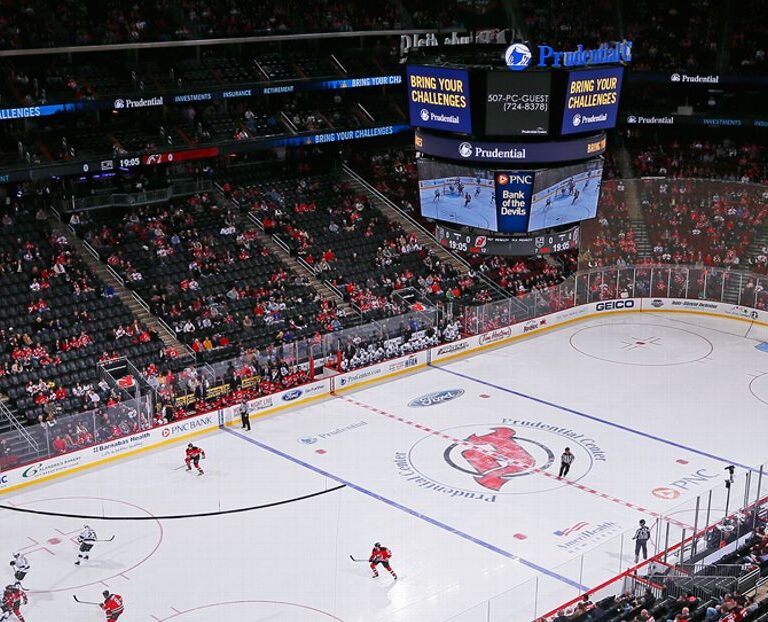
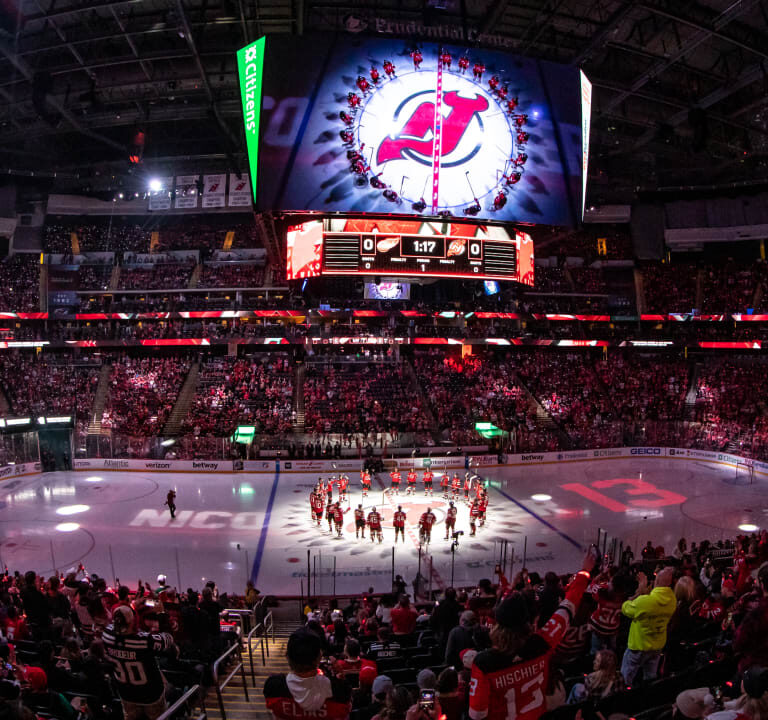
The New Jersey Devils returned to Prudential Center on Thursday night hoping a tighter structure, a simplified game plan, and a renewed sense of urgency could finally halt a slide that has begun to reshape the tone of the season. Instead, the result felt hauntingly familiar. A disciplined, low-event defensive effort kept the New York Islanders almost completely in check, but the Devils once again could not solve their offensive identity, falling 3–1 in a game that became less about a single loss and more about an increasingly troubling pattern.

This was a night where effort was not the issue. Structure was not the issue. Even goaltending, for the most part, was not the issue. What continues to separate the Devils from relevance in tightly contested games is an attack that struggles to create sustained pressure, struggles to convert high-danger opportunities, and struggles to manufacture offense when the opponent refuses to give them space.

The mood inside the building reflected it. There was anticipation at puck drop, but also a quiet recognition that this group has reached a point in the season where every shift feels like a referendum on what the roster truly is and what it still needs to become.

Compounding the frustration surrounding the loss was organizational news delivered earlier in the day, when the Devils placed forward Juho Lammikko on waivers with the intent to terminate his NHL contract. The move, procedural on the surface, quietly underscored the broader theme of transition beginning to take shape behind the scenes. The front office is no longer merely adjusting at the margins. It is actively clearing space, evaluating fit, and preparing for deeper decisions ahead.

The game itself opened with one of the lowest-event periods the Devils have played all season. Both teams were cautious through the neutral zone and reluctant to overcommit on forechecks, creating long stretches of puck control along the perimeter and very little sustained pressure inside the slot. The Devils generated only a handful of shots, but the Islanders were limited to almost nothing as well, a testament to a defensive structure that has quietly improved over recent weeks.

The one moment that threatened to break the stalemate came when Dawson Mercer slipped behind the defense on a clean breakaway and rang a shot off the crossbar, a sequence that drew the loudest reaction of the period and momentarily energized a crowd desperate for something to build upon.

By the end of the opening twenty minutes, the Devils had effectively shut the Islanders down while offering only flashes of danger themselves. It marked the continuation of a broader trend that has haunted this season. The club has struggled to strike first, and early offense has been particularly elusive. Despite the defensive discipline on display, the inability to generate meaningful chances early in games continues to leave little margin for error.

The second period provided the turning point, and it arrived not through sustained offensive pressure by the Islanders, but through a breakdown in coverage and communication that the Devils have worked tirelessly to eliminate. A misread during a defensive-zone reverse left the weak side unattended, allowing a loose rebound to be pounced on and converted. What should have been a routine exit became the opening goal against, and another uphill climb began.

That sequence highlighted an issue that has surfaced repeatedly throughout the season: winger positioning on defensive-zone reversals. The Devils often use reverses as a safety valve to escape pressure and reset breakouts, but too frequently the supporting winger is late or absent altogether. When that support disappears, exits turn into turnovers, and turnovers turn into extended defensive-zone time. On this play, it turned into the first goal of the night.

To their credit, the Devils responded with their most connected stretch of hockey in several games. A rare power play midway through the period featured quick puck movement and several heavy point shots, including multiple trademark one-timers from the blue line that forced difficult saves and second chances. Nico Hischier created traffic and battled inside the crease, and the Devils finally began to look like a group capable of generating momentum rather than simply containing damage.

The tying goal was the product of layered effort rather than individual brilliance. It required multiple recovery plays, a patient regroup through the neutral zone, and a well-timed feed into the slot that allowed Hischier to snap a shot past Ilya Sorokin. It was a simple play executed cleanly, and in the context of the Devils’ recent offensive drought, it felt far more significant than a single goal in a tied game. Even the goaltender joined the scoresheet, earning his first assist of the season by initiating the sequence that ultimately led to the finish.

For a brief stretch, the Devils resembled a functional attacking team. They forced the Islanders into late coverage adjustments, created rebound opportunities from both sides of the crease, and generated enough chaos around the net to finally break through. It was exactly the type of shift layering and puck support that has too often been absent this year.

But whatever rhythm was found in the middle frame never carried forward.

The third period unfolded with the same troubling script that has followed the Devils through much of the winter. Possession was fleeting. Zone entries were quickly neutralized. Shots came from distance without traffic. And when the Islanders finally capitalized late, it arrived on a play that combined a lost draw battle, a mishandled puck, and a defensive stumble that left the slot completely exposed. A clean walk-in and a low finish under the pad restored the Islanders’ lead and drained what little energy remained in the building.

The Devils were unable to mount any meaningful push after the goal. There was no late surge. No sequence of sustained offensive-zone pressure. No drawn penalties. An empty-net goal sealed the outcome and underscored the uncomfortable reality that the Devils simply ran out of ideas long before they ran out of time.

On paper, the defensive performance should be viewed as encouraging. Limiting an opponent to so few shots is not accidental, and it speaks to improved layers through the neutral zone and far more consistent support from the forwards collapsing low. But defensive progress only carries value when paired with offensive relevance, and that remains the central problem.

Several individual performances hinted at what this roster still possesses. Ondrej Palat created multiple quality looks, rang a shot off the post, and consistently drove play below the goal line. Young forwards such as Lenni Hameenaho continued to show poise and creativity when given space, while Cody Glass quietly played a responsible two-way game that stabilized his line. Ivan Gritsyuk, in limited opportunities, remains one of the few skaters whose speed and unpredictability consistently force defenders to back off at the blue line.

There were also subtle moments that showcased developmental promise on the back end. One defenseman in particular repeatedly activated through the neutral zone with quick give-and-go exchanges, building speed through puck support and immediately rejoining the rush. Those habits translate directly to modern NHL transition play, and they represent one of the few reliable pathways for this team to generate offense when forechecking pressure alone is not creating turnovers.

At the same time, underlying metrics painted a harsher picture for others. Shot share dipped sharply as the game progressed, and several depth forwards struggled to push play north once the Islanders tightened their defensive box in the third period. When the game demanded urgency, the Devils did not have enough players capable of creating separation with the puck or winning contested space inside the dots.

That reality has begun to influence how the organization approaches the coming weeks. The decision involving Lammikko is unlikely to be the last roster move before the trade deadline window closes. Evaluations are clearly underway, not just at the NHL level, but across the entire pipeline. The focus has quietly shifted toward identifying which players can be part of a faster, more dynamic version of this team moving forward and which roles must be reimagined.

For fans following the team closely through the ongoing coverage at Explore New Jersey’s Devils hub, the story of this season has evolved from early optimism into a more complex conversation about sustainability, roster balance, and organizational patience. The Devils are not far away in terms of structure and discipline. They are, however, far away in the area that ultimately defines success in this league: consistent, repeatable offense against structured defensive teams.

The upcoming break may arrive at the right time. For players, it offers a chance to reset physically and mentally after weeks of grinding through games that have increasingly resembled one another. For the coaching staff, it becomes an invaluable window to re-evaluate line combinations, power-play deployment, and zone-entry strategies that have grown predictable. And for management, it provides clarity before making difficult decisions about roster direction and long-term planning.

Thursday’s loss was not a collapse. It was not an effort issue. It was not even a particularly poorly played hockey game. It was something far more concerning: a controlled, structured performance that still failed to generate enough offense to win. Until the Devils find a way to consistently turn defensive reliability into attacking confidence, nights like this will continue to define the season, no matter how tight the shot totals or how disciplined the coverage appears on paper.
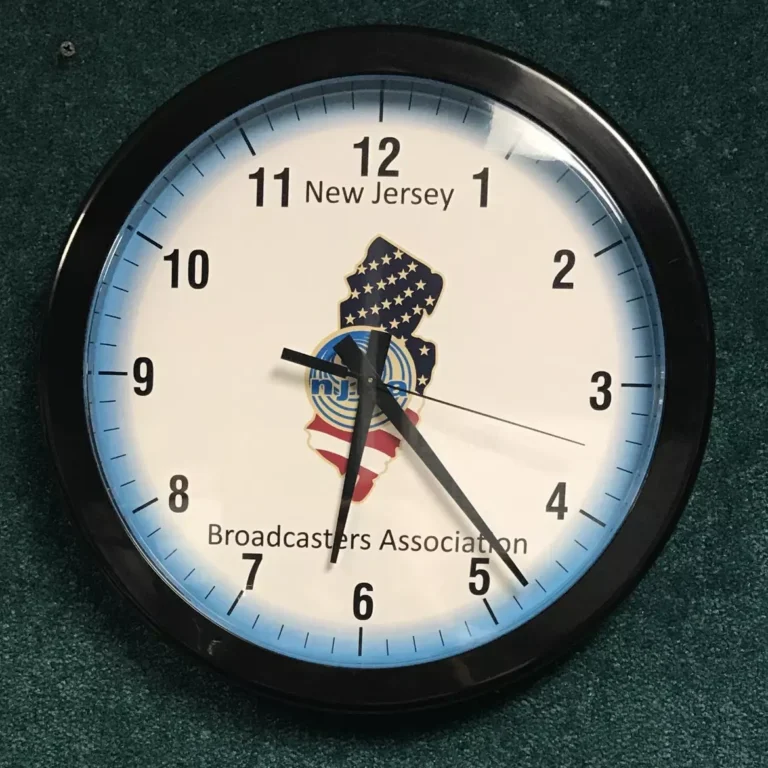

New Jersey Renews the Push to End Clock Changes as Lawmakers Weigh Permanent Time Options

Garden State leaders revive the long-running fight over daylight saving and standard time, setting the stage for a national decision that could finally end the twice-a-year ritual for residents, schools, farms, and businesses

For many New Jersey residents, the most predictable disruption of the year is not a snowstorm or a heat wave, but the moment the clocks are forced forward or back. As winter slowly loosens its grip and early spring approaches, the debate over whether the Garden State should finally abandon the twice-annual time change has returned to the State House—this time with renewed urgency and a growing sense that the decision is no longer simply about convenience.

In early February 2026, New Jersey lawmakers formally revived multiple proposals aimed at permanently ending the long-standing practice of switching between standard time and daylight saving time. The competing bills reflect a fundamental disagreement over which version of time best serves public health, economic activity, education, public safety, and the rhythms of daily life across the state.

One legislative proposal would place New Jersey on permanent daylight saving time, effectively locking the state into Eastern Daylight Time year-round. Supporters argue that longer evening daylight improves quality of life, boosts local commerce, encourages outdoor activity, and aligns better with modern work and leisure patterns. Under this approach, residents would “spring forward” one final time and never return to standard time again.

A separate measure takes the opposite approach, calling for permanent standard time instead. This proposal is built around medical and scientific research that links standard time more closely to human circadian rhythms. Advocates say earlier sunrises support healthier sleep patterns, improved academic performance for children, and safer morning commutes—especially during winter months when darkness currently stretches well into the morning hours.

While both approaches aim to eliminate the disruption of clock changes, they reflect two very different philosophies about how time should serve society.

The practical reality, however, is that neither proposal can move forward on its own.

Under existing federal law, states are permitted to opt out of daylight saving time entirely and remain on standard time year-round, as Arizona and Hawaii have done for decades. What states are not allowed to do is observe daylight saving time permanently. That authority rests with Congress.

As a result, even if New Jersey lawmakers pass legislation calling for permanent daylight saving time, the change would remain legally blocked unless federal law is amended.

That federal decision is once again under review.

The Sunshine Protection Act, reintroduced in both chambers of Congress in 2025, would allow states nationwide to adopt daylight saving time permanently if they choose. The proposal gained early attention when it was introduced but, as of February 2026, it remains stalled in the U.S. House and has not advanced to final approval. Without federal action, New Jersey’s daylight saving proposal remains largely symbolic—an official declaration of intent rather than a practical change.

The standard time proposal, however, operates within the boundaries of existing federal law. New Jersey could move to permanent standard time without congressional approval. Yet that path brings its own political and public hurdles, especially for residents who favor brighter evenings and fear that early winter sunsets could affect business activity, family routines, and community engagement.

For New Jersey, the issue extends far beyond a simple preference for light in the morning or evening.

Schools, transportation systems, healthcare providers, public safety officials, and local employers have all quietly weighed in on the broader impact of time changes. Numerous studies continue to link the seasonal shift in clocks to short-term spikes in traffic accidents, workplace injuries, and sleep-related health problems. Pediatric experts frequently point to the difficulty younger students face when heading to school in prolonged darkness after the fall time change.

At the same time, business groups and tourism advocates consistently highlight the economic value of longer daylight hours in the evening. Restaurants, downtown retail districts, parks, and recreational facilities often report increased foot traffic when daylight extends deeper into the evening hours, particularly in spring and summer.

New Jersey’s extensive outdoor economy, from shore communities to agritourism destinations, also plays a quiet but influential role in the debate. Seasonal operations, farmers markets, and family-run farms operate on narrow margins that can be affected by visitor patterns, staffing schedules, and weather-dependent hours. Many of those communities closely follow broader conversations around rural and agricultural policy, which are regularly covered through Explore New Jersey’s ongoing reporting on agriculture and farming across the state.

The political landscape reflects this wide range of competing priorities.

Supporters of permanent daylight saving time point to public polling that repeatedly shows strong voter frustration with clock changes. Many residents view the twice-yearly shift as an outdated holdover from a different era, one that no longer matches modern work schedules, digital connectivity, or 24-hour commerce.

Backers of permanent standard time counter that popularity should not outweigh public health evidence. Sleep researchers, medical associations, and pediatric groups continue to advocate for standard time as the healthier long-term option, warning that permanent daylight saving time could effectively place New Jersey on a permanent form of social jet lag during winter months.

This scientific divide is now front and center in legislative discussions.

Several New Jersey lawmakers have acknowledged that the debate has matured significantly over the past few years. Earlier proposals to eliminate clock changes were often framed as convenience measures. The current round of legislation places far greater emphasis on long-term health outcomes, workforce productivity, and student performance.

Another challenge lies in regional coordination.

New Jersey does not exist in a time vacuum. Any permanent shift—whether daylight saving or standard—would ideally be aligned with neighboring states such as New York, Pennsylvania, and Connecticut. A fractured regional approach could complicate transportation schedules, broadcast programming, financial markets, and multi-state business operations. Lawmakers have increasingly acknowledged that a patchwork of time policies across the Northeast would create more confusion than it resolves.

That reality has strengthened the argument for federal action, even among those who support permanent standard time. A national framework would eliminate interstate inconsistencies and give states clear authority to adopt long-term time policies without uncertainty.

For now, however, New Jersey remains bound by the existing system.

Unless Congress acts, residents should still expect to adjust their clocks on Sunday, March 8, 2026, when the state will move forward one hour at 2:00 a.m. The familiar loss of sleep, early-week grogginess, and temporary disruption to routines will arrive once again, even as lawmakers continue to debate whether it should be the last time New Jersey ever has to do so.

The renewed legislative push makes one thing clear: the political appetite to end clock changes has not faded. If anything, it has grown sharper, more data-driven, and more urgent.

Whether the Garden State ultimately lands on permanent daylight saving time or permanent standard time may depend less on Trenton than on Washington. Until federal law changes—or until New Jersey chooses to embrace standard time on its own—the clocks will continue to shift, even as public patience for the practice steadily runs out.

Last Stand Before the Olympic Pause: Devils and Islanders Collide in a High-Stakes Newark Showdown

With postseason dreams fading and the league about to go dark for the Winter Games, New Jersey faces a defining night against a familiar division rival at Prudential Center

The calendar could not have scripted a sharper sense of urgency for the New Jersey Devils than the one hanging over downtown Newark tonight. As the Islanders arrive at Prudential Center for a 7 p.m. puck drop on February 5, this matchup represents more than just another Metropolitan Division meeting. It is the final opportunity for both clubs to make one last statement before the NHL shuts down for the 2026 Winter Olympics—and for New Jersey, it may also be the clearest snapshot of where this season is truly headed.

For fans following the heartbeat of the franchise through Explore New Jersey’s ongoing coverage of the New Jersey Devils, this game sits at the intersection of pressure, patience, and a front office that must decide whether to fight for the margins now or reshape the future with a longer lens.

The standings tell an uncomfortable story. New Jersey enters the night at 28-26-2, sitting nine points behind the Islanders, who arrive with a 31-21-5 record and a firm grip on a playoff position. The gap is not insurmountable in theory. In practice, it is made heavier by the calendar and by a Metropolitan Division that has offered the Devils very little room to breathe since early November. Regulation wins have become essential currency, not luxury, and anything short of a full two points only tightens the math further.

Adding to the psychological challenge is the season series. The Islanders have won all three previous meetings, controlling the tempo and exposing the structural flaws that have plagued New Jersey for much of the winter. The Devils are not only chasing points—they are chasing answers to why this opponent has repeatedly dictated the flow of play.

Tonight’s contest will be televised locally on MSGSN and MSGSN2 and is available via ESPN+, but the real audience is the Devils’ own locker room, where the stakes feel far more personal than the broadcast footprint.

The roster, already thinned and reshaped by injuries and recent transactions, will look noticeably different again. Jack Hughes will miss his third straight game with a lower-body injury, and all indications remain that the organization is targeting a return after the Olympic break rather than pushing him back into action for one final pre-pause appearance. His absence continues to ripple through the lineup. Hughes is not merely a top-line center; he is the engine of New Jersey’s controlled zone entries, transition offense, and power-play creativity. Without him, the Devils are forced to manufacture offense through committee rather than through a single destabilizing presence.

There is, however, a new face expected to step into the spotlight.

Veteran center Nick Bjugstad is set to make his Devils debut after arriving in a deal with the St. Louis Blues that sent Thomas Bordeleau and a draft pick the other way. Bjugstad is projected to slot into the third-line center role, where his size, faceoff reliability, and experience against playoff-caliber competition could immediately stabilize a unit that has struggled to tilt the ice consistently.

This is not a splash move. It is a surgical one—and that distinction speaks volumes about the organization’s current posture.

New Jersey enters the night as a slight betting favorite at minus-110, with the over/under set at 5.5 goals. On paper, the margins are razor thin. On the ice, they have felt wider.

The Devils are coming off a sobering 3-0 shutout loss to the Columbus Blue Jackets on Tuesday, a game that closed the season series between the two clubs and underscored one of the most persistent problems this roster has faced: generating sustained offense when early chances dry up. New Jersey controlled stretches of play but struggled to convert pressure into quality looks, let alone goals. Too many shifts ended with perimeter movement, blocked lanes, and a lack of secondary chances around the crease.

It is a theme that has followed the team for months.

Since the middle of November, the Devils have not been able to build momentum for more than a few games at a time. Any brief uptick in results has been followed by multi-game slides, often driven by some combination of defensive breakdowns, uneven goaltending, and an attack that has failed to punish mistakes from opposing blue lines.

Those patterns have now pushed the franchise into one of the more complex decision windows of its recent history.

General manager Tom Fitzgerald faces a reality that many teams prefer to postpone: there is no obvious single move that transforms this group into a legitimate postseason threat before the trade deadline. The Atlantic Division’s depth is expected to consume both wild card positions, which means New Jersey’s only realistic path back into the playoff picture runs directly through the Metropolitan’s top three. That path currently includes chasing down the Islanders and Pittsburgh while still trying to close ground on teams that have already demonstrated far greater consistency.

The numbers alone make the case difficult. The on-ice trends make it harder.

The Devils’ internal evaluation has already produced one notable piece of roster housekeeping. Ondrej Palat was moved for Maxim Tsyplakov, a deal that did more than simply shuffle wingers. It removed the final season of a six-million-dollar cap commitment and restored flexibility at a moment when financial maneuverability may be more valuable than mid-season reinforcements.

That shift in thinking hints at a strategy centered on recalibration rather than desperation.

This does not mean dismantling the core. Nico Hischier remains foundational, and the idea of stripping the roster down to its studs would be neither necessary nor responsible. But it does suggest a growing willingness to explore the market on veterans whose contracts and career arcs no longer align cleanly with the team’s competitive window.

Brenden Dillon, now 35 and signed through next season at a four-million-dollar cap hit, fits squarely into that category. He has been a stabilizing physical presence, but it is fair to ask whether extending that relationship into his late thirties advances the long-term picture. Jonas Siegenthaler, still only 28 and under contract for two more seasons at $3.4 million annually, presents a different dilemma. His defensive profile has value league-wide, yet his struggles moving the puck and a difficult season overall make timing a crucial factor if New Jersey hopes to extract meaningful return.

Stefan Noesen, recovering from knee surgery with a year left on his deal, could quietly become a depth target for contenders if his recovery timeline allows him to contribute in the spring. Evgenii Dadonov’s fit has never materialized, but his modest cap hit and prior production history may still hold appeal elsewhere. Even Maxim Tsyplakov, newly acquired and not yet fully evaluated within the system, represents a variable the organization must assess with clear eyes rather than emotional investment.

In net, Jacob Markstrom’s market value has been dulled by inconsistent results, but his evolving no-trade structure over the next two seasons could make him more movable down the road if New Jersey opts for broader structural change.

Behind them, the pipeline is beginning to assert itself. The recent call-up of Lenni Hameenaho has offered a glimpse of pace and composure that fits the direction the franchise hopes to sustain. It is unlikely that internal options alone can fill every future vacancy, but the Devils no longer operate from a place of prospect scarcity.

Cap flexibility will also define the conversation. Projections indicate New Jersey is positioned to have close to $14 million in available space next season, and that figure can grow if additional contracts are moved. The objective is not to overspend in a shallow free-agent market. It is to retain the ability to absorb contracts, facilitate larger hockey trades, and reshape the roster with agility rather than constraint.

Even among higher-profile names, quiet evaluations are unavoidable. Dougie Hamilton’s $9 million cap hit, Dawson Mercer’s extended stretches of invisibility, and the long-term investment in Timo Meier all invite difficult questions—not necessarily about immediate movement, but about whether the current blend of skill sets truly complements the direction the organization intends to pursue.

That backdrop makes tonight’s game more revealing than its point value alone suggests.

Across the ice, the Islanders represent a version of structural clarity the Devils have struggled to mirror. They are disciplined through the neutral zone, deliberate below the hash marks, and comfortable grinding games into low-event outcomes when necessary. It is precisely the type of opponent that has frustrated New Jersey all season.

And yet, the spotlight will once again drift toward the player who is not dressed.

Jack Hughes’ absence continues to spark debate well beyond Newark. Day-to-day following a lower-body injury, Hughes has expressed his desire to return before the Olympic break, but time is running out. He remains on the United States Olympic roster, creating an uncomfortable optics problem for a fan base already stretched thin by a disappointing campaign.

No one questions Hughes’ competitiveness or his commitment to the Devils. His value to the lineup is undeniable. But with only this game remaining before the league pauses, the possibility that he could miss critical club games only to suit up internationally days later has ignited frustration among supporters who view every remaining Devils contest as a must-win scenario.

The situation also raises broader questions for USA Hockey. With center depth that includes Jack Eichel, Dylan Larkin, Auston Matthews, J.T. Miller and Vincent Trocheck, the American roster is not lacking options. Healthy forwards such as Cole Caufield, Alex DeBrincat, Alex Tuch and Jason Robertson remain available. If the goal is to maximize medal chances, selecting players who are fully fit seems logical. If the goal includes protecting long-term health for players returning to critical roles in the NHL stretch run, the calculus becomes even more complex.

For New Jersey, however, the debate is ultimately academic. Hughes is unavailable tonight. The responsibility shifts to a group that must prove it can compete without its centerpiece.

That task begins with execution in the smallest details: cleaner exits under pressure, more aggressive net-front presence, and a commitment to collapsing defensively when possession turns. Against an Islanders team comfortable living in low-scoring territory, the Devils cannot afford prolonged lapses or passive special teams.

This is the last chance before the Olympic pause to demonstrate that the gap in the standings does not fully reflect the competitiveness of this roster.

If New Jersey finds a way to finally solve an opponent that has dominated the season series, the break could arrive with a sliver of renewed belief. If not, tonight may serve as a quiet confirmation that the organization’s future will be shaped less by short-term pushes and more by the careful, deliberate restructuring that has already begun behind the scenes.

Either way, when the lights come on at Prudential Center and the puck drops at 7 p.m., the Devils are not merely playing the Islanders.

They are playing for clarity.

How Allan Rohan Crite’s Neighborhood Vision Comes Home to New Jersey

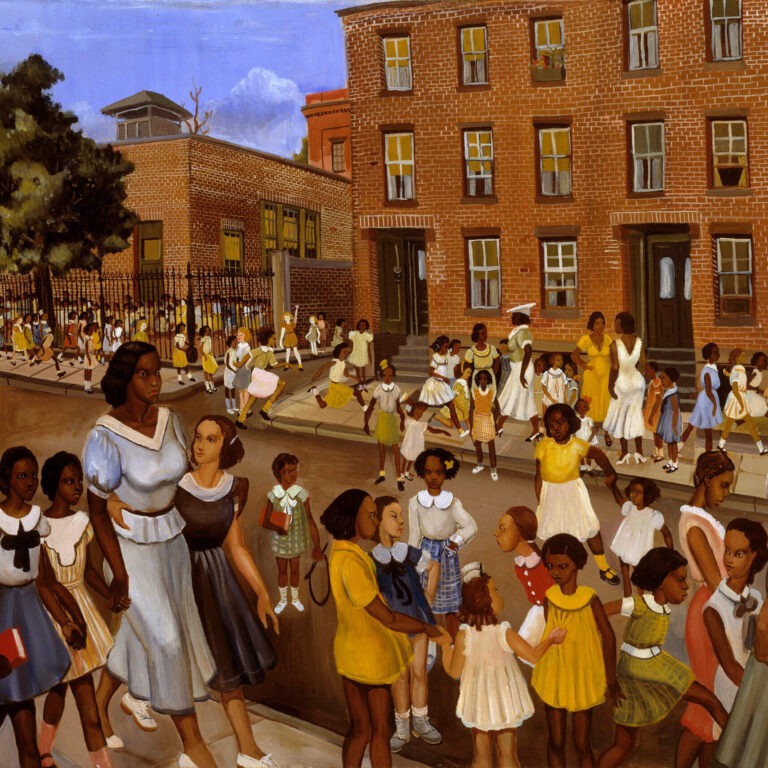
A new exhibition at the Zimmerli Art Museum at Rutgers–New Brunswick is bringing a powerful New Jersey story back into focus—one rooted not in spectacle, but in streets, stoops, sanctuaries, and the quiet heroism of everyday life. Allan Rohan Crite: Neighborhood, opening February 11 and continuing through July 31, 2026, presents a wide-ranging portrait of an artist whose work transformed ordinary moments into enduring records of Black life in twentieth-century urban America.

Born in North Plainfield, New Jersey, in 1910 and raised in Boston, Allan Rohan Crite built a career that bridged fine art, social history, and community memory. While his professional reputation extended well beyond any single city, the perspective that shaped his artistic voice was formed early, grounded in a lived understanding of what it meant to grow up within tight-knit neighborhoods defined by shared faith, cultural resilience, and collective survival.

The Zimmerli exhibition offers the most comprehensive regional look in years at Crite’s lifelong commitment to documenting Black communities as they existed on their own terms—joyful, complex, faithful, political, and deeply human. Spanning more than six decades of creative work, the exhibition traces how Crite became not only a painter and printmaker, but also a visual chronicler of American social life during a period marked by segregation, migration, war, civil rights activism, and shifting urban landscapes.

What makes Allan Rohan Crite: Neighborhood especially compelling for New Jersey audiences is the way it reconnects the artist’s national legacy to the state where his story began. Though Crite spent most of his adult life in Boston, his New Jersey roots are central to understanding how his art evolved. Growing up within a family that valued education, church life, and cultural continuity, Crite developed an early sensitivity to the rhythms of communal life—who gathered, who cared for one another, and how daily rituals held deeper meaning beneath the surface.

That sensibility would become the defining feature of his artistic career. Rather than centering his work on dramatic historical moments alone, Crite repeatedly turned his attention to everyday scenes: children playing in the street, neighbors talking on front steps, families attending church, workers navigating city life, and friends lingering in familiar public spaces. In doing so, he rejected the limited narratives that often defined Black life in mainstream American art during the twentieth century.

The Zimmerli presentation positions Crite as a storyteller whose visual language resisted both romanticization and erasure. His figures are neither anonymous nor idealized. They are portrayed with dignity, humor, fatigue, devotion, and emotional depth. Whether rendered in oil, watercolor, drawing, or print, Crite’s compositions reveal an unwavering belief that everyday life itself deserves artistic permanence.

One of the exhibition’s most important contributions is how it highlights the spiritual dimension that runs through much of Crite’s work. Faith was not simply a background element in his imagery; it was a central organizing force in the communities he documented. Church processions, choir gatherings, religious festivals, and moments of prayer appear throughout his career, not as symbols of abstraction but as lived practices that anchored families and neighborhoods through decades of social change.

This attention to spiritual life also allowed Crite to portray Black communities as self-sustaining cultural ecosystems. The exhibition carefully situates his work within broader historical movements, including the Great Migration, the rise of Black political organizing in northern cities, and the emergence of community institutions that supported housing, education, and artistic development. Viewers are invited to see how his visual storytelling evolved alongside these transformations, becoming more layered and socially reflective as the twentieth century progressed.

Importantly, Allan Rohan Crite: Neighborhood does not treat the artist as an isolated figure working apart from his surroundings. Instead, the exhibition underscores how deeply embedded he was in the communities he portrayed. His neighbors were often his subjects. His friends and fellow congregants became recurring figures in his compositions. This proximity gave his work a rare authenticity—an insider’s record shaped by long-standing relationships rather than distant observation.

The Zimmerli installation places particular emphasis on Crite’s commitment to accessibility and community education. Alongside his studio practice, he devoted significant energy to teaching, mentoring, and participating in local cultural initiatives. He believed that art should circulate within the same communities that inspired it, not remain confined to institutional walls. That philosophy aligns powerfully with the exhibition’s title, Neighborhood, which speaks as much to Crite’s worldview as it does to the scenes he painted.

For Rutgers and the broader New Jersey arts community, the exhibition reinforces the state’s enduring role in shaping nationally significant cultural voices. It also expands the public’s understanding of what constitutes American modernism by foregrounding an artist whose career unfolded largely outside the commercial art centers that typically dominate historical narratives.

Visitors moving through the exhibition will encounter works that reflect both consistency and quiet evolution. Early pieces reveal Crite’s careful attention to composition and narrative clarity, while later works demonstrate increasing confidence in color, movement, and symbolic layering. Across every period, however, the same guiding principle remains: a refusal to let everyday Black experience be reduced to stereotype, tragedy, or historical footnote.

The timing of this exhibition also feels especially resonant. As conversations about representation, memory, and cultural authorship continue to shape museums and academic institutions nationwide, Crite’s career offers a model for how artists can serve simultaneously as creators, historians, and community witnesses. His work does not attempt to summarize Black life. Instead, it preserves fragments of lived reality—moments of connection that collectively form a deeper, more durable historical record.

For New Jersey residents, the exhibition is also an opportunity to reclaim a native son whose artistic achievements deserve wider local recognition. North Plainfield may appear only briefly in the arc of Crite’s biography, but its presence is foundational. It represents the beginning of a perspective that would later resonate across cities, generations, and social boundaries.

The Zimmerli Art Museum’s commitment to presenting this expansive view of Crite’s career strengthens the region’s cultural landscape and affirms Rutgers–New Brunswick as a critical hub for scholarship and public engagement in the visual arts. Readers interested in exploring additional exhibitions, artist profiles, and cultural programming across the state can discover more through Explore New Jersey’s art and culture coverage, which highlights the institutions and creators shaping the Garden State’s creative identity.

Allan Rohan Crite: Neighborhood ultimately asks visitors to reconsider how history is recorded—and who is entrusted to record it. Through scenes of ordinary life rendered with extraordinary care, Crite built a visual archive that honors presence, resilience, and collective memory. More than a retrospective, the Zimmerli exhibition functions as a homecoming, reconnecting a nationally significant artist to the New Jersey roots that quietly helped shape one of the most meaningful visual chronicles of twentieth-century urban Black life.

All Aboard History: Morristown Families Step Into Lincoln’s Secret Journey at Macculloch Hall

This Presidents’ Day weekend, one of Morristown’s most treasured historic sites is transforming into a living, breathing rail line of American history, inviting families to follow the hidden footsteps of a president on the brink of destiny. At Macculloch Hall Historical Museum, a special family-centered experience will place young explorers directly inside the dramatic and little-known story of Abraham Lincoln’s perilous 1861 journey to Washington, D.C., offering an immersive afternoon that blends hands-on learning, storytelling, and real historical intrigue.

The program, titled Lincoln’s Whistle-stop Tour, is designed to turn a pivotal moment in national history into a fast-moving, interactive mystery for children and parents alike. Rather than simply listening to a lecture or touring a gallery, participants become investigators, tracing the actual route Lincoln traveled from Springfield, Illinois, to the nation’s capital as he prepared to take the oath of office and assume leadership of a deeply divided country.

For many families, Lincoln’s presidency is most familiar through classroom lessons on the Civil War or the Emancipation Proclamation. This experience focuses instead on the tense days before he ever reached the White House—when the nation’s future was uncertain and the president-elect faced credible threats to his safety before he could even be sworn in. Through a creative mix of travel cards, clue-based activities, and guided discussion, children follow the same railroad path that carried Lincoln through multiple cities and states, uncovering why secrecy, timing, and careful coordination were essential to protecting him.

What elevates the program beyond a traditional history workshop is its emphasis on the real people who stood quietly behind the scenes to keep Lincoln alive. Families learn about Allan Pinkerton, the pioneering private detective whose work would eventually help shape modern investigative practices, and Kate Warne, one of the first female detectives in American history. Their efforts to identify and disrupt assassination plots are presented as a story of strategy, observation, and courage, giving young visitors a powerful look at how history is shaped not only by presidents, but by problem-solvers who work in the shadows.

The experience is structured as a collaborative challenge, encouraging children to work together, compare clues, and piece together the journey one stop at a time. Each card reveals new information about the railroad route, the social climate in different regions, and the dangers Lincoln faced as tensions between North and South escalated. By the time families complete the final leg of the tour, children leave with a clearer understanding of how fragile the early days of Lincoln’s presidency truly were—and how close the country came to losing its leader before he could even take office.

The program will be offered on two dates in February 2026. Families can attend on Thursday, February 12, from 3:30 p.m. to 5:00 p.m., or on Saturday, February 14, from 10:00 a.m. to 11:30 a.m. The experience is recommended for children ages 7 through 12 and is structured to remain engaging for both younger and older elementary-level learners. Admission is $10 for adults and $5 per child. Pre-registration is required, and adults are asked to remain with their children throughout the program to support participation and discussion.

The setting itself adds another powerful layer to the experience. Located at 45 Macculloch Avenue in Morristown, Macculloch Hall Historical Museum offers an intimate, community-focused environment that allows educators to connect personally with families and adjust activities to the interests and energy of each group. The museum’s historic atmosphere reinforces the feeling of stepping back into another era, making the story of Lincoln’s journey feel immediate rather than distant.

While the whistle-stop program serves as a centerpiece for Presidents’ Day programming, the museum’s broader educational mission continues well beyond this event. Throughout the year, Macculloch Hall offers youth and family programs that explore national history through a distinctly local lens. One of the most popular themes focuses on Thomas Nast, the influential political cartoonist who lived in Morristown and famously illustrated Abraham Lincoln. Nast’s work played a major role in shaping public perception during the Civil War and helped define the visual language of American political commentary, making him a natural extension of the museum’s Lincoln-related storytelling.

By weaving Nast’s artistic legacy together with Lincoln’s political journey, the museum gives children a fuller picture of how words, images, and ideas traveled across the country during one of its most turbulent periods. It also helps young learners recognize that New Jersey’s own communities were directly connected to national events that reshaped the future of the United States.

For families planning a winter weekend outing, the Lincoln’s Whistle-stop Tour offers an experience that balances fun, movement, and meaningful learning. It speaks to a growing demand among parents for programming that goes beyond passive observation and instead invites children to think critically, ask questions, and interact with real historical challenges. The format also supports multi-generational participation, making it an ideal activity for grandparents, parents, and children to share together.

Events like this continue to highlight how regional museums across the state are redefining what family entertainment looks like, blending culture, history, and creative engagement in ways that resonate with today’s audiences. Readers looking to discover more performances, exhibits, and hands-on programs across the Garden State can explore a wider range of upcoming experiences through Explore New Jersey’s entertainment coverage, which features family-friendly attractions and cultural events throughout the year.

At a time when digital distractions dominate so much of children’s attention, Lincoln’s Whistle-stop Tour offers something increasingly rare—a chance to hold history in your hands, follow a real journey across a divided nation, and experience the suspense, teamwork, and discovery that shaped one of the most important chapters in American leadership. In Morristown this February, a train route from 1861 becomes a living classroom, and Abraham Lincoln’s race to reach Washington safely becomes a story families will not soon forget.

How Dr. Elizabeth R. Henry’s New Book Is Rewriting the Playbook on Youth Trust and Connection

New Jersey has quietly become the launchpad for one of the most timely and emotionally resonant parenting and education books of the year, as bestselling author and pediatrician Dr. Elizabeth R. Henry—widely known throughout the state as “Dr. Liz”—introduces her newest release, SPARK: A Pediatrician’s Guide to Rebuilding Trust, Restoring Connection, and Igniting Youth Potential. Released in December 2025, the book is already drawing attention far beyond the Garden State, but its roots—and its message—are deeply grounded in the communities where Dr. Henry has spent her career serving children, families, and educators.

For New Jersey parents and professionals navigating an era shaped by social media pressure, academic stress, mental health concerns, and growing disconnection between generations, SPARK arrives as both a practical guide and a cultural reset. Rather than framing youth well-being solely through diagnosis and crisis response, Dr. Henry centers the everyday moments that define how young people experience safety, belonging, and self-worth. The book argues that trust is not a soft concept or a secondary concern—it is the foundation that determines whether children feel empowered to grow, communicate, and take healthy risks in learning and life.

What makes SPARK especially meaningful for local readers is that the framework presented throughout the book is not theoretical. It was developed through years of hands-on medical practice and community-based work in New Jersey. Dr. Henry is a board-certified pediatrician based in North Brunswick and the founder of Dr. Liz Consulting in Somerset, where she continues to work directly with schools, families, organizations, and youth-serving institutions across the state. Before launching her consulting practice, she spent 16 years caring for patients with the New Brunswick Pediatric Group, building long-standing relationships with families whose children are now navigating adolescence and early adulthood.

Her professional influence extends into academic medicine as well. Dr. Henry currently serves as a volunteer Clinical Assistant Professor at Rutgers Robert Wood Johnson Medical School, where she contributes to the education of future physicians and health professionals, reinforcing the human side of pediatric care that often gets overshadowed by clinical training alone. She is also an alumna of Princeton University, a connection that continues to inform her work at the intersection of education, leadership, and youth development.

SPARK draws heavily on these layered experiences, presenting what Dr. Henry describes as a practical, relationship-centered framework designed for parents, educators, counselors, school leaders, and pediatric providers alike. The book focuses on rebuilding communication pathways that have been strained by fast-paced lifestyles, digital distraction, and the emotional fallout of prolonged social disruption. Instead of offering generic advice, the narrative moves through real-world scenarios that families recognize immediately—homework conflicts, emotional shutdowns, behavioral challenges, social anxiety, and the quiet withdrawal that so many adults now observe in children who once seemed more expressive and engaged.

At the core of the book is the idea that connection is not an optional enhancement to development—it is the mechanism through which confidence, resilience, and motivation are formed. Dr. Henry’s approach emphasizes listening practices, emotional validation, co-regulation strategies, and age-appropriate empowerment techniques that help young people regain a sense of agency over their own growth. In doing so, SPARK reframes youth support as an active partnership between adults and children, rather than a system built solely on compliance, performance, or crisis intervention.

That message carries particular weight in New Jersey, where youth mental health and suicide prevention have become urgent statewide priorities. Dr. Henry was appointed by the Speaker of the New Jersey General Assembly to serve on the New Jersey Youth Suicide Prevention Advisory Council, a role that placed her directly inside policy discussions shaping how the state responds to rising emotional distress among adolescents. Her participation in this work has influenced the preventative, relationship-driven lens that runs through SPARK, positioning trust-building as an essential early intervention rather than a reactive tool.

Her leadership and advocacy have not gone unnoticed locally. Dr. Henry has been recognized by NJBIZ as both a Healthcare Hero and one of New Jersey’s Top 50 Women in Business, reflecting the rare blend of clinical credibility, entrepreneurial leadership, and community impact that defines her career. She is also a familiar voice to many New Jersey households through frequent appearances on local television and radio outlets, including News 12 New Jersey and WCTC, where she addresses topics ranging from adolescent mental health to parenting challenges in the digital age.

Beyond media appearances, Dr. Henry maintains a strong presence across New Jersey’s higher education and community institutions. She regularly conducts professional development workshops and public programs at locations such as Kean University and Raritan Valley Community College, offering educators and administrators actionable strategies for improving school culture, communication, and emotional safety. These same principles form the backbone of SPARK, making the book a natural extension of the work she already leads in classrooms, auditoriums, and conference rooms across the state.

The release of SPARK also reinforces New Jersey’s growing influence in the national conversation around youth development, mental health, and educational reform. Readers interested in discovering additional authors and thought leaders shaping these discussions can explore more statewide and regional literary coverage through Explore New Jersey’s dedicated book features and author spotlights, which continue to highlight voices driving meaningful change in education, wellness, and family life.

While there are currently no publicly listed New Jersey book-signing dates for February 2026, Dr. Henry remains actively engaged in promoting SPARK through her Somerset-based practice and ongoing community partnerships. Her official events channels and social media platforms regularly preview upcoming workshops, speaking engagements, and school-based programs scheduled throughout the year, including several described as “in development” for 2026.

Families, educators, and organizations seeking to connect with Dr. Henry for local seminars, private workshops, or bulk book programs can reach out directly through her consulting practice in Somerset, which continues to serve as the operational hub for her statewide initiatives. Based on her recent event history, future SPARK-related appearances are most likely to take place in familiar community-centered settings such as public libraries—including venues like the Princeton Public Library—university partnerships at Rutgers Robert Wood Johnson Medical School and Princeton University, and community centers throughout Somerset and North Brunswick.

For readers eager to participate in New Jersey’s broader literary and cultural calendar, several notable author-focused events are also scheduled across the state later this month, including the Black Authors’ Showcase at Art House Productions in Jersey City on February 22, 2026, celebrating contemporary Black voices in literature, and an author workshop and talk at the Highland Park Public Library on February 26, 2026, featuring thriller writer Rowana Miller.

Yet for many local families and professionals, SPARK stands apart because of its deeply personal connection to New Jersey’s classrooms, clinics, and living rooms. Dr. Elizabeth R. Henry’s message is not built around quick fixes or trendy wellness language. It is grounded in decades of listening to young people and the adults who care for them—and in recognizing that rebuilding trust is not a single conversation, but a sustained, intentional practice.

In a state where innovation in health care and education often leads national change, SPARK positions New Jersey once again at the forefront of a growing movement that treats emotional connection as a measurable driver of success. As Dr. Henry’s work continues to reach families across the country, the foundation of that impact remains firmly rooted in the communities that shaped her career—and in the belief that every child’s potential begins with being truly seen and heard.

New Jersey’s Health Economy at a Crossroads: Accountability, Innovation, and a New Wave of Patient-Centered Care

New Jersey has long been a national center of gravity for pharmaceutical research, medical innovation, and health-care leadership. This winter, that identity is being tested and reshaped at the same time. From a sweeping state lawsuit targeting alleged price manipulation in the generic drug market to grassroots practitioners building alternative wellness networks, the state’s health landscape is entering a period defined by transparency, trust, and a recalibration of how patients, families, and providers connect with care.

At the heart of the most consequential development is a newly filed state lawsuit against Novartis and its generic-drug subsidiary, Sandoz, accusing the companies of participating in a far-reaching price-fixing scheme involving more than 30 commonly prescribed generic medications. According to state officials, the alleged conduct artificially inflated the cost of drugs that millions of patients rely on for chronic and acute conditions, placing additional financial pressure on families, insurers, and public health programs across New Jersey.

While the litigation will unfold over months or years, its significance is immediate. Generic medications are designed to be the affordable backbone of modern health care. When pricing structures are distorted, the effects ripple through hospitals, pharmacies, long-term care facilities, and state-funded programs that serve vulnerable populations. New Jersey’s action signals an increasingly aggressive posture toward pharmaceutical accountability at a time when patients are demanding clearer explanations for why everyday medications still carry unexpectedly high price tags.

Health policy experts in the region note that this lawsuit is part of a broader national reckoning with the systems that govern drug pricing, market competition, and manufacturer relationships. But for New Jersey residents, the issue is not abstract. It touches prescription counters in suburban strip malls, hospital discharge instructions in urban medical centers, and budget decisions for seniors trying to stretch fixed incomes. The state’s case frames the question simply: whether the promise of affordable generics has been undermined by practices that run counter to the very purpose of competition in health care.

At the same time that regulators and attorneys focus on corporate accountability, another movement is quietly reshaping how wellness services are organized and accessed. Dr. Garcia, a long-time advocate of biomagnetism-based wellness practices, announced that his national practitioner directory has reached 100 listed professionals across the United States and select international locations. For a modality that has traditionally operated through word-of-mouth referrals and small independent clinics, the milestone represents a meaningful shift toward professional infrastructure, consumer visibility, and standardized discovery.

The Biomagnetism Practitioner Directory was created to help patients locate trained providers and better understand what services are being offered in their communities. In New Jersey, where interest in integrative and complementary care has grown steadily alongside conventional medicine, the directory reflects a broader trend toward diversified health options. Patients increasingly want tools that allow them to explore wellness approaches while still maintaining clear expectations around practitioner training, transparency, and professional accountability.

The expansion of this network also mirrors a larger conversation about how technology platforms can help bring structure to previously fragmented sectors of health care. Digital directories, searchable credentialing tools, and standardized profiles are becoming essential for patients navigating everything from physical therapy and mental health services to alternative wellness programs. In a state with one of the densest health-care ecosystems in the nation, centralized access points are quickly becoming just as important as the services themselves.

Trust, however, remains one of the most critical and fragile currencies in health care, particularly when it comes to children and adolescents. That challenge is directly addressed in a newly released book by pediatrician and bestselling author Dr. Elizabeth R. Henry, widely known as Dr. Liz. Her latest work, SPARK: A Pediatrician’s Guide to Rebuilding Trust, Restoring Connection, and Igniting Youth Potential, arrives at a moment when families, educators, and clinicians are grappling with rising rates of anxiety, social disconnection, and emotional burnout among young people.

Drawing on clinical experience and years of community advocacy, Dr. Henry focuses on the emotional architecture of health care itself. She explores how rushed appointments, fragmented care models, and digital distractions have unintentionally eroded the relational foundations that allow children to feel safe, heard, and supported. The book emphasizes practical strategies for parents and professionals alike, highlighting how meaningful connection can serve as both a protective factor and a catalyst for long-term development.

In New Jersey, where school districts and pediatric practices continue to rebuild post-pandemic support systems, the themes resonate deeply. Youth mental health has become a statewide priority, and clinicians are increasingly searching for frameworks that bridge medical expertise with emotional literacy and family engagement. Dr. Henry’s work contributes to a growing body of literature aimed at restoring confidence in the care process itself, particularly for families navigating complex behavioral, developmental, or social challenges.

The shifting relationship between patients and providers is also influencing the business side of health care delivery. MediDepot, a medical equipment supplier serving providers and institutional clients, has introduced a new price match guarantee designed to promote fairness and transparency in medical equipment procurement. The policy establishes a structured pricing review process intended to standardize how competing quotes are evaluated and to reduce inconsistencies that can complicate purchasing decisions for clinics, hospitals, and home-care organizations.

In practice, medical equipment procurement is often more complex than consumers realize. Purchasing teams must balance clinical requirements, budget constraints, supply chain availability, and compliance standards. Price disparities across vendors can introduce inefficiencies and, in some cases, delay access to essential tools. By formalizing a price-matching framework, MediDepot aims to reduce friction in procurement cycles while offering customers clearer expectations around pricing consistency.

For New Jersey’s health-care facilities, many of which operate within tightly managed reimbursement environments, cost control remains inseparable from care quality. Even modest reductions in equipment spending can translate into reinvestment in staffing, training, and patient services. Policies that support competitive fairness in vendor relationships may ultimately play a role in stabilizing operational budgets at a time when labor shortages and rising operational costs continue to challenge providers statewide.

Taken together, these developments illustrate how New Jersey’s health sector is being reshaped on multiple fronts at once. Legal action against major pharmaceutical manufacturers underscores a renewed emphasis on ethical market behavior and consumer protection. Expanding practitioner networks reflect changing patient expectations and the demand for accessible, organized wellness resources. New leadership voices in pediatric medicine are reframing how trust and connection influence outcomes. And procurement reforms are redefining how institutions manage the economic realities of delivering care.

For readers seeking deeper coverage of wellness trends, clinical innovation, and public health developments shaping communities across the state, Explore New Jersey continues to spotlight evolving stories within its health and wellness reporting, offering a broader lens into how policy, practice, and personal well-being intersect in everyday life.

New Jersey’s position as a national health-care hub has never been static. What makes this moment distinctive is the convergence of accountability, innovation, and renewed attention to the human experience of care. Whether through courtroom battles over drug pricing, digital tools that connect patients to new forms of support, or physicians challenging the culture of rushed medicine, the state is redefining what leadership in health care can look like. In an environment where trust, access, and affordability are no longer optional ideals but essential benchmarks, New Jersey’s next chapter in health innovation is being written in real time.

Puppy Bowl Fever Takes Over Jersey City as Liberty Science Center Hosts a Live, Tail-Wagging Celebration of America’s Favorite Canine Showdown

As Super Bowl Sunday approaches, one of New Jersey’s most family-friendly and heart-warming traditions is returning to Jersey City with a unique, interactive twist. Liberty Science Center is once again welcoming guests for its second annual Puppy Bowl experience, bringing the playful spirit of the national broadcast directly into a live, in-person setting that blends entertainment, education, and community impact.

Inside the science center’s stadium-style space, visitors can watch teams of energetic puppy “players” face off in short, fast-paced games lasting approximately 20 minutes each. The format mirrors the fun and spectacle of the televised Puppy Bowl, but the real magic is happening just a few feet away from the action. The puppies participating in Liberty Science Center’s event are visiting from The Seeing Eye, a New Jersey-based nonprofit organization internationally recognized for its work training dogs to assist people who are blind or visually impaired.

The event turns a lighthearted competition into a meaningful opportunity to spotlight service-dog training, animal welfare, and the extraordinary bond between humans and working dogs. For many families, the live Puppy Bowl experience becomes a powerful first introduction to how puppies grow into life-changing companions.

The timing of Liberty Science Center’s celebration is no coincidence. Puppy Bowl XXII will air nationally on Sunday, February 8, 2026, serving as the ultimate pre-game event ahead of Super Bowl LX. The broadcast has become a cultural staple in its own right, offering viewers an uplifting and joyful alternative to traditional sports programming while showcasing the life-saving work of shelters and rescue organizations.

This year’s Puppy Bowl is the largest ever produced.

A record-setting 150 adoptable dogs from 72 shelters across 30 states, Puerto Rico, and the British Virgin Islands will take part in the televised event. The scale of participation reflects the growing reach of animal-rescue partnerships and the increasing national spotlight placed on shelter adoption and special-needs animals.

The on-air festivities begin with the kickoff show at 1 p.m. Eastern, followed by the main event from 2 to 5 p.m. Viewers can watch across multiple networks, including Animal Planet, Discovery Channel, TBS, and truTV, with streaming available on both Max and discovery+.

At the center of the competition once again are the two beloved teams, Team Ruff and Team Fluff, battling for the coveted Lombarky Trophy. This year introduces a brand-new highlight: the Pro-Dog Halftime Showdown, an exhibition game featuring senior dogs on Team Oldies and Team Goldies. The segment is designed to celebrate older rescue dogs and encourage adoption of pets often overlooked in traditional shelter environments.

The 2026 broadcast also continues its commitment to representing dogs of all abilities. Fifteen of this year’s puppy athletes have special needs, including Wynonna, a three-legged Miniature American Shepherd, and Eleanor, who is both deaf and visually impaired. Their participation sends a clear message that disability does not diminish playfulness, personality, or the ability to thrive in a loving home.

Fans can also take part in the Pupularity Playoffs by voting online for the “Most Pupular” dog, with the winner announced on February 7, adding an interactive element that extends excitement beyond the television screen.

Among the featured four-legged stars this year, Team Fluff includes standouts such as Benito, Showgirl, and Chappell Bone, while Team Ruff brings its own roster of crowd favorites, including Lobster Roll, Brûlée, and Miso. Each pup represents a rescue story, a shelter community, and a second chance.

For New Jersey, this year’s Puppy Bowl carries special regional significance.

Two Garden State shelters are represented on the national stage. The Animal Welfare Association in Voorhees Township is sending Finch to compete on Team Fluff, while Ziva Dog Rescue in Chatham is represented by Lilah, also playing for Team Fluff. Their participation places New Jersey directly into one of the most widely watched animal-adoption showcases in the country.

Beyond state lines, the Northeast remains a major contributor to the Puppy Bowl roster. Shelters from Pennsylvania and New York are sending multiple dogs into the game, including Harley’s Haven Dog Rescue in Perkasie, Phoenix Animal Rescue in Chester Springs, Providence Animal Center in Media, Nickel City Canine Rescue in Buffalo, and Brandywine Valley SPCA in West Chester and Delaware. Together, they account for a large share of the puppies competing this year, reinforcing the region’s deep commitment to rescue and rehabilitation.

The national scope of the event stretches even further. From the Midwest, shelters in Indiana and Michigan are represented, while the South and Southeast contribute pups from Virginia, Kentucky, and Florida. The West Coast joins in through rescue organizations in Los Angeles and Rancho Santa Fe, California.

International and island partners add another meaningful dimension to this year’s broadcast. The Sato Project, which rescues dogs from Puerto Rico and facilitates adoptions through its Brooklyn base, is represented by fan favorite Benito. The Humane Society of the British Virgin Islands makes history this year with Miss Coco, the first Puppy Bowl participant ever to come from outside the United States and Puerto Rico.

While Puppy Bowl has become a beloved television tradition, Liberty Science Center’s live event gives New Jersey families something truly unique: an up-close encounter with puppies who are already beginning a journey toward service, therapy, and lifelong partnership.

The collaboration with The Seeing Eye highlights a powerful local connection, reminding visitors that some of the most impactful work in animal training and accessibility happens right here in New Jersey. Guests learn how puppies are selected, socialized, and prepared for the rigorous training required to become guide dogs, offering an educational experience layered beneath the excitement of the games themselves.

For sports fans looking for a lighter side of competition during Super Bowl weekend, Puppy Bowl continues to serve as a joyful counterpoint to high-stakes football. Those following both sides of the weekend spectacle—from championship grids to canine touchdowns—can find more coverage of New Jersey’s broader game-day culture and events through Explore New Jersey’s football coverage, which connects professional matchups, fan experiences, and community celebrations across the state.

From national television screens to an interactive stadium inside Liberty Science Center, Puppy Bowl weekend in New Jersey has evolved into something much bigger than a novelty event. It is a celebration of rescue, training, compassion, and community—and a reminder that sometimes the most memorable plays come with wagging tails, muddy paws, and a whole lot of heart.

Championship Season Meets Signing Day in New Jersey as Winter High School Sports Hit Full Throttle Across the State

Early February has become one of the most electric moments on New Jersey’s high school sports calendar, and this week perfectly captures why. While National Signing Day placed the spotlight on the next generation of college-bound football talent, winter postseason races across basketball, wrestling, bowling, and indoor track intensified statewide, creating a rare convergence of future promise and present-day championship pressure.

For student-athletes across the Garden State, the timing could not be more symbolic. College futures are being finalized at the same moment league titles, sectional seeding, and historic individual milestones are unfolding inside packed gyms and fieldhouses from Bergen County to South Jersey.

Across the state, fans tracking the latest postseason matchups and recruiting developments continue to follow the rapidly evolving winter landscape through Explore New Jersey’s high school sports coverage, which has become a central destination for statewide scores, features, and championship previews.

The basketball spotlight this week is firmly fixed on one of the most compelling Non-Public matchups of the winter. On Thursday, February 5, ninth-ranked Rutgers Prep welcomes third-ranked Gill St. Bernard’s in a game that carries far more weight than a typical regular-season meeting. Gill enters the contest riding a dominant 14-game winning streak, having steadily established itself as one of the most complete and disciplined programs in the state this season. Rutgers Prep, meanwhile, remains a perennial postseason threat on its home floor, and this clash offers both programs a late-season measuring stick as sectional and state tournament positioning takes shape.

Elsewhere on the hardwood, individual history was made in North Jersey earlier this week when Waldwick senior Kopczynski surpassed the 1,000-point milestone in a postseason victory over Ridgewood, a win that also propelled Waldwick into the Bergen Jamboree quarterfinals. Reaching four digits in a career remains one of the most meaningful personal achievements in high school basketball, and accomplishing it during a tournament run only adds to its significance.

As rankings continue to tighten, Bergen Catholic currently holds the top position in boys basketball with a 16–3 record, while Morris Catholic remains the standard on the girls side, sitting atop the regional rankings at 13–5. Both programs have navigated challenging schedules and now appear firmly positioned for deep postseason runs.

On the wrestling mats, the state’s postseason machinery is moving at full speed. The cutoff for the NJSIAA team tournament arrives this Saturday, February 7, with official seeding scheduled for February 10 and sectional competition set to begin on February 16. Programs across the state are jockeying for favorable brackets, knowing that a single result in the final week can dramatically alter a championship path.

Several New Jersey wrestlers continue to command national attention. Delbarton standout Jayden James is currently ranked No. 1 in the country at 165 pounds, while Christian Brothers Academy’s Paul Kenny sits third nationally at 126 pounds. Their consistency throughout the season has not only elevated their own profiles but also strengthened the reputation of New Jersey as one of the nation’s most competitive wrestling states.

The postseason calendar received a late adjustment as well. The individual state championships in Atlantic City have been pushed back one week and will now run from March 12 through March 14, allowing Boardwalk Hall to accommodate the MAAC basketball tournament. While the shift compresses preparation time slightly for some athletes, it preserves the prestige of one of the most celebrated wrestling championships in the country.

South and Central Jersey programs delivered a wave of statement performances this week, led by Hopewell Valley, which closed its Colonial Valley Conference dual meet season with an emphatic 63–17 victory over Lawrence. The match was headlined by Scott Mangan’s pin at 190 pounds, avenging a narrow loss from the CVC championship finals just days earlier. Hopewell Valley also collected multiple first-period pins and finished the regular-season dual slate with a remarkable 16–1 record. Even more impressive, the Bulldogs now carry a 55-match conference winning streak into next season, one of the most dominant runs in recent league history.

Hightstown followed with a convincing win over Nottingham behind powerful upper-weight performances, while Burlington Township, Delran, Rancocas Valley, Pennsauken, and New Egypt all posted meaningful victories that helped solidify their positioning entering the sectional phase. Across multiple conferences, rivalry matchups delivered the intensity expected in February, with several bouts decided by late falls and momentum-shifting technical scores.

Beyond basketball and wrestling, the winter championship picture continues to expand in other sports as well. In girls bowling, Brick Township and undefeated Burlington Township have emerged as two of the most formidable programs heading into the highly anticipated “New Jersey Super Bowl” tournament, which begins this week. Burlington Township’s perfect 21–0 record has placed a target on its back, while Brick’s consistent lineup has quietly built one of the strongest résumés in the field.

Indoor track is also entering its most decisive stretch. Sectional championships are approaching quickly, and underclassmen across the state—particularly a strong sophomore class—have delivered several eye-opening performances at recent meets. Coaches and recruiters alike are already identifying this group as a potential historic class, with multiple athletes trending toward elite statewide times in both sprint and distance events.

While winter championships dominate gymnasiums and arenas, today, February 4, 2026, also marks National Signing Day for high school football players making their college commitments official. Although the majority of top prospects signed during the early period in December, this regular signing window remains a crucial opportunity for student-athletes finalizing Division I, II, and III opportunities.

Several New Jersey players formally announced their commitments today, representing programs across every region of the state.

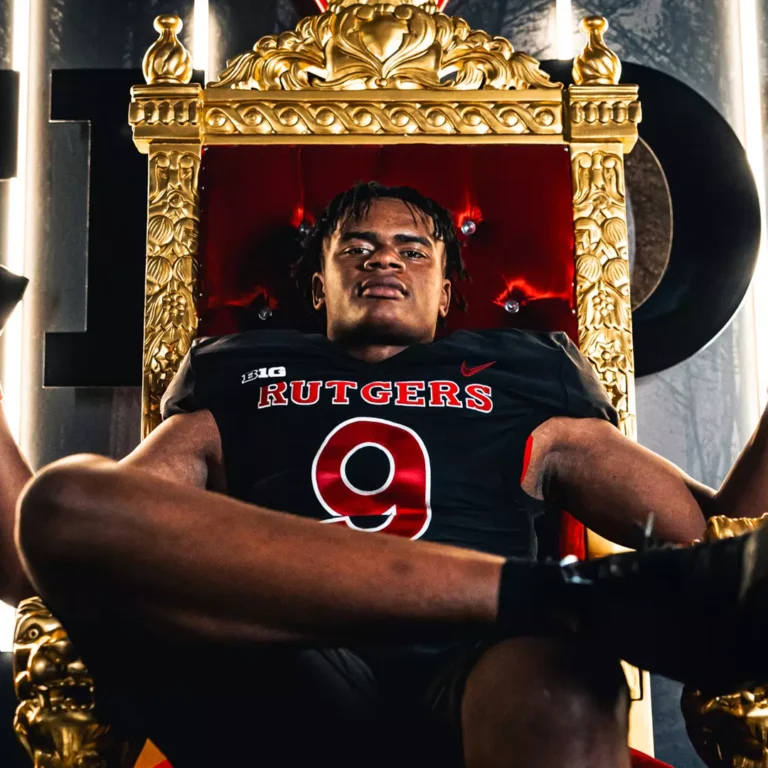
Glassboro’s Amari Sabb, a versatile three-star athlete, finalized his decision to join Alabama after producing more than 1,700 total yards during his senior campaign. Passaic running back Justin Griffin, one of the school’s most productive rushers in program history and a standout track athlete, signed with Monmouth University. Offensive lineman Ian Asaeli Ngaue-Stephenson became the lone player to join Rutgers during the February window, adding to a class that was largely secured during the early signing period. Central Regional edge rusher Elijah Reeder completed his late recruiting surge by officially committing to Penn State after rising to four-star status in the closing weeks of the process.

Earlier in the cycle, New Jersey’s top overall prospect in the 2026 class, edge rusher Luke Wafle of The Hun School, signed with USC during the December window, headlining what has been another strong year for Garden State talent on the national recruiting stage.

The February signing class also included a broad group of Division II and Division III commitments, including Dom Canzano to Kutztown, Dylan DeNobile and Marco Green to Bentley, Mason James to Indiana University of Pennsylvania, and Abdoul Traore to Franklin Pierce, underscoring the depth of football talent across the state beyond the Power Five spotlight.

The convergence of college commitments and postseason competition is what makes this time of year uniquely powerful for New Jersey high school athletics. For seniors, it represents both closure and transition. For underclassmen, it serves as motivation, offering a clear glimpse of what sustained development and opportunity can produce.

From sold-out basketball gyms and tightly contested wrestling mats to signing tables and scholarship announcements, New Jersey’s winter sports season has reached a point where every performance carries meaning. Championships are on the line. College dreams are being realized. And across the state, the next wave of athletic stories is already beginning to take shape.

New Jersey Revisits the Bicentennial as the State Museum Opens a Landmark ‘Spirit of ’76’ Exhibition for America’s 250th Birthday

As the nation prepares to mark its 250th birthday, New Jersey is choosing a deeply reflective and uniquely meaningful way to begin the Semiquincentennial year—by looking back at how Americans once celebrated a milestone that helped define a generation.

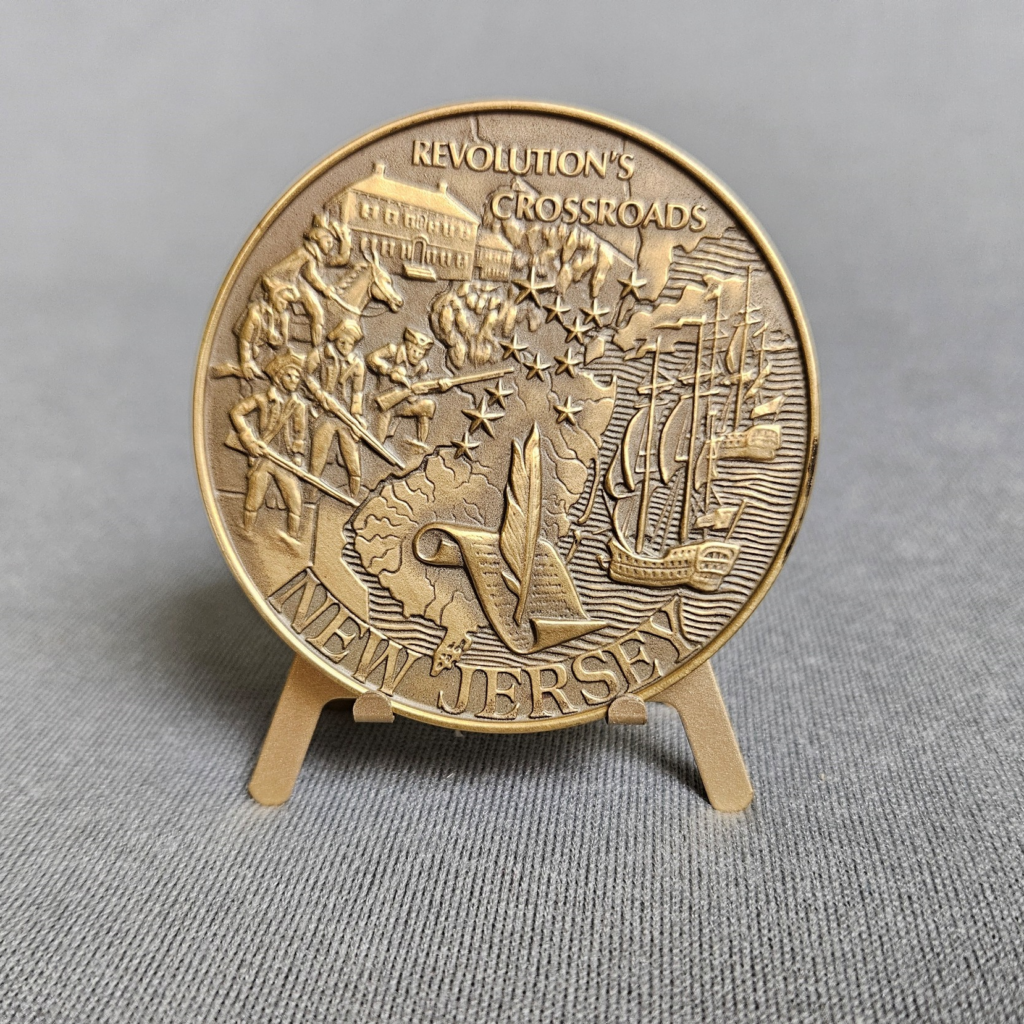
On Saturday, February 14, 2026, the New Jersey State Museum in Trenton will open a major new exhibition, Spirit of ’76: The Bicentennial, launching a year-long exploration of how the country—and especially New Jersey—experienced the historic 200th anniversary of the United States in 1976. The exhibition will remain on view through February 21, 2027, offering residents, educators, families, and visitors a rare opportunity to step directly into the cultural atmosphere of the Bicentennial era.

Timed to coincide with the nationwide Semiquincentennial, the exhibition creates a powerful bridge between two defining anniversaries of American independence, inviting the public to reflect not only on the Revolutionary past, but also on how Americans in the 1970s chose to remember and reinterpret it.

The exhibition is drawn entirely from the New Jersey State Museum’s own extensive collections, allowing curators to present an unusually authentic and locally grounded portrait of the Bicentennial. Rather than recreating a generalized national narrative, Spirit of ’76 focuses on the distinctive look, tone, and civic energy that characterized 1970s America through a New Jersey lens.

From graphic design and fine art to decorative objects and everyday memorabilia, the exhibition recreates the visual and emotional environment of the Bicentennial years, when red, white, and blue imagery saturated public life and patriotic symbolism was woven into classrooms, neighborhoods, civic celebrations, and family gatherings across the state.

Among the exhibition’s most significant artistic features are selections from the Kent Bicentennial Portfolio, a nationally recognized body of work created to commemorate the 1976 anniversary. The portfolio includes striking pieces by influential American artists such as Jacob Lawrence and Robert Indiana, whose bold graphic language and social perspective helped shape how the nation visually interpreted its own history during that moment.

These works are presented alongside an extraordinary range of historical artifacts, many of which are rarely displayed to the public. Visitors will encounter New Jersey–manufactured flags produced specifically for the Bicentennial, commemorative medallions, license plates issued during the anniversary year, and finely crafted ceramic works from some of Trenton’s most renowned manufacturers, including Cybis, Boehm, and Lenox. Together, these objects document how industry, craftsmanship, and design became part of the Bicentennial celebration itself.

One of the exhibition’s most personal and locally resonant pieces is a handcrafted cotton album quilt created by a Princeton quilting class specifically for the 1976 anniversary. The quilt reflects how civic pride and historical memory were often expressed through community-based art projects, blending personal storytelling with national identity in a way that feels remarkably contemporary.

Spirit of ’76 also places strong emphasis on the deeper historical roots that made New Jersey central to the American Revolution. Works honoring the “Ten Crucial Days” of 1776 and 1777—when George Washington’s daring crossing of the Delaware River and subsequent victories altered the course of the war—anchor the exhibition in the state’s extraordinary Revolutionary legacy.

That legacy remains central to New Jersey’s identity today. Known as the “Cockpit of the Revolution,” the state witnessed more battles than any other during the War for Independence, and that history now forms the foundation for a sweeping statewide commemoration planned throughout 2026.

The opening of Spirit of ’76 signals the beginning of an ambitious calendar of public programs, historical exhibitions, educational initiatives, and cultural events designed to engage residents of every age. From large-scale waterfront celebrations to small-town lectures and hands-on heritage programming, New Jersey’s Semiquincentennial is being built as a truly statewide experience.

Major Statewide & Regional Events

  • Sail4th 250 (July 4): A massive flotilla of tall ships will gather in the Port of New York and New Jersey, featuring public tours, cultural performances, and fireworks.
  • NJ State Parks Celebrate 250 Challenge: A year-long invitation to explore New Jersey’s 41 state parks and 50+ historic sites to honor the milestone.
  • Revolutionary Lives Traveling Exhibit: This exhibit is touring various locations, including Chatham (April 29–May 13) and Boonton (August 17–31). 

Upcoming Local Highlights

Date EventLocation
Feb 5Lecture: Hunterdon’s Jacob Francis (Free Black Revolutionary)American Baptist Church, Flemington
Feb 21Lecture: Weapons of the War of IndependenceSummit Library, Summit
Mar 29RevNJ Revolutionary Race SeriesCedar Bridge Tavern, Barnegat
Apr 18Revolutionary Trail DaySummit
Apr 22Planting a Liberty Tree (Arbor Day)Ocean County
May 22Hometown Heroes Banners CeremonyEwing Township
Jul 3Salute to Independence ParadeOcean County

Among the most anticipated regional highlights is Sail4th 250 on July 4, when a massive gathering of historic tall ships will arrive in the Port of New York and New Jersey. The multi-day event will feature public ship tours, cultural performances, and waterfront festivities, creating one of the largest maritime commemorations in the region’s history.

The state is also launching the New Jersey State Parks Celebrate 250 Challenge, a year-long invitation for residents and visitors to explore all 41 state parks and more than 50 historic sites. The initiative encourages participants to discover battlefields, historic homes, archaeological sites, and natural landscapes that shaped New Jersey’s Revolutionary story.

A traveling exhibition titled Revolutionary Lives will tour communities across the state during the year, including stops in Chatham and Boonton, offering local audiences a closer look at the diverse individuals whose experiences shaped the fight for independence.

Local programming throughout the winter and spring will further expand the reach of the commemoration. Lectures examining figures such as Jacob Francis, a free Black Revolutionary soldier from Hunterdon County, will bring overlooked narratives into public focus. Additional talks will explore the weapons and technology of the Revolutionary era, while outdoor heritage programs such as Revolutionary Trail Day and the planting of Liberty Trees in honor of Arbor Day will connect history with community participation and environmental stewardship.

Hometown Heroes banner ceremonies, local parades, and youth-focused educational events will continue throughout the summer, ensuring that the Semiquincentennial is not confined to museums alone, but becomes part of everyday life across New Jersey’s towns and counties.

Several ongoing exhibitions across the state will also complement the Trenton museum’s flagship presentation. In Burlington County, Burlington County Joins the Revolution at the Warden’s House Gallery in Mount Holly will explore the county’s Revolutionary involvement, while Hunterdon County’s Revolution and Remembrances exhibition will continue at the Millburn Free Public Library through late winter.

While historical interpretation remains at the heart of the statewide celebration, the Semiquincentennial is also being shaped through creative expression, live performance, and contemporary storytelling. Residents interested in how history is being explored on stage and through live programming can follow New Jersey’s growing slate of theatrical and performance-driven commemorative projects through Explore New Jersey’s theatre coverage, which continues to spotlight productions inspired by the state’s cultural and historical heritage.

At the center of all of this activity, the New Jersey State Museum’s Spirit of ’76 exhibition stands as a powerful point of entry into the year-long commemoration. By focusing on how Americans in 1976 experienced their own national milestone, the exhibition encourages visitors to consider how historical memory evolves—and how each generation leaves its own imprint on the story of the nation.

Equally important, the exhibition reinforces New Jersey’s role not simply as a backdrop to American history, but as one of its primary stages. From Revolutionary battlefields to Bicentennial art studios and community classrooms, the state has repeatedly shaped how Americans understand freedom, identity, and civic responsibility.

Admission to the New Jersey State Museum is typically free, making Spirit of ’76 accessible to families, students, and visitors from across the region. Special programs, lectures, and educational activities connected to the exhibition are expected throughout its year-long run, further expanding its impact.

As the United States prepares to mark 250 years since independence, New Jersey is choosing to begin the conversation by remembering how Americans once celebrated their past—and by inviting today’s audiences to reflect on what history, community, and shared identity mean in the present. Through Spirit of ’76, the state opens not only an exhibition, but a doorway into a year of discovery, remembrance, and renewed connection to the stories that continue to define the Garden State.

RENT in Concert

0

Musical in Concert | Produced by AMP Worldwide

RENT Comes to Life in Symphonic Concert at Alexander Kasser Theater

February 22 @ 15:00 18:00

A Symphonic Reimagining of a Broadway Classic Comes to New Brunswick as RENT in Concert Takes Over State Theatre New Jersey

One of the most influential and emotionally powerful musicals in modern theatre history is returning to New Jersey in a striking new form when RENT in Concert arrives at State Theatre New Jersey in New Brunswick on Thursday, February 19, 2026, for a 7:30 p.m. performance that reshapes Jonathan Larson’s landmark score into a sweeping live orchestral event.

Rather than presenting RENT as a fully staged production, this special concert tour places the music front and center, allowing the full emotional architecture of the show to unfold through voice and orchestra. The result is an immersive symphonic experience that honors the raw heart of the original musical while offering audiences a fresh and dramatically elevated way to hear one of Broadway’s most celebrated scores.

This Broadway concert presentation brings together an accomplished cast of vocalists whose performances are designed to highlight both the intimacy and urgency that have defined RENT for nearly three decades. Kris Carrasco leads the ensemble as Angel, bringing warmth, humor, and deep emotional generosity to one of the show’s most beloved characters. Ruchir Khazanchi appears as Benny, navigating the tension between loyalty and ambition that runs through the story. Candice Woods steps into the role of Joanne, while Tommy Kaiser portrays the restless and observant filmmaker Mark. Alex Lugo brings fearless theatricality to Maureen, paired with Jasiana Caraballo as Mimi, whose vulnerability remains central to the show’s emotional gravity. Will Hastreiter takes on the role of Roger, capturing both the guarded pain and creative longing of the struggling songwriter, and Terrance Johnson embodies the gentle wisdom and humanity of Tom Collins.

Together, the company performs the complete score of RENT, allowing audiences to experience every musical moment that has made the show a global phenomenon. From the explosive energy of the title number and the rebellious joy of “La Vie Bohème,” to the emotional honesty of “I’ll Cover You” and “Without You,” the concert format gives each song space to breathe and resonate. The production’s signature ensemble moment, “Seasons of Love,” becomes a powerful centerpiece of the evening, carried by layered harmonies and the full force of live orchestration.

What distinguishes this tour is the musical collaboration behind it. Orchestral accompaniment is provided by Contemporaneous, the acclaimed New York City-based ensemble widely recognized for its bold, immersive, and forward-thinking approach to live performance. Their involvement transforms the familiar rock-influenced score into a cinematic soundscape, expanding the emotional reach of Larson’s music without losing its gritty authenticity. The concert is directed by Sara Brians and conducted by Heidi Joosten, bringing together theatrical storytelling and musical leadership in a unified artistic vision.

For New Jersey audiences, this performance represents a major cultural moment in the state’s ongoing relationship with touring Broadway and concert theatre productions. Fans who regularly follow major stage events and touring presentations can continue to explore what is coming to venues across the state through Explore New Jersey’s theatre coverage, which highlights both classic works and innovative new interpretations arriving in local venues.

RENT in Concert arrives at State Theatre New Jersey as part of the venue’s Broadway Series, reinforcing New Brunswick’s reputation as one of the state’s most important hubs for large-scale touring productions. The historic theater’s acoustics and intimate sightlines make it uniquely suited for a concert experience of this scale, where the power of live voices and orchestration can be fully appreciated without theatrical distractions.

The evening runs approximately two hours and ten minutes, including an intermission, giving audiences the opportunity to experience the entire musical journey in a single, uninterrupted narrative arc. Tickets are currently on sale, with prices beginning at fifty-eight dollars, including fees.

Set in New York City’s East Village, RENT remains a story about artists, outsiders, and chosen family trying to survive, create, and love in the face of uncertainty. The musical follows a tight-knit group of young filmmakers, musicians, and performers struggling to define their identities and hold onto their dreams while living on the margins of a rapidly changing city. Beneath the humor, romance, and rebellion, the show confronts the realities of illness, loss, and social isolation, particularly under the shadow of HIV and AIDS.

At the center of the story are Roger, Mimi, Tom, and Angel, whose lives are deeply shaped by both the physical and emotional toll of the disease. Around them, friendships fracture and reconnect. Romantic relationships are tested. Personal ambition clashes with loyalty. Maureen uses performance art as both expression and escape, while Joanne wrestles with what commitment truly means. Benny, once part of the same struggling artistic circle, has chosen financial security and corporate success, creating painful divisions between past ideals and present realities. Mark, documenting everything through his camera, often feels disconnected from life itself, caught between observation and participation.

Inspired in part by Giacomo Puccini’s La Bohème, RENT reimagines that classic story through the lens of late twentieth-century New York, infusing it with rock music, political urgency, and deeply personal storytelling. Its impact has been lasting and transformative. The musical earned both the Tony Award for Best Musical and the Pulitzer Prize for Drama, and its influence continues to shape contemporary musical theatre, popular culture, and live performance.

What makes RENT in Concert especially meaningful for today’s audiences is how directly its message still speaks to the present. Community, creativity, compassion, and the courage to live truthfully remain at the heart of the show. In a world still defined by social divisions, economic uncertainty, and cultural change, the voices of these characters continue to feel unmistakably current.

By presenting the full score in a symphonic setting, this tour places renewed focus on the emotional storytelling embedded in the music itself. Every lyric, harmony, and musical transition becomes part of a shared experience between performers and audience, inviting reflection as much as celebration.

When the orchestra swells and the cast unites in song at State Theatre New Jersey this February, RENT in Concert will offer more than nostalgia. It will deliver a powerful reminder of why this musical has endured for generations, and why its call to live boldly, love deeply, and stand together continues to matter now more than ever.

State Theatre New Jersey

732-246-7469

View Organizer Website

State Theatre New Jersey

15 Livingston Avenue , NJ
New Brunswick, NJ 08901 United States
+ Google Map
(732) 246-7469
View Venue Website

RENT in Concert

0

A New Way to Feel RENT: A Symphony-Driven Concert Event Brings Jonathan Larson’s Masterpiece to Life at Mayo Performing Arts Center

February 20 @ 17:00 23:30

The revolutionary spirit of RENT is returning to New Jersey in a bold new form, and it is arriving with the full emotional force of a live symphony behind it. Rent in Concert on Tour transforms one of the most beloved and influential musicals of the modern era into a powerful, large-scale concert experience—one that places the music, the voices, and the story’s timeless message at the very center of the evening.

Rather than staging the show as a traditional production, this reimagined concert presentation strips the experience down to its emotional core and rebuilds it with cinematic musical depth. Every iconic song and defining moment from Jonathan Larson’s landmark score is performed live by a stellar touring cast, accompanied by the sweeping sound of a full symphony orchestra. The result is not simply a concert and not quite a musical—it is a fully immersive celebration of one of Broadway’s most enduring cultural touchstones.

At its heart, RENT remains a story about artists, outsiders, chosen family, and the courage to love fiercely in uncertain times. This symphonic concert format heightens those themes by allowing the music itself to lead the storytelling. From the opening pulses of “Rent” to the luminous collective reflection of “Seasons of Love,” audiences are invited to experience the score in a way that feels both intimate and grand.

The touring cast assembled for Rent in Concert brings together a dynamic group of performers whose voices and emotional authenticity mirror the urgency and vulnerability that made the original show resonate around the world.

Kris Carrasco steps into the role of Angel, bringing warmth, humor, and radiant compassion to one of the most beloved characters in contemporary musical theatre. Ruchir Khazanchi portrays Benny, navigating the complex tensions between ambition, loyalty, and community that anchor the story’s central conflict. Candice Woods brings clarity and strength to Joanne, while Tommy Kaiser captures Mark’s restless idealism and emotional honesty.

Alex Lugo embodies Maureen’s rebellious energy and theatrical unpredictability, paired beautifully with Jasiana Caraballo’s deeply expressive Mimi, whose journey remains one of the emotional anchors of the show. Will Hastreiter’s Roger channels both vulnerability and creative longing, while Terrance Johnson’s Tom Collins brings grace, wisdom, and gentle resilience to one of RENT’s most quietly powerful roles.

Supporting the principals is a versatile and emotionally charged ensemble featuring Chachi Delgado, Joseph DePietro, Rodney McKinner, Nisa Mercado, and Neema Muteti. Their presence allows the concert to maintain the communal heartbeat that defines RENT, reinforcing the idea that this story has always belonged to a collective rather than a single voice.

What distinguishes this concert experience is its commitment to presenting the complete musical narrative. Every major number from Larson’s score is performed, allowing audiences to travel through the full emotional arc of the story. High-energy favorites such as “La Vie Bohème” and “Take Me or Leave Me” deliver the exhilarating theatrical electricity fans expect, while more intimate moments like “I’ll Cover You” and “Without You” unfold with striking emotional clarity under orchestral arrangements that deepen each lyric and melodic turn.

The centerpiece of the evening, “Seasons of Love,” becomes something truly transcendent in this format. With the full cast joining in luminous harmony and the orchestra lifting the familiar melody into new emotional territory, the song’s reflection on time, connection, and meaning feels newly urgent for today’s audiences.

This touring production arrives at a moment when RENT’s central message feels especially relevant. The show’s enduring call for empathy, creative freedom, and human connection continues to resonate across generations. In an era shaped by social change, cultural division, and artistic reinvention, RENT reminds audiences that compassion and community remain acts of resistance—and hope.

For New Jersey’s theatre community, this symphonic presentation stands as a major cultural moment. It represents the continued evolution of how iconic stage works can be reimagined for contemporary audiences while honoring their original emotional power. Fans who regularly follow major touring productions and performance events across the state can discover more about upcoming stage experiences and theatrical programming through Explore New Jersey’s dedicated theatre coverage, which continues to spotlight the region’s most compelling live performance offerings.

The performance takes on added significance at Mayo Performing Arts Center, a venue that has become synonymous with artistic excellence and community connection in Northern New Jersey. Since opening its doors in 1994, the Morristown-based performing arts center has served as a cultural anchor for the region, hosting world-class touring productions, concerts, and community-driven programming that consistently elevate the local arts landscape.

Mayo Performing Arts Center is more than a theatre. It is a gathering place where audiences come together to be inspired, entertained, and uplifted by the transformative power of live performance. Its commitment to accessibility, education, and artistic diversity has helped shape generations of arts patrons throughout the region, making it an ideal home for a production as emotionally resonant and socially conscious as RENT.

In the intimate yet acoustically refined setting of the venue, the full symphonic score will surround audiences with sound, allowing the layered harmonies and instrumental textures to unfold with clarity and impact. The concert-style staging places the performers front and center, drawing attention to vocal nuance, emotional expression, and the collaborative energy that drives the entire company.

Rent in Concert on Tour offers longtime fans a new way to reconnect with a story that shaped modern musical theatre, while also welcoming first-time audiences into a world defined by courage, creativity, and radical compassion. It honors Jonathan Larson’s legacy not by replicating the past, but by reimagining how his music can continue to move hearts in the present.

As the orchestra swells and the cast lifts their voices in unity, this symphonic celebration of RENT promises to be more than a night of familiar songs. It is a shared reminder that art still has the power to connect strangers, amplify unheard voices, and help us measure our lives not by time—but by love.

Mayo Performing Arts Center (MPAC)

973.539.8008

View Organizer Website

State Theatre New Jersey

15 Livingston Avenue , NJ
New Brunswick, NJ 08901 United States
+ Google Map
(732) 246-7469
View Venue Website

Collingswood Fire Captain Sounds Alarm as Staffing Shortages Leave Crews Undermanned on Hundreds of Calls

Even with mandatory overtime, borough fire and EMS teams are falling short on one in five emergencies, raising urgent public safety concerns across South Jersey

COLLINGSWOOD — A senior fire official in Collingswood is warning that the borough’s emergency response system is operating below acceptable staffing levels on a routine basis, leaving firefighters and emergency medical crews stretched thin during some of the community’s most critical moments.

Fire Captain Julian D’Alonzo said that despite aggressive scheduling and the widespread use of forced overtime, Collingswood first responders are still short-staffed on approximately 20 percent of fire and EMS calls.

“We’re not meeting the minimum standard,” D’Alonzo said, describing a daily operational reality in which units are dispatched without the recommended number of personnel to safely and efficiently handle emergencies ranging from medical calls to structure fires and traffic incidents.

The staffing shortfall, he said, is not the result of a single budget cycle or one failed hiring effort, but a long-building problem that has intensified as call volumes increase, training requirements expand and the pool of qualified candidates shrinks.

In a borough of just over 15,000 residents, Collingswood’s fire and emergency medical services respond to thousands of incidents each year. Those calls include not only local emergencies but also mutual aid requests from neighboring municipalities when surrounding towns experience their own staffing gaps or major incidents.

According to department leadership, the current staffing model often leaves crews operating below nationally recognized deployment benchmarks for both fire suppression and emergency medical response. That means fewer hands on scene to manage patient care, secure hazardous environments, deploy equipment, and ensure firefighter safety during active incidents.

In practical terms, the shortage can slow down critical tasks such as establishing water supply at fires, performing coordinated searches, or delivering advanced life support during medical emergencies. It can also force officers to make difficult decisions about how to allocate limited personnel in rapidly evolving situations.

D’Alonzo said the reliance on mandatory overtime has become routine rather than exceptional.

“Overtime was supposed to be a short-term bridge,” he said. “Now it’s built into how we operate.”

While overtime can temporarily fill empty seats on apparatus, it also carries hidden risks. Fatigue among first responders is a growing concern, particularly in departments where staffing levels require firefighters and medics to work back-to-back shifts or extended hours with minimal recovery time.

Fire service safety experts consistently point to exhaustion as a contributing factor in on-the-job injuries, slower reaction times and increased stress-related health issues.

At the municipal level, borough officials acknowledge that the problem is real and growing more complex. Collingswood’s governing body is preparing to retain a professional consultant within the next month to conduct a comprehensive staffing and deployment study of the fire and EMS operations.

The review is expected to examine call volume trends, staffing patterns, shift schedules, response times, overtime usage, training demands and long-term workforce planning.

Officials say the study is intended to provide an independent assessment of how many firefighters and EMS personnel the borough actually needs to meet modern public safety standards — not simply what the current budget can sustain.

But leaders also caution that solving the problem will not be easy.

Several overlapping pressures are shaping Collingswood’s staffing challenge. Recruitment has become more difficult across the region as fewer applicants pursue careers in fire and emergency medical services. Training pipelines are longer and more specialized than in the past, particularly for paramedic certification. At the same time, experienced personnel are retiring or leaving for higher-paying departments elsewhere in the state.

The competition for qualified firefighters and paramedics has intensified throughout South Jersey, where municipalities are increasingly forced to recruit from the same limited pool of candidates.

Compounding the issue is the rising complexity of emergency calls. Collingswood crews are responding to a higher proportion of medical incidents involving aging residents, opioid overdoses, mental health crises and multi-patient emergencies. These incidents require more personnel on scene and longer time commitments per call, tying up units and further straining staffing availability.

From a financial standpoint, overtime costs have climbed steadily as the borough relies on extra shifts to keep apparatus in service. While overtime is often less expensive in the short term than adding full-time positions, officials concede that it is not a sustainable long-term strategy.

Public safety advocates argue that the borough must weigh the true cost of understaffing — including injury risk, burnout, delayed responses and reduced operational capacity — against the price of expanding the workforce.

The situation unfolding in Collingswood mirrors a broader trend across New Jersey, where fire and EMS departments are increasingly struggling to maintain staffing levels that match modern emergency response demands. Municipal leaders across the state are facing difficult choices about public safety funding, recruitment incentives and regional cooperation strategies.

Coverage of staffing and emergency services challenges remains a growing focus for Sunset Daily News as communities across the state reassess how public safety systems are funded, staffed and supported.

For frontline responders in Collingswood, however, the issue is not abstract.

When staffing falls short, D’Alonzo said, the consequences are felt immediately on the street and inside homes during emergencies.

“When we show up without the right number of people, the job doesn’t get smaller,” he said. “The risk just gets bigger — for our residents and for our firefighters.”

As the borough prepares to commission its outside staffing review, both union leaders and department officers are urging officials to treat the findings as more than a procedural exercise. They say the study must translate into concrete hiring plans, competitive compensation strategies and long-term workforce investments if Collingswood hopes to stabilize its emergency services and meet accepted response standards.

Until then, crews will continue to rely on overtime and personal sacrifice to keep engines staffed and ambulances rolling — even as leaders inside the department warn that the margin for error is shrinking with every understaffed call.

Alan Cumming: Uncut

0

Unfiltered, Unscripted, and Unmistakably Alan: A Daring Cabaret Experience Arrives with Uncut

February 5 @ 17:30 23:30

Few performers can command a room with nothing more than a song, a story, and an unshakable sense of self. Even fewer can turn a lifetime of art, activism, and reinvention into a live experience that feels both deeply personal and wildly entertaining. That is precisely what audiences can expect when Alan Cumming brings his newest cabaret production, Uncut, to the stage.

This is not a retrospective. It is not a greatest-hits showcase. And it is certainly not a carefully polished celebrity presentation.

Uncut is exactlyM, revealing, fearless, and unmistakably alive in the moment—a performance designed to strip away the distance between audience and artist. The show invites the crowd directly into Cumming’s world, blending music, confession, humor, and theatrical storytelling into a format that feels more like a late-night conversation than a formal concert.

Musical direction for the production is provided by Henry Koperski, whose longtime creative partnership with Cumming anchors the show with subtle, responsive arrangements that allow each moment to breathe. Rather than overpowering the stories being told, the music becomes an emotional guide, shifting tone as effortlessly as the performer at its center.

For New Jersey audiences, this engagement offers something increasingly rare: a major international performer choosing intimacy over spectacle, vulnerability over branding, and connection over polish.

Cumming’s career has never fit into a single lane. His theatre legacy alone spans some of the most demanding and transformative roles in modern stage history, from his iconic turn as the Emcee in Cabaret to his daring, multi-character interpretations of Shakespearean work, including productions of Macbeth that redefined how classical performance could live in contemporary spaces. At the same time, he has built a global reputation as a touring cabaret artist, performing solo shows that fuse Broadway-level technique with nightclub immediacy.

Yet Uncut deliberately moves beyond résumé.

The show reframes his extraordinary career not as a series of professional milestones, but as a lived journey—one shaped by identity, survival, curiosity, and a refusal to be boxed into expectations. Audiences encounter stories that are funny, raw, occasionally uncomfortable, and always deeply human. Cumming leans into the contradictions that have defined his path, using humor as both shield and spotlight.

The format allows for spontaneity, audience interaction, and tonal shifts that reflect the unpredictable rhythm of real life. One moment may deliver a sharp comedic observation about fame or relationships. The next might dissolve into a reflective musical passage exploring fear, aging, or self-acceptance. The show does not rush to resolution. It allows emotional complexity to linger.

That artistic bravery mirrors a screen career that has never been guided by category or comfort. Cumming’s television work spans courtroom drama, political satire, genre storytelling, and unscripted entertainment, including his acclaimed role in The Good Wife and his recent cultural resurgence as the Emmy-winning host of The Traitors. In each case, he brings an unmistakable point of view—playful, subversive, and emotionally intelligent.

Film audiences know him just as well for his ability to move fluidly between large-scale studio productions and intimate independent projects, often choosing roles that explore power, sexuality, and identity in unconventional ways.

But Uncut places the spotlight somewhere different.

This show belongs entirely to the voice behind the roles.

Beyond entertainment, Cumming has spent much of his life using his platform for activism and advocacy. His work supporting animal rights, LGBTQ+ organizations, mental health initiatives, sex education, and reproductive freedom is woven quietly throughout the show—not as a lecture, but as lived experience. His participation in the recent HBO documentary Chimp Crazy brought renewed attention to the ethics of animal captivity and exploitation, further reinforcing how deeply his personal values intersect with his creative choices.

Uncut also reflects Cumming’s ongoing commitment to building cultural spaces that uplift marginalized voices. He is the owner of Club Cumming, his downtown New York cabaret venue that has become a haven for queer artists, emerging performers, and experimental storytelling. Internationally, he also serves as artistic director of the Pitlochry Festival Theatre in Scotland, guiding one of the country’s most respected cultural institutions toward a future rooted in accessibility, diversity, and artistic risk.

For fans of live performance in New Jersey, this production lands squarely within a growing movement toward experiential comedy and storytelling that blends traditional stand-up, music, and theatrical structure. Audiences who follow the evolution of live humor, character-driven storytelling, and hybrid performance can explore more of that creative landscape through Explore New Jersey’s coverage of stand-up comedy and live performance, which continues to spotlight artists redefining what modern comedy and cabaret can be.

What makes Uncut especially compelling is its refusal to flatten Cumming into a brand.

Instead, the show presents him as a working artist still questioning, still discovering, and still pushing against the boundaries of what audiences expect from a celebrity figure. There is joy here—plenty of it—but also grief, vulnerability, and a candid examination of how success can coexist with insecurity.

In an entertainment industry increasingly dominated by tightly controlled narratives and image management, Uncut feels quietly radical. It suggests that honesty itself can be theatrical. That contradiction can be entertaining. And that a performer does not need to hide complexity in order to captivate an audience.

For New Jersey audiences seeking a night that delivers laughter without triviality, music without formula, and storytelling without artifice, this cabaret event offers a rare opportunity to witness a master performer working at full emotional range. Alan Cumming Uncut is not about revelation for shock value. It is about presence—about inviting the audience to share in a lived, evolving story that continues to unfold in real time.

In a cultural moment hungry for authenticity, this performance arrives as both celebration and challenge, reminding us that the most powerful stage moments are often the ones that allow a performer to be fully, unapologetically themselves.

Mayo Performing Arts Center (MPAC)

973.539.8008

View Organizer Website

State Theatre New Jersey

15 Livingston Avenue , NJ
New Brunswick, NJ 08901 United States
+ Google Map
(732) 246-7469
View Venue Website

Umphrey’s McGee

0

Umphrey’s McGee Brings a Night of Precision, Power, and Improvisation to Morristown’s Mayo Performing Arts Center

February 4 @ 17:00 23:30

Morristown becomes one of the most important stops on the regional live-music map tonight as Umphrey’s McGee takes the stage at the Mayo Performing Arts Center for a 7:30 p.m. performance that promises far more than a standard rock concert. For longtime fans and first-time listeners alike, this show represents a rare opportunity to experience one of the most technically sophisticated and creatively fearless touring bands in America inside one of New Jersey’s premier intimate theater venues.

For more than two decades, Umphrey’s McGee has carved out a singular space in modern live music. The band is often loosely associated with the jam-band scene, but that label only scratches the surface of what audiences actually experience in the room. Their shows are built around precision musicianship, rapid-fire genre shifts, and improvisational structures that blur the line between progressive rock, metal, jazz fusion, funk, and straight-ahead arena-ready hooks. No two performances are ever the same, and that unpredictability is exactly what continues to draw a fiercely loyal national following.

Tonight’s Morristown stop fits perfectly into the group’s reputation for delivering high-impact performances in thoughtfully selected theaters rather than oversized arenas. The Mayo Performing Arts Center offers exceptional acoustics, sightlines that keep fans connected to the musicians onstage, and a layout that allows the intricacy of the band’s playing to truly breathe. In a genre where sonic clarity matters as much as volume, the venue becomes part of the experience rather than simply a backdrop.

For New Jersey’s live music community, this show also highlights the state’s growing role as a destination for nationally recognized touring acts seeking venues that offer both prestige and atmosphere. As part of the broader spotlight on regional concerts and touring performances across the Garden State, fans can continue discovering upcoming shows, artist features, and venue highlights through Explore New Jersey’s dedicated music coverage.

What separates Umphrey’s McGee from many touring acts is the depth of their live catalog. Their setlists routinely blend fan-favorite compositions with spontaneous, in-the-moment musical detours that evolve differently from night to night. A tightly structured progressive anthem can dissolve into an extended instrumental conversation, only to resurface minutes later in a completely reimagined form. The band’s willingness to abandon predictable patterns keeps even seasoned fans guessing, and it is precisely that creative risk-taking that has allowed the group to remain culturally relevant long after many of their contemporaries faded.

The musicianship at the heart of the group is not simply impressive on a technical level. It is collaborative in a way that feels increasingly rare in modern touring acts. Each member is given space to lead, respond, and reshape the direction of a performance in real time. Guitar lines can suddenly trade roles with keyboard motifs. Rhythm sections push tempos forward or pull them back without breaking cohesion. Entire segments of a show can be built spontaneously around subtle cues that only seasoned players recognize in the moment.

For audiences inside Mayo Performing Arts Center tonight, the experience will likely feel immersive rather than observational. Umphrey’s McGee performances are designed to be shared events, shaped as much by the energy of the crowd as by the band’s internal chemistry. The room itself becomes part of the musical conversation, reacting to shifts in tone, unexpected transitions, and moments of explosive release.

Morristown, in particular, offers an ideal setting for this type of performance. The town’s vibrant downtown district, filled with restaurants, bars, and walkable streets, has quietly become one of North Jersey’s most appealing pre- and post-show destinations. Concertgoers arriving early will find no shortage of places to gather before doors open, while the area’s compact layout makes it easy to continue the evening after the final encore.

From a broader cultural perspective, tonight’s show also reflects how deeply New Jersey audiences continue to support live performance at a time when touring economics remain challenging for artists nationwide. Theater-sized venues like Mayo Performing Arts Center provide a sustainable model for artists who value production quality, audience connection, and sound integrity over sheer capacity. For fans, the payoff is undeniable. The distance between performer and audience shrinks. Subtle musical details become audible. The energy in the room feels concentrated rather than diluted.

Umphrey’s McGee thrives in that environment.

Fans attending tonight should expect a performance that balances technical mastery with raw spontaneity. The band’s ability to pivot seamlessly between intricate composed sections and extended improvisational explorations is what makes each show feel exclusive to the audience experiencing it. Even songs that have appeared on countless setlists are rarely delivered the same way twice.

This Morristown performance also arrives during a period of renewed creative momentum for the group, as their recent touring cycles have leaned heavily into adventurous arrangements and deeper improvisational stretches. Longtime followers often describe these eras as peaks in the band’s evolution, when familiarity with their catalog allows for greater freedom to experiment onstage.

For newcomers, the show offers a compelling entry point into a world where musicianship and entertainment are not treated as separate priorities. The band’s catalog includes soaring melodic passages, aggressive guitar-driven sections, and groove-centered interludes that invite even casual listeners into the experience. It is a rare performance environment where complexity never feels exclusionary.

As the lights dim tonight at 7:30 p.m., Mayo Performing Arts Center will transform into a space where precision and spontaneity coexist, and where New Jersey’s live-music audience once again demonstrates why the state remains an essential stop for artists who value engaged, passionate crowds.

In a touring landscape increasingly dominated by massive production spectacles, Umphrey’s McGee continues to prove that artistry, improvisation, and genuine connection still define the most memorable nights in live music. Morristown is about to experience exactly why.

Mayo Performing Arts Center (MPAC)

973.539.8008

View Organizer Website

State Theatre New Jersey

15 Livingston Avenue , NJ
New Brunswick, NJ 08901 United States
+ Google Map
(732) 246-7469
View Venue Website

A Season at a Crossroads in Newark: Devils Return Home Searching for Answers, Urgency, and Identity Against the Islanders

The New Jersey Devils return to Prudential Center on Thursday night carrying far more than a box score into their matchup with the New York Islanders. With the calendar turning toward the stretch run and the standings tightening around the Eastern Conference wild-card picture, this game has become a snapshot of where the franchise stands right now and how fragile the margin for error has become.

New Jersey enters the night at 28-26-2, still within reach but increasingly squeezed by inconsistency, injuries, and a style of play that has failed to translate skill into sustained offense. The Devils are coming off a discouraging 3-0 home loss to the Columbus Blue Jackets, a game that exposed the same issues that have quietly followed this roster for weeks: stagnant puck movement, an ineffective power play, and an alarming inability to elevate their play when the pressure is highest.

The most glaring absence remains Jack Hughes. Without their dynamic centerpiece in the lineup, the Devils’ offensive identity has flattened. What was once a team built around speed through the middle of the ice and aggressive puck retrieval has drifted into a perimeter-based attack that struggles to create interior chances or chaos in front of opposing goaltenders. For a club designed around pace and creativity, the current version feels cautious and reactive.

The frustration surrounding the Blue Jackets loss was not rooted in being outclassed. It came from watching a winnable game slowly slip away in a building that should be a clear home-ice advantage. For long stretches, the Devils controlled early possession and limited Columbus’ looks, but their inability to convert opportunities and sustain pressure set the stage for a familiar late collapse.

Jacob Markstrom once again kept the game within reach. His first period was calm and controlled, including an early moment of controversy when Columbus appeared to score on a chaotic crease scramble. The goal was overturned following a coach’s challenge, offering New Jersey an early lifeline. Instead of building momentum, however, the Devils struggled to generate anything resembling offensive rhythm. Their second shot on goal did not arrive until more than twelve minutes into the opening frame, a troubling statistic for a team that prides itself on tempo.

Timo Meier provided one of the few dangerous looks of the period with a glove-side attempt that produced a rebound, but no Devil arrived with urgency to capitalize. Simon Nemec later rang a shot off the post after a sharp setup from Jesper Bratt, a sequence that briefly hinted at what this roster is still capable of when it attacks with purpose.

That glimpse never fully materialized.

The Devils’ power play, already a point of concern for weeks, once again failed to generate momentum. Even with elite offensive personnel available, entries were disorganized, puck movement remained slow, and shooting lanes were predictable. A late first-period opportunity produced only a single clean look, and even that chance never forced Columbus’ goaltender into sustained difficulty.

The second period mirrored the first, but with less energy and far more defensive zone time. New Jersey struggled to exit cleanly, frequently resorting to soft clears and uncontrolled flips into neutral ice. While the Blue Jackets were not overwhelming in volume, the Devils were forced to defend for extended sequences, burning valuable energy and preventing any real offensive flow.

The most alarming stretch came during another power play that looked completely disconnected. Columbus generated as many dangerous rushes as New Jersey managed shots, reinforcing a growing concern that the Devils’ man advantage has become more of a liability than a weapon. Even when New Jersey found its best chance of the night on a rush attempt from Connor Brown, the release came a fraction too late, and the play evaporated.

By the time the game reached the third period scoreless, it felt less like opportunity and more like a warning. This season, tied games late have not been a comfort zone for the Devils.

That pattern continued.

An early third-period power play failed to produce traction, and moments later a defensive breakdown sent Columbus in alone. Although New Jersey escaped that sequence without damage, the shift in momentum was unmistakable. The Devils began to chase the game rather than dictate it.

The breakthrough came on a perimeter shot that found its way through traffic and past Markstrom, a goal that symbolized the night. It was not a defensive collapse as much as a momentary lapse in structure and awareness, the type of mistake that often defines games when teams struggle to manufacture offense.

The second goal arrived quickly after, off a transition sequence where New Jersey lost inside positioning and failed to recover. Down 2-0, the Devils finally showed desperation, pulling their goaltender with nearly five minutes remaining. What followed was extended six-on-five possession without real danger, capped by a turnover at the blue line and a broken-stick infraction that resulted in an automatic penalty goal and sealed the 3-0 loss.

The underlying numbers only deepen the concern. New Jersey controlled play early but steadily lost territorial advantage as the game wore on, particularly in the third period when urgency should have favored the home team. Instead, the Devils were hemmed in, outworked on retrievals, and unable to reset their offensive structure once Columbus established its defensive shell.

This has become a troubling trend.

Across multiple recent games, New Jersey has struggled to generate sustained five-on-five offense late. When trailing or tied entering the third period, their ability to create meaningful pressure has fallen off sharply. The visual evidence matches the data. Zone time shrinks, shot quality deteriorates, and far too many possessions end along the boards without a second layer of support arriving in the slot.

Coaching decisions are now firmly under the microscope. The Devils’ offensive system has become rigid, with limited motion below the goal line and little use of low-to-high rotations that could open shooting lanes for mobile defenders. Too often, the attack stalls along the perimeter before a hopeful wrist shot is funneled into traffic.

For a roster built around high-skill forwards and mobile blue-liners, the absence of deception and pace is striking. Players like Nico Hischier, Jesper Bratt, Timo Meier, and Dougie Hamilton should be able to stress defensive coverage. Instead, the structure places heavy emphasis on control rather than creativity, producing long shifts that drain energy without creating danger.

The power play, in particular, has become one of the defining weaknesses of the Devils’ second half. Since early December, New Jersey has converted at a rate well below league standards despite continuing to dress elite offensive talent. Zone entries remain inconsistent, puck support on retrievals is late, and shooting threats are easily anticipated. In today’s NHL, where special teams frequently swing playoff races, that inefficiency is no longer survivable.

There is also a growing sense that younger, more aggressive players may be needed to inject life into a lineup that has become predictable. Arseny Gritsyuk has shown flashes of creativity and willingness to attack the middle of the ice, a quality that has been otherwise scarce. With the Olympic break approaching, roster evaluation will become unavoidable.

Veteran depth forwards have struggled to produce, and their impact at five-on-five has diminished. The Devils’ bottom-six rotation has not consistently tilted the ice or relieved pressure when the top lines are neutralized. For a team fighting to remain relevant in the playoff conversation, the lack of secondary scoring and forechecking presence has become a significant obstacle.

The Islanders now arrive in Newark as a very different kind of test. Structured, patient, and comfortable playing low-event hockey, they represent exactly the type of opponent that has frustrated New Jersey this season. For the Devils to reverse the narrative, they will need more than improved execution. They will need to rediscover a willingness to attack uncomfortable areas of the ice, commit to faster puck movement, and accept the risk that comes with aggressive offensive play.

There is still talent here. There is still a foundation capable of producing meaningful hockey in March and April. But the margin is shrinking, and the room for stylistic stubbornness has disappeared.

For fans tracking every shift, every lineup decision, and every ripple in the standings, the urgency surrounding this stretch is unmistakable. Anyone following the broader storylines surrounding the club this season through Explore New Jersey’s dedicated New Jersey Devils coverage understands just how pivotal the next few weeks will be in determining whether this year becomes a missed opportunity or the start of a late resurgence.

Thursday night is not simply another home game.

It is a test of adaptability, leadership, and belief.

If the Devils are going to salvage momentum in a season drifting toward frustration, the response must begin now, on their own ice, against a divisional opponent built to punish hesitation.

A Valentine’s Weekend Worth Toasting: Working Dog Winery Unveils Retriever 2023 With Wine, Chocolate, Barrel Tastings, and a Creative Glass Workshop

Romance, craftsmanship, and one of central New Jersey’s most respected wineries come together this February as Working Dog Winery prepares to debut its highly anticipated Retriever 2023 vintage during a multi-day Valentine’s weekend celebration designed for both serious wine lovers and couples looking for something refreshingly different to do.

Set in Hightstown within East Windsor Township, the estate has built a loyal following for its thoughtful winemaking and relaxed, welcoming atmosphere—and this winter release weekend promises to be one of its most memorable seasonal events. Guests can explore the story behind the winery, its vineyard-driven philosophy, and the full experience of the property through Working Dog Winery’s dedicated destination page on Explore New Jersey, which highlights why the winery continues to stand out among the state’s premier wine destinations.

The centerpiece of the weekend is the official launch of Retriever 2023, a reserve, estate-grown blend crafted entirely from fruit grown on the winery’s own vineyards. The wine brings together an equal blend of Cabernet Franc and Merlot, two grapes that thrive in New Jersey’s evolving vineyard landscape and consistently deliver structure, depth, and expressive aromatics when handled with precision.

Working Dog Winery’s Retriever series has become a flagship for the estate, known for its bold profile and polished structure. Previous vintages have earned significant recognition in the wine world, helping establish the Retriever label as one of the most reliable and age-worthy offerings produced at the property. The 2023 release continues that tradition, offering guests the opportunity to experience the newest expression of the blend at the very moment it enters the winery’s public portfolio.

From Thursday, February 12 through Sunday, February 15, 2026, visitors will be among the first to sample the newly released vintage as part of a Valentine’s-themed weekend built around tasting, discovery, and indulgent pairings. The atmosphere is designed to be festive but unpretentious—perfect for couples, small groups of friends, and longtime supporters of New Jersey wine.

One of the most distinctive features of the release weekend is the winery’s educational barrel tasting experience. Guests who purchase an educational tasting will receive a complimentary sample of the upcoming 2025 vintage drawn directly from the barrel. It is a rare opportunity to experience the wine in its developmental stage, allowing guests to compare how structure, texture, and aroma evolve from barrel to bottle. For anyone curious about how Working Dog’s wines are shaped before release, the barrel tasting provides a behind-the-scenes look into the winemaking process that is usually reserved for cellar staff and winemakers.

Adding a layer of indulgence to the weekend, Working Dog Winery will also offer special wine and chocolate pairing flights. For an additional $30, guests can enhance any three-glass wine flight with a curated trio of chocolate pairings designed to complement the flavor profiles of the wines being poured. The pairing experience transforms a casual tasting into a sensory exploration—highlighting how sweetness, tannin, acidity, and texture interact when wine and chocolate are thoughtfully matched.

While the Retriever 2023 release anchors the Valentine’s celebration, the winery is also offering a creative, hands-on experience the weekend prior that blends art, relaxation, and wine culture into one memorable afternoon.

On Sunday, February 7, 2026, Working Dog Winery will host a Crushed Glass Resin Suncatcher Workshop, inviting guests to spend a peaceful afternoon designing and crafting a custom, light-catching piece of art. Participants will select one laser-cut wooden suncatcher design, measuring 12 inches at its widest point, and personalize it using a wide spectrum of crushed glass colors that are sealed in resin for a vibrant, glass-like finish.

Before the crushed glass is applied, each piece is painted a solid base color, allowing guests to fully customize both the background and the glass details. The workshop is intentionally designed for beginners as well as experienced crafters—no prior artistic experience is required. All materials are included, and step-by-step guidance is provided throughout the session, making it an ideal creative break for couples, friends, and anyone looking to try something new in a relaxed vineyard setting.

Two sessions are available on February 7 to accommodate different schedules. The first runs from 11:00 a.m. to 1:00 p.m., followed by an afternoon session from 2:00 p.m. to 4:00 p.m. The cost to participate is $40 per person, and wine will be available for purchase during the workshop.

Guests can choose from four seasonal and Valentine-inspired design options when purchasing tickets. Available designs include a snowman face, a snowflake, a heart window pane, and a heart of hearts. Quantities for each design are limited, and selections must be made at the time of ticket purchase. Once a design reaches capacity, it will no longer be available.

The workshop reflects Working Dog Winery’s broader approach to hospitality—creating experiences that extend beyond the tasting bar and invite visitors to slow down, connect, and enjoy the property in new ways.

The winery’s setting plays a significant role in the appeal of both events. Located in Hightstown within East Windsor, the property blends rural charm with easy accessibility for visitors traveling from across central and northern New Jersey. During the winter season, the tasting room and patio offer a cozy retreat for adults seeking a refined but relaxed atmosphere.

Working Dog Winery operates under a 21-and-over policy for indoor and patio seating on Thursdays and Fridays. On weekends, the winery’s outdoor lawn areas remain family-friendly and dog-friendly, allowing visitors to bring children and well-behaved pets to enjoy the open space while still respecting adult-only areas indoors.

Together, the release of Retriever 2023 and the creative suncatcher workshop form a two-weekend stretch that showcases the winery’s versatility—balancing serious winemaking with approachable, community-centered programming.

For wine lovers, the Valentine’s release weekend offers early access to one of the winery’s most anticipated vintages, rare barrel tastings of future releases, and thoughtfully designed chocolate pairings that elevate the entire tasting experience. For those looking for a more hands-on escape, the February 7 workshop delivers a relaxing, artistic afternoon in a vineyard setting, complete with wine available for purchase and a handmade keepsake to take home.

Whether you are planning a romantic weekend outing, searching for a distinctive Valentine’s date idea, or simply looking to reconnect with New Jersey’s growing wine culture, Working Dog Winery’s February lineup delivers an experience that blends craftsmanship, creativity, and celebration—one glass, one project, and one shared moment at a time.

Bringing the Second Line to Morristown: Thaddeus Exposé Ignites a Mardi Gras Celebration at the Morris Museum

Winter in New Jersey rarely sounds like Bourbon Street, but for one electric night in February, the rhythms, colors, and unstoppable joy of New Orleans arrive in Morristown as Thaddeus Exposé returns to the stage with a full-scale Mardi Gras celebration that promises to turn a concert hall into a living, breathing Second Line parade.

On Saturday, February 7, 2026, at 7:30 p.m., audiences will experience far more than a standard jazz performance. This is a high-energy cultural tribute led by a true New Orleans native whose life and career have been shaped by the music, movement, and traditions of the Crescent City. For fans who follow New Jersey’s ever-expanding live performance scene through Explore New Jersey’s music coverage, this concert stands out as one of the most immersive and culturally rich events of the winter season.

Thaddeus Exposé does not simply perform New Orleans music. He embodies it.

Raised in the neighborhoods and rhythms of New Orleans, Exposé grew up inside the traditions that gave the world early jazz, brass bands, parade culture, and the unmistakable groove of the Second Line. His musical journey echoes the historic path taken by many of the genre’s legends, moving from New Orleans to Chicago and eventually into New York’s fiercely creative jazz community. Along the way, he absorbed modern influences while staying fiercely loyal to the spirit and storytelling of his hometown.

That balance between tradition and evolution defines his work today. As a bassist, bandleader, and cultural ambassador, Exposé has built a reputation for concerts that feel less like formal recitals and more like neighborhood celebrations. His performances invite audiences into the heart of Mardi Gras culture, where music is participatory, communal, and designed to lift the entire room.

This Morristown appearance brings together an exceptional ensemble of artists whose collective experience spans traditional jazz, contemporary improvisation, and soul-infused vocal performance. The band features Evan Christopher on clarinet, Marty Eigen on saxophone, Wallace Roney Jr. on trumpet, Peter Lin on trombone, Bernard Elliott on piano, Gordon Lane on drums, Thaddeus Exposé on bass, and the dynamic Ayana Lowe on vocals.

Together, they create the layered sound that defines authentic New Orleans performance. Clarinet and horn lines weave through rolling rhythmic patterns, trombone accents punch through the groove, and piano fills give the music harmonic lift and emotional shading. The rhythm section anchors everything with a deep, danceable pulse that makes standing still nearly impossible.

At the center of the experience is the unmistakable energy of the Second Line.

In New Orleans, a Second Line is more than a rhythm or dance style. It is a living tradition tied to social clubs, neighborhood parades, and community gatherings that celebrate both life and remembrance. It is joyful, defiant, expressive, and deeply rooted in shared experience. Thaddeus Exposé has built his concerts around that spirit, encouraging audiences to clap, move, respond, and fully engage with the performance rather than observe it from a distance.

Vocalist Ayana Lowe brings a powerful emotional dimension to the evening. Her delivery bridges classic jazz phrasing with contemporary soul expression, allowing the program to move fluidly between exuberant dance numbers and more reflective moments that honor the deeper emotional threads of New Orleans music. Her presence helps turn the concert into a true narrative journey, rather than a collection of standalone songs.

Exposé’s leadership is subtle but unmistakable. From his place on bass, he controls the flow and pacing of the ensemble, creating space for extended improvisation while keeping the groove anchored in the traditions that define the city’s sound. His musical direction ensures that every solo, every call-and-response phrase, and every rhythmic shift serves the larger story being told on stage.

That story is one of heritage.

New Orleans music is inseparable from its cultural history, and Exposé is known for honoring that lineage in performance. The concert draws inspiration from early jazz pioneers, street brass bands, rhythm-and-blues traditions, and the modern creative voices that continue to redefine the city’s sound today. What audiences hear is not nostalgia, but a living, evolving expression of a culture that has always thrived on reinvention.

For New Jersey audiences, the concert offers something rare. It delivers a deeply authentic regional tradition without diluting it for mainstream presentation. Instead, it invites listeners to experience the raw joy and collective energy that defines Mardi Gras at its core. Whether you arrive as a seasoned jazz enthusiast or someone discovering New Orleans music for the first time, the show is designed to be accessible, joyful, and unforgettable.

The performance also anchors a broader and remarkably diverse season of music, dance, and film programming at the Morris Museum, underscoring its growing role as one of northern New Jersey’s most important cultural hubs.

Following Thaddeus Exposé’s Mardi Gras celebration, audiences will find an ambitious lineup that reflects the museum’s commitment to presenting global culture, genre-spanning music, and visually compelling performance. Highlights in the coming weeks include a special documentary screening exploring the life and artistic legacy of Italian painter Giuseppe Pellizza da Volpedo, an internationally acclaimed guitar duo from Australia, and the return of Nimbus Dance, known for its physically demanding and visually striking contemporary choreography.

The season continues with a jazz-age birthday tribute to pioneering cornetist and composer Bix Beiderbecke, a major exhibition-on-screen film celebrating the intertwined legacies of Turner and Constable, and a landmark collaboration between the Morris Museum and WBGO featuring the unmistakable tenor sound of Kirk Whalum in a special All That Jazz presentation.

Classical and chamber music take center stage later in the spring with appearances by the Galvin Cello Quartet, a performance by the Orpheus Chamber Orchestra alongside celebrated pianist Jeremy Denk, and the Cerus Quartet, whose mission focuses on expanding the expressive possibilities of the modern saxophone quartet.

The museum’s film programming continues to anchor the visual arts portion of the season with screenings dedicated to Jean-Michel Basquiat, Claude Monet, and Frida Kahlo, offering audiences cinematic journeys into the lives and creative revolutions of some of the most influential artists of the last two centuries.

Local pride also plays a meaningful role when Morristown’s own Rio Clemente celebrates his 88th birthday with a performance of original compositions, followed by a special evening with Chris Martin IV of C.F. Martin & Co., sharing stories and music tied to one of the world’s most iconic guitar makers.

Against this expansive cultural backdrop, Thaddeus Exposé’s Mardi Gras concert stands out as a vibrant opening chapter—an event that immediately sets the tone for a season built on artistic excellence and meaningful cultural exchange.

For one winter night, the sounds of New Orleans will roll through Morristown like a parade down a narrow French Quarter street. Brass will rise, rhythms will pulse, voices will soar, and the unmistakable joy of Mardi Gras will take over the room.

The invitation is simple.

Come ready to listen. Come ready to move. And most of all, come ready to join the Second Line.

Celebrate Mardi Gras with Thaddeus Exposé!

0

From Bourbon Street to the Garden State: Thaddeus Exposé Brings a Full Mardi Gras Second Line Experience to New Jersey

February 7 @ 20:00 23:30

New Jersey’s winter calendar gets a serious dose of heat, rhythm, and Crescent City soul when Thaddeus Exposé returns to the stage on Saturday, February 7, 2026, at 7:30 p.m. with a high-energy Mardi Gras celebration built to move both hearts and feet. More than a concert, this performance is designed as a living tribute to New Orleans tradition—where brass, swing, vocals, and spontaneous joy collide in a sound that feels just as much like a street parade as it does a polished jazz showcase.

For audiences across the state who follow New Jersey’s thriving live performance scene through Explore New Jersey’s music coverage, this event stands out as a rare opportunity to experience an authentic Second Line–inspired production brought to life by musicians deeply rooted in the culture that created it.

At the center of the evening is Thaddeus Exposé himself—a native of New Orleans whose life and musical journey mirrors the great lineage of jazz artists who carried the sound of the city northward, first through Chicago and eventually into the creative engine of New York. Like so many of the pioneers before him, Exposé has spent his career absorbing, refining, and honoring the traditions of the Big Easy while shaping a voice that belongs firmly to the present.

That heritage becomes the backbone of the band he leads, widely known for transforming concert halls into full-scale Mardi Gras celebrations. His ensemble—often performing under the banner of Thaddeus Exposé and the Gumbo Players—draws directly from the spirit of neighborhood parades, social aid and pleasure clubs, and the deep-rooted communal energy that defines New Orleans music culture.

This New Jersey appearance brings together an all-star lineup of seasoned jazz and soul performers who channel that legacy with technical brilliance and joyful spontaneity. The group features clarinetist Evan Christopher, saxophonist Marty Eigen, trumpeters Wallace Roney Jr. and Steven Paul Pilcher, trombonists Peter Lin and Juanga Lakunza, pianist Bernard Elliott, drummers Gordon Lane and Joe Rizzolo, bassist Thaddeus Exposé, and vocalist Ayana Lowe. While the exact onstage configuration may shift as the night unfolds, the collective sound remains focused on one goal—capturing the unmistakable rhythm, swagger, and emotional warmth of New Orleans music.

What separates this performance from a traditional jazz concert is the way the music is presented. Rather than remaining seated and structured, the show intentionally encourages audience movement, call-and-response moments, and the joyful chaos that defines a true Second Line experience. In New Orleans, the Second Line is not simply a style of rhythm—it is a living cultural tradition, rooted in community, resilience, and celebration. It is the soundtrack of street parades, weddings, memorials, and neighborhood gatherings, where music becomes a shared language between musicians and crowd.

Thaddeus Exposé has built his career around bringing that tradition beyond Louisiana without diluting its meaning. His arrangements reflect the layered musical history of the city—blending early jazz phrasing, traditional brass band energy, Caribbean and African rhythmic influence, blues storytelling, and the joyful theatricality of Mardi Gras.

Vocals play a major role in shaping the emotional arc of the evening, and Ayana Lowe’s presence adds an expressive dimension that bridges classic soul, jazz phrasing, and modern performance sensibilities. Her voice becomes a guiding force throughout the program, weaving together exuberant dance numbers and reflective ballads that honor both celebration and heritage.

Instrumentally, the ensemble is built for dynamic interaction. Clarinet and saxophone lines glide over rolling drum patterns, while trumpet and trombone voices answer each other with bright, punchy phrasing that echoes the sound of street brass bands moving through narrow neighborhood blocks. The piano anchors the harmony, allowing space for improvisation and playful exchanges between players—an essential ingredient in keeping the performance alive and unpredictable.

Exposé’s role as bassist and bandleader quietly shapes the entire production. His playing locks the rhythm section into a groove that drives the music forward without overpowering the ensemble, giving the soloists freedom while maintaining the unmistakable pulse that makes New Orleans music instantly recognizable.

The cultural story behind the performance is just as important as the music itself.

Raised in New Orleans, Thaddeus Exposé grew up surrounded by the traditions of Mardi Gras, second lines, and community-based performance. That upbringing instilled not only a musical vocabulary, but a sense of responsibility—to preserve and share the deeper meaning behind the sound. His later move through Chicago and into New York expanded his musical language, exposing him to modern jazz structures and diverse stylistic influences, but his creative identity has always remained anchored to the rhythms and stories of his hometown.

This upcoming concert reflects that philosophy. It is designed as a musical journey through the neighborhoods, parades, and dance halls of New Orleans—filtered through musicians who understand that tradition as something lived, not studied.

For New Jersey audiences, the evening offers something refreshingly different from conventional winter programming. Rather than subdued recital-style performances, this Mardi Gras celebration invites full participation. It encourages clapping, dancing in the aisles, and—if the moment feels right—joining an impromptu Second Line inside the venue itself.

That spirit of shared experience is what makes this performance especially well-suited to audiences who crave connection as much as technical excellence. Whether you arrive as a longtime jazz enthusiast or simply curious about New Orleans culture, the show provides an accessible entry point into one of America’s most influential musical traditions.

The concert takes place on Saturday, February 7, 2026, at 7:30 p.m. Tickets may be purchased through the box office, and patrons who prefer to order by phone can call 973-971-3706 for assistance. Ticket prices include a non-refundable three-dollar service fee, and, as with any live performance, program and personnel details are subject to change.

In a season when New Jersey stages are often filled with familiar touring acts and tribute productions, Thaddeus Exposé’s Mardi Gras celebration offers something more immersive—a living, breathing cultural event rooted in heritage, community, and joy.

For one winter night, the sound of Nawlins, the pulse of parade drums, and the unmistakable swing of Crescent City brass will travel north and take over a New Jersey stage—inviting everyone in the room to rise, dance, and carry the Second Line spirit home with them.

The Morris Museum

(973) 971-3700

View Organizer Website

State Theatre New Jersey

15 Livingston Avenue , NJ
New Brunswick, NJ 08901 United States
+ Google Map
(732) 246-7469
View Venue Website

Tim Hause

0

A Night of Storytelling and Sound on the Shore: Tim Hause Brings His Intimate Folk-Pop Craft to Lizzie Rose Music Room

February 6 @ 18:00 23:30

One of New Jersey’s most beloved small venues is set to host a night built for listeners who value lyrics, vulnerability, and real connection between artist and audience. On Friday, February 6, 2026, the Lizzie Rose Music Room will welcome acclaimed Philadelphia singer-songwriter Tim Hause for an evening performance that promises the kind of emotional, stripped-down musical experience that has quietly become the hallmark of this intimate Tuckerton stage.

The show begins at 7:30 p.m., with New Jersey-based act Mindful Melodies opening the night and setting the tone for an evening focused on heartfelt songwriting, acoustic textures, and immersive atmosphere. For fans searching for meaningful live performances rather than arena-scale spectacle, this concert represents exactly why small venues continue to define the soul of the region’s live scene.

The Lizzie Rose Music Room has built its reputation as a listening room in the truest sense of the term. Nestled in Ocean County and widely recognized for its candlelit ambiance, pristine acoustics, and attentive crowds, the venue attracts artists who rely on storytelling and nuance as much as melody. It is a space where subtle arrangements and honest lyrics are not lost in crowd noise or cavernous rooms, but instead become the central focus of the night.

That environment aligns perfectly with Tim Hause’s musical identity.

A longtime fixture of the Philadelphia songwriter circuit, Hause has steadily earned recognition for his emotionally grounded folk-pop style, weaving introspective themes with warm acoustic arrangements and understated production. His songwriting draws heavily from lived experience, often exploring relationships, mental health, personal growth, and the quiet moments that define everyday life. The result is music that resonates deeply with listeners who value authenticity over trend-driven polish.

Over the years, Hause has developed a loyal following through both his studio recordings and his reputation as a compelling live performer. On stage, he blends gentle humor, candid storytelling, and thoughtful pacing between songs, creating a relaxed and conversational atmosphere that feels more like a shared gathering than a conventional concert. That connection is precisely what makes his upcoming appearance at Lizzie Rose Music Room so well suited for the venue’s intimate design.

For New Jersey music fans, this performance offers more than a single night of entertainment. It reflects the ongoing strength of the regional singer-songwriter community that thrives just outside the national spotlight but continues to produce artists with depth, professionalism, and creative integrity. Concerts like this remain a cornerstone of the state’s live performance ecosystem and continue to anchor the broader local and touring landscape highlighted across Explore New Jersey’s live music coverage.

Opening the evening will be Mindful Melodies, a New Jersey-based project known for its calming acoustic sound and reflective songwriting. Their music emphasizes atmosphere, gentle harmonies, and lyrical optimism, making them an ideal complement to Hause’s emotionally driven set. For early arrivals, the opening performance provides an opportunity to experience another emerging voice in the region’s growing acoustic and folk-influenced scene.

The timing of the show also makes it especially appealing for audiences seeking a meaningful winter escape along the Jersey Shore. February in coastal New Jersey offers a quieter, more personal version of its beach towns—perfect for intimate venues, relaxed evenings, and community-centered performances. A night at Lizzie Rose Music Room often becomes as much about the shared experience of being in the room as it is about the artist on stage.

Hause’s catalog reflects a consistent evolution rather than abrupt stylistic shifts. His recent material leans further into layered acoustic textures and restrained pop sensibilities, allowing lyrical content to remain front and center. Listeners can expect a carefully balanced set that blends earlier fan favorites with newer songs that showcase his continued growth as both a songwriter and performer.

What sets Hause apart in a crowded singer-songwriter field is his ability to translate deeply personal stories into universally relatable moments. His lyrics often center on themes of vulnerability, emotional resilience, and self-reflection, delivered without theatrical excess. Instead, his performances rely on clarity, sincerity, and emotional precision—qualities that thrive in a room designed for listening rather than spectacle.

The Lizzie Rose Music Room, which has hosted an impressive range of touring and regional artists across folk, Americana, blues, and acoustic pop, has become a trusted destination for audiences who value curated programming and artist-forward presentation. Its small capacity allows every seat to feel close to the stage, and its attentive audiences create a respectful environment that encourages artists to take creative risks and share new material.

For fans of songwriter-driven music, the February 6 performance offers a rare opportunity to see Tim Hause in a setting that amplifies everything his work represents: honest expression, musical craftsmanship, and genuine human connection.

As New Jersey continues to assert itself as a vital hub for independent touring artists and grassroots venues, nights like this reinforce the importance of community-based stages in sustaining creative culture across the state. Whether you are a longtime supporter of acoustic and folk music or someone discovering this corner of the live scene for the first time, this show stands as a reminder that some of the most memorable performances happen far from massive theaters and festival fields.

Tim Hause’s appearance at Lizzie Rose Music Room, supported by the reflective sounds of Mindful Melodies, promises an evening where music is not simply heard, but felt—an experience shaped by shared stories, quiet moments, and the unmistakable warmth of live performance in one of New Jersey’s most intimate and respected music spaces.

Lizzie Rose Music Room

609-276-6758

View Organizer Website

State Theatre New Jersey

15 Livingston Avenue , NJ
New Brunswick, NJ 08901 United States
+ Google Map
(732) 246-7469
View Venue Website

Lights, Luggage and High Fashion: How New Jersey Quietly Stepped Onto the Set of The Devil Wears Prada 2

When the world’s most famous fictional fashion editor returns to the screen this spring, New Jersey will have played a discreet but meaningful role in bringing her story back to life.

The highly anticipated sequel, The Devil Wears Prada 2, may unfold primarily in the glittering corridors of New York City and the luxury capitals of northern Italy, but one of its most pivotal production moments was staged much closer to home. For one tightly coordinated day last fall, Newark became part of Hollywood’s production map, transforming one of the state’s busiest transportation hubs into a working film set for a franchise that still defines modern fashion cinema.

For a state that continues to grow its reputation as a serious filming destination, the production is another high-profile reminder that New Jersey’s screen presence is no longer limited to background locations or regional projects. It is increasingly part of major studio storytelling, a trend that continues to be tracked across Explore New Jersey’s coverage of film and television in the state.

The production team behind The Devil Wears Prada 2 arrived in Newark in September 2025 to film a key airport sequence at Newark Liberty International Airport. While the scene itself remains tightly under wraps, it has been described internally as a critical moment in the film’s storyline, tying directly into the jet-setting, globe-hopping world that has always defined Miranda Priestly’s orbit.

For a single day, terminals, gate areas and surrounding access points were carefully reworked to accommodate cameras, lighting rigs and a fast-moving crew operating within the highly regulated environment of a major international airport. The shoot required precision timing and cooperation between local authorities, airport operations and production managers, underscoring how far New Jersey’s infrastructure has evolved to support large-scale film work.

Adding to the local connection, casting teams specifically sought New Jersey residents to appear in the airport sequence. Extras were recruited to portray both first-class and economy passengers, allowing residents to take part in a production that will be seen by millions of viewers worldwide when the film opens next year.

Beyond the terminals themselves, nearby streets were temporarily transformed to support exterior shots and production logistics. According to state officials, the entire Newark portion of the shoot was completed in one highly concentrated day, a logistical achievement that further demonstrated the state’s ability to host high-profile productions efficiently without extended disruption to surrounding neighborhoods.

New Jersey’s presence may be brief on screen, but its connection to the film runs far deeper than a single filming location.

The Devil Wears Prada 2 reunites one of the most recognizable ensembles in modern movie history, bringing back the original quartet that powered the 2006 cultural phenomenon. Meryl Streep returns as the formidable Miranda Priestly. Anne Hathaway steps back into the role of Andy Sachs. Emily Blunt reprises her sharp-tongued, hyper-driven Emily Charlton. Stanley Tucci once again brings elegance and wit to Nigel Kipling, the creative heart of Runway magazine.

For New Jersey audiences, that reunion carries a uniquely local resonance.

Hathaway, who grew up in Millburn, and Streep, whose New Jersey roots include Bernardsville, Basking Ridge and Summit, are two of the state’s most celebrated acting exports. The sequel also marks a home-state reunion behind the camera. Screenwriter and producer Aline Brosh McKenna, who grew up in Demarest and Montvale, returns to write the next chapter in a story she helped define nearly two decades ago. Director David Frankel, who guided the original film to both critical and commercial success, is also back at the helm.

This convergence of New Jersey talent at every creative level gives the sequel an unusually strong Garden State fingerprint for a global studio production.

The story itself reflects how dramatically both fashion and media have changed since audiences last followed Andy Sachs through the halls of Runway. In the sequel, Miranda Priestly is no longer ruling an industry untouched by digital disruption. The new narrative places her at the center of a media landscape reshaped by declining print circulation, shifting consumer habits and fierce competition from luxury conglomerates and digital platforms.

Emily Charlton, once Miranda’s overworked and underappreciated assistant, now occupies a powerful executive role within a major luxury group. Her professional ascent brings her into direct conflict with her former boss, setting up a corporate and creative rivalry that mirrors the real-world power shifts taking place across fashion publishing and brand leadership.

Andy Sachs, who famously walked away from the fashion world at the end of the original film, reenters Miranda’s orbit in a new capacity as the features editor of Runway magazine. Her return reframes the tension that once defined their relationship. No longer an uncertain outsider struggling to survive in a demanding industry, Andy arrives with professional authority and hard-earned confidence, challenging Miranda in ways that were impossible two decades earlier.

The newly released full trailer, which debuted during the Grammy Awards broadcast, leans heavily into that emotional history. Early moments center on Andy attempting to reintroduce herself to Miranda, only to be met with the same cool detachment that once defined their dynamic. The trailer’s tagline, delivered with Miranda’s trademark restraint, captures the central tension of the sequel: ambition never fades, but power can shift hands.

The response has been immediate and massive. The trailer quickly surged into the multi-million-view range online, building on a teaser that first surfaced in late 2025 and reigniting global interest in a franchise that has never truly disappeared from pop culture conversation.

Stanley Tucci’s Nigel provides one of the film’s narrative anchors, offering perspective on how Runway evolved in Andy’s absence and how the publication now stands as more than a magazine. His voiceover frames Runway as a global cultural institution rather than a traditional print outlet, a subtle acknowledgment of how media brands must now exist across platforms, partnerships and international markets.

Emily Blunt’s Emily Charlton emerges as one of the sequel’s most dramatically transformed figures. No longer tethered to Miranda’s schedule or emotional volatility, Emily commands authority within the luxury world she once merely served. In the trailer, her interactions with Andy carry both humor and unresolved tension, reflecting how ambition reshapes relationships over time.

The film’s expanded cast deepens its generational and international reach. Kenneth Branagh joins the ensemble as Miranda’s husband, introducing a new layer to the famously private editor’s personal life. Simone Ashley, Lucy Liu, Justin Theroux and B.J. Novak bring additional star power, while younger voices such as Caleb Hearon, Conrad Ricamora and Pauline Chalamet reflect the evolving cultural landscape of fashion and media.

Another notable New Jersey connection arrives through Helen J. Shen, a rising star from Basking Ridge and a Ridge High School alum whose recent Broadway success has already drawn national attention. Her inclusion reinforces the sequel’s remarkable concentration of New Jersey-linked performers.

Fans of the original film will also recognize returning supporting characters, including Andy’s best friend Lily and the formidable publishing executive Irv, grounding the sequel firmly in its established universe.

Production for The Devil Wears Prada 2 unfolded across multiple international locations. In New York City, filming spanned Manhattan neighborhoods including Chelsea, Midtown and the Upper East Side, with highly publicized street shoots drawing crowds eager to catch glimpses of Hathaway and Streep in character. Those outdoor sequences became fashion showcases of their own, offering early visual hints of costume design, evolving character styles and narrative shifts.

Across the Atlantic, the production traveled to Milan and Lake Como, continuing the franchise’s tradition of pairing fashion storytelling with iconic European backdrops. In the original film, Paris Fashion Week symbolized both aspiration and professional compromise for Andy Sachs. The sequel’s Italian locations suggest a similarly elevated visual language tied to luxury branding, international markets and creative power.

Yet for all its international polish, the film’s New Jersey chapter stands out for its realism. Airports represent transition, decision and movement, and Newark Liberty International Airport serves as one of the most recognizable gateways between New Jersey, New York and the rest of the world. The choice to stage a crucial scene there quietly embeds the state into the emotional geography of the film.

The sequel also draws inspiration from a literary universe that predates the first movie. The original screenplay adapted a bestselling novel written by a former fashion publishing assistant whose real-world experiences shaped the biting realism that made the story resonate. Subsequent novels expanded the world of Runway and its characters, particularly focusing on Emily’s post-Runway career, a narrative thread that now appears to influence the direction of the sequel.

The commercial legacy of The Devil Wears Prada remains formidable. The original film generated hundreds of millions of dollars worldwide and became a cultural reference point for workplace ambition, creative industries and the mythos of fashion authority. Nearly twenty years later, its dialogue, scenes and characters still circulate widely across social media, fashion commentary and film retrospectives.

For New Jersey, the arrival of its sequel carries significance beyond celebrity headlines.

Every major studio production that chooses to film even a portion of its story within the state contributes to local employment, small business engagement and the broader perception of New Jersey as a versatile production partner. Casting local residents as on-screen performers, hiring regional crews and coordinating with state agencies reflects a growing production ecosystem that continues to mature.

As The Devil Wears Prada 2 prepares for its theatrical release on May 1, 2026, New Jersey audiences will be watching not only for the return of beloved characters, cutting dialogue and couture-level costuming, but also for a fleeting, meaningful moment when Newark becomes part of a cinematic world defined by power, reinvention and ambition.

In a story built around global fashion empires and elite creative circles, New Jersey’s role may be understated, but its contribution is unmistakably woven into the film’s journey. For a state whose talent helped write, direct and star in the sequel—and whose streets and terminals helped bring it to life—the return of Miranda Priestly is also, in its own way, a homecoming.

From G-League Grind to Center-Stage Breakout: Dominick Barlow Powers Philadelphia’s Surge in Statement Win Over the Clippers

On a night that quietly reshaped the narrative around Philadelphia’s evolving rotation, Dominick Barlow delivered the most complete performance of his young NBA career and helped propel the 76ers to a convincing 128–113 win over the Los Angeles Clippers, extending the club’s surge to four straight victories and reinforcing a growing belief that this roster is finding unexpected answers in the middle of an unpredictable season.

For New Jersey and regional basketball fans tracking every development surrounding the Sixers, the performance stands out not only for its box-score impact, but for what it represents about Philadelphia’s depth, adaptability, and willingness to elevate overlooked contributors when circumstances demand it. Those storylines continue to be a major focus across Explore New Jersey’s ongoing coverage of the team within our Philadelphia 76ers section, where roster trends and player development are shaping the broader conversation around the franchise’s future.

Barlow, a former undrafted prospect who has steadily carved out a role through persistence and defensive reliability, exploded for 26 points and 16 rebounds, controlling the paint on both ends and repeatedly punishing Los Angeles on second-chance opportunities. His activity level set the tone early, but it was his poise around the basket and decisiveness in traffic that transformed a strong outing into a genuine breakout moment.

Philadelphia never trailed in the contest.

The Sixers came out sharp, aggressive, and fully committed to attacking mismatches inside, building an early rhythm that forced the Clippers into a reactive posture. By halftime, the home side had already opened a commanding 72–53 advantage, fueled by relentless transition pressure and crisp ball movement that consistently created clean perimeter looks.

Tyrese Maxey remained the engine.

The All-Star guard poured in 29 points, burying seven three-pointers and once again showcasing why he has become the emotional and tactical heartbeat of Philadelphia’s offense. Maxey’s ability to stretch the floor opened wide driving lanes for Barlow and Joel Embiid, creating a three-pronged attack that Los Angeles struggled to contain throughout the night.

While Maxey’s perimeter shooting provided the highlight moments, the story underneath the scoring was Philadelphia’s control of tempo and physicality. Barlow’s rebounding dominance repeatedly short-circuited Clippers possessions and allowed the Sixers to dictate the pace of play, a critical factor against a veteran opponent built around half-court execution.

Joel Embiid, continuing to work his way back into full rhythm following a right ankle injury, added 24 points in a steady, controlled performance that reflected a star still calibrating timing and explosiveness. The numbers were solid. The comfort level is clearly still trending upward. Yet even in a game where Embiid was not asked to carry the entire offensive burden, his presence continued to warp defensive coverage and create spacing advantages for teammates.

One of the more intriguing subplots of the night centered on two marquee names who were notably absent from the NBA’s All-Star reserve selections: Embiid and Clippers forward Kawhi Leonard. Both players used the game as a quiet reminder of their continued elite impact.

Leonard led Los Angeles with 29 points and delivered several late highlights, including two powerful dunks and a three-pointer during a brief fourth-quarter push. However, the Clippers were never able to string together the sustained defensive stops required to make the game truly competitive in the final period, and Leonard eventually watched the closing minutes from the bench.

Jordan Miller provided a lift off the bench for Los Angeles, contributing 21 points and injecting energy during stretches when the Clippers needed momentum. But even his production could not compensate for the absence of James Harden, who missed his second consecutive game due to personal reasons. Clippers head coach Tyronn Lue confirmed prior to tip-off that Harden remained at home in Phoenix, leaving the team short on playmaking and offensive orchestration.

That void became increasingly apparent as the game wore on.

Philadelphia’s defensive rotations were sharp, perimeter close-outs were timely, and the Sixers repeatedly forced Los Angeles into late-clock situations that stalled potential runs before they could develop. Even when the Clippers briefly trimmed the margin, the response from Philadelphia was immediate and organized.

The pivotal stretch came in the third quarter.

Although the Clippers narrowly outscored the Sixers 34–28 in the period, Philadelphia still emerged with a 100–87 lead, a testament to the cushion built earlier and the composure of the offense. Maxey, Barlow, and Embiid combined for 22 points during the quarter, answering each Los Angeles push with baskets that stabilized the flow of the game.

For a Sixers roster navigating unusual circumstances this season, including the continued absence of Paul George due to a 25-game suspension for violating the league’s anti-drug program, the ability to generate consistent production from unexpected sources has become a defining characteristic of their recent success. With George sidelined, Philadelphia improved to 11–10 in games played without him, a mark that underscores both the challenge and resilience facing the club.

Barlow’s emergence could not have come at a more important moment.

Beyond the raw totals, his defensive positioning, willingness to contest without fouling, and effort on box-outs provided the structural backbone for Philadelphia’s interior defense. Against a Clippers lineup designed to exploit switches and drive-and-kick opportunities, Barlow consistently closed space and recovered quickly enough to disrupt second actions.

Just as critical was his offensive patience.

Rather than forcing shots, Barlow operated within the flow of the offense, capitalizing on dump-offs, offensive rebounds, and quick finishes generated by Maxey’s penetration and Embiid’s gravitational pull in the post. It was a performance built on timing, discipline, and trust in the system—exactly the traits coaches value when determining whether a breakout night can translate into a sustainable role.

Los Angeles entered the contest playing strong basketball, winning eight of its previous 11 games while attempting to remain firmly within reach of the Western Conference play-in picture. Yet the matchup exposed how thin the margin becomes when one or two critical pieces are unavailable, particularly for a team heavily dependent on half-court creation.

For Philadelphia, the win was about more than extending a streak.

It reinforced an identity that has quietly taken shape over the past several weeks—an identity built around speed on the perimeter, collective rebounding, and opportunistic scoring from players willing to seize expanded responsibilities. The Sixers have not simply survived lineup disruptions. In several key moments, they have evolved because of them.

That evolution is especially visible in the way Maxey has embraced his leadership role. His shot selection has grown more selective, his reads out of double teams have sharpened, and his willingness to trust emerging teammates such as Barlow speaks to a locker room dynamic that continues to mature under pressure.

The schedule offers little time to celebrate.

Philadelphia closes a demanding back-to-back on the road against the Golden State Warriors, a test that will quickly reveal whether the momentum generated by this performance can carry over against a different style of opponent and a more mobile defensive structure.

Still, nights like this resonate beyond a single box score.

Dominick Barlow’s career performance stands as a reminder that NBA seasons are often shaped by unexpected contributors rising when opportunity appears. For the Sixers, searching for stability and continuity during a turbulent stretch of the calendar, his emergence may prove to be one of the most meaningful developments of their midseason push.

The Devils are playing their final few games before the 2026 Winter Olympics break

A Season Hanging in the Balance: Why the New Jersey Devils’ Health Crisis and a Rookie Breakout Are Defining the Franchise’s Future. The Devils did not play last night, but they have a game tonight, February 3, 2026, at home against the Columbus Blue Jackets

Upcoming Schedule

The Devils are playing their final few games before the 2026 Winter Olympics break, which begins on February 6. 

Date OpponentLocationTime (EST)
Tonight, Feb 3vs. Columbus Blue JacketsPrudential Center7:00 PM
Thursday, Feb 5vs. New York IslandersPrudential Center7:00 PM
Wednesday, Feb 25vs. Buffalo SabresPrudential Center7:00 PM
Thursday, Feb 26@ Pittsburgh PenguinsPPG Paints Arena7:00 PM
  • Broadcast Info: Tonight’s matchup will be televised on MSG Sportsnet and is available for streaming via the official NHL Gamecenter.
  • Last Outing: The Devils’ most recent game was on Saturday, January 31, where they lost 4–1 to the Ottawa Senators.

The New Jersey Devils entered the heart of winter believing they were finally positioned to turn elite talent into sustained contention. Instead, as the Metropolitan Division tightens and every point becomes magnified, the organization finds itself navigating a season that now feels dictated less by tactics or matchups and more by medical reports and lineup availability.

With 28 wins on the board and buried in the traffic jam of the Metropolitan race, the Devils are living in the NHL’s most uncomfortable reality: close enough to the playoff picture to justify urgency, but far enough away that even a small stumble can turn into a season-defining slide. In that narrow space, injuries have become more than an inconvenience. They are actively reshaping how this roster functions, how management evaluates its options, and how the future of this core is being accelerated in real time.

No player symbolizes that tension more clearly than Jack Hughes.

The Devils escaped their latest outing with an overtime win against Nashville, but the result felt secondary once Hughes quietly disappeared from the bench. His night lasted just over two minutes across three short shifts. A test skate teased a return. It never came. By the time the game ended, the concern had already shifted from the scoreboard to the training room.

Postgame confirmation that the issue was lower body — and not related to the hand injury that derailed much of his season earlier — offered limited relief. Imaging was scheduled. His short-term availability remained uncertain. And for a team already operating with razor-thin margin, uncertainty is almost as damaging as a confirmed absence.

This is not simply about missing a star. It is about losing the structural centerpiece of how the Devils generate offense, manipulate defensive matchups, and break pressure at even strength.

Since returning from his finger injury, Hughes has produced 16 points in 19 games. On paper, that is respectable production. On the ice, the difference has been visible. He has not consistently played with the same explosiveness through traffic or the same confidence in tight puck battles. Even so, his presence alone changes how opponents deploy their best defenders and checking lines. The Devils’ lineup is constructed around that gravitational pull.

Without Hughes, the center depth chart becomes alarmingly thin. Nico Hischier remains the lone proven two-way pivot capable of absorbing top competition. Dawson Mercer, Paul Cotter and Luke Glendening can fill minutes, but asking that group to shoulder extended matchup responsibility against playoff-caliber opponents is a dangerous gamble — particularly on the road.

That concern is amplified by the status of Cody Glass, who has quietly become one of the Devils’ most stabilizing forwards over the past several weeks. Before a leg injury suffered on a blocked shot, Glass had delivered six goals and nine points over a nine-game stretch, while providing reliable defensive structure and forecheck pressure in the middle of the lineup. His potential return helps. It does not solve the problem created by a missing Hughes.

The calendar only sharpens the anxiety.

With just a handful of games remaining before the Olympic break, the Devils realistically cannot climb back into a secure playoff position before league play pauses. The window to stabilize their season is now. Dropping games while icing a depleted lineup risks turning a precarious race into a statistical long shot.

That context also reframes the organization’s recent roster move.

General manager Tom Fitzgerald finally made a decisive in-season adjustment, sending Ondrej Palat and draft capital out in exchange for Maxim Tsyplakov. The transaction did more than add a physical winger with legitimate scoring touch — it removed a burdensome contract and cleared meaningful cap space for future flexibility. From a long-term roster construction standpoint, it was a logical and necessary correction.

But timing matters.

Cap flexibility only becomes a competitive weapon if the roster can actually support an aggressive push. If Hughes is sidelined for multiple games and the Devils limp into the break shorthanded down the middle, the incentive to leverage newly created financial room for short-term reinforcements becomes far more complicated. Mortgaging future assets for a late-season charge makes little sense if the lineup cannot realistically sustain it.

And this is where the Devils’ injury problem becomes truly systemic.

Jack Hughes is not the only missing piece.

On the blue line, Luke Hughes’ shoulder injury removed the one defenseman on the roster capable of consistently transforming defensive recoveries into controlled exits with speed. His skating allowed the Devils to bypass forechecking pressure and compress the neutral zone before opposing structures could reset. Without him, New Jersey’s transition game slows noticeably.

The ripple effect has been immediate. More responsibility has fallen onto Dougie Hamilton and Simon Nemec to create offense from the back end. Both can distribute and activate in-zone. Neither replicates Luke Hughes’ ability to transport the puck under pressure. That gap has subtly altered how the Devils attack, often forcing more reliance on chip-and-chase entries and extended zone time rather than clean rush opportunities.

Ironically, Jack Hughes had already begun to compensate for that structural loss by rotating deeper into breakout sequences and supporting defensemen near the points. With both Hughes brothers unavailable, even temporarily, the Devils lose two of their most efficient puck movers in different layers of the ice. That is not a coincidence. It is a tactical vulnerability.

Against opponents still fighting for postseason survival, such as Ottawa, that weakness becomes magnified. These are not low-stakes games. They are four-point nights. Lose one, and the damage extends beyond the standings — it reshapes the psychological margin for error inside the room.

Yet, buried inside this frustrating season, a genuine bright spot has emerged.

Lenni Hameenaho is not saving the Devils’ campaign. That burden would be unreasonable for any rookie. What he is doing, however, is providing a rare and meaningful glimpse into what this organization’s next competitive iteration may look like.

Called up only weeks ago, the 2023 second-round selection has played with a maturity that belies his limited NHL experience. His early production — two goals and two assists in seven games — tells only part of the story. What stands out far more is how consistently play tilts in the Devils’ favor when he is on the ice at five-on-five.

In controlled possession metrics and quality scoring chance generation, Hameenaho has already driven results at a level typically associated with established middle-six forwards. His expected goal share has remained north of sixty percent across multiple games, even as his deployment has grown more demanding with each passing night.

Sheldon Keefe’s usage tells the deeper story.

Hameenaho has not been sheltered. He has faced top-six forwards. He has drawn difficult defensive matchups. He has been placed alongside both young linemates and veteran centers. And in several instances, he has been tasked with absorbing minutes against opposing first lines, not merely surviving them.

In his NHL debut in Calgary, Hameenaho held his own against Nazem Kadri in extended five-on-five minutes, driving play decisively in New Jersey’s favor. The following night in Edmonton, he recorded a perfect expected goal share during his ice time — an extraordinary statistical outlier, regardless of competition level.

The real statement came in Vancouver.

Matched frequently against a Canucks top line featuring Brock Boeser and Filip Chytil, Hameenaho not only survived the matchup but dominated it territorially. He recorded his first NHL goal and assist in the same game, while finishing with the strongest overall performance on the Devils’ bench. It was the type of breakout game that alters internal perception of a prospect almost overnight.

Even when the results became more mixed — as they did against Seattle and Winnipeg — the trust from the coaching staff never wavered. Against the Jets’ elite top line anchored by Mark Scheifele and Kyle Connor, Hameenaho experienced his first truly punishing assignment. The raw possession numbers dipped. The context, however, was revealing. A rookie winger was deployed directly into one of the league’s most dangerous matchups, with last change available. That is not accidental.

The trend continued against Nashville, where Hameenaho again drew a difficult blend of top-line forwards and a premier defensive pair. While some of his individual matchups proved challenging, his overall on-ice impact rebounded sharply. He finished the night as one of the Devils’ most effective players at even strength.

The reality of rookie development finally surfaced in Ottawa.

Facing another elite forward group, Hameenaho struggled along with the rest of the lineup. The Devils were collectively overwhelmed. His metrics dipped into the red. That is not unusual. It is development.

What matters is the larger pattern.

Across seven games, Hameenaho has demonstrated strong puck support, intelligent spacing in the offensive zone, and a surprising level of composure under forecheck pressure. His playmaking instincts fit seamlessly within the Devils’ speed-based attack identity. Just as importantly, he has shown he can remain defensively responsible while still pushing pace — a combination that earns ice time quickly in Keefe’s system.

For a team whose current roster has underperformed relative to expectations, Hameenaho’s emergence is quietly reshaping internal optimism about the near future. It is one of the few developments this season that meaningfully strengthens the long-term outlook without requiring projection gymnastics.

For Devils fans following the organization’s broader trajectory, this kind of development is central to the franchise’s next competitive cycle — a cycle chronicled throughout Explore New Jersey’s in-depth New Jersey Devils coverage, which continues to track how young talent is reshaping the club’s identity and future direction.

That future, however, cannot fully materialize until the present stabilizes.

The Devils’ biggest challenge is no longer tactical alignment or lineup chemistry. It is durability. Freak injuries, blocked shots, and awkward collisions have accumulated into a season-wide structural issue. When a roster is built around speed, puck movement, and layered support through the middle of the ice, losing multiple high-skill transition players simultaneously is more destabilizing than losing a single top scorer.

Jack Hughes remains the hinge point.

Whether he misses one game or several, the next stretch will reveal how resilient the Devils truly are without their offensive engine. Asking Nico Hischier to carry matchup minutes, defensive responsibility, and scoring burden simultaneously is a recipe for exhaustion over time. Asking a thin center group to replicate Hughes’ impact is simply unrealistic.

At the same time, the continued integration of Lenni Hameenaho offers a compelling reminder that the Devils are not devoid of upward momentum. The organization’s player development pipeline is delivering. The question is whether the current season can survive long enough for that progress to matter in the standings.

If both Hughes brothers remain sidelined for any meaningful stretch, the consequences extend well beyond a few lost games. The Devils’ transition structure, matchup flexibility, and scoring depth would all be compromised simultaneously. In a conference where playoff races routinely come down to one or two points, that combination can quietly erase months of work.

The season is not over.

But it is balanced precariously on health, timing, and the ability of a young roster — now leaning heavily on both its franchise star and its newest rookie revelation — to navigate one of the most unforgiving stretches of the NHL calendar.

A Century of Recognition, A Statewide Celebration: How New Jersey Is Marking 100 Years of National Black History Observance

Today, February 2, 2026, marks a historic milestone across the nation—the 100th anniversary of the first officially recognized national celebration honoring Black history and achievement. In New Jersey, that legacy is being honored not with a single ceremony, but through a sweeping, statewide series of festivals, exhibitions, performances, historical reenactments, and educational gatherings that reflect both the depth of African American history and the living, evolving cultural influence shaping the state today.

Today, February 2, 2026, officially marks the 100th anniversary of the first national Black History celebration. New Jersey has a robust schedule of festivals, historical recreations, and community expos throughout the month.

Major Festivals & Community Expos

  • Black History Month 2026 Expo (Union Township): A massive free community event on Feb. 7 from 1:00 PM – 6:00 PM at the Jefferson School Auditorium. It features an art gallery, live music, and over 40 Black-owned business vendors.
  • 7th Annual African American Read-In (Piscataway): Scheduled for Feb. 21 at 11:00 AM at the John F. Kennedy Library, this event celebrates Black authors and cultural contributions through literature and crafts.
  • Rays of Hope: Living Black Museum (Princeton): On Feb. 23 at 3:00 PM, the Arts Council of Princeton will host a “living museum” celebrating Black culture through interactive exhibits by local youth. 

Historical Recreations & Performance

  • Madame Selika: 1878 Songbird in the White House (Elizabeth): A free theatrical recreation on Feb. 19 at the Union County Courthouse (or adjacent venue) commemorating the first free person of color to perform at the White House.
  • Hannah Till: Black History in the Revolutionary War (South Orange): Historical interpretation sessions throughout February at The Woodland Parlor, focusing on the life of General Washington’s enslaved cook.
  • Cirque Kalabante: Afrique en Cirque (Morristown): A high-energy performance showcasing African culture and acrobatics at the Mayo Performing Arts Center on Feb. 13 at 8:00 PM. 

Art Exhibitions & Museum Events

  • Honor the Past, Inspire the Future (Margate): This exhibition opens today, Feb. 2, at the Katz JCC and runs through March 1, featuring regional artists like E.B. Lewis and Kimberly Camp.
  • Allan Rohan Crite: Neighborhood (New Brunswick): A major exhibition opening this month at the Zimmerli Art Museum at Rutgers, with a celebratory “SparkNight” event on Feb. 12 featuring live music and art activities.
  • Seeing America Exhibit (Newark): Throughout February, the Newark Museum of Art features galleries dedicated to the Harlem Renaissance and the Civil Rights Movement. 

Lectures, Tours & Book Signings

  • Four Centuries of African American Soldiers (Trenton): A living history program on Feb. 21 at the William Trent House documenting the stories of Black warriors throughout American history.
  • Douglass Day (Skillman): The Stoutsburg Sourland African American Museum will host a special event on Feb. 13 featuring records from the historic Colored Conventions movement.
  • A Raisin in the Sun (Maplewood): A local production of the Lorraine Hansberry classic begins on Feb. 13 as part of the township’s month-long celebration.
  • A’Lelia Bundles Author Talk (Montclair): On Feb. 21, the Montclair Public Library hosts A’Lelia Bundles to discuss her new biography on Harlem Renaissance icon A’Lelia Walker. 

Overnight & Immediate Events (Feb 2 – Feb 3)

  • Union County Flag Raising: Today at 1:00 PM at the Union County Courthouse Rotunda in Elizabeth.
  • Crafternoon: Traffic Light Craft: Today at 4:00 PM at the Mercer County Library (Hopewell Branch), honoring inventor Garrett Morgan.
  • Underground Railroad Virtual Lecture: On Feb. 3 at 6:00 PM, the Mercer County Library is hosting a virtual program on abolition in South Jersey. 

Throughout February, communities from Union County to Atlantic County, from Newark to Princeton, and from Morristown to Maplewood are transforming libraries, schools, museums, theaters, and civic spaces into places of remembrance, creativity, dialogue, and shared celebration. Together, these events form one of the most ambitious and inclusive Black History Month schedules New Jersey has ever presented.

At the center of the month’s community programming is the Black History Month 2026 Expo in Union Township, a large-scale, free public gathering scheduled for February 7 from 1:00 p.m. to 6:00 p.m. at Jefferson School Auditorium. Designed as both a cultural showcase and an economic empowerment platform, the expo brings together an immersive art gallery, live musical performances, and more than forty Black-owned business vendors representing fashion, wellness, food, publishing, and creative services. The event functions as a vibrant marketplace of ideas and entrepreneurship, while also offering families and students an accessible entry point into Black cultural heritage through hands-on experiences and community storytelling.

In Piscataway, the 7th Annual African American Read-In continues its growing tradition on February 21 at 11:00 a.m. at the John F. Kennedy Library. This interactive literacy-focused event highlights Black authors and illustrators while pairing readings with youth-centered activities, crafts, and family engagement sessions. The Read-In has become a cornerstone for introducing children to stories that reflect diverse identities and lived experiences, reinforcing the role of literature as a powerful tool for cultural preservation and imagination.

Princeton offers one of the most immersive and youth-driven programs of the month through Rays of Hope: Living Black Museum, presented by the Arts Council of Princeton on February 23 at 3:00 p.m. This innovative living museum transforms student researchers and performers into historical interpreters, guiding visitors through interactive exhibits that explore Black history, artistic expression, and community leadership. Rather than relying on static displays, the experience allows audiences to engage directly with young historians and artists whose work reflects both historical scholarship and contemporary cultural voices.

Historical storytelling takes center stage in Elizabeth with Madame Selika: 1878 Songbird in the White House, a free theatrical recreation scheduled for February 19 at the Union County Courthouse or an adjacent civic venue. The performance honors one of the earliest known free people of color to perform at the White House, blending historical research with live interpretation to illuminate the overlooked cultural influence of Black artists in the post–Civil War era. The production offers audiences an emotionally resonant window into the political and social barriers navigated by Black performers during the 19th century.

South Orange deepens that historical lens throughout the month with Hannah Till: Black History in the Revolutionary War at The Woodland Parlor. These ongoing interpretation sessions examine the life of George Washington’s enslaved cook, using primary-source research and living history techniques to explore the often-silenced roles of enslaved individuals during the nation’s founding. The program challenges visitors to reconsider whose stories have traditionally been preserved—and whose have been excluded from mainstream historical narratives.

Contemporary performance and global cultural expression are powerfully represented in Morristown on February 13 at 8:00 p.m., when Cirque Kalabante brings Afrique en Cirque to the stage at the Mayo Performing Arts Center. The production combines high-energy acrobatics, live percussion, dance, and movement inspired by West African traditions. The result is a visually electrifying performance that celebrates African cultural heritage through modern circus arts, connecting ancestral traditions with contemporary stage innovation.

New Jersey’s museums and galleries are also anchoring the centennial commemoration through major exhibitions and public programs. In Margate, Honor the Past, Inspire the Future opens today, February 2, at the Katz JCC and runs through March 1. The exhibition features the work of respected regional and national artists including E.B. Lewis and Kimberly Camp, presenting visual narratives that explore identity, memory, and resilience through painting, illustration, and mixed media.

In New Brunswick, the Zimmerli Art Museum at Rutgers University opens a significant exhibition dedicated to Allan Rohan Crite, whose work captured the daily rhythms and spiritual life of Black communities with extraordinary intimacy and artistic discipline. The exhibition is accompanied by a celebratory SparkNight event on February 12, combining live music, gallery activities, and family-friendly art experiences that invite audiences to explore Crite’s legacy through both scholarship and creative participation.

In Newark, the Newark Museum of Art is dedicating February programming to galleries exploring the Harlem Renaissance and the Civil Rights Movement, allowing visitors to trace how artistic innovation and political activism shaped—and were shaped by—one another. Through paintings, archival material, and interpretive installations, the museum positions Black creativity as a driving force in American cultural history.

Together, these exhibitions form a central pillar of New Jersey’s broader cultural programming, connecting seamlessly with the state’s expanding network of heritage institutions, creative spaces, and interdisciplinary programming highlighted through Explore New Jersey’s ongoing coverage of the state’s art and culture scene.

Educational programming and historical scholarship remain equally prominent across the state. In Trenton, Four Centuries of African American Soldiers arrives at the William Trent House on February 21, offering a living history program that documents the stories of Black warriors from the colonial period through modern conflicts. Through reenactments, first-person interpretation, and historical artifacts, the program confronts the complex relationship between military service, freedom, and citizenship.

In Skillman, Douglass Day is being observed on February 13 at the Stoutsburg Sourland African American Museum with a special program centered on records from the historic Colored Conventions movement. The event invites participants to engage with digital archives and original documents connected to Black political organizing during the 19th century, highlighting how grassroots activism shaped early civil rights efforts long before national legislation.

The performing arts continue to play a defining role in the centennial celebration. In Maplewood, a new local production of Lorraine Hansberry’s landmark drama A Raisin in the Sun opens on February 13 as part of the township’s month-long programming. The play remains one of the most influential works in American theatre, and its exploration of family, housing discrimination, generational ambition, and dignity continues to resonate powerfully with contemporary audiences.

Literary scholarship and cultural preservation take center stage in Montclair on February 21, when author and historian A’Lelia Bundles appears at the Montclair Public Library to discuss her newly released biography of Harlem Renaissance figure A’Lelia Walker. The conversation explores Black entrepreneurship, artistic patronage, and women’s leadership during one of the most influential cultural movements in American history.

The centennial also includes a series of immediate and community-focused events taking place at the very start of the month. Today at 1:00 p.m., Union County will host a ceremonial flag raising at the Union County Courthouse Rotunda in Elizabeth, marking the official opening of Black History Month observances across the county. Later this afternoon at 4:00 p.m., the Mercer County Library’s Hopewell Branch presents a hands-on Crafternoon program centered on inventor Garrett Morgan, encouraging children to learn about his contributions through creative activities.

Looking ahead to tomorrow, February 3 at 6:00 p.m., the Mercer County Library will host a virtual lecture examining Underground Railroad networks and abolitionist activity in South Jersey, offering residents statewide access to scholarly insight into one of the region’s most important historical chapters.

Together, these programs represent far more than a calendar of events. They reflect a statewide commitment to honoring Black history not as a closed chapter of the past, but as a living, evolving foundation of New Jersey’s identity. As the nation marks one hundred years since the first official Black History celebration, New Jersey is choosing to commemorate the moment through education, creativity, performance, scholarship, and community—ensuring that the next century of remembrance begins with stories told boldly, inclusively, and together.

Kinky Boots

0

High Heels, High Heart, and High Energy: Kinky Boots Brings Its Global Hit to New Jersey for an Unmissable Weekend of Theatre

February 27 @ 17:00 23:30

A joyous, unapologetically uplifting celebration of individuality, community, and courage is stepping onto a New Jersey stage this winter as the international smash hit Kinky Boots arrives for a limited run that promises laughter, heart, and powerhouse musical moments in equal measure.

Performances are scheduled for Friday, February 27 at 8:00 p.m., Saturday, February 28 at 2:00 p.m. and 8:00 p.m., and Sunday, March 1 at 1:00 p.m., creating a full weekend of opportunities for audiences to experience one of the most beloved modern musicals to tour the country.

From its very first downbeat, Kinky Boots has earned a reputation as a feel-good theatrical phenomenon that delivers both spectacle and substance. The production has been celebrated across the international theatre world, collecting major honors including six Tony Awards, a Grammy Award for Best Musical Theatre Album, and the Olivier Award for Best Musical in London. Its success is not built on flashy costumes and dance numbers alone, but on a story that resonates deeply with audiences searching for authenticity, connection, and optimism.

The musical is driven by an irresistibly energetic score written by pop icon Cyndi Lauper, whose music infuses the production with infectious melodies, emotional honesty, and unexpected depth. The book comes from legendary playwright and performer Harvey Fierstein, whose storytelling brings humor, vulnerability, and unmistakable warmth to every scene. Original direction and choreography were created by Jerry Mitchell, whose staging blends Broadway spectacle with character-driven movement that keeps the audience engaged from curtain rise to final bow.

At its core, Kinky Boots is inspired by real-life events and centers on a struggling family-owned shoe factory facing the brink of collapse. Charlie Price, the reluctant new owner, is under intense pressure to rescue the business while honoring the legacy left behind by his late father. Burdened by uncertainty and self-doubt, Charlie finds himself searching for answers in all the wrong places—until an unexpected encounter changes the direction of both his company and his life.

That turning point arrives in the form of Lola, a dazzling, charismatic performer with a bold vision and a very practical problem: traditional footwear simply cannot support the demands of her stage performances. What begins as a business idea—creating sturdy, stylish boots designed for performers—becomes something far more meaningful. As Charlie and Lola work together to reimagine the future of the factory, they begin to challenge one another’s assumptions, confront personal fears, and discover that transformation is not only possible, but powerful.

The story’s emotional engine lies in the unlikely partnership between these two characters. Charlie, cautious and overwhelmed by responsibility, and Lola, fearless in her self-expression and identity, appear to have nothing in common on the surface. Yet through collaboration, setbacks, and moments of genuine vulnerability, they uncover shared struggles around acceptance, expectations, and the courage it takes to be honest about who you are.

The musical’s central message—that the world changes when we change the way we think—has helped Kinky Boots connect with audiences of all ages and backgrounds. It celebrates resilience in the face of failure, empathy in moments of conflict, and the strength found in building community rather than clinging to tradition for tradition’s sake. The result is a production that leaves audiences energized, smiling, and often unexpectedly moved.

Beyond the story itself, this New Jersey engagement offers audiences added opportunities to deepen their experience. A special pre-performance talk will take place before the Saturday evening performance, giving theatergoers a behind-the-scenes perspective on the production and its themes. Following that same Saturday night show, audiences are invited to stay for a post-show Pride Party, extending the celebration into a community-focused event that reflects the show’s inclusive and affirming spirit.

The Saturday evening performance is underwritten in part by Todd A. Shamy and Joey Grinkley, whose support helps bring this nationally recognized production to local audiences and reinforces the importance of accessible, high-quality performing arts programming throughout the region.

For New Jersey’s theatre lovers, Kinky Boots arrives as part of a broader resurgence of touring productions and live performance experiences that continue to energize the state’s cultural landscape. From intimate playhouses to major touring venues, the Garden State remains a vital destination for audiences seeking world-class stage entertainment. Readers looking to explore more of what is happening across the region can find ongoing coverage of live productions and venues through Explore New Jersey’s dedicated guide to New Jersey theatre experiences.

What ultimately makes Kinky Boots such a lasting favorite is its ability to blend spectacle with sincerity. The choreography is thrilling, the costumes are dazzling, and the musical numbers deliver nonstop energy—but it is the heart of the story that lingers long after the curtain falls. It reminds audiences that success does not come from perfection, but from persistence. That belonging is not granted by conformity, but earned through compassion. And that sometimes the bravest thing we can do is take one bold step forward in a very unexpected pair of boots.

With only four performances scheduled—Friday, February 27 at 8 p.m., Saturday, February 28 at 2 p.m. and 8 p.m., and Sunday, March 1 at 1 p.m.—this limited engagement offers a rare opportunity for New Jersey audiences to experience one of the most celebrated musical comedies of the modern era in their own backyard. For anyone searching for a night of laughter, inspiration, and unforgettable music, Kinky Boots promises to lift spirits to truly high-heeled heights.

State Theatre New Jersey

732-246-7469

View Organizer Website

State Theatre New Jersey

15 Livingston Avenue , NJ
New Brunswick, NJ 08901 United States
+ Google Map
(732) 246-7469
View Venue Website

Devils and Blue Jackets Collide in a High-Stakes Metropolitan Showdown

The New Jersey Devils return to the ice at Prudential Center on Tuesday night with far more than two points at stake, hosting the Columbus Blue Jackets in a matchup that has quickly evolved into one of the most consequential games of the season for both clubs. Puck drop is set for 7:00 p.m. in downtown Newark, and the standings, the schedule, and the recent form of both teams all point to this contest carrying genuine playoff-race weight.

New Jersey enters the night at 28-25-2, sitting seventh in the Metropolitan Division and chasing a shrinking margin of error as the calendar pushes deeper into February. Columbus arrives just three points ahead in fourth place at 27-20-7, making this game a direct head-to-head opportunity for the Devils to cut into the gap and reassert themselves in the division picture.

For a team searching for consistency, the timing could not be more urgent.

The Devils are coming off a frustrating 4–1 loss to Ottawa on Saturday, a game that exposed many of the same offensive and special-teams issues that have lingered throughout the season. Despite controlling stretches of five-on-five play and earning multiple power-play opportunities, New Jersey struggled to generate sustained net-front pressure and high-danger chances, leaving too much of the offensive burden on perimeter shots and point attempts. The result was another night in which the scoreboard did not reflect the amount of work being put into possession and zone time.

That performance now becomes the immediate backdrop to a far different challenge.

Columbus arrives in Newark riding one of the hottest stretches in the entire league. The Blue Jackets have won five consecutive games and are 9-1-0 over their last ten, averaging close to four goals per game during that span. Their surge has vaulted them into firm contention for home-ice positioning in the first round and has turned them into one of the most difficult matchups in the Eastern Conference.

The contrast in recent form could not be sharper. Over the same ten-game window, the Devils sit at 6-4-0 and remain stuck in a season-long pattern of short bursts of success followed by costly dips in execution.

This is also a rivalry that has quietly become one of the more competitive season series in the division. New Jersey currently holds a 2-1 edge against Columbus this year, including a tightly contested 3–2 win on December 31. That victory now looms large, not only in the standings but also in the potential tiebreaker picture that could matter significantly by April.

Tuesday night’s setting in Newark provides a familiar environment for a Devils group that has often relied on home ice to stabilize its game. Prudential Center remains one of the loudest buildings in the division when the team finds momentum, and this matchup has the ingredients to quickly turn into a playoff-style atmosphere.

Statistically, the game sets up as a revealing test of identity for both clubs.

New Jersey is scoring 2.58 goals per game and allowing just over three against, numbers that reflect a team capable of playing structured, responsible hockey but one that continues to fight for offensive rhythm. Columbus, by comparison, is generating 3.19 goals per game but surrendering 3.28, leaning more heavily into tempo, transition offense, and aggressive pressure in the neutral zone.

On special teams, the Devils hold a slight edge on the penalty kill at 81.5 percent, while their power play remains below league average at 18.2 percent. Columbus brings in a slightly stronger power play at 20.1 percent but a more vulnerable penalty kill at 78.4 percent. In a game between two clubs separated by just three points in the standings, discipline and special-teams efficiency may ultimately decide the outcome.

One of the central storylines entering the night revolves around health.

Jack Hughes, the Devils’ most dynamic offensive driver and transition catalyst, is currently listed as day-to-day with a lower-body injury after missing the previous game. His availability will significantly influence how New Jersey structures its top six and its first power-play unit. Without Hughes, the Devils lose a major source of controlled zone entries and east-west puck movement, two elements that have already been inconsistent during recent games.

If Hughes is unable to go, the responsibility once again falls heavily on captain Nico Hischier, who continues to set the pace for New Jersey at both ends of the ice. Hischier leads the Devils with 18 goals and remains the team’s most reliable two-way forward, regularly tasked with the toughest defensive matchups while still carrying primary scoring expectations. His ability to push play through the middle of the ice and establish early forechecking pressure will be critical against a Columbus team that thrives on quick counterattacks.

The Blue Jackets’ offensive engine runs through Zach Werenski, who enters the game with 60 points on the season, including 19 goals and 41 assists. Werenski’s ability to activate from the blue line, create mismatches off the rush, and quarterback the power play has become one of the defining features of Columbus’ surge. The Devils’ defensive structure will need to remain disciplined, particularly when tracking late trailers and defending broken plays in the high slot.

Beyond the individual matchups, this game carries a broader message for where the Devils are headed in the second half of the season.

New Jersey remains a team built on speed, puck possession, and layered support through the neutral zone. When those elements are working in unison, the Devils can overwhelm opponents with sustained pressure and rapid puck movement. When execution slips, however, the offense becomes predictable and too easily defended, forcing low-percentage shots and rushed decisions in scoring areas.

Tuesday night provides a real-time measuring stick.

Columbus is currently one of the most confident and aggressive teams in the league. They forecheck with pace, attack off turnovers, and do not hesitate to push defensemen into the offensive zone. For the Devils, the response will need to be proactive rather than reactive. Quick puck support below the goal line, decisive breakouts, and consistent net-front traffic are not optional details in this matchup — they are structural necessities.

This game also fits squarely into a pivotal stretch of the schedule as New Jersey attempts to build momentum before the upcoming break. Every point gained or lost now directly influences the team’s margin for error down the stretch, particularly with several Metropolitan Division rivals playing well and tightening the race for playoff positioning.

For fans following the broader arc of the season, lineup decisions, injury updates, and the evolving playoff race, full ongoing coverage of the club’s journey can be found through Explore New Jersey’s complete New Jersey Devils reporting.

From a narrative standpoint, Tuesday’s contest offers clarity.

A win over a red-hot Columbus team would send a meaningful signal that the Devils can still rise to the level of elite competition when urgency peaks. A loss would deepen the pressure surrounding an offense that has struggled to consistently finish and a special-teams unit that has too often failed to tilt games in New Jersey’s favor.

In a division where separation is measured in single points rather than comfortable gaps, the Devils do not simply need a response after Saturday’s loss — they need a statement. And with the Blue Jackets standing directly in their path, that statement must be delivered in real time, on home ice, against one of the most confident teams in the Eastern Conference.

A Cherry Hill Salon Becomes a Community Lifeline for Camden Families

On Sunday afternoon in Cherry Hill, a neighborhood hair salon quietly transformed into something far more powerful than a beauty destination. For four hours, the chairs, mirrors, and styling stations inside Louis Christian Robert John Salon became the setting for a community-driven fundraiser designed to deliver real support to families raising children with intellectual and developmental disabilities in Camden.

The event, titled Styled With Heart, was hosted by Raise the Bar Family Services, a Camden-based nonprofit whose work has rapidly become essential for families navigating the emotional, financial, and logistical realities of disability care. From noon to 4 p.m., guests filled the salon along Route 70 for manicures, blowouts, and full haircut-and-style packages—knowing that every dollar spent would be redirected back into services for local families.

The fundraiser was intentionally simple in its concept. Manicures were offered at $30, professional blowouts at $50, and haircut and blowout combinations at $80. Yet behind that straightforward menu was a carefully designed community benefit model. There were also plenty of clothing, accessories, and jewelry available for sale at GemNi Boutique, located inside the salon. One hundred percent of the proceeds generated through salon services were committed directly to Raise the Bar Family Services’ programs supporting families caring for children with intellectual and developmental disabilities.

Among the community partners helping bring Styled With Heart to life was host location Louis Christian Robert John Salon, whose entire professional team donated their time, talent, and space to ensure that every service directly benefited local families. The event also featured GemNi Boutique, the South Jersey-based fashion and accessories retailer that joined the pop-up as a participating vendor, offering guests a curated selection of specialty pieces while helping amplify the fundraiser’s visibility throughout the region. Additional local small businesses and independent makers participated throughout the afternoon as supporting vendors and raffle partners, reinforcing the grassroots, community-powered nature of the event and highlighting how collaboration between neighborhood businesses and nonprofit leaders continues to play a critical role in sustaining programs for families within Camden’s intellectual and developmental disabilities community.

The salon itself became a welcoming hub, with local vendors set up throughout the space, raffles running continuously, and refreshments available for guests who lingered to connect with organizers, volunteers, and other families. Rather than feeling like a traditional fundraiser, the afternoon unfolded more like a neighborhood gathering—intimate, relaxed, and deeply personal.

That sense of accessibility mirrors the way Raise the Bar Family Services approaches its work in Camden.

Founded in October 2022, the organization was created by Karly Forman Cohen after years of firsthand experience advocating for her nonverbal sister, Sydney. What began as a personal mission quickly evolved into a structured community nonprofit focused on closing the service gaps faced by families caring for children and young adults with intellectual and developmental disabilities.

In a region where public systems are often fragmented and families are left to navigate complex programs alone, Raise the Bar was designed to act as both a support network and a practical guide. The organization now operates around three central pillars that shape every initiative it offers: youth programming, caregiver and family support, and hands-on resource navigation.

At the heart of its youth programming are two signature initiatives. Kids Club serves children ages three through eleven, offering structured social experiences that support communication, independence, and peer connection. For older participants, the Social Squad program serves teens and young adults beginning at age twelve and extending into adulthood, providing age-appropriate social opportunities that help reduce isolation while building confidence and life skills. Just as important, both programs offer families meaningful respite—time that caregivers can use to rest, recharge, and manage the demands of daily life.

Equally vital is Raise the Bar’s commitment to family support. Each month, the organization hosts Caregiver Support Nights, which combine educational sessions, wellness-focused activities, and open peer discussion. These evenings give parents and guardians a space to speak honestly about challenges that are often invisible outside disability communities—burnout, anxiety about long-term care, school placement issues, and the emotional strain of advocacy.

The third pillar, resource navigation, has quickly become one of the organization’s most impactful services. Through structured office hours and direct consultations, families receive step-by-step guidance through public and private support systems, including benefits applications, school-based services, therapy access, and community programs. For many caregivers, this hands-on assistance represents the difference between stalled paperwork and real progress.

As of late 2024, Raise the Bar Family Services had already served approximately 42 families and facilitated more than 40 community events throughout Camden and surrounding areas. While those numbers continue to grow, the organization’s leadership remains focused on depth of impact rather than scale alone.

Cohen, a University of Pennsylvania graduate and the daughter of Forman Mills founder Rick Forman, serves as executive director. Her leadership style reflects both professional rigor and lived experience, creating an organization rooted equally in operational discipline and personal empathy. That balance has earned Raise the Bar recognition well beyond the local nonprofit community, including being named AmeriHealth’s 2024 Be of Service Corporate Citizen of the Year.

The organization’s main office operates from 808 Market Street in Camden, positioning Raise the Bar directly within the neighborhoods it serves. That geographic proximity has become a defining strength, allowing staff and volunteers to build relationships with families and community partners that go far beyond program enrollment.

The Styled With Heart pop-up fundraiser in Cherry Hill was designed specifically to help sustain and expand these programs—particularly youth programming and resource navigation services that require consistent staffing, training, and coordination.

While the afternoon centered on self-care and community connection, the underlying goal was long-term stability. Funds raised through the salon event will directly support operational costs tied to programming delivery, caregiver workshops, and expert-led navigation sessions that help families overcome bureaucratic barriers to care.

Events like Styled With Heart also reflect a broader trend across South Jersey, where nonprofit organizations increasingly partner with small businesses to create hyper-local fundraising models that blend commerce with community impact. From retail pop-ups to fitness studios and creative spaces, grassroots philanthropy is becoming an important driver of neighborhood resilience and local economic participation. Coverage of how community-based organizations intersect with regional development and housing stability can be found through ongoing real estate and neighborhood reporting within the regional community and property development news section.

For Raise the Bar Family Services, however, the value of Sunday’s event went beyond dollars raised.

Throughout the afternoon, caregivers spoke with volunteers about upcoming youth sessions, siblings met one another while parents waited for appointments, and organizers shared details about future programs, including summer camps and monthly activities. In many cases, families attending the fundraiser were learning about Raise the Bar for the first time—often through word of mouth rather than advertising.

That organic growth is central to the organization’s long-term strategy. Volunteers are actively recruited to support Kids Club sessions, Social Squad outings, monthly caregiver nights, and summer programming, with training provided to ensure inclusive and supportive engagement for participants with a wide range of needs.

As the Styled With Heart fundraiser wrapped up and the final raffle prizes were announced, the salon returned to its usual rhythm. But for the families and organizers who spent the afternoon together, the impact extended far beyond a single day of self-care.

In a region where disability support systems remain difficult to access and families frequently carry the burden of coordination alone, Raise the Bar Family Services continues to build something rare—a reliable, human-centered network rooted in trust, advocacy, and practical support. Sunday’s fundraiser was not just a community event. It was a visible reminder that when local businesses and nonprofit leadership align around shared values, small spaces can generate meaningful change for some of South Jersey’s most underserved families.

How New Jersey Shaped One of the Biggest Nights in Music Last Night at The Grammy Awards Show

New Jersey did far more than simply show up at the 68th Annual Grammy Awards on Sunday, February 1, 2026 — the Garden State helped define the tone, the sound, and several of the most talked-about moments of the entire night. From major category wins to emotional on-air tributes and nationally broadcast performances, artists with deep New Jersey roots turned the ceremony into an unmistakable celebration of the state’s creative reach and cultural influence.

New Jersey had a major presence at the 68th Annual Grammy Awards held yesterday (Sunday, Feb. 1, 2026). The “Garden State” was well-represented by several winners and high-profile performers: 

Key NJ Winners & Highlights

  • SZA (Maplewood): The R&B star took home Record of the Year for “luther” (a collaboration with Kendrick Lamar). This was a standout moment as she was one of the night’s most celebrated artists.
  • Jack Antonoff (Bergen County): The prolific producer and Meadowlands-area native won multiple awards for his work on “luther” and other projects.
  • Lauryn Hill (South Orange): She delivered a powerful performance during the In Memoriam segment, paying tribute to legendary artists Roberta Flack and D’Angelo. 

Local Nominations

  • Tye Tribbett: The Camden-raised gospel artist was nominated for Best Gospel Album for Only On The Road (Live).
  • Queen Latifah (Newark): She was featured as a presenter during the live telecast. 

If you missed the show, you can find the full list of winners on the official Grammy website. 

At the center of the evening’s most electric momentum was Maplewood native SZA, whose sweeping year of artistic dominance reached a powerful peak when she captured Record of the Year for “luther,” her acclaimed collaboration with Kendrick Lamar. The win marked one of the most visible and competitive categories of the night, and SZA’s victory immediately placed New Jersey in the national spotlight. Her sound, shaped by both global R&B innovation and the authenticity of her hometown upbringing, has become emblematic of how New Jersey artists consistently blur genre boundaries while remaining emotionally grounded and unmistakably personal.

For many New Jersey viewers, the moment carried special resonance. Maplewood has long been known as a quiet incubator of creative talent, but SZA’s continued rise has elevated the town into an unlikely landmark on the modern music map. The Grammy recognition did more than validate a single track — it underscored how artists emerging from New Jersey communities continue to redefine what mainstream success can look like without sacrificing originality.

Equally influential behind the scenes was Bergen County’s own Jack Antonoff, whose fingerprints could be felt across multiple major projects honored throughout the ceremony. Widely regarded as one of the most sought-after producers and collaborators in contemporary music, Antonoff earned multiple Grammy wins for his production and songwriting contributions, including his work on “luther.” A longtime Meadowlands-area native, his career trajectory reflects a distinctly New Jersey creative mindset: collaborative, stylistically fearless, and deeply invested in the craft itself. While performers command the spotlight, Antonoff’s multi-award presence served as a reminder that New Jersey’s impact extends just as powerfully into the control room and the studio.

The emotional heartbeat of the evening arrived during the In Memoriam segment, when South Orange icon Lauryn Hill delivered a striking and reverent performance that honored the enduring influence of legendary artists including Roberta Flack and D’Angelo. Hill’s appearance was not simply a nostalgic callback to one of the most influential voices in modern soul and hip-hop history. Instead, it stood as a living bridge between generations of artistry — one New Jersey artist honoring others who reshaped global music culture.

Hill’s performance resonated deeply with viewers, particularly across New Jersey, where her legacy remains inseparable from the region’s creative identity. South Orange and its surrounding communities have long championed the intersection of activism, education, and artistic expression, and Hill’s return to the Grammy stage reinforced the idea that New Jersey’s musical heritage is as socially conscious as it is sonically innovative.

The Garden State’s presence extended well beyond the winner’s circle and marquee performances. Camden-raised gospel powerhouse Tye Tribbett earned a national nomination for Best Gospel Album for Only On The Road (Live), further highlighting New Jersey’s extraordinary diversity of musical voices. Tribbett’s career has consistently bridged faith, contemporary production, and live performance energy, and his Grammy recognition placed South Jersey firmly within the broader national gospel and inspirational music conversation.

Newark also took its place on the world stage through cultural trailblazer Queen Latifah, who appeared as a featured presenter during the live broadcast. Her presence reinforced the city’s longstanding contributions to entertainment, music, and popular culture, while offering a reminder that New Jersey’s artistic influence reaches far beyond the recording booth and into film, television, business, and community leadership.

Together, these moments formed a powerful narrative arc for New Jersey at this year’s Grammys. From genre-defining R&B and pop production to gospel recognition and legacy-driven performances, the state’s creative ecosystem was represented across nearly every corner of the ceremony. It is a reflection of a broader reality taking shape throughout the region — one fueled by independent venues, community arts programs, studio collectives, and a deeply interconnected creative network that continues to nurture emerging talent.

That ecosystem can be felt across New Jersey’s clubs, theaters, recording spaces, and cultural festivals, where artists at every level sharpen their sound and build audiences long before reaching national platforms. Readers exploring the depth and diversity of the state’s evolving performance landscape can discover more about New Jersey’s vibrant live and recording culture through Explore New Jersey’s dedicated coverage of the state’s music scene.

The 68th Annual Grammy Awards ultimately told a much bigger story than individual trophies. They offered a high-profile snapshot of a state whose creative output continues to shape the national conversation — not through one singular sound, but through an extraordinary range of voices, styles, and artistic paths. Whether it was SZA redefining modern R&B from her Maplewood roots, Jack Antonoff steering the sonic direction of chart-topping projects, Lauryn Hill elevating a tribute into a moment of cultural reflection, or emerging and established figures like Tye Tribbett and Queen Latifah expanding the boundaries of what New Jersey artists represent, the Garden State once again proved that its influence on the music industry is not a fleeting headline — it is a sustained and growing force.

Overall, New Jersey at the Grammys:

Jack Antonoff: Born in Bergenfield, the frequent Taylor Swift collaborator was once again a presence among the night’s winners and nominees.

Presenters & Performers:

Queen Latifah: The Newark native served as a high-profile presenter during the telecast.

Lauryn Hill: Raised in South Orange, she gave a powerful performance during the In Memoriam segment, honoring D’Angelo and Roberta Flack.

SZA: The Maplewood-raised star was a major winner, taking home Record of the Year for “luther”.

I brought up Cher because she presented the Award last night for SZA and Jack, and I met her back in or about 1989 in Sea Bright, New Jersey. That was an incredible “Jersey moment!” She played the piano along side of me and meeting Cher through Richie Sambora in Sea Bright in 1989 put me right in the middle of their high-profile romance.

Sambora FYI, did pre production on their New Jersey record at the studio I managed those years. At that time, Richie was living in the Rumson/Sea Bright area, and Cher spent a significant amount of time there with him while he was at the height of his Slippery When Wet and New Jersey album fame. The place I saw them at was I think at the Tradewinds (the legendary beach club that stood in Sea Bright until 2002).

Coincidently, while she has long since returned to her Malibu sanctuary, she still has strong ties to the area—she was just back in New Jersey a few months ago for her book tour.

I thought that she lived in Jersey. Now I am thinking that she maybe lived with Richie and I assumed she lived here.

WRAT and WDHA Present Cheap Trick with James Hatem

0

Fifty Years Loud: Why Cheap Trick’s Relentless Drive Still Defines American Rock—and Why New Jersey Has Always Been Part of the Story

March 20 @ 17:00 23:30

As Cheap Trick moves toward its 50th anniversary milestone, the band’s legacy is no longer just a matter of hit singles, chart placements, or platinum plaques. It has become something far more enduring—a blueprint for how American rock bands survive, evolve, and stay culturally relevant without sacrificing identity. For fans across New Jersey, where live music loyalty runs deep and classic touring acts remain central to the state’s concert culture, Cheap Trick’s longevity is not simply impressive. It feels personal.

Few bands can claim to have built a sound so instantly recognizable that a single chord change, a vocal inflection, or a jagged guitar figure immediately signals who is playing. Cheap Trick’s unique blend of melodic precision, power-pop craftsmanship, and arena-sized guitar punch created a lane that countless artists would later follow. But what truly sets the Rockford, Illinois-born quartet apart is not just how influential they became—it is how stubbornly alive their creative engine has remained.

From the beginning, Cheap Trick was never content to exist inside one musical box. The band’s original lineup—Robin Zander on vocals and rhythm guitar, Rick Nielsen on lead guitar, Tom Petersson on bass, and Bun E. Carlos on drums—approached songwriting with a rare balance of humor, vulnerability, and razor-sharp structure. Their early material married teenage urgency with grown-up musicianship, blending British Invasion melodies, American hard rock muscle, and pop sensibility into a sound that was simultaneously clever and explosive.

That duality became the backbone of Cheap Trick’s rise. When the group formally came together in the mid-1970s and began performing relentlessly throughout the Midwest, their reputation as a live act spread quickly. Early showcases revealed a band that could move seamlessly between aggressive riffs and hook-heavy choruses without ever sounding calculated. That organic tension between bite and beauty would later define their catalog.

Their self-titled debut in 1977 quietly laid the groundwork for what would become one of the most distinctive bodies of work in modern rock history. Though it initially slipped under the mainstream radar, songs such as “He’s a Whore,” “Oh, Candy,” and “Elo Kiddies” became cult favorites among musicians and tastemakers, admired for their fearless structures and sharp lyrical personality. Within months, the band returned with In Color, a record that refined their melodic instincts and opened the door to their first major international breakthrough.

It was in Japan, however, where Cheap Trick’s global identity was truly forged. The explosive response from Japanese audiences during their 1978 concerts at Tokyo’s Nippon Budokan elevated the band into a phenomenon. The resulting live album, recorded in front of deafeningly devoted crowds, became an unexpected cultural earthquake back in the United States. Imports of the album circulated rapidly among American fans before the record label moved to release it domestically, and Cheap Trick at Budokan quickly transformed from a regional success story into a national obsession.

For many listeners, that live album remains the moment Cheap Trick crossed from promising rock band into permanent fixture of American music. The energy, precision, and playful swagger captured on those recordings turned songs like “I Want You to Want Me” into generational anthems and set a new standard for how live rock albums could translate urgency into the living room.

The momentum carried directly into Heaven Tonight, the album that delivered “Surrender,” a song that would become one of the most defining youth anthems of the late twentieth century. Its brilliance lies not only in its sing-along chorus, but in its narrative subtlety—a coming-of-age reflection disguised as a power-pop singalong. Decades later, it still resonates with listeners navigating identity, rebellion, and self-acceptance.

By the time Dream Police arrived, Cheap Trick had expanded its sonic reach without losing its mischievous core. Sweeping arrangements, layered harmonies, and more adventurous production revealed a band comfortable with experimentation, even as their music continued to dominate radio playlists and arena stages. That creative confidence allowed them to avoid the stylistic stagnation that derailed many of their peers.

The early 1980s marked another pivotal chapter. Working with legendary producer George Martin and engineer Geoff Emerick, Cheap Trick pushed further into melodic complexity and studio sophistication. Rather than distancing fans, the evolution strengthened the group’s reputation as musicians willing to challenge themselves and their audience. They were no longer simply riding a sound—they were refining a language.

The late 1980s brought one of the most commercially visible peaks of their career with Lap of Luxury. Anchored by “The Flame,” the band achieved its first number-one single, introducing Cheap Trick to an entirely new generation of listeners while reaffirming their place in mainstream pop culture. Yet even at the height of chart success, the group resisted becoming defined solely by radio metrics. Touring never slowed. Songwriting never stopped.

That constant forward motion became their defining trait. Through the 1990s and into the 2000s, Cheap Trick’s influence quietly expanded across alternative rock, pop-punk, and power-pop revival scenes. Artists spanning multiple generations—from garage revivalists to stadium-filling alternative acts—publicly cited the band as a primary creative reference point. Their ability to balance distortion with melody became a template for bands trying to reconcile aggression with accessibility.

Personnel changes never fractured the group’s identity. When drummer Daxx Nielsen joined the lineup in the 2010s, the transition felt less like a reinvention and more like a continuation of an inherited musical philosophy. The release of Bang, Zoom, Crazy…Hello reaffirmed Cheap Trick’s refusal to age out of relevance. The album felt playful, loud, and unpretentious—a direct extension of the band’s original DNA.

Recognition finally arrived in institutional form when Cheap Trick was inducted into the Rock and Roll Hall of Fame. The honor, while long overdue, simply confirmed what fans had known for decades: this was a band that shaped modern rock songwriting without ever demanding critical permission to do so.

Yet what may be most remarkable is how Cheap Trick has continued to treat recording and touring as equally essential parts of their identity. Their twentieth studio album, In Another World, released more than four decades after their debut, charted impressively and was widely praised for its energy and clarity of vision. Produced with contemporary polish but unmistakably rooted in classic Cheap Trick grit, the album demonstrated that the band remains capable of creating new material that stands comfortably beside their most celebrated work.

For New Jersey fans, Cheap Trick’s story is deeply intertwined with the culture of live performance that defines the state’s concert landscape. From legendary theaters to modern amphitheaters and festival stages, New Jersey audiences have long embraced touring acts that value musicianship, consistency, and genuine connection. The band’s relentless return to the road—often logging well over a hundred performances each year—has made them a familiar and beloved presence for local concertgoers who appreciate authenticity over nostalgia packaging.

That ongoing relationship between touring veterans and New Jersey audiences continues to fuel the state’s broader live entertainment ecosystem, which remains one of the most active in the Northeast. Readers interested in discovering how national and emerging artists continue to shape the local soundscape can explore the evolving New Jersey music scene through Explore New Jersey’s dedicated music coverage.

Approaching their 21st studio album and a global anniversary tour, Cheap Trick stands as a living contradiction to the notion that legacy acts must either reinvent themselves completely or quietly fade into heritage branding. They have done neither. Instead, they have simply kept working—writing, recording, rehearsing, performing, and laughing their way through an industry that has transformed around them.

Perhaps the band’s greatest achievement is not the number of certifications on their walls or the awards listed in their biography. It is the fact that they never allowed success to interrupt curiosity. Five decades in, Cheap Trick still sounds like a band that expects its next song to matter.

For audiences across New Jersey and beyond, that enduring sense of purpose is why Cheap Trick remains more than a legendary name on a marquee. They remain a reminder that real rock and roll—hook-driven, guitar-powered, emotionally honest, and joyfully loud—does not belong to a single era. It belongs to anyone willing to keep showing up, night after night, and playing like it still means everything.

AXS

1-888-929-7849

View Organizer Website

State Theatre New Jersey

15 Livingston Avenue , NJ
New Brunswick, NJ 08901 United States
+ Google Map
(732) 246-7469
View Venue Website

February Turns Jan’s Boutique Into South Jersey’s Formalwear Powerhouse

February has quietly become the most influential month on the formalwear calendar in South Jersey and the greater Philadelphia region, and this year, Jan’s Boutique in Cherry Hill is setting the pace with an expanded slate of designer trunk shows built for one purpose: delivering a truly elevated, personalized shopping experience at the exact moment families, students, and couples begin preparing for spring’s most important celebrations.

From wedding weekends and black-tie fundraisers to prom nights and milestone anniversaries, February is the gateway month for formal dressing decisions. Jan’s Boutique has responded by transforming its showroom into a rotating showcase of exclusive designer collections, extended style assortments, and limited-edition gowns that rarely appear on standard retail floors. For shoppers navigating the crowded and often overwhelming world of formalwear, the boutique’s carefully curated trunk show calendar provides a rare opportunity to explore high-level fashion in an environment centered entirely on individualized service.

What distinguishes a trunk show at Jan’s Boutique is not simply the presence of designer collections. It is the way those collections are presented. Throughout the month, guests are invited into an appointment-only experience that prioritizes one-on-one styling, professional fit guidance, and a calm, private setting designed to remove the pressure often associated with major wardrobe decisions. Stylists work closely with each client to understand event details, venue formality, personal comfort, color preferences, and silhouette goals before a single dress is selected from the rack.

For many shoppers, the ability to access extended collections is the true draw. Trunk shows allow Jan’s Boutique to present a significantly broader range of designs than what is normally available in-store, including newly released pieces, seasonal statement gowns, and special-order styles reserved for select retailers. These events often unlock customization options as well, giving clients the flexibility to adjust fabric choices, modify necklines, refine sleeve designs, or tailor embellishment details to suit their individual vision.

The month opens with a highly anticipated mother-of-the-bride and eveningwear presentation centered on sophisticated silhouettes, fluid tailoring, and rich, luxurious textiles. Designed for women seeking a refined, confident look for wedding ceremonies and formal receptions, this opening showcase also features an in-store opportunity to meet directly with a designer. These private consultations offer an unusually personal level of creative collaboration, allowing clients to explore subtle design modifications and fit refinements that elevate a beautiful gown into a truly bespoke piece.

Early February shifts focus to the region’s prom shoppers, welcoming a collection built for bold expression and unforgettable entrances. This trunk show highlights couture-inspired designs featuring intricate beadwork, sculpted bodices, dramatic skirt volumes, and contemporary cuts created for students eager to stand out. With exclusive styles available only during the event and limited quantities across multiple sizes, early appointments are strongly encouraged. For families navigating tight school calendars and busy spring schedules, this focused showcase streamlines the process by placing the season’s most in-demand looks in one carefully curated setting.

Midway through the month, Jan’s Boutique returns to its roots in timeless elegance with a second mother-of-the-bride and eveningwear event known for refined lacework, soft draping, and beautifully balanced proportions. These collections appeal to women who appreciate classic design elevated by modern craftsmanship. Made-to-order sizing and thoughtful customization options make this showcase especially appealing for clients seeking a precise fit without sacrificing style or comfort.

As February continues, the boutique introduces two luxury eveningwear trunk shows running simultaneously, creating a rare opportunity to compare multiple designer perspectives under one roof. These collections emphasize confident silhouettes, polished tailoring, and size-inclusive designs developed with meticulous attention to construction and wearability. From sleek column gowns to architectural ballgowns and structured cocktail styles, the dual showcase serves women attending black-tie weddings, charity galas, formal corporate functions, and milestone celebrations who expect both impact and refinement from their wardrobe.

Behind every event is a service philosophy that has defined Jan’s Boutique for more than half a century. Located in Cherry Hill, the boutique has built its reputation as one of the East Coast’s most respected formalwear destinations by placing equal value on selection and service. With an inventory exceeding 15,000 dresses in sizes 000 through 26, the store offers one of the most comprehensive size ranges and style assortments available in the region.

Stylists are trained not only in fashion trends, but in body-proportion styling, fabric behavior, and event-appropriate dressing, allowing them to guide clients through choices that feel flattering, functional, and authentic. In-house fitting expertise and professional alterations further ensure that each gown leaves the boutique ready to perform as beautifully as it looks.

The boutique’s influence also extends well beyond Cherry Hill. Shoppers regularly travel from across New Jersey, Pennsylvania, Delaware, and neighboring states, drawn by Jan’s reputation for access, inclusivity, and consistent quality. Its role within the broader regional fashion landscape reflects the growing demand for specialty retailers that combine personal service with elevated designer access, a trend increasingly visible across New Jersey’s evolving boutique community. Readers looking to explore more independent fashion destinations and specialty retailers can discover additional standout shops through Explore New Jersey’s curated boutiques coverage.

February’s expanded trunk show schedule underscores a larger shift in how formalwear is being experienced in the region. Instead of rushed appointments, crowded showrooms, and limited stock, Jan’s Boutique is redefining the process around collaboration, customization, and confidence. Clients are encouraged to take their time, ask questions, and explore multiple options with the support of professionals who understand both fashion and the emotional significance attached to life’s most meaningful events.

From the first fitting to the final hem, the boutique’s appointment-based model ensures that each client’s story, style, and celebration remain at the center of the experience. In a season filled with milestone moments, February at Jan’s Boutique is not simply about shopping. It is about preparation, self-expression, and the quiet assurance that when the spotlight arrives, every detail will already be in place.

Appointments are required for all February trunk shows, and availability is limited as designers, stylists, and fitting specialists work closely with each scheduled guest to deliver the level of attention and access that has made Jan’s Boutique a regional destination for more than 50 years.