


The New Jersey Supreme Court has ruled that a township cannot seize someone’s private land simply to hand it off to a developer in exchange for a different parcel, even when the ultimate goal is preserving open space elsewhere.
NJ’s Highest Court Just Drew a Hard Line Around What Eminent Domain Can Actually Be Used For
The New Jersey Supreme Court ruled unanimously on July 20th that Jackson Township improperly used its eminent domain power to seize two privately owned parcels and hand them off to a private developer as part of a larger land swap, a decision Chief Justice Stuart Rabner wrote establishes a meaningful new limit on how far municipalities can stretch condemnation authority in pursuit of a broader public goal.
A Deal Involving a School Campus, Not Just Two Small Lots
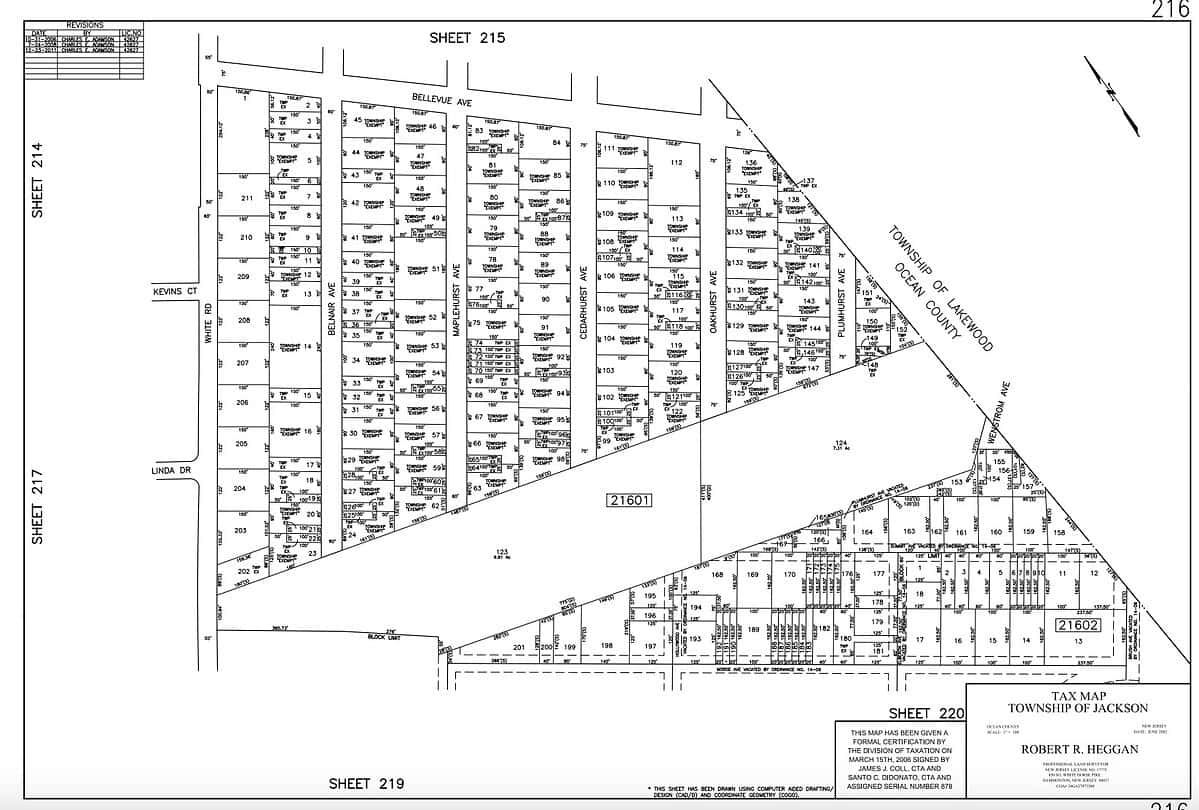
The dispute traces back to 2023, when Jackson Township struck a land swap agreement with developer Mordechai Eichorn, who wanted to build a four building religious school campus intended to serve roughly 2,850 Orthodox Jewish children on a 35 acre tract along Leesville Road. Under the arrangement, the township agreed to trade Eichorn a package that included roughly 43 acres of municipally owned land along White Road, plus two small, privately owned lots the town did not yet own, in exchange for Eichorn’s Leesville Road property, which the township planned to preserve as public open space. To complete that package, Jackson needed to acquire the two outstanding lots, owned by Bellevue Jackson LLC and Getzel Bee LLC, and turned to eminent domain to do it.
The township’s own paper trail became central to the case. An early ordinance described the taking only in terms of open space, while a later ordinance, adopted only after the property owners pushed back, added new language tying the condemnation directly to the land swap with Eichorn without ever actually specifying what the two seized lots themselves would ultimately be used for. It was not until more than seven months after the very first ordinance that township officials acknowledged, for the first time, that the condemned lots might not become open space at all.
The Legal Problem: Using Private Land as “Currency”
New Jersey’s eminent domain framework, built on the state’s Local Lands and Buildings Law and its Eminent Domain Act, allows municipalities to condemn private property, but only when that property will actually serve a legitimate public purpose once the government acquires it, parks, redevelopment, or genuine open space preservation among the recognized categories. The Supreme Court found that Jackson’s plan for the two condemned lots never fit that requirement. Once seized, the parcels were not going to become open space themselves. They were instead going to be handed directly to Eichorn, to use however he saw fit as part of the broader deal, while the actual open space benefit the township was pursuing would materialize on an entirely different property miles away.
The court drew a sharp distinction between that structure and the kind of land swap the law does permit. Municipalities can generally exchange land they already own for property they want, but Jackson’s plan instead condemned land it did not own from private citizens specifically to use as a bargaining chip in a transaction benefiting a private developer, a structure the court likened to the kind of A to B private transfer the U.S. Supreme Court had already expressed unease about in its landmark Kelo v. City of New London decision two decades earlier. Rabner posed the obvious question directly in the opinion, asking why the township had not simply condemned the developer’s own land outright, or used land it already held, rather than seizing property from uninvolved private owners to complete someone else’s deal.
A Township That Didn’t “Turn Square Corners”
Beyond the underlying legal question, the court found Jackson had also failed to meet New Jersey’s long standing requirement that government bodies deal honestly and transparently with residents, a standard courts often describe as the obligation to turn square corners. The justices pointed specifically to how the township’s own explanation for the taking shifted repeatedly over the course of four separate ordinances, calling the stated public purpose vague, inaccurate, and at times pretextual. That finding echoed the Appellate Division’s own 2025 ruling, which the Supreme Court’s decision affirmed in full, having already concluded the condemned lots functioned, in the court’s own words, as little more than currency for the exchange.
What Happens to the Land Now
The ruling leaves a genuinely unresolved question hanging over the case. By the time the appeals process reached the Supreme Court, Jackson Township informed the justices that the broader land exchange had already closed, meaning the township no longer owned or controlled the two disputed parcels at all. The Supreme Court said it did not have enough information in the record to determine what remedy the original property owners might now be entitled to, and sent the case back down to the trial court to sort out that question directly. Township Council President Mordechai Burnstein said he was not surprised by the outcome but believed the town had a strong case, and added that he did not expect the broader land swap itself to unravel as a result of the ruling. Richard DeAngelis, the attorney representing the two LLCs whose land was taken, framed the decision as a significant statewide precedent, arguing it adds a meaningful layer of protection for property owners against what he called eminent domain abuse going forward.
Beyond Jackson Township itself, the ruling gives every municipality in New Jersey a considerably clearer boundary the next time a redevelopment deal, an open space initiative, or any other public benefit project depends on assembling land through a multi party exchange. Condemning a neighbor’s backyard to grease the wheels of somebody else’s deal, the state’s highest court has now made unmistakably clear, is not what the power of eminent domain was ever meant to do.
















