

The relationship between professional sports organizations and the communities surrounding them has evolved dramatically over the last decade. Once largely centered around charity appearances, ceremonial donations, and occasional youth clinics, modern sports-driven community investment has become significantly more ambitious, more strategic, and in many cases, more necessary. Increasingly, franchises are being asked not simply to entertain or compete, but to serve as long-term institutional partners capable of addressing real social challenges within the cities they represent.
This week in Newark, the New Jersey Devils helped unveil one of the strongest examples yet of what that modern model can look like.
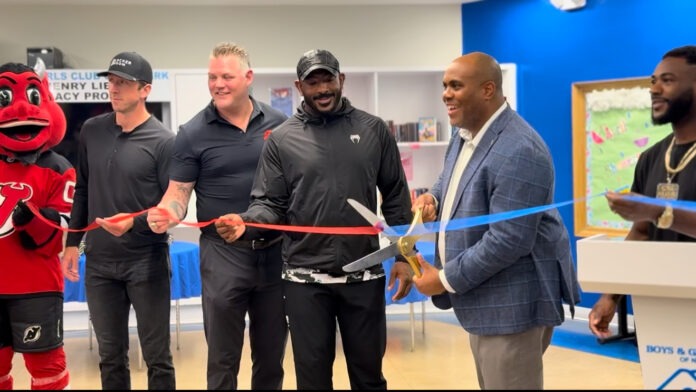
On Wednesday, May 6, 2026, the UFC Foundation officially opened its first-ever Youth Wellness Center at the Boys & Girls Club of Newark, marking a major collaborative initiative involving the UFC Foundation, the New Jersey Devils, the Devils Youth Foundation, Prudential Center, and the New Jersey Sports and Exposition Authority. The project represents far more than a ceremonial ribbon cutting. It signals a growing recognition among major sports organizations that mental health, emotional support, youth stability, and community wellness are no longer secondary conversations within urban development and youth outreach efforts. They are central priorities.
And in Newark, that reality carries enormous significance.
The new Wellness Center was designed specifically as a safe, structured, supportive environment for local youth navigating pressures that extend far beyond athletics or recreation. The facility integrates mental, emotional, and physical wellness resources within a community-centered setting that prioritizes accessibility and long-term support rather than temporary programming.
That distinction matters.
Across New Jersey and throughout the country, conversations surrounding youth mental health have accelerated rapidly in recent years. Schools, parents, healthcare professionals, and community organizations have increasingly acknowledged the growing pressures facing younger generations, including anxiety, depression, trauma exposure, social instability, academic stress, and the lingering psychological effects connected to both pandemic-era disruptions and broader economic uncertainty.
The Wellness Center directly addresses those realities.
Inside the facility are sensory-friendly decompression areas intentionally designed to help children regulate stress and emotions in safe, calming environments. These spaces are structured to support youth dealing with challenges both inside and outside school settings, recognizing that emotional wellness cannot be separated from broader daily life experiences. The center also facilitates access to professional mental health services, including one-on-one psychotherapy opportunities, group counseling, and family support systems coordinated through licensed clinical social workers.
Importantly, the project was not positioned as symbolic philanthropy alone.
Officials confirmed that more than $100,000 was invested into the facility, reinforcing that this initiative was designed as a serious operational commitment rather than a temporary awareness campaign. In today’s sports landscape, where public-facing charitable announcements can sometimes feel transactional or image-driven, the structural investment behind the Newark Wellness Center stands out as particularly meaningful.
The involvement of the Devils organization also reflects the franchise’s increasingly visible commitment to Newark itself.
For years, the Devils and Prudential Center have expanded their presence beyond game nights and entertainment programming into broader civic engagement throughout the city. Youth development, education initiatives, neighborhood partnerships, and nonprofit collaborations have steadily become larger components of the organization’s public identity. The Devils Youth Foundation, in particular, has become an increasingly active force within Newark-area community investment efforts, helping fund programs tied to education, food insecurity, recreation, and family support.
The Wellness Center project fits naturally within that expanding mission.
What made Wednesday’s unveiling especially effective, however, was the way it combined institutional support with personal visibility from athletes themselves.
Representatives from both the Devils and UFC were present throughout the day, creating an atmosphere that felt less corporate and more community-driven. Devils defenseman Johnny Kovacevic, goaltender Jake Allen, former Devils defenseman Colin White, and mascot NJ Devil participated directly in the ribbon-cutting ceremony and youth activities that followed. UFC athletes Khalil Rountree Jr. and former bantamweight champion Aljamain Sterling also spent extensive time interacting with children at the event.
But beyond the appearances themselves, the messaging surrounding the day felt notably grounded.
Rountree’s remarks about his own mental health journey carried particular weight. Rather than speaking in generic motivational language, he discussed how mixed martial arts helped him navigate adversity, emotional struggle, and personal instability earlier in life. That type of honesty resonates differently with young audiences, especially within environments specifically focused on emotional wellness and support.
Athletes today increasingly occupy roles extending far beyond performance alone. Younger audiences often connect more deeply to vulnerability, authenticity, and lived experience than polished public relations messaging. Events like this work best when athletes engage not simply as celebrities but as individuals willing to discuss personal challenges honestly and constructively.
By many accounts, that is exactly what happened in Newark.
Following the formal unveiling ceremony, the atmosphere shifted from institutional presentation into something far more organic. Athletes joined kids in dodgeball games, field day activities, casual conversations, and interactive programming throughout the afternoon. That transition mattered because it reinforced the central purpose of the facility itself: creating environments where support systems feel approachable, human, and integrated into ordinary community life rather than distant clinical structures.
The timing of the project also aligns with the broader momentum surrounding Newark’s continuing civic and cultural evolution.
Over the past several years, Newark has increasingly emerged as one of the Northeast’s most important redevelopment stories. Large-scale investment surrounding transportation, arts, entertainment, higher education, housing, sports, and technology has steadily reshaped the city’s economic and cultural profile. Prudential Center has played a major role in that transformation, serving not only as a sports venue but as a major anchor within Newark’s ongoing downtown revitalization efforts.
Yet projects like the Wellness Center highlight a different but equally important dimension of long-term urban growth.
Sustainable city development is not measured solely through construction projects, real estate activity, or corporate investment. It is also measured through the strength of community infrastructure supporting the people already living there. Youth programs, wellness resources, educational access, and family support systems often determine whether redevelopment benefits remain inclusive and durable over time.
The Newark Wellness Center represents investment in that type of infrastructure.
The collaboration between the UFC Foundation and the Devils organization is also notable because it reflects an increasingly interconnected sports and entertainment ecosystem inside New Jersey. Major leagues and organizations are recognizing that collaborative community initiatives often create broader impact than isolated charitable efforts operating independently. By combining resources, visibility, and outreach capacity, partnerships like this can extend both funding and awareness further into communities that need sustained support.
This week’s event marked the fourth consecutive year the UFC has partnered with the Devils Youth Foundation during UFC fight week activities surrounding events at Prudential Center. That consistency matters because repeated engagement tends to build far stronger community trust than isolated appearances or short-term campaigns.
In many ways, the Youth Wellness Center also represents a broader cultural shift occurring throughout professional sports itself.
Mental health discussions that once remained largely private are now becoming central components of athlete advocacy, organizational responsibility, and public dialogue. Across hockey, basketball, football, baseball, and mixed martial arts, athletes have increasingly spoken openly about anxiety, depression, emotional burnout, trauma, and psychological wellness. Organizations have slowly begun responding not only internally for players and staff, but externally through community-facing initiatives as well.
The Newark project exists within that larger evolution.
For the Devils specifically, the event reinforced something increasingly important about the franchise’s role inside New Jersey. The organization is not simply positioning itself as a hockey team operating within Newark. It is increasingly functioning as a civic institution participating directly in the city’s broader community identity and long-term social development.
That distinction matters both culturally and organizationally.
Professional sports franchises often talk about community. Fewer consistently build infrastructure capable of creating measurable long-term impact.
This week in Newark, the Devils, UFC Foundation, and their partners unveiled something designed to do exactly that.
And as conversations surrounding youth wellness, emotional health, and community investment continue growing across New Jersey, the new Youth Wellness Center stands as one of the clearest examples yet of how sports organizations can use their platforms to build something that extends far beyond the arena itself.
















