
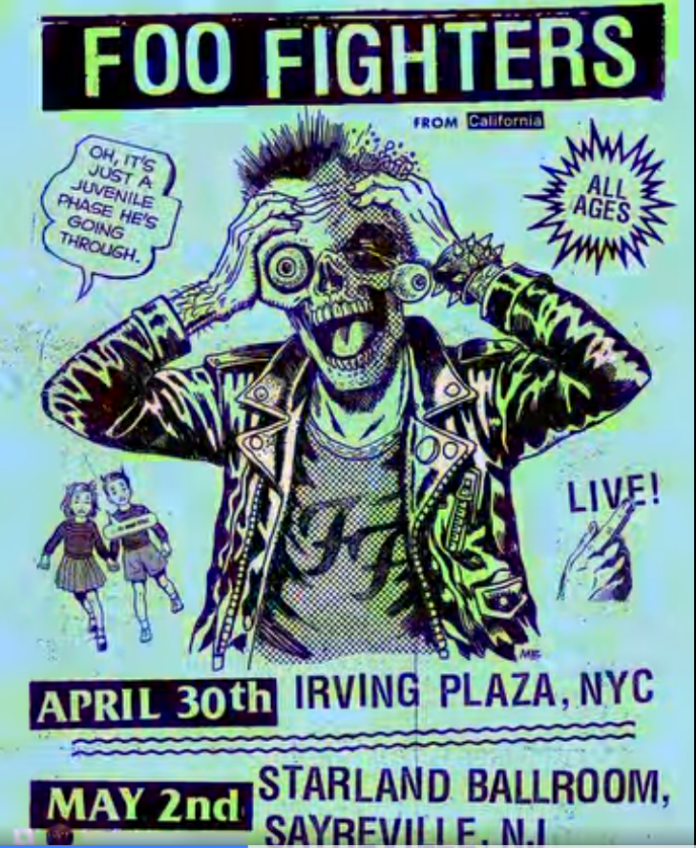

For a band that routinely commands the largest stages in the world, the decision by Foo Fighters to step into the comparatively intimate confines of Starland Ballroom on Saturday, May 2, 2026 is more than a surprise—it is a calculated return to the visceral core of live rock performance. Timed precisely with the late-April release of their twelfth studio album, Your Favorite Toy, this New Jersey appearance stands as one of the most compelling and strategically significant live music events of the year, transforming a beloved regional venue into the epicenter of a global fan frenzy.
This performance is not an anomaly in the Foo Fighters’ history; it is part of a deliberate tradition. Across decades, the band has cultivated a reputation for staging unannounced or low-profile club gigs in tandem with major album releases. These shows—often referred to as “pop-up” or “warm-up” performances—serve multiple purposes simultaneously: they reconnect the band with the immediacy of smaller audiences, provide a live testing ground for new material, and generate an organic groundswell of excitement ahead of large-scale touring cycles. The May 2 Starland Ballroom show is a direct continuation of that legacy, following closely on the heels of a similarly intimate appearance at Irving Plaza on April 30.
At its core, this New Jersey date represents the official ignition point for the Your Favorite Toy era. The album itself signals a pivotal moment in the band’s trajectory, blending their unmistakable arena-ready sound with a renewed focus on nuance, atmosphere, and songwriting depth. Bringing that material into a venue like Starland Ballroom is an intentional contrast—where songs designed to echo across stadiums are instead delivered in a setting where every lyric, riff, and dynamic shift is experienced at close range. For attendees, it offers a perspective on the music that is fundamentally different from the spectacle-driven environment of a stadium tour.
The fan experience at these rare club shows is precisely what fuels their near-mythical status. In a space where capacity is limited and sightlines are intimate, the barrier between performer and audience effectively disappears. The energy becomes more concentrated, the interaction more immediate, and the performance more unpredictable. These are the shows where setlists can shift on instinct, deep cuts can resurface, and new tracks can evolve in real time. For a band as seasoned as the Foo Fighters, this environment often results in performances that feel less like a production and more like a shared moment of discovery.
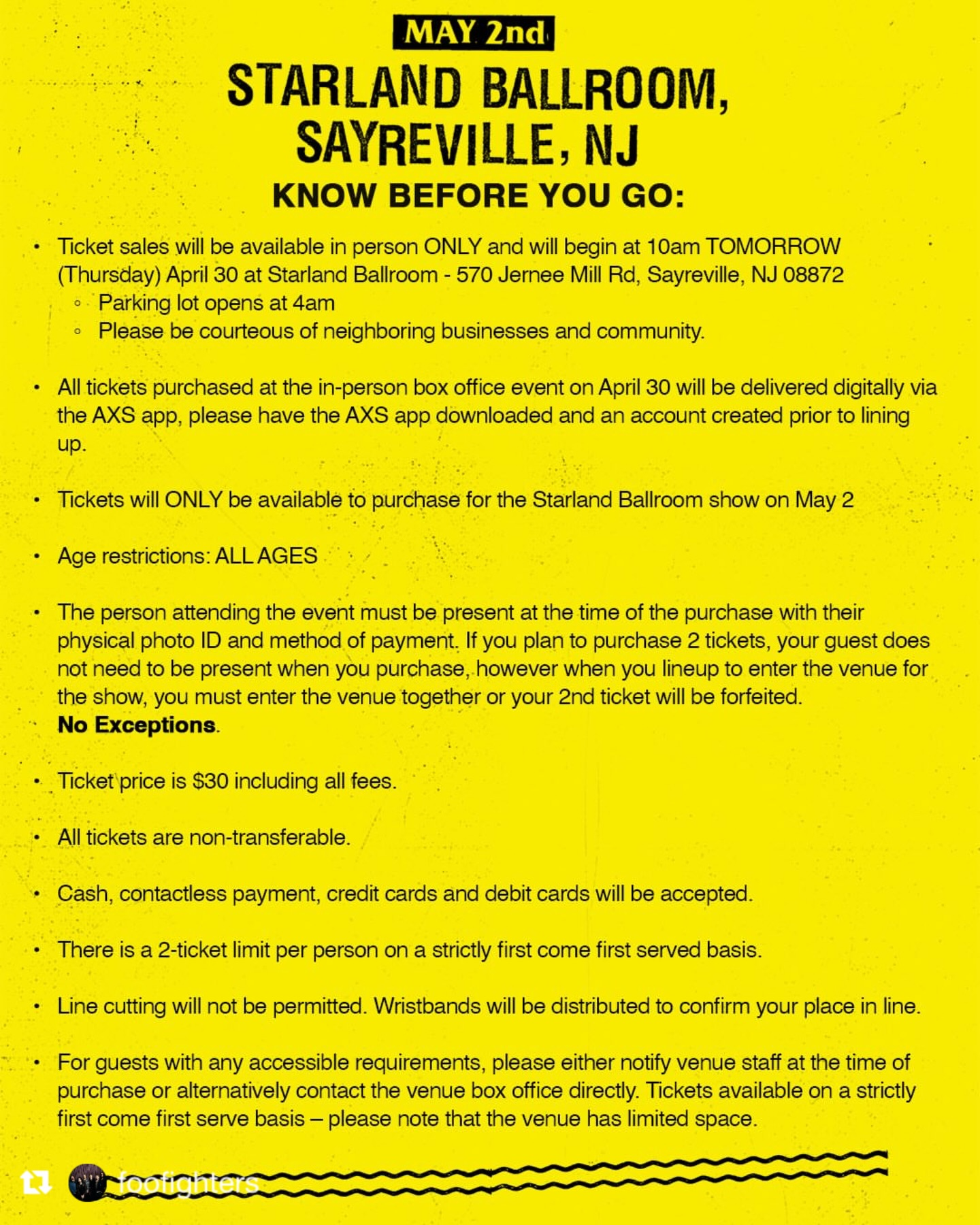
From an operational standpoint, the logistics surrounding the Starland Ballroom show underscore both the demand and the intent behind the event. Tickets are priced at an accessible $30, inclusive of fees—a deliberate move that prioritizes fan access while simultaneously reinforcing the grassroots ethos of the performance. Sales are strictly limited to in-person purchases at the venue’s box office beginning Thursday, April 30 at 10:00 AM, with a firm two-ticket limit per person. Additionally, tickets are non-transferable through the AXS platform, a measure designed to minimize resale activity and ensure that the audience inside the room reflects genuine demand rather than secondary market speculation. Anticipating significant turnout, the venue’s parking lot is scheduled to open as early as 4:00 AM on the day of the on-sale, effectively turning the ticket release itself into an event.
While the intimacy of Starland Ballroom provides a unique lens through which to experience the band, it does not signal any retreat from their status as one of the most dominant live acts in modern music. On the contrary, this club date functions as a prelude to the expansive Take Cover Tour 2026, a North American stadium run that will once again place the Foo Fighters at the forefront of the global touring circuit. Beginning in August, the tour will move through a series of marquee venues, including Ford Field in Detroit on August 6, Soldier Field in Chicago on August 8, Lincoln Financial Field in Philadelphia on August 13, Nissan Stadium in Nashville on August 15, and Allegiant Stadium in Las Vegas on September 26. These dates reaffirm the band’s ability to scale their performance from the most intimate rooms to the largest arenas without compromising intensity or impact.
Within the broader context of New Jersey’s music landscape, the significance of this event cannot be overstated. Starland Ballroom has long served as a cornerstone venue, bridging the gap between emerging artists and global headliners. Its history is defined by performances that capture artists at critical moments in their careers—either on the ascent or in the midst of reinvention. Hosting a band of the Foo Fighters’ magnitude in this setting reinforces the venue’s enduring relevance and highlights the state’s continued importance as a destination for landmark live music experiences.
This moment also aligns seamlessly with the ongoing coverage and cultural perspective found across the Explore New Jersey platform, particularly within its dedicated Music section. As the state continues to attract high-profile performances and foster a vibrant live music ecosystem, stories like this one illustrate a larger narrative—one where New Jersey is not simply part of the touring map, but a place where defining musical moments unfold.
The May 2 performance at Starland Ballroom encapsulates a rare convergence: a globally dominant band entering a new creative chapter, a venue built for intensity rather than scale, and a fan base eager to experience something that cannot be replicated. It is a reminder that even at the height of stadium success, the essence of rock and roll remains rooted in the power of a room, the immediacy of sound, and the shared energy between artist and audience.
















